Jack Dorsey to cut 4,000 jobs due to AI advances at Square parent Block

Fintech company Block announced that it would be laying off 4,000 of its 10,000 employees because of gains in AI productivity.“Intelligence tools have changed what it means to build and run a company,” Jack Dorsey, Block’s CEO, said in a letter to shareholders on Thursday.“We’re already seeing it internally.A significantly smaller team, using the tools we’re building, can do more and do it better.And intelligence tool capabilities are compounding faster every week.
” Block is the parent company for online payment platforms such as Square and Cash App.Investors so far appear encouraged by Dorsey’s assertion that the cuts, and increased reliance on AI, will drive profitability, analysts said.Shares increased more than 20% in pre-market trading on Friday.Block’s layoffs speak to larger fears about job cuts driven by a growing use of AI.Goldman Sachs noted in February that the increasing pace of AI adoption could drive up unemployment this year, and estimated that the technology had already resulted in 5,000 to 10,000 monthly net job losses last year.
A November study from the Massachusetts Institute of Technology found that AI could already replace nearly 12% of the workforce in the US.The tech sector is among the most hit, and workers at other tech companies are feeling the heat, too.Marc Benioff’s Salesforce cut about 4,000 jobs last year, with the CEO saying that he “needs less heads” given AI’s efficiency.Dorsey claimed on Thursday that the decision to almost halve Block’s workforce wasn’t because the business was in trouble, and that economic performance had actually been strong.(Block beat Wall Street expectations for its fourth quarter, reporting $6.
25 bn in total revenue).Dorsey said on X that he had two choices: gradually cut his workforce over months and years – “or be honest about where we are and act on it now”.He wrote: “Repeated rounds of cuts are destructive to morale, to focus and to the trust that customers and shareholders place in our ability to lead.”Block executives said on Thursday’s earnings call that the company had been increasing its reliance on AI for years, noting that some AI work streams were “nearly fully rolled out, others are earlier in their maturity”.Block had already laid off hundreds of workers in early February.
Earlier this month, employees still at the company reported that there was rapidly deteriorating employee morale and that there were requirements to use generative AI, according to Wired.Wired said it reviewed an employee complaint submitted to Dorsey in a recent all-hands meeting that said “morale is probably the worst I’ve felt in four years” and that “the overarching culture at Block is crumbling”.Dorsey acknowledged the risk of the cuts on X, and in his message to shareholders.The company’s most recent 10-K filing outlined ways its AI gamble could go wrong.“Our ability to successfully operate with a reduced workforce is expected to depend in part on the effectiveness, reliability and adoption of our proactive intelligence and AI tools,” the company noted.
“These technologies may not perform as expected, may require more time or expense to implement effectively, may introduce operational or cybersecurity risks or may fail to enhance productivity and maintain operational efficiency as expected.”“For years, we have debated whether AI would dent jobs at the margin.Now we have a public case study in which the CEO explicitly says that intelligence tools have changed what it means to build and run a company,” Stephen Innes of SPI Asset Management told the Associated Press.He said: “Other large employers have announced tens of thousands of cuts in recent months.Some have downplayed the AI link.
Block did not.”
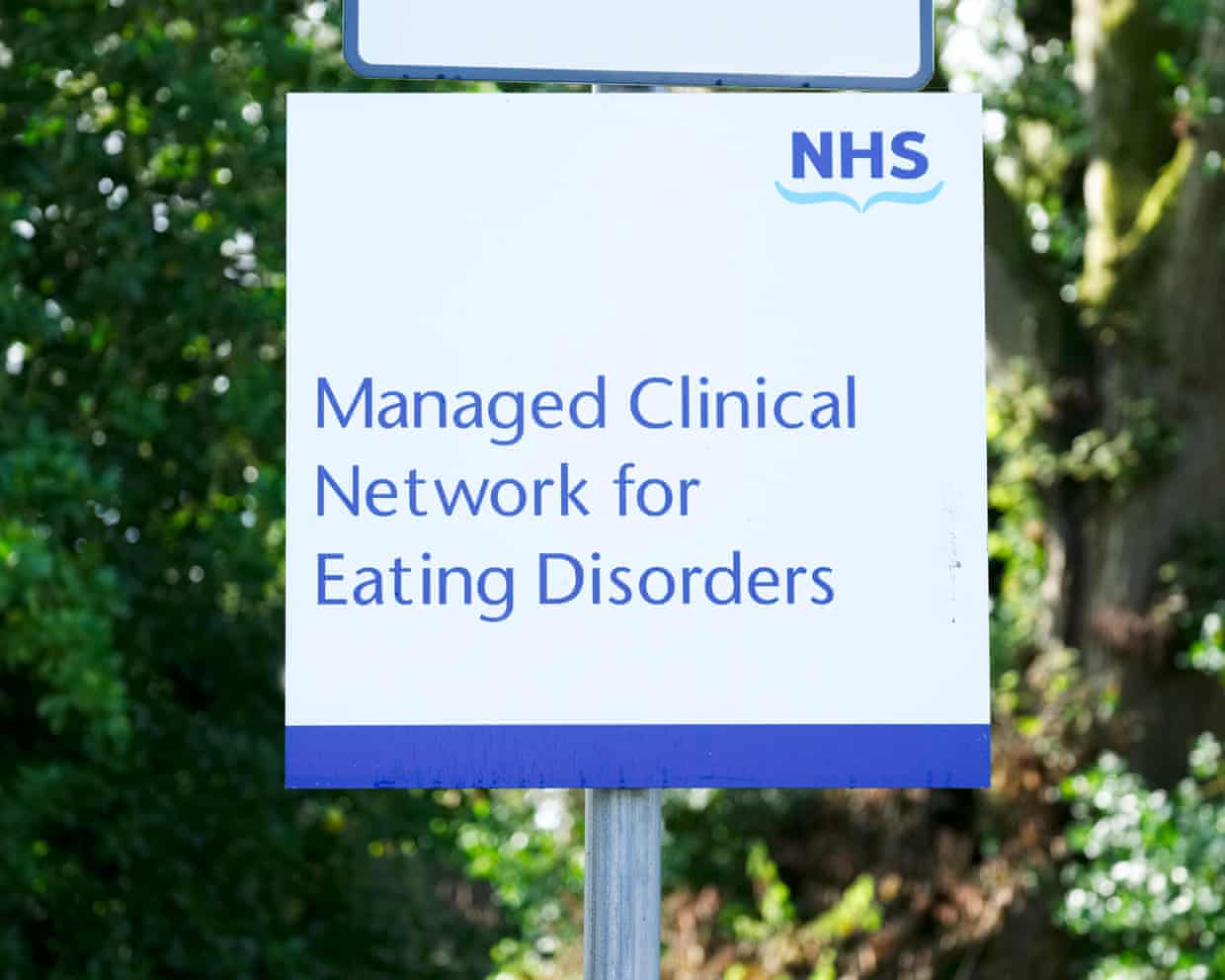
Mental health units discharging eating disorder patients with ‘dangerously low’ BMIs
Patients with eating disorders are being discharged from mental health units even though they are still very thin and have “dangerously low” body mass index levels.Some hospitals are sending home people whose BMIs are as low as 12.5, despite usual clinical practice in the NHS seeking to wait until a BMI of 18 or 19 has been achieved.The early discharges were revealed through freedom of information requests to NHS mental health trusts in England submitted by Hope Virgo, a prominent eating disorders campaigner.Experts said the revelation was “horrifying” and was probably linked to NHS services struggling to cope with a rise in demand

Diagnosing mental health conditions need not be a case of yes/no | Letters
Lucy Foulkes explores the possibility that the rising numbers of young people receiving a diagnosis of mental illness or ADHD are subjects of overdiagnosis (Are we really overdiagnosing mental illness?, 22 February). She posits that changes in terminology, increasing societal awareness and reductions in stigma are all factors in the increase in diagnoses.However, there is another way of looking at this issue. If we treat ADHD as binary (you have it or you do not), we are missing the possibility that we all lie somewhere on a continuum with diagnosed ADHD towards one end (and perhaps an ability to focus and concentrate at the other). A diagnosis of ADHD then depends on where the line is drawn

‘Violent bully’ who broke partner’s neck and left her paralysed jailed for 16 years
A “violent and controlling bully” who broke his partner’s neck, leaving her paralysed and her life “destroyed”, has been sentenced to 16 years in prison.Robert Easom, a landscape gardener, violently assaulted Trudi Burgess, a schoolteacher and former singer, when she threatened to leave him after enduring eight years of coercive, controlling behaviour.A court heard that Easom, 57, pinned Burgess down in a rage and pushed her head into her body until her neck snapped. He denied a charge of causing grievous bodily harm with intent but was found guilty after 27 minutes of deliberation by a jury at Preston crown court in November.He had admitted causing the injury but denied intending to cause her serious harm

European girls aged 13-15 have world’s highest rate of tobacco use for age group
Teenage girls in Europe have the highest rate of tobacco use in their age group around the world, while one in seven adolescents across the continent use vapes and e-cigarettes, figures show.The data, based on analysis by the World Health Organization (WHO), shows that Europe is on course to maintain its status as the world’s biggest consumer of tobacco up to 2030, and reveals “particularly concerning” trends of tobacco use among women and young people.Four in 10 adult female smokers around the world – about 62 million women – live in Europe, while 4 million teenagers aged 13 to 15 across the continent use tobacco products.For vapes and e-cigarettes, Europe has the highest prevalence of teenage regular users, at 14.3% of children aged between 13 and 15

Vegetarians have ‘substantially lower risk’ of five types of cancer
Vegetarians have a substantially lower risk of five types of cancer, a landmark study on the role of diet has revealed.The research, using data from more than 1.8 million people who were tracked over many years, found that vegetarians had a 21% lower risk of pancreatic cancer, a 12% lower risk of prostate cancer and a 9% lower risk of breast cancer compared with meat eaters. Combined, these cancers account for around a fifth of cancer deaths in the UK.Vegetarians also had a 28% lower risk of kidney cancer and a 31% lower risk of multiple myeloma, according to the study published in the British Journal of Cancer

Kinship carers in England to be given financial support in government pilot
Grandparents who step in to provide full-time care for their grandchildren to prevent them being taken into care will be given guaranteed financial support under a government pilot scheme.Charities welcomed the trial as groundbreaking and said if fully rolled out across England it had the potential to transform the lives of tens of thousands of children looked after under “kinship care” arrangements.Kinship carers are grandparents, aunts and uncles, older siblings or close family friends who take on full parental responsibility when a child loses their birth parents as a result of death, a family court order, severe illness or imprisonment.Campaigners have fought for more than two decades to establish financial recognition of the role and personal sacrifices that kinship carers make. Some carers say they have felt ignored and exploited as a “cheap option” despite saving the state billions it would otherwise have had to spend on foster or residential care

Square Mile strikes back: how the City of London is fighting disinformation about crime

Harrods faces legal action over £1-a-head dining charge not going to staff

OpenAI to work with Pentagon after Anthropic dropped by Trump over company’s ethics concerns

Suicide forum found to be in breach of Online Safety Act after failing to block UK users

Formula One to revise controversial rule at centre of Mercedes engine row

Oleksandr Usyk to defend title against kickboxer at Pyramids of Giza in Egypt