Police AI chief admits crime-fighting tech will have bias but vows to tackle it
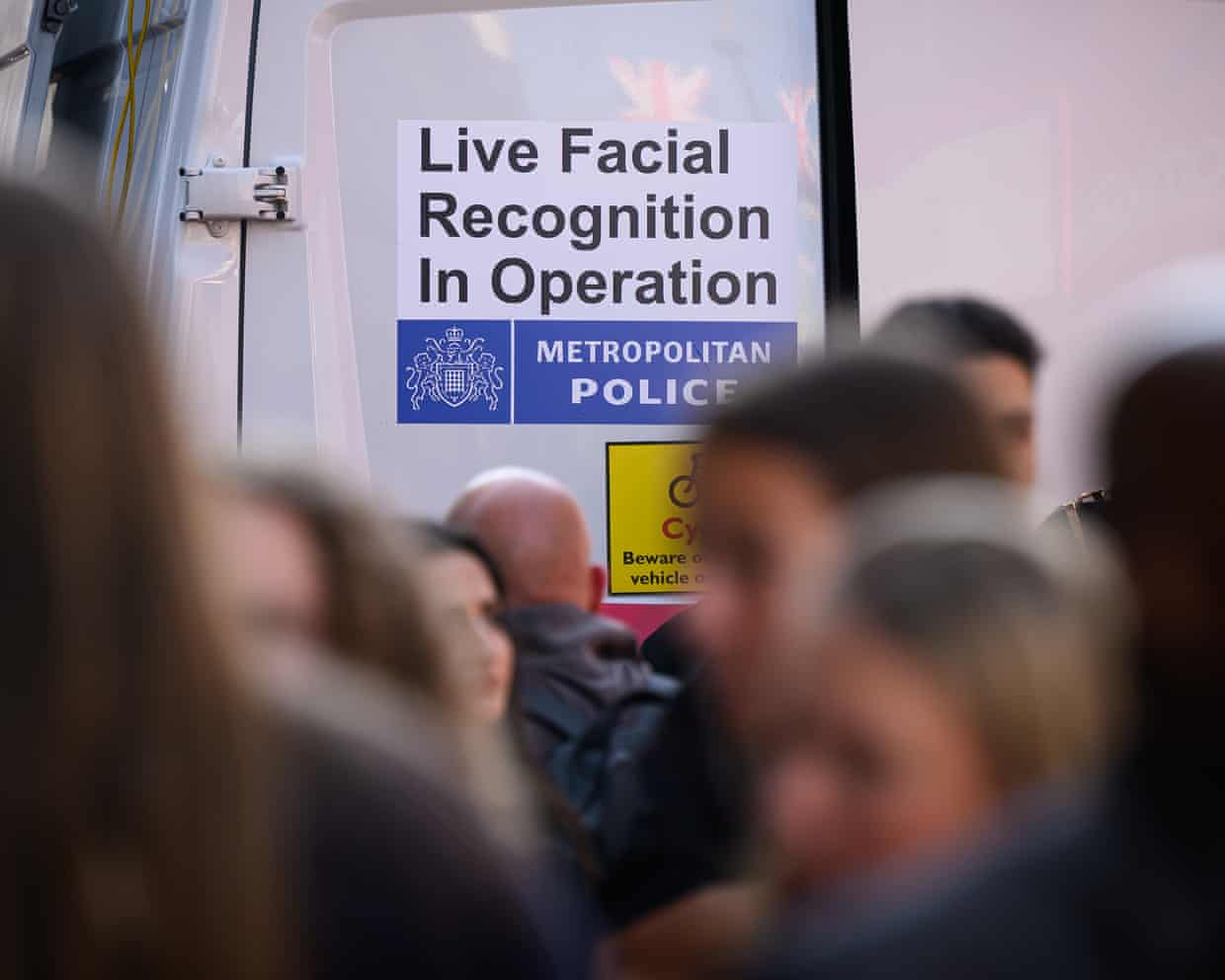
A police chief has admitted artificial intelligence used to boost crime fighting will contain bias but pledged to combat the risks,Labour wants a dramatic expansion of police use of AI within England and Wales, with police chiefs also believing it could help keep law enforcement up to date with new criminal threats,Alex Murray told the Guardian that a new national police AI centre would recognise the risks of bias and minimise them,Bias in use of AI in policing could result in instances where algorithms – often trained on historical data reflecting past human prejudices – systematically produce unfair outcomes, such as overtargeting minority communities or misidentifying individuals based on race, gender, or socioeconomic status,Murray, the director of threat leadership with the National Crime Agency, and the national lead for AI, said: “Once you’ve recognised and minimised [bias], how do you train officers to deal with outputs to ensure that it is further minimised?“If you talk about live facial recognition or predictive policing, there will be bias, and you need to get in the data scientists and the data engineers to clean the data, to train the model appropriately, and then to test it.
“There is no point releasing something to policing that has bias in it that’s not recognised, and everything should be done to minimise it to a level where it can be understood and mitigated.”Examples of bias have already surfaced in the police use of retrospective facial recognition, which is powered by AI.That is where a suspect is compared with a database of images after a crime.Live facial recognition, which is more controversial and is used less by policing, hunts for suspects in real time, and also contains bias.A report in December found that a retrospective facial recognition system used by police had been used with inadequate safeguards.
The Association of Police and Crime Commissioners (APCC), which oversees local forces in England and Wales, said: “System failures have been known for some time, yet these were not shared with those communities affected, nor with leading sector stakeholders,”The APCC forensic science lead, Darryl Preston, who is the police and crime commissioner for Cambridgeshire, said: “The discovery of an in-built bias in the police national database’s retrospective facial recognition system, even if only in limited circumstances, demonstrates the need for independent oversight of these powerful tools,“It is not acceptable for technology to be used unless and until it has been thoroughly tested to eliminate bias,That clearly was not the case in this instance,”The new national AI centre, costing £115m, would aim to reduce bias, said Murray, as well as assessing and deciding what products from private suppliers work.
Currently each of the forces across the UK makes its own decisions, which is seen as slow and wasteful.Murray said police were in an “arms race” with criminals who were using the technology: “Anyone with imagination can use AI.”In one case a paedophile claimed images showing him involved in the abuse of children was a deepfake, which police then had to disprove to get him convicted.Murray said the benefits of AI were far beyond the “cliche around Minority Report and predictive policing”.He added that across a range of crimes and challenges facing policing, AI ranged from being a help to a gamechanger, but a human police officer will have to make the final decisions about what to do about the results AI produces.
He said it could help police deal with political agitators who infect social media with fake images to try to trigger violence on the streets.In time, Murray said, it could help with manhunts, or speed up searches for cars linked to suspects and save the hundreds of hours it takes for detectives to trawl through extensive CCTV footage, or speed up the search of seized digital devices from suspects in the hunt for incriminating evidence.“What took days, weeks, sometimes months can potentially take hours,” he said.In one recent case, four Luton-based suspects were arrested for attacks on – and thefts from – cashpoints.Police downloaded the data from the suspects’ phones and, thanks to AI, secured guilty pleas within weeks.
The data was in Romanian and AI scoured through it, translated it, identified the material relating to potential crimes, identified the offences and presented it all in a package for detectives.Trevor Rodenhurst, chief constable of the Bedfordshire force, told the Guardian: “This allowed us to draw evidence from lots of devices with a vast quantity of data, which we would otherwise not have been able to do.”Rodenhurst said that as officers use AI and see its benefits, it is changing the view of the frontline: “They are no longer suspicious, they are asking when they can have it.That capability is transformative.”
Police AI chief admits crime-fighting tech will have bias but vows to tackle it
A police chief has admitted artificial intelligence used to boost crime fighting will contain bias but pledged to combat the risks.Labour wants a dramatic expansion of police use of AI within England and Wales, with police chiefs also believing it could help keep law enforcement up to date with new criminal threats.Alex Murray told the Guardian that a new national police AI centre would recognise the risks of bias and minimise them.Bias in use of AI in policing could result in instances where algorithms – often trained on historical data reflecting past human prejudices – systematically produce unfair outcomes, such as overtargeting minority communities or misidentifying individuals based on race, gender, or socioeconomic status.Murray, the director of threat leadership with the National Crime Agency, and the national lead for AI, said: “Once you’ve recognised and minimised [bias], how do you train officers to deal with outputs to ensure that it is further minimised?“If you talk about live facial recognition or predictive policing, there will be bias, and you need to get in the data scientists and the data engineers to clean the data, to train the model appropriately, and then to test it
New datacentres risk doubling Great Britain’s electricity use, regulator says
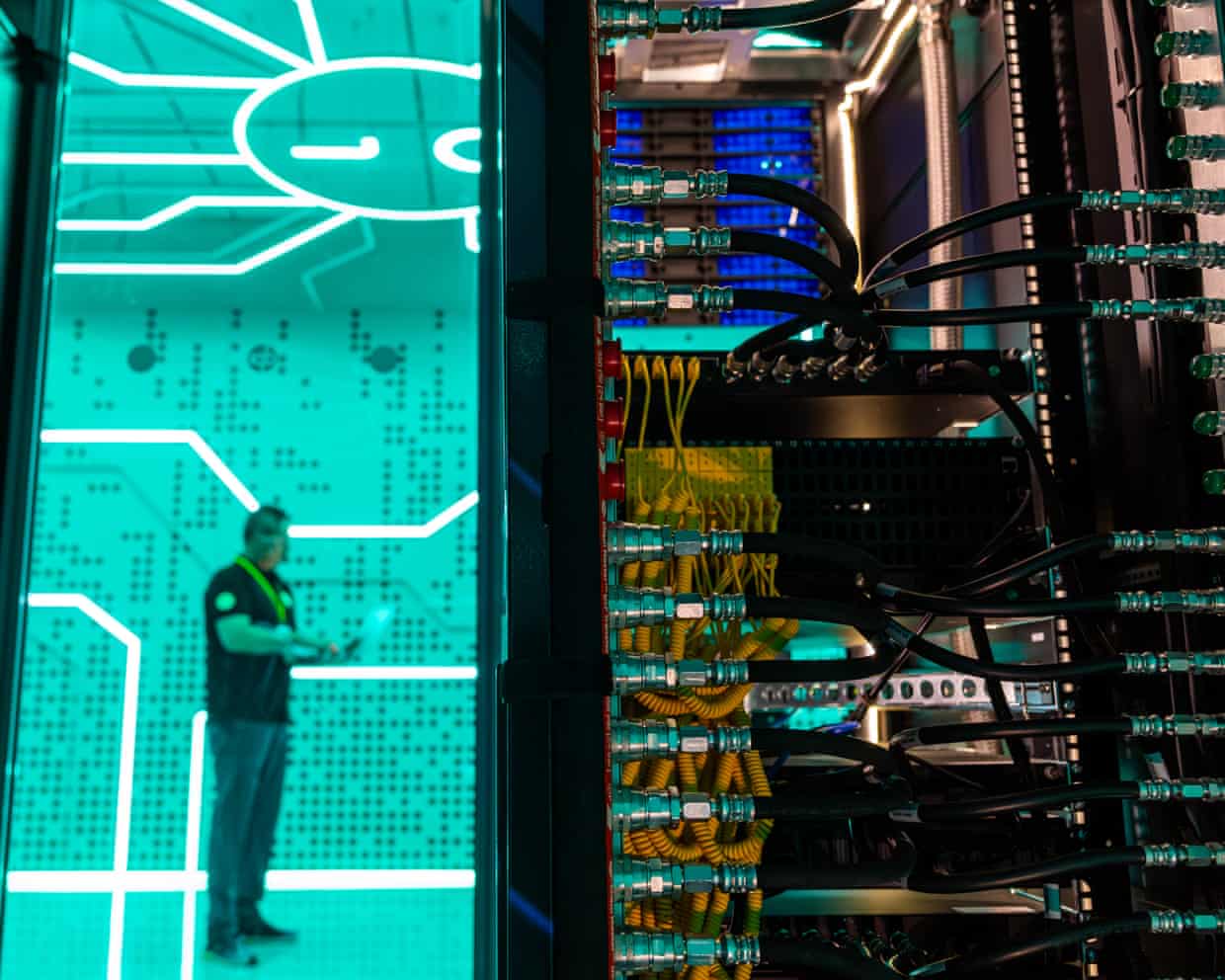
The amount of power being sought by new datacentre projects in Great Britain would exceed the national current peak electricity consumption, according to an industry watchdog.Ofgem said about 140 proposed datacentre schemes, driven by use of artificial intelligence, could require 50 gigawatts of electricity – 5GW more than the country’s current peak demand.The figure was revealed in an Ofgem consultation on demand for new connections to the power grid. It pointed to a “surge in demand” for connection applications between November 2024 and June last year, with a significant number coming from datacentres. This has exceeded even the most ambitious forecasts

Palantir deals are a threat to our data rights as UK citizens | Letters
For 100 years, the UK government has led us through existential threats, including two world wars. But instead of resisting the latest threat to democratic accountability, it has welcomed it with open arms: Palantir Technologies (NHS deal with AI firm Palantir called into question after officials’ concerns revealed, 12 February).This polarising US surveillance giant provides data-fusion and AI platforms used by by the US for immigration enforcement and by Israel in the Gaza conflict. Its software amplifies state power through militarised analytics and opaque algorithms.The current government hasn’t just surrendered citizens’ data rights to Palantir – it has paid for the privilege
Sam Altman defends AI’s energy toll by saying it also takes a lot to ‘train a human’
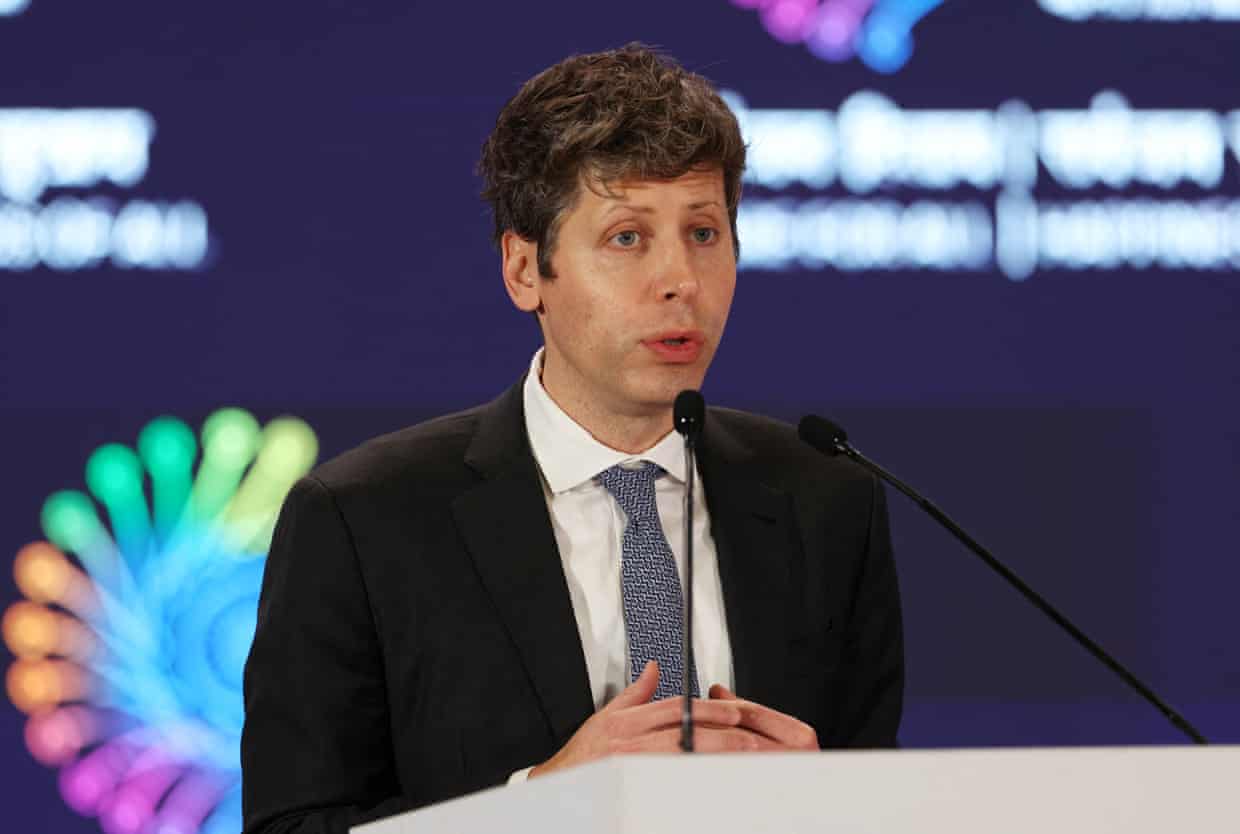
The OpenAI boss, Sam Altman, has tried to ease concerns about how much power is used by artificial intelligence models by comparing it to the amount of energy required by human development.“People talk about how much energy it takes to train an AI model – but it also takes a lot of energy to train a human,” Altman told the Indian Express recently while in India for the AI Impact summit. “It takes about 20 years of life – and all the food you consume during that time – before you become smart.”Despite that defense, he said that the public assessment of AI’s energy consumption was “fair”, adding: “We need to move towards nuclear or wind and solar very quickly.”Those remarks come amid growing discussion about the environmental impact of the datacenters required to power AI models – and, more generally, about technology’s possible impact on society

US farmers are rejecting multimillion-dollar datacenter bids for their land: ‘I’m not for sale’
When two men knocked on Ida Huddleston’s door last May, they carried a contract worth more than $33m in exchange for the Kentucky farm that had fed her family for centuries.According to Huddleston, the men’s client, an unnamed “Fortune 100 company”, sought her 650 acres (260 hectares) in Mason county for an unspecified industrial development. Finding out any more would require signing a non-disclosure agreement.More than a dozen of her neighbors received the same knock. Searching public records for answers, they discovered that a new customer had applied for a 2
Amazon’s cloud ‘hit by two outages caused by AI tools last year’
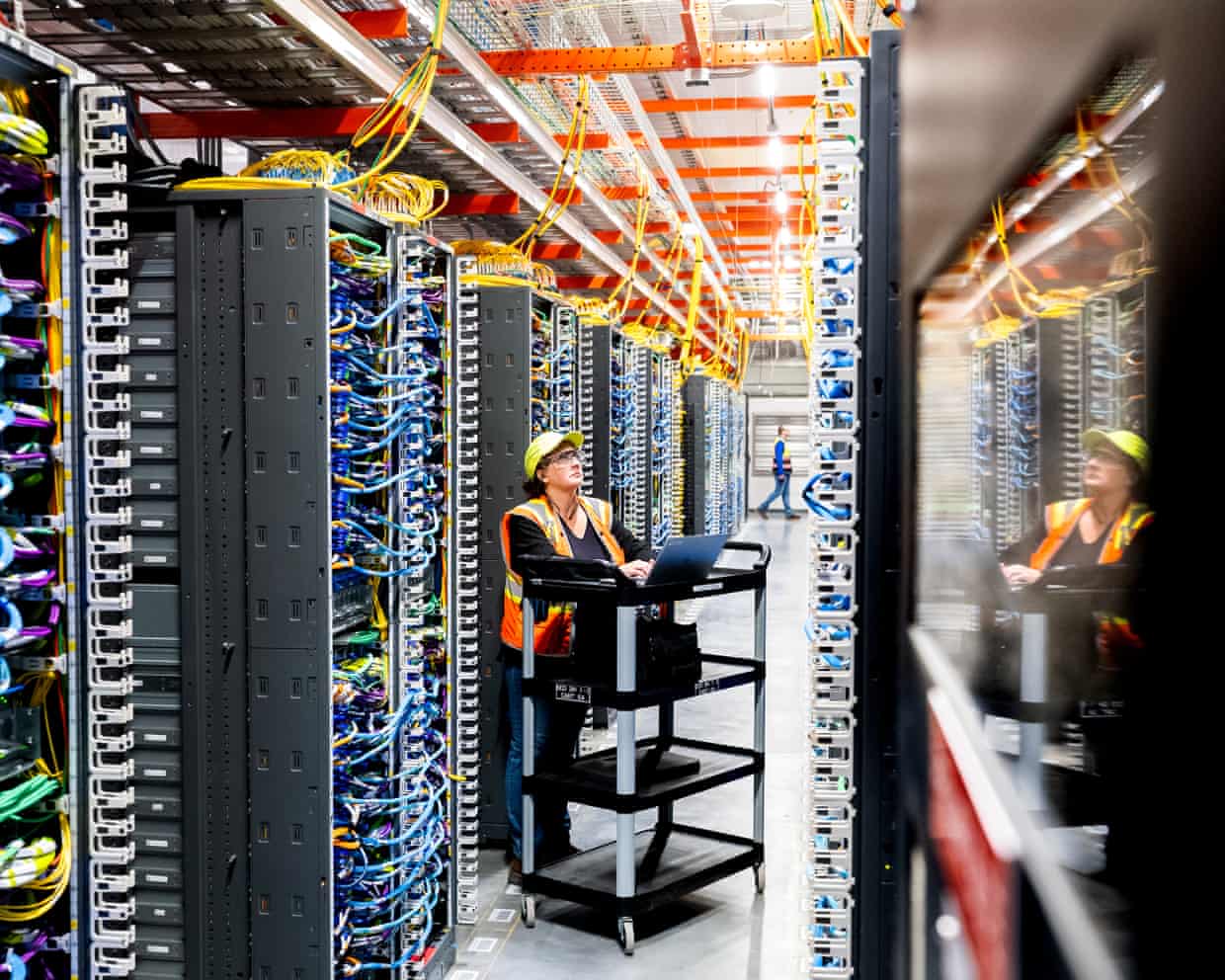
Amazon’s huge cloud computing arm reportedly experienced at least two outages caused by its own artificial intelligence tools, raising questions about the company’s embrace of AI as it lays off human employees.A 13-hour interruption to Amazon Web Services’ (AWS) operations in December was caused by an AI agent, Kiro, autonomously choosing to “delete and then recreate” a part of its environment, the Financial Times reported.AWS, which provides vital infrastructure for much of the internet, suffered several outages last year.One incident, in October, downed dozens of sites for hours and prompted discussion over the concentration of online services on infrastructure owned by a few massive companies. AWS has won 189 UK government contracts worth £1

AstraZeneca boss Pascal Soriot’s pay rises to £17.7m

Oil prices hit seven-month highs as tensions rise before US-Iran talks

‘A feedback loop with no brake’: how an AI doomsday report shook US markets

Meta agrees $60bn deal with chipmaker AMD despite AI bubble fears

Harry Brook relieved to lead England into last four after ‘the hardest winter of my life’

England edge past Pakistan: T20 Cricket World Cup Super 8s – as it happened