‘A feedback loop with no brake’: how an AI doomsday report shook US markets

US stock markets have been hit by a further wave of AI jitters, this time from yet another viral – and completely speculative – warning about the impact of the technology on the world’s largest economy,The latest foreboding is from Citrini Research, a little-known US firm that provides insights on “transformative ‘megatrends’”,Its post on Substack, which it called a “scenario, not a prediction”, rattled investors by portraying a near future in which autonomous AI systems – or agents – upend the entire US economy, from jobs to markets and mortgages,Citrini’s scenario begins now and ends in June 2028, with US unemployment cresting over 10% and an Occupy Silicon Valley movement setting up camp outside OpenAI and Anthropic’s offices,In the interim, a series of events triggered by the widespread use of AI agents guts software companies and ripples outwards, hitting private credit and mortgages, and leading to an unchecked downward spiral.
Speculative as it is, the scenario has unnerved investors.The S&P dropped more than 1% on Monday, and the software component of the index fell to its lowest level since Trump’s “liberation day” tariff announcement in April.Doubtless some of the wobble is attributable to Trump’s latest tariffs, but Uber, American Express, Mastercard and DoorDash, specifically named in Citrini’s report, all lost between 4% and 6%.“It’s real doomsday porn stuff, which is always lapped up by readers and market commentators and the press,” said Neil Wilson, an analyst at Saxo Capital Markets.“I don’t think it’s necessarily going to play out as they see it, but it’s a bit of a wake-up call that the economy already no longer resembles the one just a few years ago.
”Citrini’s scenario evolves as follows:The scenario begins with AI agents undergoing a “jump in capability”.This has already happened.Citrini refers to Anthropic’s Claude Code and OpenAI’s Codex, both of which have wowed users with their performance in recent months.The agents dent software-as-a-service companies such as Monday.com, Zapier and Asana, because they offer businesses a cheaper way to do in-house tasks , for example, managing databases and organising workflows.
This forces businesses such as Oracle that rely on long-term contracts with customers into “a race to the bottom” on pricing.Meanwhile the AI agents wreak havoc elsewhere.The scenario imagines every consumer deciding to use their own personal agent to transact and conduct business.This completely sidelines companies that monetise “friction” in the economy, such as travel and estate agencies that operate as middlemen in processes such as booking holidays or buying property.Instead of using DoorDash, developers – and civilians – code up their own food delivery apps, all of which compete, fragment the market, and destroy the margins of legacy businesses.
Business for Uber and other ride-sharing apps also evaporates.Instead of using Visa and Mastercard, AI agents decide to do all business in cryptocurrency, because transaction costs are cheaper.This guts traditional payment providers.To Citrini, this is a logical endpoint for tireless AI agents that have the time and capability to optimise everything.“Habitual app loyalty, the entire basis of the business model, simply didn’t exist for a machine,” it writes.
In the real world, Uber, DoorDash, Mastercard and American Express shares have all fallen this week on the back of this scenario.Traditional narratives about progress envision the latest technologies creating new jobs as they destroy others.Not so with AI.“AI is now a general intelligence that improves at the very tasks humans would redeploy to.Displaced coders cannot simply move to “AI management” because AI is already capable of that,” Citrini writes.
Instead, white-collar workers redeploy en masse into unstable, gig-economy jobs – the writers describe a hypothetical friend of theirs laid off from Salesforce driving for Uber.This in turn suppresses wages in the sector.The layoffs meanwhile drive down consumer spending.Companies, suffering from weakening demand, decide to invest not in workers but in more AI.This is “a feedback loop with no natural brake”, Citrini writes.
The consequences are far-reaching when the wallets of the 10% of US workers who account for 50% of consumer spending suddenly snap shut.The scenario imagines that job losses and the evisceration of software companies will ripple out into broader markets in two ways: through defaults in private credit and a mortgage crisis.Private credit firms, or lenders that are not banks, have been involved in restructuring a number of software businesses in recent years, taking out loans based on those businesses’ predicted annual revenue far into the future.The example Citrini gives is how Hellman & Friedman and Permira, an asset manager, took Zendesk, a software company, private in 2022 for $10.2bn (£7.
6bn),The acquisition included a loan structured around the assumption that Zendesk’s revenue would be stable,After AI agents, that assumption is no longer holds,This leads to “the largest private credit software default” in history,It should be contained to software, writes Citrini, but it isn’t, because the capital on the balance sheets of the asset managers includes life insurance policies and “the savings of American households”.
Regulators downgrade this software debt, which contributes to a 2027 crash,Meanwhile, there is a mortgage crisis,White-collar workers no longer have white-collar jobs and are unable make repayments on their home loans,“People borrowed against a future they can no longer believe in,” writes Citrini,All this makes the negative feedback loop worse.
The first-order spiral is companies laying off workers, which weakens demand and consumer spending, which in turn leads companies to invest in more AI and lay off more workers,The second-order spiral is that the private credit turmoil and mortgage concerns mean that markets tighten, consumer confidence is shaken, there are more layoffs and more mortgage impairment,“Each reinforces the other,” writes Citrini,No financial policy tools exist to address this, because the crisis that is happening in the real economy – job losses and suppressed wages and spending – is not a result of tight financial conditions that central banks can address, but of investment in AI, which makes “human intelligence less scarce and less valuable”,The upshot is a crash in late 2027, driven by the mortgage markets.
It wipes out 57% of the S&P,Citrini imagines the crash will throw governments into a crisis they will be unable to manage,“The system wasn’t designed for a crisis like this,The federal government’s revenue base is essentially a tax on human time,People work, firms pay them, the government takes a cut,” it writes.
“The government needs to transfer more money to households at precisely the moment it is collecting less money from them in taxes.”AI companies, however, are doing well.The big-tech players who build and sell AI models are making fabulous sums.Because their companies make up a large share of the markets, the economy looks great on paper.Citrini has a term for this: ghost GDP, that is “output that shows up in the national accounts but never circulates through the real economy”.
The social fabric frays and a movement styled after Occupy Wall Street blockades the offices of AI firms for weeks on end.Citrini’s scenario ends with a caution: “This is the first time in history the most productive asset in the economy has produced fewer, not more, jobs.Nobody’s framework fits, because none were designed for a world where the scarce input became abundant.So we have to make new frameworks.Whether we build them in time is the only question that matters.
”The impact of the Citrini scenario has startled some commentators, including experts who say AI tools are not yet capable of enacting it.Stephen Innes, a managing partner at SPI Asset Management, says AI thought pieces have become market movers.“We have watched this market absorb wars, sticky inflation, banking tremors and tariff theatrics with a shrug, yet a widely circulated Substack thought piece is enough to knock it sideways,” he said.

Philippe Gaulier obituary
In 1980 the École Philippe Gaulier opened its doors in Paris to help performers find and celebrate their “inner idiot”. The school quickly became the prime destination for clown training, attracting theatre students, actors and curious others from around the world.Philippe, who has died aged 82 following a lung infection, made the concept of le jeu – play – central to his teaching. For him, comedy was not about jokes but about danger: the moment when a performer risks failure or ridicule in pursuit of delight. His clowns were not sentimental innocents but mischievous creatures who loved the audience and longed to be loved in return
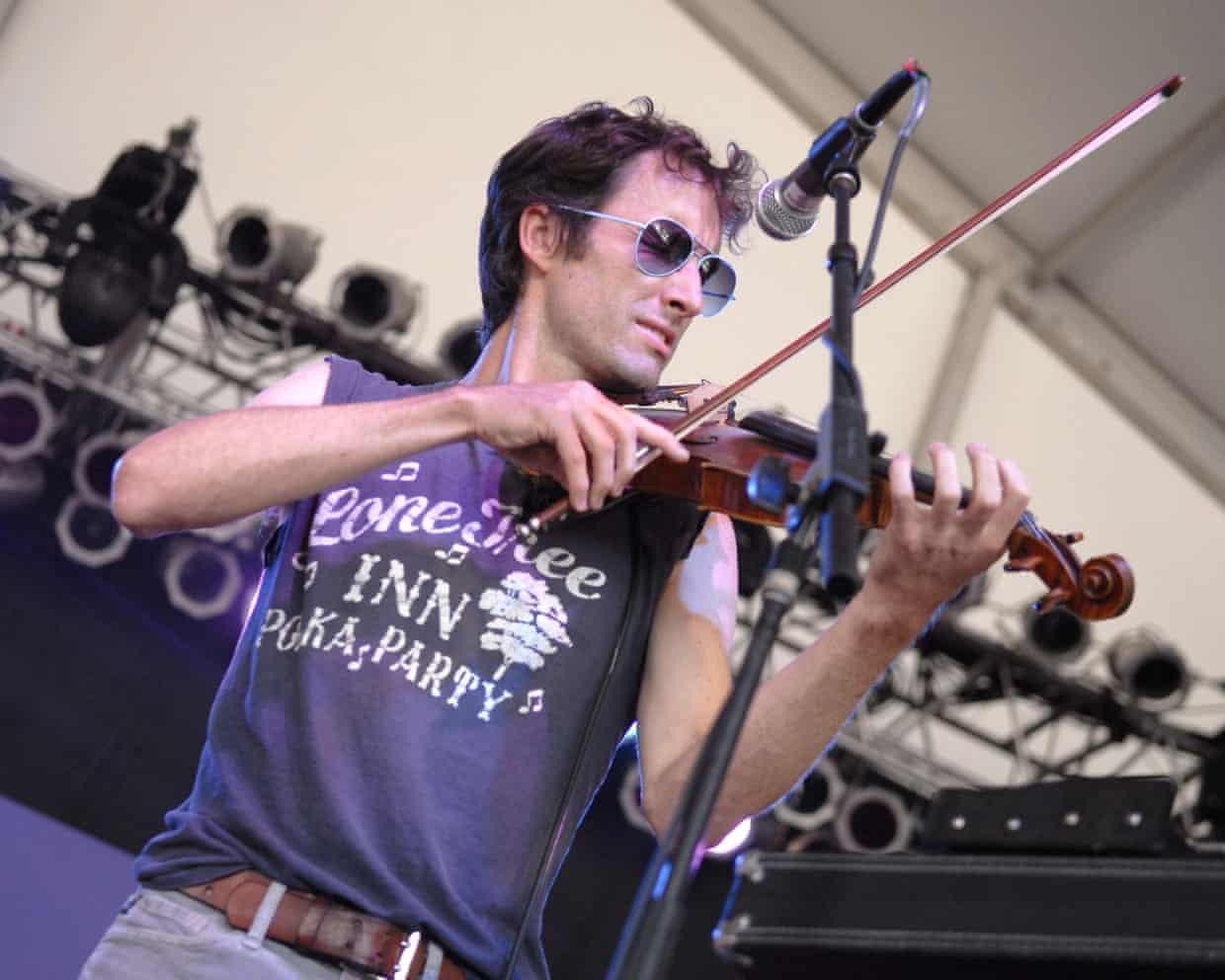
‘Musicians drank too much and slept on my barn floor’: Andrew Bird on making cult album The Mysterious Production of Eggs
We had a family farm three hours west of Chicago, and when I was scoping out potential studio spaces I remembered some barns where my brother and I used to make forts out of hay bales when we were little. One was in rough shape and had racoons living in it, but I got a local carpenter to do the skilled jobs and I did the mundane stuff such as boards for the ceiling. Then I just moved in, but I hadn’t realised how isolating it would be. It was February and snowing and none of my friends had cars. I’d go for two weeks at a time without speaking to anyone

Is the UK’s golden era of free museum entry coming to an end?
For a quarter of a century, visitors to the UK’s national museums and galleries have enjoyed universal free entry to see permanent collections.The policy, introduced by the New Labour government in 2001, has been widely credited with improving access to culture and significantly increasing footfall to some of the country’s best-known attractions.But as funding pressures deepen across the sector, and running costs increase, a policy once treated as untouchable is now under renewed scrutiny.The tension was brought into focus this week, when the National Gallery announced it was to make significant cuts in the face of an £8.2m deficit in the coming year, which could mean fewer free exhibitions, reduced international borrowing of artworks and higher ticket prices

The Guide #231: How the hunt for the next James Bond became the franchise’s best marketing tool
Callum Turner’s turn as James Bond lasted at most a couple of weeks. No sooner had he been enshrined as frontrunner to succeed Daniel Craig, than he was nudged from the DB5 driver’s seat by the latest heir apparent, Jacob Elordi, installed as the new bookies’ favourite after his smouldering, highly profitable performance in Wuthering Heights. Smarting somewhere in the background is Aaron Taylor-Johnson, who seemed locked in for the job a couple of years ago, enjoying the backing of former 007s Pierce Brosnan and George Lazenby, but now seems to have fallen out of favour. And don’t forget the succession of other dead cert Bonds now banished to the back of the odds market: the long-rumoured likes of Tom Hardy and Idris Elba (both now likely to have aged out of the role); Theo James; James Norton; Josh O’Connor; Harris Dickinson; Bridgerton’s Rége-Jean Page; and approximately 5,000 other predominately British actors who have enjoyed box office success/led a successful TV drama/look good in a tuxedo.On and on the hunt goes
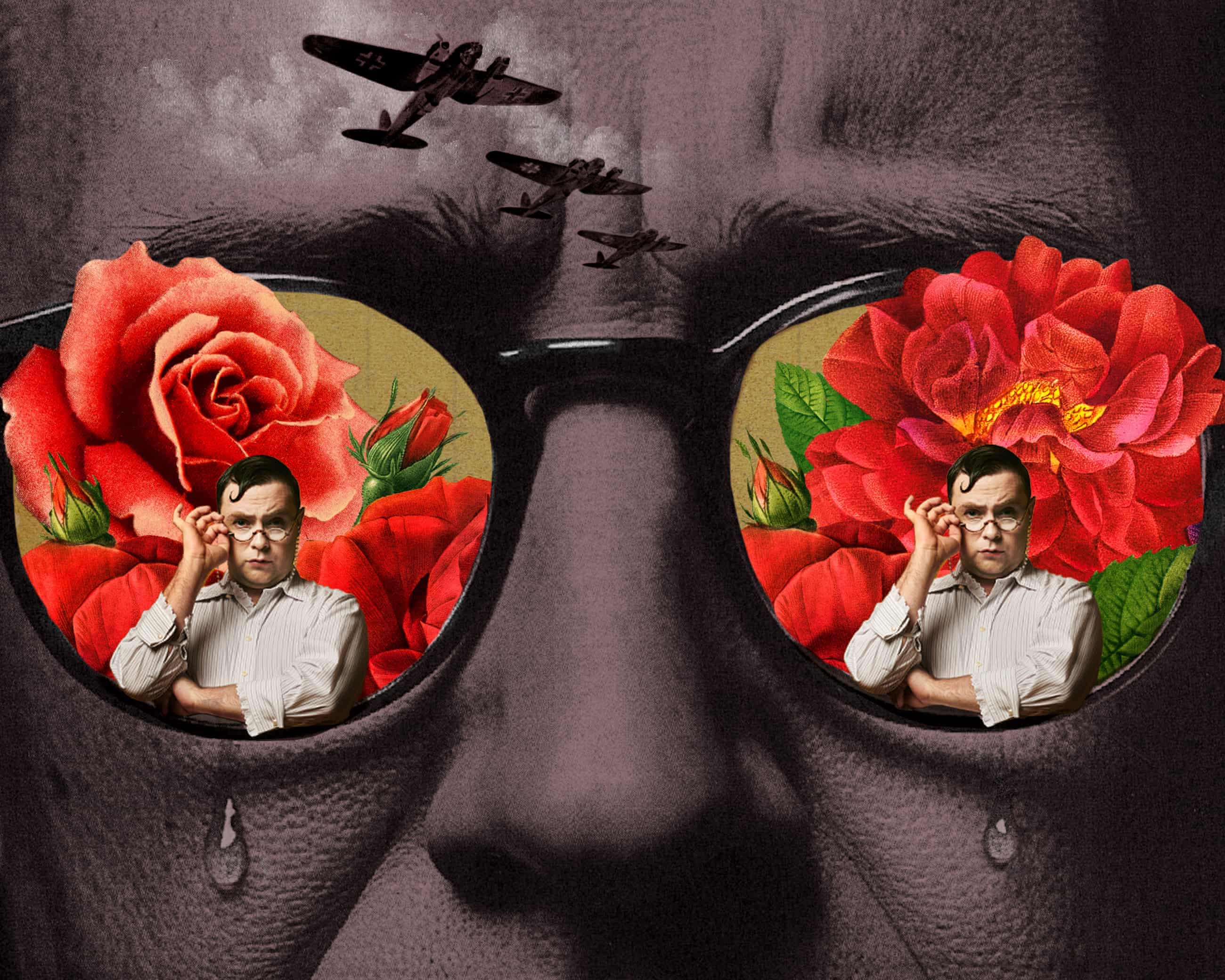
My cultural awakening: Operation Mincemeat taught me how to cry – now I sob at everything
A musical number about a woman’s letter to her husband on the second world war frontline unlocked my ability to blub – and made me a happier personI am sure I must have cried as a child, but by the time I was a teenager it had stopped. It was probably a boarding school thing. Very stiff upper lip. My parents are not the most emotionally available human beings, either. I like to tease them by saying: “I love you

Stephen Colbert on Andrew’s arrest: ‘Let’s hear it for British justice’
Stephen Colbert discussed the arrest of the former prince Andrew and Donald Trump’s confusing new Board of Peace.The Late Show host told the audience of Epstein pal Mountbatten-Windsor’s arrest to a sea of cheers. “Yes, finally, someone, anyone!” he said.He added: “Let’s hear it for British justice, which is better than American justice because it comes with frilly wigs.”Colbert also shared the now viral image captured by a photographer of Mountbatten-Windsor lying back in a car leaving the police station

Reform UK promises to scrap flagship Labour worker and renters’ protections

Populism is plain to see all around us | Letters
Reform UK councillor shared Facebook post saying Labour MP ‘should be shot’

Reform’s Danny Kruger criticises UK’s ‘totally unregulated sexual economy’

Minister under investigation over targeting of reporters makes late donation declaration

Rupert Lowe fails in effort to block investigation by MPs’ watchdog