Maryland becomes first state to ban surveillance pricing in grocery stores

Maryland has become the first state in the US to ban surveillance pricing in grocery stores,Maryland’s law bans grocers and third-party delivery services from using a person’s personal data to set higher prices,Wes Moore, the governor, signed the measure into law on Tuesday,“At a time when technology can predict what we need, when we need it, when we’ll pay for it and also – when we’ll pay more for it, and at a time when we’re watching how big companies are then using these analytics against us to make record profits, Maryland is not just pushing back,Maryland is pushing forward because we are going to protect our people,” Moore said at the bill signing ceremony.
When engaging in surveillance pricing, stores rapidly change the cost of products based on consumer data, including their location, internet search history and demographics.That means buyers are paying different prices for the same items purchased around the same time.Critics of this method – also known as dynamic pricing – say that in doing so, businesses are effectively charging each person the most that they’re willing to pay.While Maryland’s new law focuses on grocery stores, the Federal Trade Commission (FTC) has documented examples of surveillance pricing in stores selling clothing, beauty products, home goods and hardware.Consumer groups note there is an added urgency when it comes to grocery stores, though, given that they affect Americans’ ability to access affordable food.
Bills being considered in Colorado, California, Massachusetts, Illinois and New Jersey may likewise regulate surveillance pricing.The US federal government has weighed in as well.The Federal Trade Commission, under the Biden administration, opened an investigation into these pricing practices and published initial findings from a study last January that found companies use an expansive range of personal data in setting varying prices for buyers.But it’s unlikely the current administration will crack down on surveillance pricing, given that the current FTC chair, Andrew Ferguson, characterized the previous administration’s report as a rush job.It’s in this context of federal inaction, that states like Maryland need to take action says Tom McBrien, counsel at the Electronic Privacy Information Center (Epic).
Anti-surveillance advocates say the new law is riddled with industry carveouts that will make it harder to protect consumers.They welcomed Maryland’s focus on the practice but say they are concerned about loopholes inserted as a result of industry lobbying.“We’re excited Maryland took this step but we do have serious concerns,” McBrien says.“The exemptions allow other ways of arriving at the same outcome that are just harder for consumers to detect.”Maryland’s law includes exemptions for loyalty programs and promotional offers.
While the law bans setting higher prices through surveillance pricing, it doesn’t address reducing prices,If a company raises its prices for everyone, and then offers individualized discounts, “suddenly you’ve arrived at the same outcome,” McBrien says,Consumer Reports, a non-profit which investigated Instacart’s pricing, said in a statement that it appreciated Moore prioritizing the issue but decried the law’s “weak enforcement provisions”,“We urge Maryland lawmakers to revisit the legislation next year to build in stronger consumer protections and remove loopholes that undermine the intent of this law,” it said,Instacart announced it would no longer be using technology that allows grocery stores to charge different shoppers different prices for the same groceries after a Consumer Reports investigation last year exposed the practice.
A statement from Instacart read: “Instacart has never engaged in that practice, and we support this legislation’s core principle: that prices should never be personalized based on a customer’s individual data.”The harshest critics of Maryland’s new law believe it does not just lack enforcement but erodes existing rights.They point, in particular, to a provision that only allows the state’s attorney general – and not individuals – to enforce the law.“The private right of action is a fundamental piece of accountability,” says Lee Hepner, senior legal counsel at the American Economic Liberties Project.“A meaningful threat of enforcement is the only effective deterrent to violating the law.
”“The biggest threat of the Maryland bill is that other states will see it as a model bill that they should replicate in their own jurisdictions,” Hepner says.“It is very important for us – as we try to get this legislation right in states from Colorado to California to New York – that the Maryland bill not be held up as a model, but in fact be recognized as an industry-written permission slip to engage in ongoing discrimination.”

If you’re not Thames, the water looks lovely for investors | Nils Pratley
Thames Water, with occasional cameos by ugly little siblings Southern Water and South East Water, grabs most of the attention in the sector for obvious reasons. So it’s easy to overlook what’s happening further north. Short answer: the new era of higher bills and higher spending on water infrastructure will feel splendid if you’re United Utilities, licence-holder in north-west England, or Severn Trent, operating in the Midlands.The former’s share price surged 11% on Thursday, the sort of thing that shouldn’t happen at a utility where success is meant to be defined in terms of dull predictability. And it’s definitely unusual to see a one-day valuation jump of that size when the company is issuing £800m-worth of new shares

Bank of England warns ‘higher inflation unavoidable’ after holding interest rates
The Bank of England has left interest rates unchanged at 3.75% but said the UK may need to brace for increases later this year, as “higher inflation is unavoidable” as a result of the war in the Middle East.The Bank’s rate-setting monetary policy committee (MPC) voted to leave borrowing costs on hold, but said that if energy costs stayed persistently high it might have to take a more “forceful” response to keep inflation under control.The nine-member MPC was split 8-1 in its decision to keep borrowing costs on hold for the third consecutive meeting.Andrew Bailey, the governor of the Bank of England, said: “Where we go from here will depend on the size and duration of the shock to energy prices” as the conflict in the Middle East evolves

Musk faces third day of questioning in contentious trial over OpenAI’s founding
Elon Musk’s court case against Sam Altman continues on Thursday, after a day of contentious exchanges during OpenAI’s cross-examination of the Tesla CEO. Musk will face another round of questioning before his lawyer calls more witnesses, including OpenAI’s president, Greg Brockman.Witness testimony and evidence has revealed formerly private emails, text messages and diary entries surrounding the formation of OpenAI, giving a behind-the-scenes look at how the tech behemoth was created. Many of the tech industry’s most powerful players are named as witnesses and will give their account on the origins of Musk and Altman’s bitter feud. Altman is set to testify later in the trial, which will last three weeks

AI outperforms doctors in Harvard trial of emergency triage diagnoses
From George Clooney in ER to Noah Wyle in The Pitt, emergency department doctors have long been popular heroes. But will it soon be time to hang up the scrubs?A groundbreaking Harvard study has found that AI systems outperformed human doctors in high-pressure emergency medicine triage, diagnosing more accurately in the potentially life and death moments when people are first rushed to hospital.The results were described by independent experts as showing “a genuine step forward” in the clinical reasoning of AIs and came as part of trials that tested the responses of hundreds of doctors against an AI.The authors said the results, published in the journal Science, showed large language models (LLMs) “have eclipsed most benchmarks of clinical reasoning”.One experiment focused on 76 patients who arrived at the emergency room of a Boston hospital

Is this the end for LIV? Where does Saudi withdrawal leave golf and the players?
Can LIV find new backers and what are the options for Bryson DeChambeau, Jon Rahm, Lee Westwood and others?Confirmation that Saudi Arabia’s Public Investment Fund will cease funding the LIV Golf tour will have huge ramifications, for the future of the tour itself, the players and across golf’s traditional heartlands. Where does PIF’s withdrawal leave them all?Certainly in its present form, as a 14-event entity worth $30m per tournament. LIV was entirely reliant on Saudi Arabian money, to the tune of more than $5bn since 2021. The cash burn rate, albeit slowed down recently, has always been unsustainable.It is feasible that Scott O’Neil, LIV’s chief executive, will find backers for the business at a level which means it can be prolonged in some way

LIV Golf races against time for investment with confirmation Saudi funding will end in 2026
LIV Golf’s race to secure at least a watered-down future is formally under way after Saudi Arabia’s Public Investment Fund (PIF) confirmed it will cease to fund the breakaway circuit at the end of this year. Fears over LIV’s existence are inescapable given the PIF has bestowed in excess of $5bn on the tour since 2021. Tournaments started in the following year; there is a very real chance the 2026 season will prove LIV’s last.LIV had already confirmed appointment of new board members, aimed with the specific task of raising finance, by the time the PIF stipulated its position on Thursday. “PIF has made the decision to fund LIV Golf only for the remainder of the 2026 season,” read a statement

The chips are down: pizza, fried chicken and doughnut shares plunge on ASX as living costs bite budgets
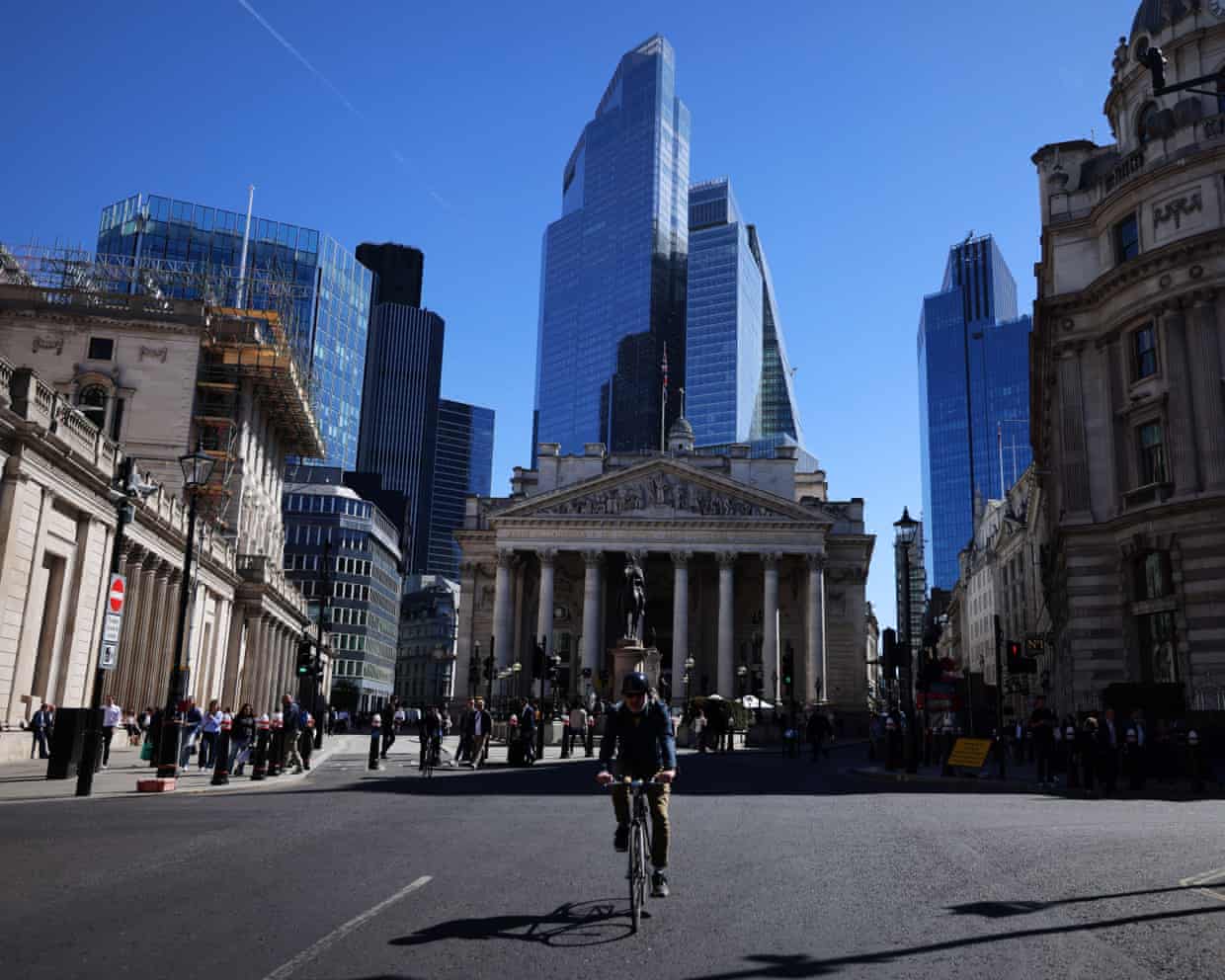
Bank of England leaves interest rates on hold with committee split 8-1; ECB also keeps rates steady – as it happened

Calls grow to ban Palantir in Australia after manifesto described by UK MP as ‘ramblings of a supervillain’

Galaxy S26 review: Samsung’s still-compact flagship Android
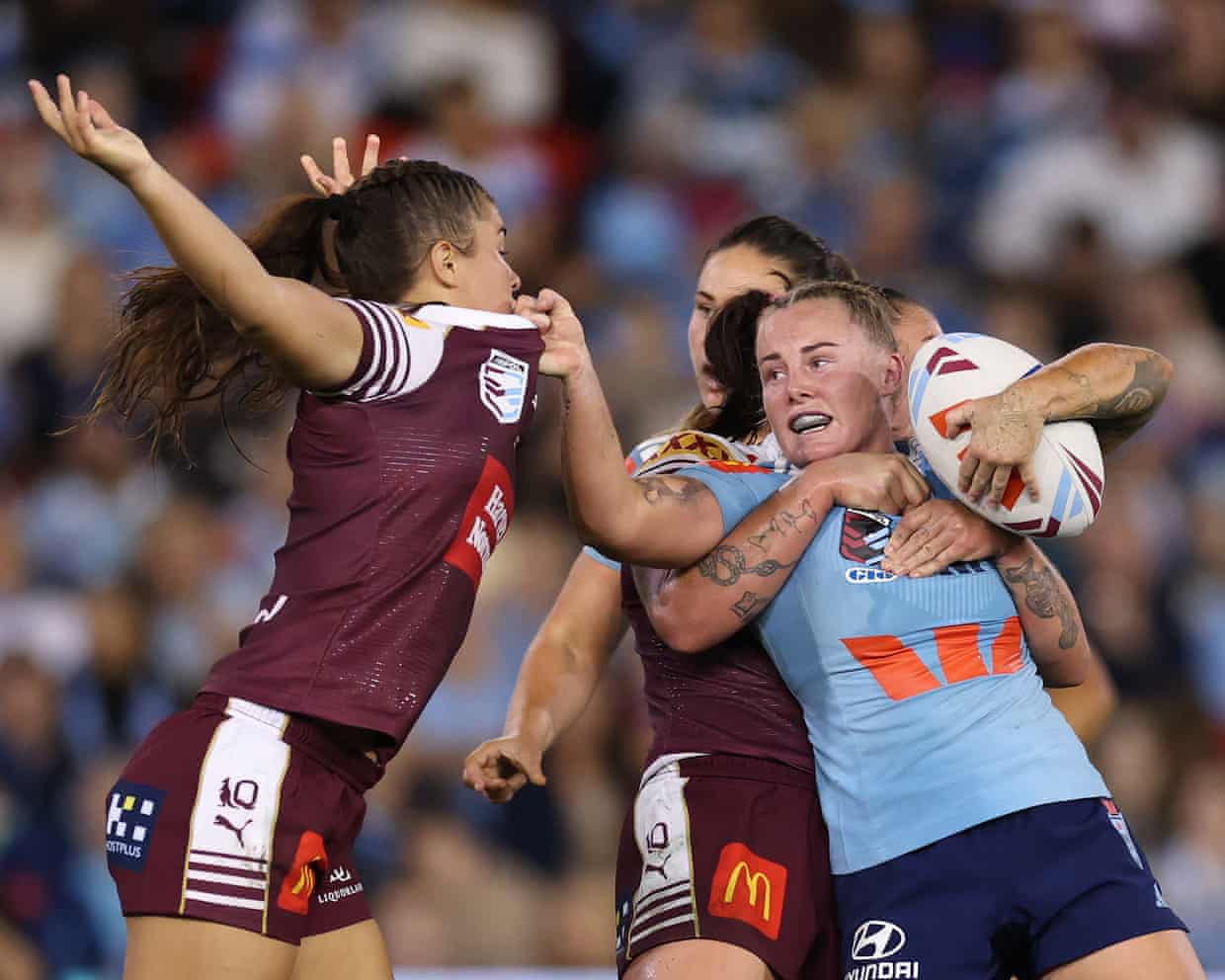
Blues win Women’s State of Origin opener in fast fight with Maroons – as it happened

Marauding Blues hold off luckless Maroons to take Women’s Origin series lead