Bank of England leaves interest rates on hold with committee split 8-1; ECB also keeps rates steady – as it happened
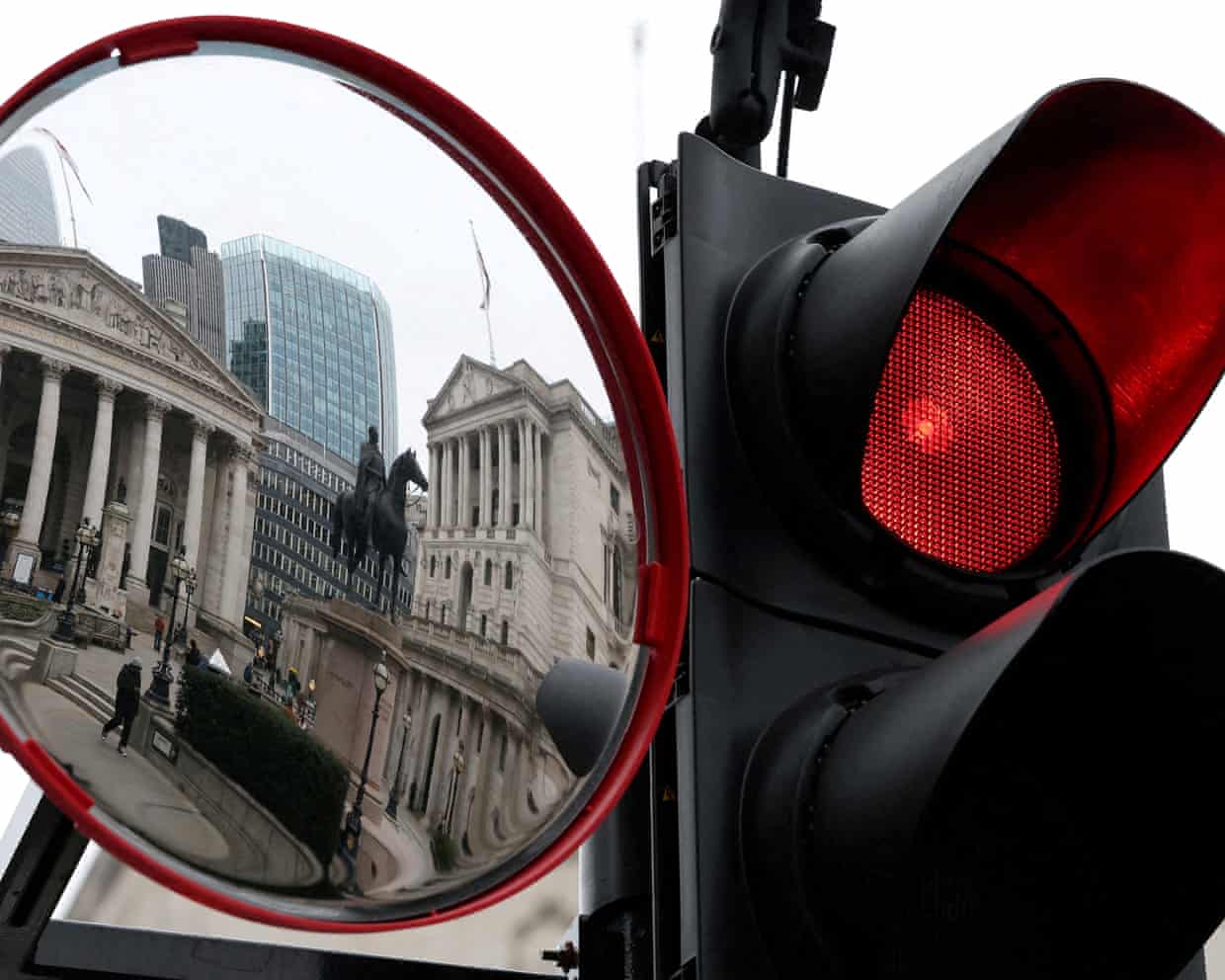
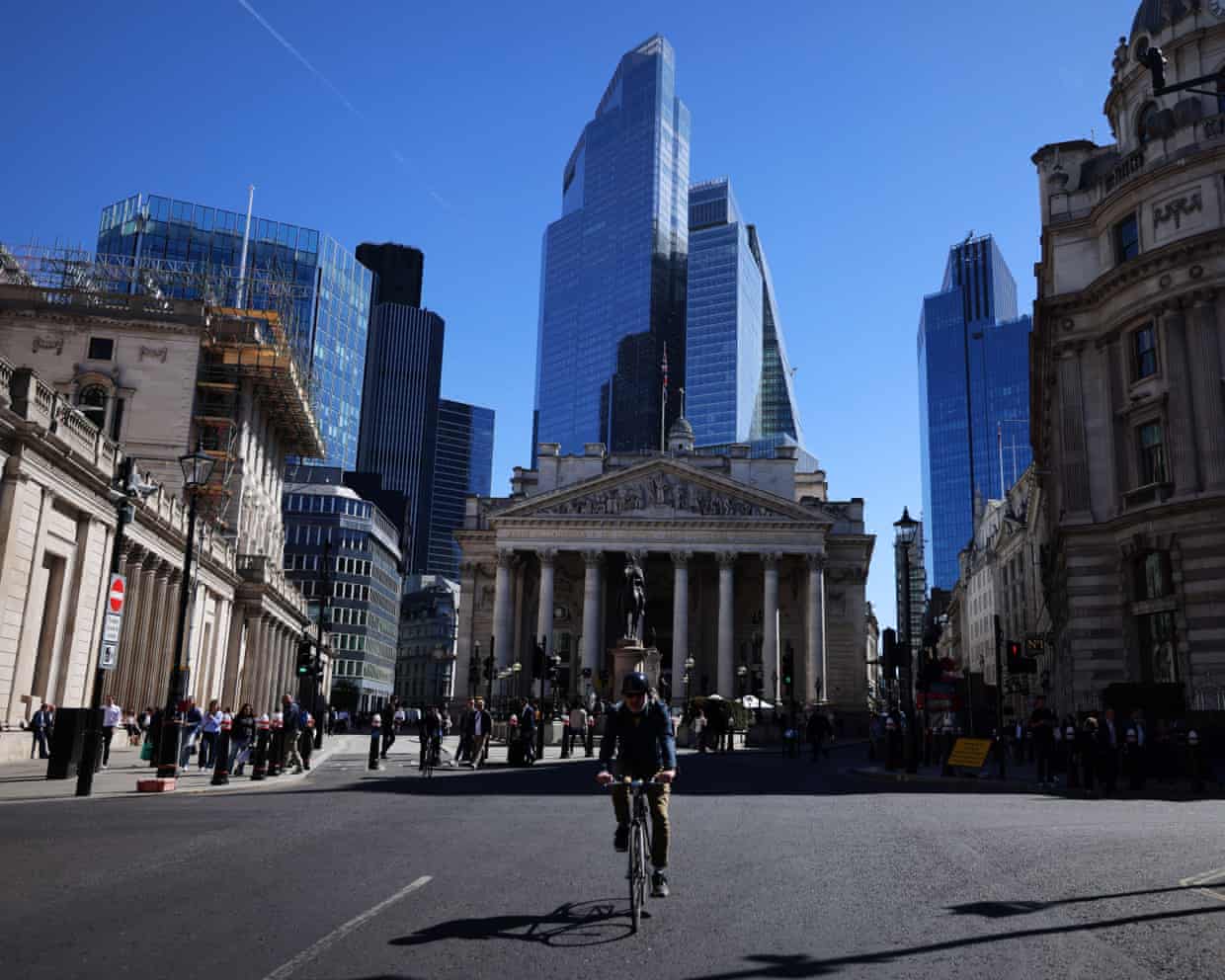
The Bank of England has left interest rates unchanged at 3.75%.The central bank’s rate-setting monetary policy committee (MPC) voted to leave borrowing costs on hold at noon, after its latest meeting.The vote by the nine-member committee to keep rates on hold was split eight to one.The Bank’s chief economist Huw Pill voted for a rate hike to 4%.
The Bank is charged with keeping UK inflation at a target of 2% in the medium term,It has lowered interest rates six times since mid-2024, and had been expected to cut again this year before the US-Israeli war on Iran began on 28 February,However, soaring energy costs as a result of the effective closure of the strait of Hormuz have began to push up inflation around the world,Inflation in the UK rose to 3,3% in March, from 3% in February.
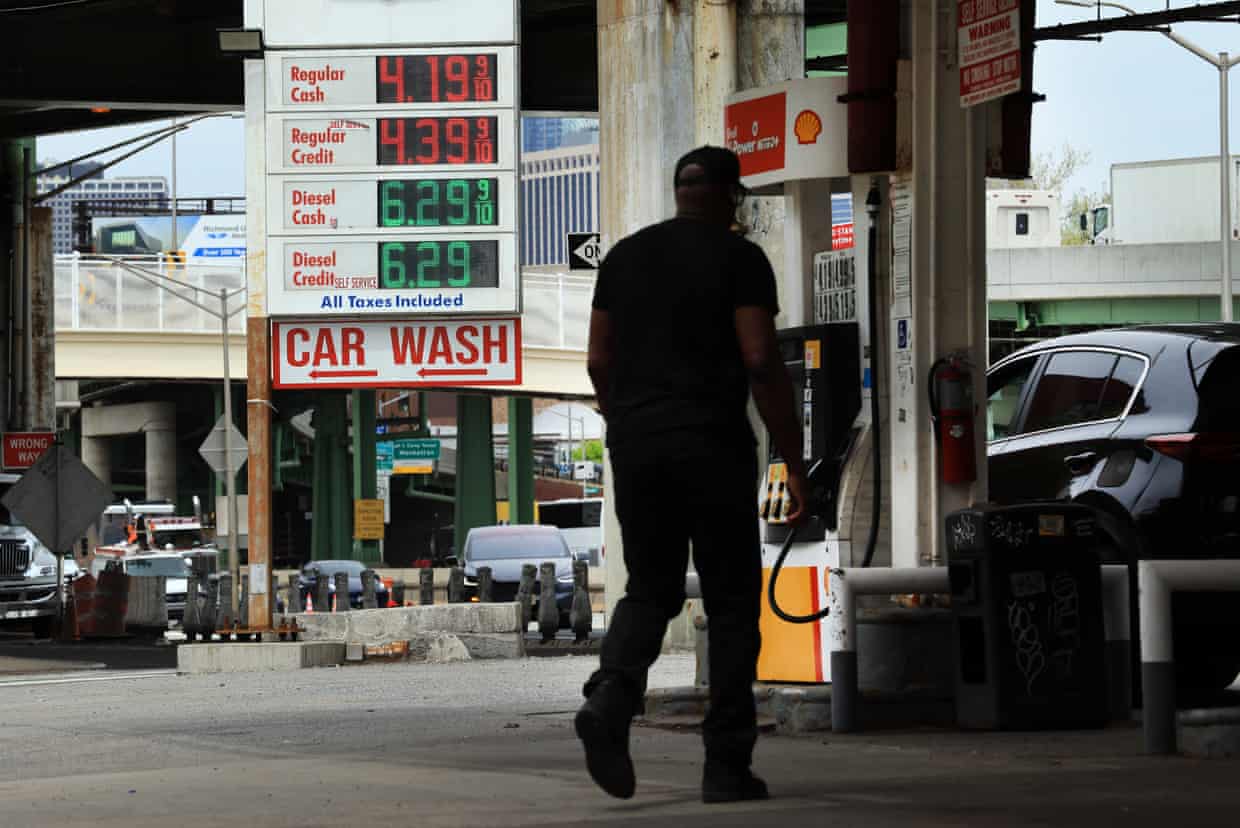
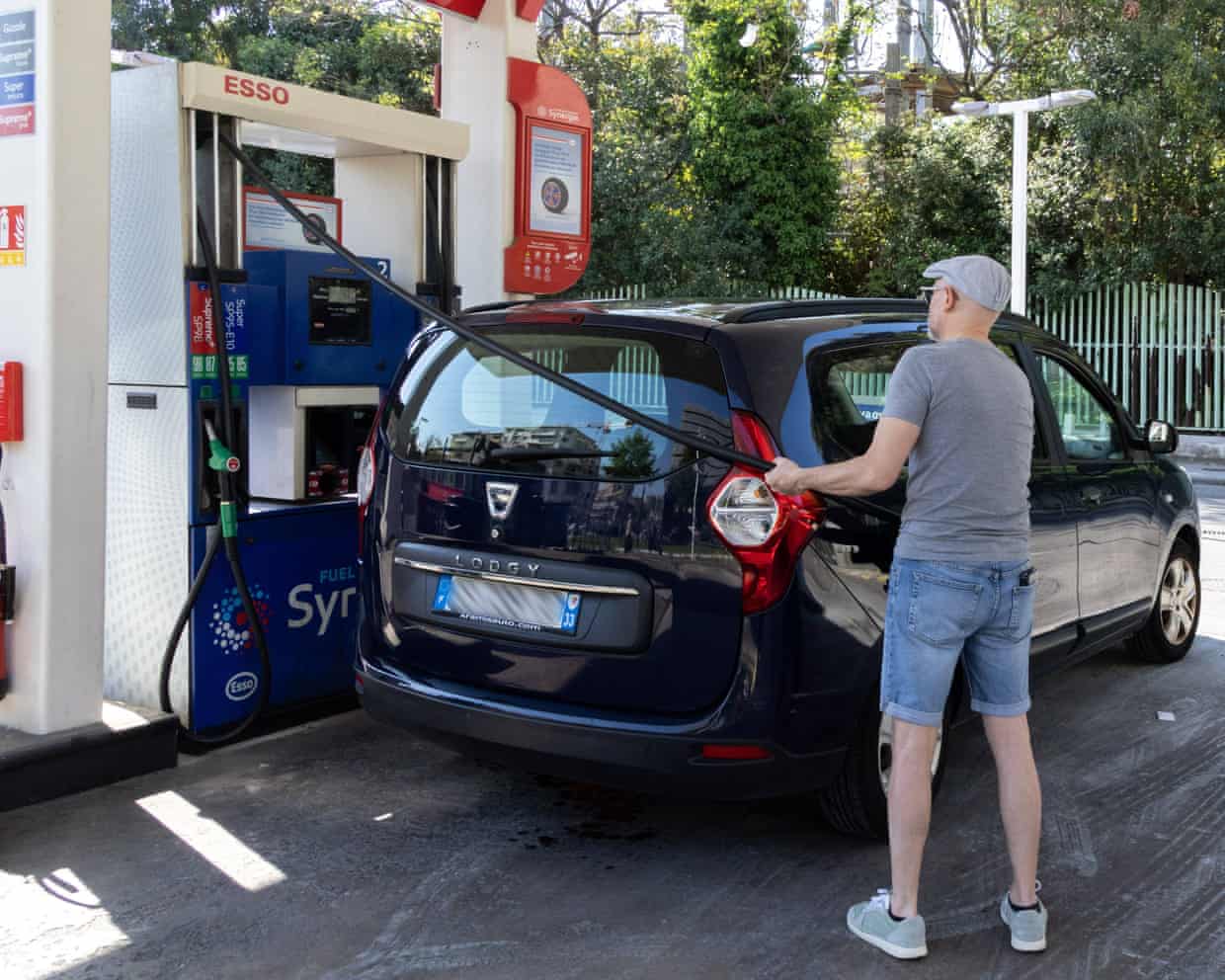
Petrol and diesel prices have soared since the start of the Middle East conflict, reflecting a jump in the global oil price to above $100 a barrel.The Bank of England has left interest rates unchanged at 3.75% but warned that the UK may need to brace for hikes later this year, as “higher inflation is unavoidable” as a result of the war in the Middle East.The Bank’s rate-setting monetary policy committee (MPC) voted to leave borrowing costs on hold on Thursday, with its nine-member committee split 8-1 in their decision.Andrew Bailey, the governor of the Bank of England, said: “The war in the Middle East is causing inflation to rise again this year.
”He added that the policymakers were monitoring the global situation and its impact on the UK economy “very closely”, but that the decision to hold rates at 3.75% for now is a “reasonable place given the situation of the economy and the unpredictability of events in the Middle East”.Financial markets are expecting a rate rise by the end of July, and another one by the end of the year.Investec economist Sandra Horsfield explained:double quotation markThe market reaction has been considerable: the market has scaled back its expectations of BoE rate hikes, now pricing in 62 basis points of rate increases by the end of this year, whereas shortly before the decision, it had priced in over 70bps of hikes.This reflects less the policy decision today and more the message the monetary policy committee sent about how it sees policy evolving from here: the MPC did not send as strong a warning about potential future rate hikes as markets had priced in.
The European Central Bank also left interest rates unchanged as expected but discussed a rate hike “at length”,The bank, which sets interest rates for the 21 countries that are in the eurozone, signalled mounting concerns over soaring inflation, leading to market epectations of several rate hikes this year, with the first move expected in June,Oil prices have retreated after a 7% jump earlier,Brent crude is down 2,9% at $114.
65 a barrel, after rising as high as $126.41 a barrel this morning.Our other stories:Thank you for reading.We’ll be back tomorrow.Take care! – JKMore thoughts on the ECB from Felix Feather, an economist at Aberdeen.
double quotation markJust a month ago, markets were pricing in an 80% chance of the European Central Bank delivering a hike at today’s meeting.That chimed with the very hawkish communications key ECB officials were delivering at the time, which often drew parallels between the 2022 energy shock and today’s.But in the end, the decision to hold the deposit rate at 2% came as no surprise to either our forecasts, consensus, or market pricing, which priced an 8% change of a hike.Certainly, the energy shock hasn’t unwound as hoped.At time of writing, brent crude prices sit above $116 a barrel.
And many of the waymarks to hiking laid out by ECB chief economist Phillip Lane have been hit.Surveyed household inflation expectations, firm selling price expectations, the PMI output prices subindex, and headline inflation have all moved sharply higher over the past month.But weak activity data has prompted key ECB officials to soften their rhetoric for fears of impairing the demand side.We see the ECB eventually hiking this year, probably multiple times.But soft demand and tighter financial conditions could help attenuate the passthrough of higher costs to consumer prices.
Here’s some analysis from our economics editor Heather Stewart:The message to the UK’s crisis-weary households from the Bank of England is: brace yourself for Trumpflation – and the higher interest rates it may yet take to rein it in,Reading the Bank’s quarterly monetary policy report, it is not difficult to understand the fury Rachel Reeves expressed while in Washington this month at the “folly” of the US president’s war on Iran – its economic consequences will hit the UK hard,As a result of the conflict and the resulting rise in oil and gas prices, the Bank reckons average mortgage repayments are to rise by £80 a month; food price inflation could hit 4,6% by the autumn; and utility bills will jump in July and remain high into the winter,Overall inflation is now expected to peak above 3.
5% by the end of this year: more than a percentage point higher than the Bank’s pre-war forecasts.In its worst-case “scenario C”, in which oil prices hit $130 a barrel and remain there for a prolonged period – alarmingly plausible given Donald Trump’s latest erratic pronouncements – inflation peaks above 6%.In this higher oil price world, interest rates may have to be raised by more than 1.5 percentage points, to at least 5.25%.
Despite this inflation shock, monetary policymakers have opted not to raise rates yet, with the Bank’s hawkish chief economist, Huw Pill, the only dissenter on the nine-member committee.But their reasons are hardly comforting, pointing to the weakness of the UK’s battered economy in the face of this latest crisis.The rate-setters’ main concern is not the energy price shock, which they cannot alter; but “second-round effects”, under which firms raise prices and workers negotiate pay rises, to offset higher costs, causing inflation to be embedded in the wider economy.As for the Bank of England, financial markets are expecting a rate rise by the end of July, and another one by the end of the year.Ruth Gregory, deputy chief economist at Capital Economics, said:double quotation markThe Bank of England’s further hawkish tilt while leaving interest rates unchanged at 3.
75% suggests the chances of near-term rate hikes are rising.If oil prices fall back to about $95 a barrel as in our baseline scenario, our best guess is that rates will remain at 3.75% this year.But one or two hikes in the coming months are certainly possible, especially if energy prices stay around $115 a barrel, or rise even further.Max Stainton, senior global macro strategist at Fidelity International, has sent us his thoughts on the ECB.
double quotation markThe ECB took a balanced tone as they monitor the uncertain fallout of the energy price shock, with both a hike and hold debated – but ultimately a wait and see approach was seen as justified,The decision to hold was made against the backdrop of only marginally more information relative to March with the news flow over the next six weeks providing more clarity on how the shock is playing out,We see the ECB hiking in the near term, to lean against the inflationary impulse of higher energy prices and supply chain disruptions in order to contain potential second round effects and ensure that the ECB clearly commit to reining in inflation,June will provide a further round of projections and scenarios, leaving them in a better position to act,Inflation expectations and forward-looking wage developments will be closely monitored going forward - with the inflation outlook for this year already likely pointing to a higher path relative to the March forecasts.
Prada Group revealed that retail sales in the Middle East slumped by more than a fifth in the first quarter of the year as the Iran conflict “weighed on both domestic and tourist spending”.The luxury group, which owns Versace and Miu Miu as well as its namesake label, said the poor performance in the market, as well as a 6% fall in Europe and a 2% in Japan had been offset by strong growth to wholesale partners and in the Americas and the Asia Pacific region beyond Japan so that total sales rose by 3% to €1.4bn.Patrizio Bertelli, the chairman of Prada Group, said:double quotation markWe are navigating a highly complex environment, marked by persistent uncertainty and rapidly evolving geopolitical dynamics.The European Central Bank left interest rates unchanged as expected but discussed a rate hike “at length”.
The bank, which sets interest rates for the 21 countries that are in the eurozone, signalled mounting concerns over soaring inflation, leading to market epectations of several rate hikes this year, with the first move expected in June.Inflation jumped to 3% this month, well above the bank’s 2% target, and is likely to rise further as the Iran war has pushed oil prices to a four-year high.ECB president Christine Lagarde said the final decision to hold rates was unanimous but told a press conference that a possible rate hike had been discussed “at length” by policymakers.“We made an informed decision based on as-yet insufficient information,” she said, adding that the next meeting in June would be the “right time” for a new assessment.double quotation markThere is such uncertainty that we need to understand and revisit that at our next policy meeting.
We are certainly moving away from our baselineshe said, referring to a scenario for an early end to the war and a limited energy shock,Earlier, the ECB said in a statement that upside risks to inflation and downside risks to growth had both intensified,Money markets are pricing in roughly three quarter point rate increases this year,Some economists think the energy shock could cut as much as 0,5 percentage point off economic growth – about half of the bloc’s projected expansion in the coming year, Reuters reported.
The second quarter is already looking dismal due to the Iran war, and the currency bloc’s biggest economy, Germany, could even contract after 0.3% growth in the first quarter.However, Lagarde said the notion of “stagflation” does not apply at the moment.“That is a term better to be parked in the 1970s,” she said in response to a question.Thomas Ryan, North America economist at Capital Economics, said US growth was boosted by a 9.
3% rebound in federal expenditure, which mostly reversed the large contraction in the previous quarter caused by the record-long government shutdown.double quotation markThe modest slowdown in consumption growth to 1.6% annualised, from 1.9%, was not as bad as we had feared..
.The only drag came from January, when unseasonably severe winter weather hit real consumption, though this does not point to a strong rebound this quarter as the dampening effects of high gas prices on discretionary spending will be felt more.Elsewhere, the standout was the 10% annualised gain in business investment, driven by a 17% surge in equipment spending and a 13% rise in intellectual property products spending.Strength across these two categories mostly reflect the rapid rollout of AI-related infrastructure and models.Finally, we also learned today that the total PCE deflator surged by 0.
66% month on month in March, lifted by higher gasoline prices,The core PCE deflator rose at a cooler but still-above target 0,29% month on month pace, pushing the annual rate up to 3,2%, from 3,0%.
Core inflation is moving in the wrong direction as far as the Fed is concerned, helping to explain why some regional bank presidents want the FOMC to drop its easing bias.We expect the Federal Reseve to remain on hold this year, in line with current money market pricing.Meanwhile, the US economy grew at a faster rate at the start of the year, fuelled by business and consumer demand.Gross domestic product increased an annualised 2% in the first quarter, up from 0.5% in the previous three months, according to an initial estimate from the Bureau of Economic Analysis.
A prolonged federal government shutdown limited growth in the final months of 2025.Consumer spending, which accounts for two-thirds of economic activity, increased at a better-than-expected 1.6% rate, driven by demand for services.Business spending on equipment rose 10.4%, the fastest pace in almost three years, underpinned by investment in artificial intelligence technology.
To sum up, Bank of England governor Andrew Bailey said interest rates are not necessarily going up.It will depend on the size and duration of the energy price shock and how that is affecting UK inflation and the rest of the economy.But, interest rate hikes may well become necessary, given the rate-setting committee’s judgment that “higher inflation is unavoidable”.The European Central Bank has kept interest rates unchanged, and noted that “the upside risks to inflation and the downside risks to growth have intensified”.Like the Bank of England, it is charged with ensuring inflation is around 2% in the medium term.
The ECB said in a statement:double quotation markThe war in the Middle East has led to a sharp increase in energy prices, pushing up inflation and weighing on economic sentiment,The implications of the war for medium-term inflation and economic activity will depend on the intensity and duration of the energy price shock and the scale of its indirect and second-round effects,The longer the war continues and the longer energy prices remain high, the stronger is the likely impact on broader inflation and the economy,Asked whether interest rates are definitely going up, the Bank of England governor said the most benign scenario A “is not there for decoration”,double quotation markI would very much give the message: no, it is not the case that we’re giving some sort of slightly clandestine message that interest rates are going to go up, notwithstanding what we’ve decided today