How was Elijah Hollands allowed to keep playing during a ‘mental health episode’? | Jonathan Horn
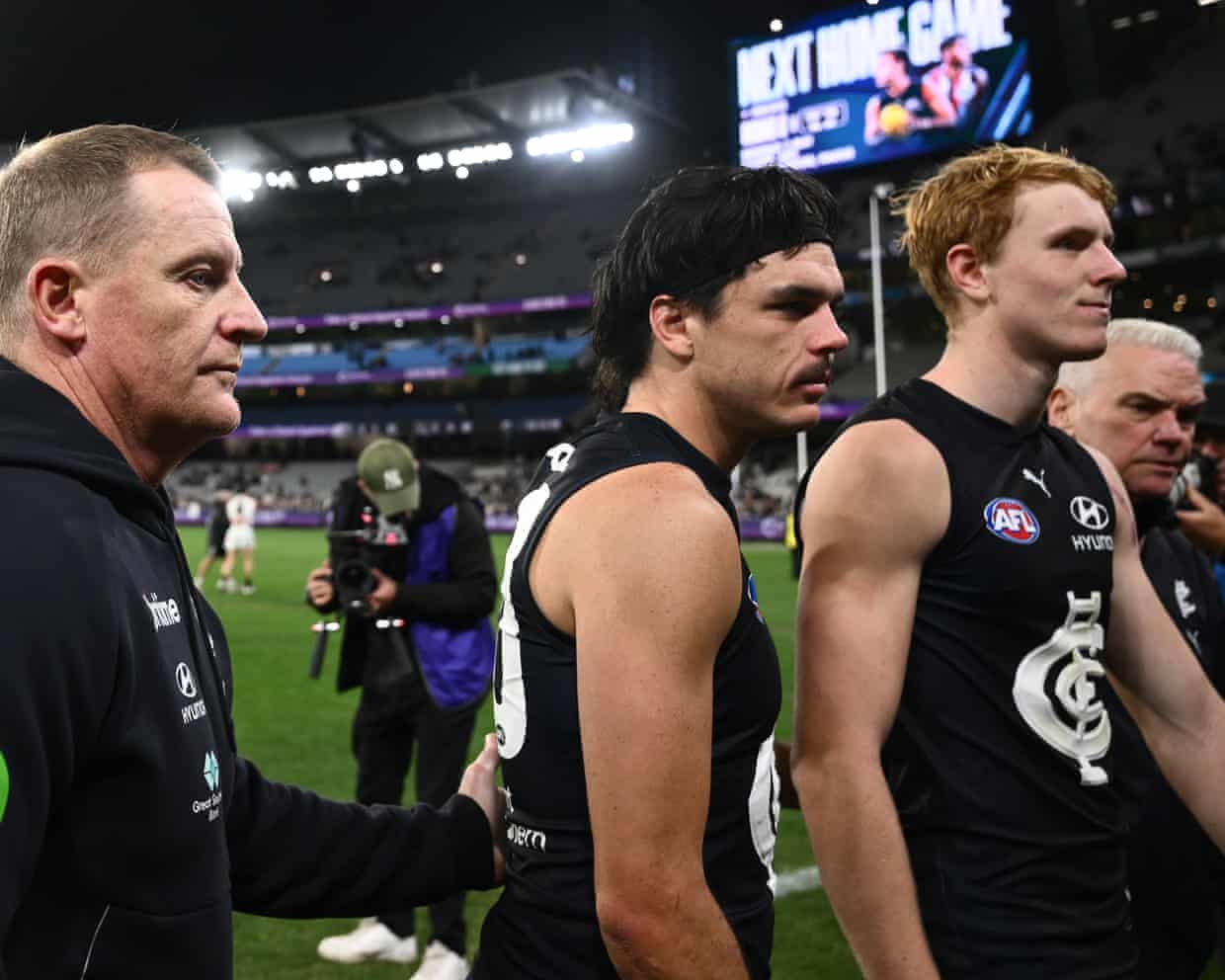
The weekend of football threw up great dollops of drama and pathos.One of the tallest and most talented players in the sport buckled like a stricken baby giraffe.Arguably the best footballer in Australia was blanketed by an Irishman.The heart and soul of his club copped a knee to the head that may spell the end of his career.In Adelaide, 46,000 people stood to acknowledge a family that had lost a brother and a son.
We see variations of that every weekend,We see knee injuries and head knocks,We see teams squander winning leads,We see coaches fighting for their jobs,We see the brilliance of players like Nick Daicos, Nick Watson and Jeremy Cameron.
It’s all neatly packaged, all easily explained, and all what keeps drawing us back,What we almost never see, and what’s harder to manage, to diagnose and to articulate, is what took place at the MCG on Thursday night,It didn’t come through the filtered lens of the host broadcasters or the curated feeds of the club itself, but through grainy footage from high in the stands,A few years ago, I watched a friend’s son play in a school game and was immediately drawn to a kid floating across half forward,About half a dozen players in that match ended up being drafted, several in the very hit and miss “Covid draft.
” But Elijah Hollands, who kicked six goals, was the one who stood out.He had what coaches called “the footy chip”.He had the spatial and situational awareness of a much older player.It was obvious at certain times this year as well, especially in the Good Friday game, that he was the only Carlton player you trusted with the ball in his hand.From the moment the footage was uploaded on Thursday night, there was speculation as to what had happened – that he’d been drinking, that he’d taken illicit drugs, that he’d taken the wrong dose of prescription drugs, that he’d had a panic attack.
His coach said he had an “off night”.The investigation will now be led by Laura Kane.There will be discussion about the AFL’s illicit drugs policy, especially from those who believe it is too lenient.There will be calls for a “Men’s Health Round” and to “get around one another”.But most of that will miss the point, and dodge the core questions we should be asking – how was a footballer in such a vulnerable state allowed to keep playing? Where was the leadership, both on and off the field? How, in an environment where heart rates, heat maps, statistical printouts and wellness markers are constantly being pored over, could this have slipped through? How could a senior coach who operates from down on the bench with the primary objective of “building greater connection with his players” be so blasé when answering questions about what had occurred? How, in an environment that must rank among the most cosseted in the modern workplace – with an army of doctors, nurses, physios, psychologists, concussion spotters and line coaches at the ready – could he have been allowed to play in that condition? Why, when so many key people seemed to have missed or ignored the red flags, was it almost immediately picked up by punters in the nosebleeds section? And why can’t the CEO offer a better explanation than “we’re looking into it”?Footballers and sportspeople suffering from extreme anxiety is nothing new.
In 2013, Mitch Morton said he would regurgitate his food before every training session and before every one of his 83 games.Prior to the 2012 grand final, a game he played a key role in, he didn’t sleep for three nights.Gavin Crosisca, a premiership teammate of Carlton’s CEO, self-medicated throughout his career, often on the day of games, with amphetamines and alcohol.Before games, James Hird would stand at the top of the race and lick his palms, a portrait of self-assuredness.But it was a construct.
He almost never slept before games, and would agonise all night about playing poorly and being exposed in front of so many people.All hid it well.All coped in ways befitting the era they played in and the men they played under.But footballers, and young people generally, are so much more open about discussing their challenges than the generations that preceded them.We saw it when Bailey Smith received his All Australian blazer last year.
We saw it in an interview Hollands did with the Age’s Peter Ryan, which was well handled by both parties, in which he spoke about self-medicating and panic attacks.Anyone who’s had a panic attack, or a “mental health episode”, whether it takes place in their living room, on a crowded train or in front of 80,000 people at the MCG, knows about the helplessness, the terror and the embarrassment.The crucial thing is to have someone in the room, or in the vicinity, who immediately assesses what is happening and who is calm, firm and compassionate.Football clubs often speak of the care they provide “within the four walls”.And that’s beyond dispute.
What matters most however is the care they provide outside of the four walls.What matters most is the care they provide in the most naked environment imaginable – a full stadium, a TV audience of millions, and a pitiless social media ecosystem.That’s when vulnerable players are most in need of protection – with decisive action from a teammate, a medical professional, a coach, even an executive in the stands.Any investigation into Thursday night’s events at the MCG has to ascertain whether the club fulfilled its duty of care.
Finance leaders warn over Mythos as UK banks prepare to use powerful Anthropic AI tool
British banks will be given access in the next week to a powerful AI tool that was deemed too dangerous to be released to the public, as a series of senior finance figures warned over its impact.Anthropic, which has so far limited the release of the new model to a small clutch of primarily US businesses, including Amazon, Apple and Microsoft, said it would expand that to UK financial institutions.“That is in the very near term, in the next week,” Pip White, Anthropic’s head of UK, Ireland and northern Europe operations, said in a Bloomberg TV interview. “As you would expect, the engagement I have had from UK CEOs in the last week has been significant.”Anthropic, which is the company behind the Claude family of AI tools, has said that its latest model, Mythos, poses an unprecedented risk because of its ability to expose flaws in IT systems
US tech firms successfully lobbied EU to keep datacentre emissions secret
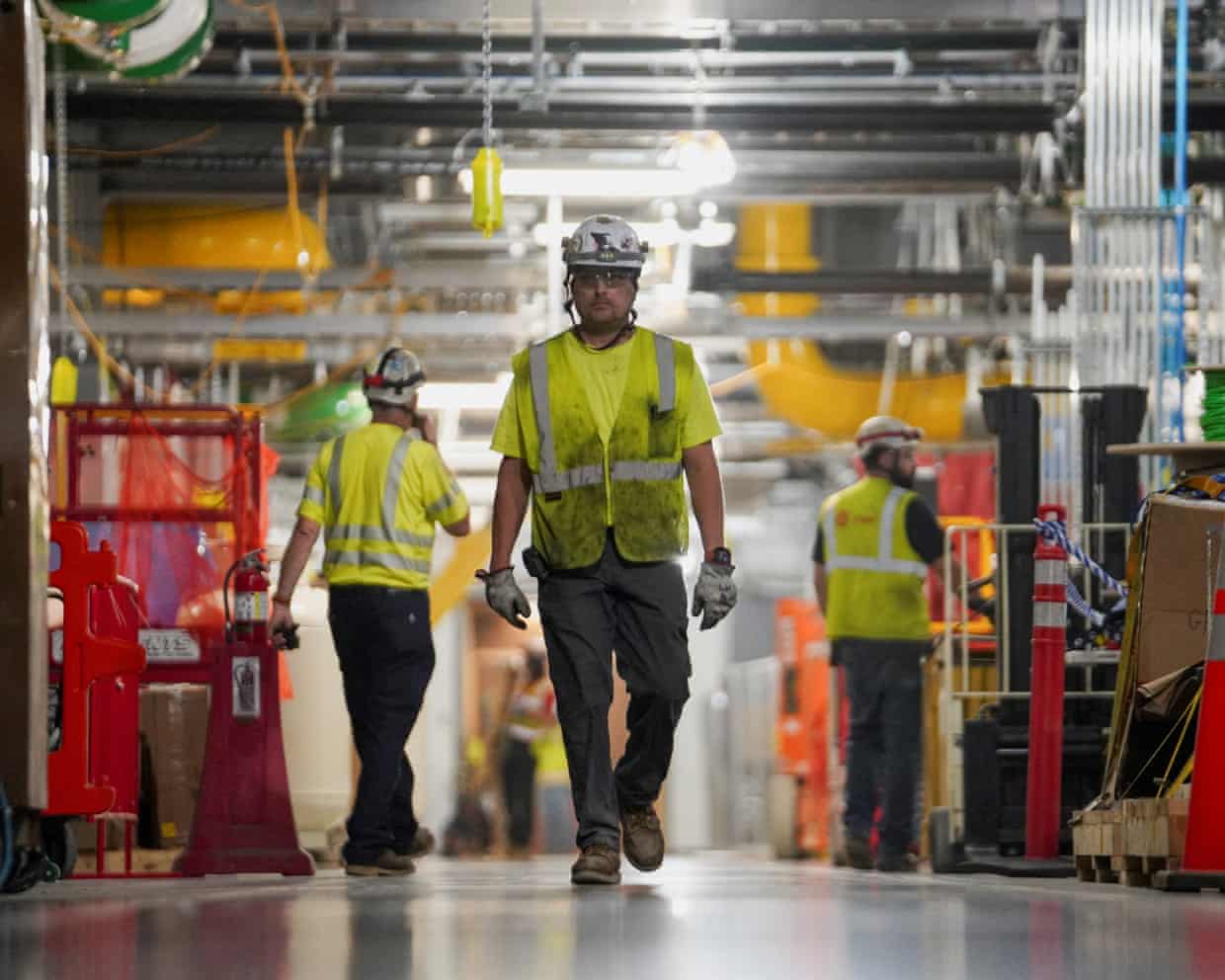
Microsoft and other US tech companies successfully lobbied the EU to hide the environmental toll of their datacentres, an investigation has found, with demands to block a database of green metrics from public view written almost word for word into EU rules.The secrecy provision, which the European Commission added to its proposal almost verbatim after industry lobbying in 2024, hinders scrutiny of the pollution that individual datacentres emit. It leaves researchers with just national-level summaries of their energy footprints.The rise of AI chatbots has spurred a boom in the construction of chip-filled warehouses with a hunger for power that is being met, in part, by burning fossil gas. Legal scholars warn the blanket confidentiality clause may fall foul of EU transparency rules and the Aarhus convention on public access to environmental information
Liz Kendall urges UK public to embrace AI as government makes first £500m fund investment
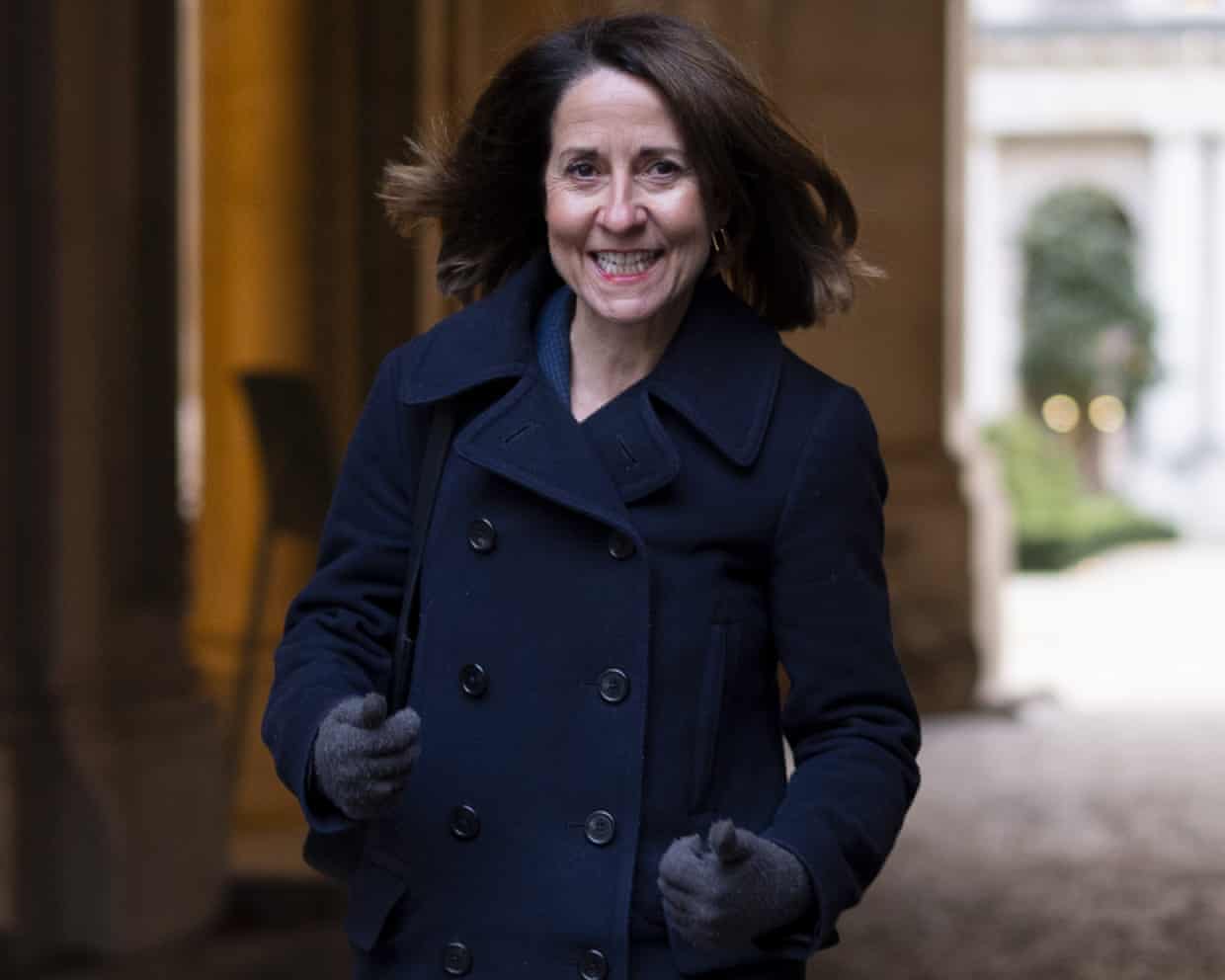
The UK technology secretary has urged the country to “make AI work for Britain”, brushing off fears about its impact on jobs and cybersecurity as the government announced its first investment under a £500m sovereign AI fund. Liz Kendall said the UK had to “seize” the opportunity offered by AI despite concerns underlined this month when US startup Anthropic revealed it had developed an AI model that posed a potentially significant cyber threat. Asked how the government makes the case for embracing a technology that could disrupt jobs and now cybersecurity, Kendall said: “We have to seize this to make it work, for Britain, for our jobs, for solving the biggest challenges we face as a world.”Speaking on Thursday as the government unveiled its first investment in a UK company as part of a £500m sovereign AI fund, Kendall acknowledged “people are worried about the risks and what it means for their jobs”, but AI entrepreneurs also believed they can “make it work … they can create jobs”.In January Kendall admitted “some jobs will go” as AI automates certain tasks and roles, but it would also create new employment opportunities

‘How do I end a call?’: the elderly Japanese people determined to master smartphones
It’s not only young people whose gaze is fixed on tiny screens. But for these users in Tokyo, clicking and scrolling is anything but second nature.“I can’t deal with all of the apps that jump out at me,” says one. “How do I know if I’ve definitely ended a call?” asks another.They are common concerns among the four women and one man attending a beginner’s smartphone class at a public facility for older residents in Nerima in the Japanese capital’s north-west suburbs

Labour and Lib Dem MPs demand ‘shameful’ Palantir NHS contract be scrapped
MPs have queued up to demand the government scraps its £330m NHS contract with the spy-tech company Palantir, calling it “dreadful” and “shameful” in a debate on Thursday, after which the government said it was “no fan” of the US company’s politics.Labour and Liberal Democrat MPs led the calls for Palantir, which also works for Donald Trump’s ICE immigration crackdown and the Israeli military, to be removed as a supplier to the NHS federated data platform (FDP), with one Labour backbencher, Samantha Niblett, questioning whether it could be “trusted as a custodian of the intimate health records of tens of millions of British citizens”.The Lib Dem MP Luke Taylor, who called the deal “shameful”, said: “Palantir and Peter Thiel must have their hands ripped off of our NHS before it is too late.”Thiel, a Trump-supporting tech billionaire, founded the company and has previously said that democracy and freedom are incompatible.In response to the MPs who spoke in a Westminster Hall debate, the government confirmed it would consider whether to continue with the deal when a break clause is due in spring 2027, although £210m of the £330m has already been spent

Man used AI to make false statements to shut down London nightclub, police say
A businessman has pleaded guilty to making false statements in order to shut down a nightclub, which police believe were generated using AI.A Metropolitan police source said the use of AI to generate letters by complainants who do not exist is a growing issue.Aldo d’Aponte, 47, the CEO of Arbitrage Group Properties, pleaded guilty to writing two letters, supposedly by his neighbours, objecting to the reopening of Heaven nightclub, which temporarily closed after a rape allegation against one of its security guards.D’Aponte was given a 12-month conditional discharge and ordered to pay £85 costs and a £26 victim surcharge.Heaven, an LGBTQ nightclub in central London had its licence suspended in November 2024 after a 19-year-old woman accused a bouncer of rape

Just the tonic: why it’s more than a mixer

Move over matcha: how ube cocktails and coffees are hitting the UK’s sweet spot

Rachel Roddy’s ‘high-ranking’ penne with potatoes, cabbage, butter and cheese – recipe

How to turn old bread into a brilliant Italian cake – recipe | Waste not

Roast chicken, cheesy scones and a genius cocktail: Ravinder Bhogal’s recipes for cooking with lime pickle

Vegemite is recognised globally – but how many people know Milo was invented in Australia?