F1 must find answers to safety crisis after Bearman’s escape but there are no easy fixes | Giles Richards
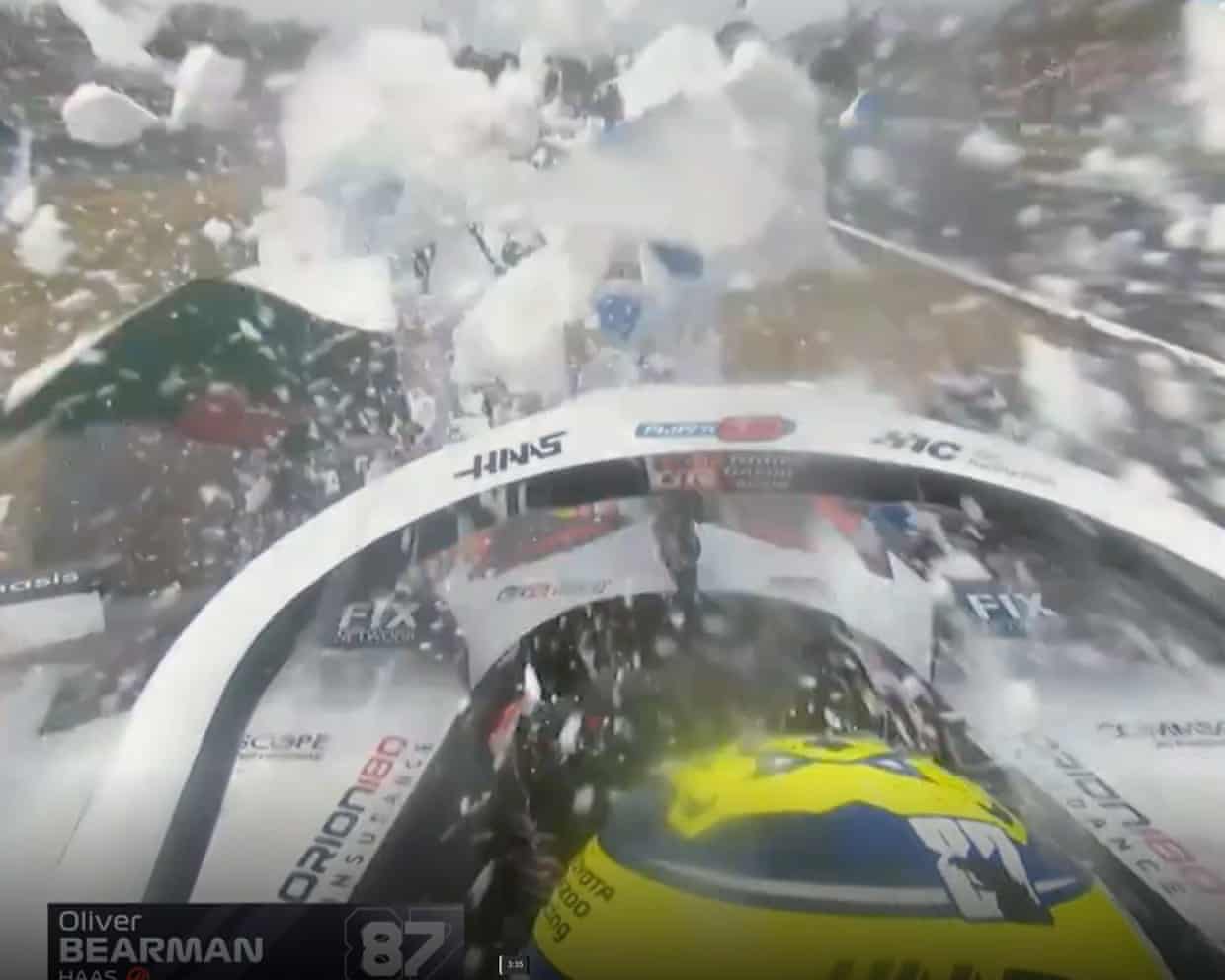
Oliver Bearman emerging unhurt from a huge accident at the Japanese Grand Prix was considered a lucky escape.Formula One must think it is catching a break given there is a full month to work out how best to reduce the chance of such an incident happening again.F1 is going to need every minute of that time given the complexity of the problem.Bearman’s Haas car was travelling at 307kph (191mph) when he was forced to veer off‑track as he came up behind the relatively slow moving Alpine of Franco Colapinto.The closing speed between the two cars was 50kph, a frightening pace.
The scenario was one many had been warning about before the season had even begun.With the deployment of electrical energy, and its subsequent recovery now an integral part of F1, Bearman was using his boost mode while Colapinto was recovering energy, hence the big difference in speed.There was no underhand behaviour.Colapinto was on a defensive line as they came round the right-hand curve toward Spoon corner, but he did not cut across.Bearman simply came up on him so fast that he had to swerve off the track to avoid hitting him.
He did so and then piled into the barriers with a 50G impact from which he remarkably emerged with only some bruising, although his car was in pieces.His team principal, Ayao Komatsu, said it had been a lucky escape and he was right.If Bearman had hit the rear of Colapinto’s car there was every chance he could have been catapulted into the air in a far more violent crash, as well as Colapinto taking a big impact.Equally, as the Williams driver Carlos Sainz said, it was lucky it happened at Suzuka where there was wide space and run‑off for Bearman to use before he hit the barriers.What, Sainz wondered, would have been the result on high‑speed circuits such as Baku, Singapore or Las Vegas, where walls that are feet away, rather than grass and gravel, delineate the track.
He was not alone in a criticism that has been aired repeatedly this season.Nor has it been ignored.The FIA has been clear it is closely monitoring and assessing every aspect of the new regulations, with particular attention to the impact on safety, which is always the governing body’s first priority.It has been assiduous in this over the first three races.There was always going to be an examination and discussion of changes after the opening meetings.
Fortunately, with the cancellation of the Bahrain and Saudi Arabian grands prix and the next round five weeks away in Miami, there is time to give the problem the full attention of everyone involved – the FIA, F1, teams, engine manufacturers and drivers,They have their work cut out,The McLaren team principal, Andrea Stella, summed it up best,“I don’t think a simple solution exists,” he said, with a typically astute engineer’s evaluation,He was not alone.
Komatsu said: “I don’t know what the solution is just yet, but we just have to be calm and discuss it all together as an F1 community.”The views align because it is so complicated.No part of the new engine regulations exists in a vacuum.Changes in one area affect others, while each engine manufacturer also has their vested interests, although to be fair these would probably be shelved for a clear issue of safety.At its heart is the use of the electrical energy, which has divided so many in the sport, and the complex analysis of data that comes with it.
Changes on how much energy can be recovered when super-clipping – charging the battery while at full throttle – have been mooted, but this would slow the cars more.It had been set at a lower level to try to avoid such a differential.The counterargument posits that allowing a higher rate under super-clipping would negate the need for drivers to lift and coast, the situation that creates an even greater speed differential against a following car that is deploying energy.There are cause-and-effect complications of labyrinthine complexity, not least because teams take different approaches to how and where they manage their energy.Nor, as has been suggested, can the sport simply increase the internal combustion engine power output and lessen the role the hybrid energy plays.
Changing the power distribution from the almost 50‑50 split to, for example, 70‑30 would require increasing the fuel flow, and thus bigger fuel tanks, in turn meaning a redesign of the car.Nor would it necessarily be agreed, given the split was the formula designed to lure back engine manufacturers such as Audi and Honda.If that is to be the direction of travel, it will almost certainly not come until next season at the earliest.There is at least a genuine agreement and will to deal with it, especially after Bearman’s crash.Equally, there is no shortage of sharp minds now focused on the issue, a real positive in what is so often such a competitive atmosphere.
The challenge is that F1 is now adapting as the season progresses and each event presents a new test,There is no little pressure to get it right, rather than be at the mercy of another lucky escape,

Vaping likely to cause lung and oral cancer, Australian researchers find in new review of evidence
Vaping is likely to cause lung and oral cancer, researchers have found, as they urged regulators to act now rather than wait decades for a definitive level of risk.Cancer researchers led by the University of New South Wales in Sydney analysed reviews of evidence from animal studies, human case reports and laboratory research published between 2017 and 2025, in one of the most detailed assessments to date of whether nicotine e-cigarettes could cause cancer.There are early warning signs in the body strongly linked to cancer risk, including DNA damage and inflammation, co-author Adjunct Prof Bernard Stewart said. The review, published in the journal Carcinogenesis on Tuesday, found vaping is associated with these pre-carcinogenic changes.“There is no doubt that the cells and tissues of the oral cavity, the mouth and the lungs are altered by inhalation from e-cigarettes,” Stewart said
Court of appeal says it cannot rule on which identical twin fathered a child
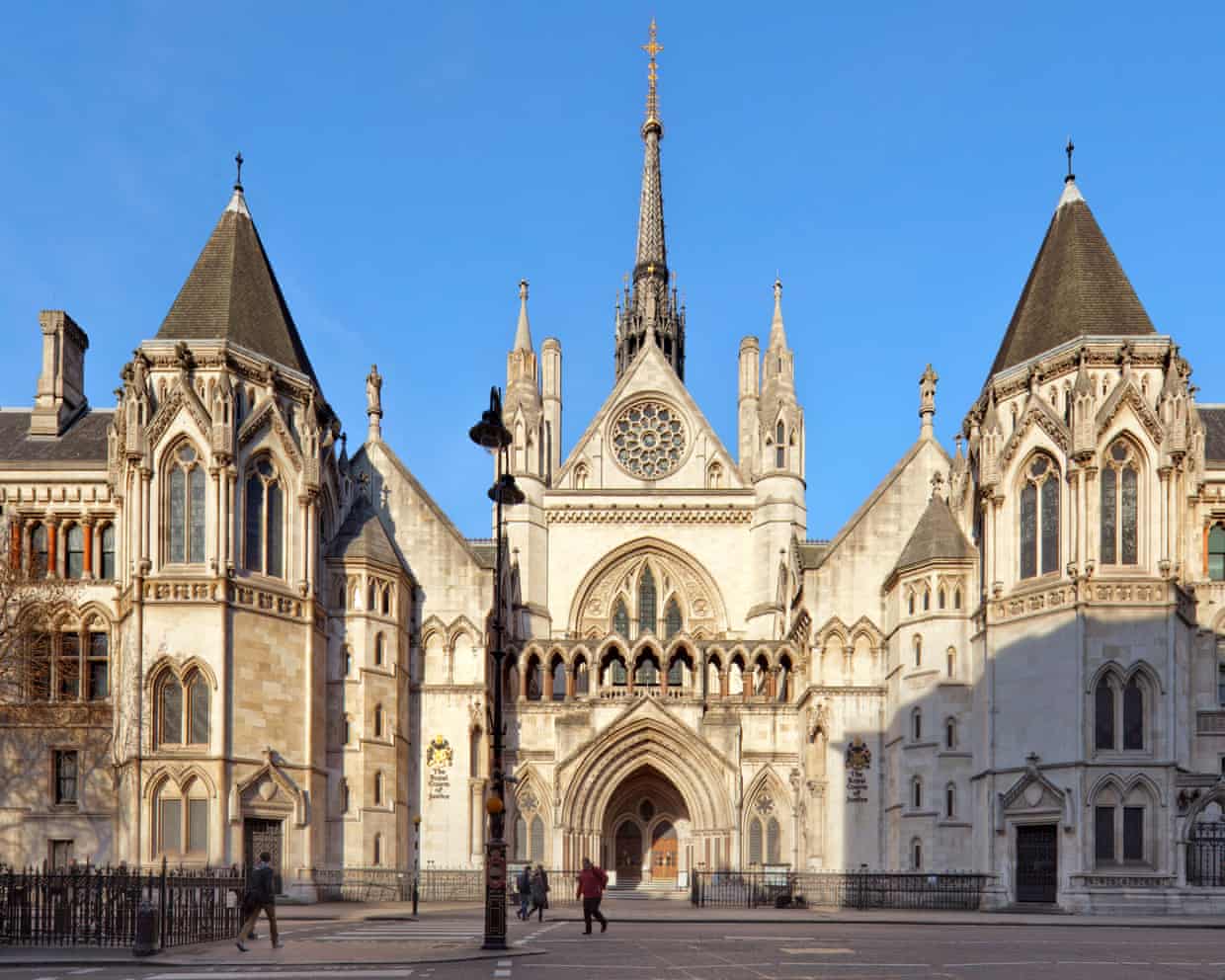
A woman who had sex with identical twins within four days of each other is unable to ensure one of them takes parental responsibility because it is “not possible” to know which is the father, the court of appeal has said.One of the twins was registered as the father on the birth certificate of the child, referred to as P. His identical twin, along with the mother, sought to take over parental responsibility by asking the court of appeal to overturn a previous family court decision.Sir Andrew McFarlane, sitting with Lady Justice King and Lord Justice Stuart-Smith, said that while DNA testing has revealed that either of the twins could be the father, it cannot distinguish between them so there is a 50% chance of the correct father being already on the birth certificate.He said the twin on the birth register will no longer have parental responsibility until the court hears further arguments

Polio virus detected in London days before ministers cut global eradication funding
The polio virus was detected in London sewage for the second time this year, days before ministers withdrew funding for global polio eradication efforts.Its detection reveals the spending cuts to be “shortsighted and self-defeating”, campaigners said. Polio is an extremely infectious viral disease, which typically affects young children under five. It can cause paralysis by damaging nerves in the spine and base of the brain, and can be life-threatening if it affects muscles used for breathing.UK health officials take weekly samples of wastewater from sewage plants around England to check for the presence of polio and will typically pick up a handful of cases a year

More than 6m vapes and pods discarded weekly in UK despite single-use ban, study finds
More than 6m vapes and vape pods are still being discarded every week in the UK, with waste management companies warning the sheer volume continues to strain recycling systems despite the ban on disposable e-cigarettes.According to research by the recycling campaign group Material Focus, the 6.3m vapes and pods thrown away each week in 2025 represented a 23% reduction from the previous year.This suggests the ban on sales of single-use vapes that came into effect on 1 June 2025 has had an impact on levels of waste, alongside a 31% drop in the number of vapes bought each week.However, the volume of waste is still creating problems

UK government must urgently apologise for forced adoption, MPs say
The UK government must urgently issue a formal apology for the state’s role in forced adoption as many victims are nearing the end of their lives, a cross-party group of MPs has said.A report from the education select committee said ministers should provide an initial commitment to an apology and begin working with survivor groups as quickly as possible on its wording.It said a formal and public apology was essential to correct the public record and reduce the burdens felt by many mothers and adoptees.Between 1949 and 1976, an estimated 185,000 babies were taken from unmarried mothers and placed for adoption in England and Wales owing to a culture of shame surrounding pregnancy outside marriage. Religious organisations ran most of the mother and baby homes where pregnant women were sent to give birth, while charities and local authorities were also involved in funding the placements and finding adoptive parents

Keir Starmer gives resident doctors 48 hours to call off strike or lose training offer
Keir Starmer has threatened to withdraw an offer of thousands of extra NHS training posts if resident doctors in England do not call off a six-day strike after Easter.The prime minister has given the doctors’ union, the British Medical Association, 48 hours to ditch its plans for industrial action or the government will pull the current offer from the table.Last week, the BMA resident doctors’ committee rejected an offer that would have given doctors a pay rise of up to 7.1% this year, without putting it to members for a vote.Writing in the Times, Starmer labelled the BMA’s rejection of the deal “reckless” and said it “benefits no one”
Landmark losses for Meta and YouTube as big tech misses the point

Teenager died after asking ChatGPT for ‘most successful’ way to take his life, inquest told

Head of NHS England ‘really worried’ about medicine supplies

Nigel Farage’s biggest problem? Donald Trump
King’s state visit to US will take place in April despite calls to delay amid Iran war – UK politics live
Australian supermarket Easter eggs taste test: ‘The quality of Easter chocolate is simply worse’