Landmark losses for Meta and YouTube as big tech misses the point
Hello, and welcome to TechScape.I’m your host, Blake Montgomery, US tech editor for the Guardian.I’m hoping futilely for warm spring weather in New York City, but while it’s still cold, I’m sitting inside and reading The Shallows: What the Internet Is Doing to Our Brains by Nicholas Carr.Published in 2010 and a finalist for the Pulitzer prize, the book is a fascinating record of our anxieties about technology at a time when the iPhone was just three years old and Facebook was just six.Google Chrome had debuted two years prior, and I think I was using Mozilla Firefox as my main browser.
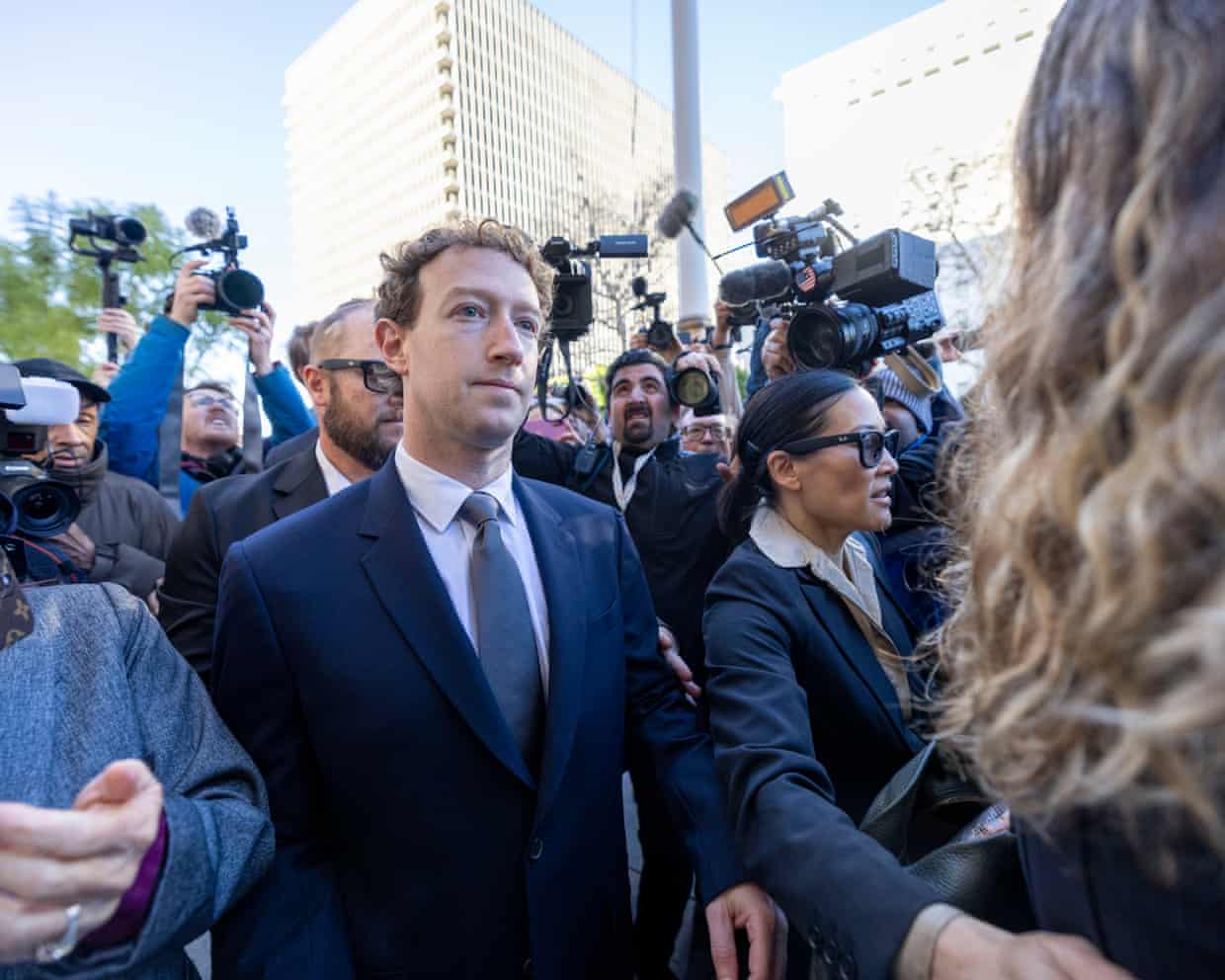
Stay tuned for a fuller analysis once I finish, but my early impression is that Carr’s observations have stood the test of time,This week in tech, we’re discussing one major topic: two landmark cases against Meta and YouTube over social media addiction,Whether social media is clinically addictive or not, the liability for it has been determined,Last week, jurors in California and New Mexico gave back-to-back verdicts that for the first time ever found Meta liable for products that inflict harm on young people,My colleague Dara Kerr writes in her analysis of the landmark losses:In the span of just two days, the most powerful social media company in the world faced a more severe public reckoning than it has in years.
For years, lawmakers, parents and advocates have raised red flags over how social media can hurt children, but now the tech firms are being held to account via court rulings that could set long-lasting precedents,A jury in New Mexico ordered Meta to pay $375m in damages over claims that its products led to child sexual exploitation, among other harms,The following day, a jury in California ordered Meta and YouTube to pay $6m over claims that both companies deliberately designed addictive products to hook young users,These cases were the first to go to court, and soon will be followed by more trials from two coordinated groups of more than 2,000 plaintiffs, including families, school districts and state attorneys general, who have brought lawsuits against Meta, YouTube, TikTok and Snap,Meta and YouTube both say they disagree with the verdicts and will appeal.
A YouTube spokesperson said the California case “misunderstands” the company, which maintains it is a video streaming platform and “not a social media site”.For its part, Meta has emphasized the specifics of the case rather than litigate its own public image.A company spokesperson said: “Teen mental health is profoundly complex and cannot be linked to a single app.We will continue to defend ourselves vigorously, as every case is different, and we remain confident in our record of protecting teens online.” The spokesperson also pointed to the California ruling not being unanimous.
In harping on the specifics of the case, Meta sought to convince jurors that social media addiction is not a real, widespread problem,The issue was an individual one, and the plaintiff, a 20-year-old woman named KGM, was disturbed before she ever got online, the company’s lawyers argued,Psychologists in the US currently do not recognize social media addiction as a clinical condition, a fact Meta’s lawyers and executives brought up repeatedly at trial,As much distress as obsessive and constant scrolling may cause, it is not described as clinically significant in the latest Diagnostic and Statistical Manual of Mental Disorders (DSM-5), the authoritative handbook published by the American Psychiatric Association (APA) that guides psychological diagnostics and treatment,That is not to say psychologists and clinicians have failed to study social media: researchers have documented the harmful consequences of compulsive social media use among young people and described treatment, and lawmakers around the world are worried about social networks’ addictive potential.
Meta’s lawyer Kevin Huff said in his opening statement in New Mexico: “The American Psychiatric Association studied [social media] and decided that social media addiction is not a thing.” In response, the APA said in a statement to Engadget: “Social media addiction is not currently listed as a diagnosis in the DSM-5-TR – but that does not mean it doesn’t exist.”Pornography addiction, a phrase that colloquially refers to compulsive use but does not denote a disorder clinically countenanced, resides in a similar gray area.“Internet gaming addiction” is likewise listed not as an official mental disorder but as a “condition for further study”.Both behaviors are often classified under the umbrella of impulse control disorders, sometimes symptomatic of underlying issues.
Adam Mosseri, the head of Instagram, tried to highlight the discrepancy between the clinical and the colloquial while testifying in Los Angeles, telling the court, “I think it’s important to differentiate between clinical addiction and problematic use,” and arguing that Meta’s products were not “clinically addictive”.Yet it was Meta’s own internal correspondence and research that provided the most thorough documentation of its products’ harms during the trial.A 2020 conversation between Meta researchers entered into evidence reads: “I know Adam doesn’t want to hear it … He freaked out when I talked about dopamine in my teen fundamentals lead review, but it is undeniable.It is biological.It is psychological.
”Another email exchange between Meta employees in 2020 shows one person saying: “oh my gosh yall IG is a drug”,A colleague responds: “Lol, I mean, all social media,We’re basically pushers,”The dialog continues with the employees likening social media’s draw to being similar to gambling with “reward tolerance” getting so high that people “can’t feel reward any more”,The conversation concludes with an employee saying: “It’s kind of scary.
” One email has an employee saying “targetting [sic] 11 year olds feels like tobacco companies a couple decades ago”,An internal document from YouTube: “[The] goal is not viewership, it’s viewer addiction,”TikTok’s research into its own app came to similar conclusions about detrimental effects on teens – “in under 35 minutes, an average user is likely to become addicted to the platform … compulsive usage correlates with a slew of negative mental health effects,” reads one internal document,TikTok settled with KGM before its case went to trial,Meta’s attempt to put daylight between the design of its products and problematic use ultimately failed.
A jury in Los Angeles found Meta and YouTube liable for the behaviors that their products inspire.The jurors asserted that, even if the science of social media addiction is not settled, tech companies can be held liable for the design of their products and its effects.Mosseri can debate the division between clinical addiction and compulsive use until he’s blue in the face, but his company will still have to pay damages.In an analysis published on Friday, the risk assessment firm Moody’s posited that the dual verdicts have established that users’ responses to tech companies’ design choices can expose the businesses to liability.The firm is advising its clients that litigating the legitimacy of social media addiction is of little use at this point; those clients would be better served reckoning with the real monetary risk that users’ addiction-esque use now poses.
The particular legal reasoning that plaintiffs’ lawyers used in showing the injuries to their clients at trial poses a business risk, as that theory could influence litigation over other digital products, according to Moody’s.“The bigger signal for insurers is the underlying theory of harm, which centers on claims that certain selected engagement-driven design features can be associated with compulsive use and downstream effects,” wrote Adam Grossman and Taro Ramberg.“The verdicts themselves are only an early data point.The broader significance for insurers is what these outcomes suggest about where design-centered liability theories may go next.”By demonstrating that the seductive, time-sucking design features of Meta and YouTube’s products like an infinitely scrollable feed and autoplaying videos were the definitive cause of harm, the plaintiffs have exposed a wide swath of software to litigation, according to the Moody’s analysts.
Those features are not the sole property of social media: video games, sports betting, chatbots, online retail, and streaming services deploy them, too.Some 1,168 cases against social media companies are pending in Los Angeles superior court alone, per a Moody’s tracker.More broadly, according to the firm, about 4,000 cases are targeting 166 US companies over addictive software design in products like sports betting sites, online games and AI-powered chatbots.‘Accountability has arrived’: dual US court losses show shifting tide against Meta and coThe Guardian view on social media in the dock: tech bros move fast – society is trying to catch upHow Meta’s victim-blaming failed to sway jurors in landmark social media addiction trial | TechnologyI was paid to write fake Google reviews – then my ‘bosses’ tried to scam meKeep under-fives’ screen time to no more than an hour a day, UK advice saysWikipedia bans AI-generated content in its online encyclopediaFederal judge sides with Anthropic in first round of standoff with PentagonBernie Sanders and AOC introduce bill to pause building of new datacenters
Nigel Farage to snub US conservative conference brought to UK by Liz Truss
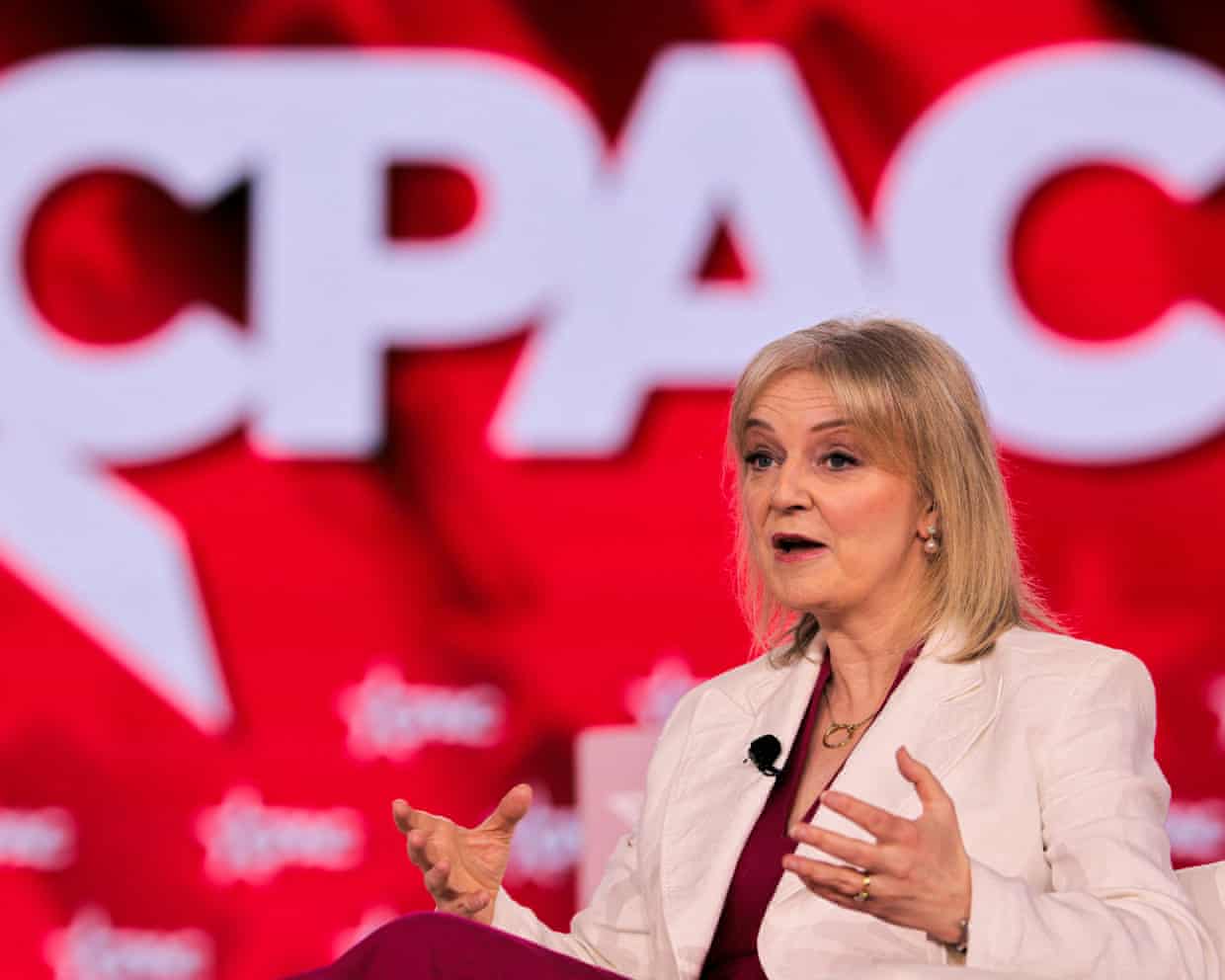
Nigel Farage will snub a major conference of US conservatives that is being brought to the UK by Liz Truss.The short-lived former prime minister, who was accused of crashing the economy, was chosen by the Conservative Political Action Conference (CPAC) to lead a version of the event in the UK in July.She announced this on stage in Texas on Monday while next to Matt Schlapp, commentator and chair of the event, which in the US has hosted major figures including Donald Trump, Ron DeSantis, Tulsi Gabbard and Hungary’s Viktor Orbán.However, mainstream conservative figures in the UK seem wary to be associated with the Truss-led event.“We will be steering well clear of it,” a Reform UK source said, dashing any hopes that Farage would attend
Zack Polanski meets unions in attempt to get them to switch party funding to Greens
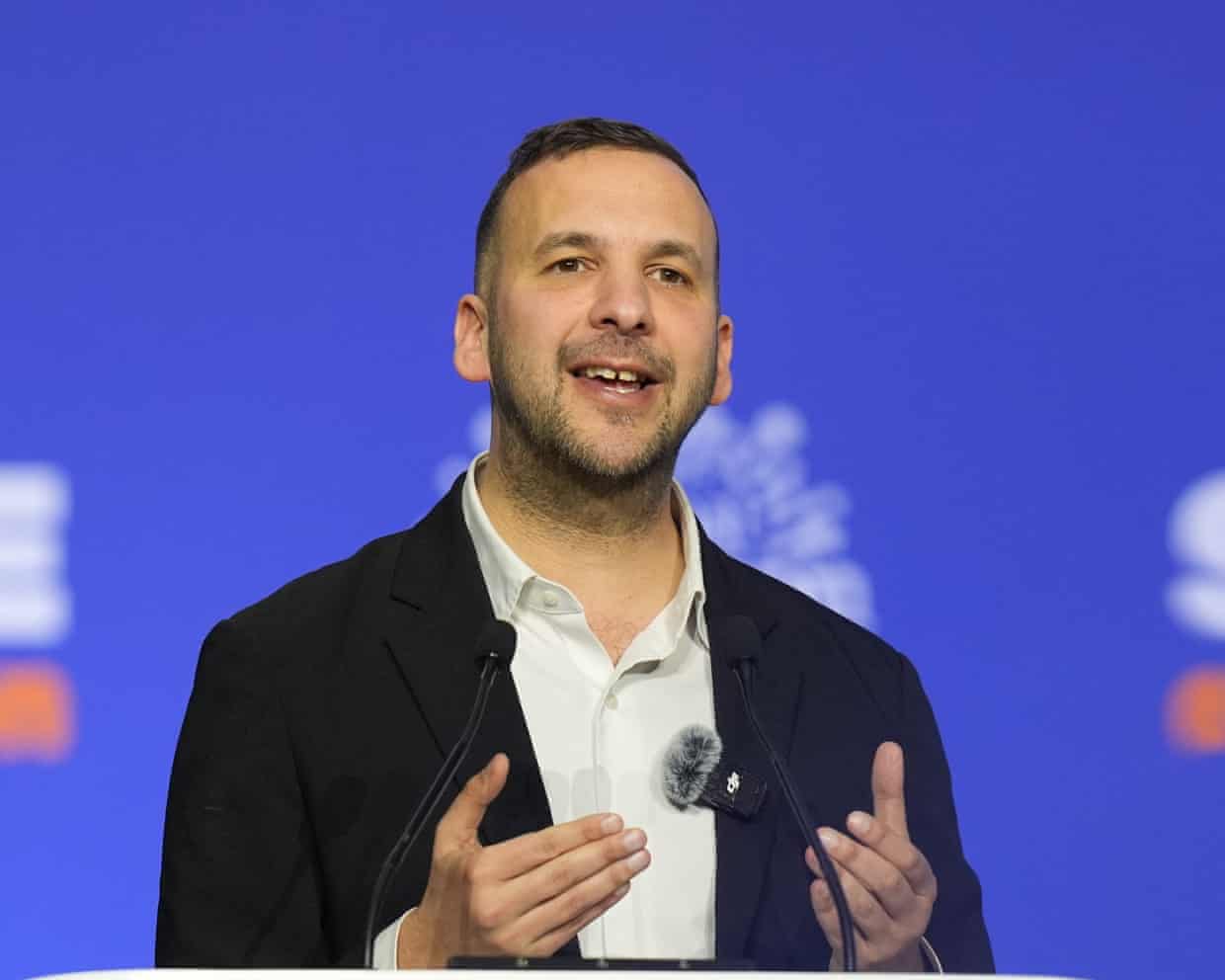
Zack Polanski has kicked off a charm offensive designed to convince trade unions to stop funding Labour and throw their weight behind the Green party, as he delivered the first in a series of speeches to union conferences.The Green leader has had “good conversations” with 10 trade unions, including some affiliated to Labour, according to party sources, and is due to address the University and College Union and the Bakers, Food and Allied Workers Union, not affiliated with Labour, in the coming months.The UK’s largest unions – Unite and Unison – were among those that denied negotiating with Polanski and said they remained affiliated to the Labour party. However, Unite is holding internal discussions about its future relationship with Labour before a special conference in 2027 at which it could potentially decide to disaffiliate.While Green party sources admitted that discussions Polanski had held with individual unions varied in formality, some union insiders were adamant that supporting the Greens would be a no-go area, and that such discussions were “much ado about nothing”
Kemi the attention seeker somehow always makes two plus two equal five | John Crace
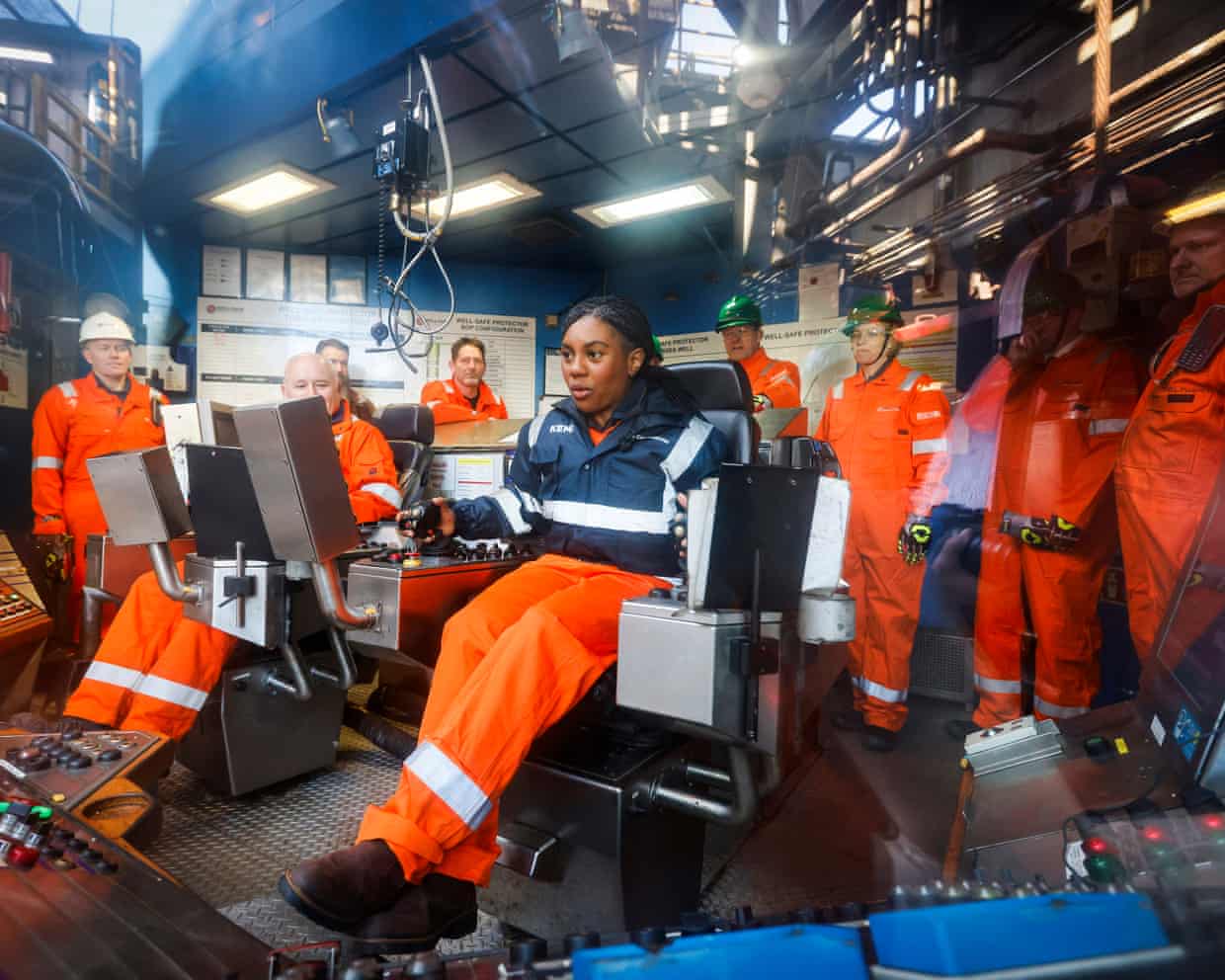
Losing sleep over the war in Iran? Worried sick about the cost of living? Can’t pay your energy bills? Then relax. Because Kemi Badenoch has a displacement activity for you.It’s becoming increasingly easy to understand the Conservative leader by viewing her as a hyperactive five-year-old at the back of the class who is constantly disruptive. Who can’t get through a lesson without some kind of attention-seeking behaviour. Who has a constant desire to be indulged even though her first reactions are invariably wrong
Zack Polanski tells NEU teachers’ union that Greens would abolish ‘toxic’ Ofsted – as it happened
The Green party would abolish Ofsted because they view it as a “failed institution”, Zack Polanski, its leader, has told a teaching union conference.Polanski also said that the Greens were opposed to the academisation of schools and that they believe that Labour is not fixing the “failings” in the system by the Tories, but embedding them.In a speech to the National Education Union’s annual conference, Polanski said:double quotation markOfsted is a toxic, failed institution which is harming teachers and children – and it’s time to end it.Talking about school structures more generally, he said:double quotation markThis government’s reforms are simply tinkering around the edges.We need to end the Ofsted era entirely and move towards a genuinely collaborative model

Starmer pledges to tackle new cost of living crisis at May elections campaign launch
The 7 May elections are taking place against a backdrop of “war on two fronts”, Keir Starmer has said, as he pledged action to tackle the resurgent cost of living crisis.Launching Labour’s English local elections campaign in Wolverhampton on Monday, the prime minister said: “We’re facing a war on two fronts – the Ukraine war, now four and a bit years in … and now the Iran war, which I know is causing huge concern.“People look at their screens and they’re worried when they see explosions, infrastructure blown up, the rhetoric that goes with it, worried about whether this is going to escalate even further.”Labour is braced for heavy losses in English council votes on 7 May, in particular in the north-east and London, amid challenges from Reform UK on the right and the Green party on the left. The contests are seen as a major test for Starmer’s premiership

MPs wary of move against Starmer while war is raging
A week after Labour’s election victory in July 2024, officials at Labour HQ held their first crisis meeting about the May 2026 local elections.The party had just secured a 174-seat majority and already strategists were predicting it would be very tough, though none were assuming the prime minister’s own position would be vulnerable.Now, according to multiple officials, it will be nothing short of a “bloodbath” – though it is an open question whether the parliamentary Labour party will use it to depose Keir Starmer.One Starmer ally said it would be impossible to spin the results. “There’s no point us doing expectation management, as the results are going to be terrible anyway,” they said

Tiger Woods says looking at his phone led to Florida rollover crash
‘Death hunted him since he was a kid’: how Lamar Odom survived to become a villain in his own tale

County Championship 2026: team-by-team guide to the new season

The Breakdown | Parling’s TV spat with Doyle symbolises the tug of war for rugby’s modern soul

Middlesex ‘drifting towards irrelevance’: Gatting leads revolt against club leadership

Sinner and Sabalenka’s Sunshine Doubles turn up heat on chasing pack