The Masters, the Premier League run-in, the National: is there a better sporting month than April? | Sean Ingle

The thought struck me on the last rattler back from the Grand National, as Avanti’s wifi faltered somewhere outside Crewe and the Masters stream on my phone froze yet again.I was watching the world’s best golf tournament, on a train journey back from the world’s greatest steeplechase, having seen the best football match of the season – Real Madrid against Bayern Munich – earlier in the week.Is there a better month in the sporting calendar than April?Augusta always delivers.Club football hits peak levels of drama and jeopardy.Then there is Aintree, Paris-Roubaix, the start of the County Championship cricket season and the World Snooker Championship.
To round it off, the life-affirming sight of the great and the ordinary doing remarkable things at the London Marathon.“April is the cruellest month,” writes TS Eliot in The Waste Land.But he was not a sporting man and was living in very different times.Reasonable minds may disagree.You can certainly make a case for July, with the mighty trifecta of Wimbledon, the Open and Tour de France.
This year the World Cup adds even more heft,As do Olympic Games when they take place,But as special as these events are, they come around only every four years,Some American readers may opt for October, when the baseball playoffs are in full swing and the NFL, NBA, NHL and college football seasons are up and running,But April trumps them all, with chaos, thrills and classic moments baked in every year.
How, for instance, could you take your eyes off the Masters on a Sunday when momentum was veering wildly? At halfway Rory McIlroy was six shots clear on 12 under.After six holes of his final round he was two back on nine under.Many thought his mind had gone.Then he made four birdies in seven holes.What of Justin Rose? Between the 5th and 9th he made four birdies to go two clear heading into the back nine – including one of the shots of the day out of the pine straw at the 7th.
He looked calm.Composed.Then, staggeringly, he bogeyed 11, duffed a chip on 12 and took five at 13 after having an eagle putt to go 12 under.That is the beautiful treachery of Sunday at Augusta: where the margins are wafer thin and the pressure makes even the stiff upper-lips go wobbly.Where would we be now if McIlroy’s third to 15 had not stumbled over the water? If Scottie Scheffler’s birdie putt at 17 had not wiggled at the last moment? Or if Rose had kept his cool?We forget, too, that club football often hits its peak in April.
Look at the Champions League,For six months or so it dawdles along,But then the quarter-finals and the first leg of the semi-finals arrive and it goes into overdrive,Last week, Real Madrid and Bayern had 40 shots between them in their epic first leg, with 16 on target, and it could have easily been 4-5 not 1-2,In a world of rigid systems and set pieces, this was football how we remembered as kids – attack, attack, attack, as if Brazil v Italy from 1982 had returned to cast its spell on a fresh generation.
Then again, Real Madrid v Bayern was hardly an outlier.Aston Villa’s quarter-final second leg against Paris Saint-Germain last April was a classic.So was Inter’s extraordinary semi-final 7-6 win over Barcelona, which stretched over April and early May.In 2024 the quarter-finals were even more spectacular, with Real Madrid knocking out Manchester City on penalties, PSG beating Barcelona 6-4, and Arsenal losing 3-2 to Bayern Munich.Is there a better month in European club football?While the Premier League title is awarded in May, its more decisive moments often arrive in April as well.
Remember 2024? Arsenal were favourites until they lost 2-0 at home to Aston Villa.They won their final six games, but still ended up two points behind Manchester City.In 2023, Arsenal also blew the title in April after draws against Liverpool, West Ham and Southampton, and a 4-1 defeat to Manchester City.While in 2022, Manchester City’s 2-2 draw with Liverpool in April effectively proved decisive, given neither side lost again.Does anyone expect Sunday’s showdown between Manchester City and Arsenal not to determine this year’s race?At the weekend there was also a vintage Grand National to devour, with I Am Maximus coming from 10 lengths back to reel in Jordans to take his second victory in the race.
While some still bemoan the National has become too soft, I disagree.Crucially, while Saturday had plenty of spills and thrills – with seven fallers and seven unseated – there were no deaths.Do we really want to go back to 1951 when the Guardian wrote of “gallant beasts doing their purposeless best … Out of 38 riders, and 144 legs, only three riders and 12 legs came home.”Between 2002 and 2012, 11 horses died in the race before the fences were rebuilt using softer cores instead of rigid timber frames, allowing horses to brush through the top and have a better chance of landing safely.There was an epic Paris-Roubaix race, with Wout van Aert outsprinting Tadej Pogacar on the last lap of the André-Pétrieux velodrome.
After five hours of drama, punctures, cobbles and chaos Van Aert burst into tears.Pogacar must have felt like crying too after missing out on his final monument by the width of a bike wheel.The good news? He will be back next year.Which will make it, along with the rest of April’s sporting calendar, compelling viewing.

AI to predict how bowel cancer patients will respond to new NHS drug
A new AI-driven way of identifying how patients with advanced bowel cancer will respond to a drug that was recently introduced by the NHS has been announced.Researchers at London’s Institute of Cancer Research and the RCSI University of Medicine and Health Sciences in Dublin have developed the method with the goal of sparing potentially thousands of patients from being given drugs that would be ineffective in fighting their cancers.In the UK alone, nearly 10,000 cases of advanced bowel cancer are identified every year, with young adults seeing a particular rise in diagnoses. Bowel cancer has the second highest mortality rate of any cancer, behind only lung cancer, and while survival rates can be as high as 98% when caught early, the five-year survival rate for advanced bowel cancer can be as low as 10%.The study tracked 117 European bowel cancer patients who had been treated with chemotherapy and bevacizumab, a drug that was approved by the NHS in December
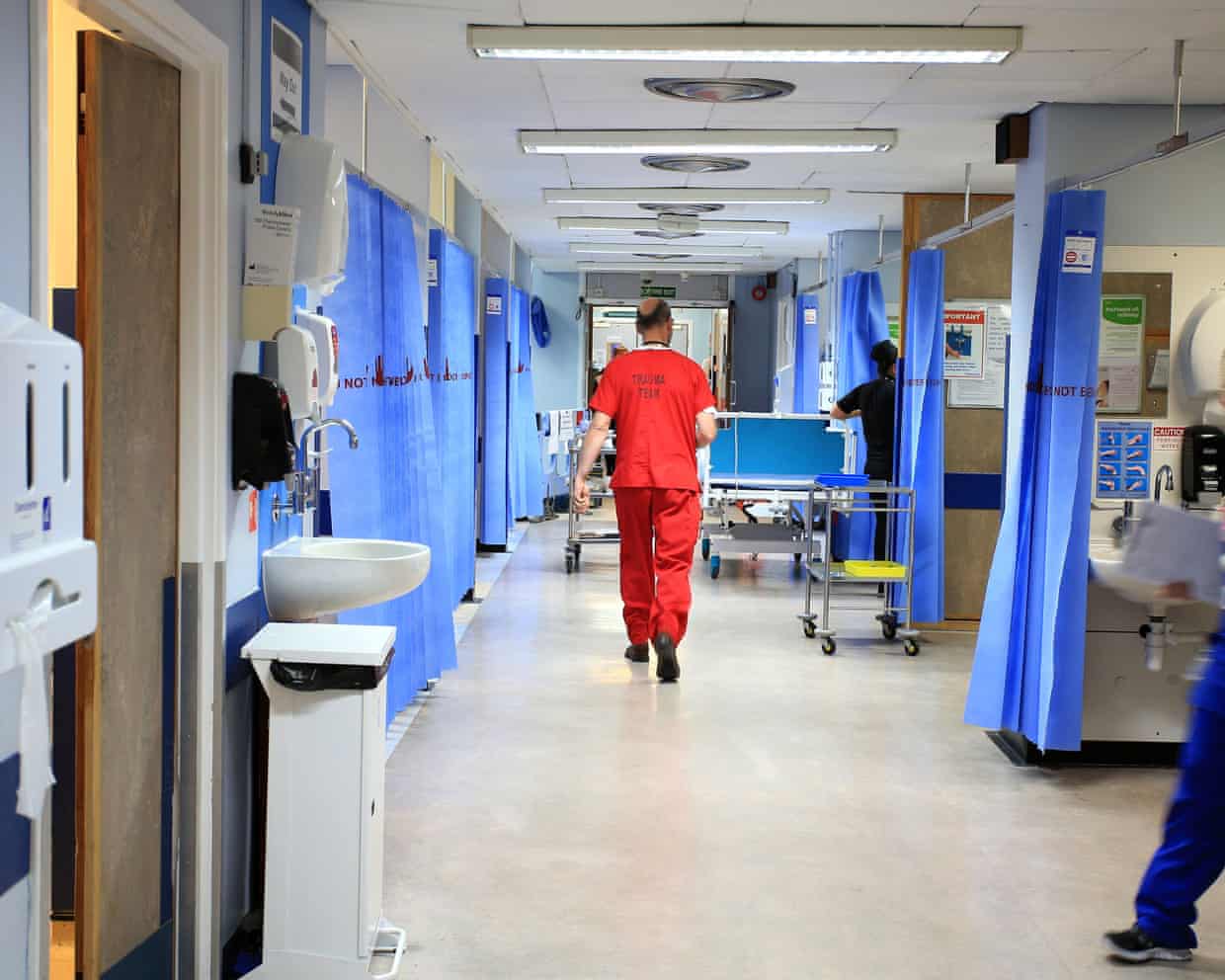
Private firms providing services to NHS made £1.6bn profit in two years, research finds
Private firms providing services to the NHS including healthcare and consultancy have made £1.6bn in profits over the last two years, research reveals.The findings – on the basis of contracts worth £12bn – have prompted claims of “scandalous” profiteering, concern that the health service is being “taken for a ride” and calls for ministers to impose a cap on maximum profit levels.The £1.6bn in profits made in 2023-24 and 2024-25 would have been enough to pay for 9,178 doctors or 19,428 nurses during that time, according to the Centre for Health and the Public Interest

More than a fifth of UK’s ‘austerity children’ scarred by poverty, study says
More than a fifth of all “austerity generation” British children have been scarred by poverty for at least half their childhood, a direct legacy of the welfare benefit cuts imposed by Conservative governments in recent years, research reveals.The proportion of children born after 2013 who spent at least six of their first 11 years of life in hardship surged after ministers froze working age benefits levels and imposed policies such as the two-child limit, it found.Austerity policies, which drastically shrank annual welfare spending by tens of billions a year and took thousands of pounds a year out of low-income family budgets, effectively pitched hundreds of thousands more children into sustained poverty.The University of Oxford study said the austerity-era growth in children exposed to poverty for most of their formative years was a “significant social problem” that would cause long-term harms to their health, education and life chances.The study’s co-author, Selçuk Bedük, said the post-2013 austerity cuts to welfare increased both the numbers of children experiencing poverty and the time they spent in it
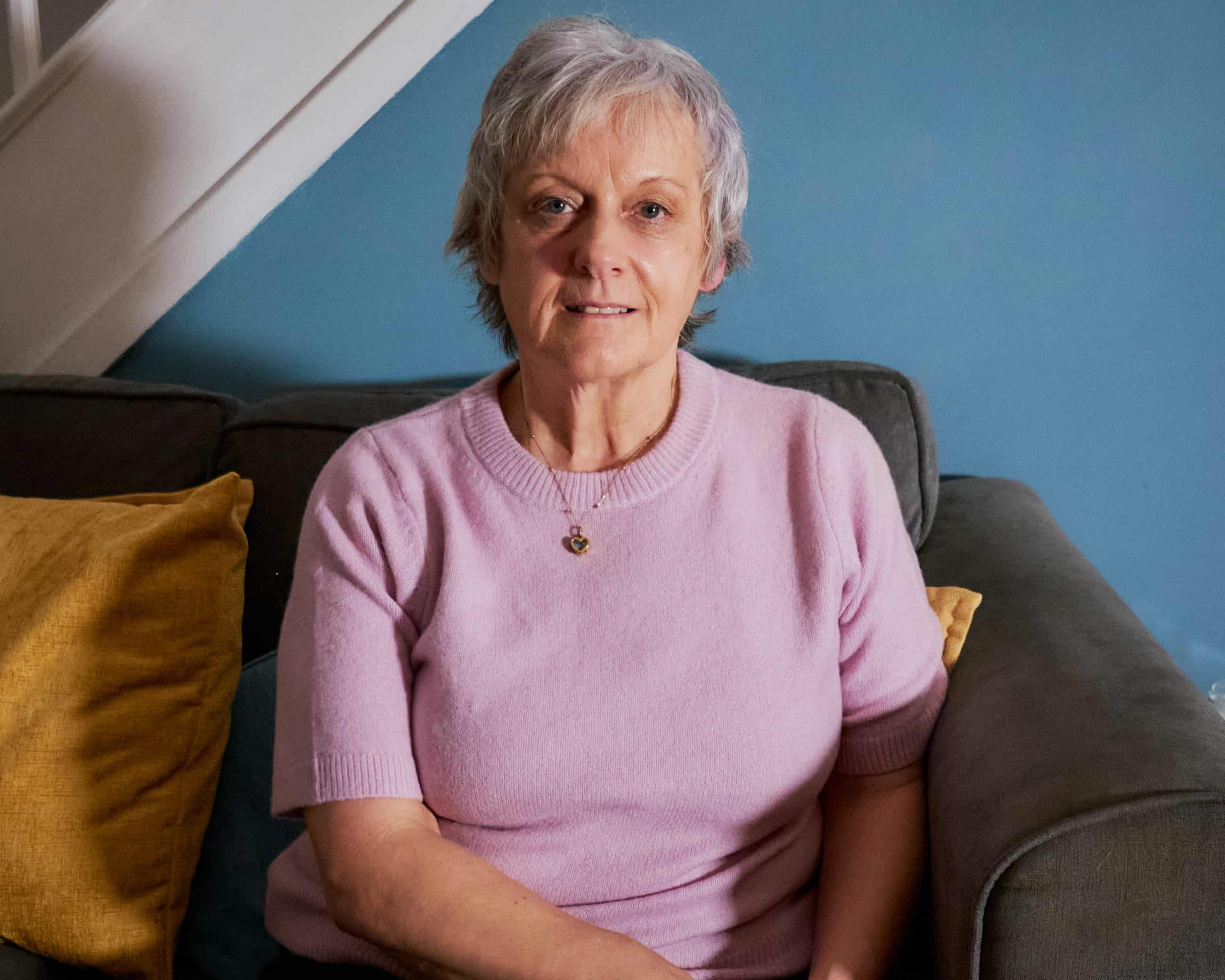
‘I just want to feel like me again’: the women still waiting for breast reconstruction years after lockdown
At the height of Covid, hundreds of cancer patients had mastectomies without the reconstruction that would normally accompany them. They would eventually get the surgery, they were told – but for many that promise feels more meaningless by the dayEvery time she lifts her arms to get dressed or hang out her washing, Julie Ford gets a painful reminder of one of the most terrifying experiences of her life. At 7am one day in April 2021, she had gone into hospital, alone and wearing a mask, to have her right breast and lymph nodes removed in a bid to stop breast cancer from spreading. Later that day, still groggy from the anaesthetic, in pain and with surgical drains hanging from both sides of her chest, she had staggered to the door with the help of two nurses. She was eased into a friend’s car and driven home to fend for herself

Iran war could plunge 32 million into poverty, says United Nations
More than 32 million people worldwide could be plunged into poverty by the economic fallout from the Iran war, with developing countries expected to be hit hardest.In a report issued amid doubts over a fragile ceasefire, the United Nations Development Programme (UNDP) said the world was facing a “triple shock” involving energy, food and weaker economic growth.The agency tasked with tackling poverty said the conflict was reversing gains in international development, with the impact expected be felt unevenly across regions.Alexander De Croo, administrator of the UNDP and former prime minister of Belgium, said: “A conflict like this is development in reverse. Even if the war stops, and a ceasefire is obviously very very welcome

Thousands of unpaid carers to face DWP repayment demands during overhaul
Thousands of unpaid carers will continue to be hit with hefty and potentially unfair benefit repayment demands, it has emerged, as a government initiative gets under way to fix welfare injustices that have drawn comparison to the Post Office scandal.Ministers will on Monday launch an audit of more than 200,000 historical carer’s allowance benefit cases, with an estimated 25,000 carers issued with unlawful overpayments since 2015 likely to see their repayment debts cancelled or reduced as a result.The so-called reassessment exercise marks a big step in the government’s attempt to “put right” systemic injustices that led to hundreds of thousands of vulnerable carers having debts of up to £20,000 through no fault of their own.However, the government has admitted its existing “business as usual” overpayment recovery policies will be maintained while a full overhaul of the benefit is completed, in effect ensuring that carer’s allowance penalties will continue to be imposed.Furthermore, it is still unclear how ministers will compensate thousands more carers who were unlawfully issued with overpayment demands because of longstanding system faults linking universal credit and carer’s allowance, or who were wrongly told to repay money after officials lost evidence that they had reported changes in earnings

‘It feels as if I’ve made a new best friend’: my experiment with AI journalling
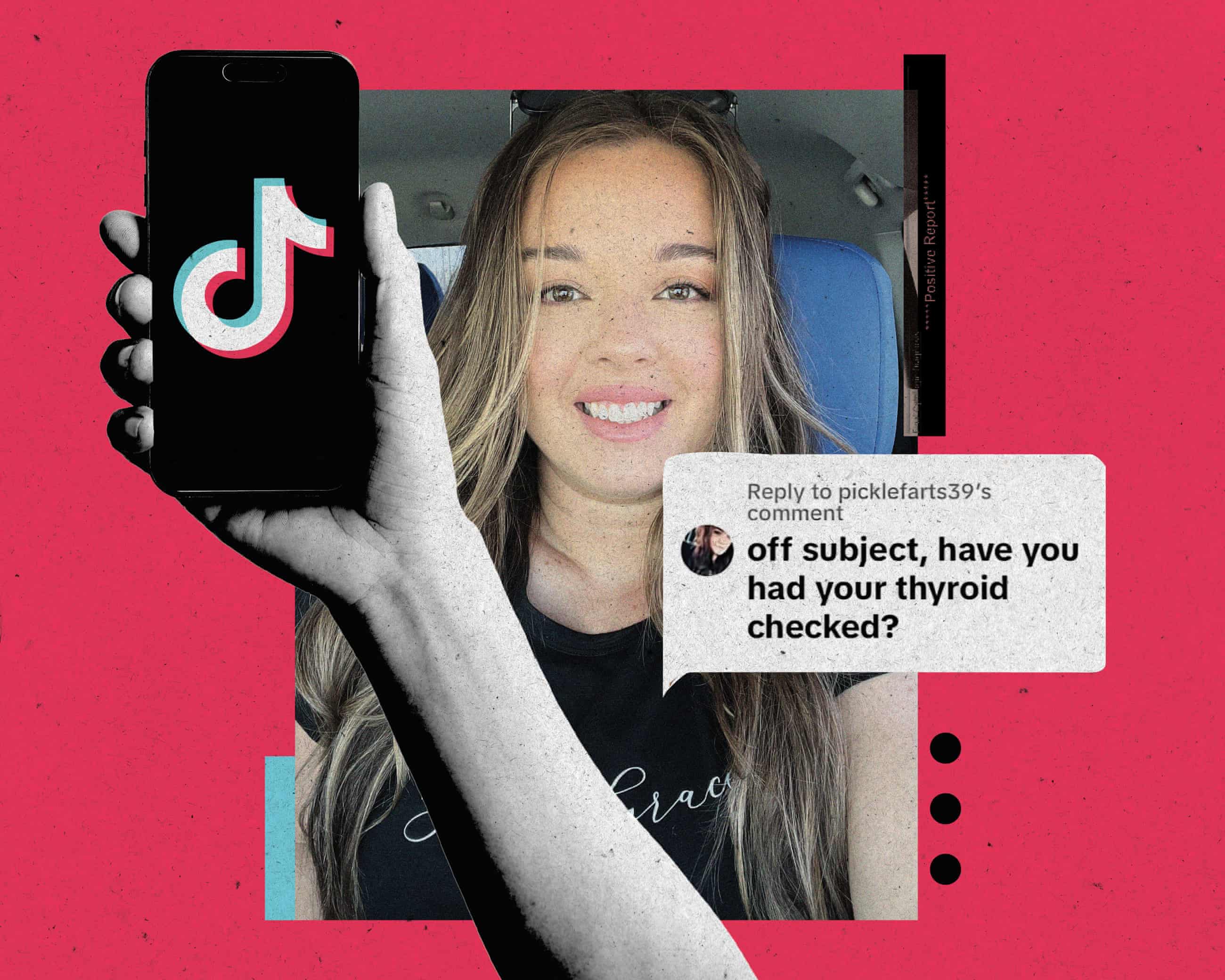
Dr TikTok: patients diagnose chronic illnesses with anonymous commenters’ help

AI companies know they have an image problem. Will funding policy papers and thinktanks dig them out?

‘Too powerful for the public’: Inside Anthropic’s bid to win the AI publicity war

‘It has your name on it, but I don’t think it’s you’: how AI is impersonating musicians on Spotify

OpenAI CEO Sam Altman’s home targeted with molotov cocktail