Iran war could plunge 32 million into poverty, says United Nations
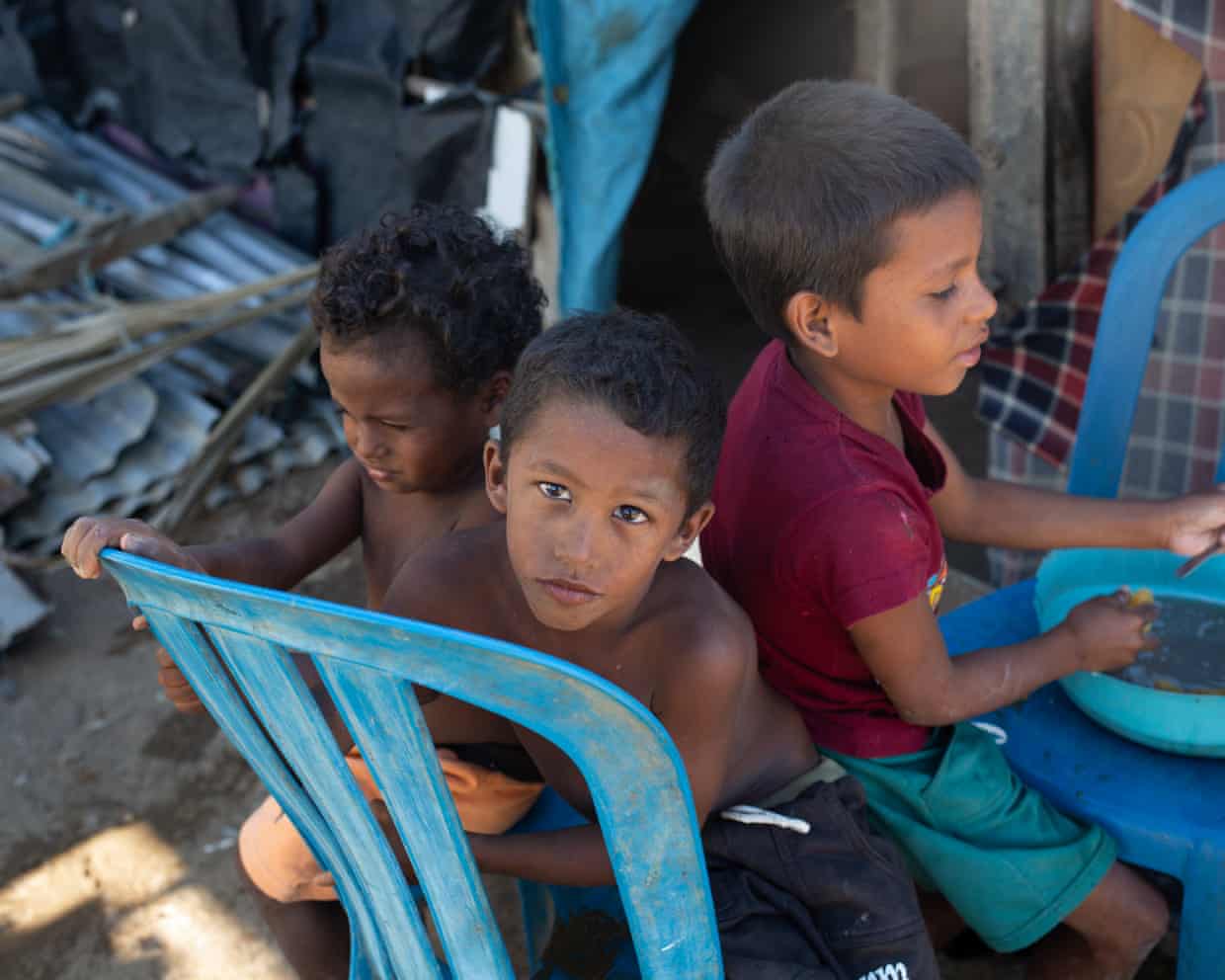
More than 32 million people worldwide could be plunged into poverty by the economic fallout from the Iran war, with developing countries expected to be hit hardest.In a report issued amid doubts over a fragile ceasefire, the United Nations Development Programme (UNDP) said the world was facing a “triple shock” involving energy, food and weaker economic growth.The agency tasked with tackling poverty said the conflict was reversing gains in international development, with the impact expected be felt unevenly across regions.Alexander De Croo, administrator of the UNDP and former prime minister of Belgium, said: “A conflict like this is development in reverse.Even if the war stops, and a ceasefire is obviously very very welcome.
But the impact is already there.“You will see an enduring impact, especially in the poorer countries, where you push people back into poverty.That’s the most heartbreaking element.The people being pushed into poverty are very often the people who used to be in poverty, got out of it, and are now being pushed back.”Energy prices have surged in the six weeks since the first US-Israeli airstrikes on Tehran, as Iran’s closure of the strait of Hormuz chokes oil and gas supplies to the world economy.
With a knock-on impact on fertiliser supplies and global shipping, experts warn that a “food security timebomb” has been set for the developing world,Even if a durable peace in the Middle East can be sustained, the head of the International Monetary Fund has said the “scarring effects” from the conflict have permanently damaged the global economy,Publishing its report as world leaders gather in Washington for the IMF’s spring meetings, the UNDP said a global response was required to support countries hardest hit by the economic fallout,It said targeted and temporary cash transfers were needed to protect the most vulnerable households in developing nations, at a cost of about $6bn to neutralise the shocks for those falling below the poverty line,De Croo said international agencies and development banks could provide the financial support.
“There is a positive economic payout for giving short-term cash transfers to avoid people getting back into poverty,” he said.Second-best interventions could include temporary subsidies or vouchers for electricity or cooking gas.However, the UNDP warned against blanket subsidies because they would unnecessarily support wealthier households, and would be financially unsustainable over time.Setting out three scenarios for the war, it found that in the worst-case – involving six weeks of major disruption to oil and gas production and eight months of lingering higher costs – as many as 32.5 million people globally would fall into poverty.
The report used the upper-middle-income poverty line, an international standard calculated by the World Bank, which is defined as income below $8.30 per person per day.Half of the global poverty increase would be concentrated in the group of 37 net energy-importing countries: in the Gulf region, Africa, Asia and small island developing states.The UNDP said that while rich countries were in a stronger position to cushion the economic fallout from the war, nations in the global south had a weaker starting position and already had severe financial constraints.The news comes as western governments, including the US, Germany, France and the UK, cut their aid spending amid elevated borrowing and debt levels across advanced economies and a clamour to increase defence spending.
Figures from the Organisation for Economic Co-operation and Development, published last week, showed countries in its development assistance committee cut aid spending by $174.3bn in 2025, almost a quarter lower than 2024’s figure.De Croo said that he understood the pressures facing rich countries but that aid cuts would have longer-term negative consequences.“Investments in development, to say it in military terms, they are the ultimate pre-emptive strike.Why you do a pre-emptive strike? You do it to avoid a conflict starting.
That is what development does,” he said.“If you invest in poverty reduction, in strong institutions, in mitigating and adapting to climate change; these are elements that will help you to stabilise the world.”

History beckons for I Am Maximus as Red Rum’s record comes in to view | Greg Wood
Relentless drama, no significant injuries to any of the 34 runners and a winner who inked himself on to the exclusive list of Aintree legends with the possibility of better to come next year. Saturday’s Grand National produced everything racing could realistically hope for and more, and if I Am Maximus can stay sound and return to Aintree in 2027 for a fourth run in the race, it promises to be one of the highlights of the sporting year.There was a 45-year wait for the next dual Grand National winner after Red Rum’s second success in 1974. Now, seven years after Tiger Roll’s second victory, I Am Maximus is only the third horse since the mid 1930s to register win number two, and the first since the peerless “Rummy” to win in nonconsecutive years. Having also finished a close second in 2025, he is arguably already second only to Red Rum in the list of all-time Aintree greats

Cardiff stages thriller while Women’s Six Nations favourites show strength
Sporting theatre reached Shakespearean heights at the Principality Stadium on Saturday as Wales and Scotland produced the best match of the opening Women’s Six Nations weekend. Welsh hearts broke seven minutes past the full 80 as Scotland managed to get a comeback win over the line. The fixture had sensational tries and late drama, and played out on BBC Two. The only thing missing was the type of crowd that such a thriller deserved.Wales hosted the game at the national stadium, the only one taking place there during this year’s tournament, watched by 10,569 supporters
Is Gout Gout faster than Usain Bolt? Australian sprinter sets sights on Jamaican great’s 200m record
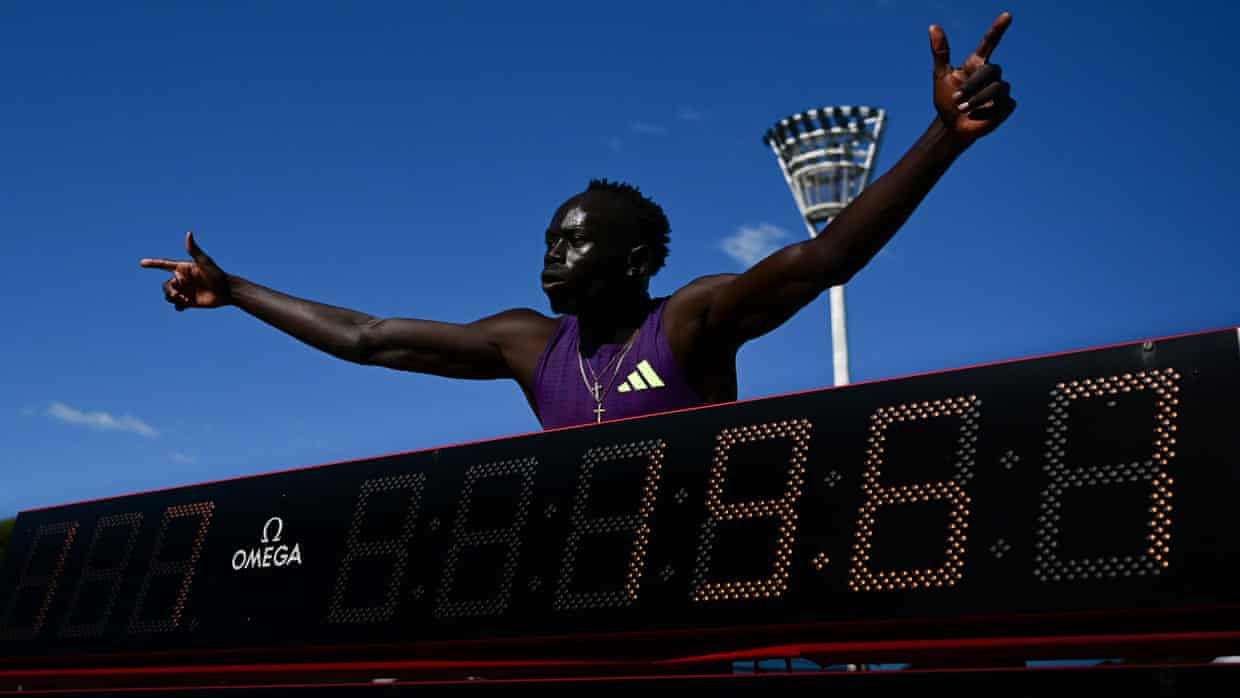
Having cracked the 20-second barrier with a sizzling run over 200m – and in the process fulled comparisons with the great Usain Bolt – the question now is, how fast can Gout Gout go?“How long’s a piece of string?” said Gout’s coach and mentor, Di Sheppard, after he clocked 19.67sec at the Australian championships in Sydney on Sunday.The time smashed his own national record of 20.02sec and was good enough for him to become the first Australian to record a legal time under the magical 20-second barrier.Aidan Murphy quickly became the second, just a step behind with another supremely impressive run in the same race, but Gout grabbed the headlines as he bettered Bolt’s best when the Jamaican sprint great was the same age

Rory McIlroy targets even loftier goals after winning back-to-back Masters titles
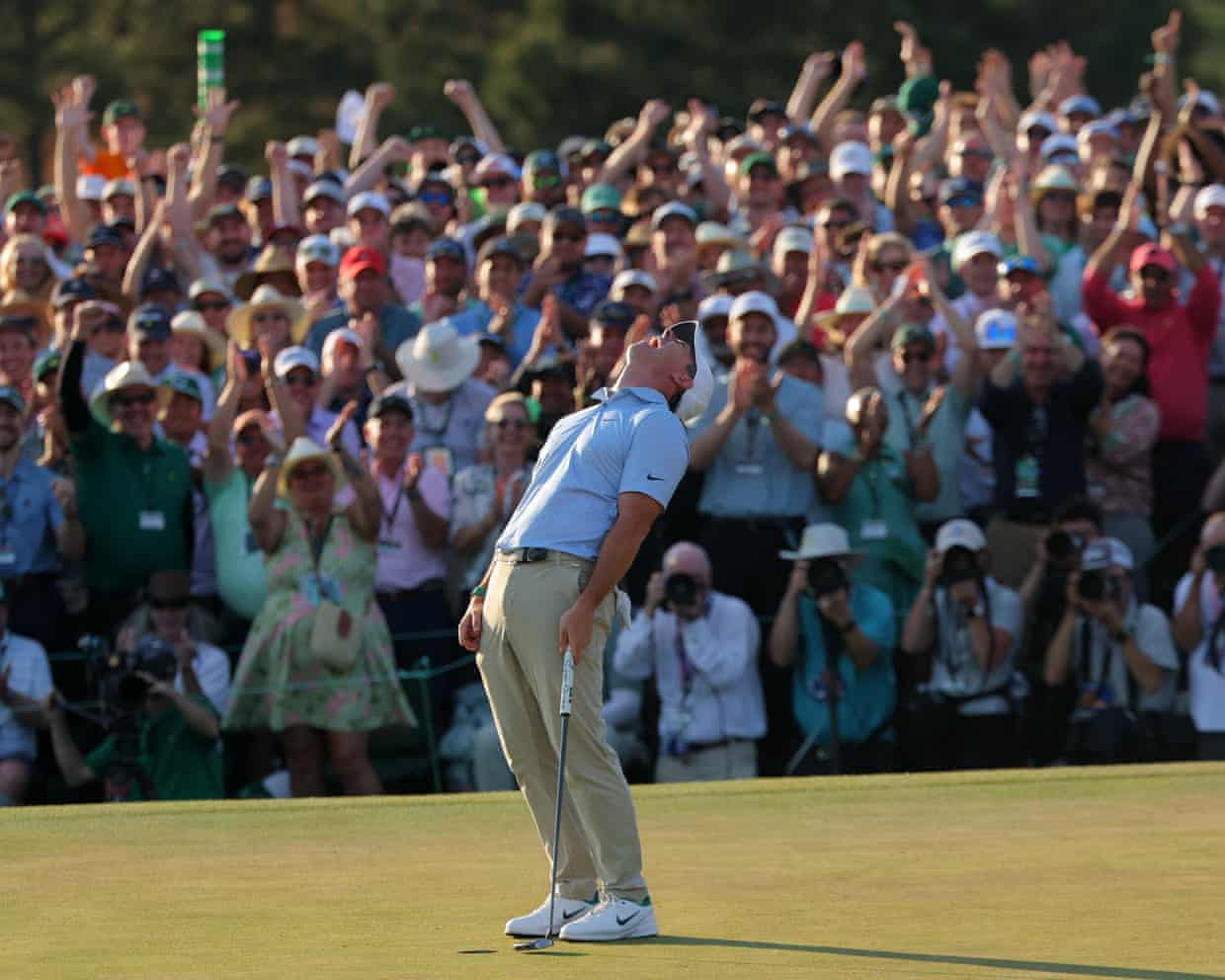
Rory McIlroy has warned the rest of elite golf he will set further, lofty goals in his sport after a successful defence of the Masters.McIlroy prevailed at Augusta National by a shot over Scottie Scheffler, meaning the Northern Irishman becomes just the fourth golfer to win the tournament back-to-back. While McIlroy will cherish his win, he has no plans to rest on his laurels.“I just won my sixth major and I feel like I’m in a really good spot with my game and my body,” McIlroy said. “I don’t want to put a number on it, I don’t want to say a stop on the journey, but it’s just a part of the journey

Rain puts dampener on Gather Round despite AFL’s hype and schmoozing | Jonathan Horn
Gather Round began with lavish lunches, intriguing matchups and a South Australian premier who lobbied for it, nurtured it and who very much now owns it. Politically, culturally and geographically, South Australia remains an excellent fit. But it always feels like the footy industry is on one big sell for the week, and this year’s version didn’t quite reach the heights of the previous three.A lot of that was due to the weather, which was atrocious at times. With two mismatches earlier on Sunday, Gather Round was crying out for a decent match to close things out
The Masters 2026: McIlroy retains title after thrilling final round – as it happened
Ewan Murray’s final verdict has landed, so that’s the cue to wind down this live blog. Congratulations to the two-time Masters champion Rory McIlroy, commiserations to Scottie Scheffler, Tyrrell Hatton, Russell Henley, Justin Rose and Cameron Young, who ran him so close; and thanks to you for sticking with us over the four days. See you again next month for the PGA Championship. In the meantime, here’s how the top of that Leader Board looks after four days of drama that will live long in the memory.-12: Rory McIlroy -11: Scottie Scheffler -10: Tyrrell Hatton, Russell Henley, Justin Rose, Cameron Young -9: Collin Morikawa, Sam Burns -8: Max Homa, Xander Schauffele -7: Jake Knapp -5: Jordan Spieth, Hideki Matsuyama, Brooks Koepka, Patrick Reed, Patrick Cantlay, Jason Day -4: Viktor Hovland, Maverick McNealy, Matt Fitzpatrick -3: Keegan Bradley, Ludvig Åberg, Wyndham Clark -2: Matt McCarty, Adam Scott, Samuel Stevens, Chris Gotterup, Michael Brennan, Brian Campbell -1: Alex Noren, Harris English, Shane LowryIn his Butler Cabin interview, Rory picked his tee shot at 12 as perhaps the most important of the final round
Rolls-Royce secures nearly £600m in UK government cash to develop small reactors
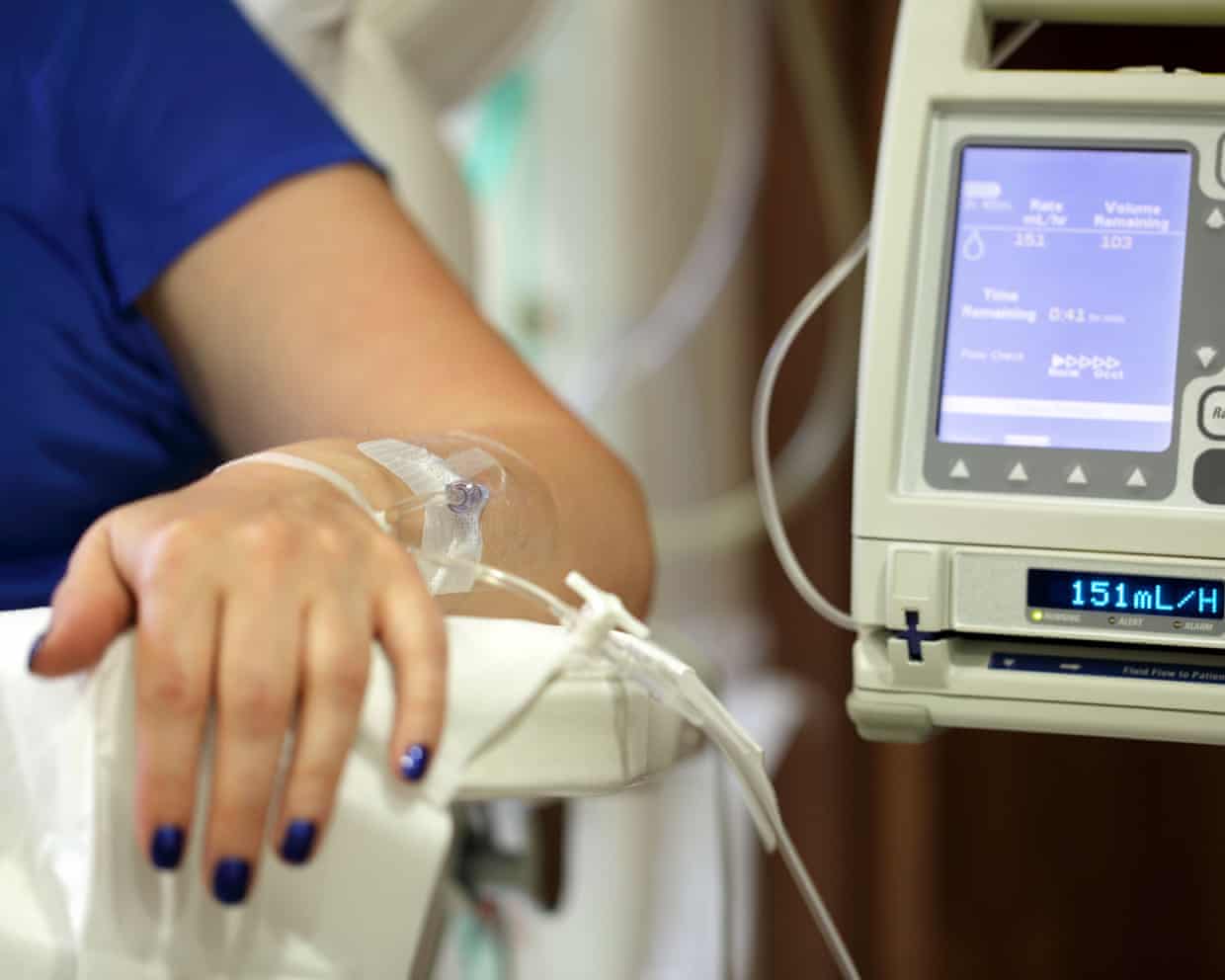
GSK reports promising early results in ovarian and womb cancer drug trial

Booking.com warns customers of hack that exposed their data

‘It feels as if I’ve made a new best friend’: my experiment with AI journalling

Rory McIlroy hails his parents after second Masters triumph

WNBA draft 2026 predictions: Will Azzi Fudd or a Spanish prodigy go No 1 overall?