Meningitis outbreak at University of Kent and three schools kills two young people with 11 in hospital

A university and three schools have been struck by an outbreak of invasive meningitis that has killed two young people and left 11 others in hospital,One of the young people to have died was a student at the University of Kent, while the second was a sixth-former at Queen Elizabeth’s grammar school (QEGS) in Faversham,Two other schools, Simon Langton grammar school for boys in Canterbury and Norton Knatchbull school in Ashford, confirmed that both had a year 13 student in hospital with meningitis,The UK Health Security Agency (UKHSA) said on Monday evening it was continuing to investigate the outbreak, with 13 cases notified since March 13, including the two deaths,The sixth-form student at QEGS was named as Juliette by teachers, who described her as a kind and intelligent young woman.
“It is with great sadness that we are confirming the loss of Juliette, a much-loved and treasured member of our school community.Juliette was a student at our school for seven years.She was incredibly kind, thoughtful and intelligent and she loved our school and was very happy here,” said the headteacher, Amelia McIlroy.“Juliette embraced everything that school had to offer with great enthusiasm and joy and her humour and positivity were captivating.She was a genuinely caring and attentive listener, a true friend who listened with warmth, respect and sincere interest to her peers and to our staff.
“In short, she was a lovely girl – her beautiful smile, her loving nature and her sense of fun will be hugely missed,We are all devastated,Our love and thoughts are with her family and friends at this terribly sad time,”Juliette’s father told the BBC the family were “beyond devastated and they have no words to express their loss”,Over the weekend it was reported that a University of Kent student was one of two people to have died after contracting the disease, while 11 more people were seriously ill in hospital.
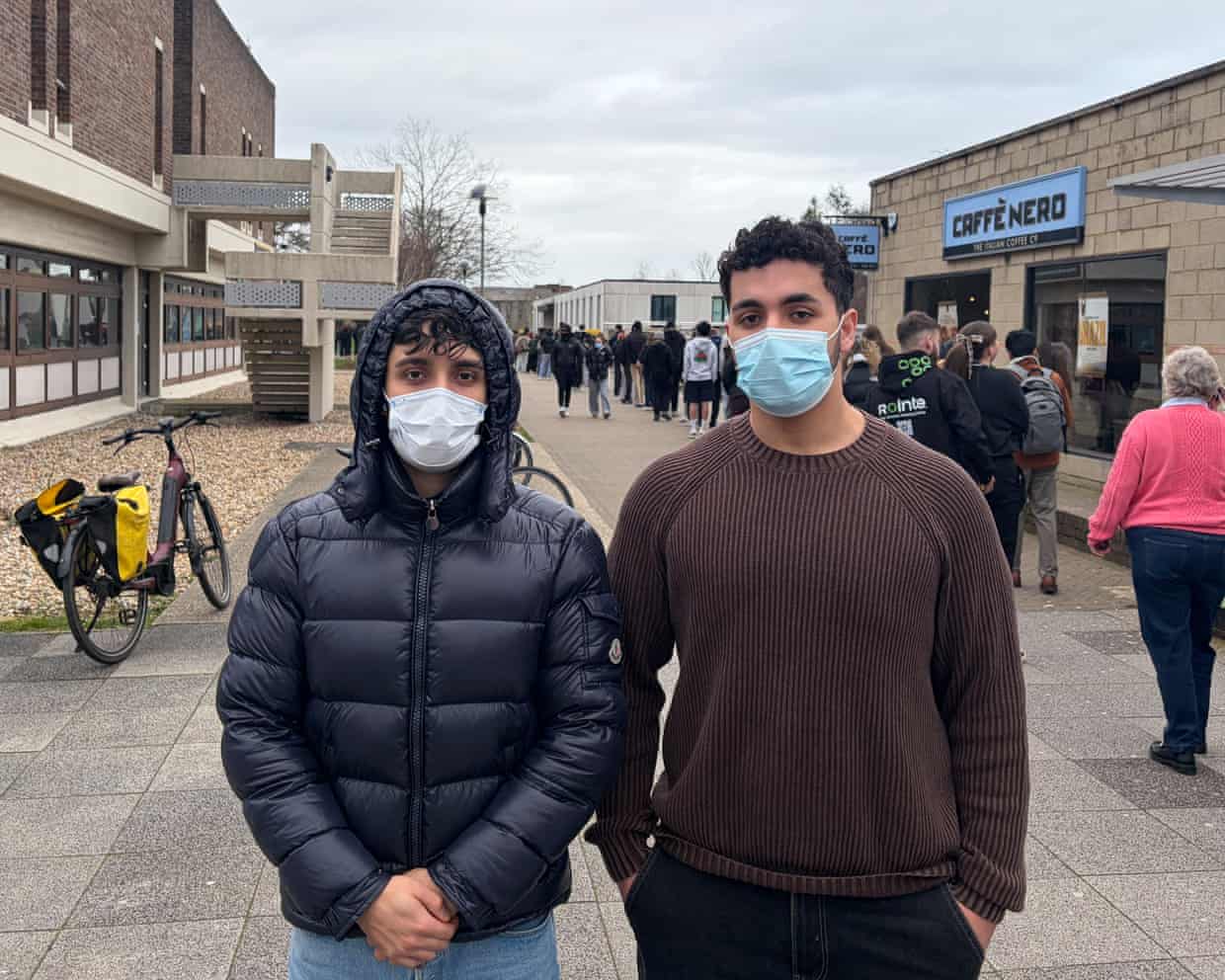
Long queues of students – many wearing face masks – were building at the institution’s Canterbury campus on Monday morning, as they awaited antibiotics.Many turned up after being approached directly by the UK Health Security Agency (UKHSA) because of possible contact with infected people.Others are thought to have arrived after calling 111.Teaching has finished at the university for this term and exams are under way.All assessments due to take place this week will be moved online, affecting about 1,700 students, but the campus remains open.
“It’s not a Covid lockdown situation,” a spokesperson said.“There are still staff and students around.It’s quieter because teaching has finished anyway.”Kirab Rhoda, 18, a law and criminology student from Uganda, said her mother had offered to book her a flight home after the news of the meningitis outbreak, but she was feeling reassured by the university handing out medicine.“I feel reassured because the school cares, I feel [it’s] safer than not any action taking place.
This is really assuring to all students,” she said,Law student Millie Inglis, 21, said she got a message to collect antibiotics, adding: “We were just pretty shocked,It just feels like a repeat, it feels very Covid-esque,As long as everyone’s all right, though, I guess that’s all that matters, really,We’re just making sure that it doesn’t get any worse.
”On Monday, Helen Whately, the MP for Faversham and Mid Kent, said: “The meningitis outbreak in our area is a huge shock.Feeling so deeply sad for the young lives lost – a year 13 pupil at QEGS and a Uni of Kent student.My heart goes out to their families.”In a post on Facebook, she added: “It’s incredibly worrying too for the families of the young people in hospital, and others at risk.I am asking the NHS urgently for more information and guidance, especially given the rumours going round about where they may have picked it up.
”Whately said she had spoken to the health secretary, Wes Streeting, and was expecting to hear from the UKHSA on Monday morning.The UKHSA said it had been notified between Friday and Sunday of 13 cases of people with signs and symptoms of meningitis.Some students at the University of Kent have been given antibiotics, while others are in hospital.The specific strain of meningitis has not yet been identified.“We can confirm that UKHSA has worked with the University of Kent to provide advice letters to all 16,000 students, advising on recent cases, signs and symptoms, how to obtain antibiotics, and what to do if they feel unwell,” a UKHSA spokesperson said.
Not all students were to be given antibiotics, only those regarded as close contacts of those affected.The UKHSA confirmed that some cases visited Club Chemistry in Canterbury, and they are offering free antibiotics at temporary sites to anyone who went there on 5, 6 or 7 March.Louise Jones-Roberts, the owner of the venue, told the Press Association more than 2,000 people would have visited the club over those three days, and would now need tracing for antibiotics.She said her thoughts were with the families of those affected by the outbreak.“I’m devastated.
I can’t imagine what the families are going through.Our thoughts are with the families.Meningitis affects healthy, young people and this is devastating.”Meningococcal bacteria can cause serious illness, including inflammation of the lining of the brain and blood poisoning, which can rapidly lead to sepsis.Anyone can get meningitis, but it is most common in babies, children, teenagers and young adults.
The UKHSA said anyone with meningitis and septicaemia symptoms should seek medical help urgently.Symptoms include a rash, sudden fever, severe headaches, a stiff neck, vomiting and diarrhoea, joint and muscle pain, sensitivity to bright lights, cold hands and feet, seizures, confusion and extreme sleepiness.
‘The videos are terrifying’: students describe spreading panic amid Kent meningitis outbreak
On Monday morning, nine days after a night out at Club Chemistry, a nightclub in Canterbury, Joe Bradshaw realised he had been linked to the meningitis outbreak in Kent that has killed two people, a university student and a sixth-former.He ran through the week in his mind, beginning to worry about those he had been in contact with.“I’m less concerned about my own health than spreading [the infection] to other vulnerable people,” he said. “My mum’s just come out of surgery so her immune system is relatively suppressed.”Bradshaw, 23, is one of the many young people in Canterbury shocked by news of the outbreak
Meningitis outbreak at University of Kent and three schools kills two young people with 11 in hospital
A university and three schools have been struck by an outbreak of invasive meningitis that has killed two young people and left 11 others in hospital.One of the young people to have died was a student at the University of Kent, while the second was a sixth-former at Queen Elizabeth’s grammar school (QEGS) in Faversham.Two other schools, Simon Langton grammar school for boys in Canterbury and Norton Knatchbull school in Ashford, confirmed that both had a year 13 student in hospital with meningitis.The UK Health Security Agency (UKHSA) said on Monday evening it was continuing to investigate the outbreak, with 13 cases notified since March 13, including the two deaths.The sixth-form student at QEGS was named as Juliette by teachers, who described her as a kind and intelligent young woman

Child’s play: blame it all on the dog | Brief letters
When gently asked about a pen scribble in a picture book “Goodness, I wonder who did that?”, 27-month-old Emily confidently retorted “Nancy!” – our miniature dachshund (Little liars: babies younger than one practise deceit, study suggests, 16 March).Dianne BallNottingham The government’s fuel duty is set, but the VAT element is a percentage of the retail price. Reducing VAT, perhaps to zero, could be a way to show an intent for fuel price “fairness” and avoid accusations that the government is profiteering, as it is suggesting that others might be (Watchdog puts UK fuel retailers ‘on notice’ over profiteering from Iran war, 12 March).Mic PorterWhitley Bay, Tyne and Wear Donald Trump’s performance reminds me of the Lyndon Johnson campaign’s evaluation of Barry Goldwater, his Republican rival in the 1964 presidential election: “In your guts, you know he’s nuts”.Dr John DohertyStratford-upon-Avon, Warwickshire So Iran may to have to withdraw from the Fifa World Cup (Report, 12 March) because it is being bombed by the winner of the Fifa peace prize

‘Second chance’: why minister wants to jail fewer women in England and Wales
Pat had been in trouble with the police before, when she was 16 and had been spat out of the care system with no qualifications, no housing and no support. Nearly 50 years later, she heard a knock on the door again.There had been a fire in the estate where she lived, and another resident said she had seen Pat start it. “I was in the police station for nearly two days before I got to the magistrates court,” she said, worrying one finger over the top of her hand. “The magistrate said he was sending it to the crown court, and sending me to prison, basically

Robert Goodman obituary
In 1992 a man with poorly controlled schizophrenia climbed into the lions’ enclosure at London Zoo and was badly mauled. This and other horrifying incidents in the early 1990s prompted widespread concern about services for mentally ill people.Better statistics were urgently required. Official surveys initially focused on adults, but in 1999 the Office for National Statistics decided to survey children and young people’s mental health for the first time, turning to the child psychiatrist Robert Goodman to guide their team of psychologists and statisticians.As well as being a distinguished child psychiatrist, Goodman had invented two child psychiatric assessment tools that now underpin population surveys worldwide: the Strengths and Difficulties Questionnaire (SDQ) and the Development and Well-Being Assessment (DAWBA)

Kent meningitis outbreak: key questions answered
A sixth-form pupil and a university student in Kent have died and 11 people are believed to be seriously ill in hospital after an outbreak of a rare form of invasive meningitis. We take a look at the disease, and how the situation is being managed.Meningitis is a serious condition in which the membranes surrounding the brain and spinal cord are infected with bacteria or a virus and become inflamed. It can come on suddenly and can be fatal.The current outbreak appears to involve invasive meningococcal disease

Chris Bowen declares rush on jerry cans ‘un-Australian’ as he urges end to panic buying of petrol

Train delays: compensation claims to be easier under Great British Railways

Thames Water rescue deal talks rumble on interminably but its future remains unclear | Nils Pratley

Car park firm NCP falls into administration, putting nearly 700 jobs at risk

IEA to consider release of more oil reserves as Iran war keeps prices high

UK mortgage rates jump, and petrol prices rise, amid ‘Trumpflation’ worries; Oil price falls as Bessent says US is letting Iran ship its crude – as it happened