‘Second chance’: why minister wants to jail fewer women in England and Wales
Pat had been in trouble with the police before, when she was 16 and had been spat out of the care system with no qualifications, no housing and no support,Nearly 50 years later, she heard a knock on the door again,There had been a fire in the estate where she lived, and another resident said she had seen Pat start it,“I was in the police station for nearly two days before I got to the magistrates court,” she said, worrying one finger over the top of her hand,“The magistrate said he was sending it to the crown court, and sending me to prison, basically.
”Pat, now 66, spent the next seven months on remand at HMP Bronzefield,When her case came to the crown court, she was acquitted,She struggles to walk but found when she came out of prison that her mobility car had been confiscated after the local authority stopped payments,“Being in prison turned my life upside down,” she said,“Even now I still can’t get over the fact that I was in prison.
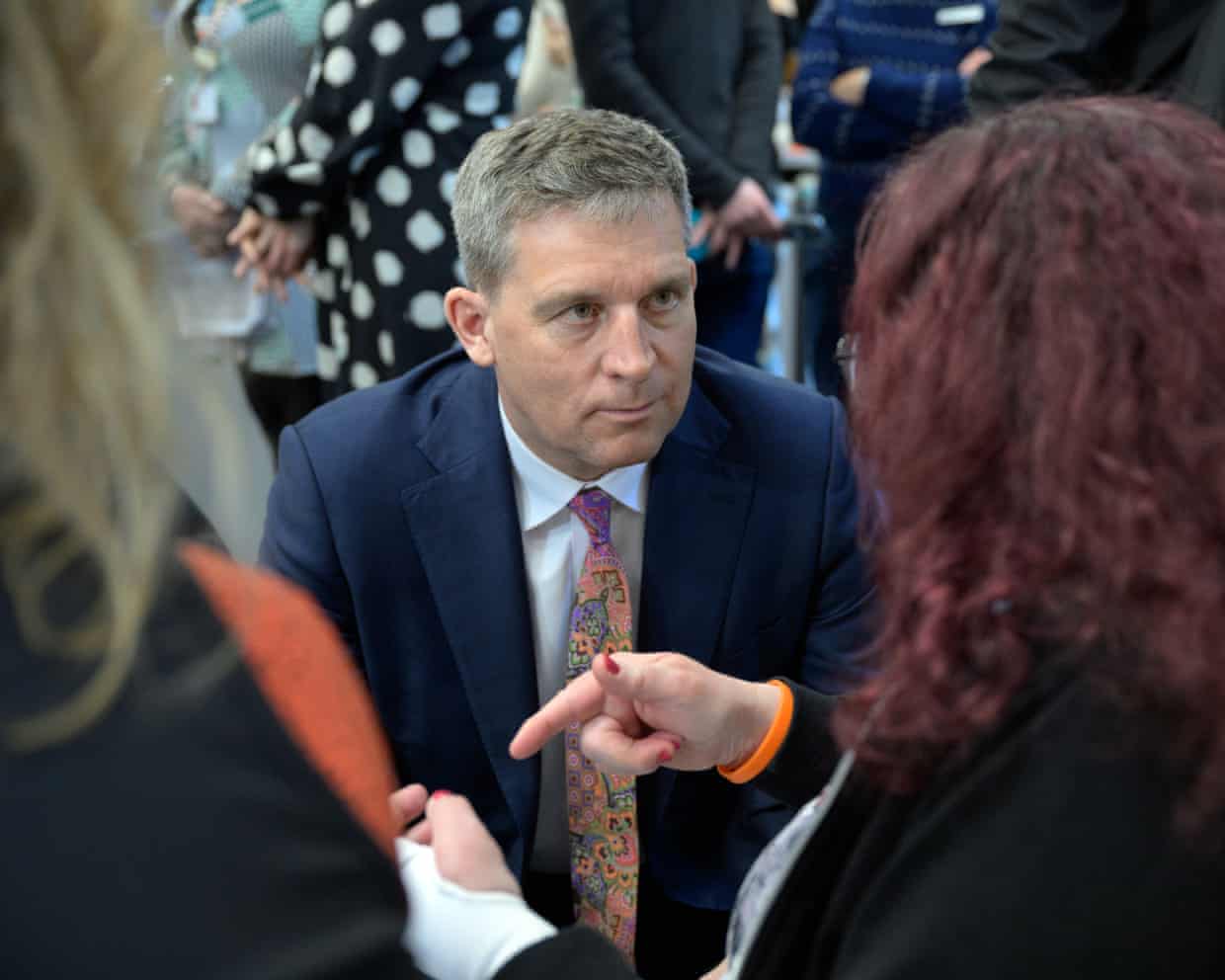
Words just fail me.I’ve got no money, I had to get an emergency loan off universal credit so that I could live.And I’m still paying it back.”James Timpson, the CEO turned prisons minister of England and Wales, thinks women like Pat do not belong behind bars.During a visit last week to Alana House, a women’s centre in Reading run by the charity Pact, which provides support for women in the criminal justice system, Lord Timpson told former prisoners about his parents fostering 90 children during his childhood, some of them just babies who needed to be looked after while their mothers served time.
“What is clear is that there are far too many women in prison who should not be there,” he said,“Prison is needed for some women because of the crimes that they do, but there are far too many women who should be diverted away from prison and supported, and that’s what we want to try and do,”Timpson, who was on the visit to trumpet £31,6m of new Ministry of Justice funding for women’s services, admitted that the transition from chief executive of his family shoe repair and key-cutting business to (unpaid) government minister had not been easy,Having to immediately deal with an overcrowding crisis, the Labour peer was tasked with shepherding the Sentencing Act, which was passed in January and replaced most short sentences of a year or less with community sentences and allowed for some people to be released earlier.
“The first few months I will put down as a traumatic experience because we had the capacity crisis,” he said.“But now I feel the genuine green shoots across a huge amount of the areas that we’re responsible for, including from a women’s justice perspective.”A longtime observer of the criminal justice system – Timpson has employed ex-offenders since 2002 – he said he was grateful for the chance to use the machinery of government to make a difference.“I feel very strongly that there are so many people who deserve a second chance in life and to be able to get the keys to drive change, it’s worth sacrificing all the other things,” he said.Women form only about 4% of the prison population, their number having dropped slightly from 3,600 in October 2024 to about 3,300.
But for those in it the statistics are unrelentingly grim.More than two thirds of female prisoners are victims of domestic violence and half have suffered a brain injury.While two-thirds did not commit a violent crime, female prisoners are nine times more likely to self-harm than men.“There are many women who are, in my view, in the criminal justice system because they are victims,” Timpson said.“We need to help them.
”Last year Timpson set up the Women’s Justice Board with the explicit aim of reducing the number of women in prison.In its first report, released on Monday, it called for a change in the law so that pregnant women are imprisoned only in exceptional circumstances, and new laws to reduce remand and recall.It also urged the government to incentivise police forces to keep women out of prison by using alternatives such as deferred sentences, which give offenders a grace period to tackle an issue that resulted in them committing a crime.Pia Sinha, the CEO of the Prison Reform Trust and a member of the board, said successive governments had called for fewer women to be put in prison, without much changing.She compared the formation of the Women’s Justice Board to that of the Youth Justice Board in 1998, which is credited in part for vastly reducing the youth prison population in England and Wales, from 3,200 in 2008 to 445 in 2024.
“When everyone works together, you can actually really make a difference on the ground,” Sinha said.“We now have a team of experts influencing the government, saying: ‘We’ve been hearing this for 20 years, what are you going to do that’s different?’”Speaking to Timpson at Alana House, Pat said the women’s centre had been her “lifeline”.Having left school at 15, in prison she took GCSE maths and English, getting the highest grade possible.Now she hopes she can pay off her debt, get her mobility car back and start volunteering to help other women who are getting out of prison.“It’s like there’s a missing piece in me at the moment,” she said.
“But I’m going to get that missing piece back.”

AI has exposed age-old problems with university coursework | Letter
The frustration many academics are expressing about artificial intelligence and critical thinking is understandable (‘I wish I could push ChatGPT off a cliff’: professors scramble to save critical thinking in an age of AI, 10 March). But from my experience working with students on academic writing, blaming AI risks masking a problem that universities have lived with for years.In my work with students, I have long seen the ways in which thinking can be outsourced when assessment allows it: essay mills, shared past papers, model essays passed between cohorts, or heavy reliance on tutors and friends to structure assignments. Artificial intelligence did not invent this behaviour. It has simply industrialised a shortcut that already existed

Trump administration reportedly set to be paid $10bn for brokering TikTok deal
Donald Trump’s administration is reportedly poised to be paid $10bn by investors as part of a deal to create a US-controlled version of TikTok.The $10bn, considered by the US government as a sort of transaction fee, will be paid by the administration-friendly investors who took control of TikTok’s US operations from its Chinese parent company, ByteDance, according to reporting that first appeared in the Wall Street Journal.The investors in the popular social media app include software company Oracle; MGX, an investment firm based in the United Arab Emirates; and private equity business Silver Lake. These entities, along with other backers, paid $2.5bn to the US treasury when the deal closed in January and are set to make further payments in the unusual arrangement until the total hits $10bn

Meta and Google trial: are infinite scroll and autoplay creating addicts?
It was as “easy as ABC”, claimed the lawyer prosecuting a landmark social media harm case against Meta and Google which heard closing arguments this week. The defendants were guilty, said Mark Lanier, of “addicting the brains of children”. Not true, replied the tech companies. Meta insisted providing young people with a “safer, healthier experience has always been core to our work”.Features such as autoplay videos, infinite scrolling and constantly chirruping alerts woven into the fabric of online platforms were central to the six-week trial in Los Angeles, which has been compared to the cases against tobacco companies in the 1990s

New study raises concerns about AI chatbots fueling delusional thinking
A new scientific review raises concerns about how chatbots powered by artificial intelligence may encourage delusional thinking, especially in vulnerable people.A summary of existing evidence on artificial intelligence-induced psychosis was published last week in the Lancet Psychiatry, highlighting how chatbots can encourage delusional thinking – though possibly only in people who are already vulnerable to psychotic symptoms. The authors advocate for clinical testing of AI chatbots in conjunction with trained mental health professionals.For his paper, Dr Hamilton Morrin, a psychiatrist and researcher at King’s College in London, analyzed 20 media reports on so-called “AI psychosis”, which describes current theories as to how chatbots might induce or exacerbate delusions.“Emerging evidence indicates that agential AI might validate or amplify delusional or grandiose content, particularly in users already vulnerable to psychosis, although it is not clear whether these interactions can result in the emergence of de novo psychosis in the absence of pre-existing vulnerability,” he wrote

Fake rooms, props and a script to lure victims: inside an abandoned Cambodia scam centre
It is as if you have walked into a branch of one of Vietnam’s banks. A row of customer service desks, divided by plastic screens, with landline phones, promotional leaflets and staff business cards. A seated waiting area and a private meeting room. All of it features the OCB bank’s logo, or its trademark green colour.This is not a genuine bank branch, however

Apple cuts China App Store commission fees after government pressure
Apple announced late on Thursday it would lower the commission fees collected in its App Store in mainland China. The move follows pressure from regulators in the tech company’s second-largest market, as well as global scrutiny of its payment requirements.Fees for in-app purchases and paid transactions will be lowered to 25% from 30% starting on Sunday, Apple said in a statement on its blog for developers.“Apple is making changes to the App Store in China following discussions with the Chinese regulator,” the company’s announcement reads. “As of March 15, 2026, changes will be made to the commission rates that apply to the China mainland storefront of the App Store on iOS and iPadOS

US oil prices could see another day of wild fluctuation as Iran war drags on

Chinese-owned Syngenta to build new £100m bioscience hub in UK

Sobering times: alcohol-free beer added to UK inflation basket

European takeover battle hots up with UniCredit’s ‘unfriendly attack’ on Commerzbank
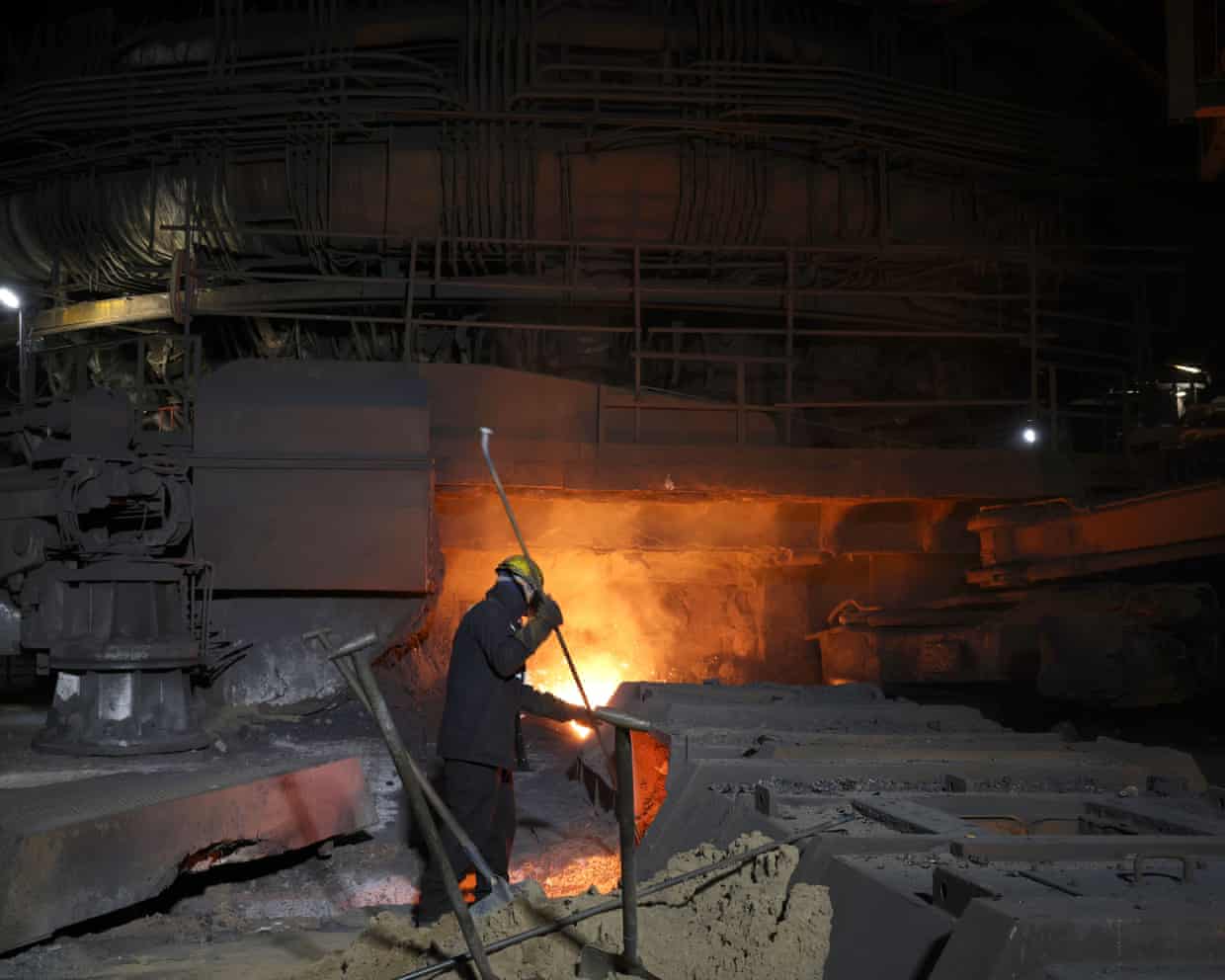
Taxpayer bill for saving Scunthorpe steel furnaces could top £1.5bn by 2028, auditor says

Thames Water lenders float new £10bn rescue plan