AFL to plough funds into addressing racism as league grapples with Indigenous drop-off
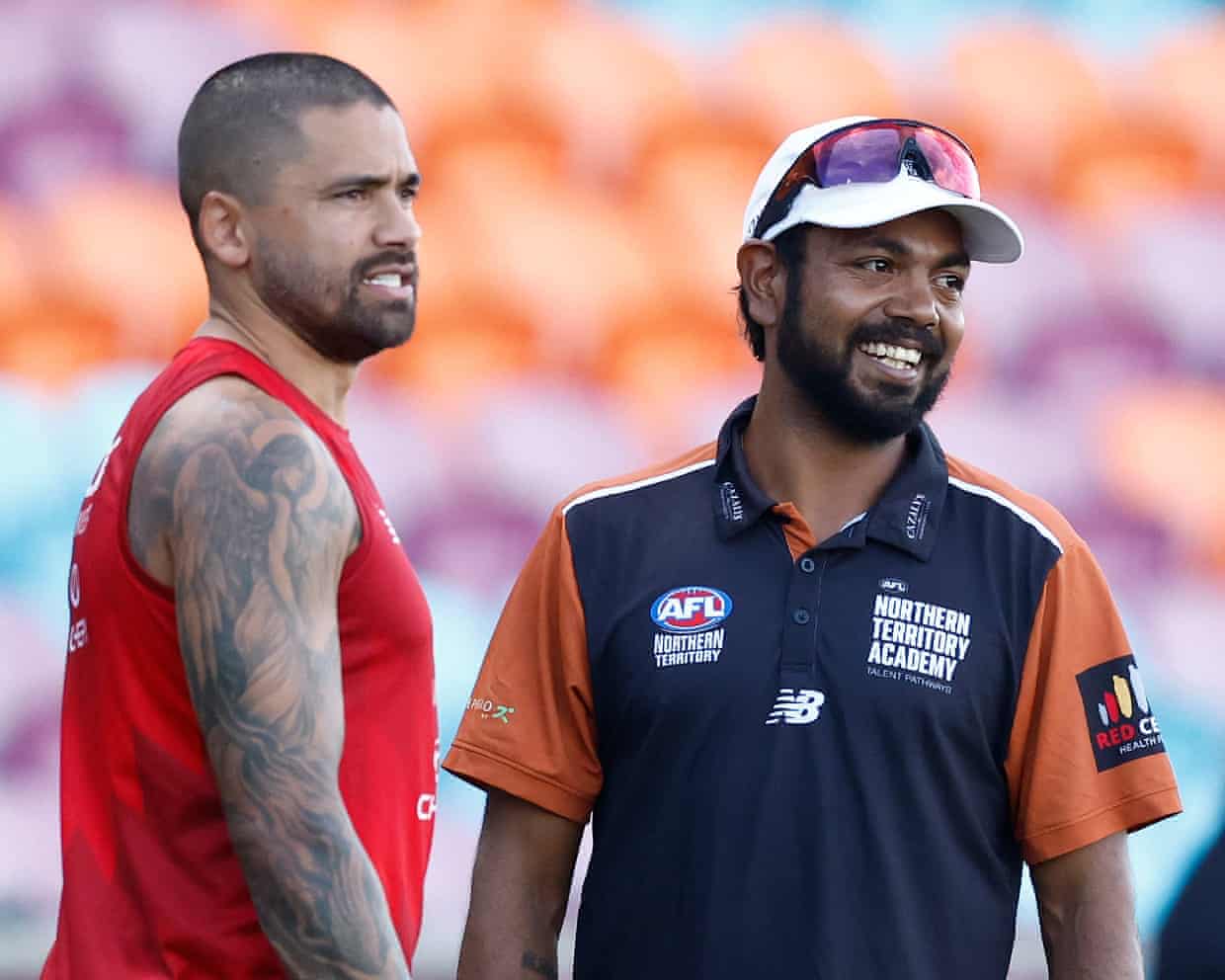
The AFL will divert around $300,000 from Indigenous guernsey sales towards initiatives designed to address culturally unsafe environments and racism, as the league grapples with a growing trend of First Nations players leaving the game.The number of Indigenous players in the league has dropped every year since its peak of 87 in 2020, to now where it sits at 62.Under its five-year strategy drafted last year, the AFL has targeted an increase to 89 by 2030.AFL chief executive Andrew Dillon said First Nations teenagers are getting drafted at a higher rate than their overall share of the league, but more work needs to be done to ensure players can fulfil their potential.“What we did see last year was nine Indigenous players drafted in the men’s competition, which was a bigger proportion of the 80-or-so players drafted – percentage-wise, that was a really high percentage,” he said.
“But what happened was, at the same time, we had 11 Indigenous players delisted, so that’s why the number went down.”The typical career for an Indigenous player is approximately one year shorter than that of a non-Indigenous player.The trend is evident even in the careers of high-profile, proven performers such as Willie Rioli, who retired last year at age 30.Dillon said there are no “cookie-cutter” solutions, and the league has introduced a subcommittee to look at ways of growing Indigenous numbers.There is also a working group considering dedicated First Nations list spots.
“I think the players are there.Would we like even more? Absolutely, and that’s why we’re doing that work,” he said.“So it’s not only just about identifying, it’s then when the players are on the list, how can we make sure that an Indigenous player stays on the list as long as any other player does.”The AFL expects the newly-launched First Nations impact fund will receive around $300,000 this season.Clubs are able to access the funding by pitching initiatives to support the league’s First Nations strategy, which include creating culturally safe environments and calling out and addressing racism.
St Kilda’s Bradley Hill said he didn’t know exactly what the cause for the drop-off was, but he believed there is still more to be done to help young Indigenous players realise opportunities,“Growing up as an Aboriginal young kid I know how hard it can be as a teenager, whether it’s getting to training, getting people committed to their teams,” said the Noongar man and three-time premiership player,“I know sometimes it is difficult for us to get there, whether it’s money, travel, there could be a lot of things that we could do to make it easier for the younger boys coming through,”Hill said there was a “positive outcome” to last month’s incident when Hill and others at the Saints took exception to a comment by coach Ross Lyon described as “casual racism”, but he did not want to elaborate further,“It’s already been out there in the newspapers and stuff, I probably don’t need to touch on that again,” he said.
“I think you guys all know exactly what went on.”
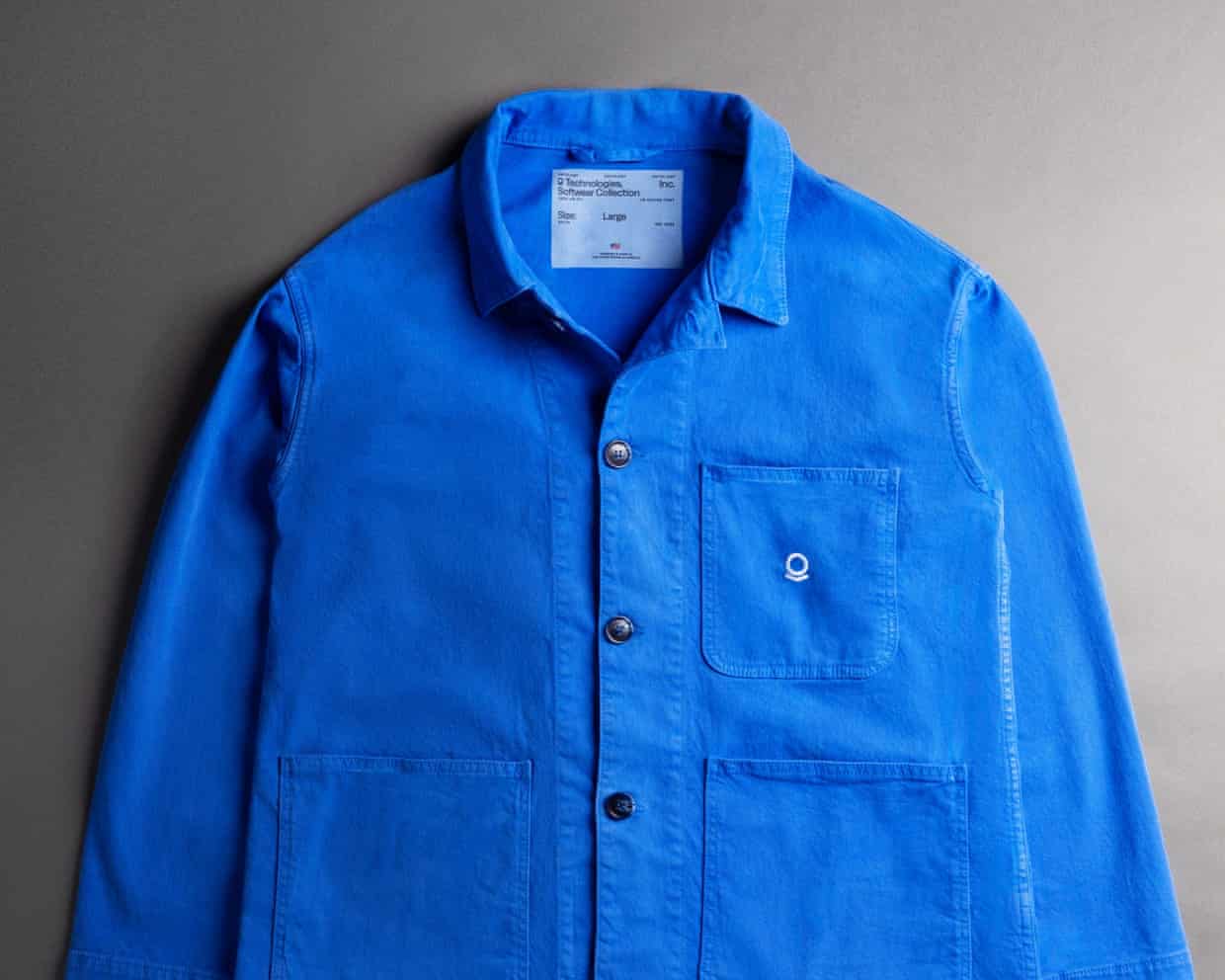
AI-powered surveillance company Palantir created a chore coat. Great, now I have no choice but to burn mine | Van Badham
It’s taken me years to find a chore coat with a cut that flatters my big tits but, now that I finally own one, I want to incinerate it.Such is the power of brand contamination; infamous data surveillance megacorp Palantir has decided to bang a logo on a chore coat to sell as corporate merch.Chore coats are the traditional short denim or twill jacket of the 19th-century French working class. Palantir, however, is a company whose public words and commercial-in-confidence activities are inspiring local calls to have its contracts cancelled and its business banned.The gentle French garment is now as cursed as whatever “Marie Amazonette” will ever wear to the Met Gala

‘Being human helps’: despite rise of AI is there still hope for Europe’s translators?
In February 2022, while he was plugging away at rendering the US writer Dana Spiotta’s novel Wayward into French, the literary translator Yoann Gentric decided he needed a bit of light relief. He would test whether AI could put him out of work.Gentric had been grappling with a short non-verbal sentence that described the book’s protagonist’s feelings upon opening a window: “Bright, sharp night air, bracing.” He put the prompt into DeepL, a neural-network-powered machine translation engine that regularly outperforms Google Translate in accuracy assessments.The proposed translation was reassuring, with his job security in mind: L’air de la nuit, vif et vif, était vivifiant (The night air, lively and lively, was enlivening

UK schools should remove pupils’ online photos as AI blackmail threat grows, say experts
UK schools should remove pictures of pupils’ faces from their websites and social media accounts because blackmailers are using them to create sexually explicit images, experts have said.Child safety experts and the UK’s National Crime Agency (NCA) warn that criminals are using AI to manipulate photos of children and then demand cash not to publish them.They are recommending educational institutions remove identifiable pictures of children from their websites and social media accounts – or consider not using them at all.The Internet Watch Foundation (IWF) said an unnamed UK secondary school had recently been subjected to a blackmail attempt after criminals used the institution’s website or social media accounts to take photos of schoolchildren and then, using AI tools, turned them into child sexual abuse material (CSAM). The blackmailers sent the images to the school and threatened to publish them online if they did not receive money

Meta sues Ofcom over fines regime for breaches of Online Safety Act
Meta has launched a legal challenge against the UK’s media regulator over the fees and fines regime it is enforcing under landmark digital safety legislation.The Facebook and Instagram owner is claiming that Ofcom’s methodology for calculating the charges is flawed and should not be based on a company’s global revenue. Breaches of the Online Safety Act can be punished by fines of up to 10% of qualifying worldwide revenue (QWR) or £18m – whichever is higher.In the case of Meta, which reported revenues of $201bn last year, Ofcom could in theory impose a fine of $20bn for breaches. Under regulations introduced in September, Ofcom’s fees will also be based on a proportion of an organisation’s QWR and apply to businesses that made more than £250m of this revenue a year

‘No one has done this in the wild’: study observes AI replicate itself
It’s the stuff of science fiction cinema, or particularly breathless AI company blogposts: new research finds recent AI systems can independently copy themselves on to other computers.In the doom scenario, this means that when the superintelligent AI goes rogue, it will escape shutdown by seeding itself across the world wide web, lurking outside the reach of frantic IT professionals and continuing to plot world domination or paving over the world with solar panels.“We’re rapidly approaching the point where no one would be able to shut down a rogue AI, because it would be able to self-exfiltrate its weights and copy itself to thousands of computers around the world,” said Jeffrey Ladish, the director of Palisade research, a Berkeley-based organisation which did the study.The study is one more entry in a growing catalogue of unsettling AI capabilities revealed in the past months. In March, researchers at Alibaba claimed to have caught a system they developed – Rome – tunnelling out of its environment to an external system in order to mine crypto

Europe’s AI translation industry told it risks reputation by partnering with US firms
AI companies in Europe risk losing their world-leading status in the field of machine translation, industry figures have said, after the decision by one of the continent’s leading startups to partner with Amazon’s cloud computing division provoked alarm.While businesses in the EU have generally lagged behind the US and China in AI adoption, a small group of European companies have cornered the global market for high-quality machine translations for professional use.The biggest success story is Cologne-headquartered DeepL, an online translator that regularly outperforms Google Translate in accuracy assessments. Used by governments, courts and half of the Fortune 500 list of highest-earning US companies, last year it was reported to have recorded revenues of $185.2m

‘Restaurants won’t survive’: Michelin chef opens venues abroad to withstand UK taxes

Rachel Roddy’s recipe for spring chicken thighs with spring onions, mint and peas | A kitchen in Rome

Navel gazing: oranges, mandarins and persimmons top Australia’s best-value fruit and veg for May

How to save asparagus trimmings from the food-waste bin – recipe | Waste not

Thoran and chaat: Romy Gill’s Indian-style asparagus recipes

Australian supermarket sauerkraut taste test: one is ‘like eating the smell of McDonald’s pickle’