AI-powered surveillance company Palantir created a chore coat. Great, now I have no choice but to burn mine | Van Badham
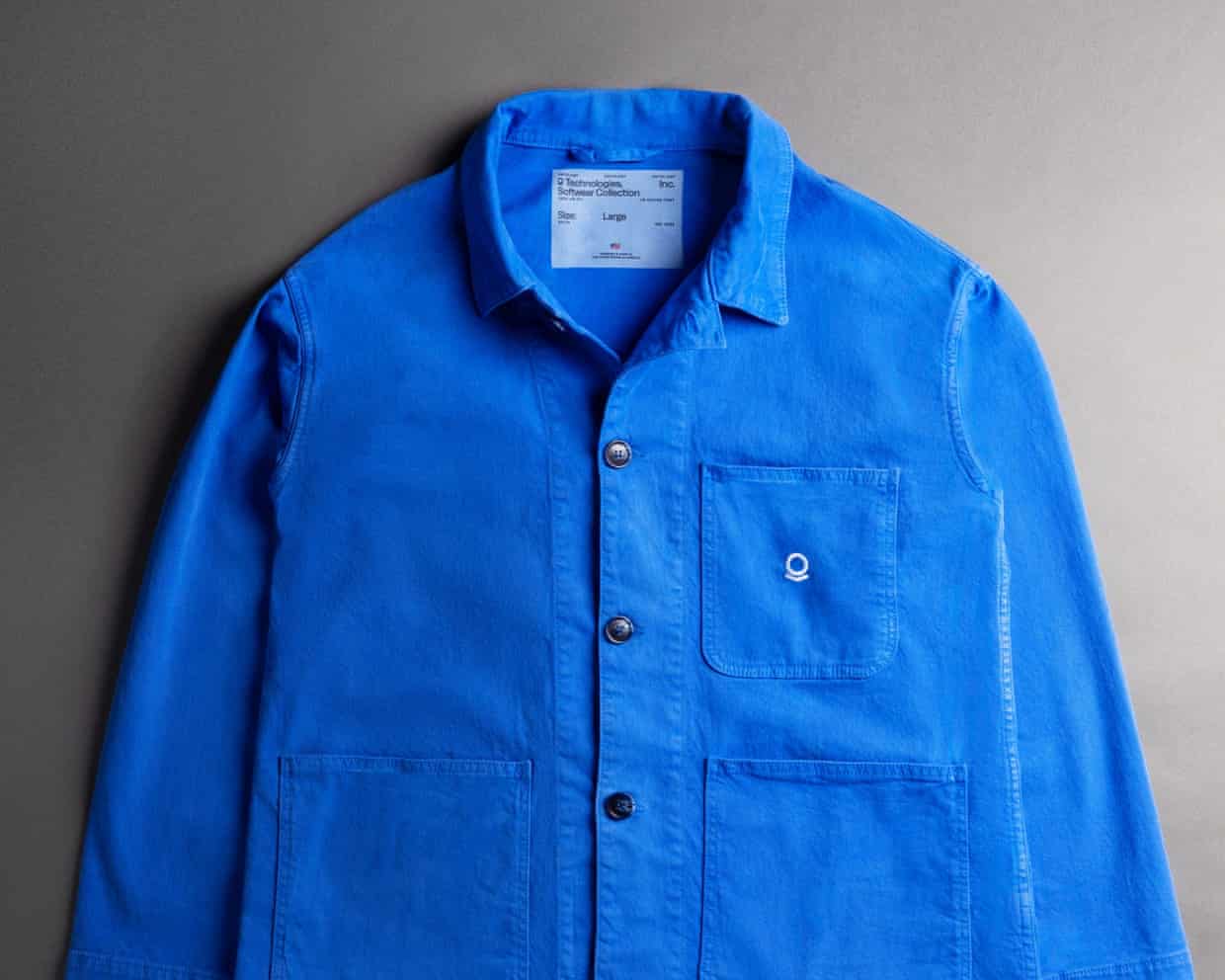
It’s taken me years to find a chore coat with a cut that flatters my big tits but, now that I finally own one, I want to incinerate it,Such is the power of brand contamination; infamous data surveillance megacorp Palantir has decided to bang a logo on a chore coat to sell as corporate merch,Chore coats are the traditional short denim or twill jacket of the 19th-century French working class,Palantir, however, is a company whose public words and commercial-in-confidence activities are inspiring local calls to have its contracts cancelled and its business banned,The gentle French garment is now as cursed as whatever “Marie Amazonette” will ever wear to the Met Gala.
According to the New York Times, Palantir’s head of strategic engagement wanted to create a merch offering “that wasn’t a bland corporate polo or vest”.Thus the veste de travail, with its convenient pockets and famous styling on the likes of Paul Newman and Jeremy Allen White became the latest cultural victim of a company with a $325bn+ market capitalisation and whose chief executive’s favourite motto is “Dominate”.The NYT reports in-house strategic engagers used to deferentially emblazon this word on hoodies and T-shirts before they decided to ruin my coat.This seems to be effective labelling for one reason, and that is knowing immediately who to avoid in a bar.Let me assure Palantir’s reputational management team that “bland corporate” is not the sticky brand of a company whose very name comes from the seeing-stones manipulated by the dark lord Sauron in The Lord of the Rings as he attempts to take totalitarian control and, uh, dominate the lands of Middle-earth.
With its reputation as the “scariest company in the world”, I’m disappointed the merch-makers didn’t double down on a range of horned war-helms, branded black capes and wearable fog machines for that molten-fire-pits-of-Angband workplace-casual look.Maybe next season?“Sinister” is arguably more the vibe for a global, corporate, Trump-aligned outfit supplying AI-powered surveillance technology to America’s “ICE” paramilitary, delivering “increased efficiency in deportation logistics” – although Palantir pushed back on Amnesty International’s claims operations may have been at “high risk” of contributing to human rights violations.But data-driven deportation is not Palantir’s only business! The Guardian has previously reported on its role in the Pentagon’s lethal unmanned drone program, the company’s assistance in police departments’ allegedly racist criminal profiling and the use of its software by the IDF in Gaza.Militaries and police forces all over the world use its services; so do corporations.So does the British government, and so do Australian governments – the latter to the tune of $80m in contracts and $160m in investment.
Should we discount as hyperbole, then, MPs from both the UK’s governing and opposition parties describing Palantir’s recently issued manifesto as like something from “Robocop” or “the ramblings of a supervillain”?Is it supervillainy for the Palantir co-founder and board chair, Peter Thiel, to be building a bunker in New Zealand, funding far-right political influence operations across the world, investing in for-profit private libertarian charter cities and giving speeches about “the antichrist” that quote a Nazi jurist “whose work he said helped create the core of his own beliefs”?Thiel didn’t write the manifesto! The document that claims “some cultures have produced vital advances; other remain dysfunctional and regressive”, described disarming Germany and Japan after the second world war as an “overcorrection”, backs AI weapons and has many angry words for those who’d scrutinise (for shame!) the rich and powerful was authored by Thiel’s co-founder, now CEO, Alex Karp.The “Dominate” guy.Karp clarified the absolutely-not-supervillain-like values of the company in a video to shareholders in February when he said “Palantir is here to disrupt and make the institutions we partner with the very best in the world, and, when it’s necessary, to scare enemies and, on occasion, to kill them.”Asked to respond to calls for its banning in Australia, it was reported a Palantir spokesperson replied the company was “proud” its software was used to “keep Australians safe and tackle financial crime”.Confidence in this statement somewhat depends on a shared definition of the words “safe” and “financial crime”.
Does Palantir’s version of “safety” match your democratic expectations of the same?Palantir describes itself as “just a software company”.“We simply provide the tools to help customers organise and understand their own information,” its spokesperson has explained.“How those tools are used is determined by the customer and constrained – legally, contractually and technically – by their instructions.”Of course sovereign democracies should restrict Palantir.Of course governments should not hand sensitive data to them – if only because far-right influence campaigns to weaken trust in democratic institutions are rewarded every time governments enfranchise “the scariest”, “sinister” corporations that people already do not trust.
Billionaires aren’t the only ones who read Lord of the Rings.It’s wise to be attuned to threat, whatever coat it’s wearing.Van Badham is a Guardian Australia columnist
Court rules Coles misled shoppers with its ‘Down Down’ discount campaign
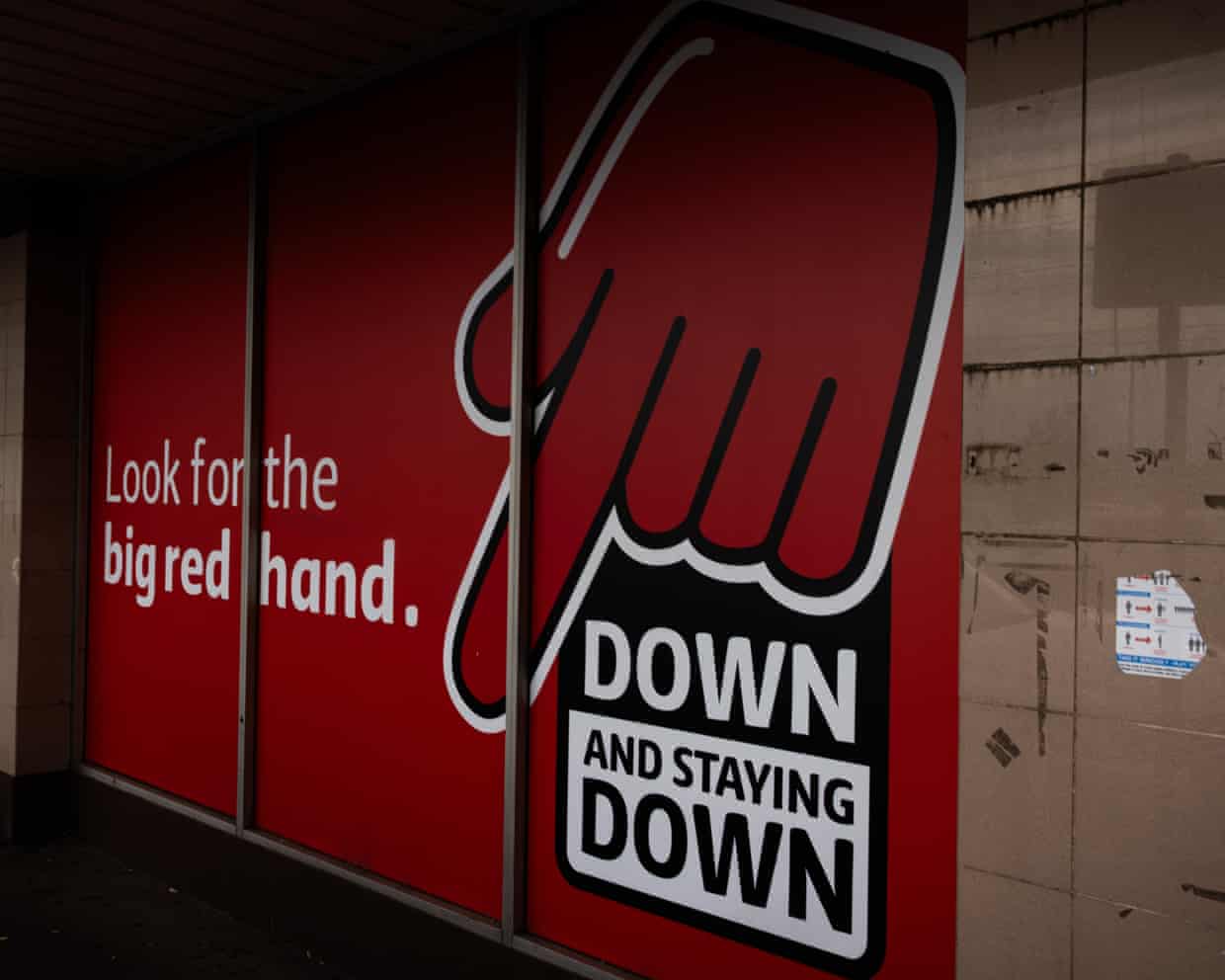
Coles misled Australian shoppers by promoting fake “Down Down” discounts on everyday grocery products, the federal court has ruled in a landmark decision for the supermarket industry.Justice Michael O’Bryan handed down his judgment on Thursday, delivering a significant blow to Australia’s second-largest supermarket chain, which had argued that the discounts represented genuine savings during a period of high inflation.He found the supermarket giant had engaged in misleading conduct, in contravention of the Australian consumer law.The Australian Competition and Consumer Commission sued Coles and its rival Woolworths, accusing the supermarket giants of duping shoppers between 2021 and 2023 by using promotional programs to disguise price increases on hundreds of products.O’Bryan’s verdict in the Coles case – which was heard in February – comes before his decision in a similar trial against Woolworths, which was heard in Sydney in late April and early May and which the judge will rule on later this year

Housing market in England and Wales weakening due to Iran war, say estate agents
Fears of higher mortgage rates and rising inflation as a result of the Middle East conflict are leading to a subdued and downbeat housing market, according to estate agents.Demand from potential homebuyers across England and Wales has shown a “noticeable softening” recently, according to a monthly survey of estate agents by the Royal Institution of Chartered Surveyors (RICS).Members have told the professional body that buyers and sellers are becoming more cautious, and many agents have cited clients who are worried about whether inflation and interest rates will rise in the coming months, leading to slower sales, fewer homes on the market, and more price-sensitive buyers.The Bank of England warned last month that interest rates may have to increase in the coming months as “higher inflation is unavoidable” because of the war in the Middle East and resulting jump in oil and gas prices.At the same time, mortgage rates are likely to be affected by the current sharp rise in government borrowing costs, as swap rates – which lenders use to price their fixed-rate mortgages – tend to move in tandem with government bond yields
Datacentres using 6% of electricity supply in UK and US, research says
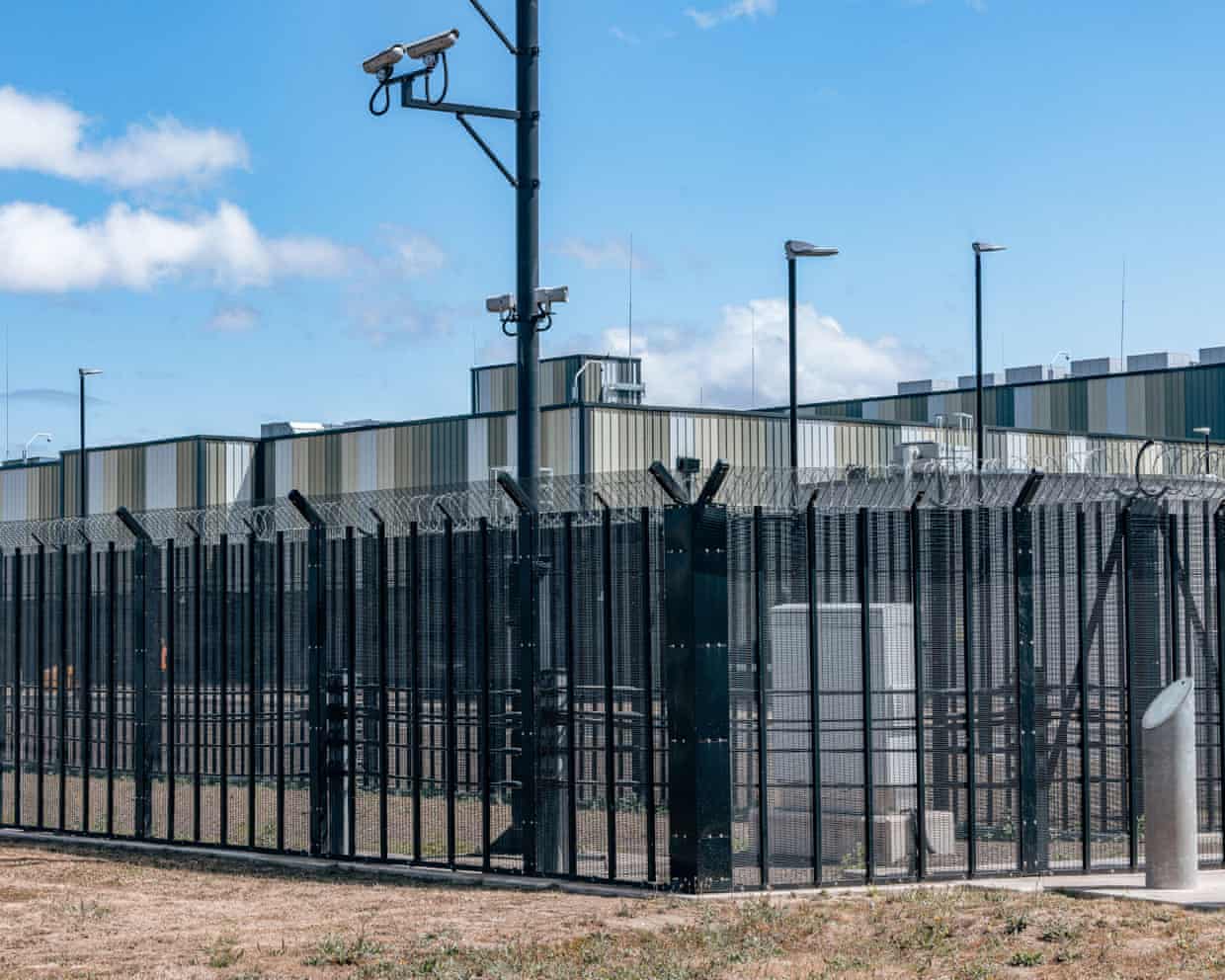
Datacentres are consuming 6% of electricity in the UK and US, with the growing strain of AI on energy supplies prompting community resistance, according to research.The proportion of electricity used by vast warehouses stacked with microchips to power AI and the internet has risen 15% worldwide in the past two years as annual global investment in datacentres approaches $1tn (£740bn) – nearly 1% of the global economy, according to the International Data Center Authority (IDCA).The figures come amid energy shortages in the UK and datacentre developers reporting waits of several years for national grid connections. The IDCA said rising power usage globally was “sparking societal and political concerns” and called on tech companies to become more transparent about their plans for new datacentres to tackle “community frustration”.The Guardian this week reported that developers working for Google significantly misstated how much carbon two proposed AI datacentres would contribute to the UK’s total emissions

Nvidia’s Jensen Huang joins other US bosses on Trump trip to China
The billionaire chief executive of the chipmaker Nvidia, Jensen Huang, has joined Donald Trump’s China delegation after a reported last-minute invitation, highlighting the US’s AI and tech ambitions.Huang will join a roster of US bosses including the Tesla chief executive and X owner, Elon Musk, the Apple chief executive, Tim Cook, and Goldman Sachs’s David Solomon at Trump’s 36-hour meeting with the Chinese president, Xi Jinping.The high-stakes summit is the first overseas trip for Trump since the US and Israel launched attacks on Iran in late February. The summit is expected to cover topics including that conflict, tariffs and China’s relationship with Taiwan.Huang was not on the initial list of business delegates, according to reports

Ivan Cleary begins long goodbye with a legacy built to last long after he leaves Panthers | Nick Tedeschi
The great coaches all have something special that elevates them above others. Wayne Bennett built his success on connection and an ability to authentically forge relationships with generation after generation of players. Craig Bellamy has a foundation of deifying work ethic and simple communication. Trent Robinson, intellect and loyalty.Ivan Cleary is an engineer, the ultimate believer in process, a coach at once ruthless and relatable who dreamt of building a bigger and more complex machine that could sustain itself beyond the people it was initially built around

Sarah Taylor named England men’s fielding coach while Gay, Rew and Baker are called up
On a day when England named three uncapped players in their Test squad, brought Ollie Robinson out of cold storage and officially confirmed a new selector had joined the set-up, perhaps the most significant news was the identity of their fielding coach.Sarah Taylor, the former England wicketkeeper, will be in charge of the fielding drills during the three-Test series against New Zealand that begins at Lord’s on 4 June – the first female coach to work in the men’s senior setup.The fact that Rob Key, the England men’s team director, almost mentioned it in passing was fitting for a coach who has quietly risen through the ranks. Taylor, 36, has held a number of roles in the men’s game since hanging up her gloves five years ago, including spells with Sussex men and Manchester Originals in the Hundred.This latest post is just for the New Zealand series initially but may continue through the summer

How to make arancini – recipe | Felicity Cloake's Masterclass

Mitsu, London EC2: ‘Determinedly fun and delicious’ – restaurant review | Grace Dent on restaurants

Benjamina Ebuehi’s recipe for Mexican-style vanilla bean flan | The sweet spot

How to match wine with vegetables

‘Restaurants won’t survive’: Michelin chef opens venues abroad to withstand UK taxes

Rachel Roddy’s recipe for spring chicken thighs with spring onions, mint and peas | A kitchen in Rome