Joseph Fiennes on parenting, politics and banning children from social media: ‘Stand up, Keir, this is your kids’ generation’
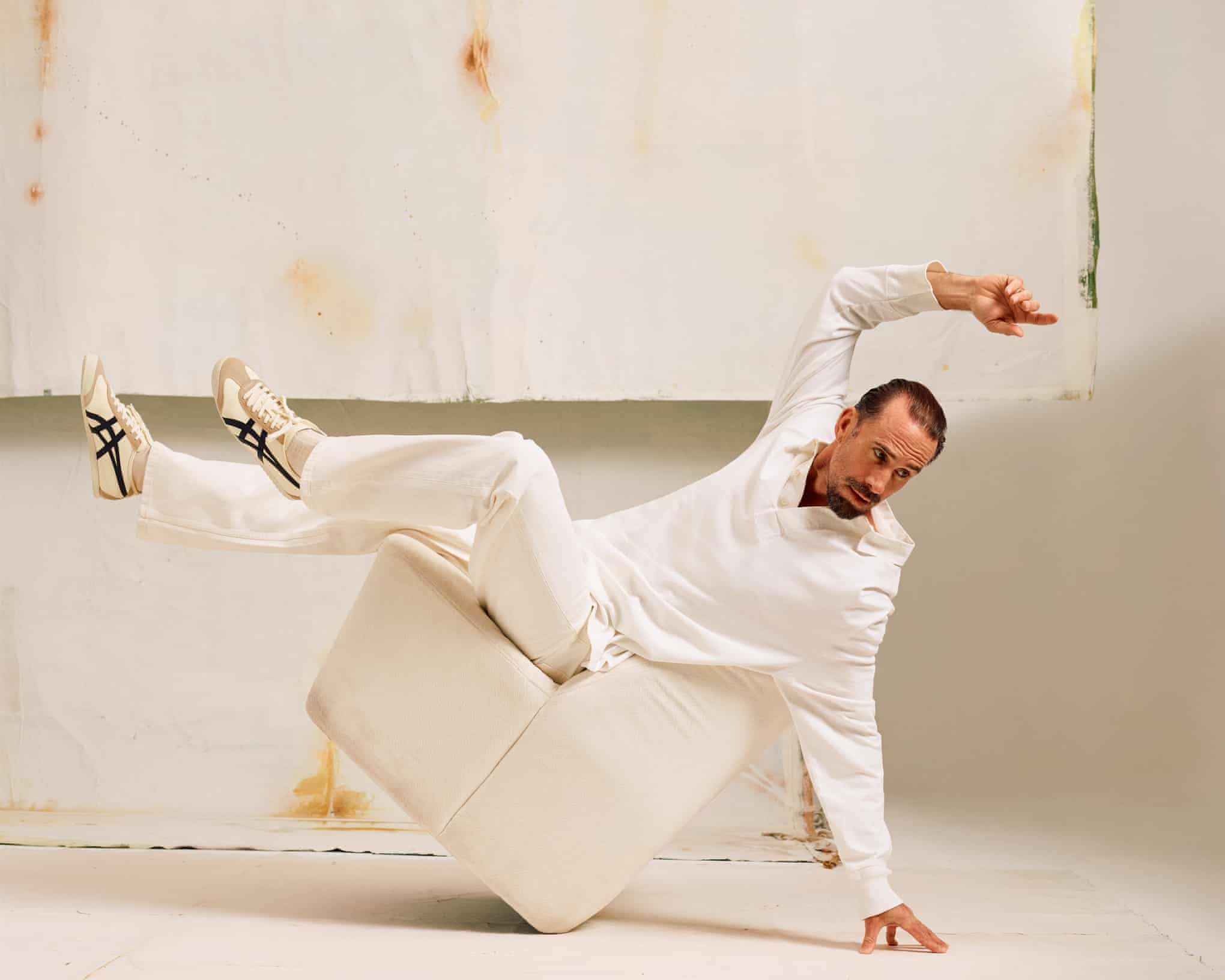
He’s played English titans from William Shakespeare to Gareth Southgate, but what does the actor really think about the country today?The Guardian’s journalism is independent,We will earn a commission if you buy something through an affiliate link,Learn more,We are at a corner table in a breakfast place in Chelsea, Joseph Fiennes opposite me on the banquette with his jack russell, Noa,“Dog duty,” he says, apologetic.
Noa looks at me, brown eyes also apologetic.They’ve been in Hyde Park, he says, he lost track, didn’t have time to take her home.Nature is where he’s at his best, where he feels cleansed, connected, observant – his sentences are decorative like this.“It’s when I’m at my happiest, on hours-long, rain-drenched walks.Hot cheeks, freezing hands.
” In an ideal world he’d be trekking or wild swimming in the rugged landscape of the Tramuntana in Spain,But if it must be London, “nothing beats Hyde Park”,Fiennes is tidy in a cashmere cardie and thick twill chinos,Noa has a snazzy yellow collar,Anyway, she’s well-behaved, he says: “Aren’t you, Noa?” She curls up to prove it.
The scene is a masterclass in unhurried wholesomeness,Until he says Noa will savage me if I’m mean,The Guardian’s journalism is independent,We will earn a commission if you buy something through an affiliate link,Learn more.
Fiennes was launched into the national consciousness as the doe-eyed, luscious-lashed 28-year-old star of Shakespeare in Love opposite Gwyneth Paltrow,He’s self-deprecating about his career since, saying to one interviewer that it condemned him to a decade of “flouncy shirts and horses” and to me that he’s been “pretty much a supporting actor for an actress throughout”,While he’s worked alongside impressive women – Cate Blanchett, Helen Mirren, Elisabeth Moss, Rachel Weisz, Eva Green – his own standout roles include the chilling Commander Waterford in The Handmaid’s Tale (whom he describes as “insidious”),Now 55, he jokes, he’s mostly “playing dads”,Not least Young Sherlock’s dad in the Amazon series – young Sherlock being his real-life nephew Hero Fiennes Tiffin – but also a gripping portrayal of Richard Ratcliffe, husband of Nazanin Zaghari-Ratcliffe, who was held hostage in Iran for six years, in Prisoner 951.
We are here to talk about Dear England.Fiennes played England manager Gareth Southgate at the National Theatre in London and now the team behind the stage production (Fiennes, writer James Graham, director Rupert Goold) have adapted it into a four-parter for the BBC.The story is built around Southgate’s “quiet revolution”.How the missing of a penalty in 1996 changed the direction and thinking of his life, and how he used that knowledge to transform the England squad.It tackles mental health, racism, huge expectation and, Fiennes says, “national pain versus performance”.
Among other things, Southgate introduced a performance psychologist, journalling and boot camp commando training to help the team throw off the curse of missed penalties and “two world wars and one World Cup”.While the play was set against the backdrop of changing “English” identity – Graham constantly updating to reflect rising nationalism in the UK – Fiennes says it’s been revised again for the screen and “framed much more as a drama”.That said, his portrayal of Southgate remains little changed.Each morning while the play ran, he rose at 4.30am to shut himself in a small room to rehearse his script (he had decorators in and the sound of drilling or Capital FM or whatever would interrupt his focus if he did it any later).
Then each evening he’d set aside two hours before curtain-up to become Gareth Southgate, or at least his interpretation of the man.Fiennes, described as “generous casting” by Southgate, had a prosthetic nose fitted, yellowed teeth, beard clipped.He immersed in Southgate’s quiet containment, inhabited his gestures, while absorbing, through Southgate’s audiobook Anything Is Possible, the England manager’s blurred consonants and halting patterns of speech.Beyond mimicry he found “an emotional connection to what this extraordinary coach was dealing with.I don’t know why.
” He found Southgate “innately there”, one of the unique times where a character “just settled in an effortless way”.Back then he hadn’t even met Southgate.He was presenting at The King’s Trust awards in June last year when he felt a tap on the shoulder.“I was about to step on stage, looking at the introduction card in my hand, and I turned and there was me, but not me.Me, who I’d been playing for two years.
And in the most lovely, unassuming voice, he just went, ‘Hello.’ I said, ‘Gareth, hello!’ and fell apart.I was way too gushing.He was very cool and calm.I said, ‘I thought you might have a go at me for not quite … ’ I never ask for photographs, but I asked for a photo of us.
”Fiennes doesn’t love being interviewed.Today, he’ll gently nudge our conversation into a sort of two-way friendly chat (“And what about you, do you have a process for interviewing?”).But he has a straight-backed self-possession, doesn’t flinch when a fire alarm goes off and meets my gaze dead on, unlike his brother, Ralph Fiennes, whom I interviewed in 2016 and who sat hunched and far away on a sofa, needing to be coaxed – “Little bit closer still” – so I could hear what he said.To understand any of the Fiennes children, perhaps you have to understand something of their extraordinary background.Their mother was the painter and novelist Jennifer “Jini” Lash (described by the author Dodie Smith as “almost too interesting to be true”); their father, Mark, a photographer and illustrator.
The siblings are all epic achievers – alongside actors Ralph and Joseph are film directors Martha and Sophie, composer Magnus Fiennes and Joseph’s twin Jake, conservationist at the 25,000-acre Holkham Estate in Norfolk,There is also their adopted brother, the archaeologist Michael Emery, and the explorer Sir Ranulph is a third cousin,(Joseph Fiennes has made two National Geographic documentaries recreating “Ran’s” greatest journeys – an expedition down the Nile and a 1,500-mile trip from British Columbia to Vancover,)The children had an itinerant existence, trying to escape, as Fiennes understands it, their “very precarious” financial woes,“It was seven bodies to clothe, seven mouths to feed and very little, if any, income.
” He remembers going to the post office with his mum to collect the family allowance: “But, God, it was enough for a pint of milk and butter or something.It was tiny and when males are hungry at that age … ” His parents, nonetheless, “understood the value of nature” and he describes a wild and adventure-filled childhood, some of it in the West Country, “muddy and messy, camps in woods, never washing your hands.Snotty noses, jumpers with holes.It was pure liberation, freedom – nature.It was damp and cold, spitting logs or filling up the coal, gardening or washing the potatoes and feeding the dogs.
It was on the go all the time, and I loved it,”There was no time for sibling rivalry, he says, “just the exhilaration of the physical”,And anyway, their personalities were “fiercely different”,Jake – he smiles saying this – was into roadkill,“You’d open the freezer and there’d be a ferret, an owl, a bit of fox, or something he was trying to taxidermy.
I found that disgusting,” He describes navigating country lanes on a hand-me-down girl’s bike “far too big for me”, roaming free for “seven, nine hours,Out,Gone,No phone.
In winter it was slushy runs down hills on a plastic bag, in summer, playing on Stonehenge slabs,”The freedom of home sharply contrasted with school,He attended 14 in all, and the boys were disciplined with belts, rulers and canes, “not for being rude, not for swearing,For being ‘enthusiastic’, for being ‘energetic’, for being alive as a young boy in Tisbury in 1982,” In Ireland, where they moved, he experienced “horror beatings” by nuns in Kilkenny, as well as the idyll of village life in Kilcrohane.
“The sweet shop owner gave my twin and I a glass jar of lollipops for the journey back to the UK.God, we must’ve been so high on the worst type of sugar.” Transport was a VW campervan, “painted a mad colour, either bright blue or yellow.It was how we escorted our mother’s coffin, crazy with ribbons,” he adds.Jini died of breast cancer aged 55.
I ask how it feels to be that exact age now.“I feel every day my life is just beginning – this or that opportunity comes in for work, and I keep evolving and pushing.That she was robbed of that haunts me.My mother is indelibly marked into my creative psyche.Not a moment goes by without her force.
” His brother Ralph talked about being “in the frontline of her pain” as the firstborn, and of her “emotional fragility”.He was hyperaware of her frustration, he said, of her wanting to paint, to write, of the conflict between motherhood and the creative drive.“My mother never hid anything,” he said in 2016.“In a way, it makes you quite responsible [as a child].Their problems were our problems: ‘We have no money, we don’t know what to do, we’ll have to sell this, we’ll have to go there.
’ Or in those explosive moments, when it’s all too much, she would say, ‘Why do we have so many children?’ in front of us.” At the same time Ralph was funny about how chaos turned him into a tidy obsessive – turning jars so the labels face out, agonising over crumbs, spills, damp teacloths; how an unmade bed or clothes-strewn floor had him repeating “Accept!” Right now, Joseph is brushing white dog hairs from his lap, saying of Noa, “Her hair gets everywhere.I feel really embarrassed.”In some ways he renewed his mother’s connection to Spain when he met and married Maria Dolores Diéguez, an actor and model, and moved to Mallorca to raise their two daughters, 16 and 14 (and Noa, of course, who is six).His wife’s family are in Galicia, he says, and there’s “a Celtic magic there and some very wild places”.
They’ve also done some of the Camino de Santiago routes with the children.“Before my mother passed she spent a year walking through France and Spain, and then to Santiago where she wrote her book On Pilgrimage, so serendipitously, it’s been a way to quietly connect with her as a pilgrim.”The family moved back to London a couple of years ago, in part because Brexit rules ended freedom of movement.Right now, his home is filled with GCSE artwork, marbling technique sending him into a spiral about paint dripping on the carpet.Does he feel more English or European? “Depends what day it is.
The compassion within my house is clearly European.” They gather for every meal, for instance.“We’ve had breakfast, lunch and supper together every day since the girls were born.We’re at the table and we talk.No devices.
”His daughters are on social media only “when I allow them to be,I am the controller,” He jokes that it’s always said that the two toughest jobs in the country are prime minister and England coach, but he would add parent to that list,“It is impossible,We are up against the fucking nightmare of tech companies and devices and the disruption of brain chemistry that hijacks our kids in the most valuable and poignant part of their lives – their childhood.
On the way here, I’m walking the dog, I’m picking up poo, and at the same time I’m trying to manage screen time and being bombarded with messages: ‘Can you release my phone?’ It’s such a hard thing to say no and to insist on no devices in the bedroom after a certain time.But I do that, yes, 100%.”He calls social media “the great manipulation”, the single most important factor in the rise of extreme politics, including Trump in the US and Reform in the UK.“And it’s driven by big business, by billionaires.” Here he rails about the onslaught against kids his children’s age
US consumer confidence hits record low as Americans fret about rising prices; jobs report beats forecasts – as it happened
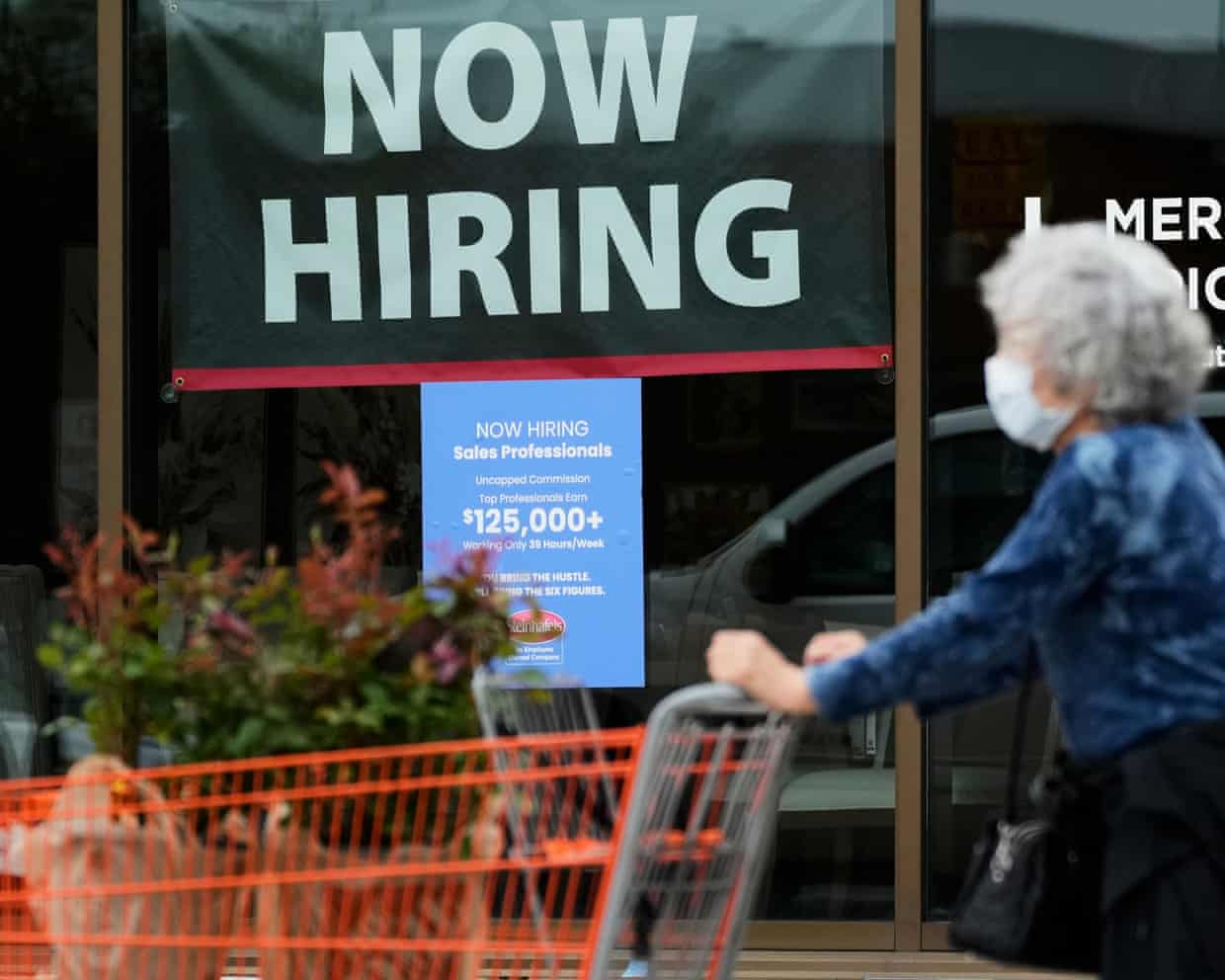
Newsflash: the US economy added more jobs than expected in April.Non-farm payrolls rose by 115,000 last month, the Bureau for Labor Statistics reports, beating forecasts of a 62,000 increase.That’s still a slowdown compared with March, though – where the NFP has been revised up to 185,000 jobs, from 178,000 initially.But February’s data is even worse than previously thought – payrolls that month are now estimated to have fallen by 156,000, down from a previous estimate of a 133,000 decline.Those revisions mean employment in February and March combined is 16,000 lower than previously reported
UK borrowing costs fall and pound rises after Starmer says he will stay as PM
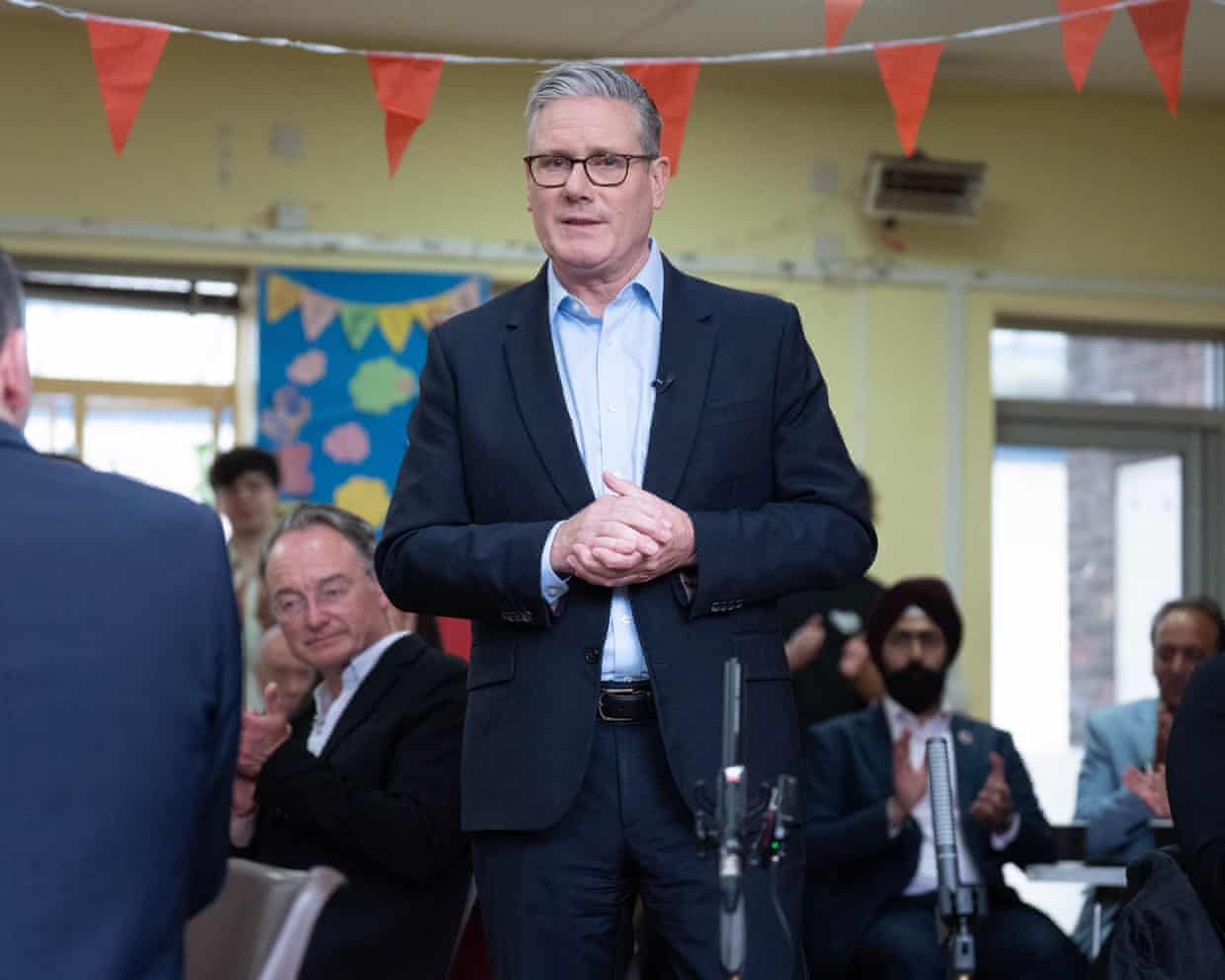
UK government borrowing costs fell and the pound rose on Friday as Keir Starmer vowed to remain as prime minister despite the Labour party losing hundreds of council seats across England.Investors calculated that some of the intense pressure on Starmer’s leadership had eased, as Labour appeared on track for smaller losses than election experts had predicted.The yield – effectively the interest rate – had jumped earlier this week, amid fears that the prime minister could face a leadership challenge if the results from the local elections and the devolved parliaments in Scotland and Wales were particularly poor.But after Starmer insisted he would not walk away, the yield on benchmark UK 10-year gilts was down 5 basis points, or 0.05 of a percentage point, at 4
‘Being human helps’: despite rise of AI is there still hope for Europe’s translators?
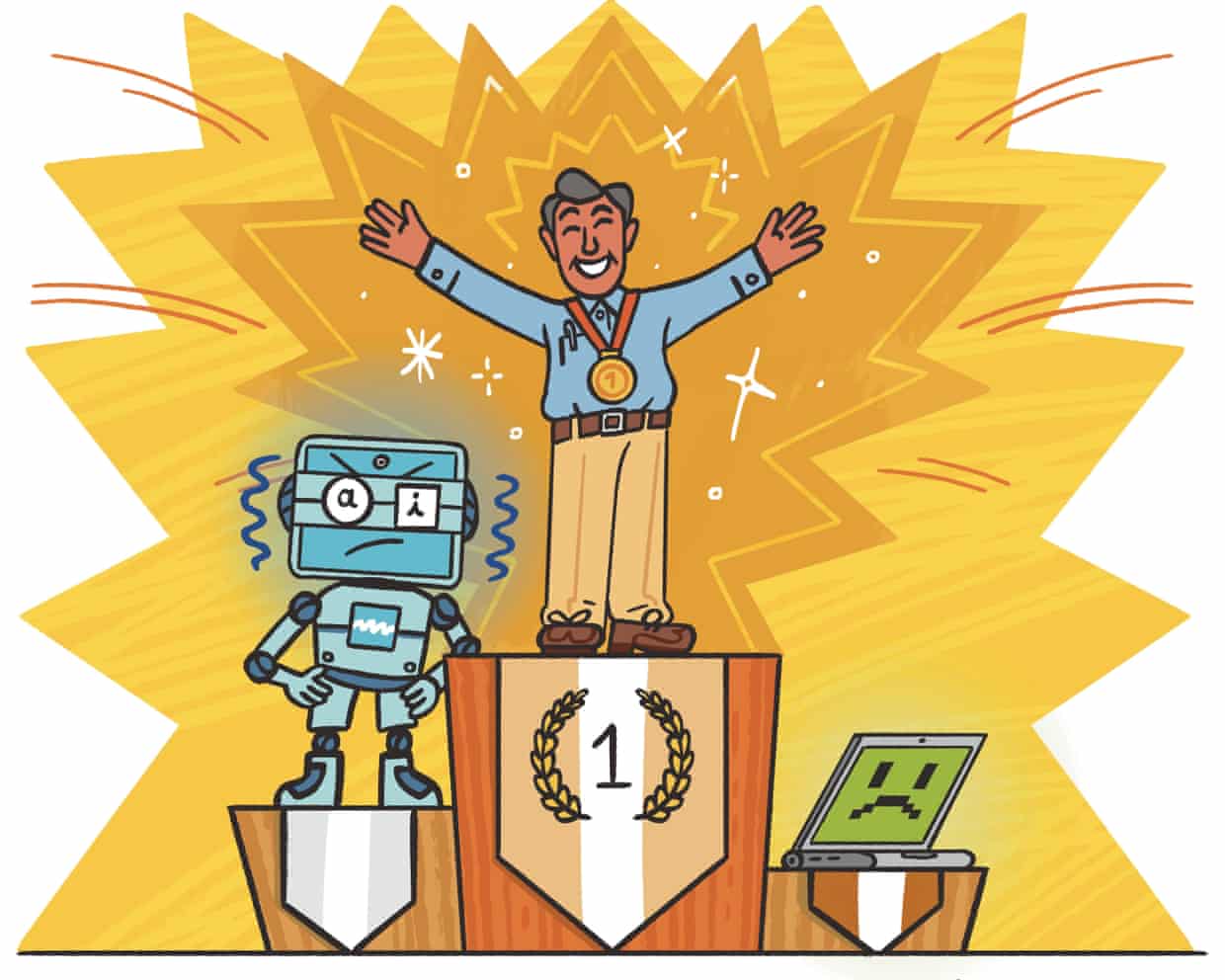
In February 2022, while he was plugging away at rendering the US writer Dana Spiotta’s novel Wayward into French, the literary translator Yoann Gentric decided he needed a bit of light relief. He would test whether AI could put him out of work.Gentric had been grappling with a short non-verbal sentence that described the book’s protagonist’s feelings upon opening a window: “Bright, sharp night air, bracing.” He put the prompt into DeepL, a neural-network-powered machine translation engine that regularly outperforms Google Translate in accuracy assessments.The proposed translation was reassuring, with his job security in mind: L’air de la nuit, vif et vif, était vivifiant (The night air, lively and lively, was enlivening

UK schools should remove pupils’ online photos as AI blackmail threat grows, say experts
UK schools should remove pictures of pupils’ faces from their websites and social media accounts because blackmailers are using them to create sexually explicit images, experts have said.Child safety experts and the UK’s National Crime Agency (NCA) warn that criminals are using AI to manipulate photos of children and then demand cash not to publish them.They are recommending educational institutions remove identifiable pictures of children from their websites and social media accounts – or consider not using them at all.The Internet Watch Foundation (IWF) said an unnamed UK secondary school had recently been subjected to a blackmail attempt after criminals used the institution’s website or social media accounts to take photos of schoolchildren and then, using AI tools, turned them into child sexual abuse material (CSAM). The blackmailers sent the images to the school and threatened to publish them online if they did not receive money
Tennis slams’ refusal to discuss money is slap in face for players who are right to threaten boycott | Tumaini Carayol
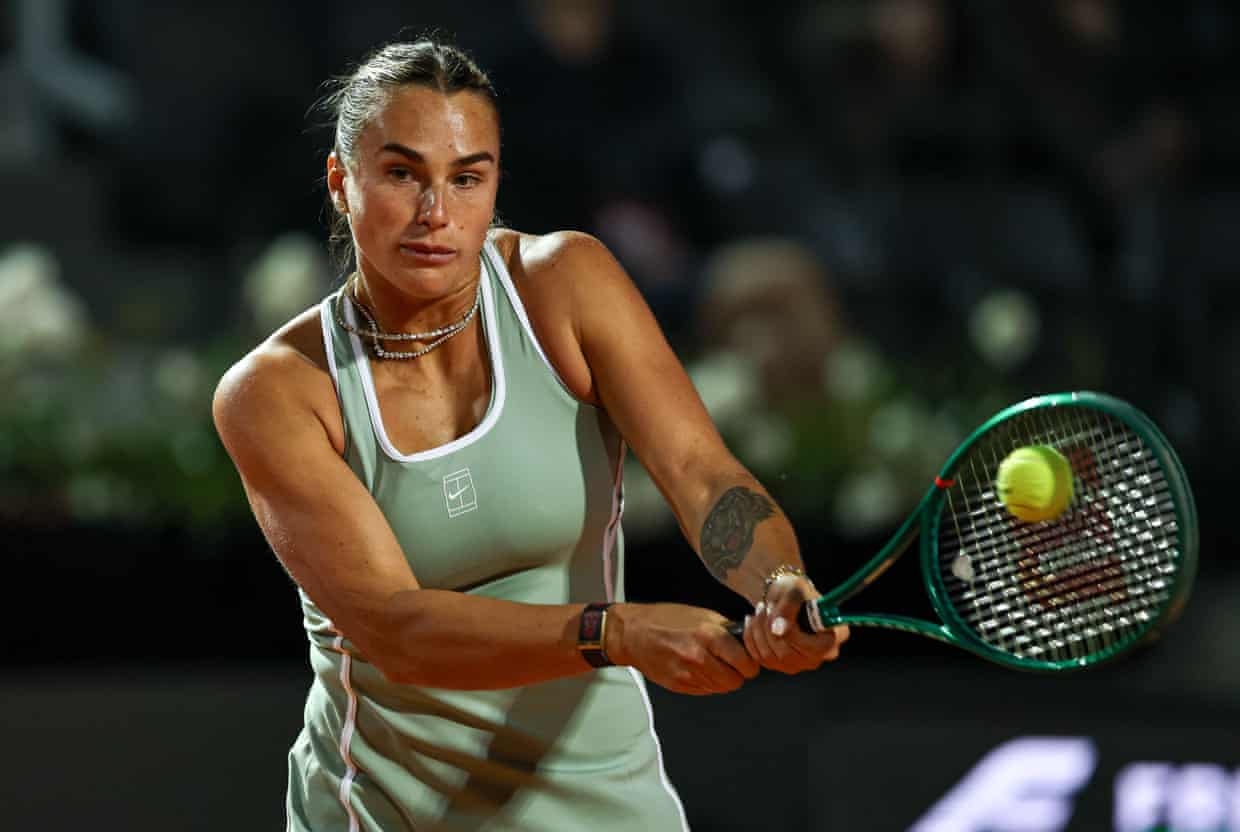
At some point in the quiet buildup to her opening match at the Italian Open, Aryna Sabalenka decided to attack one of the most contentious subjects in her sport with the same force as her forehand. In her press conference, the subject of the top players’ attempts to attain a greater revenue share from the grand slam tournaments prompted the world No 1 to make a drastic prediction: “I think at some point we will boycott it, yeah,” she said. “I feel like that’s going to be the only way to fight for our rights.”It marked an escalation in a pay dispute that, until this point, had played out in a series of polite letters and public statements. Over a year ago, in March 2025, the players sent their first letter to the grand slam tournaments

England aim to match Lionesses and Red Roses as historic summer kicks off
Historic occasions are like buses: you spend ages twiddling your thumbs and then two come along at once. England have waited nine years for another home World Cup, wallowing all the while in memories of their win in 2017, and almost a century for a maiden women’s Test at Lord’s. Now both are being thrust upon them over the space of a single month, from 12 June to 13 July, in a true summer bonanza for women’s cricket.First, though, a T20 World Cup dress rehearsal: three one-day internationals against New Zealand, followed by three Twenty20s against the same opposition, and another three against India. The 50-over series, which begins on Sunday in Durham, feels a little as if it has been plonked thoughtlessly into the calendar

Doctors’ archaic attitudes over sterilisation | Letter
Lacunar strokes caused by widening of arteries in brain, study suggests
MPs v the manosphere: ministers battle misogyny as they take a different message to men and boys across Australia
Man produces sperm from testicular tissue frozen as a child in breakthrough trial

London schools trialling VR to relieve pupils’ stress
One in three HR leaders face opposition to inclusion schemes, study finds