UK schools should remove pupils’ online photos as AI blackmail threat grows, say experts

UK schools should remove pictures of pupils’ faces from their websites and social media accounts because blackmailers are using them to create sexually explicit images, experts have said.Child safety experts and the UK’s National Crime Agency (NCA) warn that criminals are using AI to manipulate photos of children and then demand cash not to publish them.They are recommending educational institutions remove identifiable pictures of children from their websites and social media accounts – or consider not using them at all.The Internet Watch Foundation (IWF) said an unnamed UK secondary school had recently been subjected to a blackmail attempt after criminals used the institution’s website or social media accounts to take photos of schoolchildren and then, using AI tools, turned them into child sexual abuse material (CSAM).The blackmailers sent the images to the school and threatened to publish them online if they did not receive money.
The IWF, which monitors CSAM online, used a digital tool to turn the blackmail images into a “hash”, or digital fingerprint, which was shared with leading tech platforms in order to prevent them from being uploaded.The watchdog said 150 of the images from the secondary school blackmail attempt could be classified as CSAM under UK law.Jess Phillips, the minister for safeguarding and violence against women and girls, said the attempted blackmailing of schools was a “deeply worrying emerging threat” and laws on use of AI to create explicit images would be updated if necessary, having announced a ban on possessing AI models designed to generate CSAM.“We will not hesitate to go further if necessary and make sure our laws stay up to date with the latest threats,” she said.The IWF said the secondary school incident, which happened late last year, is not the only blackmail attempt involving manipulated school website or social media account photos that it is aware of in the UK.
The IWF is not naming the school involved in the incident last year, or the police force that contacted it seeking help in blocking distribution of the images.A UK advisory body on tackling online harms, the early warning working group (EWWG), has issued guidance to schools on protecting pupils from blackmailers.Although the problem is not widespread, the group is concerned it is “only a matter of time” before more schools are targeted.The group recommended schools remove images that show a student face-on and instead publish images that are harder to misuse, such as pictures taken from a distance, blurred images or portraits taken from behind a pupil.The advice warned against publishing “identifiable information” that could be used to harm or blackmail an individual, such as “names or faces”.
Schools should also consider whether they need pupil photos at all, said the guidance, stating that establishments should mull over “whether using imagery without children and young people’s faces can still achieve your objectives”.This included “celebrating achievements more safely” by showcasing milestones “while minimising risks”.Avoiding the use of names or full names in labelling photos will reduce the risk of blackmail, the advice added, while applying privacy settings to a school website or social media account will limit who can view or share content.A checklist of actions recommended by the EWWG included conducting regular audits of children’s images on websites, social media accounts and promotional material and regularly seeking re-signing of image consent agreements.If an incident occurs, the group advised schools to contact the police immediately, retain any criminal images and remove from view the original images that had been tampered with.
The EWWG’s members include the NSPCC charity, the IWF, the Welsh government, Education Scotland, the Safeguarding Board for Northern Ireland and the NCA.The Confederation of School Trusts (CST), whose academy schools educate more than four million primary and secondary schoolchildren across England, said schools would “carefully consider” the guidance and find the “right balance” between “celebrating pupils … and keeping everyone safe”.“As educators we instinctively want to celebrate children’s achievements and that includes sharing photos and videos of all the good things that go on in our schools – it is deeply depressing that in doing so we potentially have to contend with threats from abusers and scammers,” said Leora Cruddas, CST chief executive.Blackmailing people over intimate images is known as sextortion and the crime has a become increasingly prevalent, with the advent of generative AI tools giving criminals a new way of extorting victims.Typically, sextortion involves manipulating a child or adult into sending intimate images or videos of themselves and then threatening to send the images to friends or relatives, or release them online, if the victim does not send money or more explicit images.
Sextortion has been linked to the suicides of several British teenagers who have killed themselves after receiving extortion threats.In 2024, the Guardian reported the threat was evolving due to advances in AI, with one teenager being sent a fake “nude” image of herself that appeared to have been taken from her Instagram account.The Report Remove service, which allows children to flag explicit images or videos of themselves that have appeared – or could appear – online, said sextortion attempts are increasing.Last year it received 394 reports from under-18s of blackmail attempts after the victims had been manipulated into sending sexual images to predators.The figure is 34% higher than in 2024.
Sextortion has been carried out by criminal gangs based outside the UK, with the NCA pointing to west Africa and Nigeria as hubs.It is understood that the secondary school sextortion attempt involved the use of terms that appear in negotiation “scripts” used by sextortion gangs.Some schools have already taken action after an increase in the threat from AI tools.Last year, the Loughborough Schools Foundation, which represents three private schools, redesigned its website to remove recognisable images of pupils.

Navel gazing: oranges, mandarins and persimmons top Australia’s best-value fruit and veg for May
“Sweet, low seed and great for snacking” imperial mandarins have just started their season, says Josh Flamminio, owner and buyer at Sydney’s Galluzzo Fruiterers. The tangy-sweet citrus is selling for between $2.99 and $3.99 a kilo in major supermarkets. At Galluzzo, Queensland-grown imperial mandarins are $3
How to save asparagus trimmings from the food-waste bin – recipe | Waste not
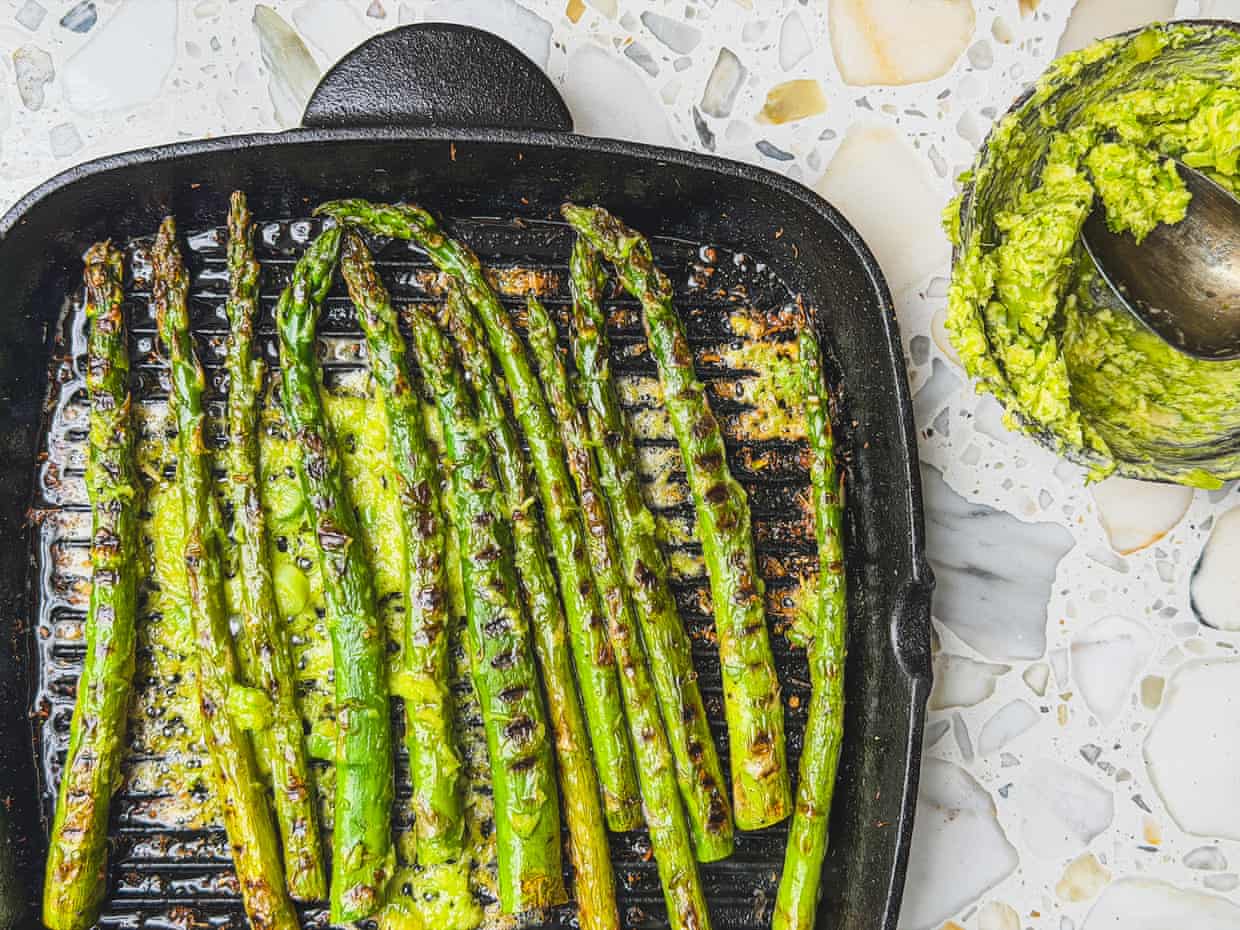
Asparagus butts are a particularly tricky byproduct to tame because they’re so fibrous. I usually cut them very finely (into 5mm-thick discs, or even thinner), then boil, puree and pass them through a sieve (as in my green goddess salad dressing and asparagus soup), but even then you’ll still end up with a fair bit of fibrous waste. Enter asparagus-butt butter: a recipe that defies all odds, making the impossible possible by transforming a tough offcut into an intense compound butter that’s perfect for grilling or frying asparagus spears themselves, or for eggs, bread, gnocchi or whatever you can think of. The short fibres brown and caramelise in the butter, and in the process become the highlight of the dish, rather than the problem.This transforms an unwanted byproduct into an intense expression of the plant’s flavour

Thoran and chaat: Romy Gill’s Indian-style asparagus recipes
Spring’s first asparagus always feels like a celebration, but there’s so much more to cooking those spears than just butter and lemon. Here, those tender stems combine with bold Indian flavours in two playful dishes. The thoran, inspired by Keralan home cooking, involves stir-frying asparagus with coconut, mustard seeds and curry leaves to create something warm and comforting (my friend Simi’s mum always used to drizzle it with a little lemon juice to give the flavours a lift). The chaat, meanwhile, tossed with tangy tamarind, yoghurt, spices, crunchy chickpeas and sweet pomegranate, is a delicious snack or side. Together, they show how versatile asparagus can be: easy to cook, vibrant and moreish even in unexpected culinary traditions

Australian supermarket sauerkraut taste test: one is ‘like eating the smell of McDonald’s pickle’
It’s ‘Gut Coachella’ for Nicholas Jordan and friends, who blind taste a line-up of 20 shredded and fermented cabbage productsIf you value our independent journalism, we hope you’ll consider supporting us todayGet our weekend culture and lifestyle emailI cannot tell you how many times I’ve been introduced to a fatty, salty hunk of meat and thought, “my god, I’m going to need a pickle”. I feel the same eating cheese toasties or deli sandwiches with rich mayo-based sauces. Where is the pickle, hot sauce, citrus or ferment? Even the most savoury, juicy slab of umami is a bit much without acidity to balance it.What is the point of sauerkraut without acidity? It’s just wet, salty cabbage, and what is that for, other than deflating my spirits and inflating my gastrointestinal system? Sauerkraut should be sour; it’s the hallmark of the very thing that created it – fermentation.Why am I saying all this? After eight friends and I tasted 21 supermarket sauerkrauts, I was shocked to find some lacked not just acidity but any vigour at all
Fears for spears: how to cook asparagus without blanching | Kitchen aide
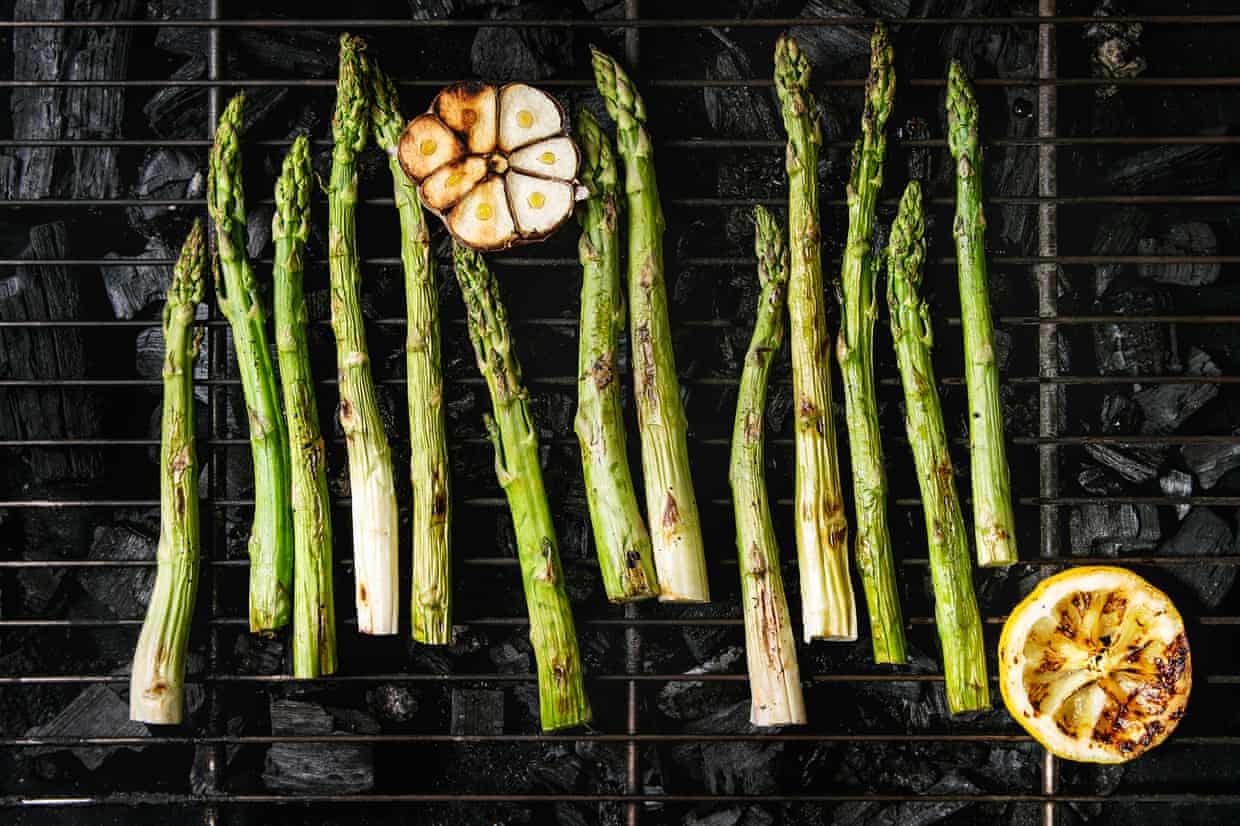
I always blanch asparagus, but how else can I cook it?Joe, via email“Blanching captures that green, verdant nature of asparagus so well, and saves its minerality, too,” agrees Bart Stratfold of Timberyard in Edinburgh, but when the season is going full tilt, it’s just common sense to expand our horizons. For Billy Stock, chef/owner of the Wellington in Margate, that means salads, especially with spears that are really fresh: “Use a peeler to shave thin strips off the raw asparagus, and use them in a delicious variation on salade Niçoise.”Another approach would be the grill, Stratfold says: “Coat the spears in rapeseed oil, then grill on an excruciatingly high heat for just a few seconds, until they develop some char.” After that, he rolls them in a tray of vinegar or preserves: “At the restaurant, that’s usually sweet pickled elderflower and elderflower vinegar.”Joe could even abandon the kitchen altogether

Georgina Hayden’s quick and easy recipe for spanakopita orzo | Quick and easy
For me, it isn’t really spring until the first May bank holiday; the days are longer, the flowers are out, and an abundance of green graces our shelves. This spanakopita orzo is a celebration of all things light, bright and spring. It’s a great weeknight dinner that will instantly transport you to Greece.This dish should be oozy, like a good risotto, so if your orzo absorbs all the stock, add a little more hot water to give it that requisite creamy finish.Prep 15 minCook 25 min Serves 425g butter 2 tbsp extra-virgin olive oil, plus extra to serve1 bunch spring onions, trimmed and sliced2 garlic cloves, peeled and finely sliced220g baby leaf spinach, chopped1

Formula One agrees to engine changes from next season after widespread criticism

Premier League crunch time, the clásico and international cricket – follow with us

British sprinter CJ Ujah among 10 suspects charged over alleged cryptocurrency fraud

How reading the Guardian led to a million-pound move for Cornish Pirates

Wardley v Dubois is bout of uncertainty far more interesting than Fury v Joshua
England’s men to host more five-Test series but play some one-off games overseas