Brent crude rises after Trump says he wants to ‘take the oil’ in Iran and Yemeni Houthis launch second attack on Israel – as it happened
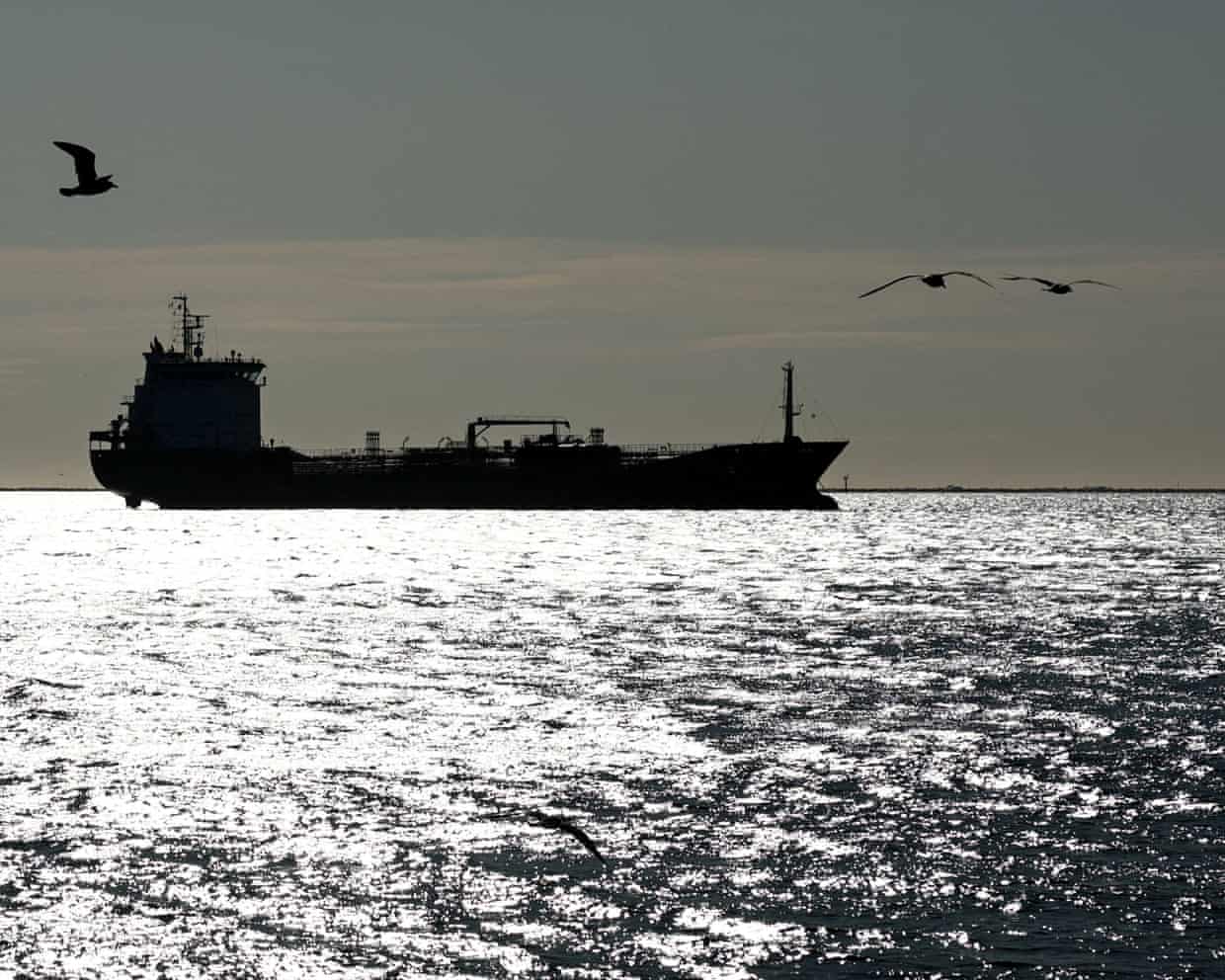
Brent crude is on course for a record monthly rise of nearly 60%, exceeding gains it made during the 1990 Gulf War.The global oil benchmark is currently trading 3.5% higher at $116.051 a barrel – up 59% so far in March – while New York light crude rose 2% to $101.6 a barrel.
Yemen’s Houthi rebels, which are backed by Iran, launched their first attacks on Israel since the start of the US-Israel war with Iran over the weekend.More US troops have arrived in the Middle East while the Israeli military said today that is it attacking government infrastructure “throughout Tehran”.Vandana Hari, founder of oil market analysts Vanda Insights, said:double quotation markThe market has all but discounted the prospect of a negotiated end to the war, Trump’s claims of ongoing ‘direct and indirect’ talks with Iran notwithstanding, and is bracing for a sharp escalation in military hostilities, which is a bullish signal for crude, with huge uncertainties on the timing and nature of the outcome.Natural gas prices have also gone up again, amid concerns that supplies will be further disrupted.Dutch month-ahead futures rose 1.
6% to just over €55 a megawatt-hour,Wall Street stocks have pared gains, and the Nasdaq has turned negative,The S&P 500 is now up just 0,1% while the Dow Jones is 0,4% ahead, and the Nasdaq slipped by 0.
1%,In Europe, stocks are holding onto their gains, with the FTSE 100 index in London up 1,2%, or 115 points, at 10,083,The German, French, Italian and Spanish indices have climbed between 0.
4% and 0,6%,Brent crude, the global oil benchmark, has gained 2,5% to $115,38 a barrel, and touched $116.
89 a barrel earlier today.It is on track for its biggest monthly increase on record following the US-Israeli attack on Iran on 28 February which triggered a wider Middle East conflict.You can follow the latest news on the Middle East here:Our other main stories:Thank you for reading.We’ll be back tomorrow.Bye! – JKThere is much speculation about how the Bank England will react to the spillover effects from the Middle East conflict.
High inflation will need to be tackled by higher interest rates, say international investors.This sentiment has supported betting by financial markets, which agree that Threadneedle Street policymakers will vote for at least two increases in the cost of borrowing this year and possibly a third, pushing interest rates from 3.75% to 4.5%.The first move could be as early as next month.
Many economists say a rise in the consumer prices index (CPI) from 3% in February to 4% or 5% is unlikely to trigger higher borrowing costs.The basis for this claim is an unfashionable corner of the central bank’s financial data output.Paul Dales, the chief UK economist at the consultantcy Capital Economics, says he has been looking at the annual growth rate of the M4 money supply in today’s mortgage and credit figures.M4 – the broadest measure of money circulating in the economy – is the defining signal that inflationary pressures are gaining a head of steam.That’s according to monetarist economists, who were popular in the early 1980s.
Margaret Thatcher’s favourite economists were monetarists.And there are still devotees who argue that it provides a clear signal – when M4 is growing quickly – that too much money is chasing too few goods and services, leading to high inflation.M4 rose from 3.6% in January to 3.9% in February.
But as Dales says, that’s a long way from the peak of 15.2% in February 2021, which he says contributed to the most persistent inflation problem of recent years.double quotation markIndeed, although the relationship is not tight, the current rate points to CPI inflation being around 2-3% in 18 months’ time.What’s more, the tightening in financial conditions since the Iran War began at the end of February suggests that credit won’t be flowing freely through the economy in the coming months, or if it is, it will certainly be more expensive.His conclusion? A reluctance by banks and other lenders to expand credit (and consumers to demand it) will restrain some of the inflationary effects from the Iran war “and may mean the Bank of England won’t need to raise interest rates from 3.
75%,” Dales says.double quotation markOr at the least won’t need to raise them to the 4.50% that is almost fully priced into the financial markets.Wall Street has opened higher.The S&P 500 index rose 51 points, or 0.
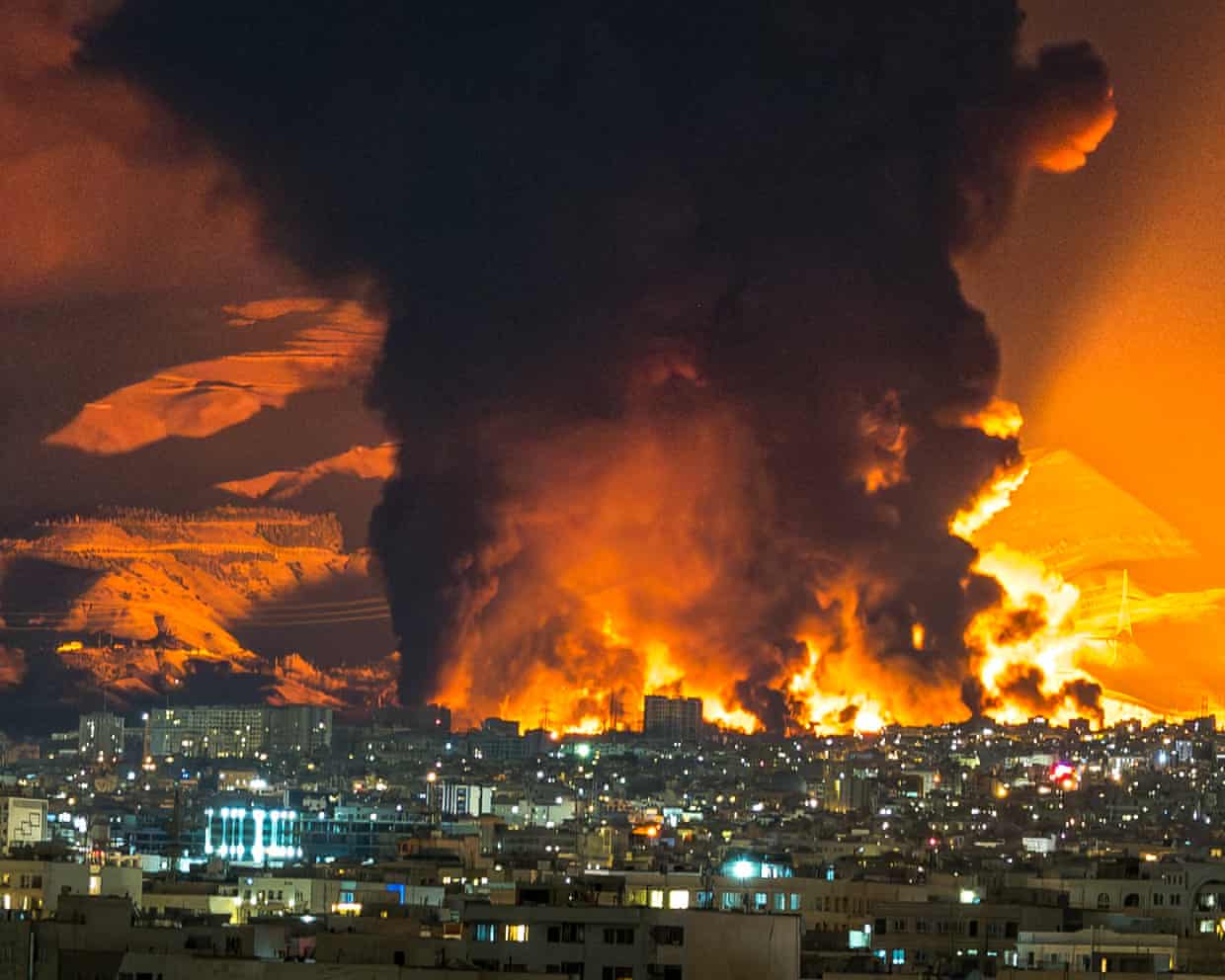
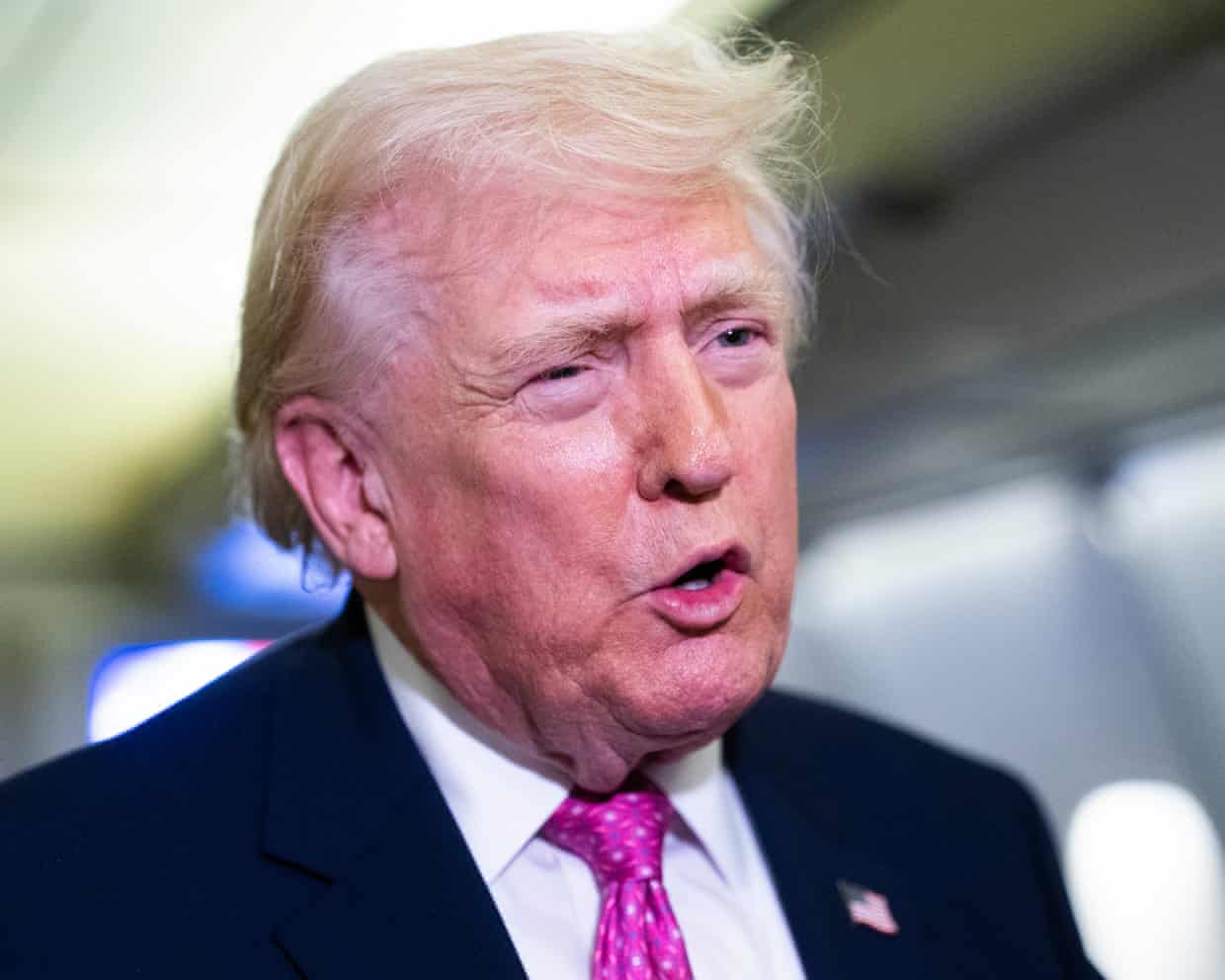
8%, to 6,420 at the open, while the Dow Jones opened nearly 400 points higher at 45,562, up 0.88%, and the tech-heavy Nasdaq climbed 157 points, or 0.75%, to 21,105.In his latest post on Truth Social today, Donald Trump claimed that the US is in “serious discussions” with a “new and more reasonable regime” to end its war on Iran, but threatened to “obliterate” Iran’s strategically crucial Kharg Island if a deal is not reached shortly.double quotation markGreat progress has been made but, if for any reason a deal is not shortly reached, which it probably will be, and if the Hormuz Strait is not immediately “Open for Business,” we will conclude our lovely “stay” in Iran by blowing up and completely obliterating all of their Electric Generating Plants, Oil Wells and Kharg Island (and possibly all desalinization plants!), which we have purposefully not yet “touched.
”This will be in retribution for our many soldiers, and others, that Iran has butchered and killed over the old Regime’s 47 year “Reign of Terror.”Brent crude rose as high as $116.89 a barrel earlier today, and is now trading 1.4% higher at $114.21 a barrel.
US Treasury secretary Scott Bessent sounded optimistic when he talked about a reopening of the Strait of Hormuz for passage of cargo ships, and said the administration is moving to address the shortage of global oil supplies,Bessent said in an interview on Fox News,double quotation markOver time, the US is going to retake control of the strait, and there will be freedom of navigation — whether it is through US escorts or a multinational escort,Bessent said the global oil market is “in deficit about 10m to 12m barrels a day, and we’re making up for that deficit,”The International Energy Agency’s coordinated release of strategic reserves amounts to about 4m barrels a day towards that deficit, he said.
When looking at possible next steps for the European Central Bank, markets have started to price in up to four rate hikes this year,ING economist Carsten Brzeski said:double quotation markIndeed, the central bank made a hawkish pivot at the last policy meeting – but we think that markets are too much guided by an overly simplistic reading of the 2022 episode and the narrative that the ECB was far too late reacting to an oil price shock,In our view, however, there are important differences between the current situation and 2022,Back then, the ECB was emerging from an extremely accommodative stance and normalising policy from negative interest rates and quantitative easing,With hindsight, the biggest policy mistake was probably the delayed response to an energy price shock that ultimately morphed into a broader inflation surge.
Learning from that episode, though, does not mean a rate hike is imminent,As long as the energy price shock remains broadly contained – including first‑round knock-on effects – it remains far from certain that the ECB will react at all,For rate hikes to come back to the table, the Bank would need to see a rise in inflation expectations and a broadening of inflationary pressures across the economy,So far, the war in the Middle East has instead weighed on business and consumer confidence,Meanwhile, the labour market is entering this energy shock in a weaker position than in 2022, and governments’ fiscal pockets are more constrained, making large‑scale stimulus to offset higher energy prices less likely.
Three potential pain points lie ahead for the ECB, he said.double quotation marka psychological one, i.e., headline inflation above 4%, reviving uncomfortable memories of 2022; an analytical one, with core inflation above 3%, signalling broader price pressures; and a credibility one, i.e.
, a surge in survey‑based inflation expectations, which would constrain the ECB’s room for inaction.Even if the latest developments in the war and in energy prices have started to shift our base case scenario more towards our adverse scenario, we find it hard to see the ECB moving at the next meeting at the end of April.By then, there will be no new forecasts, and only limited data available: March inflation, a handful of country inflation releases for April, and initial estimates of first‑quarter GDP on the day of the meeting.In all honesty, that does not look sufficient to move the needle, unless the ghosts of 2022 are really keeping policymakers awake at night.For the June meeting, the story is different.
Simply put, if we are still talking about the war in the Middle East and high energy prices by then, a rate hike is clearly possible.However, this is not our base case, as we expect the Strait of Hormuz to reopen before then.To sum up: the energy price shock is transitory for now but a broadening could still trigger an interest rate hike from the ECB.double quotation markAll in all, today’s German inflation data shows that, for the time being, the new inflation wave stemming from the war in the Middle East is ‘only’ an energy price shock.Any ECB reaction to this new price shock will clearly depend on whether soaring energy prices will find their way into the rest of the economy or not.
Needless to say that a broadening of inflationary pressures and a de-anchoring of inflation expectations could trigger an ECB rate hike.For now, however – at the risk of using a forbidden word, at least at the ECB – the energy price shock falls under the label of ‘transitory’.Carsten Brzeski, global head of macro at ING, said the jump in German inflation to 2.8% in March “shouldn’t be a surprise to anyone” as the war in the Middle East entered its fifth week, and both energy prices and uncertainty remain high.While the national inflation measure came in at 2.
7% year-on-year, from 1.9% in February, the European measure surged to 2.8% from 2%.At 1.2% month-on-month, March saw the largest monthly price increase since 2022.
double quotation markAt the same time, however, today’s numbers also showed that for the time being, the inflation shock remains limited to energy prices as core inflation and services inflation remained unchanged at 2.5% and 3.2% respectively.Oil prices have always been the most important and direct link between geopolitical developments and the real economy.While the war in the Middle East and the blockade of the Strait of Hormuz provide further evidence of shifting geopolitics and will have longer-term implications for the European economy, the rise in energy prices is already very real.
In Germany, if gasoline prices remained at their current levels until the end of the year, the loss in purchasing power for consumers would already be larger than in 2022.Today’s inflation data shows that a first inflation wave is clearly on its way.While currently available regional data suggests that the inflation surge in March was mainly driven by energy prices, knock-on effects on transportation costs, food prices and other industrial products will follow.The only question is whether this will be a single, time-limited wave or whether it will eventually also lead to a de-anchoring of inflation expectations and higher wages.However, even if it is only ‘one’ large inflation wave, German inflation should increase further, remaining in the 3% to 4% range for most of the year.
In the UK, petrol prices have gone up further as the Middle East conflict escalates, with Iran-backed Houthi rebels in Yemen launching strikes on Israel for the first time since Israel and the US jointly attacked Iran on 28 February.Average petrol prices have now reached 152p a litre – the highest in 28 months – while diesel has topped the 180p mark to hit 181.2p, a price not seen since December 2022, according to the RAC motoring group.RAC head of policy Simon Williams said:double quotation markCompared to the start of the Iran conflict, it costs £10.55 more to fill up a typical family car that runs on petrol, and £21
Mounjaro maker wants NHS drug price rises in return for more investment in UK
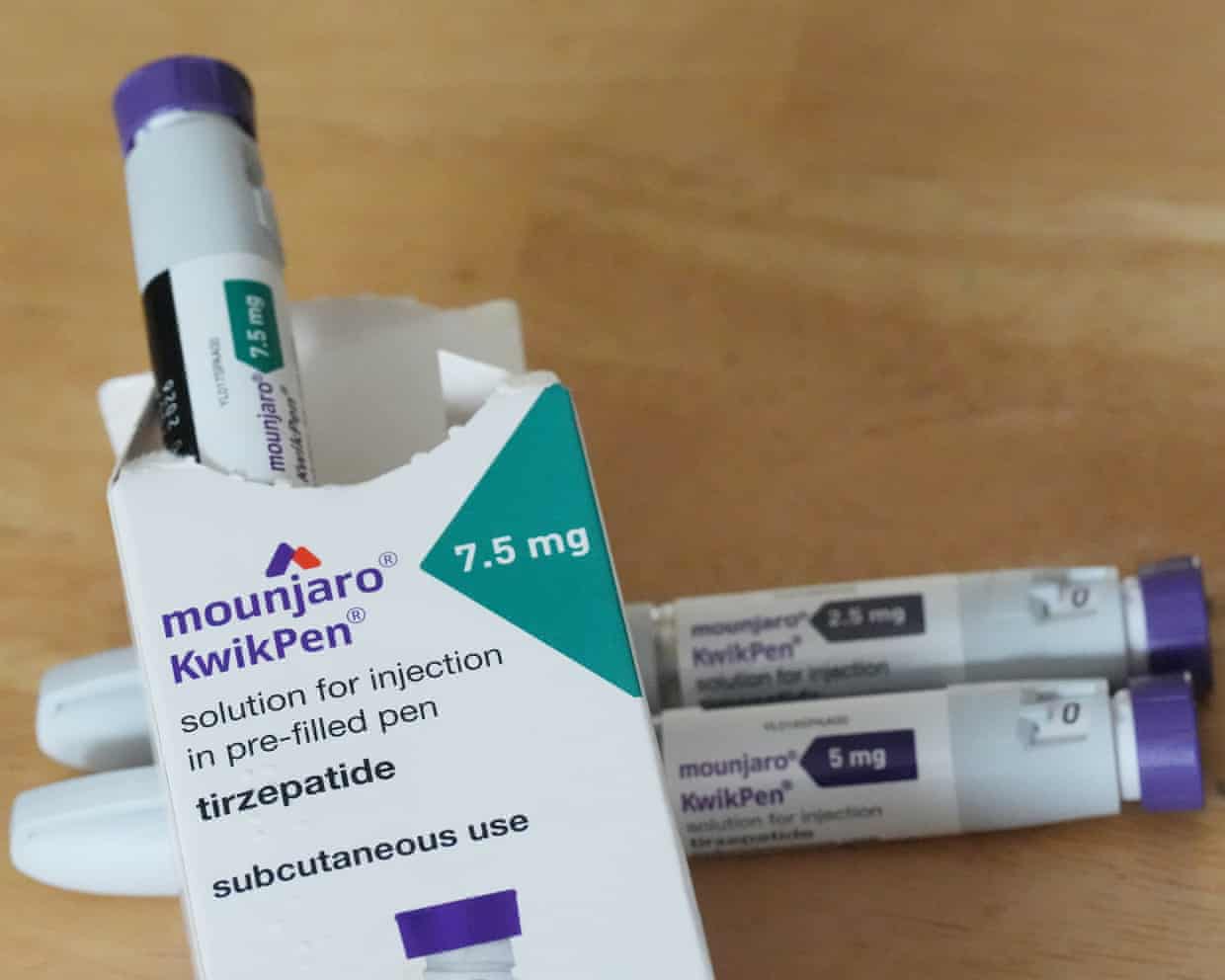
The US pharmaceutical group behind the Mounjaro weight-loss drug has said it will unpause its UK investments if ministers agree to regularly increase NHS drug prices and end a rebate scheme.Patrik Jonsson, the president of Eli Lilly’s international business, said the company was in talks with UK ministers and that he was optimistic about reaching an agreement this summer for Britain to pay more for its medicines.He said in an interview with the Financial Times that the talks would also explore “innovative” pricing plans, such as linking payments for anti-obesity drugs to whether the treatment will help patients return to work.It comes as the US pharmaceutical industry ramps up pressure on the UK, with Keir Starmer agreeing last year to the first increase in NHS cost effectiveness thresholds in 27 years. This raised the price the NHS will pay on potentially life-extending drugs, from £20,000 to £30,000 a year for every year of life gained to £25,000 to £35,000
Pessimism takes root in UK as shoppers struggle to afford essentials
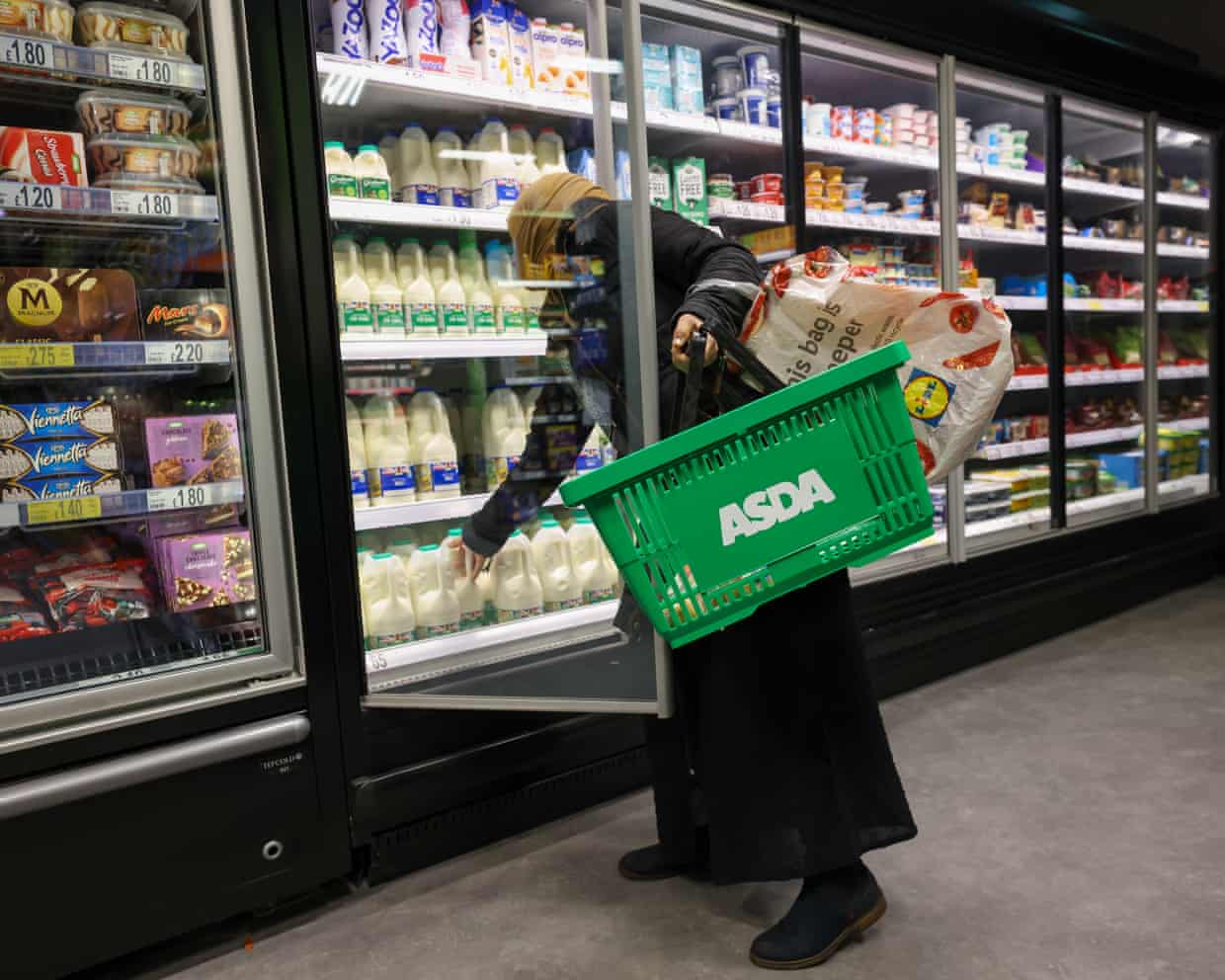
The Iran war has led to a surge in pessimism in the UK as half of households are already struggling to afford everyday essentials.The escalating conflict in the Middle East, which has driven the price of oil, gas, crop fertiliser and other raw materials sharply higher, threatens to cause another cost of living shock.The latest Which? consumer insight tracker found that price pressures were forcing half of households, an estimated 14 million, to make at least one adjustment – dip into savings, sell possessions or borrow money – to cover the cost of essentials on a daily basis.Confidence in the future of the UK economy plummeted by 13 points to a score of -56 in the month to 13 March, the lowest level recorded since the end of 2022, the tracker found.Which? said this score reflected “a deep-seated pessimism across the country”, with two-thirds (67%) of UK adults now expecting the national economy to worsen over the next 12 months, while just 12% think it will improve

Millions of boomer small business owners will soon retire. Will their companies just disappear? | Gene Marks
Want to buy my business? It’s been very profitable. I’ve run it for more than 25 years. But no, you don’t want to buy it. Like most small businesses in this country, there’s really nothing of value here.According to the Small Business Administration, there are approximately 33m small businesses in the US
One in five UK hospitality businesses fear collapse as costs surge
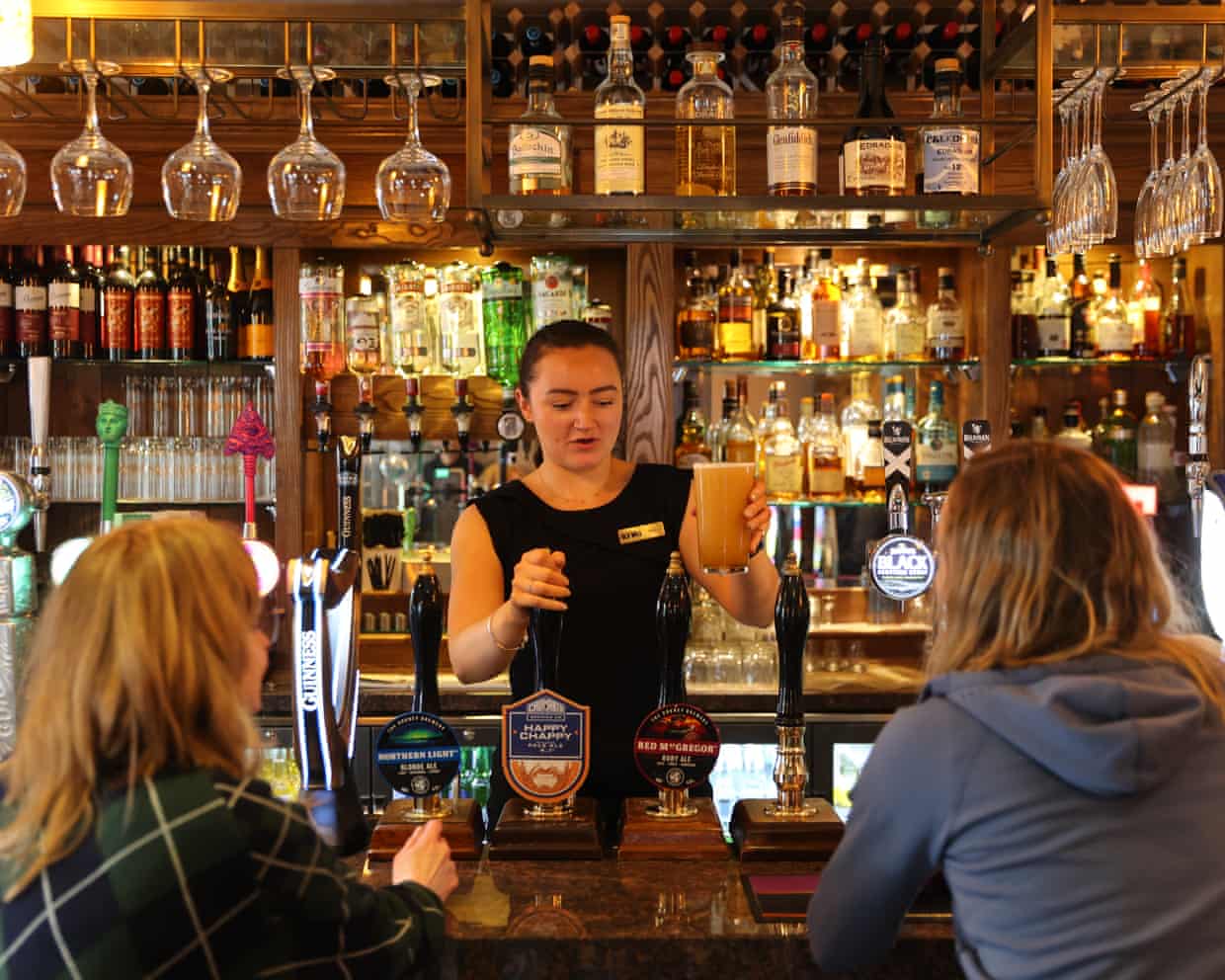
One in five hospitality businesses fear collapse in the next 12 months, according to an industry-wide survey that comes days before rises in tax and employment costs kick in.From Wednesday, many pub, restaurant and hotel companies face the prospect of a higher bill for business rates paid to their local authority, while an increase in minimum wage thresholds takes effect on the same day.The impending cost crunch has left the sector facing a crisis in confidence and warning of multiple business failures unless the burden is “dramatically reduced”.One in five of the survey respondents, who between them operate more than 20,000 venues, said their businesses were at risk of failing in the next 12 months.Almost half (44%) were pessimistic, while 17% were operating at a loss and 2% believed their businesses were already unviable, according to data shared with the Guardian by sector analysts CGA by NIQ

Oil on track for record monthly surge as Iran war disrupts markets
The Brent crude oil price is on track for its biggest monthly gain on record in March after the Iran war caused mayhem in the markets.Brent crude, the international benchmark, has climbed by 51% since the start of March, LSEG data shows, beating the previous monthly record of 46% in September 1990 after Saddam Hussein invaded Kuwait, leading to the first Gulf war.Brent closed at $112.57 a barrel on Friday, up from $72.48 a barrel on 27 February, the day before the US-Israeli war on Iran began
War in Iran erodes the chancellor’s headroom and exposes our fragility | Heather Stewart
It is with no pleasure that I must report a depressing domestic byproduct of the war in the Middle East: headroom chat is back.Of course, shifts in investors’ appetite for gilts – UK government bonds – are trivial in the context of the bloodshed in Iran and beyond. But as a result of the economic chaos unleashed, gilt yields, which determine the interest rate on government borrowing, have resumed their grip on British politics. And one of Rachel Reeves’s proudest boasts, the £23bn in “headroom” she had built up against her fiscal rules, is in jeopardy.Less than a month ago, the chancellor was able to stand up in the House of Commons and report that her headroom had increased since November’s tax-raising budget
Brent crude hits $116 a barrel as Trump threatens to ‘blow up’ Iran’s oil wells and export hub

FCA to release details of UK car finance scandal compensation scheme

‘Soon publishers won’t stand a chance’: literary world in struggle to detect AI-written books

‘Our assumptions are broken’: how fraudulent church data revealed AI’s threat to polling

F1 must find answers to safety crisis after Bearman’s escape but there are no easy fixes | Giles Richards

Worcestershire overseas signing leaves one-day final early to catch flight to England