Oil on track for record monthly surge as Iran war disrupts markets

The Brent crude oil price is on track for its biggest monthly gain on record in March after the Iran war caused mayhem in the markets,Brent crude, the international benchmark, has climbed by 51% since the start of March, LSEG data shows, beating the previous monthly record of 46% in September 1990 after Saddam Hussein invaded Kuwait, leading to the first Gulf war,Brent closed at $112,57 a barrel on Friday, up from $72,48 a barrel on 27 February, the day before the US-Israeli war on Iran began.
Brent traded as high as $119.50 a barrel during March, its highest level since June 2022, after Iran all but closed the strait of Hormuz, through which a fifth of global oil and gas would normally pass.US crude prices also rose during March; West Texas Intermediate has gained 48%, on track for its strongest month since May 2020, when the Covid-19 pandemic was disrupting the world economy.Oil prices climbed through the month despite the coordinated release of 400m barrels of oil from emergency reserves announced on 11 March.Analysts at BloombergNEF estimate that 9m barrels of oil per day have been knocked off global oil supply by the Middle East conflict.
Donald Trump appeared to lose his ability to talk down the oil price as the war continued.Earlier in the month, the president’s claims of progress in negotiations pushed down crude prices, but by late March his declaration of a 10-day extension for Iran to reopen the strait of Hormuz was followed by a rising oil price and falling stock markets.Oil was the best-performing asset during a volatile month for markets, in which shares, government bond prices and precious metals all fell.Gold failed to live up to its reputation as a safe haven against inflation.The spot price of gold has fallen by almost 15% since the start of March, on track for its worst month since 2008, and the fifth-biggest monthly fall in the past 50 years.
Some investors may have been forced to sell gold to cover losses, or margin calls, on other positions in the market.Gold was also under pressure from the sale of about $3bn of bullion by the Turkish Central Bank last week.It cut its reserves by almost 50 tonnes to 772 tonnes, to fund efforts to stabilise the Turkish lira.Losses on Wall Street during March pulled the Dow Jones industrial average into a correction at the end of last week, more than 10% below its record high.Stocks fell despite Trump’s latest extension on planned strikes against Iran’s energy infrastructure, as investors anticipated prolonged disruption to oil from the Gulf.
“Markets appear to be placing less weight on White House jawboning and focusing more on the underlying supply risks,” said Fawad Razaqzada, a analyst at City Index,Britain’s stock market had a poor month too, with the FTSE 100 index falling more than 8% – on track for its worst month since March 2020, when Covid-19 rocked financial markets,Almost all of its gains in January and February have been wiped out, with the FTSE 100 ending last week back below 10,000 points,UK government bonds weakened through March too, as traders ripped up forecasts for the Bank of England to cut interest rates this year,As bond prices fell, the yield (or interest rate) on 10-year UK bonds rose by 17% to nearly 5%, which would be the biggest monthly percentage rise in borrowing costs since September 2022 when Liz Truss’s mini-budget sparked a bond sell-off.
Other European government bonds were also hit; Italian two-year debt was heading for its worst month since May 2018.Modupe Adegbembo, an economist at Jefferies, said European governments were operating from a much weaker fiscal starting point than in 2022, the last energy price shock, meaning they had less scope for large‑scale fiscal intervention.“As a result, more of the adjustment is likely to fall on demand,” which is negative for the growth outlook, Adegbembo added.
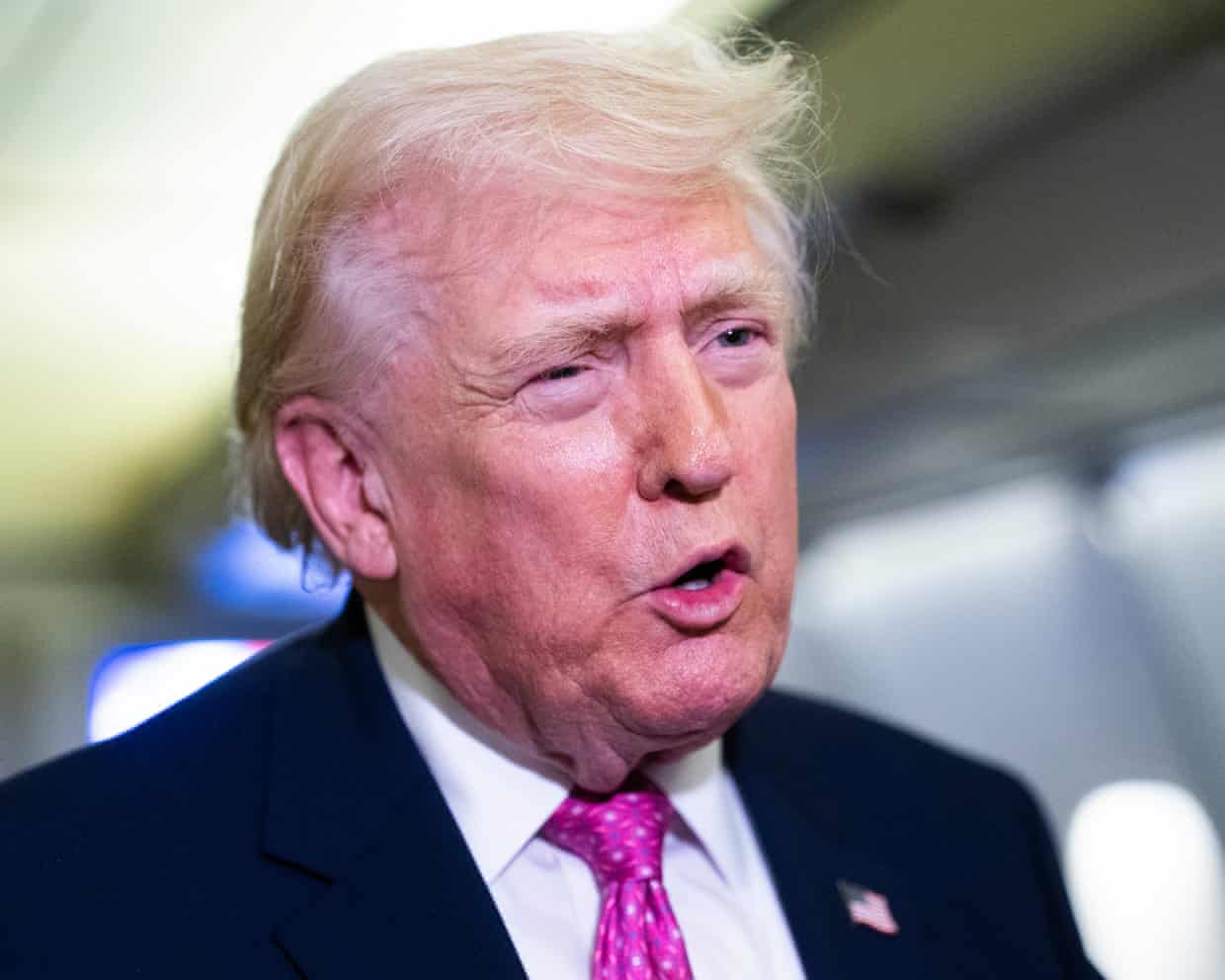
Brent crude hits $116 a barrel as Trump threatens to ‘blow up’ Iran’s oil wells and export hub
The price of oil rose sharply to $116 a barrel on Monday as Donald Trump threatened to “blow up” and “completely obliterate” Iranian electricity plants, oil wells and its export hub Kharg Island if it did not agree to a deal.Brent crude, the international benchmark for oil, rose by 1.6% on Monday after Trump wrote on his social media platform Truth Social that if a deal was not agreed and the strait of Hormuz was not reopened, the US would take further action.He wrote: “We will conclude our lovely ‘stay’ in Iran by blowing up and completely obliterating all of their Electric Generating Plants, Oil Wells and Kharg Island (and possibly all desalinization plants!), which we have purposefully not yet ‘touched’ …“This will be in retribution for our many soldiers, and others, that Iran has butchered and killed over the old Regime’s 47 year ‘Reign of Terror’.”The US president threatened to seize the Iranian export hub of Kharg Island in an interview with the Financial Times on Sunday

FCA to release details of UK car finance scandal compensation scheme
Millions of drivers will discover how much can they claim over the car finance scandal on Monday, as the City regulator sets out the final terms of its compensation scheme.The Financial Conduct Authority (FCA) will release the details of its redress programme for 14m motor finance agreements after 4.30pm, ensuring that the information comes out after stock markets close for trading.Regulators want to avoid large price fluctuations in the share prices of the biggest stock market-listed car loan providers, including Lloyds Banking Group, Santander, Barclays, and the specialist lender Close Brothers.The companies have been lobbying against the FCA’s proposals, which were put out for consultation in the final months of 2025, arguing that they amounted to a too-generous compensation bill for drivers

‘Soon publishers won’t stand a chance’: literary world in struggle to detect AI-written books
Recently, the literary agent Kate Nash started noticing that the submission letters she was receiving from authors were becoming more thorough – albeit also more formulaic.“I took it as a rise in diligence,” she said. “I thought it was a good thing.”But then she had what she described as her eureka moment: the letter with the AI prompt right at the top. “It read: ‘Rewrite my query letter for Kate Nash including a comp to a writer she represents,’” she said

‘Our assumptions are broken’: how fraudulent church data revealed AI’s threat to polling
If you had been keeping tabs on the news about church attendance in Britain lately, you would be forgiven for thinking the country was in the midst of a Christian revival.Stories of swelling congregations, filled with young people returning to the flock, spurred on by everything from social media to a rise in bible sales appeared to be confirmed by a 2024 report from the Bible Society.Based on data collected by a YouGov survey, it claimed church attendance was increasing in England and Wales. The findings drove headlines, and the narrative was established.There was just one problem – the survey turned out to be based on “fraudulent” data and has been withdrawn

F1 must find answers to safety crisis after Bearman’s escape but there are no easy fixes | Giles Richards
Oliver Bearman emerging unhurt from a huge accident at the Japanese Grand Prix was considered a lucky escape. Formula One must think it is catching a break given there is a full month to work out how best to mitigate against it happening again. It is going to need every minute of that time given the complexity of the problem.Bearman’s Haas car was travelling at 307kmh (191mph) when he was forced to veer off track as he came up behind the relatively slow-moving Alpine of Franco Colapinto. The closing speed between the two cars was 50kmh, a frightening pace

Worcestershire overseas signing leaves one-day final early to catch flight to England
Worcestershire’s new overseas signing has arrived under a cloud after leaving a one-day final in South Africa in order to catch his flight to England. Beyers Swanepoel was playing for Lions against Titans on Sunday when, according to a report by Times Live, he set off for the airport “around the 43rd over” of the second innings without informing his teammates as to why. It was widely assumed he had picked up an injury.The all-rounder had bowled his full allocation of 10 overs, but because there was no injury, Lions were denied a substitute fielder for the final stages of the match. Titans went on to chase down the target with a ball to spare
‘They feel true’: political deepfakes are growing in influence – even if people know they aren’t real

Sony to hike PS5 prices by $100 as AI and Iran war push up memory chip costs

Wikipedia bans AI-generated content in its online encyclopedia

Number of AI chatbots ignoring human instructions increasing, study says
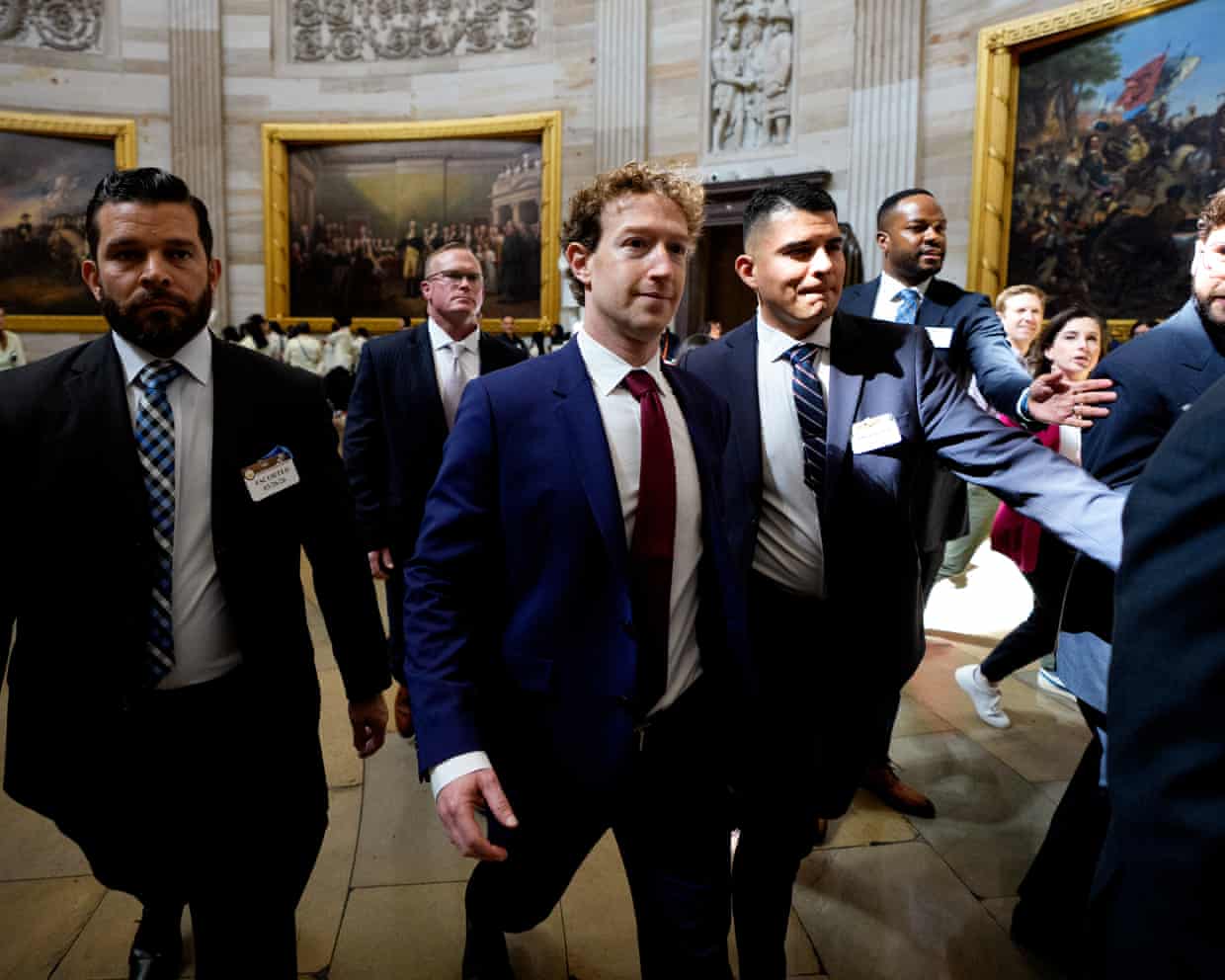
‘Accountability has arrived’: dual US court losses show shifting tide against Meta and co
New York City hospitals drop Palantir as controversial AI firm expands in UK