Japan avoids recession with weak return to growth – business live

Japan has slotted in at the bottom of the G7 growth table, along with the UK:With Canada and the US yet to report their GDP data for October-December, here’s what we know so far:Germany: +0,3% in Q4 2025Italy: +0,3%France: +0,2%UK: +0,1%Japan: 0.
1%US: Due on 20th FebruaryCanada: Due on 27th FebruaryCompetition among UK house sellers is running at an eleven-year high, giving buyers more opportunities and keeping prices pegged this month,Property portal Rightmove is reporting this morning that the average asking price for a newly listed homes dipped by just £12 this month, to £368,019,And with more houses on the marker – after a record number of early-bird new sellers coming to market sinceBoxing Day and in January – potential buyers have plenty of choice,Rightmove says the high number of homes for sale is continuing to benefit buyers, giving them more choice and more power to negotiate,And with last November’s budget behind us, net confidence among buyers and sellers in January has risen back to its highest level since September 2025, Rightmove reports.
Should the Bank of England cut interest rates at its next meeting, in March, that could give borrowers another lift, as the peak spring selling season approaches.According to Rightmove, the average asking price is the same as a year ago, after that £12 shuffle lower.That’s despite a record asking price increase for the time of year in January, which means prices are up by 2.8% since DecemberAs the market is “still very price-sensitive,” sellers need to pitch their properties realistically, says Colleen Babcock, property expert at Rightmove:“Virtually flat prices in February really needs to be viewed alongside what happened in January.After the prolonged uncertainty in the run up to the late November Budget, plus the usual Christmas slowdown, we saw activity pick up again from Boxing Day.
Many sellers, some of whom had been holding back because of the Budget, came to market in early 2026 with renewed confidence, which helped to drive that bumper January price rise.But the market fundamentals haven’t changed.There are still lots of homes for sale, and buying activity isn’t as strong as this time last year, when many buyers were rushing to move before the stamp duty increase in England.So in February, sellers have taken a more cautious approach by holding onto January’s gains rather than pushing prices higher, at a time when competition is high and the market is still very price-sensitive.”After a bullish January, sellers overall think better of asking for more as increased competition stifles growths.
Annually prices remained flat but many sellers tiptoed higher in February hoping end of year budget restraints being now removed would release pent up demand,… pic,twitter,com/PQbemcjmJNShares fell in Tokyo as investors digest today’s weaker-than-expected growth report,The Nikkei 225 index dipped by 0.
24%, while the broader Topix shed 0.8%.Masahiro Ichikawa, chief market strategist at Sumitomo Mitsui DS Asset Management, said:“I figured the GDP figures would be treated as past figures, but seeing the Nikkei average struggling to gain, there may be some slight impact.”Good morning, and welcome to our rolling coverage of business, the financial markets and the world economy.Japan has escaped falling into recession, just, with a weak return to growth that highlights the need for punchy measures from its new government to spur the economy on.
Japanese GDP expanded by just 0.1% in October-December, fresh data from Japan’s Cabinet Office shows, missing forecasts of 0.4% growth.That follows a contraction of 0.7% in July-September, and means Japan has avoided a technical recession – two negative quarters of growth in a row.
Japan’s GDP disappointed: December quarter grew just 0.2% annualized vs.1.6% expected, following Q3 contraction — sending the Nikkei lower as growth hopes faded#BOJ #Ueda #Japan #inflation #週末はマックへ冒険ドラクエバーガー pic.twitter.
com/5XJPboHQ4HPrivate consumption drove the expansion, while exports and public spending were weak,Shinichiro Kobayashi, chief economist at Mitsubishi UFJ Research and Consulting, explained:“Personal consumption showed resilience, but whether this resilience can be sustained will depend on whether price relief measures will make an impact and whether real wages will turn positive,”Japan’s economy has been hurt by Donald Trump’s trade war, which increased tariffs on Japanese goods entering the US,The diplomatic row between Beijing and Tokyo over the security of Taiwan also weighed on the economy, with Chinese tourism to Japan almost halving,The data comes just a week after prime minister Sanae Takaichi won a landslide election victory, having promised “responsible and proactive fiscal policies”.
Takaichi was due to meet with Bank of Japan governor Kazuo Ueda, in their first bilateral meeting since the election,Last November, Takaichi unveiled a massive ¥21,3tn (£100bn) stimulus package in an effort to spur economic growth and protect households from the rising cost of living,Further measures may be needed…,10am GMT: Eurozone industrial production data2pm GMT: Eurogroup finance ministers meeting

Fast-spreading measles outbreak takes hold among under-10s in north London
A big measles outbreak in north-east London is affecting unvaccinated children under the age of 10, the UK Health Security Agency (UKHSA) has confirmed.UKHSA previously reported 34 laboratory-confirmed measles cases among children who attend schools and nurseries in Enfield from 1 January to 9 February, with some requiring hospital treatment.Measles is a highly infectious viral illness that can spread very easily among people who are not fully vaccinated. While many people recover, the illness can lead to serious complications such as pneumonia, brain inflammation and, in rare cases, long-term disability or death.Dr Vanessa Saliba, a consultant epidemiologist at the UKHSA, said: “Our latest data shows we are now seeing a big measles outbreak in north-east London, mostly affecting unvaccinated children under 10 in schools and nurseries, with some being hospitalised

Challenges of being a GP in remote areas | Letter
Regarding your report (Lake District village struggles to find GP – despite ad pledging ‘we’ll never run out of beer’, 11 February), Coniston’s situation is not a question of marketing flair but of structural pressure in rural general practice.Findings from a recent survey of our member doctors working in rural and remote areas underline the scale of the challenge. One in four doctors told us that working in a single-handed practice has negatively affected their wellbeing or contributed to burnout.A striking 71% believe rural and remote healthcare is not properly understood by government and policymakers. Doctors have told us that there is a “lack of rural-proofing policy”, with services increasingly centralised and general practice described as “defunded and salami-sliced”

Jess Phillips calls for Epstein files to be catalyst for long-term legislative change
Institutions can be persuaded to take action on violence against women and girls only when some sort of “calamity” or “political scandal” hits the headlines, Jess Phillips has said.Phillips, the minister for safeguarding and violence against women and girls, said she wanted to use the momentum from the Jeffrey Epstein files to push for long-term legislative change and greater support for survivors, rather than quick-fix reactive policy announcements.Writing for the Guardian, the Labour MP for Birmingham Yardley said: “If repentance and sorrow is all we achieve out of the courage of the Epstein victims, we will have failed. Change is all that will suffice.“The long-term strategy of the government must be exactly that – long term

‘It matters if you have a parent with an expensive house’: how Australia’s great wealth transfer threatens faith in the fair go
Kim Day has got word that her mother-in-law is dying. At last. It’s good news for one half of Kath and Kim, the noughties comedy series that delighted international audiences with its satirisation-come-celebration of the comforts, proclivities and aspirations of middle Australia. By series three, Kim (Gina Riley) is struggling; she has a new baby and is living in her mother Kath’s (Jane Turner) house in Fountain Lakes – a mottled-brick, wide-lawned every-suburb. But her mother-in-law on the Gold Coast is rich

‘We almost lost you in the night’ - the life-threatening rise of measles in the UK
Saijal Ladd’s week in hospital remains a blur. The very worst days still feel like a fog, punctuated by two nightmarish memories. First, attempting to speak to a consultant to discuss if she should be rushed to ICU, but being unable to form words through her breathlessness. And later, a family member’s exhausted face mouthing: “We almost lost you in the night.”The 53-year-old had called an ambulance when what she had assumed was flu became so severe she could barely walk, and she experienced diarrhoea and violent vomiting

Social media misleads young on gender transitioning, says UK review leader
The expert who led the review into youth gender identity services has said young people are being misinformed by “unrealistic” portrayals of transitioning on social media.Hilary Cass, the British paediatrician whose review of NHS gender care led to a significant shift including a ban on puberty blockers, warned of “unrealistic images and expectations on social media” when it came to “what transition would really mean and how hard it would be”, including “quite intensive medical treatments” and “sometimes quite brutal surgeries”.Lady Cass told Sunday with Laura Kuenssberg: “There are a tiny number of people who will never be comfortable with their biological sex, with the gender associated with their biological sex. For them, a medical pathway is the only way they’re going to live their life comfortably.“We don’t understand why that is, but we have to try to help those people thrive as much as the young people who are going to grow out of this

How to plan Ramadan meals: minimal work, maximum readiness

Benjamina Ebuehi’s recipe for almond frangipane crepes | The sweet spot
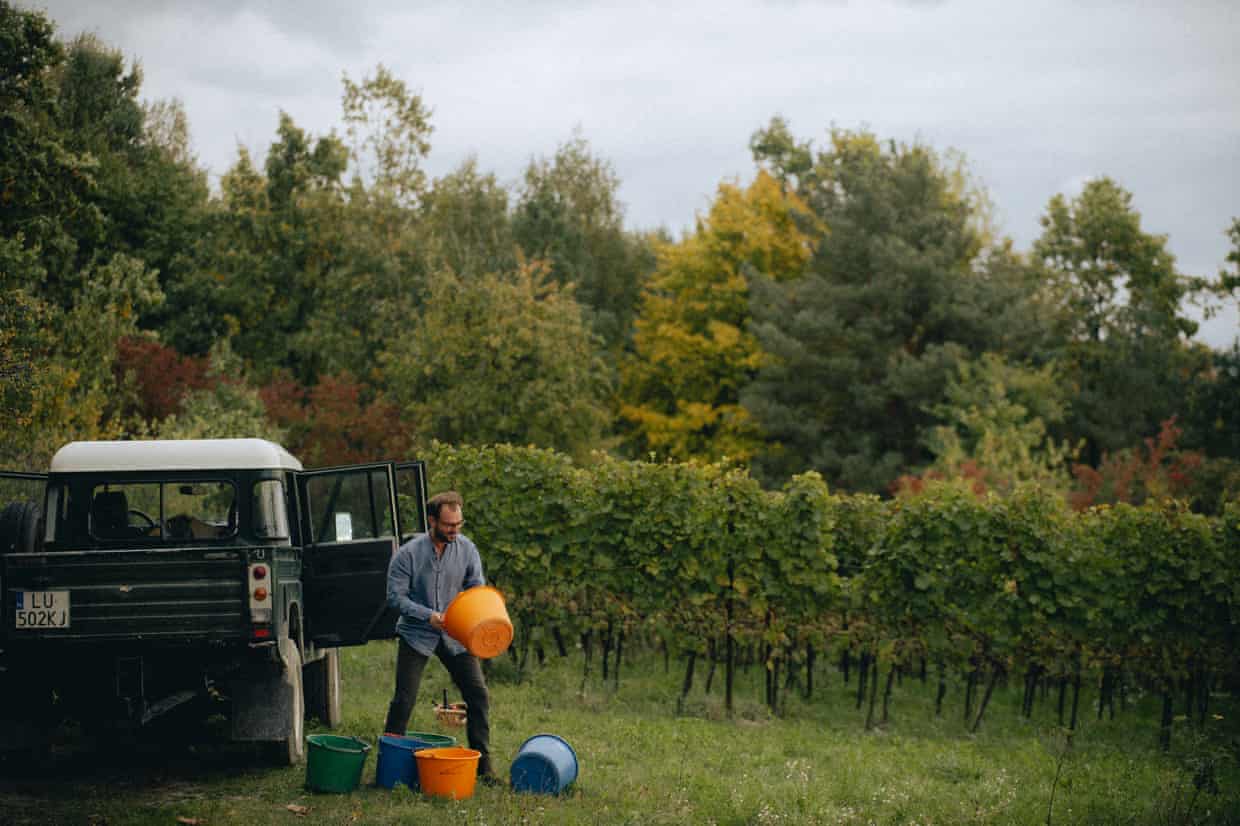
Heard it on the grapevine: Polish wine’s quiet renaissance

My love letter to Brittany’s best exports
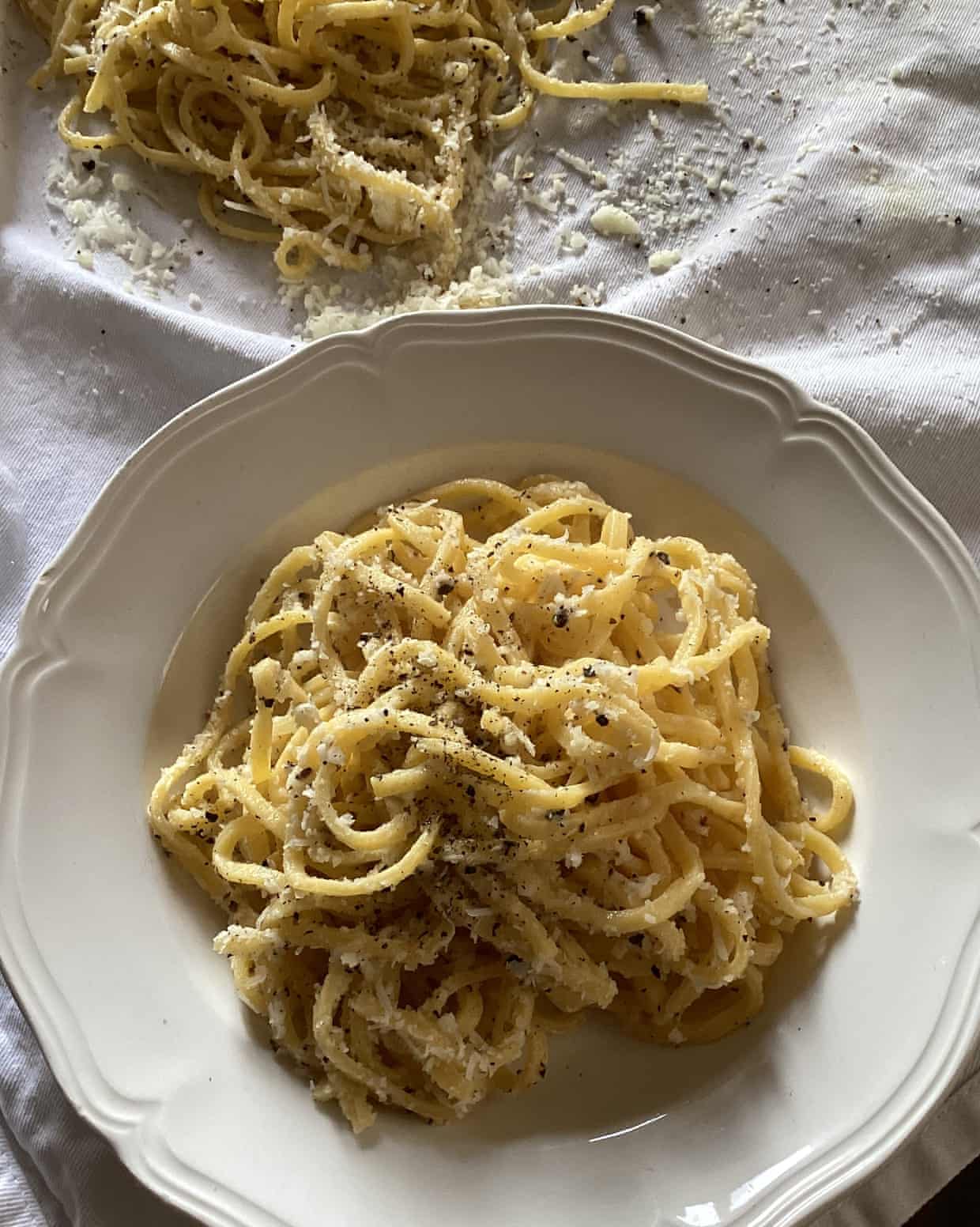
Rachel Roddy’s recipe for cacio e pepe, the old-fashioned way | A kitchen in Rome

How to use up leftover pickle brine in a tartare sauce – recipe | Waste not