‘It’s stupid’: why western carmakers’ retreat from electric risks dooming them to irrelevance
Iran war should be wake-up call about costs of not going full throttle towards EVs as Chinese have done, experts sayBy the 1980s, Detroit’s once titanic carmakers were being upended by rivals from Japan,Ford, General Motors and Chrysler had grown rich selling gas guzzlers, but when oil prices rose and suddenly cheap, fuel-efficient Japanese models looked attractive, they were unprepared,The collapse in sales led to hundreds of thousands of job losses in the automotive heartland of the US,Now western car manufacturers are making what one former boss calls a similar “profound strategic mistake” as they pull back from electric vehicles (EVs) and refocus on the combustion engine just as oil prices are soaring once again,Experts say the industry’s future – and that of tens of millions of jobs – could be on the line.
This time, however, the threat is from China.Cheap, well-made electric cars from brands such as BYD and Leapmotor are finding buyers across Europe.BYD overtook Tesla as the world’s biggest EV seller this year.Chinese marques are fast seizing the market share once dominated by the likes of Volkswagen, Ford, Peugeot and Renault.In the US, the pullback has been even more severe.
Donald Trump has in effect wiped out the country’s electrification push by cancelling tax credits for consumers and dismantling exhaust emissions rules, which he calls a scam.Andy Palmer, a former chief executive of Aston Martin, said: “The worst possible response [from the Europeans] is to blink, slow investment and hope the market somehow resets in their favour.It won’t.”The Iran war makes the west’s EV retreat look even more shortsighted.Soaring oil prices have already prompted fresh interest in electric cars after petrol station prices surged across Europe.
The German car dealer MeinAuto said EV-related online traffic had jumped by 40% since the war broke out.Palmer, who also developed the world’s first mass-market EV in the Nissan Leaf and now chairs a battery technology firm, said: “Chinese carmakers have moved early, built real capability in batteries and software, and are scaling fast.If Europe hesitates now, it will hand rivals a structural advantage that becomes harder and harder to reverse.”The problem is that western manufacturers are doing exactly that, having wiped tens of billions of expected returns from previous EV investment off their books as profits on electric cars remained far below those on petrol and diesel.Stellantis, the group that owns Peugeot, Vauxhall and Fiat, wrote down €22bn (£19bn) in February, while Volkswagen, Europe’s biggest manufacturer, which owns Audi, Porsche and Škoda, made a similar move last year.
The two control more than 40% of Europe’s car market.In the US, where trade barriers were erected to block the wave of Chinese EVs, Ford took a $19.5bn (£14.6bn) hit, killing off several future electric models and scrapping a battery venture.These companies are “having a hard time”, said Julia Poliscanova, the director for EVs at the Brussels thinktank Transport & Environment.
“They have tariffs in the US, they are nowhere in China [where homegrown brands are booming] … So they’re thinking: ‘Maybe at least in Europe, we can have a few years where we prioritise short-term profits selling petrol and diesel cars,’“That is probably a valid business view if your term as a CEO finishes in two years,” she added,“That is a stupid view if you still want to be in the car market in 2035,”At Stellantis, the pivot was especially sharp,Carlos Tavares, its former boss, was among the industry’s loudest champions of electrification, but he was forced out in late 2024.
The automotive group has since announced a reset of its plans, giving customers’ “freedom to choose” petrol cars again and launching a fresh spending spree on hybrids, which combine an electric motor and a petrol or diesel motor,“The only fundamental question for carmakers is how to curb emissions significantly,” Tavares told the Guardian by email,“Those who believe that EVs are not the solution have to explain the ‘how’ without EVs,”Europe’s manufacturers have yet to do so convincingly,Instead, they blame weak consumer demand for the retreat.
The argument goes that high costs and patchy charging infrastructure have slowed EV sales, which accounted for only one in five new cars sold in Europe last year.BYD, meanwhile, is accelerating, unveiling a new battery that gives its cars a range of 600 miles.It said 250 miles could be injected into its new batteries in just five minutes – albeit using megawatt charging points that deliver more than four times the fastest chargers in the UK.Even Uwe Hochgeschurtz, a former chief operating officer for Stellantis in Europe, who left just before Tavares, said he would have no problem buying a Chinese model.“The BYDs, the Leapmotors are very good, very nice cars,” he said.
“They sell well because they are quite cheap … I would buy one, if I was a normal consumer, I would consider a Chinese car.”Politicians are unsure which way to turn.Last December, the European Commission scrapped a 2035 ban on selling new petrol or diesel cars.Instead, under pressure from Germany and Italy, it let manufacturers keep making cars with up to 10% of their current exhaust emissions past that date – in effect, a way to keep selling combustion engines.The EU has said the changes “maintain a strong market signal” for electrification, but Transport & Environment estimates the changes mean a quarter of cars sold in 2035 could still run on fossil fuels.
Hochgeschurtz said Brussels’ mixed messages were holding carmakers back, essentially forcing them to keep all the complexity of multiple power sources.“[Carmakers] try to invest on both sides,” he said.“It’s very costly, but that is their life insurance.”He added: “China decided decades ago to go electric.The US has decided to go full petrol with the latest administration … Europe has no direction.
If you want to lose the car industry, go ahead with the confusion.”But Pascal Canfin, an MEP who was one of the architects of the 2035 ban and chaired the European parliament’s environment committee until 2024, said attempting to blame politicians was “a scapegoating exercise.[The carmakers] are losing the technological battle with China.”He said manufacturers had been “lobbying for this for months” before the ban was watered down.“They are creating themselves the instability, the uncertainty that could jeopardise the whole business model again.
”In Britain, carmakers also want ministers to weaken plans to make all new cars zero emission by 2035,“Other major markets have responded and we should do too,” said Mike Hawes, the head of the Society of Motor Manufacturers and Traders, an industry lobby group,“The EU has crossed the Rubicon,”A Volkswagen spokesperson said the group was “clearly in favour of electric mobility” and had invested heavily in it,“However, this requires a reliable, long-term and binding political framework … the ball is now in the politicians’ court to create the necessary framework conditions to make electromobility a success,” they said.
Stellantis declined to comment.Hochgeschurtz still has hope for western brands.“Don’t forget, they are still dominant,” he said.“And Europeans love their cars.The British love their Jaguars even though they always break down, the Germans love their Volkswagens even though they are too expensive.
”Yet the stakes are higher than simply holding on to British and German consumers.EV sales are surging in India, Mexico and Brazil, where they now make up a higher share of the market than in Japan, according to data from Ember, a thinktank.All are buoyed up by cheap Chinese cars.Poliscanova said: “Western carmakers do not have the product to sell them, so they are fast losing what used to be their territory in those economies too.These are not just niche, outside markets … they are really growing.
”Rather than hedging their bets with petrol and diesels, she added, manufacturers should go full throttle towards EVs as the Chinese have done to make up the lost ground.That would involve pouring R&D money into the most important part of an electric car: the battery.Historically, European manufacturers have outsourced battery production, often leaving them dependent on Asian suppliers.BYD, by contrast, makes its own, mines its own lithium and builds its own chips.Some attempts have been made to build European capability via joint ventures between carmakers and battery producers, but even some of those have stalled.
Northvolt, once Europe’s battery darling, went bankrupt last year, and a €7.6bn venture between Stellantis, Mercedes and TotalEnergies shelved plans to build gigafactories in Germany and Italy in February.Palmer said focusing on one power source would also help carmakers achieve the economies of scale needed to make EVs profitable.He said: “A platform that has to accommodate an internal combustion engine, a plug-in hybrid and a battery electric car is not optimised to anything – it’s the worst of all worlds.”Part of the answer, he agreed, lay with policymakers – but whatever they do or do not provide, the cost of carmakers pausing on electrification now would be high.
“The lesson from history is very clear,It risks repeating, in very close form, the error American carmakers made in the 1980s,” he said,“They still have the engineering talent, the brands and the manufacturing heritage to compete,But the window is narrowing,” he added,“Expect to see more Chinese cars on our roads in future.
”

‘It all feels very natural’: Britain’s sauna boom heats up as people seek warmth of human connection
From fields to floating pontoons, in horseboxes, barrels and beach huts, saunas are springing up across Britain. The British Sauna Society now lists about 640 saunas – up from 540 at the start of the year – while a recent report predicted that the UK could become the world’s largest sauna market by 2033, outpacing even Finland and Germany.“The continuing growth suggests that the peak has still yet to come – if there is one,” said Gabrielle Reason, the society’s director. But are saunas a tonic for the nation’s health – or a wellness fad with hidden risks?When it comes to measurable health effects, the strongest evidence relates to the cardiovascular benefits of sauna use. These are “substantial”, said Prof Setor Kunutsor, the Evelyn Wyrzykowski research chair in cardiology at the University of Manitoba in Canada
House of Lords has ‘signed its own death warrant’ by stalling assisted dying bill, says MP
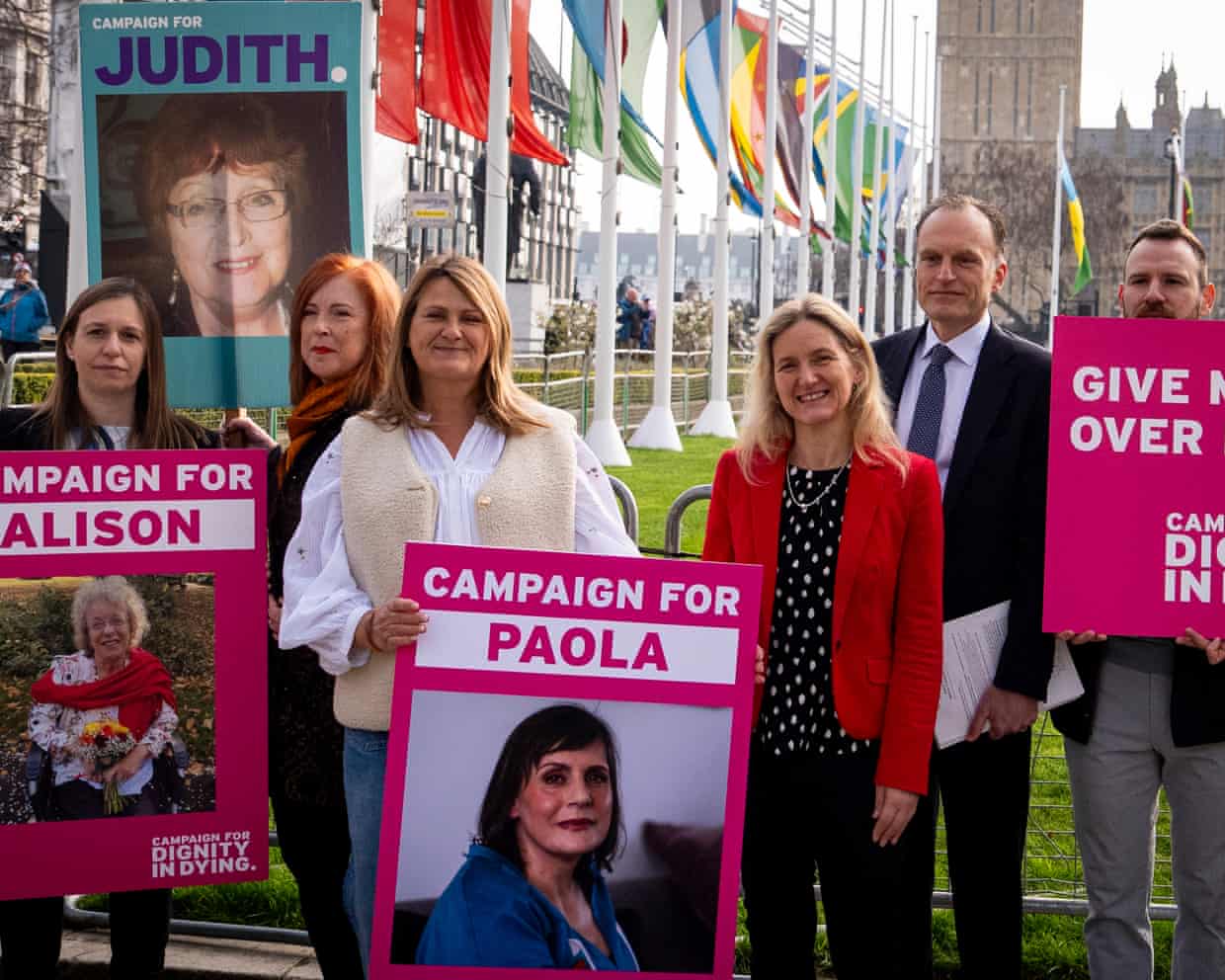
The House of Lords “signed its own death warrant” over its stalling of the UK assisted dying bill, the MP Kim Leadbeater said as she joined more than a dozen terminally ill and bereaved people in protest outside parliament.Marking the second anniversary of the death at Dignitas of the prominent assisted dying campaigner Paola Marra, Leadbeater, whose private member’s bill for England and Wales looks set to run out of time, said many MPs, who had already voted by a majority to pass the bill, were “angry and upset” by the addition of about 1,200 amendments in the Lords, which will probably result in the bill falling without a vote.The protest, organised by the campaign group Dignity in Dying, came as the number of UK residents who had an assisted death at Dignitas rose to its second-highest level in two decades. Forty-three people travelled to Switzerland in 2025, up from 37 the previous year, and second only to 47 people in 2016, figures show.Leadbeater said of the teminally ill adults (end of life) bill: “MPs took this decision having entered into this debate in a really serious, considered manner
Kent meningitis outbreak may have peaked as UKHSA reports slowdown in cases
The Kent meningitis outbreak may have reached its peak after only two new cases were reported by officials on Friday.The UK Health and Security Agency said that as of 12.30pm on Thursday, there were 18 confirmed and 11 probable cases of meningitis linked to the Kent outbreak, taking the total number of people with the disease to 29. Of the confirmed cases, 13 were meningitis B.While the growth in cases may have slowed, the situation remains serious, with all cases requiring hospital admission
The Kent meningitis outbreak: what is happening and why?
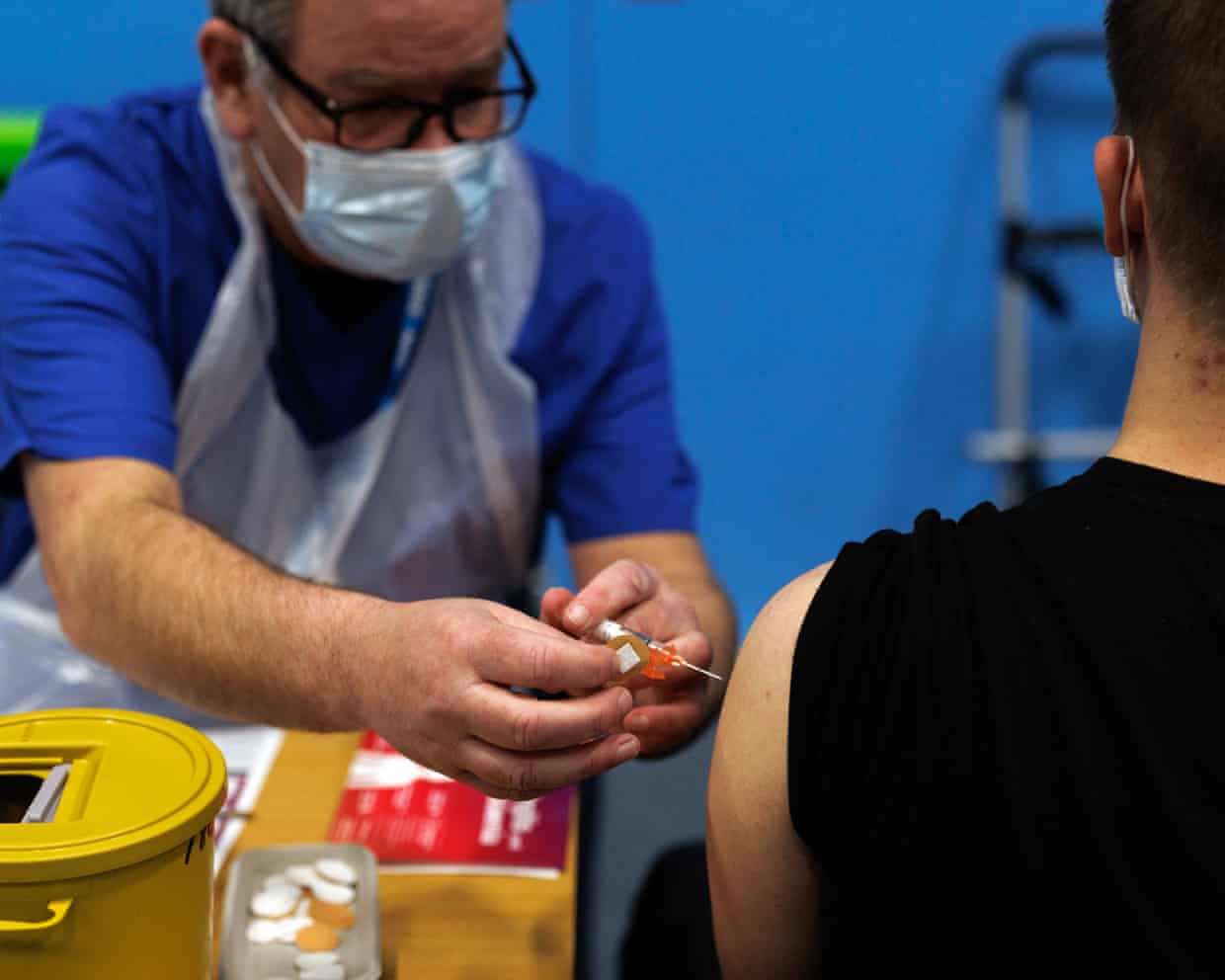
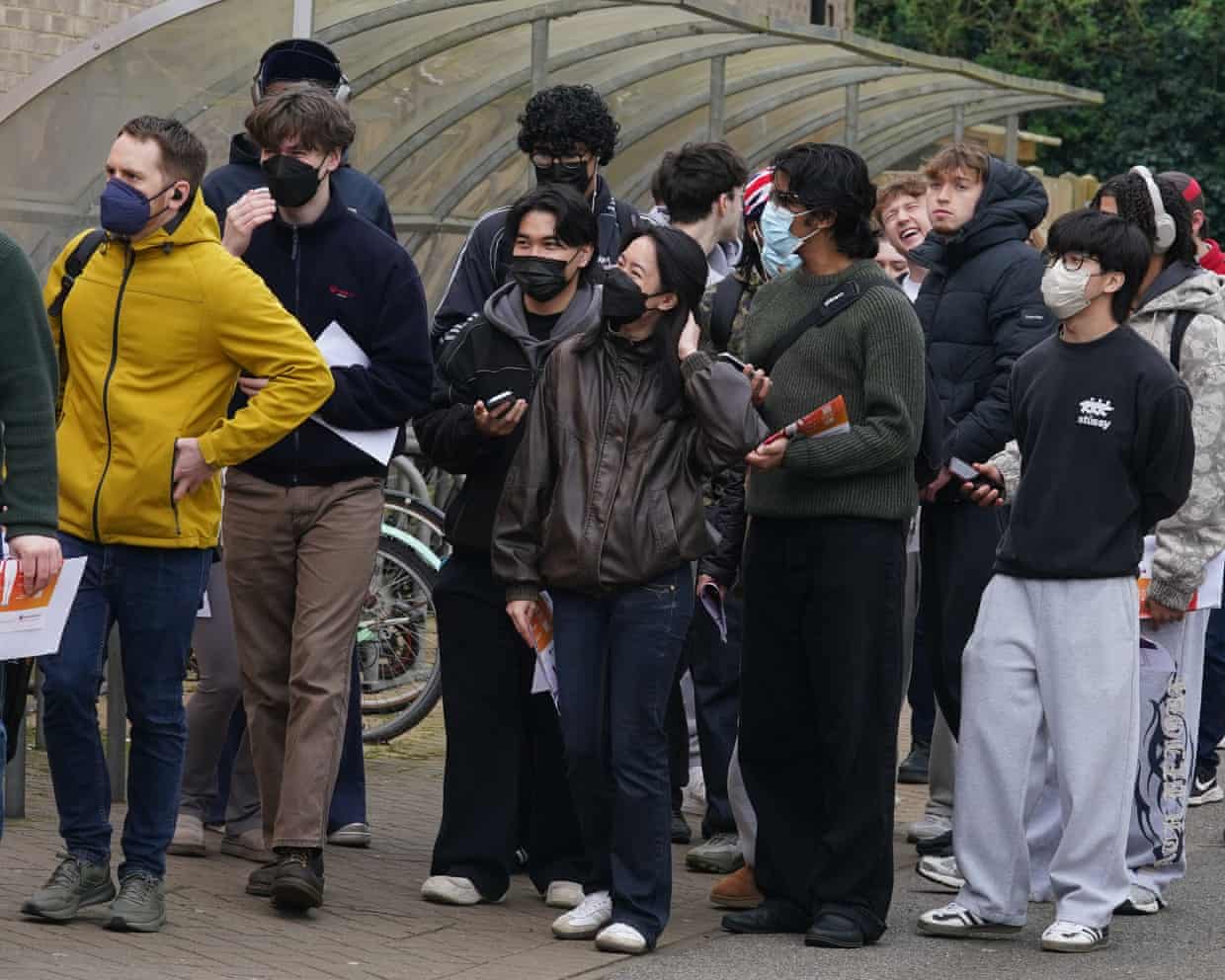
The deadly outbreak of meningitis in Kent has fuelled concerns about how far the disease will spread and seen the return of people wearing masks and queueing for vaccines. The scenes are reminiscent of the Covid crisis, but meningitis is very different. Here we look at how the outbreak has unfolded.Meningitis is a potentially lethal but uncommon disease caused by viruses and bacteria that trigger inflammation of the meninges, the protective linings that cover the brain. The Kent outbreak is driven by meningococcal bacteria which are found in the nose and throat of about 10% of the population

George Nicholson obituary
Borough Market in London is today a thriving market and popular place to eat – George Nicholson, who has died aged 79, was chair of its board of trustees for 10 years until 2006, and, as such, contributed much to that success. He loved the place; he and I ate there together, as friends, on his last birthday.George was proud of being a Londoner and his sense of civic pride and commitment to London continued all his life. In 1981 he was elected as the Labour member for Bermondsey of the Greater London council. He became chair of the GLC planning committee, advocating for Thames beaches, social housing, the best of urbanism and celebration of the possible
Father of meningitis victim, 18, tells of family’s ‘immeasurable’ devastation
The father of an 18-year-old school pupil who died after the meningitis outbreak in Kent said his family’s devastation is “immeasurable” as he called for better protection for young people.Juliette Kenny died last Saturday, one day after first showing symptoms of vomiting and discoloration in her cheeks, her father, Michael Kenny, said.He said his daughter had been “fit, healthy and strong” and had completed the practical assessment for her PE A-level two days prior to her death.Juliette Kenny, a sixth-form pupil at Queen Elizabeth’s grammar school in Faversham, is one of two students to have died after the outbreak of meningitis B in the county.Kenny said “no family should experience this pain and tragedy” and that “this can be avoided”, adding that he wanted his daughter’s legacy to be “lasting change”

First came the AI ‘teammates’, then the layoffs: the new reality for Atlassian staff now looking for work

Fire experts ‘kept awake’ over growing hazard of lithium-ion batteries

Essex police pause facial recognition camera use after study finds racial bias

Meta AI agent’s instruction causes large sensitive data leak to employees

Cryptocurrency firms suffer heavy losses in Illinois primaries after spending big

Lack of funding is stifling scientific research | Letter