Cryptocurrency firms suffer heavy losses in Illinois primaries after spending big

The cryptocurrency industry spent big and lost often in this week’s Illinois primaries,As the industry prepares to make massive donations in the 2026 midterm elections to replicate its success in 2024, the Illinois losses mark an early setback for firms that are trying to establish themselves as power players in American politics,Crypto companies flooded the state’s Democratic primaries with millions of dollars to promote candidates they believed would have a light touch when it came to regulating digital assets,AI firms, meanwhile, backed opposing candidates and seemed to cancel each other out,Using Super Pacs that are allowed to spend unlimited sums of money, crypto and AI companies ran television advertising and distributed campaign fliers that only occasionally alluded to their industries.
Instead, the messaging focused on promises to combat Donald Trump’s administration and support liberal policies, a strategy used by other organizations such as the American Israel Public Affairs Committee (Aipac).But the coy strategy did not stop interventions by both the AI and crypto industries from becoming a lightning rod in the rowdy primaries in Illinois, where there was a rare glut of open seats that led to competitive races.The crypto-backed political action committee Fairshake spent more than $10m against Juliana Stratton, the Illinois lieutenant governor, who ultimately won the Democratic nomination to succeed Dick Durbin, a US senator.Stratton has no track record on crypto, but her boss does: her campaign is backed by JB Pritzker, the Illinois governor, a billionaire who, alongside his wife, has donated $6m to the Super Pac supporting her candidacy.While Stratton served as lieutenant governor, Pritzker signed laws creating state-level crypto regulations, undermining the Clarity Act’s attempt to set a federal framework.
The industry sees her as likely to follow in Pritzker’s footsteps.Fairshake and Protect Progress, which is also tied to the crypto industry, spent millions more to unsuccessfully support Stratton’s main rivals, representatives Raja Krishnamoorthi and Robin Kelly, according to filings with the Federal Election Commission.In the Illinois US House primaries, the tech-backed groups’ campaign spending had mixed results.La Shawn Ford, a state representative, who had supported state legislation regulating the AI and crypto industries, won the Democratic primary to succeed Danny Davis.Fairshake spent nearly $2.
5m opposing Ford’s candidacy in a race that featured at least four other political groups spending against the progressive lawmaker or for his opponents.It was only where the crypto industry spent the least amount of money that its candidate succeeded.Donna Miller, a Cook county commissioner, prevailed in the Democratic primary to succeed Kelly after Fairshake spent more than $800,000 against Robert Peters, a state senator, another progressive who supported legislation to regulate the crypto industry.The late-stage infusions of cash into the Illinois races, including multiple competing donations by AI firms, totaled almost $20m across races and served as a declaration of AI and crypto’s political ambitions, raising the stakes in primaries that were already hotly contested.“Corporate money is being used to paint corporate-backed candidates as fearless progressives,” said Adam Green, co-founder of the Progressive Change Campaign Committee, a political group that works to elect anti-corporate progressives.
“The question for the Democratic party is whether we elect people who actually believe in these positions or will we elect milquetoast candidates who give lip service to these values.”The AI-backed Think Big Pac invested more than $1m to boost the candidacy of Jesse Jackson Jr, a former congressman who pleaded guilty in a fraud scandal in 2013.But Jobs and Democracy Pac, another AI-backed group, also mounted about $1m in negative campaign spending against Jackson during the race.Think Big is a subsidiary of Leading the Future, a political group that is funded by major Silicon Valley executives, including the venture capitalist Marc Andreessen, who opposes federal regulations for AI and has been a staunch backer of the Republican president’s AI policies.Jobs and Democracy Pac, by contrast, is funded by the AI company Anthropic, which favors some safety regulations on AI as the technology develops.
Both Pacs opposed progressive candidates who called for relatively heavy regulations on the technologies and higher taxes on wealthy Americans.Campaign finance experts and rank-and-file voters alike are still struggling with what to make of the technology industry’s political influence.“They’re so new to the game that public opinion isn’t very well formed about them,” said Brian Gaines, a political science professor at the University of Illinois Urbana-Champaign.“You don’t get a clear signal for who is the progressive and who is the moderate on AI and crypto policies.”
JP Morgan Chase to use computer estimates to monitor hours worked by junior bankers
JP Morgan Chase has started to compare the hours junior investment bankers claim to have worked against logs on its IT system.The US bank said it would begin issuing reports to junior bankers that compare computer-generated estimates of their work weeks against their self-reported time sheets as part of a pilot scheme.The company said it planned to roll out the programme more widely across its investment bank, with IT estimates based on employees’ weekly digital activities including video calls, desktop keystrokes and scheduled meetings.“Much like the weekly screen time summaries on a smartphone, this tool is about awareness, not enforcement,” JP Morgan said in a statement. “It’s designed to support transparency, wellbeing, and encourage open conversations about workload
Marmite maker Unilever in talks to merge food business with US-based McCormick
Unilever, the owner of Marmite, Dove and Hellmann’s mayonnaise, is in talks to combine its food business with the US-based spice and seasoning maker McCormick.The Anglo-Dutch food company – which last year spun off its ice-cream division, the home to Ben & Jerry’s, Magnum and Wall’s – has entered discussions over the future of the “highly attractive” business.Unilever is valued at almost £100bn, and its food unit, which includes brands such as Knorr, could be worth tens of billions of pounds.McCormick, which owns brands including French’s yellow mustard, Old Bay seasoning and Cholula hot sauce, is valued at about $15bn (£11bn).“Unilever confirms that it has received an inbound offer for its foods business and is in discussions with McCormick & Company,” the Marmite maker said in a statement
Meta AI agent’s instruction causes large sensitive data leak to employees
An AI agent instructed an engineer to take actions that exposed a large amount of Meta’s sensitive data to some of its employees, in the latest example of AI causing upheaval in a large tech company.The leak, which Meta confirmed, happened when an employee asked for guidance on an engineering problem on an internal forum. An AI agent responded with a solution, which the employee implemented – causing a large amount of sensitive user and company data to be exposed to its engineers for two hours.“No user data was mishandled,” a Meta spokesperson said, and they emphasised that a human could also give erroneous advice. The incident, first reported by The Information, triggered a major internal security alert inside Meta, which the company has said is an indication of how seriously it takes data protection
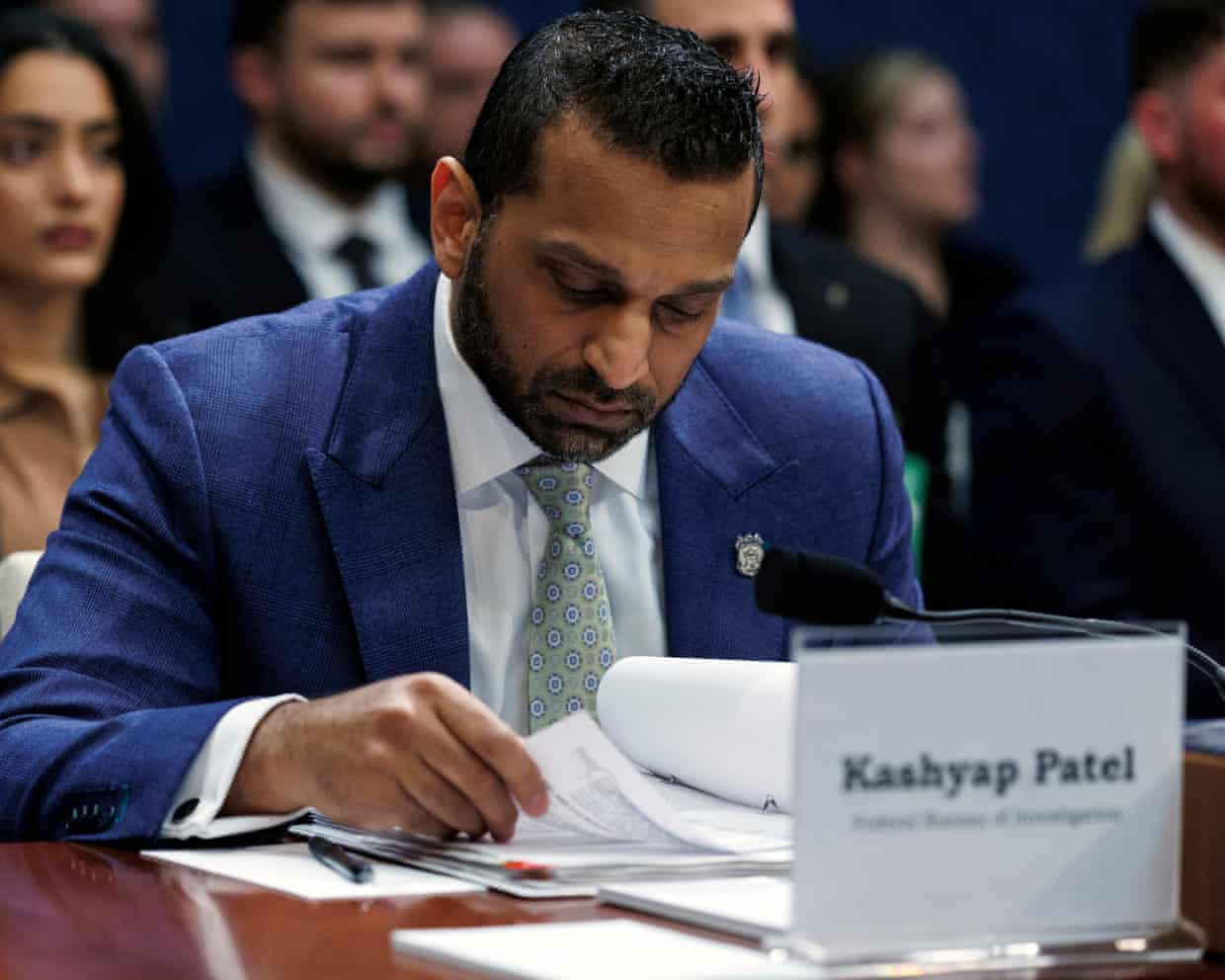
Why is the FBI buying people’s location data and how is it using the information?
Kash Patel’s disclosure Wednesday that the FBI has resumed buying location data on Americans has many people, including members of Congress, wondering: how does private information get into the hands of the US government in the first place – and how can federal law enforcement use that information to track peoples’ whereabouts?Federal law enforcement agencies generally must obtain a warrant, which requires establishing probable cause in the eyes of a judge, to gather historical or real-time cell phone location data. The US supreme court has ruled that the fourth amendment to the US constitution, which protects against “unreasonable search and seizure”, prohibits the warrantless collection of individuals’ location histories. Buying such information, usually en masse, can circumvent this requirement, leading many privacy advocates to label the practice unconstitutional.The FBI director’s admission came in response to a question from Ron Wyden, a Democratic senator of Oregon and a longtime opponent of the warrantless surveillance of Americans. Wyden told Patel that his predecessor, Christopher Wray, testified in 2023 that the FBI did not at that time purchase location data derived from internet advertising, although he acknowledged that it had done so in the past
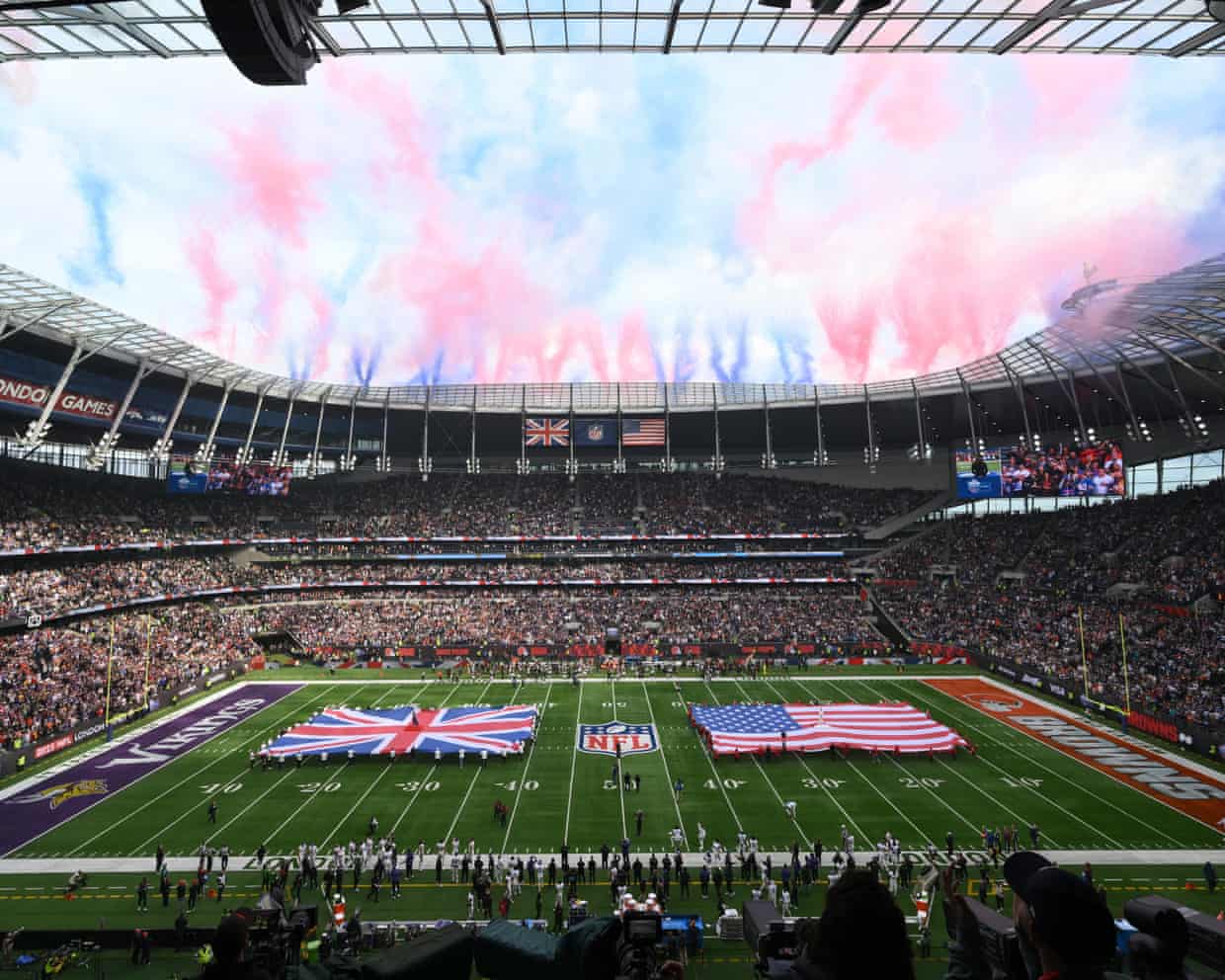
Sixteen international games and a franchise overseas: is the NFL’s global ambition good or greed?
“Pigs get fat, hogs get slaughtered. And they’re getting hoggy.” When Mark Cuban, then owner of the NBA’s Dallas Mavericks, fired that line at the NFL in 2014, he was partly goading and partly gloating.It felt directionally true. The NFL looked bloated, arrogant and vulnerable

Chess: Scotland’s Freddy Waldhausen Gordon, 15, routs the English in British Rapidplay
Freddy Waldhausen Gordon, a 15-year-old from George Heriot’s school, Edinburgh, came through with a stunning burst to capture the annual British Rapidplay championship in Peterborough with a score of 9.5/11, defeating the top-seeded GM, Gawain Maroroa Jones, in the final round in a must-win game by a checkmating attack where White’s queen and both rooks all invaded Black’s rear rank.Maroroa Jones was in trouble early in the decisive game, soon had to concede rook for knight, and a second loss of the exchange followed at move 32. At the end, 39 Rxg7+ and 40 Qg8 mate could only be delayed by Black giving up his queen.It was the 37th staging of the British Rapidplay, whose fast time limit of all the moves in 15 minutes for each player, plus a 10 seconds increment per move, makes it possible to hold an entire 11-round tournament in a single weekend

Banksy has been unmasked (again). But does this major Reuters investigation actually tell us something new?

Arts Council England must change or face ‘disaster’, culture department is told

Jimmy Kimmel on Trump: ‘He uses his bones to feel things instead of his brain’

Carnivàle revisited: is this HBO’s strangest show?

‘We kicked Bono’s arse’: how we made Atomic Kitten’s Whole Again (with a little help from Kraftwerk)

Gatz review – the Great Gatsby performed in eight and a half hours of attentive, immersive joy