May elections: Badenoch rows back on Reform pacts as millions cast their votes – as it happened
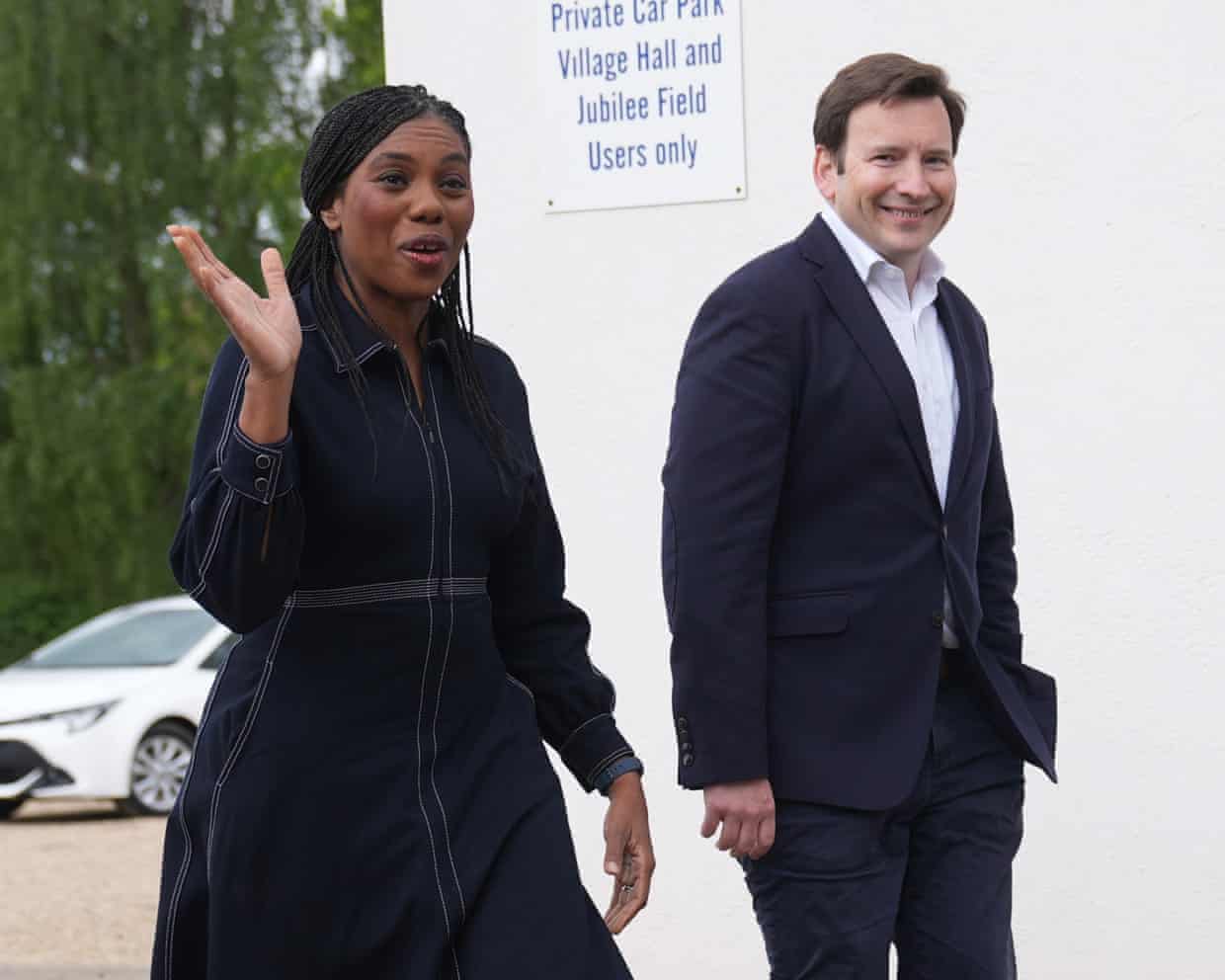
Yesterday Kemi Badenoch gave an interview to Sky News suggesting she would be happy to see Conservative councillors working with Reform UK councillors to deliver rightwing policies.In an interview with the Sun published today, Badenoch rowed back on this.She said there would not be any deals because Reform councillors weren’t “serious”.She told the paper:double quotation markWe’re not doing deals with Reform.I don’t want to see us helping Reform.
A lot of people in Reform are people we kicked out.Conservative councillors don’t want to work with Reform because they’re not serious.Voters in England, Scotland and Wales have been voting in elections likely to have a transformative effect on British politics.(See 3.21pm.
) The polls close at 10pm, and there will be full cover of the results, and the reaction to them, overnight and tomorrow at the Guardian here.Kemi Badenoch has pulled back from her suggestion that she would be happy to see Conservative and Reform UK councillors in coalition together in local government.(See 10.23am.)Police investigating the theft of a phone belonging to Keir Starmer’s former chief of staff Morgan McSweeney have arrested a man.
Progressive voters have been driven away from Labour by a lack of argument and vision from Keir Starmer, according to a report using research from a senior pollster to Tony Blair and Bill Clinton.Coverage of Scotland’s election counts by STV, the commercial broadcaster, is expected to be heavily hit by strike action in an escalating dispute over pay.For a full list of all the stories covered on the blog today, do scroll through the list of key event headlines near the top of the blog.Polly Toynbee says Labour needs to embrace PR.Here is her column.
And here is an extract.double quotation markI have no crystal ball to show me what Labour will do in its paroxysms of misery when the results pour in.But if at some point, in some mode, [Keir] Starmer leaves Downing Street, sooner or later contestants for his post are all likely to promise the electoral reform the Labour party membership wants.Andy Burnham, a very long-time reformer, has set the pace and other contenders will have to follow.(If they dare continue blocking Burnham, his voice as king of the north would still overshadow the winner, forcing this and other policies to the fore.
)Of course, Labour doesn’t need to wait for a new leader,Starmer himself could set up a national constitutional commission to report well ahead of the next election, for Labour to put electoral reform into its next manifesto, with no need for a referendum (after Brexit, please, never again),Get out on the front foot, since the next election may result in a situation whereby to keep out Farage and the Tories, Labour needs to be part of a grouping of progressive parties, with all the others committed to PR as the absolute sine qua non of cooperation; they know the lesson of Nick Clegg’s failure to change the course of history,Whatever the results today, it’s a solid-gold bet that first past the post will do even worse damage to trust in democracy,Earlier I made the point that local government will be getting more pluralist after these elections.
(See 5.21pm.) In a statement to the Press Association, Prof Justin Fisher, director of the policy unit at Brunel University of London, makes the point that this has already been happening.He says:double quotation markMulti-party politics is not new at local government level.Since 2022, the largest groups of GB councils has been under ‘no overall control’, and this has been rising.
After the 2025 local elections, 43.5% of local authorities were under ‘no overall control’.This figure is likely to rise again after Thursday.The Conservative/Labour domination of GB councils has been declining for some time.While 57% of councils were runs by either the Conservatives or Labour in 2019, by 2025, the figure was 38%.
Similarly, the proportion of GB Conservative and Labour councillors was 70% in 2019.By 2025, it was 57%.It is possible that the Liberal Democrats may become the second party of local government in terms of councillors – something that hasn’t happened since the mid-1990s.Local government has always been more multi-party than Westminster.There is intense interest in Labour as to what the party will do to respond to the election results, which are widely expected to be dire for the party.
As Jessica Elgot reports for the Guardian, some MPs would like mayors to intervene,double quotation markMPs hoping to see a change of leadership believe that regional mayors and council leaders – among them Greater Manchester’s Andy Burnham and even the mayor of London, Sadiq Khan – may join calls for a change of prime minister,Allies of the mayors said an immediate call for resignation was unlikely,But Starmer’s position may be safeguarded by leftwing MPs who want to see Burnham return to the Commons before a challenge,Other potential leadership contenders – Wes Streeting and Angela Rayner – are said to be unwilling to be the first to challenge Starmer.
In a story for the i, Arj Singh and Caroline Wheeler say Keir Starmer is expected to respond with a big speech about moving closer to the EU.They quote a cabinet minister saying “big, expansive, ambitious conversations” are taking place in government about Brexit policy.In a story for the Times, Aubrey Allegretti says Wes Streeting, the health secretary, has a team ready to run his leadership campaign if there is a contest.But he also quotes a spokesperson for Streeting saying: “Wes is not going to challenge the prime minister.”The Telegraph has a story saying union leaders will confer on Friday to discuss what Labour should do.
The story says:double quotation markOne general secretary of a Labour-affiliated union told The Telegraph that the prime minister “needs to go”, while another said “the government is not good enough”.A video call has been scheduled for 5pm on Friday, when union leaders will privately discuss the local election results and what should be done next.And, in a story for the Sun, Martina Bet says, if Andy Burnham tries to return to the Commons, Starmer may try to keep him out by refusing to move the writ for a byelection in the seat where a Labour MP stands down to create a vacancy for Burnham.Instances of voters being turned away from polling stations due to confusion over photo ID requirements have been recorded by European election observers watching voting in England, Ben Quinn reports.According to a story by Lucy Fisher in the Financial Times, the former Tory justice secretary, David Gauke, is set to get a knighthood.
He chaired a review of sentencing policy for the government.Despite serving as a cabient minister, he had the Tory whip withdrawn because he did not support Boris Johnson’s Brexit policy and he lost his seat in 2019.He has been estranged from the Tory leadership ever since.According to James Heale from the Spectator, Kemi Badenoch is not happy about Gauke getting a knighthood.double quotation markTory source responds to David Gauke being nominated for a knighthood by Labour “Kemi absolutely livid Labour nominated Gauke.
She wouldn’t have him anywhere near any list.Starmer even snuck it through a random honours committee to stop Kemi vetoing it.He stood against the Conservatives, now he’s doing Labour’s bidding on sentencing and bagged himself a knighthood.Total Starmer stitch up.”The FT commentator Robert Shrimsley says this response is a mistake.
double quotation markNever understand this approach.Yes, Labour used a Tory as cover on sentencing but when parties give honours to the other side, they are also saying this guy was so good even we used him.By fuming publicly Kemi is saying - Don’t worry I’m nothing like those old competent ToriesThis is from the FT’s Stephen Bush on Bluesky on the news that someone has been arrested in connection with the theft of Morgan McSweeney’s phone.double quotation markI know we all know that the police could, in fact, track down mobile phones if they thought it was worth their time, but it is nonetheless galling to have it confirmed.And here is Ben Quinn’s story about the arrest.
This story is probably bad news for those Tories who have been floating the idea that McSweeney made it all up.A reader asks:double quotation markWill there be Politics Live running overnight with comments open so we can laugh/cry/cheer/commiserate (delete as applicable) as the results come in?We will be running an overnight blog.But I don’t think it will start at 10pm; I think it will be launched closer to 1am, when the first results start coming in.And comments won’t be open overnight.I’ll be picking up the blog from about 6am.
And comments will be open on Friday, starting soon after 8am, we hope,This is Robert Pownall from the wildlife advocacy group Protect the Wild, who is standing as a candidate in the Holyrood election dressed as a gannet,He explains why here,Earlier I said that today’s elections are likely to be seismic,(See 8.
14am.) We don’t have any results yet, but unless all the opinion polls, and all the council byelections that have taken place over the past 12 months, and all the parliamentary byelections that have taken place since the general election, turn out to be completely unreliable guides to how people vote today, then we already have a rough idea of what the outcome will look like.It will be enough to transform the political landscape of Britain – in at least seven ways.1) The full arrival of five-party politics in EnglandTwo-party politics has been in decline in British politics for more than half a century.Its high point was in 1951, when 97% of people who voted in the UK general election opted for either the Conservative party or Labour.
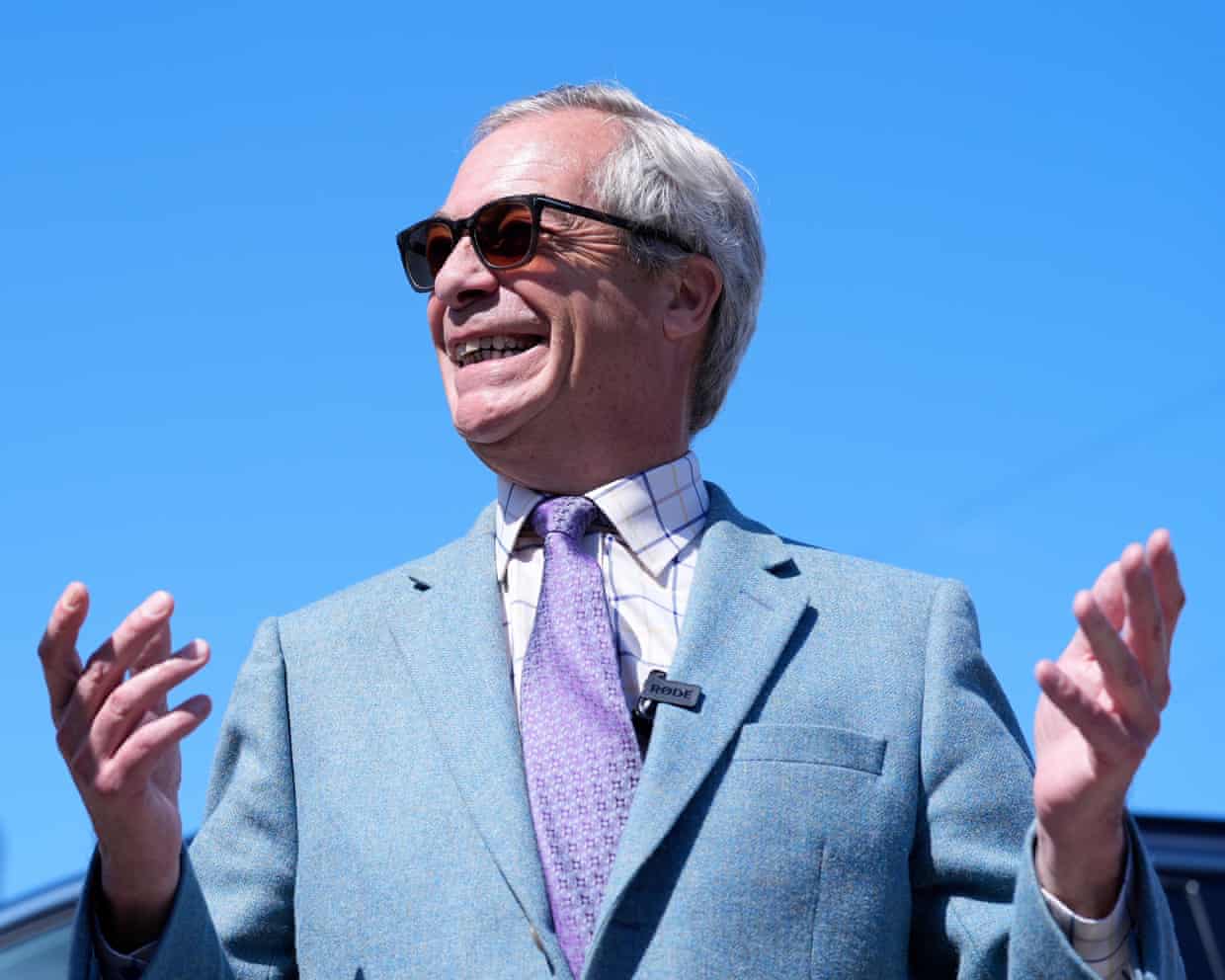
In recognition of the Lib Dems, people used to talk about England having a two-and-a-half party system.Scotland and Wales have had strong nationalist parties for years, and Reform UK easily won the English local elections last year.Under Zack Polanski, the Greens have now been soaring in the polls and this is the first English election where talking about “main” parties and “minor” parties no longer makes sense.(How can it, when the “minor” parties with least parliamentary representation, Reform UK and the Greens, have been the two best-performing parties in some polls?) Those terms describe the parliamentary situation but not politics outside, where five parties are competitive across England and it is probably more useful to think in terms of legacy parties and disruptor parties.2) Reform UK’s emergence as a GB-wide partyWhen Nigel Farage was leading Ukip, it looked like an English nationalist party.
Scotland seemed to have a healthy resistance to Faragism and on one occasion, in 2013, he had to be locked in a pub in Edinburgh for his own protection.The Brexit party also never really succeeded in Scotland (although it did make inroads into Wales), but under its new name, Reform UK, it is competing with Plaid Cymru for first place in Wales, and with Labour for second place in Scotland.It should easily win the English locals, and so it is the only party with a realistic chance of coming first or second in England, in Scotland and in Wales.That is why Farage is boasting about his being the “only true national party”.3) Wales going nationalistPlaid Cymru, the Welsh nationalist party, is widely expected to be the largest party in the Senedd after the elections and, unless Labour and Reform UK form some extraordinary version of their own Molotov–Ribbentrop Pact, Plaid will be the only party with a realistic chance of forming a government.
Rhun ap Iorwerth, the Plaid leader, would be the first non-Labour first minister of Wales since devolution,Assuming the SNP remain in power in Scotland (almost certain), and with Sinn Féin the largest party at Stormont, this would mean nationalists leading the three non-English nations in the UK,This does not mean Welsh independence is on the cards,Although formally committed to independence, Plaid has never given any serious thought to how independence might be achieved and a government that tried to implement it would find it even more complicated and less popular than the project has been in Scotland, where independence was rejected in a referendum in 2014,But, after that vote, the Scottish parliament got new powers, and the Scottish government started to use them to diverge from UK government tax policy.
The Welsh government has fewer devolved powers than its Edinburgh counterpart, but with Plaid in power in Cardiff over time that may change.4) Labour support collapsing – especially in LondonIf Plaid win in Wales, it will be the first time Labour has lost a big election there for more than 100 years.It is also expected to lose big in London, where it is the dominant party in local government and where at the last election it won 59 of the 75 parliamentary seats.In fact, it is on course to do badly everywhere, recording its worst result since at least the 1970s.Here is the forecast from Britain Elects, who produce election forecasts for the New Statesman and who have a good record.
Tomorrow you may hear talk from Labour figures of the 1968 London elections.Taking place after devaluation the previous year, they were an utter disaster for Labour, which lost 17 of the 20 boroughs it controlled in the capital.They almost all went Tory.The upside for Labour people looking for a positive message out of this today is that the party recovered and, two years later, Harold Wilson called a general election that he thought he might win.But he lost.
And Wilson did not have to contend with Reform UK, or the Greens, or five-party politics, or prolonged austerity, or social media, or any of the other factors that make Starmer’s situation different.5) Local government getting more pluralistLocal government in Britain used to be dominated by the two biggest legacy parties, the Conservatives and Labour.That picture should take a considerable jolt this weekend.The Liberal Democrats think they will be at least the second largest party in local government by the time of the next election, in terms of councillor numbers, and perhaps even the biggest.And Reform UK and the Greens will have a signficantly bigger presence