£570m cost of Erasmus is ‘money coming back to UK’, says minister – as it happened

Rejoining Erasmus will cost the UK £570m.In an interview this morning, Nick Thomas-Symonds, the Cabinet Office minister who is in charge of post-Brexit relations with the EU, defended this on the grounds that the money would be “coming back” to the UK.He said:We’ve agreed that there will be a 30% discount for the UK’s participation.And that is, of course, money that is then, as it were, coming back.It’s making sure that there are students and young people, indeed people of other ages across the UK, who are benefiting from it.
Thomas-Symonds also said that, after 10 months, there would be a review to consider who many people are using the scheme,He is now making a statement about the announcement to MPs,The UK has given its final warning to Roman Abramovich to release £2,5bn from the oligarch’s sale of Chelsea FC to give to Ukraine, telling the billionaire to release the funds within 90 days or face court action,The UK’s largest trade union, Unison, is on a potential collision course with Labour after it ousted a general secretary with close links to Keir Starmer in favour of a leftwinger who was expelled from the party three years ago.
Young people across the UK will be able to study or gain work experience through the EU’s Erasmus scheme for the first time since Brexit, after the government announced an agreement to rejoin at a cost of £570m.Jamie Driscoll, the former Labour metro mayor for North of Tyne who later played a role setting up Your Party, has joined the Greens, the party has announced.The conciliation service Acas has offered to help to try to break the deadlock in the resident doctors’ strike in England.For a full list of all the stories covered on the blog today, do scroll through the list of key event headlines near the top of the blog.Jeremy Corbyn has renewed his call for a meeting with ministers to discuss the treatment of the Palestine Action-linked hunger strikers.
He did not get very far raising the issue at PMQs (see 12.45pm), but he has now written another letter to David Lammy, the justice secretary.In it he says the eight hunger strikers are “at serious risk of death”.The Conservatives have criticised the local government settlement as biased in favour of Labour-voting areas.The party issued a statement from James Cleverly, the shadow housing secretary, saying:Labour say they want to make local government funding ‘fair’, but are instead launching a nakedly political power grab.
The government is fiddling the funding model to punish councils that keep council tax low and moving funding to badly-run Labour councils that spend irresponsibly,Inevitably, councils that lose out will be forced to cut services or raise tax – and with referendum principles scrapped, those hikes will be big,This is part of Labour’s mission to hike council tax across the board,Hidden behind their rhetoric about supporting local government is a council tax bombshell, with the average family in a band D home facing a cumulative £1,143 council tax increase across this parliament,And Reform UK has claimed the settlement is biased against rural areas.
Stephen Atkinson, the Lancashire county council leader and chair of the Reform UK group on the Local Government Association, said:At its core, this is a settlement that leaves behind rural communities, funnelling money towards Labour-dominated London and city councils.It is a cynical settlement driven by Labour’s fear of Reform rather than what’s good for ordinary people.Cities are already prioritised above counties and shires for investment.We were promised mayors to drive investment in our towns and villages, but Labour chose to cancel these elections.Left behind Britain is being forgotten again as a result of this Government’s political games.
Under the local government settlement, six councils in England will be given total freedom to raise their council tax by as much as they want.They won’t have to ask permission if they want to put up bills by more than 5%.(See 4.18pm.)The government says:Six councils with historically very low bills will be given flexibility for 2 years with local leaders given the choice to use the flexibility: Wandsworth, Westminster, Hammersmith and Fulham, City of London, Kensington and Chelsea, and Windsor and Maidenhead.
Around 500,000 households in these areas already have very low bills, with Band D households paying between £450 and £1,280 less in council tax than the average English household.This temporary measure gives them the option of bringing their bills more in line with the rest of the country – making the system fairer.Of the six councils, three off them are Labour-run (Hammersmith and Fulham, Wandsworth and Westminster – although the latter two have only been Labour since 2022), one is Tory (Kensington and Chelsea), one is Lib Dem (Windsor and Maidenhead, but only since 2023), and one is run by independents (the City of London Corporation, which is an odd authority in lots of ways).Alison McGovern, the local government minister, is making a statement to MPs about funding for English councils.It is a three-year settlement, covering 2026-27, 2027-28 and 2028-29.
It is the first multi-year settlement in a decade.McGovern said that the 10% most deprived councils would get 24% spending boost per head as a result of a change to the funding formula.She confirmed that the government is maintain the cap on council tax increases that are allowed – 3%, or 5% (an extra 2%) for authorities that have to fund adult social care.And she said some councils will be allowed to apply for permission to raise council tax by more than that amount.But that will only apply to authorities with below-average bills, she said.
Here is the news release about the statement.Here is the government document with details of how the settlement was decided.Here is the draft of the document that needs to be approved by MPs.The Ministry of Housing, Communities and Local Government has also published a raft of other documents relating to this process.You can find them all here.
The Stormont executive has agreed to set aside almost £120m for a Police Service of Northern Ireland (PSNI) data breach payouts, PA Media reports.PA says:It is understood that ministers are also continuing their discussions on a multi-year budget, which would be the first in Northern Ireland in more than a decade.This afternoon Naomi Long welcomed agreement to commit to set aside £119m to fund the costs of the PSNI data breach.The PSNI breach occurred in August 2023 when a spreadsheet released as part of a freedom of information request held hidden data with the initials, surname, rank and role of all PSNI officers and staff.The information later got into the hands of dissident republicans.
The PSNI accepted liability for the data breach and a test case over potential compensation has begun in the courts.The Treasury previously refused two requests by the executive to fund the compensation payments.Long said she hopes the move by the executive will reassure those affected.“This will enable the PSNI to advance negotiations with police officers and police staff in a timely manner, to bring about an early settlement of the ongoing legal proceedings and ensure that significant additional costs to the public purse are not incurred,” she said.“I am also mindful of the distress experienced by those affected and I hope that today’s decision will bring reassurance to staff and their families.
”Deputy first minister Emma Little-Pengelly also welcomed the executive’s decision,She said: “The PSNI data breach was a costly mistake within the PSNI,“The Treasury has refused to meet the cost of this error,We have stepped in to secure funding, in acknowledgment that the PSNI does not have the resources to settle the cases and that this was the right thing to do,The sooner these cases are settled the better, before legal costs ramp up any further.
“The loss of £120m to fund public services however is significant.This was a very costly error.“Whilst this is good news for the PSNI, it will have significant impact for next year’s overall budget for public services which is far from ideal.”Labour is going to be pushed “even further to the left” following the election of Andrea Egan as the new Unison general secretary, the Conservatives are saying.In a statement, Kevin Hollinrake, claimed:This is another blow to Keir Starmer’s already damaged authority.
Having already bent over backwards for the unions in their disastrous Unemployment bill, it is clear that Starmer is now set to be pushed even further to the left by his union paymasters.A reader asks:Does anyone understand why it’s Your Party and Ulster Unionist Party, but Scottish National party and Democratic Unionist party?Andrew tried to explain but it made no sense.I’ll try again.It’s Guardian house style.The questioner is wrong about the UUP – it should be Ulster Unionist party in Guardian copy – but they are right to say it is lower case p for all parties, except for Your Party.
For some reason, this particularly annoys SNP supporters,Most news organisation have their own style guides, and this is what ours says about this,party lc in name of organisation, eg Conservative party, Monster Raving Loony party,Your Party is an exceptionAs for why we don’t capitalise party, it’s a reflection of the fact the Guardian tends to keep the use of capitals to a minimum,In our style guide, in an entry on the c page, there is a longer explanation why.
Other papers, like the Telegraph, tend to use capitals more enthusiastically.You might argue that that is because they like hierarchy, and we don’t, but maybe it’s just habit, or coincidence.As for why Your Party gets an exception, there is a simple explanation, and it is the fallback one for all rules about style and grammar; Your party would just look silly.Ulster Unionist party looks fine, because people talk about the Ulster Unionists.But no one talks about “Your”.
It needs the capital P to look proper.Rejoining Erasmus will cost the UK £570m.In an interview this morning, Nick Thomas-Symonds, the Cabinet Office minister who is in charge of post-Brexit relations with the EU, defended this on the grounds that the money would be “coming back” to the UK.He said:We’ve agreed that there will be a 30% discount for the UK’s participation.And that is, of course, money that is then, as it were, coming back.
It’s making sure that there are students and young people, indeed people of other ages across the UK, who are benefiting from it.Thomas-Symonds also said that, after 10 months, there would be a review to consider who many people are using the scheme.He is now making a statement about the announcement to MPs.The Conservative party has now issued a response to the news that the UK is rejoining the Erasmus scheme.(See 8.
51am.) In a statement Alex Burghart, the shadow Cabinet Office minister, said:The UK re-joining Erasmus was a big Brussels demand, and Keir Starmer has seemingly caved in to the EU without getting anything in return for our £500m – just like he did over our fishing rights.The Erasmus scheme is drastically more expensive than the Turing Scheme introduced after Brexit, which benefited more British people.Turing was a global programme rather than a scheme based on a blank cheque for Brussels.Scrapping it in favour of Erasmus poses serious questions about whether this government is really focused on opportunities for young Brits, or instead on re-entangling Britain with EU programmes at any price.
Rejoining Erasmus, reopening costly energy integration, and edging back into EU regulatory frameworks looks less like pragmatism and more like pro-EU ideology.The British people voted in 2016 to take back control, and Labour’s approach shows a worrying disregard for that democratic decision.Net migration to the UK could rise to around 300,000 by the end of the decade, a leading government adviser has said.Prof Brian Bell, the chair of the migration advisory committee, said the overall migration figure will jump “in the medium term” from the current level of 204,000 as the numbers of overseas students and workers rise again.As Rajeev Syal reports, Keir Starmer’s election manifesto pledge is to reduce net migration, as Labour heads towards a general election campaign where immigration is expected to be a major issue.
The Treasury has put out a news release about the issuing a licence to get the £2.5bn that has been frozen since the sale of Chelsea FC to be released for the people of Ukraine.Explaining what will happen now, the Treasury says:Since the sale of the club in 2022, the UK Government has tried to agree a way forward with Abramovich and his company, Fordstam Ltd.The government will consider any proposal from Abramovich to voluntarily donate the multi-billion-pound proceeds to Ukraine.Under the terms of the licence, proceeds must go to humanitarian causes in the country while any future gains can be spent more broadly on victims of conflict worldwide.
In neither case can the funds benefit Abramovich or other sanctioned individuals.It is now time for Roman Abramovich to act.Once a charitable foundation is established, the proceeds from the sale can be transferred in accordance with the terms authorised by today’s OFSI [Office of Financial Sanctions Implementation] licence.However, should he fail to act, the money will remain frozen and the government will consider all options, including pursuing the matter in court.During PMQs the Labour MP Neil Duncan-Jordan said that changing settlement rules for health workers from overseas was “profoundly un-British”.
He said:Over the past few weeks, I’ve been contacted by a number of constituents who work in the health and care sector because they are concerned about the proposed changes to the rules surrounding indefinite leave to remain,These individuals came to this country to do a job we asked them to do, and then we decided to change the rules halfway through the process,Does the prime minister agree that if we are to be a proud, rules-based nation, going back on our word to people who are contributing to our society and building lives here is not only just unfair, it’s also profoundly un-British?At the moment people who come to the UK to work can normally applied for settled status – the right to stay for good – after five years,But instead the government is increasing the baseline waiting period to 10 years, with individuals having to wait longer or shorter depending on a range of factors, such as the salary they get, or the benefits they have received,And Starmer replied:We’re replacing a failed settlement system with one that is fair and recognises contribution
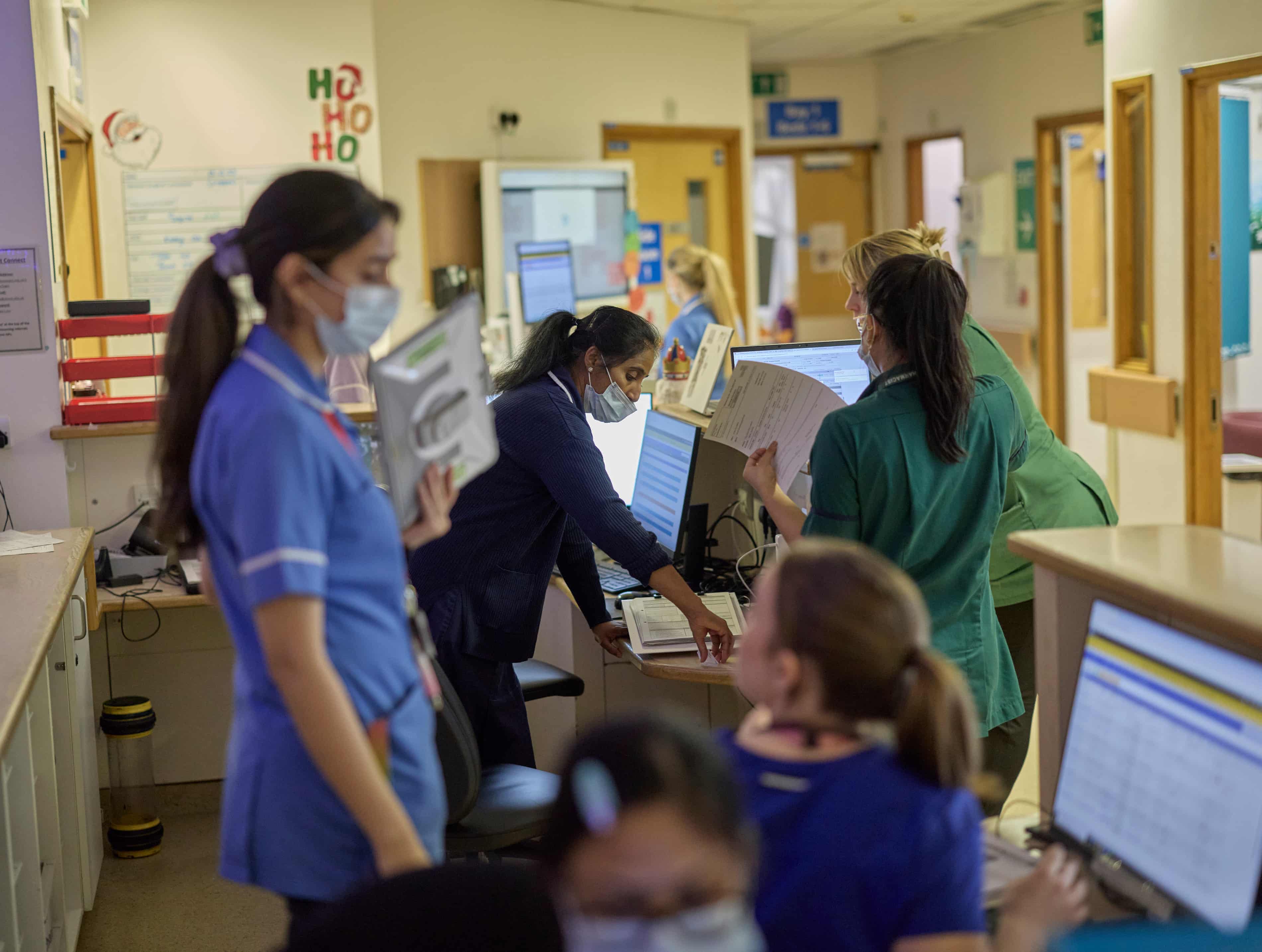
‘Permanent winter’: a day in the life of a hospital dealing with flu and strikes
Thirteen ambulances are lined up at the rear of the emergency department (ED) of the Royal Stoke university hospital, Staffordshire, as Ann-Marie Morris, the hospital trust’s deputy medical director, walks towards the entrance, squinting in the low afternoon sun. Behind the closed door of each vehicle is a sick patient, some of whom have been waiting for four hours or more, backed up in the car park, just to get in the door.The reason they are stuck out here is that there are no beds in the ED – and there is not much corridor space, either. In the tight foyer, a cluster of ambulance staff and a senior nurse in hi-vis are huddled around a computer station. Behind them, a corridor stretches into the ward, where at least six or seven beds are lined up head to toe along one side, each occupied by a patient

Some of England’s most-deprived councils to get funding boost in new deal
Some of England’s most-deprived councils will receive a funding boost under a new three-year local government deal which prioritises urban areas with high social needs at the expense of affluent places in the leafy south-east.Manchester, Birmingham, Luton, Bradford, Coventry, Derby and outer London boroughs such as Haringey and Enfield will receive big spending power increases under what ministers have described as a fairer system that will “restore pride and opportunity in left-behind places”.The housing and communities secretary, Steve Reed, said: “This is a chance to turn the page on a decade of cuts, and for local leaders to invest in getting back what has been lost – to bring back libraries, youth services, clean streets, and community hubs.”However, the settlement got a lukewarm welcome from some urban councils in the north and Midlands which said it was disappointing that “London’s suburbs” were the “biggest winners” from the review, “leaving many of the most deprived communities facing further cuts after a decade of austerity”.Leaders of county councils in English home counties and rural areas also criticised the settlement, describing it as unfair because it disproportionately benefited urban ones

Rights group challenges trans-inclusive swimming policy at Hampstead Heath
Rules permitting trans women to share female changing facilities and swim in a women-only pond are discriminatory and unlawful, the high court has heard.The City of London Corporation is breaching equality legislation by allowing trans people to use the single-sex ponds on Hampstead Heath, according to a claim brought by the rights group Sex Matters. It is seeking permission to challenge the admission regulations.Daniel Stilitz KC, for the City of London, said Sex Matters had “steamed in”, bringing a premature legal action at a time when its officials were actively consulting pond users on its entry rules.Public bodies are redrafting their policies on single-sex spaces in response to the supreme court’s ruling in April that the legal definition of a woman is based on biological sex
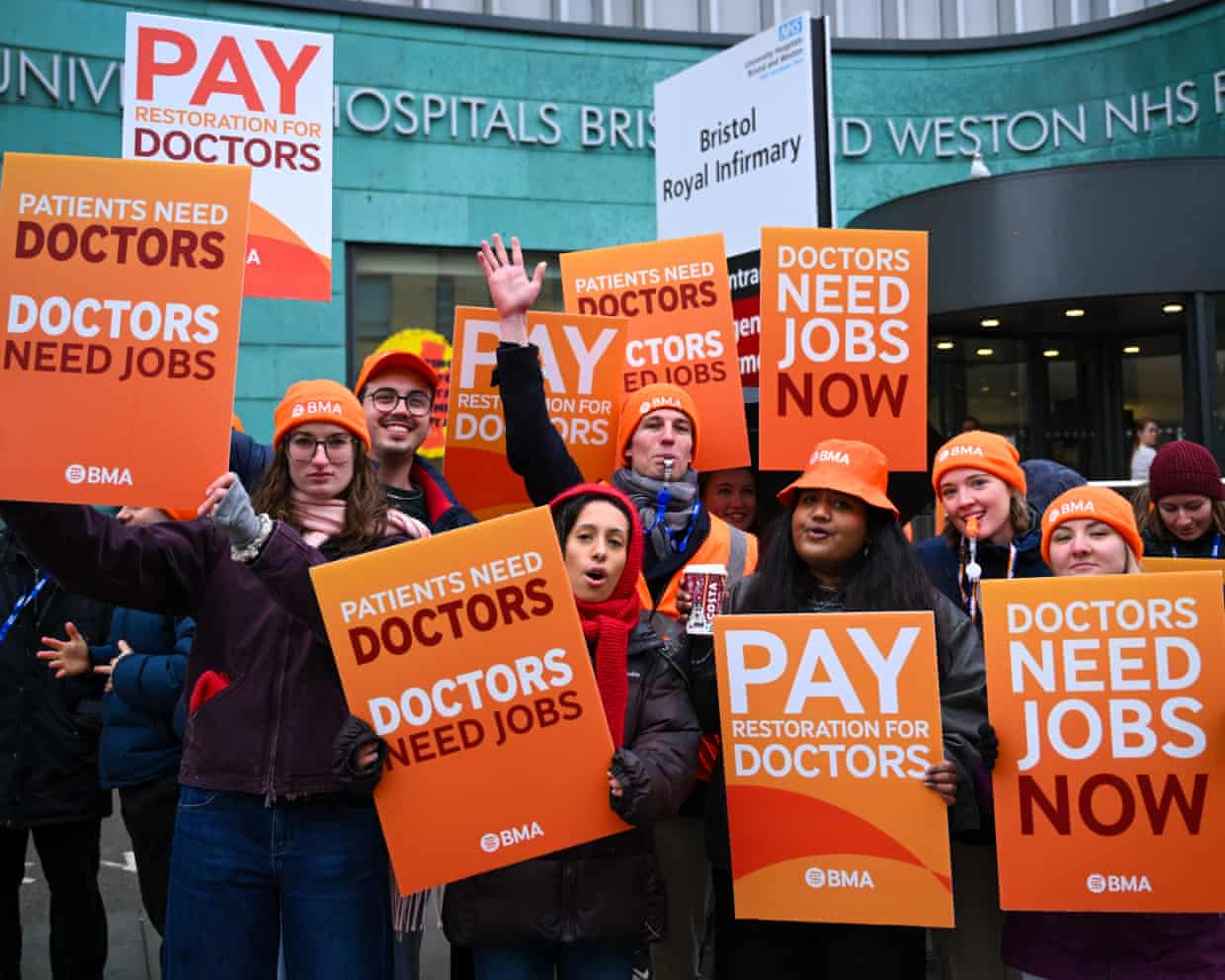
Will resident doctors lose support over latest strike? | Letters
“Striking resident doctors are digging in. History suggests this will go on and on” says the headline on Denis Campbell’s analysis piece (16 December). As a retired public health research and policy adviser and the parent of a doctor currently in core training, I agree that it is likely to go on and on – but not because doctors are stubborn. It will persist because the numbers do not add up and too much of the response has been political posturing rather than workforce planning.This year, around 30,000 doctors competed for just 10,000 specialty training posts, leaving thousands unable to progress

When ‘How are you?’ becomes a painful question to answer | Letter
It’s not just Germans like Carolin Würfel (16 December) who face a challenge with the question “How are you?” When I was diagnosed with metastatic prostate cancer, that question went from being a routine conversation-opener to something much trickier.The convention, in Britain at least, is to answer something like “Oh, not bad…” Frankly, things are very bad, so I’m stuck between the dishonesty of the ritual reply and the full truth, which is a lot to fling back at someone offering an innocent greeting. I’ve developed the more nuanced response “All right today”, which I use if I really am doing all right in the general context of things.Some days are genuinely rotten, in which case it remains a struggle to work out what to say, but the rest of the time I try to respond relative to my “new normal”. Some days I still have joyous events and upbeat feelings, in which case I’d stretch to a buoyant “Pretty good today”, but always I feel compelled to append the word “today” as a matter of honesty about the future

Study finds 10% of over-70s in UK could have Alzheimer’s-like changes in brain
One in 10 people in the UK aged 70 and older could have Alzheimer’s-like changes in their brain, according to the clearest, real-world picture of how common the disease’s brain changes are in ordinary, older people.The detection of the proteins linked with the disease is not a diagnosis. But the findings indicate that more than 1 million over-70s would meet Nice’s clinical criteria for anti-amyloid therapy – a stark contrast to the 70,000 people the NHS has estimated could be eligible if funding were available.Experts, including those from Alzheimer’s Research UK, have said the findings from the first-ever population-based research into the disease have huge potential for early and accurate diagnosis.“High-quality studies like this are crucial to enhancing our understanding of how blood tests for Alzheimer’s could be used in clinical practice,” said David Thomas, the head of policy and public affairs at Alzheimer’s Research UK

More UK interest rate cuts expected in 2026 after Bank of England lowers borrowing costs to near three-year low – business live

What the UK interest rate cut means for you, from mortgage deals to savings rates

AI boom has caused same CO2 emissions in 2025 as New York City, report claims

Third of UK citizens have used AI for emotional support, research reveals

Blowers: 300-1 shot becomes joint longest-priced winner in racing history
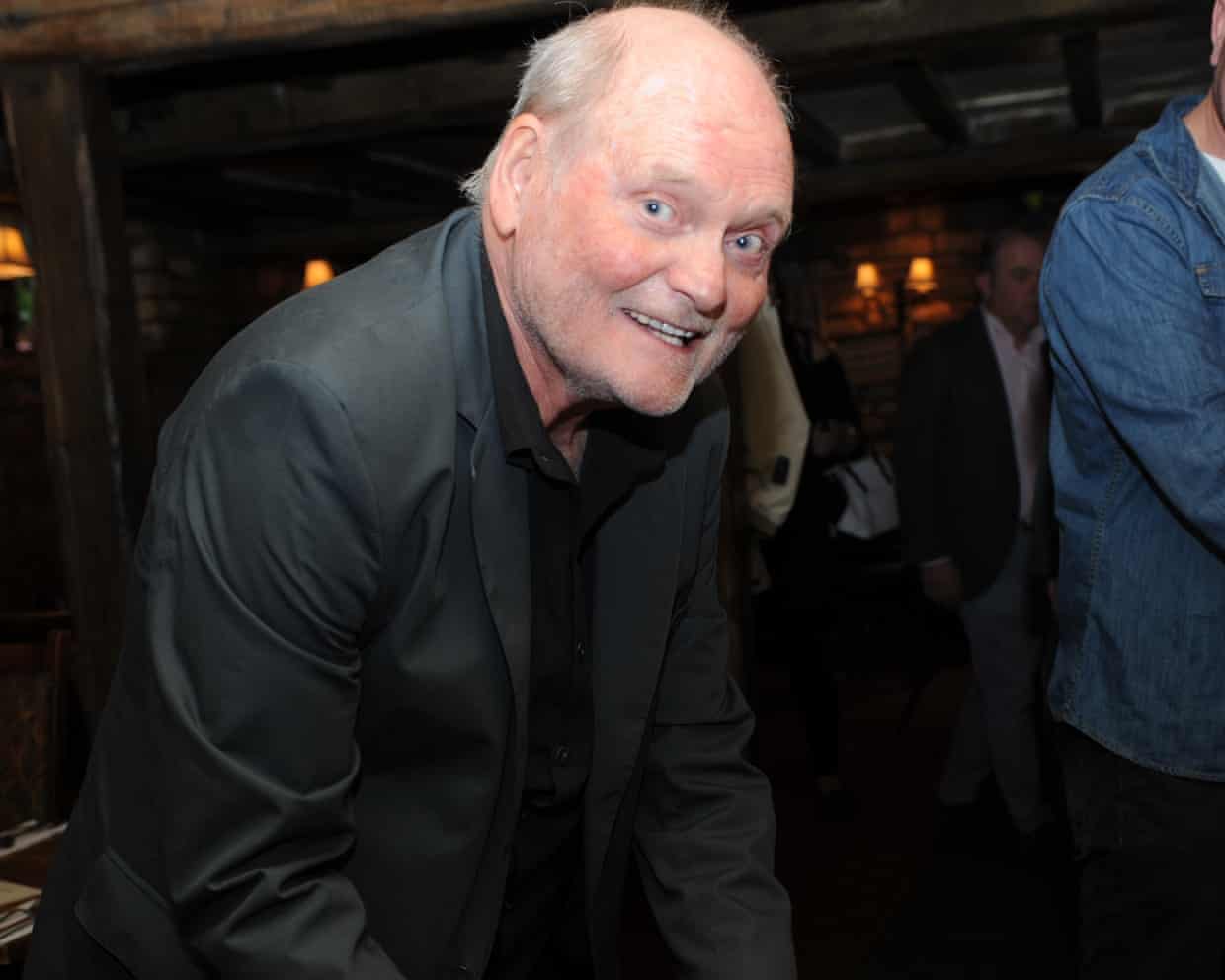
Gerald Donaldson obituary