‘A cruel penalty’: disabled people face lower benefit payments if conditions not deemed lifelong

Hundreds of thousands of severely ill and disabled people making new claims will have their benefits cut if the government assesses that their condition might improve, charities have said.In April, the health element of universal credit – an extra payment for people assessed as too unwell to work or prepare for work – will be halved to £50 a week and frozen for new claimants unless their condition is found to be terminal or severe and lifelong with no prospect of improvement.Ministers had pledged last summer that the “severe and lifelong” clause – known as the severe conditions criteria – would shield the most severely disabled and ill people from the new lower benefit rate.But charities and disabled people’s organisations (DPOs) have told the Guardian that a wide range of debilitating conditions may not meet the strict eligibility criteria, despite them often leaving someone unable to work.This includes multiple sclerosis, learning disabilities, bipolar, Parkinson’s, ME and long Covid.
Samuel Thomas, a senior policy adviser at the anti-poverty charity Z2K, said: “Cuts to universal credit’s health element threaten to push some of the most seriously ill and disabled people in the country to the brink.The higher rate of support will only be available to [new claimants] whose condition is lifelong and shows no prospect of improvement.“That rigid test could exclude people who have had strokes or heart attacks, or people with conditions like cancer or schizophrenia.Seriously ill and disabled people facing years of significant difficulty are at risk of being left on a lower rate simply because recovery, however partial or distant, cannot be ruled out.”Ella Smith, the welfare rights policy lead for the ME Association, said: “The government says it’s protecting people with the most severe conditions, but in reality, this actively excludes swathes of severely ill and disabled people.
“The fact someone might improve at some point in the future should not be used to reduce essential support today.Reassessment already exists if someone’s condition genuinely improves.Awarding people a lower rate just because they may hypothetically recover later turns the constant struggle with unpredictable conditions into an additional cruel penalty.”Government data estimates that by 2029-30, 730,000 future recipients of universal credit will miss out on the higher rate, with an average loss of £3,000 per year.While a Labour backbench rebellion last summer paused the proposed personal independence payment reforms, MPs voted to go ahead with changes to universal credit.
Under the changes, existing claimants will continue to receive £97 a week whether their disability is judged to be lifelong or not,James Taylor, the director of strategy at Scope, said: “Essentially, we’ll have a two-tier universal credit system,Two people with a similar condition and similar extra costs will get different amounts,Creating the severe conditions criteria is designed to protect some new claimants but it could add another level of jeopardy for disabled people,There’s a risk that certain conditions might not be judged as ‘severe’ and assessors inconsistently interpret and apply new criteria for a new category.
”There is further concern among charities that to qualify for the higher “severe” payment, new claimants must provide extensive medical evidence from the NHS,This can be harder for certain conditions, particularly at a time when waiting lists are still long,Hannah Nicholls-Harrison, a policy manager at Mencap, said the rule could mean a significant number of new universal credit claimants with a learning disability would lose out on support,“Many people struggle to achieve a formal diagnosis of learning disability due to the lack of a clear pathway in the NHS,” she said,“For people with a learning disability who do not have that level of documentation, or who do not have the support to navigate a complex system and advocate for themselves, this will mean missing out on [thousands of pounds] a year.
”Several charities and DPOs said they were concerned the lower benefit rate would push already struggling disabled people into deeper poverty, and in some cases, “destitution”,Thomas said: “The human cost is stark,Families losing out on this vital income could face eviction, go without food and heating, and lose access to the care they depend on,”Tom Pollard, the head of policy at Mind, said: “[Government] protecting a higher rate of payment for people meeting the severe conditions criteria is recognition that the reduced rate is not sufficient for people who are out of work for longer periods of time,“Many people with severe and long-term mental health diagnoses, such as bipolar disorder or schizophrenia, may not meet these criteria, despite impairments and barriers that will often keep them out of work for long stretches of their lives.
”A DWP spokesperson said the government was committed to supporting vulnerable people.They added: “Under the severe conditions criteria, claimants are assessed not on their condition itself but on how it affects them, with the criteria intended to protect those who are not expected ever to be able to work due to a severe lifelong health condition or disability that is unlikely to improve.“Those with the most severe, lifelong conditions, those nearing end of life, and all existing universal credit health claimants will continue to receive the higher rate.”
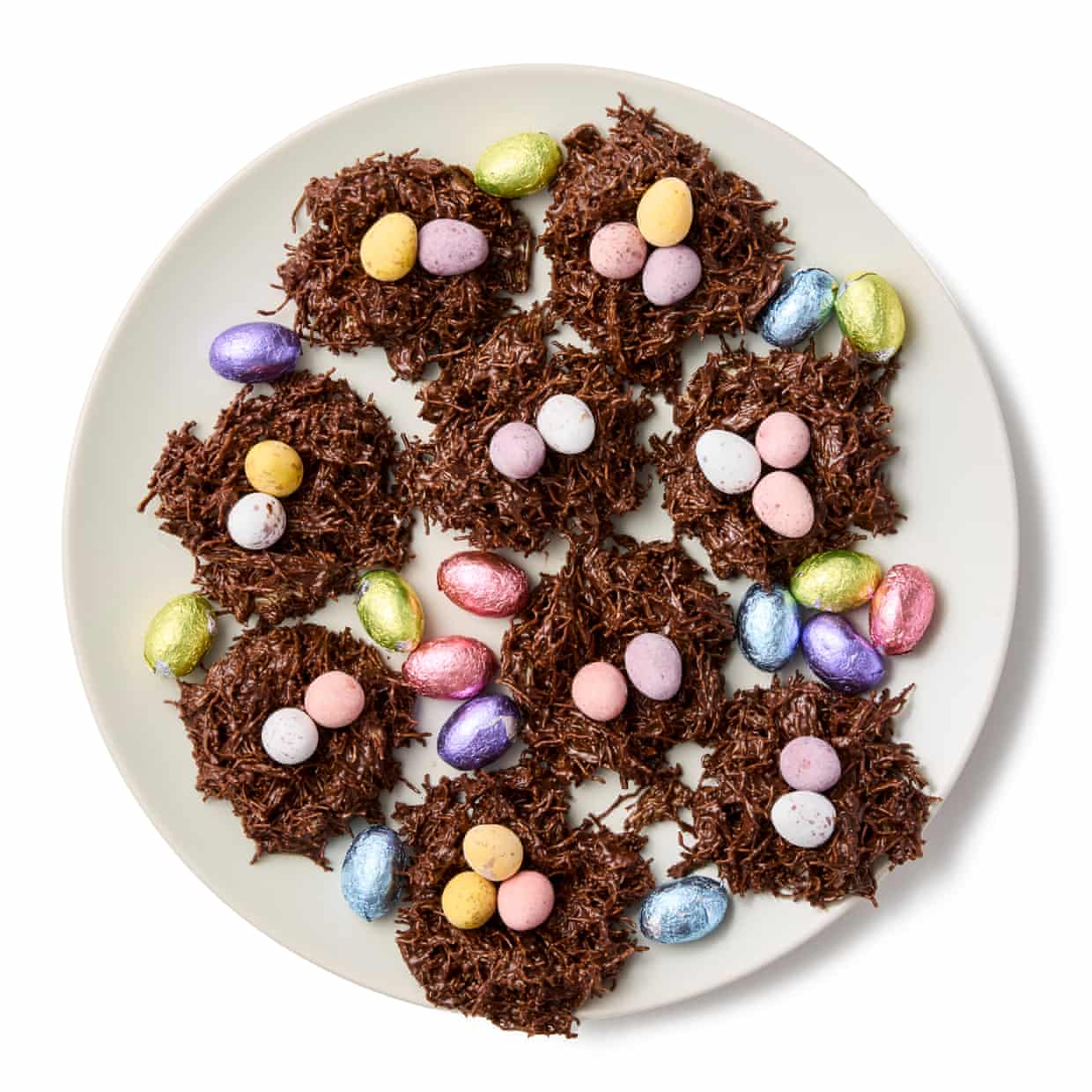
How to make Easter chocolate nests – recipe. | Felicity Cloake's Masterclass
Much as I love Easter eggs – and I really do, despite being that irritating person still nibbling away at them at Christmas time – these charming, crunchy little nests full of colourful treasure are up there with hot cross buns as my favourite seasonal produce. Top tip: they’re even easier to make if you enlist a small sous chef or two to help stir the pan!Prep 20 min Cook 5 minChill 2 hr Makes About 1280g Shredded Wheat (about 3½ full-sized ones), or other cereal (see step 1)75g dark chocolate (see step 3)100g milk chocolate 35g butter, or vegan alternative50g golden syrup 1 pinch salt ¼ tsp mixed spice (optional)Finely grated zest of ¼ orange (optional)36 miniature chocolate eggs (about 115g)Shredded Wheat (or another brand of similar cereal) is not the only choice here: you could substitute corn or bran flakes, puffed rice, Weetabix and so on, but it does look the most authentically twig-like. Try to get the big ones, if possible, because it’s all too easy to crush the bite-size variety to dust.Break the Shredded Wheat into pieces (leave flaked cereals, puffed rice and so on whole, and crumble Weetabix) in a large bowl – use your hands, the end of a flat rolling pin or glass, or the bottom of a smaller bowl to do this, and aim for a variety of lengths, rather than crushing the cereal to smithereens.Almost any chocolate will work here (this is, in fact, a great use of last year’s Easter eggs or Christmas chocolate, if you still have some left), though be careful with white chocolate, which doesn’t always melt well

The Wellington, Margate, Kent: ‘Worth risking a werewolf attack to get to’ – restaurant review | Grace Dent on restaurants
The ever-changing menu is a paean to things that make me happyThe Wellington has been drawing crowds to Margate of late, due to a recent takeover by chef Billy Stock and front-of-house queen Ellie Topham. Stock is formerly of nearby Sète, which I loved very much, and also cooked at London’s The Marksman and St John, which is a pedigree that says: “I like feeding people proper food, not fancy, itsy-bitsy suggestions of food.” So with that, I set off to the south-east Riviera on a day when the weather ranged from hailstones to simply freezing gales.Much is said about Margate being freshly desirable, hip and charming, but on a freezing day at the tail end of winter, this seaside town certainly tests the prescription of one’s rose-tinted spectacles. None of the down-from-London brigade cries, “Let’s move to Margate!” as icy hail plink-plonks off their nose while they cower in the door of the Turner Contemporary
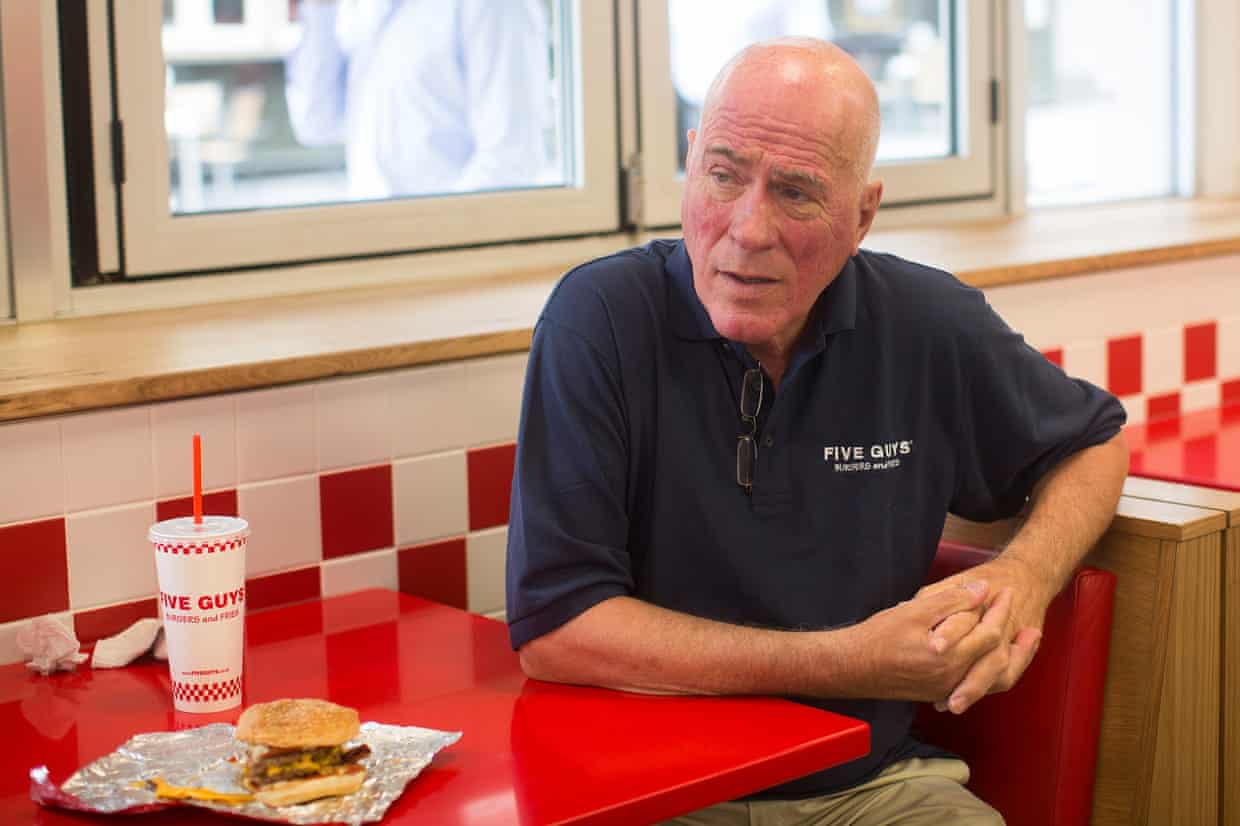
Five Guys CEO says he gave a $1.5m bonus to his workers so he wouldn’t get shot in the back
Five Guys’ chief executive officer, Jerry Murrell, said he gave a $1.5m bonus to employees of his US-based burger restaurant chain because “I didn’t want anybody shooting me” after the company recently “screwed … up” a buy-one-get-one-free promotion.Murrell did not elaborate on the comment, which he gave to Fortune in an interview published on Wednesday – but it came a little more than a year after the UnitedHealthcare CEO Brian Thompson was shot dead on a midtown Manhattan street in what was widely considered a murderous rebuke of the US health insurance industry’s profit-driven practices.Fortune’s conversation with Murrell revisited a two-for-one promotion that Five Guys organized in February to celebrate its 40th anniversary that proved to be much more popular than the chain expected. Five Guys’ app crashed as customers sought to take advantage of the promotion, and many overwhelmed chain locations discontinued the offer early, inviting backlash on social media

Ready to order? 10 rules for UK’s restaurant diners
Hospitality is in a right state at the moment, what with the seemingly never-ending shitshow of rising rents and rates, extortionate VAT, higher staffing, produce and utility costs, and all those other well-documented socioeconomic pressures (don’t mention the Bre*it word, please). So the last thing those of us who work in this beleaguered industry need right now is to be kicked in the proverbials by the very people we rely on perhaps more than anyone. And, yes, by that I mean you, our lovely customers. So here is some advice on how to avoid infuriating your serving staff.Turn up … Pre-Covid, most restaurants didn’t have the balls to take card details or charge for late cancellations and no-shows, but that’s all changed now (thank God)

Is foraging really feasible to feed myself?
When I called Robin Greenfield, an environmental activist and author, his assistant answered. “We’re stopped really quick,” Marielle said, adding “he is harvesting a ton of wild onions right now. He’ll be on in just a minute.”I waited, curious to see his haul and bemused by his willingness to delay an interview for wild vegetables. I had called Greenfield, who wrote Food Freedom about the year he grew and foraged 100% of his food, to talk about how possible, or hard, it is to do just that

Benjamina Ebuehi’s recipe for lemon lamington cake | The sweet spot
I think lamingtons should be much more popular than they are on this side of the world. One of my go-to coffee shops is Aussie-run and they always have a proud display of chunky, jam-filled, chocolate- and coconut-coated lamingtons. Making them isn’t complicated, just a little messy with all the filling and dipping of multiple cubes of cake in different bowls. In an attempt to streamline the process, and because giant versions of anything are always fun, I’ve made one extra-large lamington. It’s a wonderfully soft sponge, covered in lemon curd ganache and filled with plenty of cream, making for a very pretty Easter centrepiece

NHS restructure is greatest danger to Streeting’s effort to revive service
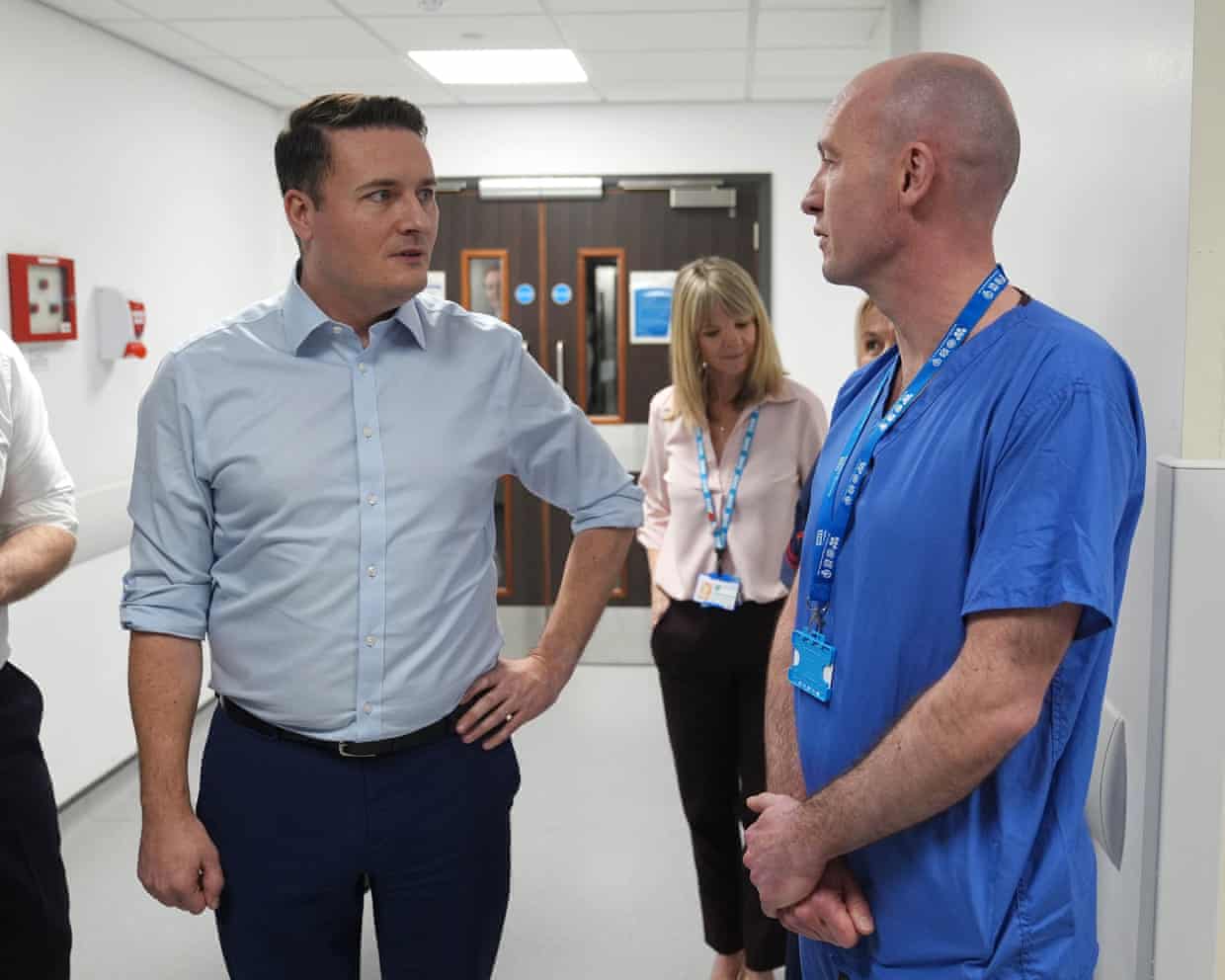
NHS to miss targets for cutting A&E wait times and performance in England

Table tennis can help manage Parkinson’s | Brief letters

‘Definitely dodgy’: how to spot a fake vape

The great care home cash grab: how private equity turned vulnerable elderly people into human ATMs

Conversations about infertility are hard, but essential | Letters