Chalmers rejects opposition claims Labor is fuelling inflation, and says he is ‘impatient for reform’

Jim Chalmers says the May budget will help tackle inflation and strengthen the economy against shocks from Donald Trump’s policies, and has pushed back on opposition claims his government is intensifying cost-of-living pain.Days before another expected interest rate rise from the Reserve Bank of Australia, Chalmers labelled criticism of government spending from the Liberal and National parties as hypocritical, while also saying the government was “open” to big ideas on tax reform and would apply a laser-focus on intergenerational inequity in Labor’s second term.“The same people who say now that the budget is the sole or primary driver of inflation weren’t saying that last year when inflation was falling substantially and the bank cut rates three times,” he said.“We actually improved the budget in December in the update in any case, another $20bn in savings and the sort of responsibility and restraint unrecognisable to our predecessors.”Chalmers praised last week’s landmark speech by Canada’s prime minister, Mark Carney, but stopped short of endorsing Carney’s call for a coalition of middle powers and said Australia would navigate a path between China, as its biggest trading partner, and the United States as a vital defence ally.
In a wide-ranging interview with Guardian Australia, Chalmers revealed that a new intergenerational report [IGR] would be released in the middle of the year, and was likely to include a greater-than-usual focus on geopolitics.The five-yearly federal government reports are designed to project budget and economic outlooks for the next 40 years, measuring long-term policy and structural trends.Sign up: AU Breaking News email“The 2020s are a defining decade in terms of setting us up for the future, but also a dangerous decade, so the IGR will help paint a picture of our understandings in the 2020s about how the world will play out in the coming decade,” he said.He pushed back against claims his government was not acting boldly and quickly enough to lift the economy’s productive capacity, saying the breadth of Labor’s agenda was under-appreciated.“I’m impatient for reform, but I’m not impetuous about it,” he said.
On the prospect of a major tax reform proposal in time for the next election, Chalmers said Labor was working on a substantial agenda already, including from last year’s productivity round table and Friday’s announcement of an independent review of thin capitalisation reforms.The rules are designed to prevent companies claiming excessive debt deductions to minimise the tax they pay in Australia.“We take decisions collectively in our government, and any steps beyond that will be consistent with the directions that we set at the reform round table, which were around intergenerational fairness, attracting investment and making the system simpler,” he said.“If there are responsible steps that we can take beyond that already very substantial agenda, and if we can afford to do that, obviously we’re open to ideas.But decisions about any further tax reforms, whether it be in this May budget or subsequently, will be, as they always are, a matter for the cabinet to determine.
”Figures on Wednesday showed inflation had jumped to 3.8% in the year to December, from 3.4% the month before, strengthening expectations of a Reserve Bank rate rise on Tuesday.The return of high inflation threatens to hijack Labor’s second term economic agenda in the short term, but Chalmers said he remained focused on longer-term challenges around productivity and intergenerational inequity.“The government’s priorities [are] dealing with this inflation challenge, turning around a couple of decades of underperforming on productivity, [and] making our economy more resilient.
“We’re interested in building more homes for people.You know that the housing market is really one of the defining elements of this big intergenerational challenge that we have in our economy and in our society, and so those are the sorts of lenses through which we view the preparations for May.”Chalmers said Carney’s speech at the World Economic Forum in Davos was a reminder decision makers in Australia should not be “nostalgic” about the past, especially after economic shocks including the Covid-19 pandemic and the global financial crisis.“The point that Carney is making goes beyond trade policy changes out of [Washington] DC, it captures the whole shebang,” he said, pointing to Russia’s invasion of Ukraine, “a more assertive China” and Middle East conflict.“But we work across the board in the service of our interests.
We work with our allies, like the US, big economies like China and increasingly, middle powers like Canada,”Chalmers said there was an “extraordinary” level of interest in Australia from global investors, which he said reflected the potential for Australia to prosper despite the rupture in the global economic order,“We are increasingly seen as this island of stability and opportunity in a sea of risk and uncertainty,“We’ve got so much of what the world needs,We’ve got the stability that the world is hankering for, and that makes us more attractive.
And there’s economic opportunity in that for Australia, for our workers and businesses and investors, and we intend to make the most of that.”Carney is scheduled to address the Australian federal parliament in March.Despite polls showing One Nation has a record-high primary vote of 22%, Chalmers told Guardian Australia support for rightwing parties was fracturing, pointing to the split between the Liberal party and the Nationals.“I think they’re splintering, and obviously the divisive politics of the three far-right parties in Australia risk making the intergenerational challenge worse, not better, because divisive politics are anathema to economic progress.”
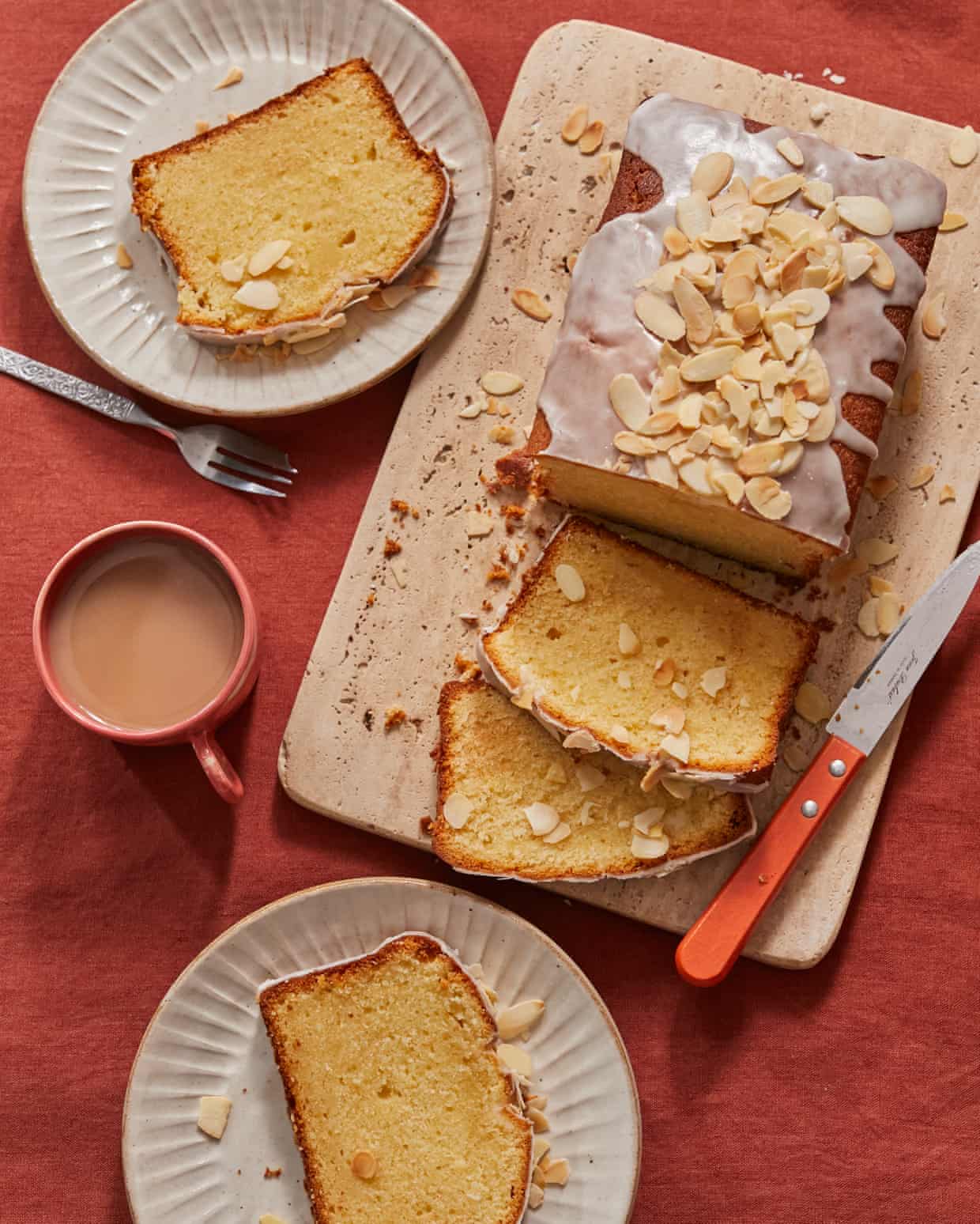
Benjamina Ebuehi’s recipe for citrus and almond cake | The sweet spot
Anything bright and zingy is particularly welcome in January, even more so when it’s in the form of cake. I always have an odd end of marzipan after the festive season, and this is a great way to use it up and bring that cosy almond flavour. The marzipan gets blitzed into the butter for a plush-textured loaf cake, and comes together in minutes thanks to simply putting everything in a food processor.Prep 10 min Cook 1 hr 10 min, plus cooling Serves 8-10200g unsalted butter, softened125g marzipan 150g caster sugar Finely grated zest and juice of 1 orange, plus 2 tbsp extra juice for the icingFinely grated zest and juice of 1 lemon3 large eggs 220g plain flour 50g ground almonds ¼ tsp fine sea salt 2 tsp baking powder 50g plain yoghurtTo finish100g icing sugar 40g toasted flaked almondsHeat the oven to 180C (160C fan)/350F/gas 4, and grease and line a 2lb loaf tin with baking paper.Put the butter and marzipan in a food processor and blitz until smooth
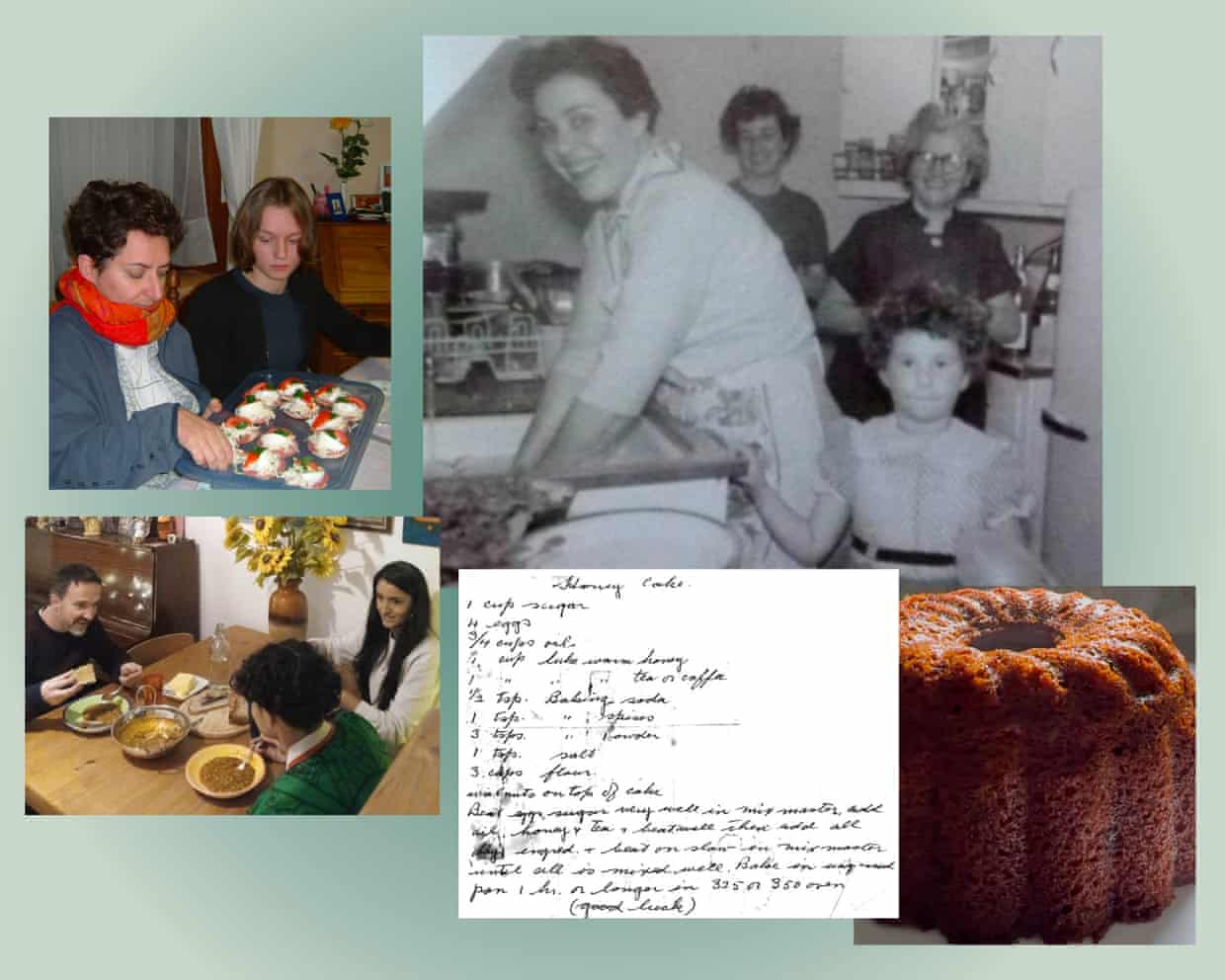
‘It’s still a family favourite’: your heirloom recipes – and the stories behind them
A few years ago, I bought my mother a notebook for her recipes. It was a weighty, leather-bound affair that could act as a vault for all the vivid stews, slow-cooked beans and many other family specialities – the secrets of which existed only in her head. Although the gift has basically been a failure (bar a lengthy WhatsApp message detailing her complex jollof rice methodology, she still has an allergy to writing down cooking techniques or quantities), I think the impulse behind it is sound and highly relatable. Family recipes are a form of time travel. An act of cultural preservation that connects us deeply to people we may not have met and places we may not have visited

Rachel Roddy’s puntarelle, radicchio, celery, apple and cheese salad recipe
Like many, I remember Charlie Hicks from Veg Talk, a weekly show that ran on Radio 4 from 1998-2005. The show, according to Sheila Dillon, came into being after her interview with Charlie, a fourth-generation fruit and veg supplier at Covent Garden market, for an episode of The Food Programme exploring where chefs bought their produce. Sitting at the kitchen table with her husband the following evening, Sheila recounted her day and Charlie’s enormous knowledge, enthusiasm and ability to communicate both. A few days after that, a similar conversation took place with her colleagues at Radio 4, which resulted in Veg Talk – what’s in and what’s out in the world of fresh produce. As well as Charlie’s market report, each episode included a feature called “vegetable of the week” and the participation of studio guests – Angela Hartnett, Alastair Little, Rose Gray, Darina Allen and Mitch Tonks, to name just a few – and took calls from listeners

How to convert kitchen scraps into an infused oil – recipe
All those odds and ends of chillies, garlic skins and rind can be used to flavour oil for dunking, dipping and marinatingToday’s recipe began life as a way to use up garlic skins and herby leftovers, all of which contain a surprising amount of flavour, but it has evolved over time. Infused oil has countless uses – drizzle it over carpaccio, pasta or salad, use it to marinate meat, fish and vegetables, or simply as a dip for chunks of sourdough – and some of my favourites include lemon rind, garlic skin and rosemary; star anise, cacao and orange rind; and makrut lime leaf, lemongrass husk and coriander stems, which I found especially delicious drizzled over some noodles and pak choi. Freshly infused oils of this sort aren’t suitable for long storage, however, so use them up within a day to two.As I look around my kitchen, I’ve got a two-year-old jar of remarkably tasty chillies gathering dust, a bowl of clementines (I think of citrus rinds as harbingers of incredible flavour, rich in essential oils and highly aromatic terpenes) and a small jar of long pepper, a pungent, complex spice that’s been sitting on my kitchen shelf for years without a purpose. When put together, however, and left to bubble gently on the hob, they fill my kitchen with a wildly aromatic and exotic aroma

Slurp the blues away: Ravinder Bhogal’s recipes for winter noodle soup-stews
One of the best things for lifting deflated spirits is a deep bowl of steaming, restorative soup – perfect for warming the places your old woolly jumper can’t reach. I love the romance and cosiness of creamy European soups drunk straight out of a mug around a fire in November, but in the icy tundra that is January I need something with more heat and intensity, something sustaining, spicy, gutsy and textured, so that I need a fork or chopsticks to eat it, rather than just a spoon. These punchy soups are simply rapture in a bowl, and make for extremely satisfying slurping.Khao swe is a Burmese noodle soup with hot coconut broth, springy noodles and a madness of garnishes, from boiled eggs to peanuts or crisp shallots. Feel free to swap out the poultry for vegetables such as pumpkin or tofu, or seafood such as prawns
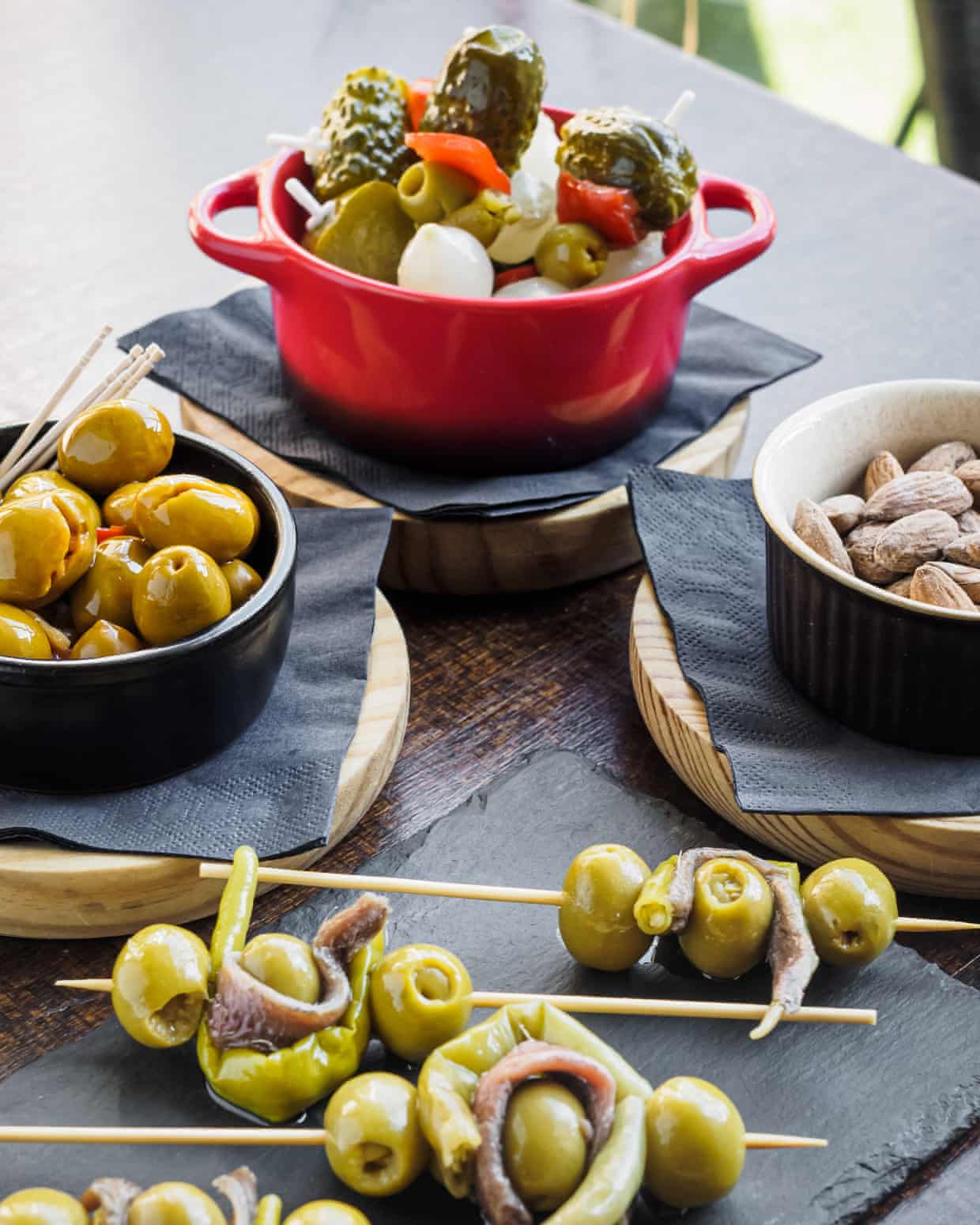
Savoury snacks to stave off the lure of the biscuit tin | Kitchen aide
What savoury snacks do your recipe columnists make when they’re trying to stay away from the biscuit tin?Jess, by email The pull of the biscuit tin is all too familiar to Guardian baker Benjamina Ebuehi, who, unsurprisingly, is often found in full “sweet mode”. To counterbalance the intake of cake, she tends to look for “something salty, spiced and crisp”, and, if time is on her side, that usually means homemade tortilla chips. “Chop corn tortillas into triangles, brush with olive oil and seasonings – flaky salt, za’atar, dukkah, garlic granules, or everything bagel seasoning, which is elite.” Bake until nice and crisp, then dunk into hummus. Her fellow Guardian regular Georgina Hayden is also rarely found without a tub of that creamy chickpea dip, whether it’s homemade or shop-bought: “I usually drizzle chilli crisp oil over the top of my hummus, then scoop it up with crudites [celery, carrot, cucumber, say]

Catherine O’Hara managed to make difficult characters utterly delightful

Catherine O’Hara, actor known for Home Alone and Schitt’s Creek, dies aged 71

Colbert on Springsteen’s anti-ICE song: ‘Do you know how hard it is to rhyme with Minneapolis?’

Ṣọpẹ́ Dìrísù: ’If the west doesn’t say a film is good, that doesn’t mean it’s no good’

‘Begging my boyfriend to get one’: Paul Mescal inspires yet another fashion craze with Hamnet earring

Seth Meyers on Minneapolis: ‘Trump is trying to distance himself from the chaos he created’