Catherine O’Hara managed to make difficult characters utterly delightful
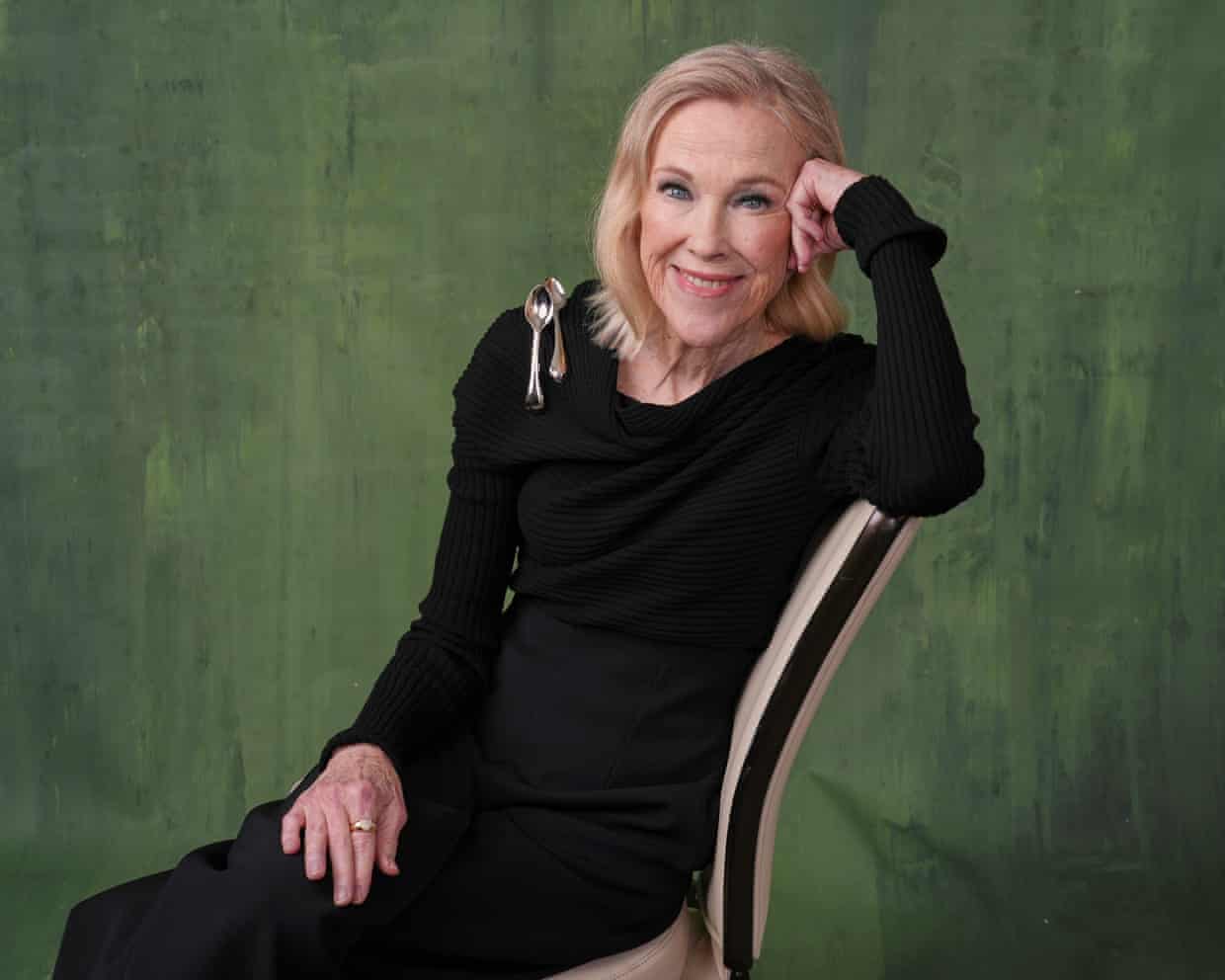
One of the later and less beloved Christopher Guest comedies featuring his troupe of peerless, often SCTV-related improvisers is For Your Consideration, a medium-funny savaging of Hollywood’s feverish awards-season prestige campaigning,The film’s unquestionable highlight is Catherine O’Hara, playing an actor who gets a whisper of awards buzz for a schlocky, still-filming drama called Home for Purim, and slowly loses her mind with the knowledge that she could maybe, possibly be recognized by her peers,O’Hara, known for her distinctively brassy yet malleable trill of her voice and her frequently red hair, peels back her performer’s bravado to expose the frenzied need beneath it,She somehow plays the outsized beneath the regular-sized, as her Marilyn Hack goes from plugging-away workhorse to desperate striver,Unsurprisingly, O’Hara briefly generated awards buzz of her own for playing this part; even less surprisingly, an Oscar nomination was not forthcoming.
It couldn’t be; otherwise, it might have marred O’Hara’s masterclass in how certain actors, especially those specializing in comedy, are destined to go under-recognized in their lifetimes,The difference, of course, is that Marilyn Hack is depicted by O’Hara, with tragicomic precision, as a mediocrity,O’Hara, who passed away today at the age of 71, was not,She was exceptional, and within her reputation as a primarily comic actress, she possessed an extraordinary range,She was the best-case scenario of a performer trained in sketch comedy, able to slip into various characters and render them instantly vivid.
There are nonetheless signature roles and projects for O’Hara, in television and film.There was SCTV, for which she shared a writing Emmy, and her late-career renaissance brought about by her work as Moira Rose on Schitt’s Creek, for which she won a leading actress in a comedy Emmy that pretty much the entire world agreed was richly deserved.In between those pillars, she was an in-demand character actor and constant TV guest star.She’s particularly indelible to generations of kids for playing the frazzled but ultimately dedicated mom in Home Alone and its sequel, serving as the true emotional heart of the original film.She stole scenes in eventual classics such as After Hours and The Paper, hits like Dick Tracy, bombs like Wyatt Earp, and countless comic and voiceover roles.
But the two major film collaborations of her career were with her SCTV pal Guest and Tim Burton.For Guest, O’Hara did flawless teamwork in his mostly mockumentary movies Waiting for Guffman, Best in Show, A Mighty Wind, and For Your Consideration.Guffman and Consideration make for poetic but unsparing bookends; the former ends with O’Hara and her on-screen husband Fred Willard leaving small town Missouri to pursue work as film extras in Los Angeles, while Consideration finds O’Hara’s Marilyn butting up against the limitations of her career, with O’Hara doing a virtuosic bit of fake-plastic-surgery acting.Guest makes wonderful meta-text of O’Hara’s genuine dexterity as a performer; she plays a former folk singer in A Mighty Wind, whose breakup with her long-time partner (Eugene Levy) causes his mental breakdown.She’s also paired with Levy for Best in Show, where she’s also (believably) portrayed as more vivacious than her milquetoast beau.
Despite the common ground her characters in the Guest films share, they aren’t just comic archetypes, but distinctive people.Her characters with Burton are equally nuanced, no small feat in such stylized environments.The pair didn’t collaborate as frequently as Burton and Johnny Depp or Danny DeVito, but she was there for one of his biggest breakthroughs, playing artist Delia Deetz, mother to melancholy goth girl Lydia (Winona Ryder), in Beetlejuice, and new caretaker of a house haunted by its sweet-natured former occupants.O’Hara makes Delia somewhat villainous in her garish sculptures and house-wrecking postmodern tastes, as well as her lack of understanding for her daughter; she is also, unquestionably, the heroine of her own story.O’Hara satirizes art-world pretension without sacrificing her innate comic likability.
You want to see what this confidently untalented woman gets up to, even as it seems natural for a pair of ghosts to take point on parenting her daughter.She reteamed with Burton for his animation project The Nightmare Before Christmas, where she provided multiple voices, most notably for female lead Sally, a wistful, stitched-together ragdoll in love with Christmas-besotted Halloween planner Jack Skellington.Though Jack’s singing and speaking parts were divided between two performers, O’Hara did her own singing as Sally, and occasionally performed Sally’s Song in concert later in her career.Given the more clipped, brassy tone she was best-known for in comedies, her work as Sally, a soulful wallflower and twisted vine of yearning, is pretty stunning; you’d never guess it was her.Both Burton movies were echoed later in her career: for Frankenweenie, Burton’s stop-motion animated adaptation of his own short film, O’Hara again provided multiple voices, equally adept at playing a caring mom and a character referred to only as “weird girl”.
And for his 2024 legacy sequel Beetlejuice Beetlejuice, O’Hara reprised Delia Deetz – and made her, if anything, more endearing than ever as a still-talent-deficient-but-now-quite-successful artist who loses her husband, subsequently dies in an absurd snake accident, and searches the underworld for her beloved.It’s a perfect turn for O’Hara because she seemed so indefatigable; what other comic actor could be so funny grappling with her own literal mortality and deciding she has her own post-life goal to attain? It didn’t much matter that Burton no longer had the services of her former on-screen partner Jeffrey Jones; O’Hara made Delia as funny as ever and weirdly touching, too.It may be a tough performance to rewatch in the coming days, now that O’Hara is actually gone, far too soon.Then again, maybe not; it’s difficult to watch just about any Catherine O’Hara performance, even the more serious ones, and not feel delighted by her presence.She made big, crazy, sometimes potentially abrasive characters such welcome company.

‘Menopause gold rush’? Boom in hi-tech products as stigma starts to recede
For any bodily function you want to measure these days there is a gadget – a wristband for step-counting, a watch to track your heart rate or a ring for measuring sleep.Now the march of wearable tech is coming to the aid of what some say is a long underserved market: menopausal women.One startup has recently launched a high-end cooling bracelet that kicks into action during a menopausal hot flush. The device is one of a growing number of lifestyle products being launched in this area, which some experts say is growing as stigma around menopause recedes. Companies are developing everything from apps offering dietary advice to devices that track symptoms, hormones and body temperature
Paying kidney donors won’t solve the problem | Letters
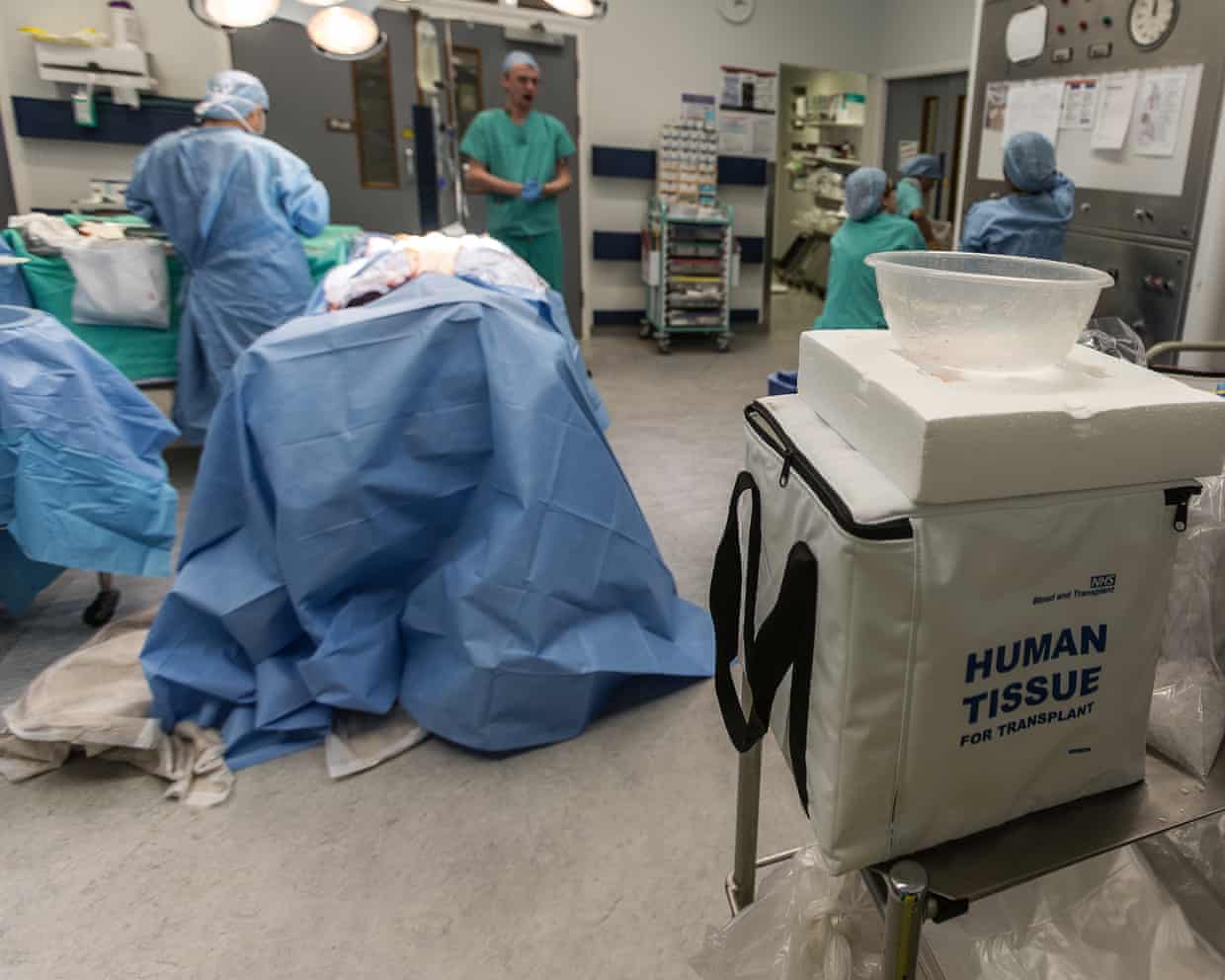
It is hard not to feel a certain sadness reading arguments for legalising the sale of kidneys that rely more on provocation than on engagement with how healthcare systems actually work in the UK (The big idea: Should we sell our kidneys?, 25 January).Kidney failure is devastating, and the shortage of donor organs costs lives. About 7,000 people in the UK are currently waiting for a kidney transplant, and six people die every week while waiting. It is therefore concerning to read an argument that implicitly accepts continued late diagnosis of kidney disease and progression to kidney failure as an inevitability, rather than recognising the urgent need to raise awareness of kidney disease and prioritise its prevention before lives reach crisis point.Furthermore, the notion that altruism in the UK has reached its limits, justifying a legal market for human organs, is not supported by public attitudes, social evidence or ethics

On Polymarket, ‘privileged’ users made millions betting on war strikes and diplomatic strategy. What did they know beforehand?
In the early hours of 13 June, more than 200 Israeli fighter jets began pummeling Iran with bombs, lighting up the Tehran skyline and initiating a 12-day war that would leave hundreds dead.But for one user of the prediction market Polymarket, it was their lucky day. In the 24 hours before the strike occurred, they had bet tens of thousands of dollars on “yes” on the market “Israel military action against Iran by Friday?” when the prospect still seemed unlikely and odds were hovering at about 10%. After the strike, Polymarket declared that military action had been taken, and paid the user $128,000 for their lucky wager.But was it just luck?Polymarket is an online platform where people can bet on just about anything, from what the most-streamed song on Spotify will be to how many times Donald Trump will say “terrible” that day

Abusers using AI and digital tech to attack and control women, charity warns
Domestic abusers are increasingly using AI, smartwatches and other technology to attack and control their victims, a domestic abuse charity says.Record numbers of women who were abused and controlled through technology were referred to Refuge’s specialist services during the last three months of 2025, including a 62% increase in the most complex cases to total 829 women. There was also a 24% increase in referrals of under-30s.Recent cases included perpetrators using wearable tech such as smartwatches, Oura rings and Fitbits to track and stalk women, disrupting their lives through smart home devices that control lights and heating, and using AI spoofing apps to impersonate people.Emma Pickering, head of the tech-facilitated abuse team at Refuge, said: “Time and again, we see what happens when devices go to market without proper consideration of how they might be used to harm women and girls

‘Chilling’ hacking network is targeting vulnerable children, charity warns
A leading UK online safety charity has issued a “public warning” about a hacking community that is targeting vulnerable children for sexual abuse, self-harm and suicide.The Molly Rose Foundation (MRF) said online networks linked to a global ecosystem labelled the Com were carrying out extreme exploitation, cyberbullying, violence and abuse – and called for a coordinated global response from governments, regulators, law enforcement and tech companies.The warning follows the publication of a report by the online risk consultancy Resolver in partnership with the MRF, which was founded by the family of Molly Russell, a British teenager who killed herself in 2017 after viewing harmful content online.“The growing threat posed by Com networks is the most chilling and urgent threat to children online today and it requires a swift and comprehensive response,” said Andy Burrows, MRF’s chief executive, who described the report as a “public warning”.“These groups prey on children’s vulnerabilities to coerce and groom girls on gaming and messaging platforms, inflicting appalling harm and cruelty including acts of self-harm, livestreamed abuse or even suicide

Great Ormond Street surgeon harmed 94 children, review finds
Nearly 100 children were harmed by a Great Ormond Street surgeon, according to an independent review.Great Ormond Street hospital (Gosh) conducted an independent review of nearly 800 patients treated by the consultant orthopaedic surgeon Yaser Jabbar between 2017 and 2022, who specialised in limb lengthening and reconstruction.Of the 789 children under his care, the study concluded that 94 were specifically harmed as a result of his actions, of whom 91 had been operated on by Jabbar.Announcing the findings, Matthew Shaw, the chief executive of Gosh, said everyone at the hospital was “profoundly sorry” for all those affected and promised the trust had learned lessons.“We have made significant changes to both the orthopaedic service itself and across the hospital to minimise the chance of something like this happening again

Sri Lanka v England: second men’s cricket T20 international – as it happened
‘Distracting and sad’: Olympics chief laments ICE protests and Epstein fallout

Aryna Sabalenka’s soul-searching goes on after Australian Open final collapse | Tumaini Carayol

‘Already a legend’: Djokovic’s praise for Australian Open champion Alcaraz
Djokovic tries his best in time-warp final but cannot stop the pull of decline

Australia’s youngest Winter Olympian Indra Brown: ‘I just love the feeling of flying’ | Martin Pegan