‘Bizarre’ lack of urgency in putting UK on war footing, says defence review co-author
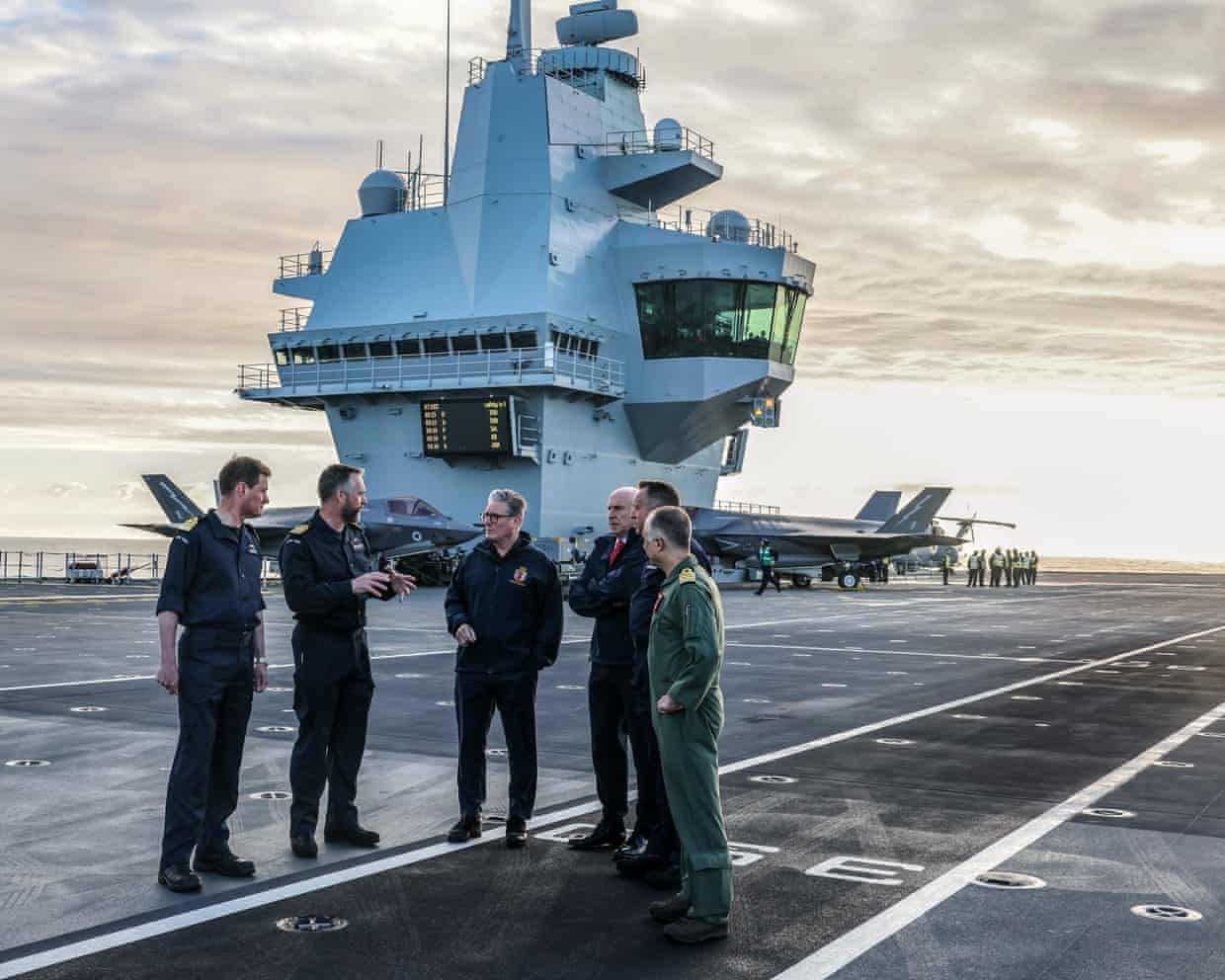
A co-author of Britain’s strategic defence review has joined criticism of Keir Starmer’s leadership on military policy, warning of a “bizarre” lack of urgency in defence planning.Fiona Hill, a former chief adviser to the White House on Russia, echoed the concerns of George Robertson, her co-author with Gen Richard Barrons on the strategic defence review (SDR), over what he had called the prime minister’s “corrosive complacency”.Robertson, a peer and former head of Nato, has publicly aired his frustration at the government’s failure to come forward with its 10-year spending plans for defence following publication of the SDR last June.Elaborating further on Tuesday night in a speech in Salisbury, Wiltshire, he accused “non-military experts in the Treasury” of “vandalism” and warned that “we cannot defend Britain with an ever-expanding welfare budget”.Robertson also disclosed he had a discussion with the defence secretary, John Healey, on Monday about his intervention.
He said Healey was “extremely angry with me”,“They don’t want these headlines but sometimes you have to say it,” Robertson said,“That’s what I said last night to John,I believe my country is in danger,”Of the government’s delay in providing details of its defence spending plans, he added: “I don’t understand it any more than you … No doubt it will come out, in, as they constantly say, due course.
”Earlier on Tuesday, the suggestion public spending cuts may be necessary to fund defence prompted Diane Abbott, the Labour MP, to accuse Robertson of putting “guns before butter”, adding that Labour would lose votes to the Greens if Starmer followed the peer’s advice.“We have already slashed foreign aid, and to cut welfare to spend on armaments is appalling,” she said.“People are going to start to wonder why they are voting Labour in the first place.It is not going to help us electorally.”But speaking to the Guardian, Hill, who worked for Donald Trump in his first term, said she believed No 10’s lack of urgency in putting Britain on a war footing was “bizarre”.
Hill said that Robertson was “basically just trying to say, we need to have more movement now.If you get that sense of urgency then action will follow but we don’t have the sense of urgency, which is kind of bizarre really given everything that’s happening …“What George is saying, very bluntly, is there is basically a lack of resolute leadership on this.Because everybody’s worried about votes and, you know, reactions, and all of this on the left and on the right.“The political situation, you know, for the [Labour] party, is not good, but as George has been saying, this is a UK strategic defence review and, frankly, if anybody wants to make political points, I would suggest that it’s shame on them.Big time.
”She added: “I think we can see [the risk], just look at what is happening in the Gulf.You think we couldn’t get a nice drone on the Shard [building in London]?”Barrons told the BBC’s Today programme: “There’s an enormous gap between where we have to be to keep the country safe in the world we now live in, and where we actually are.”“The US cavalry is not coming to bail us out now,” he said, adding that the Royal Navy and Royal Air Force were “undernourished”.Hill said the government’s failure to come forward with its spending plans for defence was leading to a loss of confidence within the British defence sector and among interested financial investors.She said: “Companies that are British, that have really important armaments and other equipment, are not getting the orders and so they are looking elsewhere and some are folding.
“The City has been standing by – George and Richard have been constantly talking to them – getting ready to put together investment funds and things but if there is no signal from the Ministry of Defence then they will go and do deals with the US, which is always what happens.”Hill said there was a wider problem that the government had yet to tell the country it needed to build civil defence and resilience in case of war.John Hutton, a former defence secretary, said he believed the UK had 18 months to show it was properly financing its defence if it were to deter Vladimir Putin from making a military move against British interests.He called on the chancellor, Rachel Reeves, to use the flexibility in her fiscal rules to borrow more for defence, as Germany had done.Hutton said: “I think there’s a significant gap in our credibility in Nato to provide a conventional deterrence to any possible Russian aggression, which I think is now more likely to happen than not.
”Tan Dhesi, the Labour MP for Slough, who chairs the cross-party Commons defence select committee, said he was concerned that Robertson had pinpointed the Treasury as being to blame for the delay on announcing the spending plans, and accused its ministers of avoiding appearing before his members.He said: “Lord Robertson’s public intervention is sobering.It is damning that a man of his stature and experience has to speak out publicly to get his message heard.When it comes to defence, the government’s rhetoric promising action does not yet align with reality.“Lord Robertson has pointed at the Treasury as a blocker.
Treasury ministers have repeatedly refused to appear before the defence committee, giving every impression that they are trying to avoid accountability,”A government spokesperson said the SDR was “backed by the largest sustained increase in defence spending since the cold war, with a total of over £270bn being invested across this parliament”,
The IMF refuses to name the cause of this global chaos. It starts with ‘Donald’ and ends in ‘Trump’ | Greg Jericho
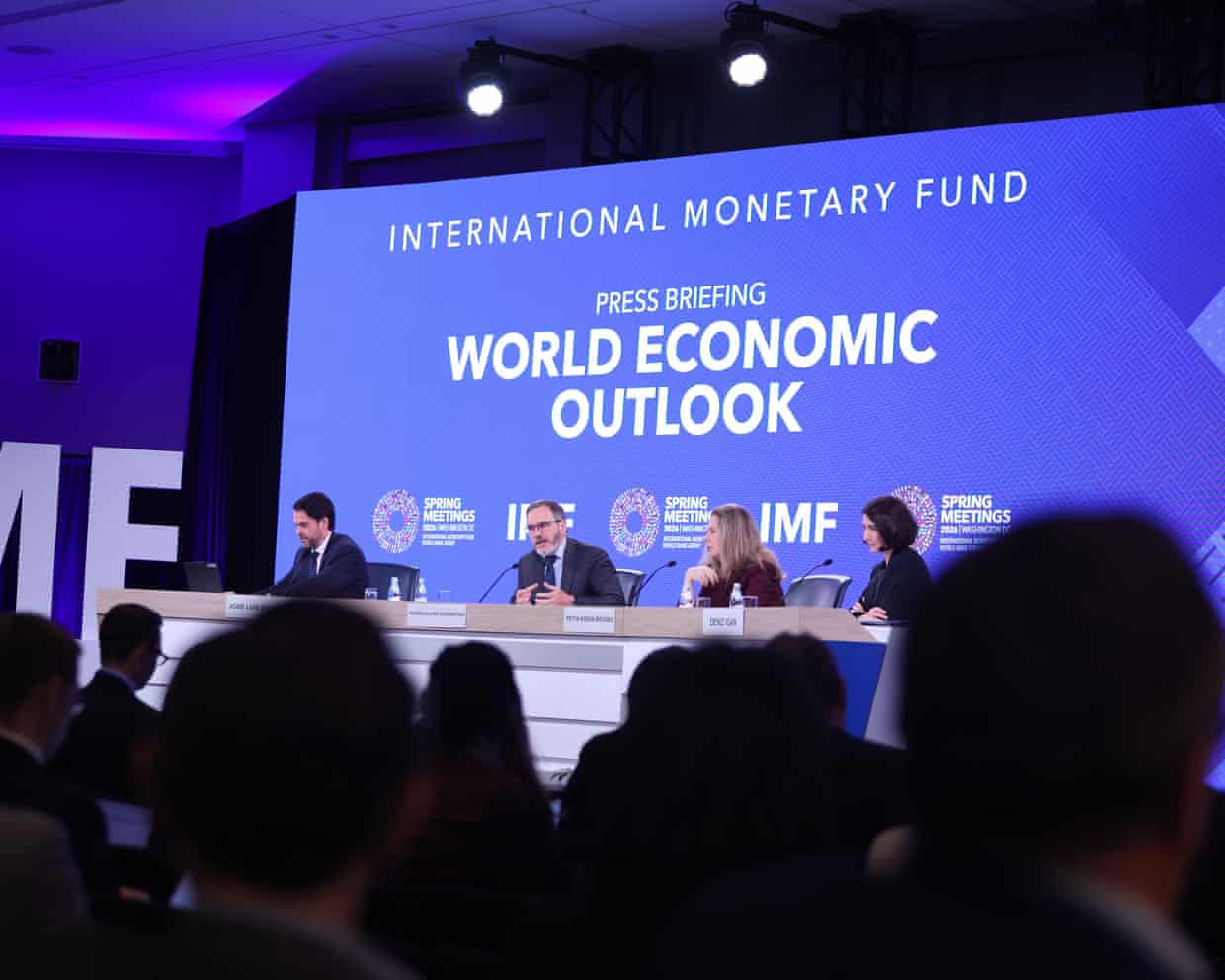
The IMF’s latest World Economic Outlook has forced it to admit that things have changed since its previous update in January when it blissfully hoped things would be OK. Now there is mostly darkness and despair.The IMF’s January report was titled “Steady amid Divergent Forces”; whereas the latest outlook is headlined “Global Economy in the Shadow of War” and begins “the global outlook has abruptly darkened following the outbreak of war in the Middle East on February 28, 2026.”Far be it for me to gloat, but my suggestion in January that “steady” was not a word to describe the global economy unless you were desperately trying to make the madness of Donald Trump seem normal has aged quite well.If the graph does not display click hereAs ever, the IMF remains unwilling to name Donald Trump
This chart on oil prices shows why Qantas and Virgin are cutting flights and raising fares
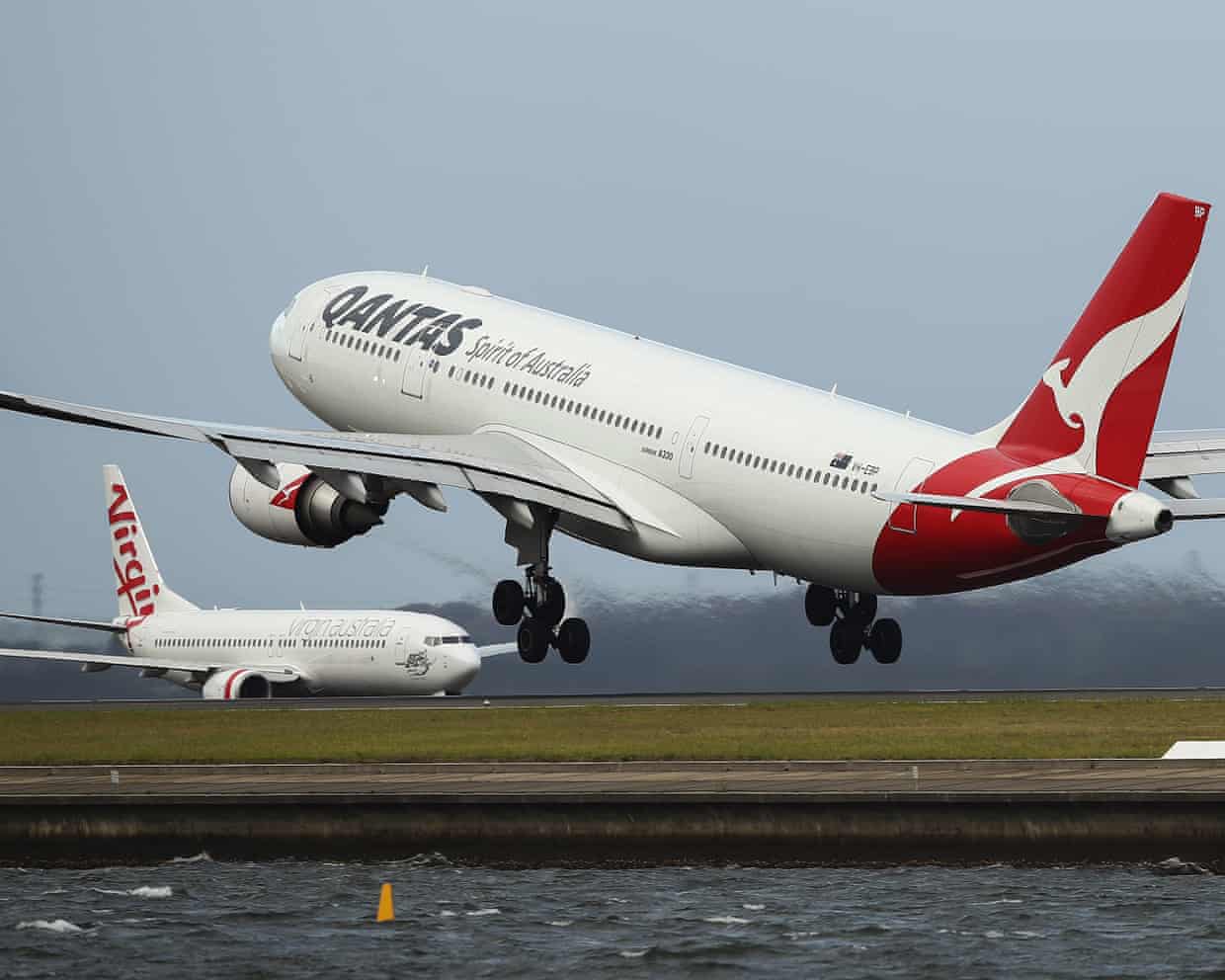
Thanks to the US-Israel war on Iran, filling up your car with petrol costs about 40% more than it did in February, and for diesel vehicles it’s closer to 80%.But even those painful increases pale in comparison to the extraordinary rise in the price of jet fuel, which has climbed by a 125% since the start of the Middle East conflict.This increase dwarfs the last global energy shock that followed Russia’s invasion of Ukraine in early 2022. Jet fuel peaked at about $US155 a barrel in June of that year; now it’s trading at $US210.Johnathan McMenamin, a senior economist at Barrenjoey, said the explosion in refining margins – the difference between the price of jet fuel and crude – was due to the big Asian refiners struggling to operate with falling oil supplies
Trump threatens to fire Fed chair Jerome Powell amid pressure campaign
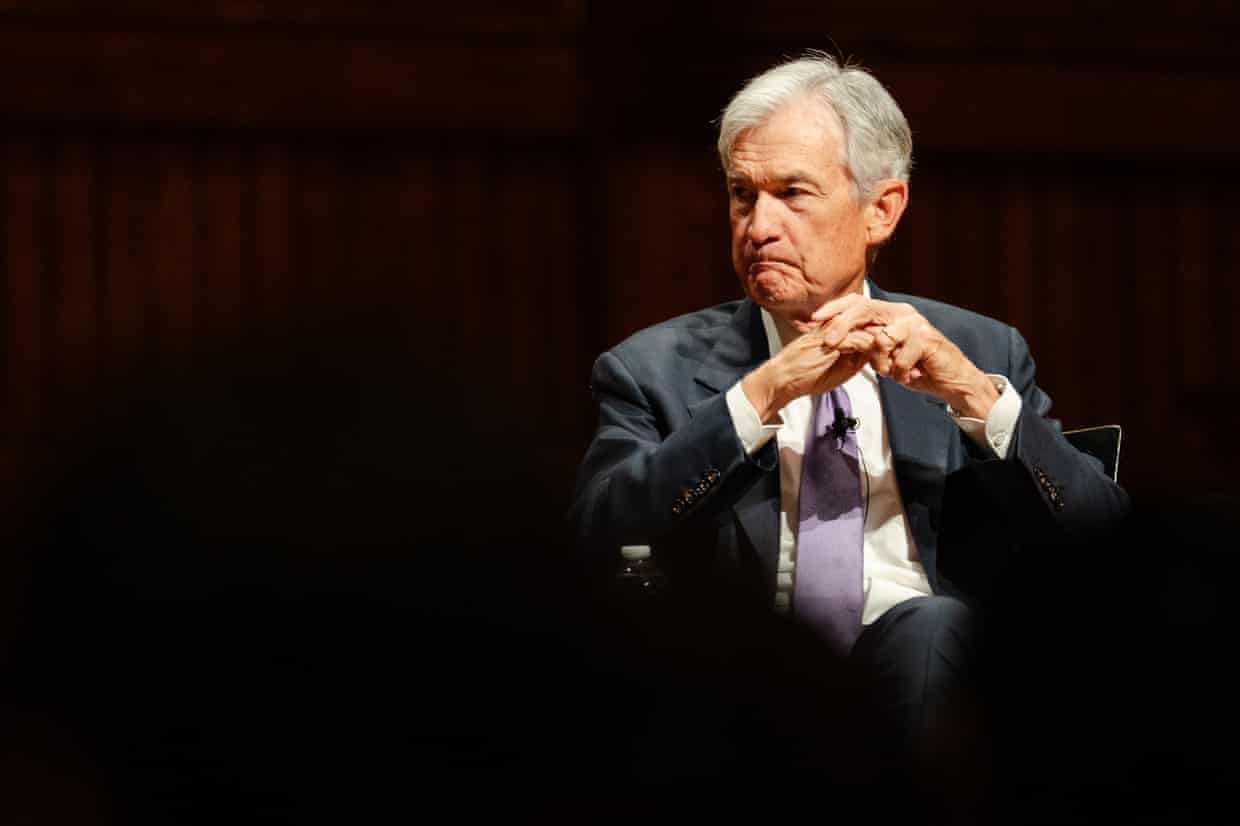
Donald Trump threatened to fire Jerome Powell if he stays on as US Federal Reserve chair past the end of his tenure and doubled down on a criminal investigation into renovations of the central bank’s headquarters.As the White House pushes Trump’s new nominee to take charge of the Fed, Kevin Warsh, Powell has a month left in the role. The possibility of Powell staying on as chair past 15 May, the official end of his term, has grown amid mounting scrutiny of Trump’s approach to the Fed in the Senate, which is required to approve Warsh’s nomination.“I’ll have to fire him, OK, if he’s not leaving on time,” Trump said of Powell during an interview on Fox Business. “I’ve held back firing him

Economic shock from Iran war risks driving up global debt levels, says IMF
The Iran war risks triggering a rise in global debt levels, forcing governments to choose between cushioning a cost of living shock and maintaining sound public finances, the International Monetary Fund has warned.Against a volatile backdrop of the Middle East conflict, the Washington-based fund said the war could add to the already strained position of government finances throughout the world.In its half-yearly fiscal monitor, the IMF said global debt levels were on track to increase because the war was pushing up the price of energy and food, fuelling higher government borrowing costs, and hitting economic growth.After a rise in gross government debt levels to almost 94% of GDP last year, it warned this figure was on track to reach 100% by 2029, a level previously reached only in the aftermath of the second world war.“The outbreak of war in the Middle East has added a new source of fiscal pressure to an already strained global landscape,” it said in the report
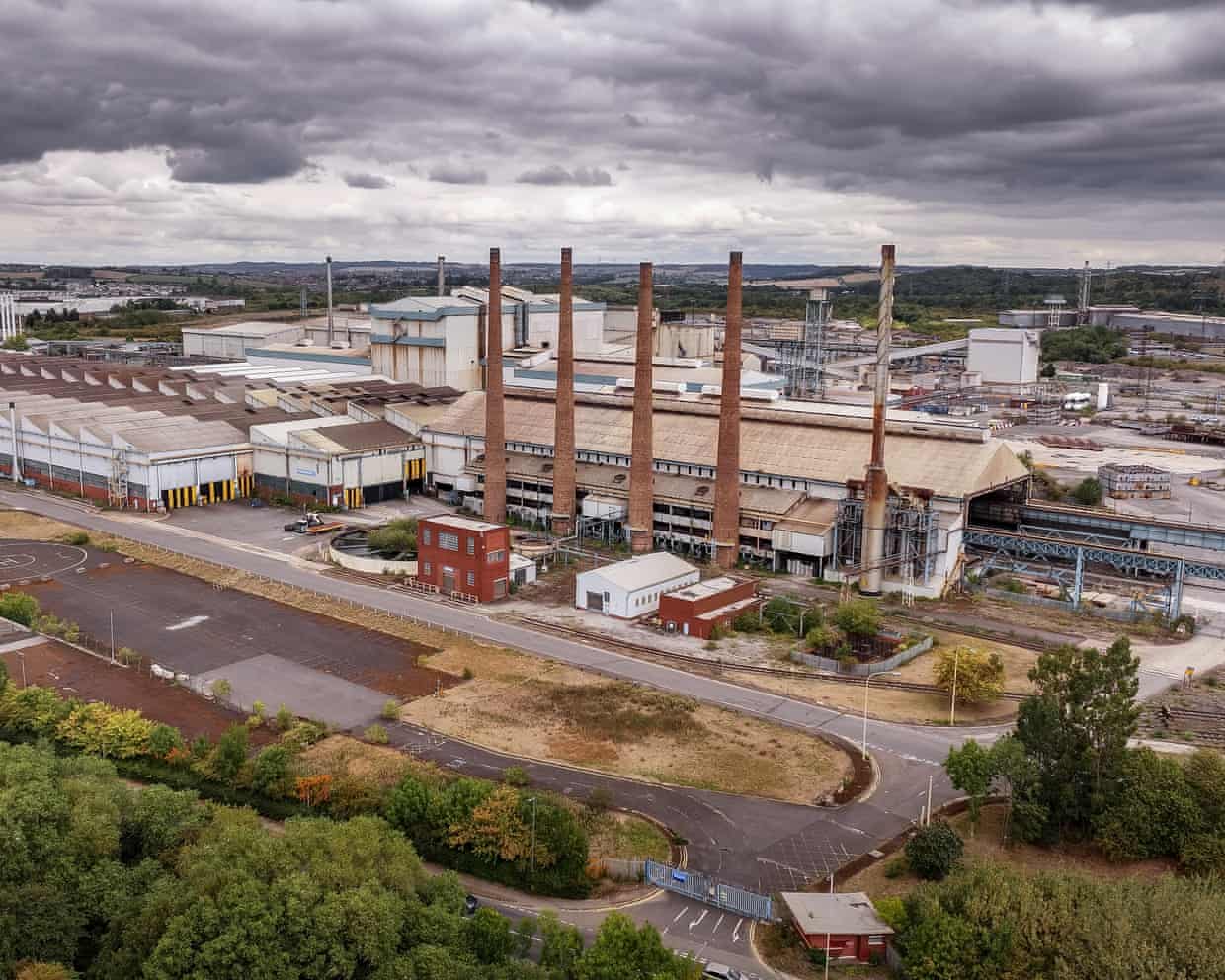
Norwegian group in talks to buy former Liberty Steel works in South Yorkshire
UK officials have entered exclusive talks with a Norwegian startup to buy the former Liberty Steel works in South Yorkshire, in a significant step towards its rescue.Norwegian-owned Blastr is understood to be the bidder preferred by the government’s official receiver to take on ownership of the UK’s largest existing electric arc furnace in Rotherham and other works in Stocksbridge, both in South Yorkshire.The business, formally named Speciality Steel UK (SSUK), has been under the official receiver’s control since August, after the previous owner Sanjeev Gupta lost the ownership in London’s high court.Finding a new buyer would remove a headache for the government, which also a year ago took control of the Chinese-owned British Steel blast furnaces in Scunthorpe, Lincolnshire. Ministers are understood to be looking at fully nationalising that plant
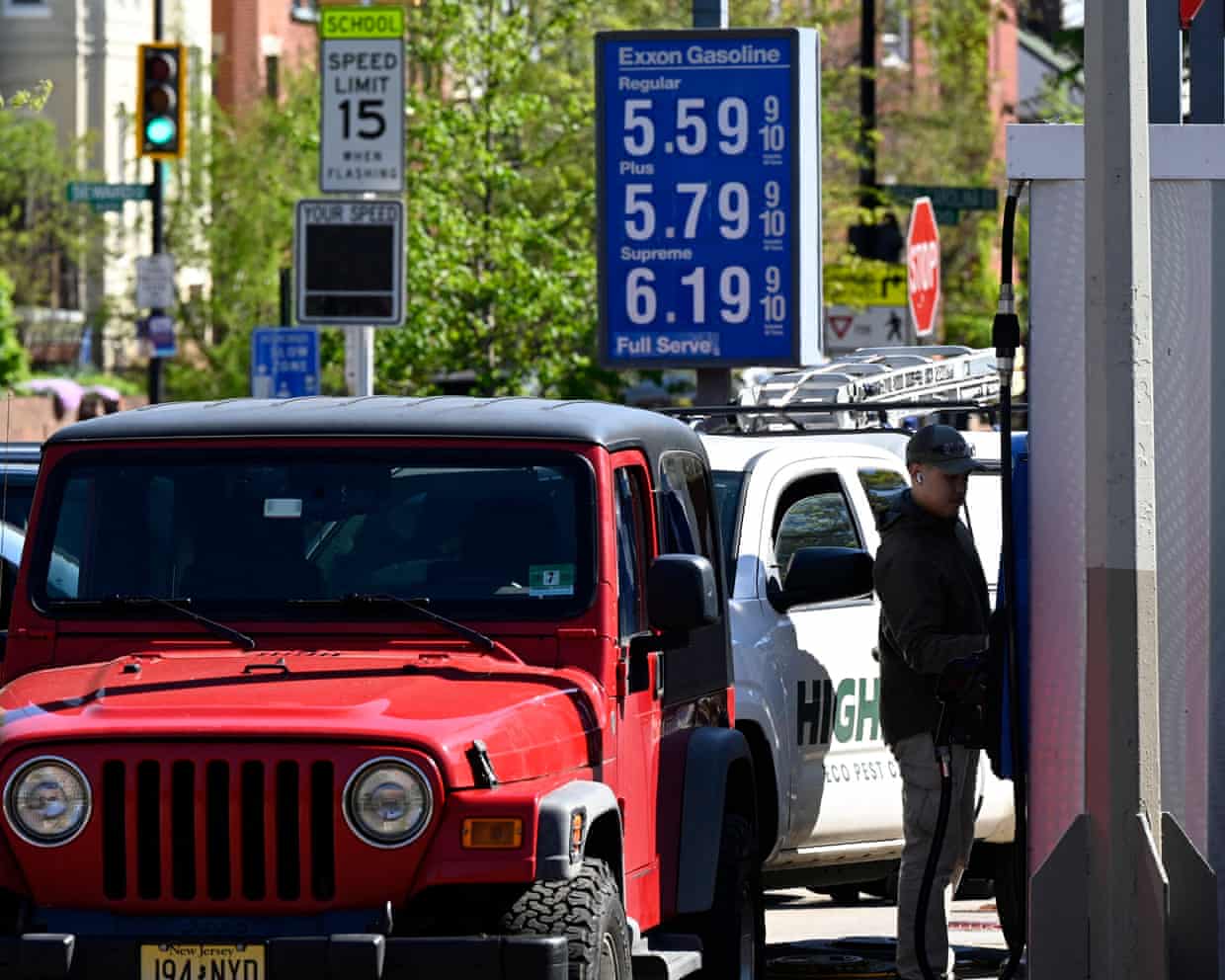
$30m an hour: big oil reaping huge war windfall from consumers, analysis finds
The world’s top 100 oil and gas companies banked more than $30m every hour in unearned profit in the first month of the US-Israeli war in Iran, according to exclusive analysis for the Guardian. Saudi Aramco, Gazprom and ExxonMobil are among the biggest beneficiaries of the bonanza, meaning key opponents of climate action continue to prosper.The conflict pushed the price of oil to an average of $100 (£74) a barrel in March, leading to estimated windfall war profits for the month of $23bn for the companies. Oil and gas supplies will take months to return to pre-war levels and the companies will make $234bn by the end of the year if the oil price continues to average $100. The analysis uses data from a leading intelligence provider, Rystad Energy, analysed by Global Witness
NAACP lawsuit accuses Elon Musk’s xAI of polluting Black neighborhoods near Memphis

China now the ‘good guy’ on AI as Trump takes ‘wild west’ approach, MPs told

Bosses say AI boosts productivity – workers say they’re drowning in ‘workslop’

AI companies make powerful tech – but they’re also savvy marketers

Don’t make Marshal Foch’s mistake on AI | Letters
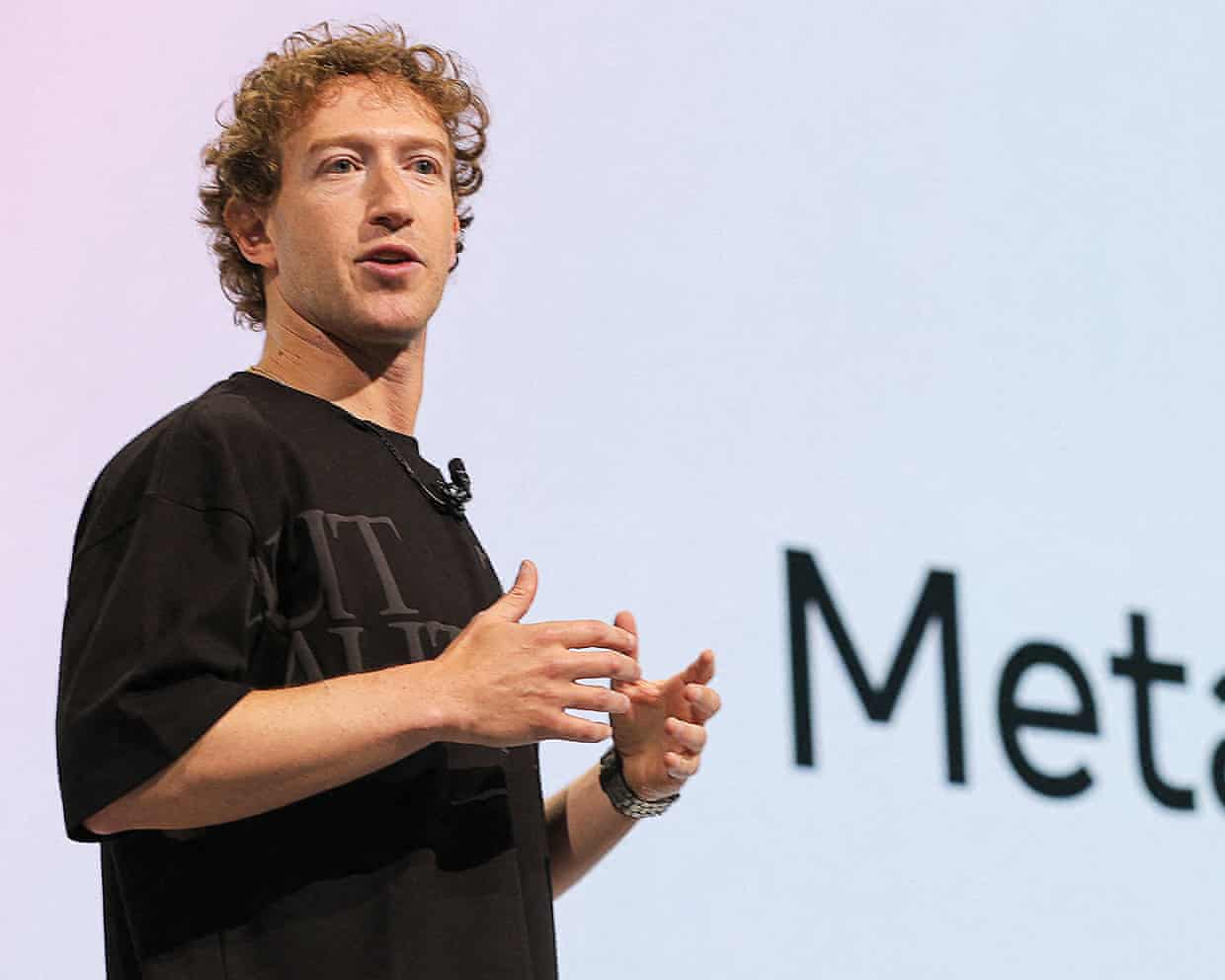
Meta creating AI version of Mark Zuckerberg so staff can talk to the boss