AI companies make powerful tech – but they’re also savvy marketers

Hello, and welcome to TechScape,I’m your host, Blake Montgomery, the Guardian’s US tech editor, writing to you from my happy village in Pokopia,Artificial intelligence companies make powerful products,They also make outlandish claims,Last week, Anthropic released Claude Mythos, an AI model focused on cybersecurity, which has inspired widespread thrill and panic over how capable it is said to be.
There’s a catch, though: the public can’t touch it.OpenAI declared at the end of last week that it, too, had developed a frighteningly capable cybersecurity AI.Anthropic called Mythos a “reckoning” for the cybersecurity industry because of how keenly adept at exposing software weaknesses the new tool had proven.According to Anthropic, Mythos has laid bare thousands of vulnerabilities in commonly used applications for which no patch or fix exists, prompting the startup to form an alliance with cybersecurity specialists, nicknamed Project Glasswing, to bolster defenses against hacking and withhold the model from wide distribution, much like an arthouse film that plays solely in Los Angeles and New York.Shakeel Hashim writes in a Guardian op-ed:Mythos, the company claims, has found vulnerabilities in every major browser and operating system.
In other words, this new AI model might be able to help hackers disrupt much of the world’s most important software.If such technology was widely available and as capable as Anthropic claims, the implications could be catastrophic.Cyber-attacks are no longer a solely digital problem.Almost everything we rely on in the physical world involves software.In recent years, airports, hospitals and transport networks have been crippled by cyber-attacks.
Until now, attacks of this scale required serious expertise.Mythos would put that capability in reach of amateurs – and turbocharge the professionals’ ability to wreak havoc.Already, though, cybersecurity experts are pushing back on Anthropic’s claims.My colleague Aisha Down reports:It is unclear if Anthropic has built the machine god.What is more apparent is that the San Francisco startup widely seen as the “responsible” AI company is brilliant at marketing.
“Mythos is a real development and Anthropic was right to treat it seriously,” said Jameison O’Reilly, an expert in offensive cybersecurity.But, he said, some of Anthropic’s claims, such as that it found thousands of “zero-day vulnerabilities” in major operating systems, were not that significant to real-world cybersecurity considerations.In 2017, BuzzFeed News’s tech editor argued that the engineering of desire was Apple’s greatest strength.I agree, and Anthropic seems to possess a similar genius.The technology is powerful, but so is the manipulation of attention.
Like Apple’s genuinely transformative iPhone, Claude is the real deal.Businesses can’t get enough of its coding capabilities.Serious companies – Apple, Nvidia, Google, JPMorganChase, Amazon Web Services, Broadcom – have partnered with Anthropic on Project Glasswing.However, it is also a clever bit of marketing to say: “You can’t have this; it’s too strong.” Nothing sparks a stronger desire than withholding.
According to Bloomberg, Anthropic was the talk of the town at the HumanX AI conference in San Francisco last week.Hype has obscured the public’s understanding of generative AI since the technology’s advent.Journalists and clear-eyed observers have been trying to pierce it for just as long.In 2019, Slate published a piece, “OpenAI says its text-generating algorithm GPT-2 is too dangerous to release” (hat tip to X’s @Banteg for surfacing the story in a tweet).The headlines may look similar because Anthropic’s CEO, Dario Amodei, was once the vice-president of research at OpenAI.
He left the company in 2020,OpenAI also withheld its video generator Sora from wide release for many months,Did that kill Hollywood and film-making as we know it? No,The company shuttered Sora late last month,Concerns over the hazards of simple text generation might seem quaint in comparison to the complete end of digital security, but the fact that we have moved past the fears of 2019 points to a heartening likelihood: we will move on from today’s fears of cybersecurity’s demise as well, settling in a middle-ground reality between the present status quo and the hyperbolic future.
Read more: AI companies know they have an image problem.Will funding policy papers and thinktanks dig them out?Tech companies are cutting jobs and betting on AI.The payoff is far from guaranteed‘There’s a lot of desperation’: skilled older workers turn to AI training to stay afloat‘It has your name on it, but I don’t think it’s you’: how AI is impersonating musicians on SpotifyTwo weeks ago in New Mexico, Meta lost a multimillion-dollar legal battle over its failure to prevent children being sold on its platforms.Longtime Guardian writer Katie McQue uncovered evidence that became part of the case against the tech giant.She detailed her investigative reporting process in a piece last week:It started with a tipoff.
I was reporting on the trafficking and exploitation of migrant workers in the Gulf when a source I had known for more than a decade reached out.They told me that child sexual abuse trafficking in the US was surging.As the Covid pandemic pushed predators online, some were using Facebook and Instagram to buy and sell children.It was 2021, and I was about to begin an investigation with Mei-Ling McNamara, a human rights journalist, that would lead to the tech company Meta losing a multimillion-pound court case in March this year.The company had not yet rebranded and was known as Facebook, and there had not been any reporting on how children were being trafficked on its platforms.
Experts from anti-trafficking nonprofit organisations and an American law enforcement official talked me through the crimes they were seeing,Much of the trafficking on Facebook and Instagram was happening in non-public areas of the platforms, such as Facebook Messenger and private Instagram accounts, I would learn later,Traffickers were searching for teens to target and groom, and to later advertise to sex buyers,In July 2022, we went to Washington DC to visit a safe house run by the nonprofit Courtney’s House, which cares for teen girls of colour who are survivors of trafficking or are actively being trafficked,Its location is not public and we were only sent the address an hour before our appointment.
Courtney’s House is run by Tina Frundt, a trafficking survivor and former member of the United States Advisory Council on Human Trafficking during the Obama administration,Read the rest of her ticktock here: ‘It started with a tipoff’: how a Guardian investigation exposed child sex trafficking on Facebook and InstagramRead her full investigation here: How Facebook and Instagram became marketplaces for child sex trafficking‘It feels as if I’ve made a new best friend’: my experiment with AI journalling‘Irresponsible failure’: Google, Meta, Snap and Microsoft slam EU over child sexual abuse law lapse‘Abhorrent’: the inside story of the Polymarket gamblers betting millions on warOpenAI CEO Sam Altman’s home targeted with molotov cocktail
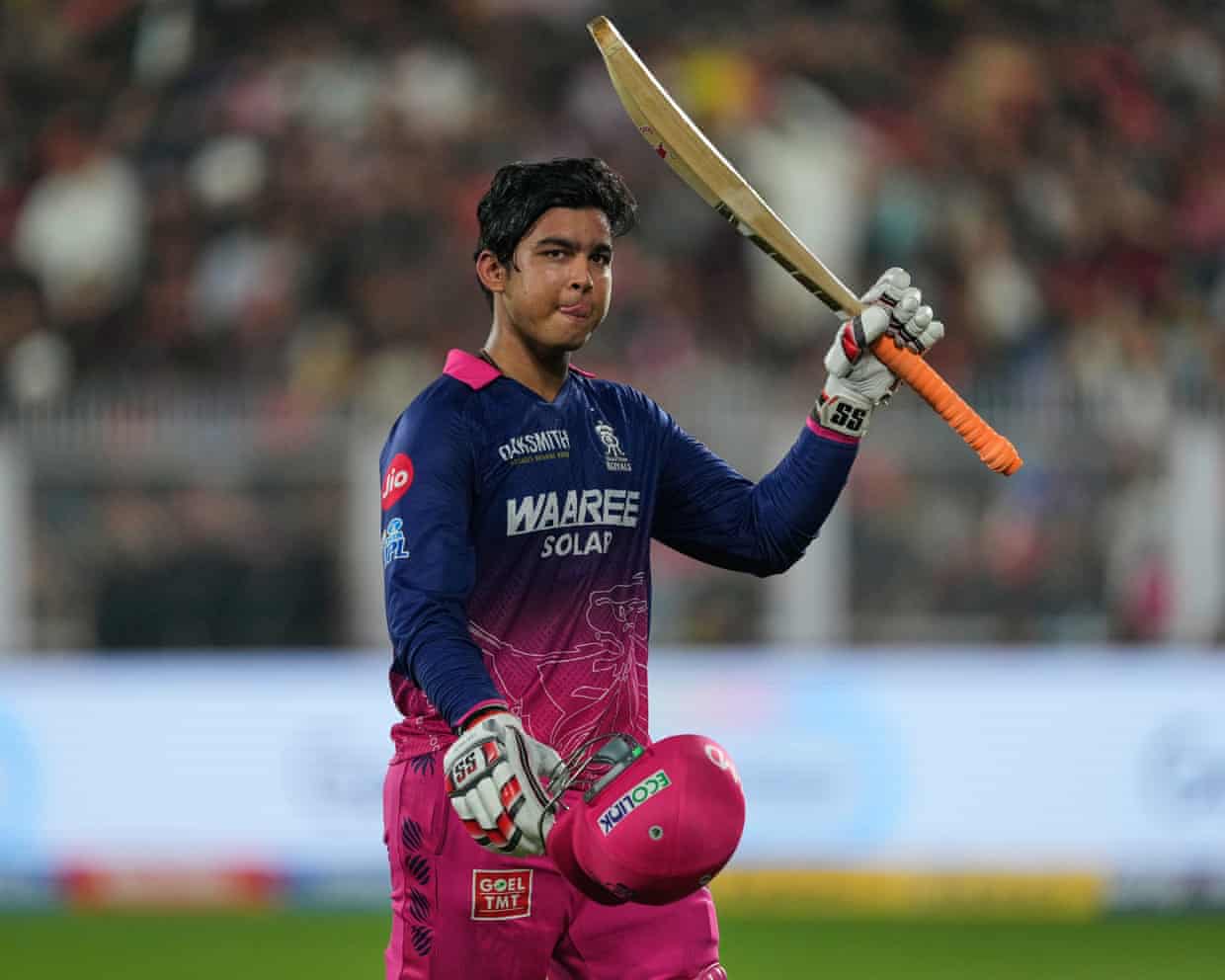
The Spin | Teenager Sooryavanshi from ‘a different planet’ but superstardom not guaranteed
When Jasprit Bumrah stood at the top of his mark for the Mumbai Indians against Rajasthan Royals in this year’s Indian Premier League, he was the most complete all-format bowler in history. With a whiplash action that explodes from a staccato run-up like a stick of dynamite from unraveling silk, he fires searing yorkers and steepling bouncers at will. Three balls later, he was the setup for the story’s real protagonist.Before this moment, Bumrah, winner of five IPLs and two World Cups, had delivered 5,445 balls in T20 cricket for Mumbai and his country. Only 180 of them were sent sailing over the rope for six

How the streaming dream turned sports on TV into a costly maze
There was a moment, perhaps a decade ago, when it felt as if sports broadcasting nirvana was near. A world where ordinary fans could access any game on any device, any time, anywhere.Or near enough, as cord-cutting devastated traditional cable subscription models and viewers who had long been locked into expensive and restrictive TV packages now had choices. Streaming nurtured a diverse and bespoke landscape.At some point, though, the age of abundance became the era of excess

American investor agrees to buy Exeter Chiefs with plans to inject fresh funding
Exeter Chiefs have finalised a deal with a wealthy American backer to take control of the club, subject to the approval of their membership. An extraordinary general meeting is to be held on 7 May when members will be urged to support the move to sell the 155-year-old club and unlock significant fresh funding.Insiders are describing the impending multimillion pound investment as “meaningful” at a pivotal stage in the development of English professional club rugby. The existing 10-team Prem is to become a franchise “expansion” league from 2029-30 and the race for new funding is accelerating.Last August, Red Bull completed its takeover of Newcastle while the billionaire Sir James Dyson has recently acquired a 50% stake in Bath alongside the club’s longtime supremo Bruce Craig and pledged to commit substantial new capital

Half-billion dollar BBL sell-off stalls as states urge Cricket Australia to be patient
Cricket Australia has not yet done enough to convince two crucial stakeholders of the merits of selling stakes in Big Bash League franchises, leaving the future of the T20 league up in the air.Cricket NSW chief executive Lee Germon expressed his opposition to the proposal on Wednesday morning and confirmed the Sydney Thunder and Sydney Sixers would not be involved in a process of valuing the clubs being run by CA.Later on Wednesday, CA chief executive Todd Greenberg said the process remains ongoing.“We are receiving responses from states to our proposal on private investment in BBL clubs and remain open to discussing any questions or concerns about this model,” he said.“This process remains respectful and collaborative and with the best interests of Australian cricket the key consideration of all involved
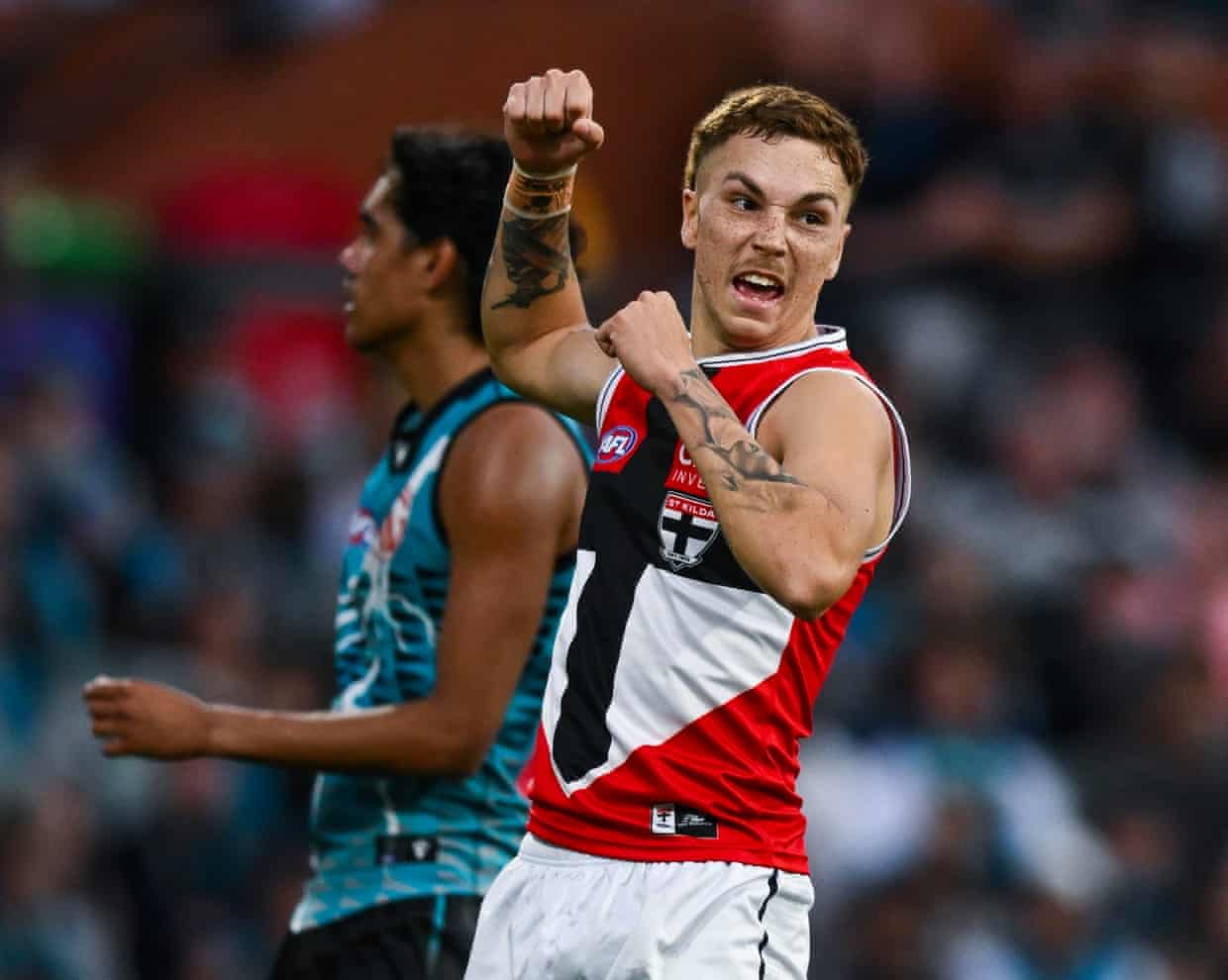
From the Pocket: AFL tribunal verdicts sit as uneasily as any in recent memory
Two cases rocked the football industry this week, one your typical footy folderol that everyone hyperventilates over for several days, the other an incident that cut to the core of a league trying to effect serious cultural change. In both instances, all parties professed absolute certainty in their version of events.First, to the relatively trivial matter, where umpire Nick Foot alleged that Port Adelaide’s Zak Butters abused him by asking: “How much are they paying you?” Complicating matters was the fact that the senior umpire, and I can’t believe I’m typing this, also moonlights as a betting analyst for Sportsbet. All parties brooked no doubt as to what had happened. Foot was “100% adamant” he was insulted

NFL reporter Russini resigns amid ‘self-feeding speculation’ over photos with Patriots’ Vrabel
NFL reporter Dianna Russini has resigned from The Athletic less than a week after photos of her and New England Patriots coach Mike Vrabel prompted an internal investigation at The New York Times-owned sports outlet.The New York Post last week published the photos of Vrabel and Russini at an Arizona resort and said they were taken before the NFL owners meetings that began in Phoenix on 29 March.“I have covered the NFL with professionalism and dedication throughout my career, and I stand behind every story I have ever published,” Russini said in a letter sent on Tuesday to The Athletic’s executive editor, Steven Ginsberg. “When the Page Six item first appeared, The Athletic supported me unequivocally, expressed confidence in my work and pride in my journalism. For that I am grateful
Big US banks rake in near $50bn profit as Iran war shakes markets
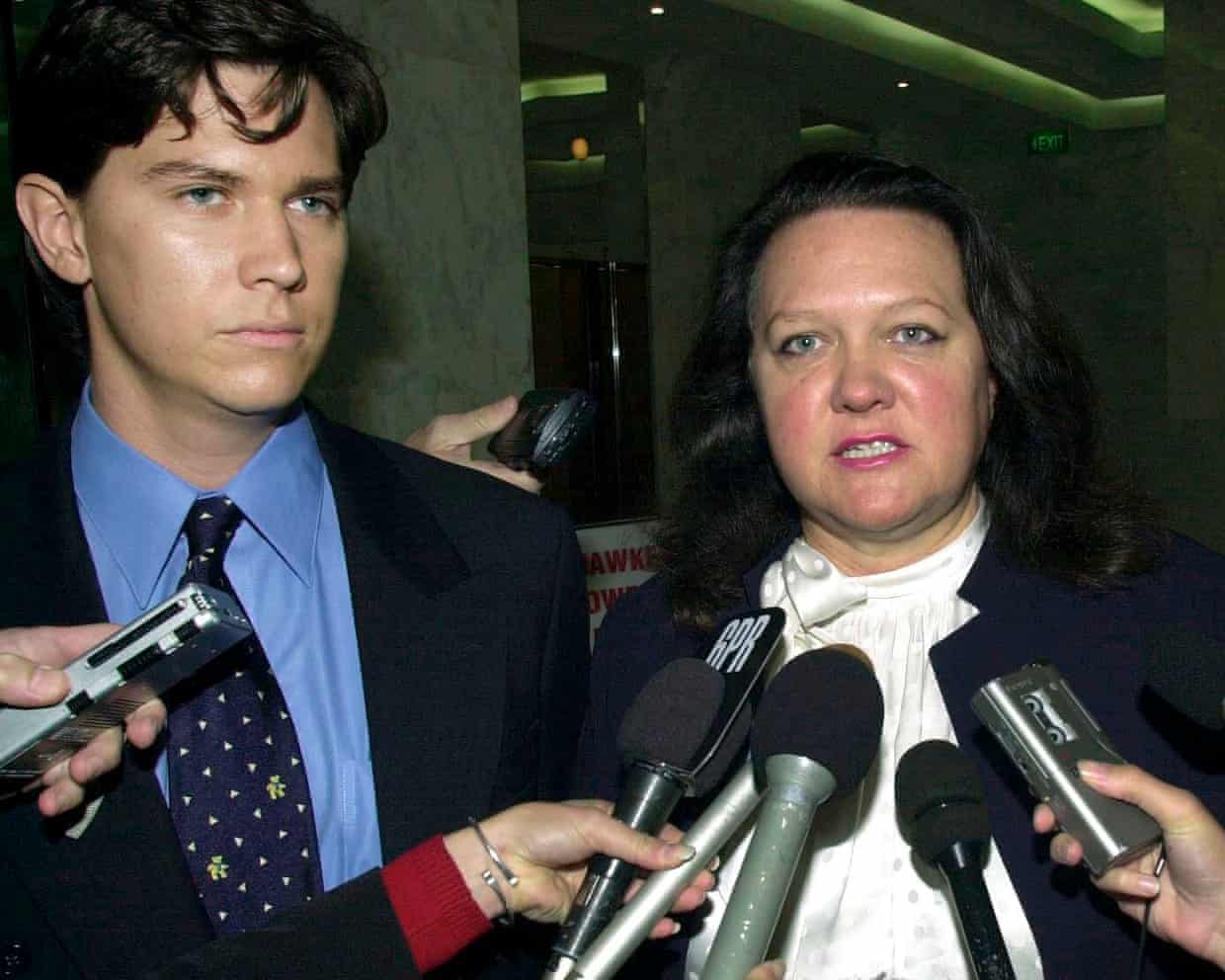
Gina Rinehart has been forced to share her riches. But will she fight on or end the family feud?

Amazon enters agreements for nine Australian renewable projects to power datacentres

MacBook Air M5 review: Apple’s best consumer laptop speeds up

Unhappy Verstappen ‘has to be listened to’ over new rules, says F1 chief Domenicali

The Dianna Russini fallout is less about scandal than who carries blame in the NFL | Melissa Jacobs