$30m an hour: big oil reaping huge war windfall from consumers, analysis finds
The world’s top 100 oil and gas companies banked more than $30m every hour in unearned profit in the first month of the US-Israeli war in Iran, according to exclusive analysis for the Guardian,Saudi Aramco, Gazprom and ExxonMobil are among the biggest beneficiaries of the bonanza, meaning key opponents of climate action continue to prosper,The conflict pushed the price of oil to an average of $100 (£74) a barrel in March, leading to estimated windfall war profits for the month of $23bn for the companies,Oil and gas supplies will take months to return to pre-war levels and the companies will make $234bn by the end of the year if the oil price continues to average $100,The analysis uses data from a leading intelligence provider, Rystad Energy, analysed by Global Witness.
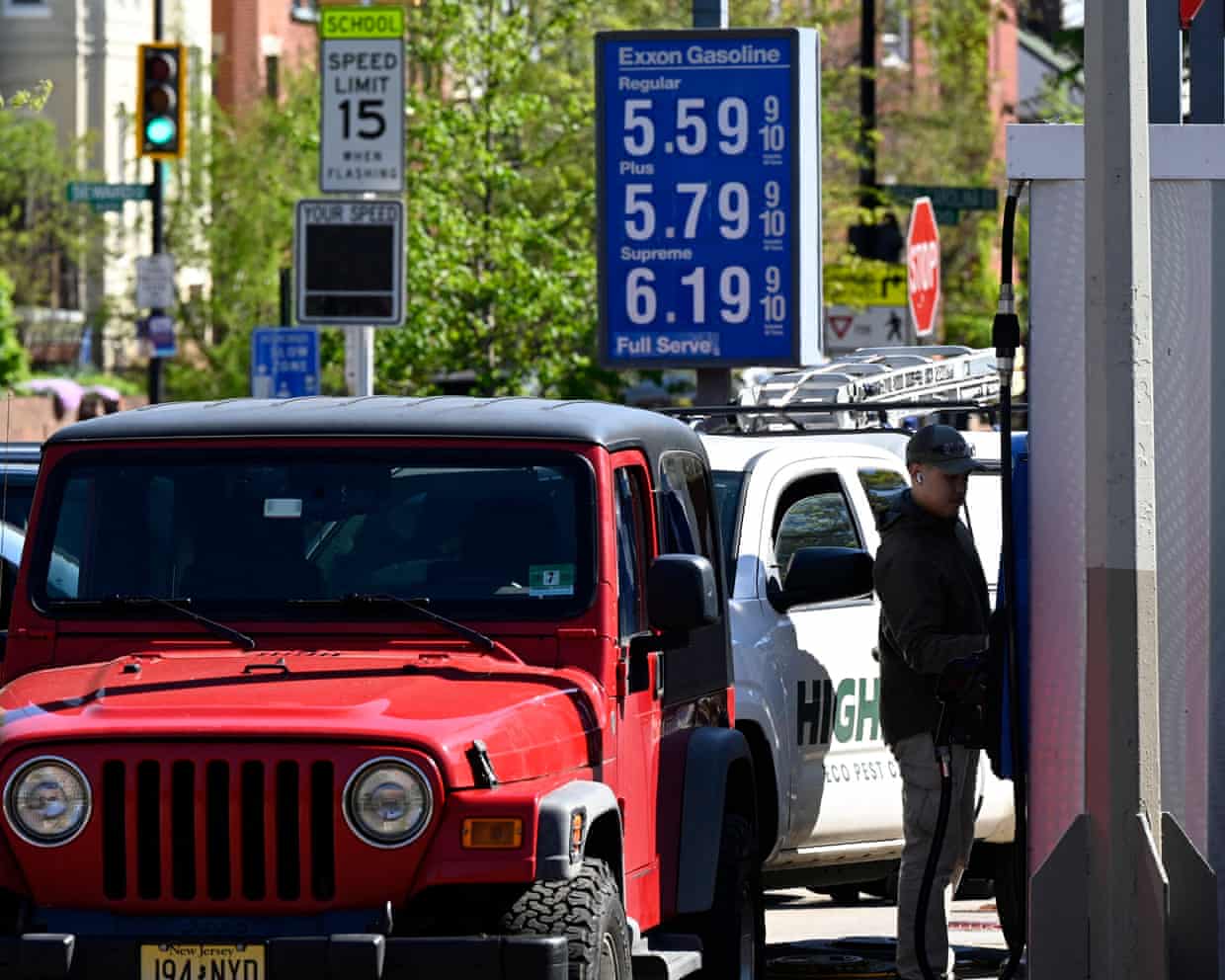
The excess profits come from the pockets of ordinary people as they pay high prices to fill up their vehicles and power their homes, as well as from businesses incurring higher energy bills.Dozens of countries have cut fuel taxes to help struggling consumers, meaning those nations, including Australia, South Africa, Italy, Brazil and Zambia, are raising less money for public services.Pressure is growing for windfall taxes on the war profits of oil and gas companies, with the European Commission considering a request from the finance ministers of Germany, Spain, Italy, Portugal and Austria to “send a clear message that those who profit from the consequences of war must do their part to ease the burden on the general public”.“It would make it possible to finance temporary relief, especially for consumers, and curb rising inflation, without placing additional burdens on public budgets,” the ministers said in a letter on 4 April.The EU’s fossil fuel bill has risen by €22bn since the start of the Iran war.
Aramco is by far the biggest winner, estimated to make a war profit of $25,5bn in 2026 if the oil price averages $100,That is on top of the huge profits habitually made by the majority state-owned Saudi company – $250m a day between 2016 to 2023,Saudi Arabia has for decades led successful efforts to block and delay international climate action,Three Russian companies – Gazprom, Rosneft and Lukoil – stand to make an estimated $23.
9bn in Iran-related war profits by the end of the year.The conflict has benefited Vladimir Putin’s treasure chest for his own war in Ukraine, with Russia receiving oil export revenues of $840m a day in March, 50% higher than in February, according to analysis by the Centre for Research on Energy and Clean Air.ExxonMobil, which has a long record of denying climate change, will take in $11bn in unearned war profits in 2026 if the $100 price endures.Shell will get a $6.8bn boost.
The value of both companies, like others, has risen significantly due to increases in share prices in the month after the Iran war began: ExxonMobil is worth $118bn more, Shell $34bn more.Chevron is on track to make windfall profits from the Iran war of $9.2bn, according to the analysis.The company’s chief executive, Mike Wirth, has also benefited, selling $104m worth of Chevron shares between January and March.The impact of the Iran war is likely to be long lasting, with the head of the International Energy Agency, Fatih Birol, on Monday describing it as the biggest shock ever to the global energy market.
Soaring oil and gas prices led the UN’s climate chief, Simon Stiell, to warn in mid-March: “Fossil fuel dependency is ripping away national security and sovereignty, and replacing it with subservience and rising costs.” He said renewable energy could insulate people and nations from price hikes: “Sunlight doesn’t depend on narrow and vulnerable shipping straits.”The Iran war profits for oil and gas companies add to what has been for decades a supremely lucrative business for petrostates and shareholders.The oil and gas sector has made an average of $1tn a year in pure profit every year for the last half century, and much more in crisis years like 2022, when Russia launched its full-scale invasion of Ukraine.The fossil fuel sector also benefits from explicit subsidies that totalled $1.
3tn in 2022, according to the International Monetary Fund.Patrick Galey, the head of news investigations at Global Witness, said: “Moments of global crisis continue to translate into bumper profits for oil majors while ordinary people pay the price.Until governments kick their fossil fuel addiction, all of our spending power will be held hostage to the whims of strongmen.”Jess Ralston, the head of energy at the Energy and Climate Intelligence Unit, said: “This oil and gas crisis is illustrating yet again the cost of our dependence on volatile fossil fuels.“Investing in net zero technologies is not only the route to permanent energy security, it’s also the only way to get the climate system back into balance.
Calls to increase fossil fuel production and row back on net zero measures in the face of this new crisis would simply undermine our energy security and increase our exposure to damaging climate impacts.”Beth Walker, an energy policy expert at the E3G thinktank, said: “Governments should use taxes on windfall profits to accelerate the transition to green energy, rather than deepen dependence on fossil fuels.”Saudi Aramco, Shell and TotalEnergies declined to comment and ExxonMobil, Chevron, Gazprom, Petrobras and ADNOC did not respond to requests for comment.The estimated war profits were calculated using Rystad Energy’s UCube database, which integrates global field-by-field data, news and intelligence and takes into account oil and gas demand to project how much each field can supply.The windfall war profits were calculated by comparing the free cash flow generated from oil and gas production in March when oil was at an average $100 a barrel, compared with the $70 price before the Iran war.
This data is the estimated upstream profit, after taxes and royalties, and capital and operating expenditure,People in countries that are increasing their renewable energy capacity are shielded from some of the price rises and war profits,Wind and solar power in the UK in March meant £1bn of gas imports were avoided,From 2010-25, wind power saved consumers an estimated £100bn,Maria Pastukhova, energy transition programme leader at E3G, said that as long as homes, transport and industry remain tied to oil and gas, the UK and other fossil fuel importers remained exposed to global price shocks driven by conflict, chokepoints and market contagion.
“It doesn’t matter whether the molecules come from the North Sea or overseas; the UK exposure remains,” she said.“More UK fossil fuel production is therefore a weak answer to energy insecurity.”A UK government spokesperson said: “The government is determined to fight people’s corner in this crisis.We are driving further and faster for clean homegrown power that we control to protect the British people and bring down bills for good.We have also acted to prevent unfair practices like price-gouging, help those who rely on heating oil, and ensure households and businesses get a fair deal on their bills now.
”
Reeves tells Americans she does not know why they launched Iran war – as it happened
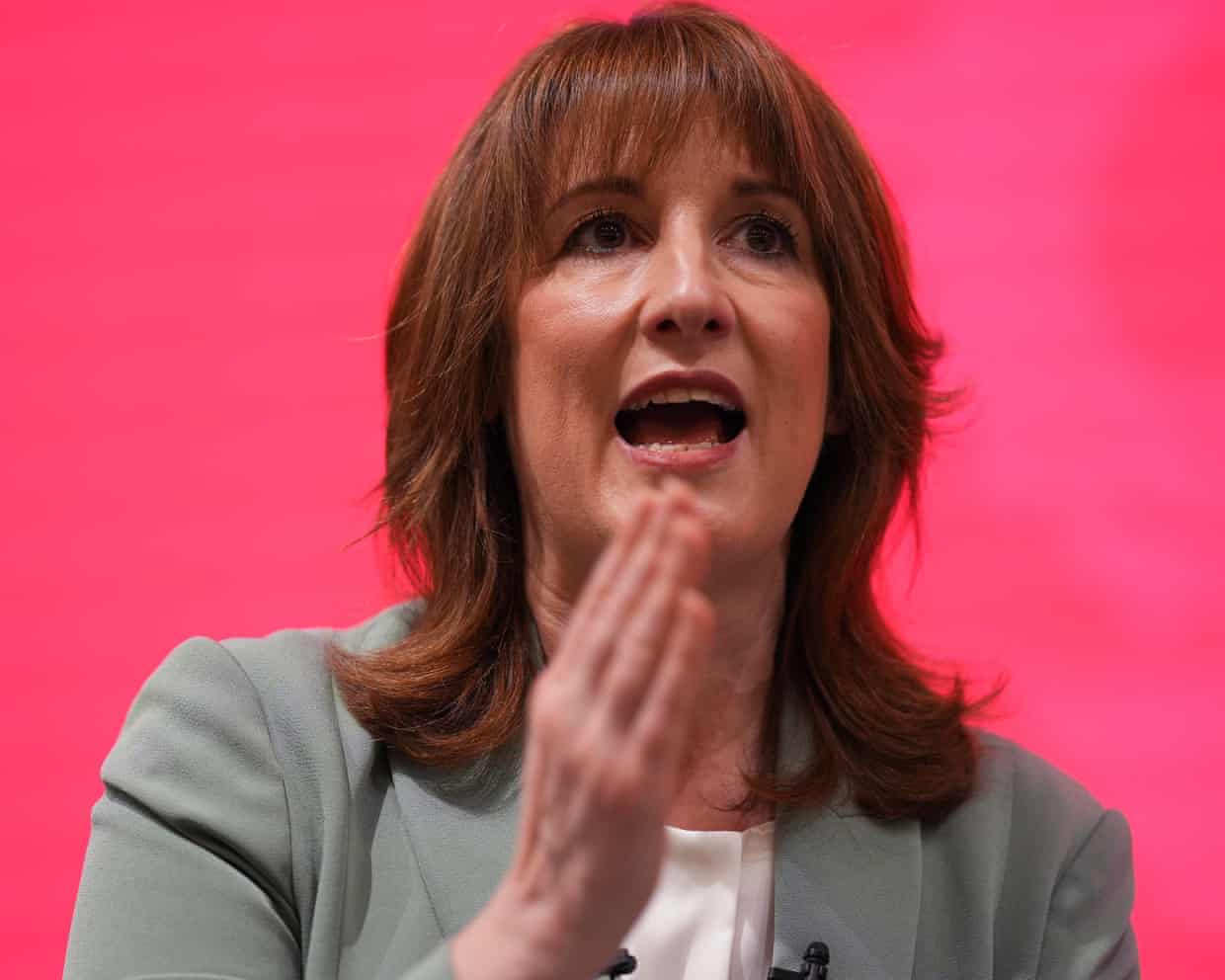
Rachel Reeves, the chancellor, has told an American audience she does not know why they went to war against Iran.Reviving criticisms of Donald Trump she has already stated, she said that she was “not convinced that this conflict has made the world a safer place” and that Trump seemed to have ended up in a worse position than he was before the war started.Speaking at a CNBC event in Washington, where she is attending IMF meeting, Reeves said:double quotation markThere were diplomatic negotiations happening before this. So if the aim is to now to get diplomatic negotiations, well, they were already happening before the conflict started …We’ve never been clear about what the goals of this conflict is, which is why the impacts in our economy, but also here in the US economy and around the world, and particularly for our allies in the Gulf, like Saudi and Qatar and the UAE, are so immense.Reeves said that it was important to reopen the strait of Hormuz to reduce energy prices
Scottish Labour leader says claim he tried to do Reform deal is ‘desperate lie’
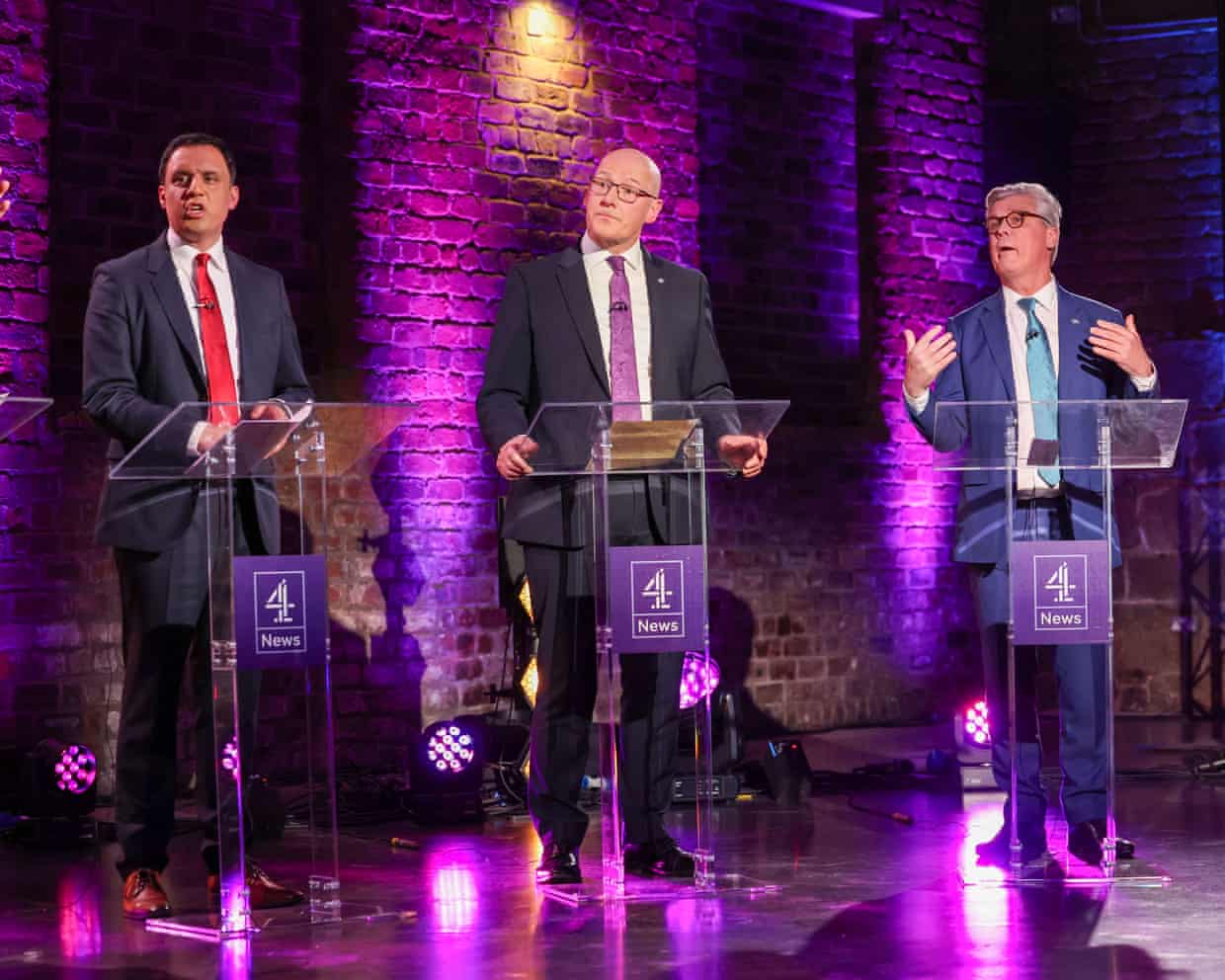
Anas Sarwar has dismissed as “a desperate lie from a desperate man” a claim by Reform UK’s Scotland leader, Malcolm Offord, that he offered to do a deal with the rightwing party to keep the Scottish National party out of power.Offord made the claim on Channel 4’s Scottish leaders’ debate on Tuesday evening, alleging the Scottish Labour leader came “bouncing up” to him at an event in December last year, suggesting they “work together to remove the SNP”.The row escalated when Offord told reporters after the debate that he stood by the remarks. Thomas Kerr, a Reform UK candidate in Glasgow, claimed Sarwar had made similar overtures to him some months earlier.Sarwar immediately dismissed the accusations as “nonsense” but the SNP posted the exchange on social media, saying it was evidence of Scottish Labour seeking “a grubby deal”
Questions asked and answers given – up to a point. Welcome to lo-fi PMQs | John Crace
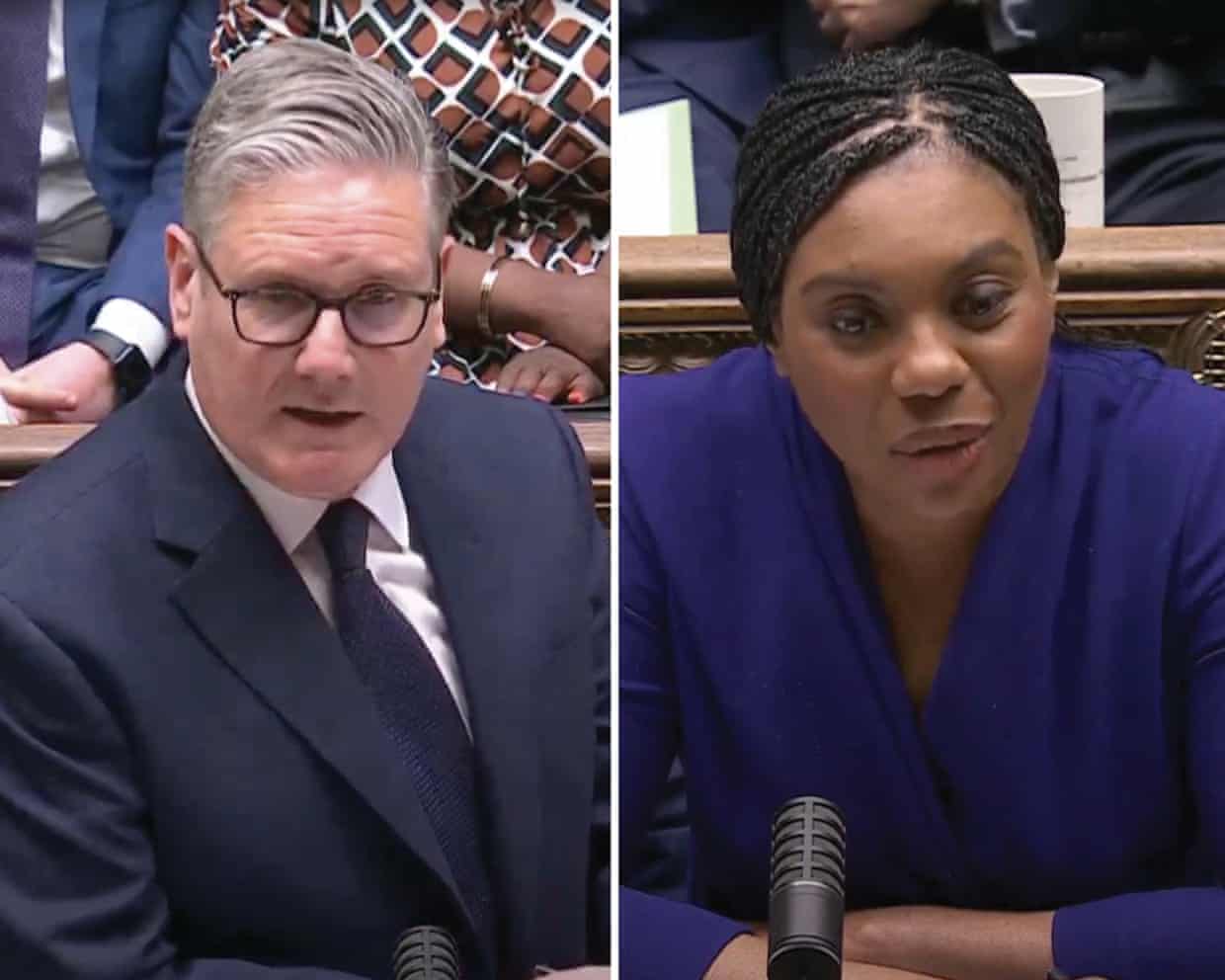
Credit where credit is due. The last few prime minister’s questions have been an exercise in nihilism. The embodiment of existential futility. Questions asked by Kemi Badenoch but not even a pretence by Keir Starmer of answering them. It was like the worst days of Boris Johnson’s time in No 10
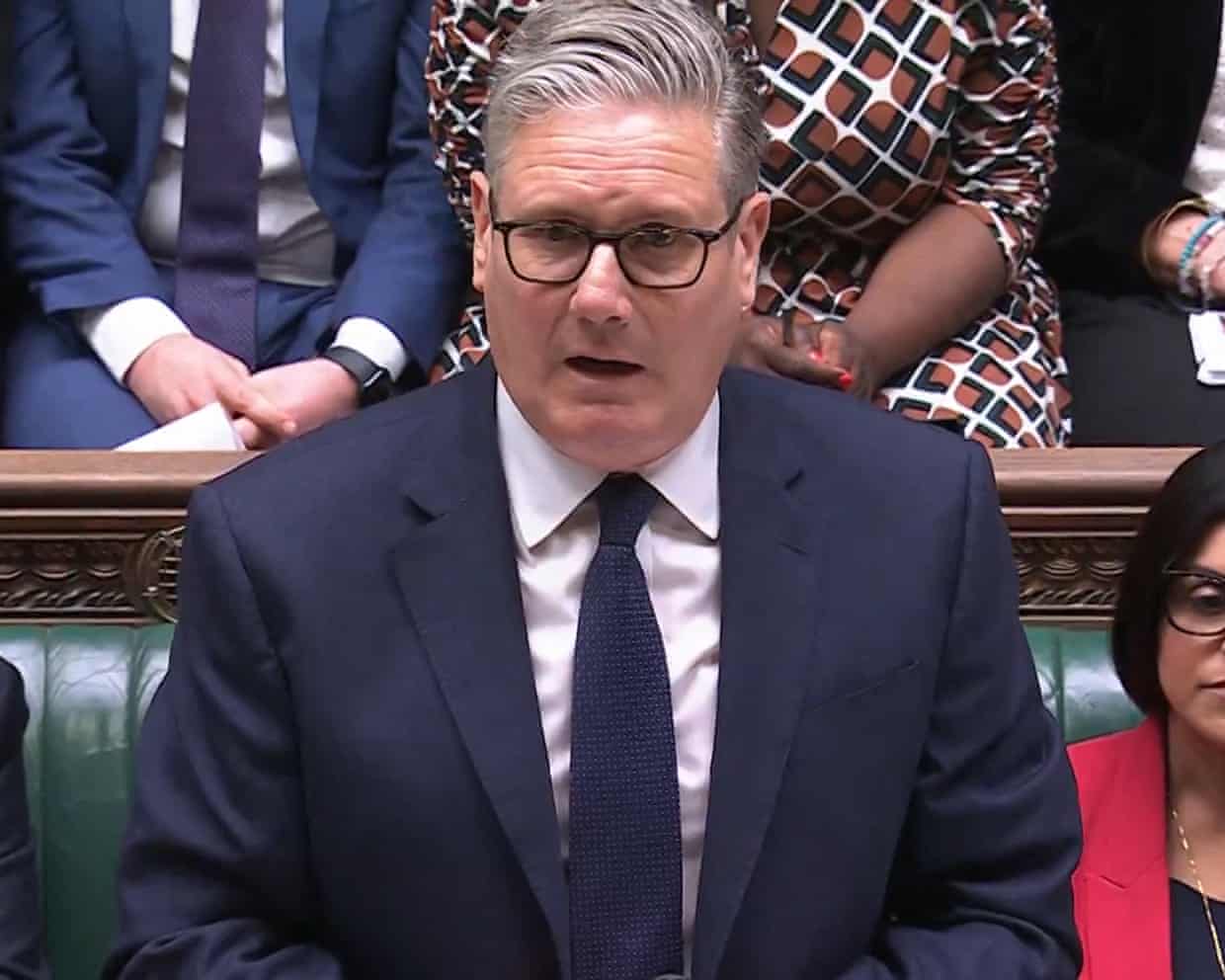
Starmer rejects accusation Labour is ‘complacent’ on defence funding
Keir Starmer has said he does not agree with George Robertson’s comments about the government’s “corrosive complacency” on defence funding, as the prime minister faced sustained pressure on the issue.Questioned in the Commons about the claims by Robertson, the former Labour defence secretary and Nato chief who co-authored a defence review for the government, Starmer insisted that defence spending was increasing rapidly.Pressed by Kemi Badenoch about whether he agreed with Robertson, now a Labour peer, that social security should be cut to boost defence, Starmer said his government was tackling both areas – and argued that previous Conservative governments neglected them.Government sources have not denied that Rachel Reeves has proposed increasing the budget by less than £10bn over the next four years amid concerns that any more would be unaffordable.While the government has committed to reach 2

How a £2m bitcoin order made Nigel Farage the political face of UK crypto
A thumping electronic beat provides the soundtrack to the video as Nigel Farage appears in front of a bank of screens.At first glance, it could be yet another of the Reform UK leader’s “second jobs” – whether promoting gold as a pension fallback or recording Cameo videos. And in a sense, it is: Farage is promoting a £2m cryptocurrency purchase by a company in which he has £215,000 invested, Stack BTC.“So we are about to place our bitcoin order,” says Farage with a smile, drawing on the communication skills honed as a politician and GB News anchor.After pressing a button, he shrugs theatrically as a bugle marks the “purchase” before the clip cuts to him standing on a roof with Kwasi Kwarteng, the former Tory chancellor known for his disastrous 2022 mini budget in the government of Liz Truss
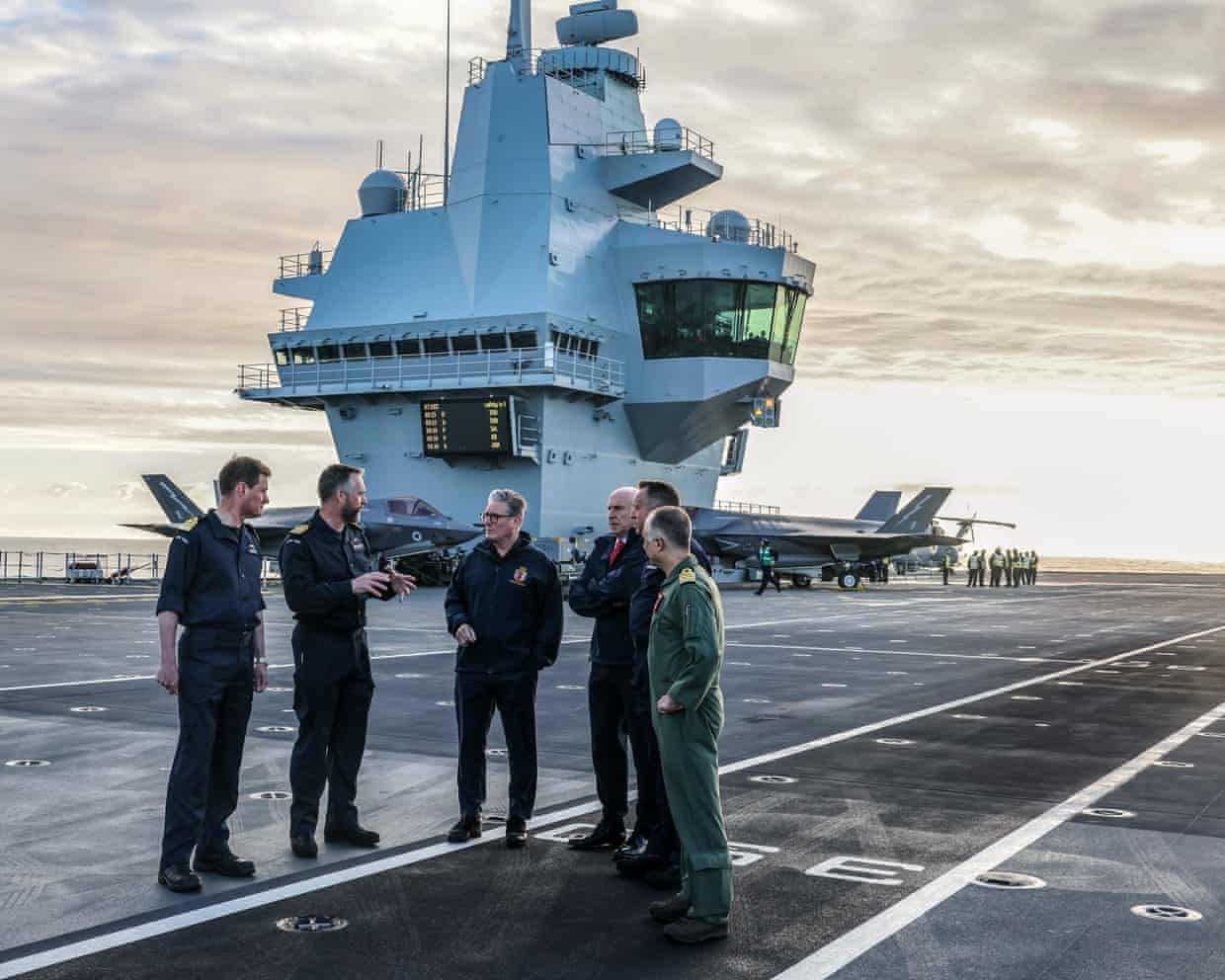
‘Bizarre’ lack of urgency in putting UK on war footing, says defence review co-author
A co-author of Britain’s strategic defence review has joined criticism of Keir Starmer’s leadership on military policy, warning of a “bizarre” lack of urgency in defence planning.Fiona Hill, a former chief adviser to the White House on Russia, echoed the concerns of George Robertson, her co-author with Gen Richard Barrons on the strategic defence review (SDR), over what he had called the prime minister’s “corrosive complacency”.Robertson, a peer and former head of Nato, has publicly aired his frustration at the government’s failure to come forward with its 10-year spending plans for defence following publication of the SDR last June.Elaborating further on Tuesday night in a speech in Salisbury, Wiltshire, he accused “non-military experts in the Treasury” of “vandalism” and warned that “we cannot defend Britain with an ever-expanding welfare budget”.Robertson also disclosed he had a discussion with the defence secretary, John Healey, on Monday about his intervention
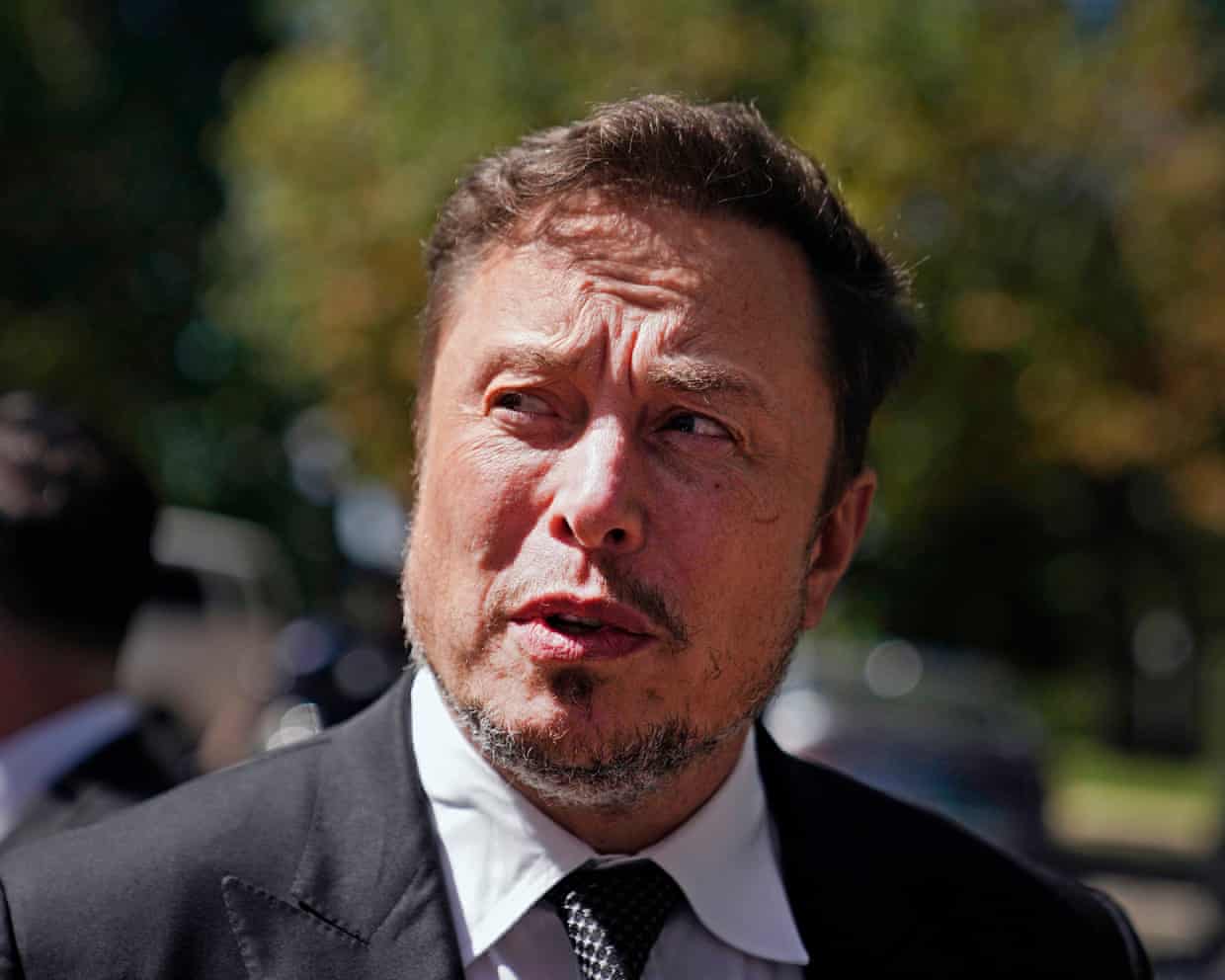
NAACP lawsuit accuses Elon Musk’s xAI of polluting Black neighborhoods near Memphis

China now the ‘good guy’ on AI as Trump takes ‘wild west’ approach, MPs told

Bosses say AI boosts productivity – workers say they’re drowning in ‘workslop’

AI companies make powerful tech – but they’re also savvy marketers

Don’t make Marshal Foch’s mistake on AI | Letters
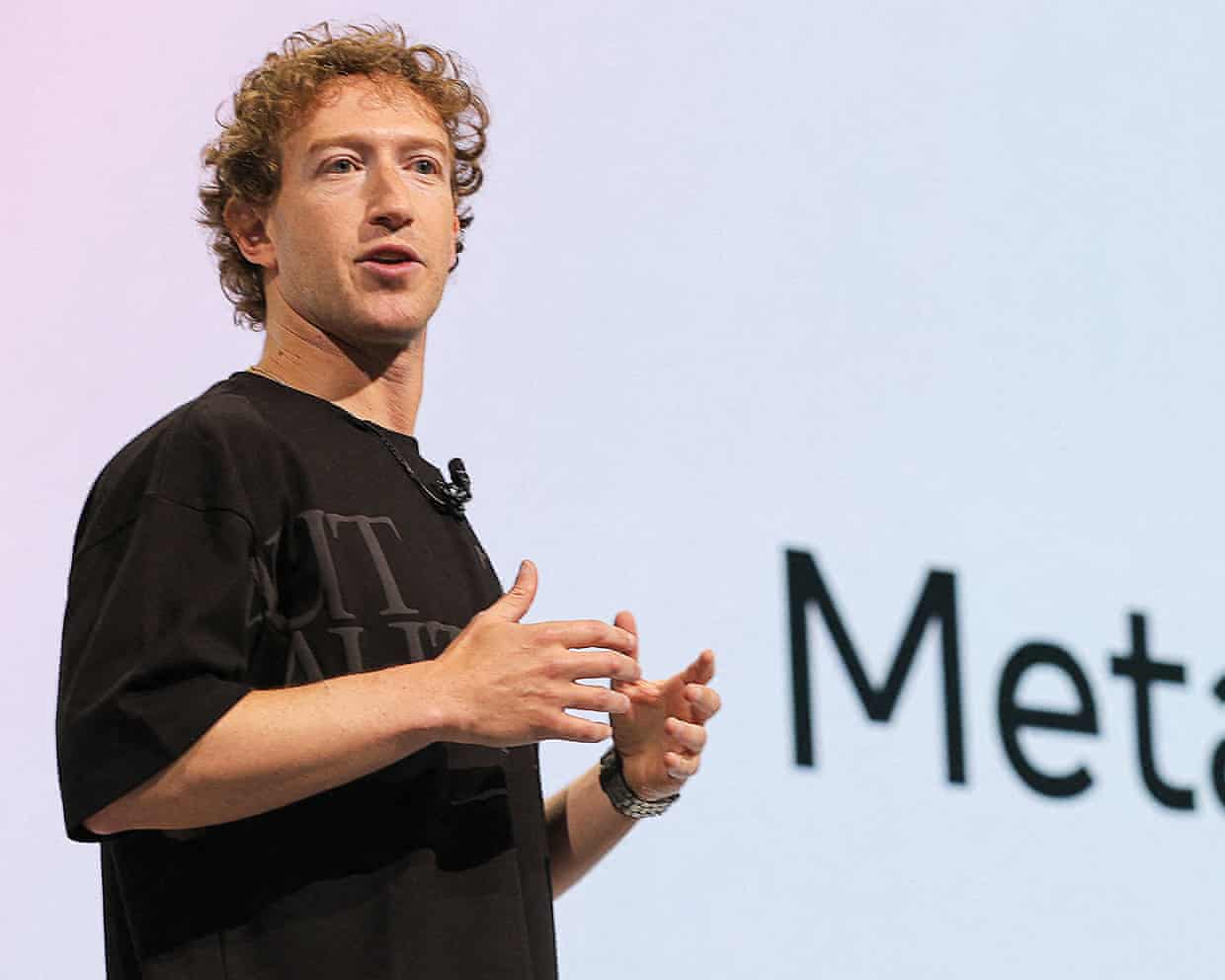
Meta creating AI version of Mark Zuckerberg so staff can talk to the boss