British Steel: more questions than answers on the future | Nils Pratley

“One of the proudest things we have done in government,” said Keir Starmer in Monday’s big speech about the decision a year ago to recall parliament in order to take control of British Steel at Scunthorpe.It was an odd boast because last year’s action was merely an emergency exercise in saving the patient, as opposed to getting British Steel on its feet and out of the hospital.Taking control meant the Chinese owner, Jingye, could not turn off the two blast furnaces but meant the government was on the hook for operational losses, which will be £615m and counting by next month according to the National Audit Office (NAO).Full nationalisation is now on the cards, which will end the limbo-land state of ownership and give some comfort for 4,000 workers.But it is also the point at which the government will have to choose between its barely described “potential future options” for British Steel.
What’s the actual plan here? How much is it going to cost? And, by the end, will much be left from the £2.5bn promised in the election manifesto for the revitalisation of UK steelmaking?Half an answer to the first question might appear later this week if ministers confirm that nationalisation is not an end in itself but a way to enable a sale, or partial sale, to a better owner than Jingye.The list of credible suitors won’t be long but at least Sev.en Global Investments, the Czech group which owns a modernised steelworks in Cardiff, is trying to create a buzz.But the terms of any post-nationalisation sale will be crucial.
The big idea, presumably, is for the Scunthorpe site to convert over time to using an electric arc furnace, the lower carbon alternative to blast furnaces.But, since the technology takes about three years to build, one obvious question is whether the old-style furnaces will be kept running in the meantime.One assumes they will be because, if not, there would be a big hole in the UK’s freshly minted “steel strategy” and a major bust-up with the unions.Yet the price tag may be steep.Any new owner will surely want a subsidy to cover some or all of the transition losses, and a second subsidy will probably be expected to build the electric arc furnace itself.
The going rate, as it were, for the latter was set at Port Talbot under the last government when Tata Steel (which closed its blast furnace) was given a £500m support package for an overall £1,25bn investment to fund conversion,The price tag probably hasn’t fallen in the interim,Add it all up and we’re talking serious money, even before any bung to Jingye to go away quietly,The good news for producers is that the separate steel strategy, when it finally arrived in March, threw a protective cloak across the UK sector in the form of tariffs to deter cheap Chinese and Vietnamese imports.
It is possible to see how the government’s initial aim to return UK production to 40%-50% of domestic steel demand, compared with 30% in 2024, could be met.Greater volumes should improve the economics at sites such as Scunthorpe.On the other hand, tariffs are not a cure-all (and, obviously, are not universally acclaimed by UK buyers of steel).The industry’s other complaint about sky-high electricity costs has not gone away.Even with subsidy schemes such as the “supercharger”, energy costs are still higher than in continental Europe.
The government’s plans on that front are vague at best,That is the context for the next round of action at British Steel,It has taken slightly more than a year to get from initial temporary rescue to the introduction of powers to enable nationalisation in the public interest,The hard decisions, and hard numbers, only start to come into view now,The same NAO report in March warned that, if current operating conditions continue, the taxpayer bill at Scunthorpe could exceed £1.
5bn by 2028.If the government can find a way to take chunks out of that projection, while protecting jobs and steel-making capacity, Starmer would have something substantial to boast about.The job has barely started.
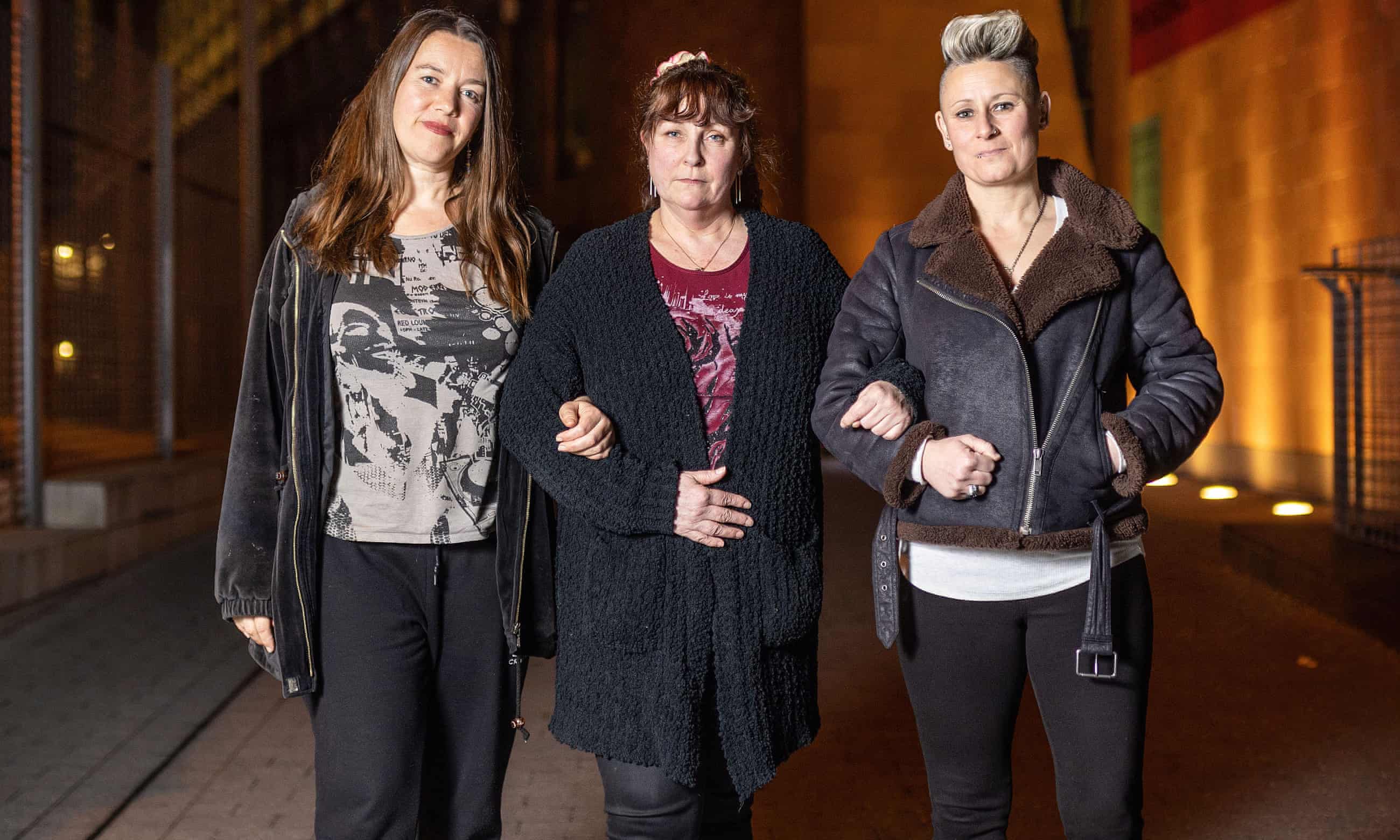
‘We have the same monster’: three women brought down their rapist – this is what happened next
In 2023, the Guardian profiled a group of women who had formed an unshakeable bond after they saw their attacker convicted and decided to waive their anonymity. That interview has now led to a documentaryThe three women refer to each other as “the girls”, even though they are in their 40s and 50s, long past girlhood. They have a WhatsApp group called Sister Solidarity, even though they are biologically unrelated.The unshakeable bond between Laura Hughes and Lauren Preston, both 45, and Mary Sharp, 58, came about for the saddest reason – all three were raped and abused by Martin Butler, a manipulative drug dealer on their estate in London who groomed and coerced them decades ago.Butler is now serving a lengthy sentence for the rape and buggery of Sharp in 1988

Did breakthrough in US fentanyl crisis start in China?
As Donald Trump travels to Beijing this week, fentanyl – and China’s role in its supply chain – remains an enduring point of acrimony in bilateral relations.At a UN meeting in March, the US again accused China of failing to stop its chemical industry selling the precursors required to make the potent synthetic opioid, while China suggested the US was shifting the blame for its domestic drug problem.Yet there are growing signs that the US fentanyl crisis has turned a corner – and some experts believe that interventions made in China have played a key role.“There was a supply shock: the purity of fentanyl fell,” said Keith Humphreys, a professor at Stanford University. “The question is why was there a supply shock

Getting children to eat their vegetables starts in the womb, researchers suggest
Rather than bribery, or hiding carrots under ketchup, the key may be to expose foetuses to healthy flavoursIt is an age-old battle with small children that most parents will recognise: please, please, eat your vegetables.Some will read them books with titles such as The Boy Who Loved Broccoli. Others have been known to smother veg in tomato ketchup, or mix avocado and fruit with Greek yoghurt and call it icecream. Or resort to plain bribery.Now, a study suggests there may be a more effective approach – but mothers need to start early

Older people risk mental decline if they do long hours of caring, UK study shows
The stresses and strains of caring for someone for 50 hours or more a week leads to “accelerated cognitive decline” in middle-aged and older people, research shows.However, providing care for only five to nine hours a week has the opposite effect, boosting brain health so much that the benefits last until older age.Carers UK called the findings “extremely worrying” and said they highlight how long hours spent providing care raises the risk of social isolation and burnout.Dr Baowen Xue, an academic at University College London and the lead author of the paper, said: “Our study shows that the caring responsibilities many people take on in later life can be a double-edged sword.“On the one hand, lighter caring responsibilities can be good for you by providing mental stimulation from interacting with loved ones or others you’re helping and a sense of purpose and usefulness

Capacity of lifts not kept up with UK obesity levels, study shows
Lifts are no longer big enough to fit the UK’s larger citizens, according to researchers.A study of maximum capacity in elevators in the UK and mainland Europe found lifts have not kept up with increasing obesity levels, raising concerns about safety and equity.The research, presented at the European Congress on Obesity in Istanbul, Turkey, used photos of weight limits for 112 lifts manufactured between 1972 and 2024 in the UK, France, Germany, Italy, Spain, Austria and Finland.Prof Nick Finer, the president and chair of the International Prader-Willi Syndrome Organisation and lead author of the study, compared the average maximum weight allowance (total weight allowance divided by maximum passenger limits) with the average adult weight in the year the lift was manufactured.The research found that despite adults’ continued growing weight, total lift limits have not increased since about 2004

More than 6,000 children treated at obesity clinics in England, figures show
More than 6,000 children living with obesity, including hundreds as young as four, have required treatment at specialist NHS weight-loss clinics, new figures reveal.NHS England data, published for the first time, underlines the scale of the growing childhood obesity crisis.Since the first Complications from Excess Weight clinic (CEW) opened in 2021, the NHS has treated 6,497 children and teenagers. Of these, 423 were four years old, 1,088 were aged between five and eight, 1,791 were aged nine to 12 and 3,137 were aged between 13 and 17. The age of a further 58 is unknown
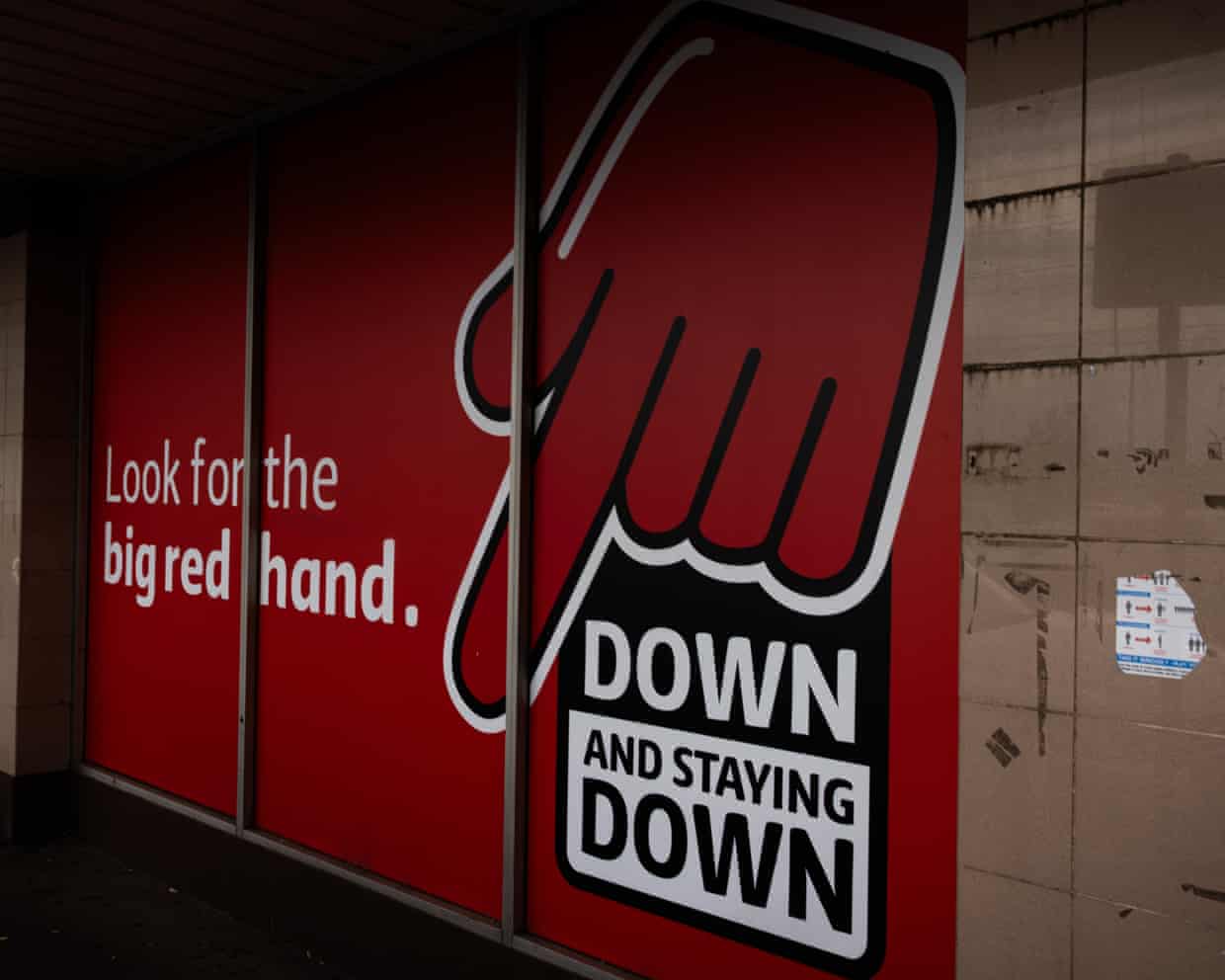
Court rules Coles misled shoppers with its ‘Down Down’ discount campaign

Housing market in England and Wales weakening due to Iran war, say estate agents
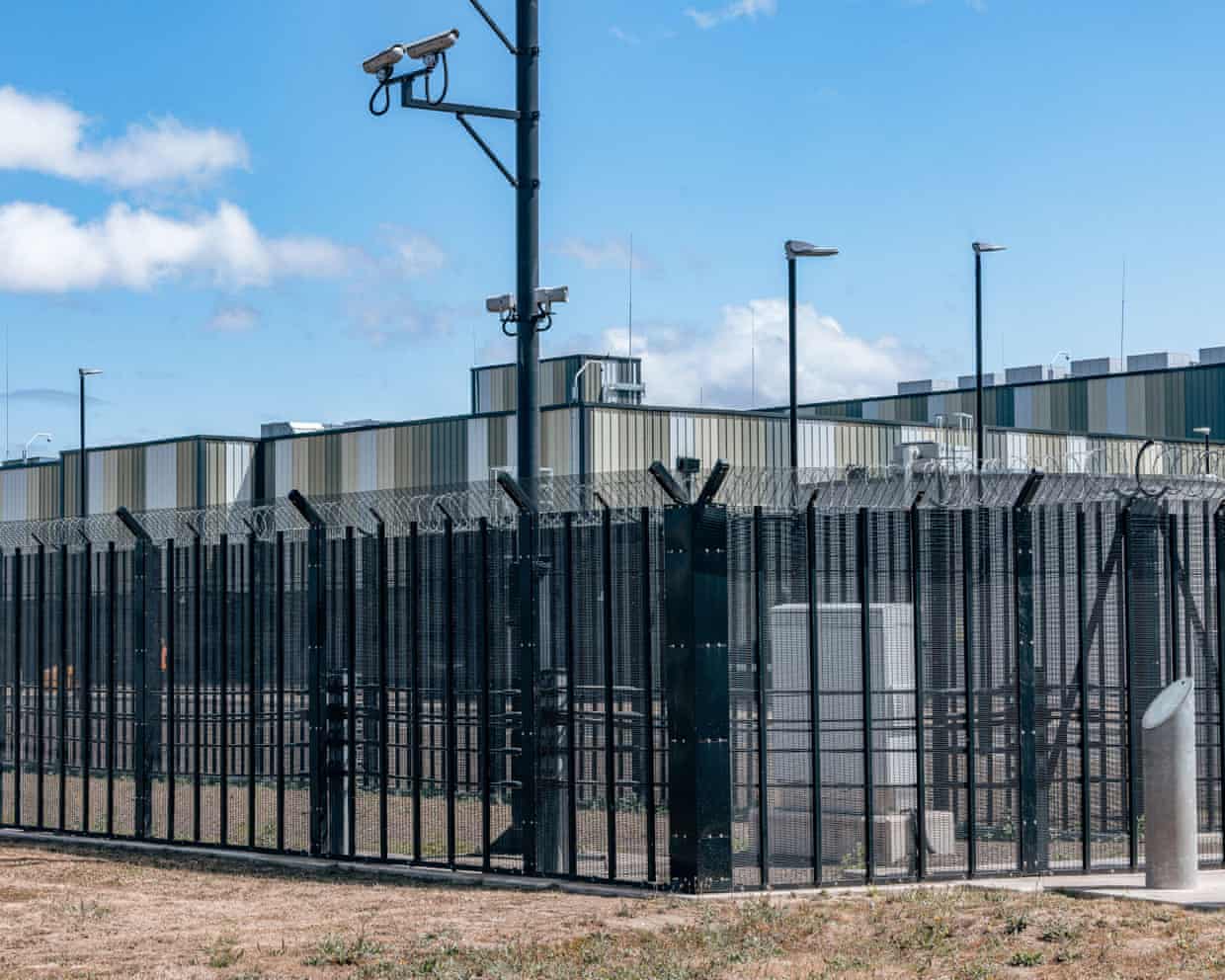
Datacentres using 6% of electricity supply in UK and US, research says

Nvidia’s Jensen Huang joins other US bosses on Trump trip to China

Ivan Cleary begins long goodbye with a legacy built to last long after he leaves Panthers | Nick Tedeschi

Sarah Taylor named England men’s fielding coach while Gay, Rew and Baker are called up