British Steel nationalisation: what went wrong, and what happens now?
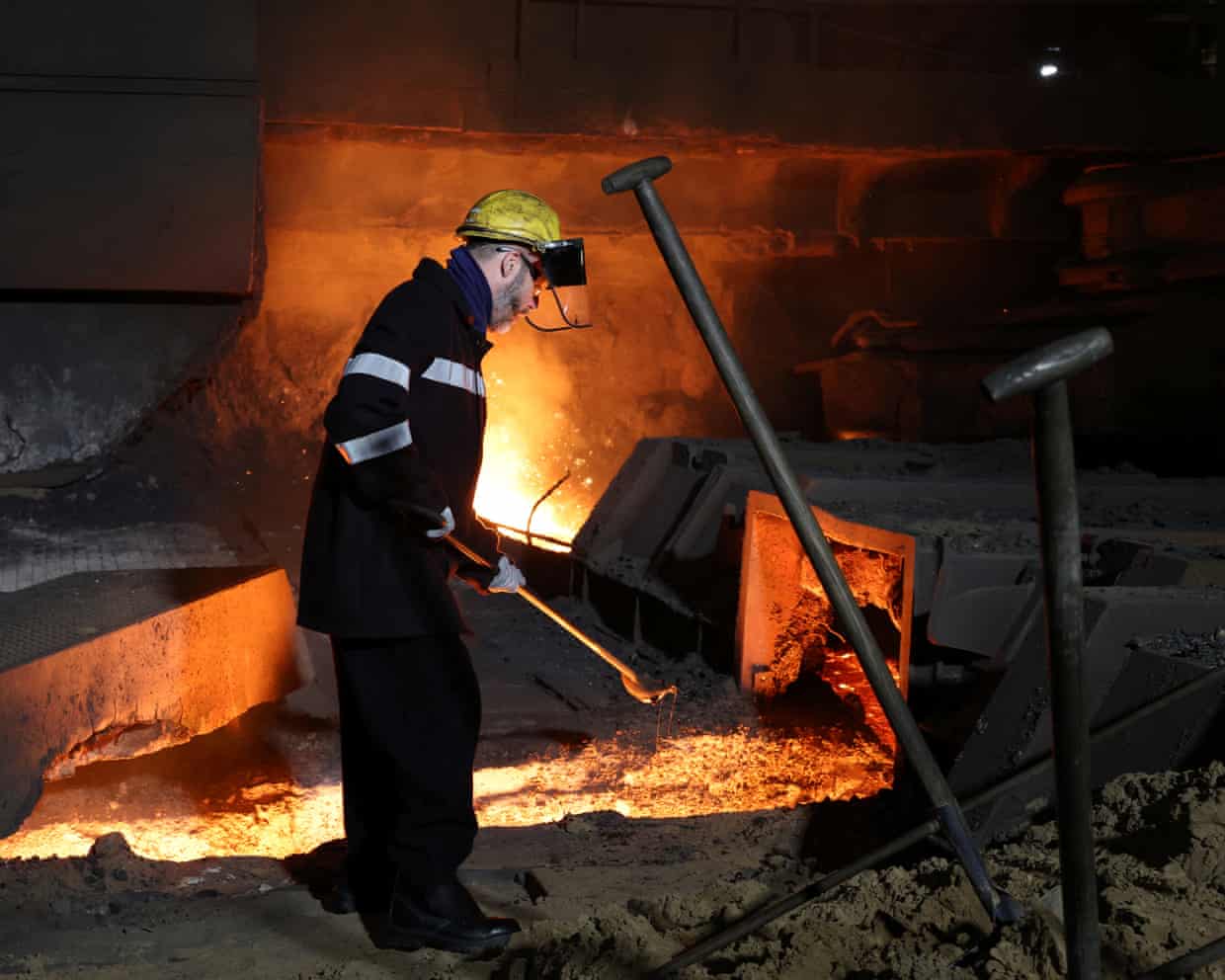
Four queens – blast furnaces named after Anne, Bess (Elizabeth), Victoria and Mary – loom over the British Steel works at Scunthorpe.Within days the queens could be under public ownership, after Keir Starmer on Monday promised legislation to nationalise the plant.“Strong nations in a world like this need to make steel,” Starmer said on Monday in a speech.The prime minister was hoping decisive action would fend off challenges to his leadership.It comes 13 months after the government recalled parliament for a historic Saturday sitting to ram through legislation to take control of the steelworks.
Jingye Steel, a Chinese company, has remained the nominal owner, but with government officials at the helm.Nationalisation, expected to be included in Wednesday’s king’s speech, would be the latest stage in the tortuous history of the plant.The first iron ore was discovered in Scunthorpe in 1859 by a local landowner, helping Britain’s steel industry to become the largest in the world in the late 19th century.The industry had been in and out of public ownership – nationalised in 1951, privatised two years later, nationalised in 1967.UK steel production peaked in the 1970s, but it started to struggle before Margaret Thatcher’s government slashed jobs and plants, and privatised the remainder again in 1988.
At first British Steel was a member of the FTSE 100.Ownership of the Scunthorpe steelworks eventually passed in 2007 to India’s Tata Steel.In 2016 Tata sold the works – by then heavily loss-making – to Greybull Capital, a private equity group, for only £1.Greybull revived the British Steel brand, but then walked away in 2019, before the Conservative government brokered a takeover by Jingye.The Scunthorpe steelworks’ long history is still relevant to its problems now.
Two of the blast furnaces were first built in 1938, with the second pair following in 1954.They have been upgraded many times since, but the consensus in industry is that the two queens still operating have reached the end of their life.At the same time, the rise of China’s economy has upended the industry, flooding the global market with cheap steel and putting enormous pressure on companies around the world.That has left private sector owners struggling to make profits with assets that have been increasingly vulnerable to outages.British steelmakers have also persistently argued that they must pay higher energy costs than other European economies, let alone China.
Jingye made some investments after taking control, but it, too, found it impossible to turn a profit.Under Jingye’s ownership, British Steel lost a cumulative £350m, according to accounts up to the end of 2023.After years of stop-start negotiations over state aid to upgrade the plant to electric arc furnaces, Jingye last year threatened to walk away and leave the blast furnaces to fall into disrepair.The Labour government, elected less than a year before, could not stomach the prospect of 2,700 job losses in an industry it had promised to support.The government also insisted that it needed to preserve “primary steelmaking” – the ability to produce steel from iron ore.
That is part of a broader concern with national sovereignty amid rising international tensions.Last year’s legislation locked Jingye out of Scunthorpe, but left it with economic ownership.That gave it leverage in talks with the government.Jingye demanded up to £1bn to repay debts.However, the government refused on the basis that the actual value of the steelworks is much lower.
The government said “it has not been possible to agree a commercial sale with the current owner” after Jingye rejected a £100m offer.However, Jingye may still receive a payment to compensate for the expropriated asset – in part to assuage concerns of other foreign investors into the UK.It is understood that an independent valuer would be appointed to determine what compensation, if any, is payable.The government appears to think British Steel – which employs 4,000 people across the business – may have a future supplying the UK market, after putting up protectionist tariffs of 50%.The government wants to “bolster economic resilience by meeting up to 50% of UK steel demand domestically”.
Michael Flacks, a Manchester-born turnaround investor, and the Czech group Sev,en Global Investments have indicated they may be interested in buying it,But what will replace the blast furnaces? The business secretary, Peter Kyle, has backed a shift to cleaner electric arc furnaces – likely with hundreds of millions of pounds more in government subsidies to build them,That could provide a long-term future for Scunthorpe, but it would only preserve jobs in the short term if a new owner commits to keeping the blast furnaces open during the transition,

Google announces raft of free upgrades for Android phones
Google has announced a range of features coming to Android phones this year, including a new Gemini Intelligence AI system and a tool to help users avoid distracting apps.Revealed in a livestreamed “Android Show” event, the free upgrades are scheduled to arrive in waves over the next year for high-end new and old phones alike, including Samsung and Pixel devices. Google also revealed that a new lineup of laptops will arrive in the autumn.Gemini Intelligence will combine the company’s top AI tools into one system aimed at being more proactively useful.It will be able to automate tasks by directly interacting with the apps already on a phone
Head of Microsoft’s Israel branch to step down after inquiry into dealings with Israeli military
The head of Microsoft’s Israeli subsidiary will step down in the wake of an inquiry that has scrutinised its business dealings with the Israeli military.Microsoft ordered the inquiry last year in response to a Guardian investigation revealing the military had used the company’s technology to operate a powerful surveillance system that collected Palestinian civilian phone calls on a mass scale.The joint investigation with the Israeli-Palestinian publication +972 Magazine and the Hebrew-language outlet Local Call found the military’s elite spy agency, Unit 8200, had used Microsoft’s Azure cloud platform to store a vast trove of intercepted calls from Gaza and the West Bank.The inquiry commissioned by Microsoft is understood to have recently concluded. Its findings are unclear; however, sources familiar with the situation said they prompted an announcement last week that Microsoft Israel’s general manager, Alon Haimovich, would leave the company
GameStop’s $55.5bn bid for eBay rejected as ‘neither credible nor attractive’
The board of eBay has rejected the US video games retailer GameStop’s surprise $55.5bn bid (£41bn) for the online marketplace, describing the proposal as “neither credible nor attractive”.Earlier this month, GameStop made an unsolicited bid for eBay, publishing a letter on its website outlining a half-cash, half-stock proposal.This was despite the US games company – which became a global household name during the meme stock craze of 2021 – being worth far less than its takeover target. GameStop had a market valuation of roughly $12bn before its bid, almost a quarter of eBay’s $46bn valuation
Trump heads to China to spread the gospel of American tech
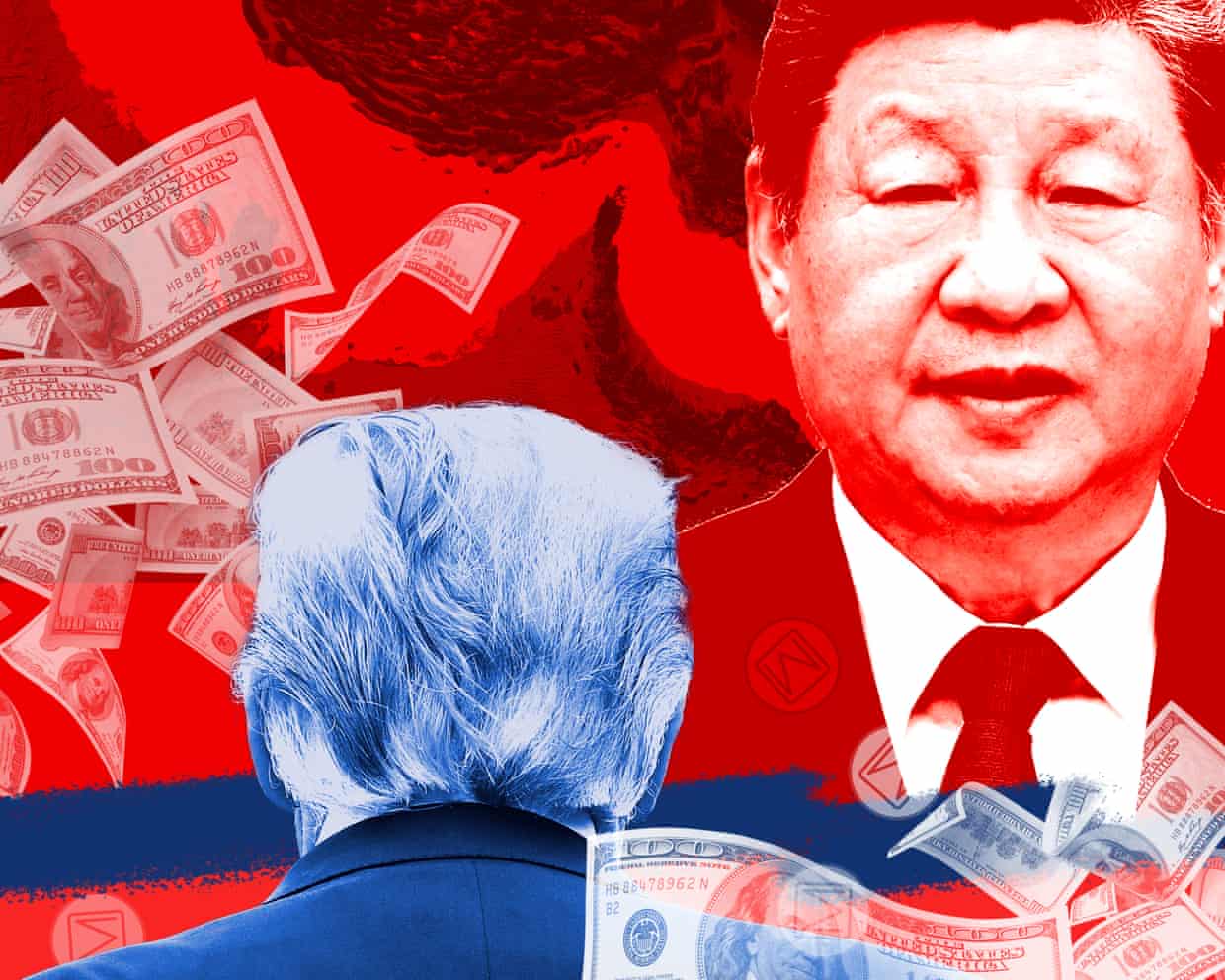
Hello, and welcome to TechScape. I’m your host, Blake Montgomery, US tech editor at the Guardian.Donald Trump is headed to China this week. If his guest list is any clue, he wants to discuss technology with Xi Jinping, though perhaps after the war in Iran.On Monday, news broke that outgoing Apple CEO, Tim Cook, as well as SpaceX and Tesla’s CEO, Elon Musk, would join Trump
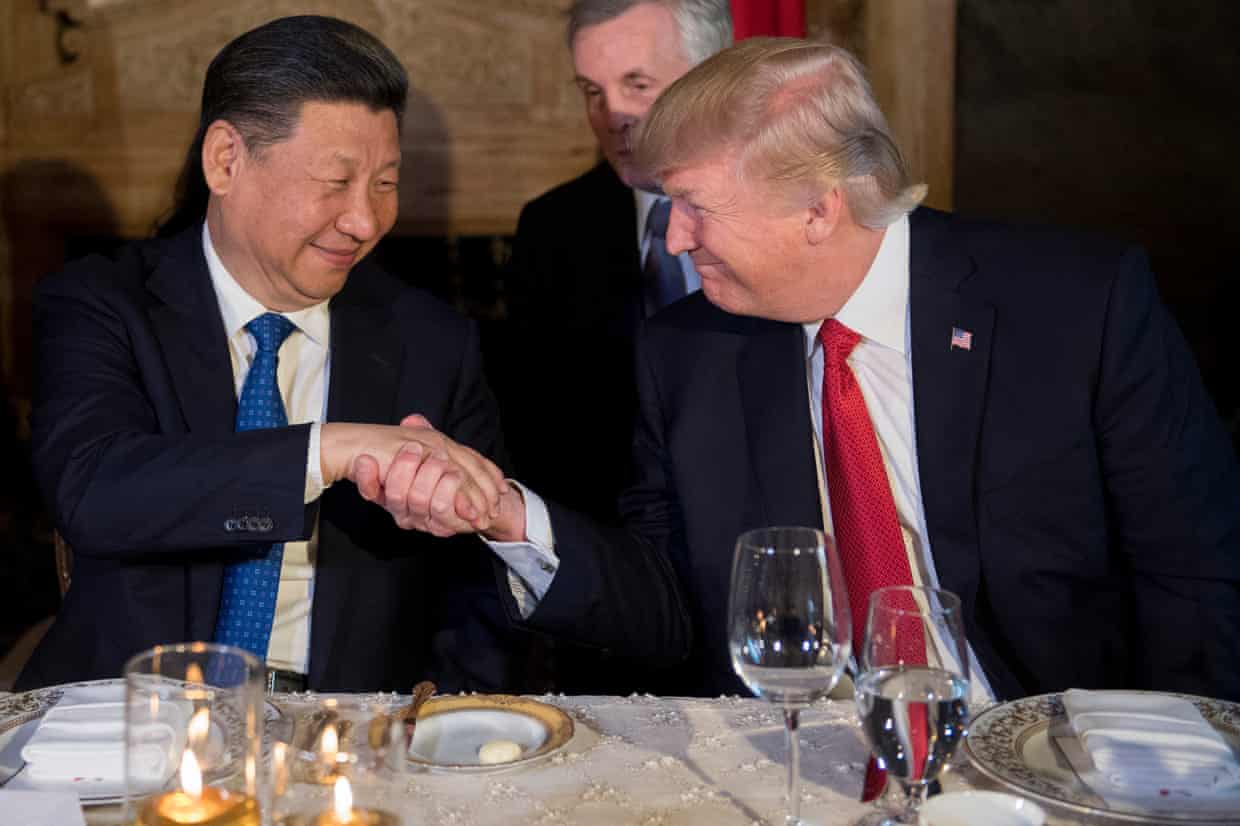
Trump heads to China to spread the gospel of American tech while emulating Xi Jinping on AI
Donald Trump is heading to China this week. If his guest list is any clue, he wants to discuss technology with Xi Jinping, though perhaps after the war in Iran.On Monday, news broke that outgoing Apple CEO, Tim Cook, as well as SpaceX and Tesla CEO, Elon Musk, would join the US president. Other guests from the tech sphere include Meta’s recently appointed president, Dina Powell McCormick; Sanjay Mehrotra, CEO of computer memory maker Micron; Chuck Robbins, CEO of longtime telecom giant Cisco; and Cristiano Amon, CEO of semiconductor maker Qualcomm, according to a White House official.Jensen Huang, Nvidia’s CEO – who is close to Trump but criticized the US’s limitations on chip sales to China in an April interview, saying that he didn’t want a “loser mentality” to cost the US its edge in AI – will not be joining the president

Molière Ex Machina: AI used to create ‘new work’ by beloved French playwright
Molière is to the French what Shakespeare is to the English: the last word in historical literature, drama, wit and satire.Now, more than 350 years after his death, the 17th-century dramatist has been revived after scholars at the Sorbonne University in Paris used artificial intelligence to help write an experimental play in his style.L’Astrologue ou les Faux Présages (The Astrologer, or False Omens), a three-act comedy, made its debut at the Royal Opera at the Château de Versailles last week.The two-hour play tells the story of a wealthy bourgeois Parisian who, under the instruction of a charlatan astrologer called Pseudoramus, insists his daughter Lucile marry a debt-ridden and elderly wigmaker.While the theme could well have been dreamed up by Molière, the dialogue, music, costumes and scenery were all created with the help of a French AI tool called Le Chat (The Cat)

Milka maker milked shoppers over size of chocolate bars, German court rules

Global oil inventories falling at record pace amid Iran war; US producer price inflation hits four-year high – as it happened
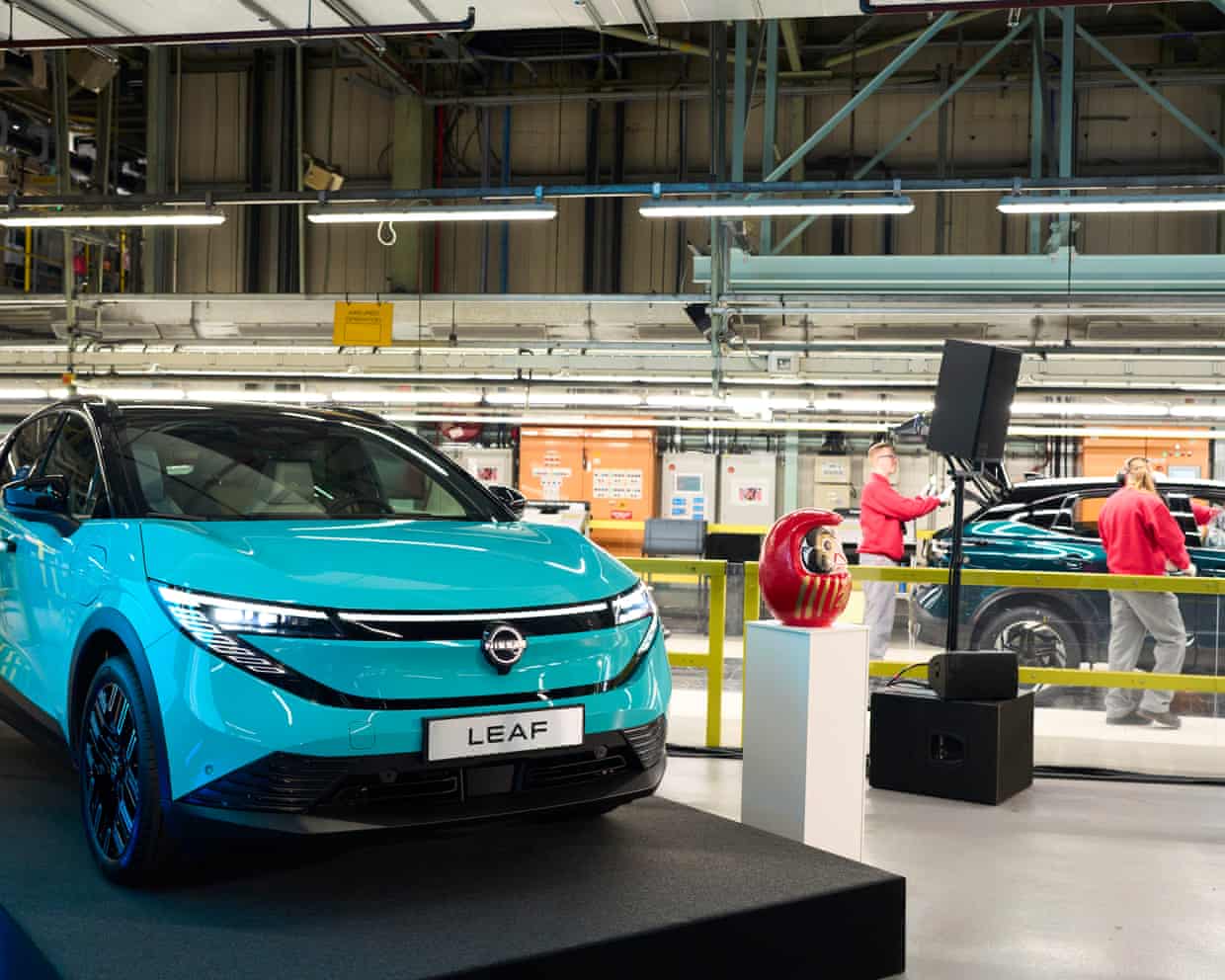
Nissan ponders building cars for Chinese rivals at Sunderland plant

Lab testing group Intertek to back £10.6bn takeover by Swedish firm EQT

UK housebuilder Vistry warns of ‘significantly’ lower profits amid Iran war uncertainty
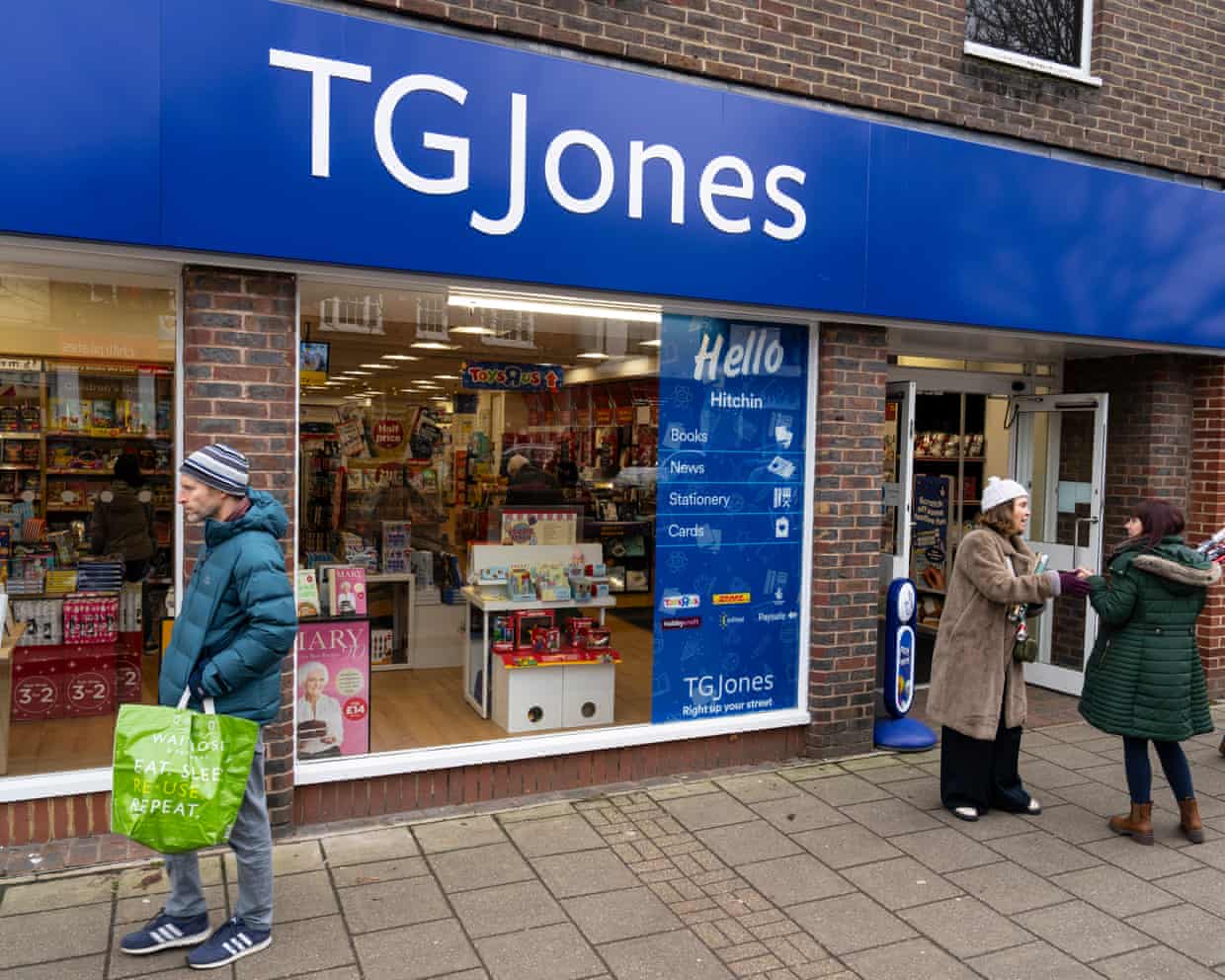
How new owner became all powerful in ‘high stakes’ attempt to revive former WH Smith chain