Who is Louis Mosley, the man tasked with defending Palantir against its critics?
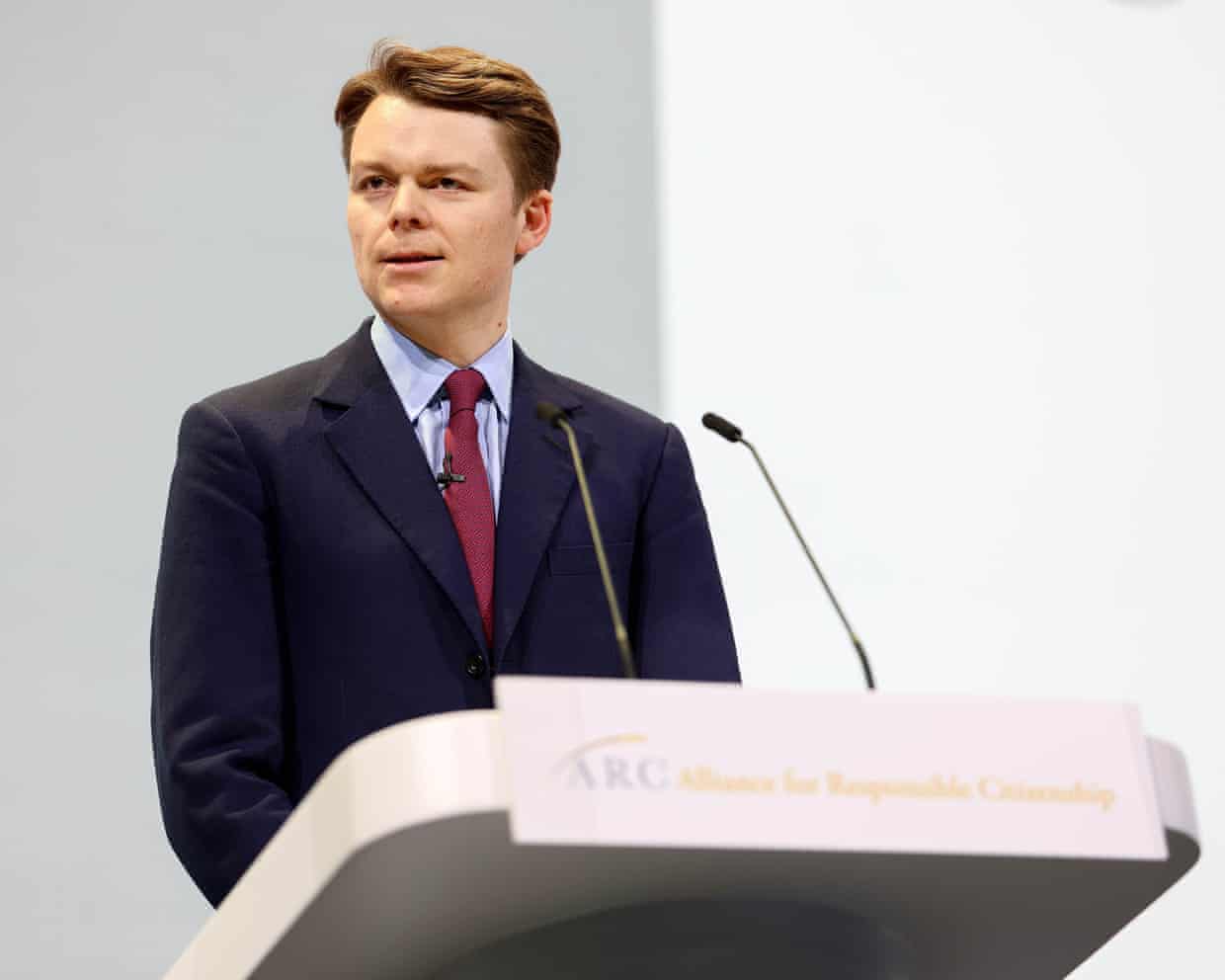
The hall was packed with rightwing radicals when Louis Mosley heralded a coming revolution.Just as Oliver Cromwell – that “crusader for Christ and liberty” – routed King Charles I’s royalists, “a similar revolution is brewing today”, said the UK and Europe boss of Palantir.Globalism’s “twilight” was upon us, he said in a speech dotted with admiring mentions of the podcaster Joe Rogan and “Elon’s Doge”.It was not a typical peroration for a big UK government contractor with more than £600m in deals with the NHS, the Ministry of Defence and police.But Palantir, the world’s most controversial tech company, is no typical contractor.
In recent years it has gained firm footholds across Britain’s public sector while appalling critics with its leadership’s rightwing rhetoric and its work for the US and Israeli militaries and Donald Trump’s ICE immigration crackdown.Calls are growing for Keir Starmer’s government to cut its ties with the company that was co-founded by the Trump-backing tech billionaire Peter Thiel.It means Mosley has become a lightning rod for public fear of a US tech takeover of the British state.It has fallen to him to fight back.Almost daily his boyish features can be seen defending Palantir against its critics on X.
com, on podcasts and on BBC News sofas.But who is Mosley and what does he think?Mosley’s Cromwell speech, which was delivered in 2025, came at a rally organised by the Alliance for Responsible Citizenship, a convening organisation of the west-must-win libertarian Christian right.It was also addressed by Jordan Peterson, Thiel and Nigel Farage.Mosley delivered it with the calm, intellectual self-confidence that could be expected of a man educated at Westminster school and the University of Oxford.But it also contained a whiff of conspiracy.
Watch out for the Disc, Mosley warned – the dissent-crushing “distributed idea suppression complex” consisting of “armies of fact checkers and experts”, activists, lawyers, academics and journalists.Here was a force more powerful than the Spanish inquisition.Brexit, Trump and the rise of populism were signs of cracks in the Disc and now, with technology shifting power from establishment to insurgent, the moment was coming to start “restoring our civilisation”.Freedom, Christian tolerance, curiosity, and open democratic debate were the doorway to a better future and Palantir wanted to lead society through that door, said Mosley.Mosley is an important figure at Palantir.
He is not trained as a technologist, but worked in Tory politics, including spells as an assistant to Rory Stewart and as a councillor in the Royal Borough of Kensington and Chelsea,He read history at Oxford where he met his wife, Nura Khan, a fashion editor, with whom he has four children,He is more likely to be seen reading biographies – Aneurin Bevan and Stalin have been recent subjects – than coding manuals,Associates say he is “easy to like”, sensitive and intelligent,He had a spell working on strategy at the bank Santander, before being hired by Palantir in 2016, rising to lead its now 700-strong UK and Europe operation in a chic exposed brick headquarters in London’s Soho.
He had success pitching directly to government ministers and securing deals to install Palantir’s AI-powered analysis tools as an operating system to make sense of mountains of public data.His name has been a burden, at least in some ways.He came close to becoming a Conservative parliamentary candidate in 2017, but his candidacy was axed by a party fearful of association with his grandfather Sir Oswald Mosley, the leader of the British Union of Fascists in the 1930s.Online, where much of the debate about Palantir plays out, Mosley’s habit of wearing dark tops has raised eyebrows.The Green party leader, Zack Polanski, recently pointed out the parallel to the “blackshirt” garb of Oswald Mosley’s followers.
But it was no nod to fascism, said Libby Bateman, a former Conservative county councillor who knew Louis Mosley when he worked with Stewart in Cumbria.It was more because black suited his fair complexion.She sympathised because “everyone likes to pick on Louis because of who his grandad was”.In 2019, he won a contract with the government to help with Brexit planning after pitching directly to Michael Gove, who was impressed by Mosley’s intellectual curiosity.When Stewart was prisons minister, Palantir pitched its software to manage prisoner data, initially on a no-cost basis and, when the pandemic struck, Boris Johnson’s government called in Mosley and other tech executives for help.
Mosley offered to track infections and hospital beds and later enabled the vaccine rollout.By 2023, Palantir had signed a seven-year £330m deal with NHS England to provide its Foundry system to enable the creation of a federated data platform.For a couple of years this key contract faced low-level opposition from some doctors and campaigners, with others finding the technology useful.But in recent months Mosley has faced a darkening anti-Palantir mood, fuelled by one of its clients, ICE shooting dead two people in January plus the role of its technology in wars in Gaza and Iran.The company’s reputation has also been shaded also by its association with Peter Mandelson, whose Global Counsel lobbying company worked for Palantir until its collapse over the peer’s relationship with Jeffrey Epstein.
“Palantir has become a bogey in which some of our broader fears about tech and some of our broader concerns about particular political developments are focused,” said Gove.Last month, cross-party MPs called for the NHS contract to be cancelled, describing Palantir as “shameful” and “dreadful” and citing fears about the security of patient data and public trust.Mosley repeatedly hit back against critics who “have chosen ideology over patient safety” and claimed the company’s software had helped deliver 110,000 additional operations and cut discharge delays.But public antipathy was inflamed again last month when Palantir’s US office posted a manifesto extolling the benefits of American power and implying some cultures were inferior to others.Another associate described Mosley as straddling “the frontline between rival ideas of tech and its place in the world … [between] an American versus a European vision of tech”.
On one side are the US accelerationists who believe that only by applying the most advanced AIs to whole government systems will western democracy avoid being eclipsed by totalitarianism.In Europe people want to pedal slower, install guardrails and fear tech companies gaining too much power could usher in another kind of tyranny.Polling for the campaigning organisation 38 Degrees shared with the Guardian suggests Mosley faces an uphill battle.More than two-thirds of the UK public are concerned at Palantir’s growing number of public contracts and 40% distrust it to not access NHS patient data, despite the company repeatedly insisting it cannot and will not do so.What Gove saw of the tech company in government led him to believe that “used with wisdom, Palantir was and is capable of providing huge boons to government in delivering services effectively”.
But others, including some NHS doctors, dispute this and fear its benefits are overplayed.Tom Bartlett, who, until five weeks ago was the deputy director of data engineering at NHS England, has praised the Palantir-enabled NHS system for dramatically accelerating data analysis requests affecting frontline care that used to take months.“To have got this technology up and running is fantastic,” he said, stressing he was speaking independently.He said the “huge negativity” around the company was creating adoption hesitancy that would impact patients’ outcomes.Mosley has embraced the foundational idea of Palantir, launched after 9/11 to help the US win the war on terror.
It was named after the all-seeing crystal stones from The Lord of the Rings, which, as Mosley later explained, “are made by the goodies – by elves – but they fall into the hands of the baddies – the wizards – and they get used for evil purposes”.It is, said Mosley, a constant reminder that “you’re building a very, very powerful tool, and in the wrong hands, very powerful tools can be extremely dangerous.But in the right hands, they can be used to do extraordinarily good things.”This troubles Palantir’s critics such as the Labour MP Rachael Maskell.“The biggest fear of all is when our data does get into the hands of the bad actors who may want to use this for ill, not good,” she said.
“We need only look across the Atlantic to see how integrated data has informed the ICE unit to target migrant communities, and this is the same technology which holds our NHS data and coordinates our defence information.”Palantir’s problem now is a rising number of people worrying about the baddies.Mosley’s job is increasingly to persuade the public he, and Palantir, are not among them.

‘I’m unique’: Dyson Daniels on his NBA niche, missing three-pointers… and investing tips
He is a shooting guard that doesn’t often shoot. A wing deployed less for lift than pressure. The style of Australia’s best basketballer, Dyson Daniels, is difficult to describe. “It’s kind of hard for me to describe it too,” he says. “It’s unique

The Spin | ‘We have a hoot on the field’: Oswestry CC boasts 10 mother-daughter pairs
Women and Girls section has built strong family dynamic since launching in 2018 – and embraced Wags monikerThe acronym Wags first entered popular consciousness in 2006 during England’s football World Cup adventures in Baden-Baden. Victoria Beckham, Cheryl Tweedy and the gang became a sneering tabloid obsession, their matching outfits, nightclub antics and hair extensions gleefully picked apart.Twenty years later, a very different set of Wags are causing a stir at Oswestry Cricket Club on the north Shropshire-Wales border. The thriving Women and Girls section (WaGs) has an astonishing 10 mother and daughter pairs who have played competitive cricket together, ranging from 12 years old to 67.The oldest member is the irrepressible Jools Payne, team manager and founding player
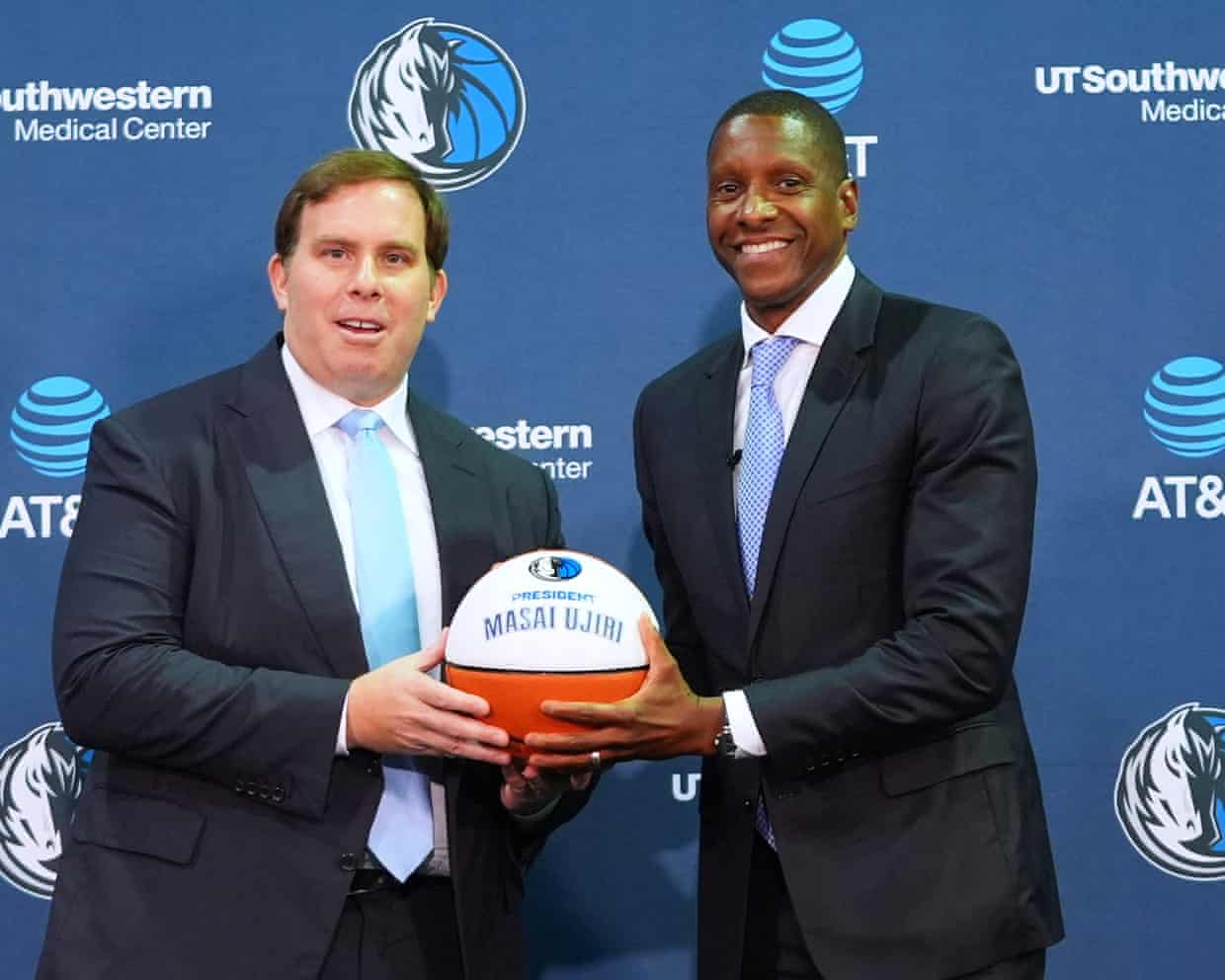
How will the liberal Masai Ujiri handle leading the ultraconservative Dallas Mavericks?
On its face, the fit between Masai Ujiri and the Dallas Mavericks is perfect. “It’s almost like a match made in heaven,” Ujiri said after being introduced as the franchise’s president of basketball operations and alternate governor last week. “Every single one of us in this world is chosen for something special, and we just have to find it,” he added. “And I found basketball.”Since he became the first African to run a major sports franchise in the United States as the general manager of the Denver Nuggets in 2010, Ujiri has accomplished everything

World’s No 1 disabled golfer Kipp Popert: ‘The best need to play for a living. The sport has stopped’
Kipp Popert is a man on a mission. The 27-year‑old Englishman, who tops the disabled world rankings, uses one word a lot: “opportunity”. Popert was “shocked” to hear from the DP World Tour that its G4D circuit, which staged a handful of tournaments per year for disabled players between 2022 and 2025, has been placed into cold storage.The G4D Open, a tournament for 80 golfers with disabilities, will be staged at Celtic Manor from Thursday. It takes place thousands of miles from Pennsylvania and this week’s US PGA Championship, which last year bestowed $3

Racing need not fear Green party ‘conversation’ but must continue efforts on horse welfare
The Green party surged to record results at local and national level in last week’s elections, prompting Zack Polanski, the party’s leader in England and Wales, to suggest that two-party politics is “dead and buried”. Ladbrokes, meanwhile, subsequently cut the odds about the Green party winning the most seats at the next general election to 12-1, while an overall majority for the Greens is priced at 28-1.Not likely, in other words but, at the same time, far from impossible. In the case of a majority for Polanski’s party, it is roughly the same price as Moon Chime, the winner of the big handicap hurdle at Haydock last Saturday. However the party fares in terms of seat numbers, the Green voice in the next parliament, in three years’ time or possibly fewer, seems sure to be significantly louder than ever before

From the Pocket: Voss coached the way he played and his brutal football failed Carlton
When John Elliott died in 2021, the old, dark, imperial Carlton was dead. The new Carlton was grounded on “respect, humility and integrity”. The new president was a master networker. The new chief executive was the best administrator in football. The new coach had been one of the great players of his generation

‘We have the same monster’: three women brought down their rapist – this is what happened next

Did breakthrough in US fentanyl crisis start in China?

Getting children to eat their vegetables starts in the womb, researchers suggest

Older people risk mental decline if they do long hours of caring, UK study shows

Capacity of lifts not kept up with UK obesity levels, study shows

More than 6,000 children treated at obesity clinics in England, figures show