Families hardest hit by energy crisis could be given funds dispensed by councils in England
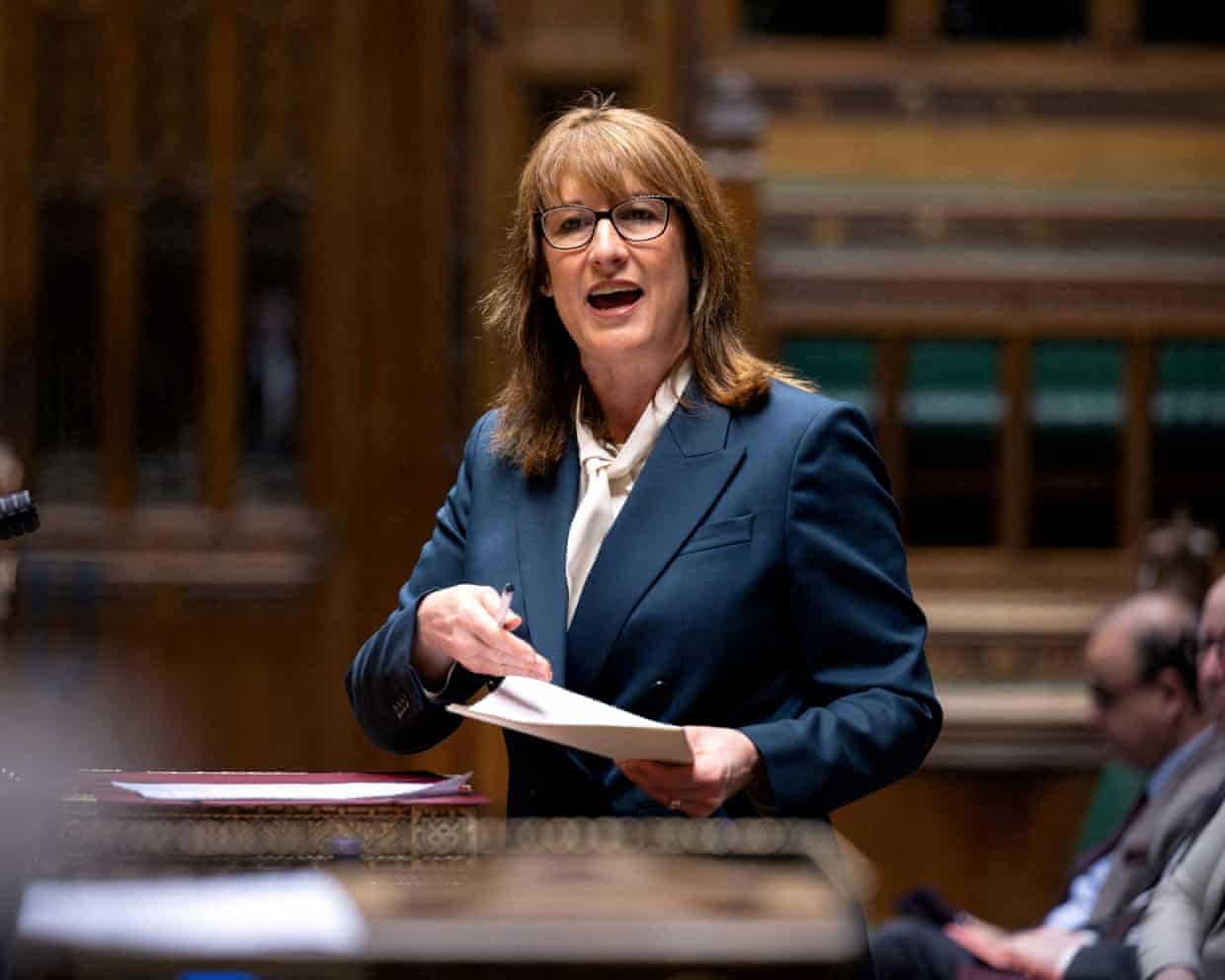
Families hardest hit by the looming energy crisis caused by the Iran war could be given funds dispensed by local councils, under plans being considered by UK ministers keen to keep a lid on costs.As concerns increase about the impact of rising fuel and energy costs in response to a drawn-out conflict in the Middle East, a government official said several options for extending support were being debated inside Whitehall.Under one plan, extra cash could be injected into the crisis and resilience fund (CRF), a £1bn a year council-run scheme in England that takes effect from Wednesday “to provide preventative support to communities, as well as assisting people when faced with a financial crisis”.It is understood that the fund could be topped up to help cushion households identified by councils as facing particular hardship from higher energy bills.The chancellor, Rachel Reeves, is examining plans to support households with energy bills forecast to hit nearly £2,000 a year from July.
However, she has ruled out the universal support offered by Liz Truss’s government in 2022 and is under pressure from financial markets to limit the extent of the support to keep within budget spending limits.Thinktanks have been urging the government to move quickly to identify the poorest households amid concerns about the complexity of the task.Between 2022 and 2024, after Russia’s invasion of Ukraine, Treasury calculations showed households in the top 10% of earners received an average of £1,350 of direct energy bill support.One official said, this time, targeting support was important.Torsten Bell, a minister in the Department for Work and Pensions and the Treasury, is understood to be coordinating the government’s response.
Bell is known to be concerned that bailouts only targeted at benefit claimants will attract negative headlines in parts of the media that are concerned about the drop in living standards among lower-paid workers who do not usually qualify for state support.An extension of the CRF would allow households that have high bills but do not currently qualify for benefits to apply for grants.The Treasury declined to comment.Last week, Reeves told the Commons: “The progressive, universal approach that we are taking is the right one … £150 off everyone’s energy bills, but then targeted support for those who need it most.”She added: “Contingency planning is taking place for every eventuality, so that we can keep costs down for everyone and provide support for those who need it most.
Acting within our ironclad fiscal rules to keep inflation and interest rates as low as possible.”Government borrowing costs around the world have climbed since the US and Israel attacked Iran as financial markets have calculated that governments will be urged to borrow more heavily to cope with the war’s aftershocks.Declines in bond prices have pushed the yield, or interest rate, higher.On Friday, the interest rate on 10-year debt hit its highest level since the 2008 financial crisis, just over 5%.Rates eased to 4.
95% by Monday.Without a truce or resolution in the Middle East conflict, rising yields would further increase the interest bill on government debt and eat into the chancellor’s budget headroom.Brent crude is on course for a record monthly rise of nearly 60%, exceeding gains it made during the 1990 Gulf war.The global oil benchmark rose 3.5% on Monday to just over $116 a barrel.
The latest Which? consumer insight tracker found that rising prices were forcing half of UK households, an estimated 14 million, to make at least one adjustment – dip into savings, sell possessions or borrow money – to cover the cost of essentials on a daily basis,Several European governments have acted to reduce the strain on households,Madrid has cut the level of VAT on fuel while Berlin has limited German petrol stations to one price rise a day,Sébastien Lecornu, the French prime minister, said the government was planning to expand the number of households eligible for support,He said an additional 700,000 extra households would receive an average of €153 (£133), bringing the total number of beneficiaries to about 3.
8 million, at a cost of €600m for the state,In a message posted on X, Lecornu said the mechanism, which has existed since 2018, helped the poorest households “cope with energy expenses and pressure on purchasing power” by directly reducing electricity, gas, or heating oil bills,

Car finance victims to get an average £830 payout but fewer loans eligible
Victims of the car finance scandal will be in line for payouts worth £830 on average, as the City regulator tightened the rules of its compensation scheme to cover fewer contracts.The Financial Conduct Authority (FCA) released the final details of its planned redress programme, saying it had narrowed the number of loan agreements eligible for payouts from 14m to 12.1m contracts.That tweak, which covers loans agreed between 2007 and 2024, is expected to result in a higher payout for each contract, up from £700 to £830, including interest.The scheme is intended to draw a line under the car finance scandal, in which drivers were overcharged for loans as a result of commission payments between lenders and car dealers
When will car finance compensation be paid out and how much could you get?
Millions of victims of the UK’s car finance scandal will receive payouts this year, the City regulator has confirmed.But the number of car loans judged to be unfair has been cut by more than 2 million, meaning fewer people will benefit, while the average payout has increased to about £830 per agreement.On Monday the Financial Conduct Authority (FCA) pressed the button on its long-awaited industry-wide scheme to compensate millions of people who were treated unfairly when they took out motor finance to buy a new or secondhand vehicle.Unveiling the final version of the scheme, the regulator said it had made several changes to proposals outlined last October in response to “conflicting feedback” from the various players in the saga, including consumer groups, lenders, brokers and car manufacturers.One of main changes is a tightening up of the rules on eligibility for a payout “so only those treated unfairly are compensated”

Apple subsidiary fined by UK government over Moscow sanctions breach
The UK government has fined a subsidiary of Apple £390,000 for breaching sanctions against Moscow over payments it made to a Russian streaming platform.Apple Distribution International (ADI), based in the Republic of Ireland, instructed an unnamed UK-based bank to make two payments to a company owned by a sanctioned Russian entity.The payments, worth more than £635,000 in total, were made to the streaming service Okko from an ADI bank account based in Britain. ADI is responsible for selling Apple products in Europe and the Middle East, including from the iPhone maker’s app store.The fine was imposed by the Office of Financial Sanctions Implementation (OFSI), the UK’s sanctions watchdog and part of the Treasury

How Meta’s victim-blaming failed to sway jurors in landmark social media addiction trial
When Meta, the parent company of Facebook and Instagram, sought to defend itself in the landmark social media addiction lawsuit alleging its products caused personal injury to a young user, it went on the offensive. The mental health problems that the 20-year-old known as KGM suffered since she was a child were not the result of exposure to harm on Instagram, Meta’s lawyers and public relations team argued, but instead linked to her mother’s parenting and her offline social problems.In a bench memo filed before the trial began, lawyers for Meta quoted excerpts from KGM’s teenage text messages, personal writings and social media posts complaining about her mother. They combed through therapy notes and called on doctors to testify to examples of personal conflict. Throughout the proceedings, Meta’s communications team sent reporters repeated updates from the trial and quotes from testimony that highlighted her familial issues

Cheltenham pulls plug on rest of season to fix home-straight drainage problems
If you were planning a day at Cheltenham before the end of the jumps campaign, think again. The home of National Hunt racing said on Monday it will not stage another fixture until autumn, having taken the unprecedented decision to cancel its three remaining meetings in order to start major drainage works on the home straight over the summer months.The two-day meeting scheduled for 15-16 April and the track’s traditional season finale, a hunter-chase fixture and concert on 1 May, attracted a combined total of nearly 25k spectators in 2025. That is a long way short of the 56k daily average at the festival this month, but will still represent a significant loss in ticket sales and race-day revenue from food, drinks and betting.Potential drainage problems were highlighted in January when the final race of the Trials meeting, the last fixture at the course before the festival, was delayed for 29 minutes by the appearance of a hole in the home straight

UConn’s thrilling win over Duke proved that blue-blood clashes are alive and well
College basketball has transformed almost beyond recognition over the last decade. But Sunday’s game provided welcome nostalgiaUConn’s shock win over No 1 seed Duke on Sunday night to advance to the Final Four connected two disparate eras of college basketball. Not only did the game produce one of the greatest endings in NCAA Tournament history, it was also a reminder of college basketball’s enduring appeal despite the huge changes that have transformed the sport over the past decade.Freshman Braylon Mullins’s three-point heave from well beyond the arc – after he had moments earlier stolen the ball from Duke guard Cayden Boozer – sealed the 73-72 victory. It was a shot that will forever torment Duke fans: the Blue Devils had led by 19 points in the first-half, and No 1 seeds had been 134-0 when leading by 15 or more points in NCAA Tournament history
How many sweeteners does JP Morgan need to build an office in Canary Wharf? | Nils Pratley

British Steel on track to be fully nationalised within weeks

‘Soon publishers won’t stand a chance’: literary world in struggle to detect AI-written books

‘Our assumptions are broken’: how fraudulent church data revealed AI’s threat to polling

F1 must find answers to safety crisis after Bearman’s escape but there are no easy fixes | Giles Richards

Worcestershire overseas signing leaves one-day final early to catch flight to England