Growing knowledge, growing yield: British wine-making comes of age
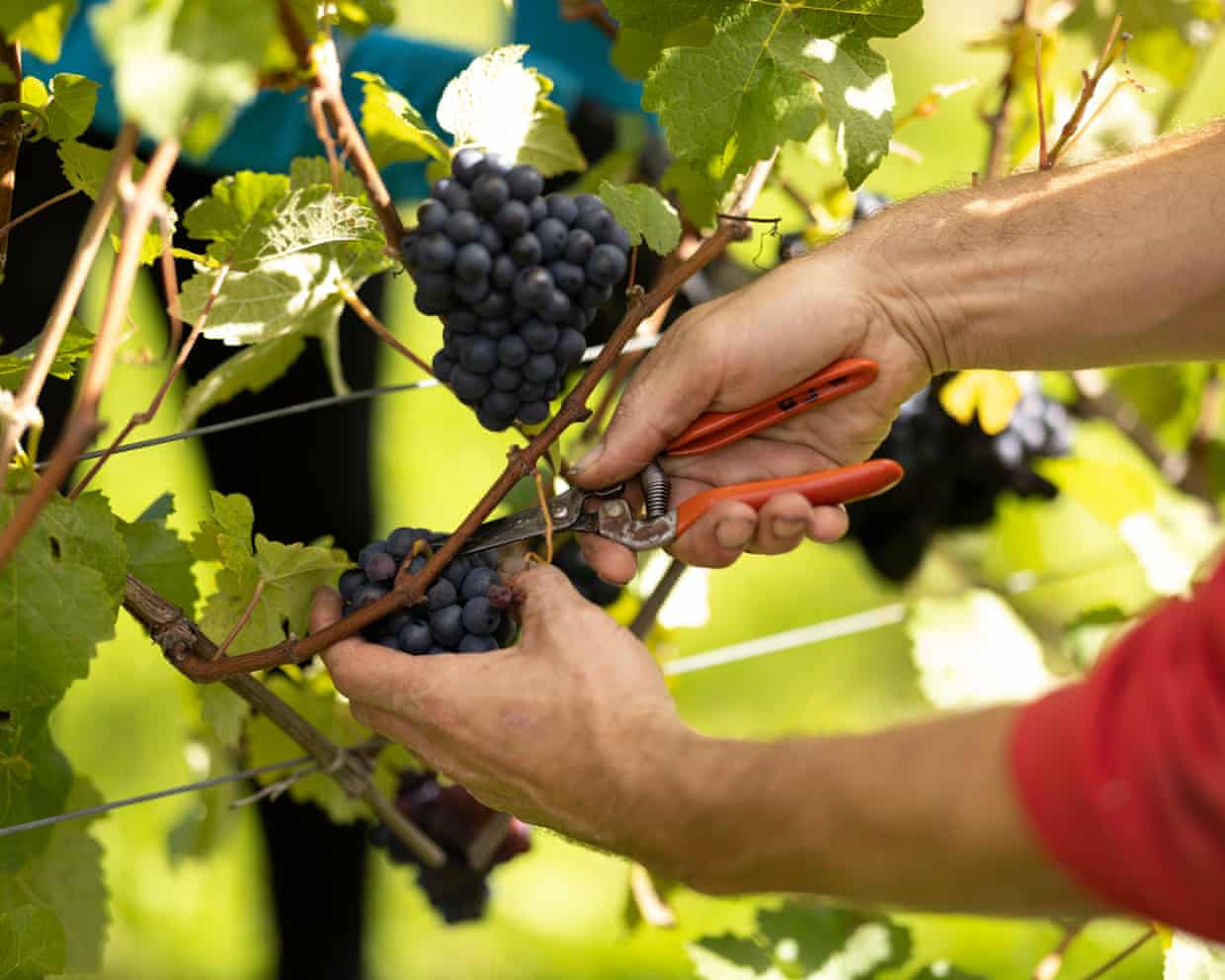
Rows of vines stretch across the rolling hills of rural Dorset.Currently waist height, they appear bare against a bleak spring sky.Up close, you can see they are already dotted with tiny woolly buds as they exit their winter dormancy for a new growth cycle.Come summer these rows will be laden with chardonnay, pinot noir and pinot meunier grapes, ready to make the latest batch of English sparkling wine from the Langham estate near Dorchester.Although it was only 2009 when the first vines were planted here on former arable farmland, the estate has already produced award-winning wines that beat established European rivals.
“It was always at the back of my mind, as a way of diversifying and expanding the business, and doing something a bit more fun and interesting too,” says the estate’s owner, Justin Langham, standing in a barn on site.“When I’m making wine, the output per acre is many multiples of what we grow in wheat.”Growing grapes in Britain on a commercial scale has been made possible by new growing methods and a shifting climate.“I don’t think we would have been doing what we’re doing going back 40, 50 years,” says Langham.Yet the climate crisis also presents a host of challenges for the UK’s burgeoning wine industry, including unreliable, rainy summers like that of 2024, where moisture leads to problems including mould and disease and causes wide variation in vintages.
Vines were first grown in England during Roman times, but vineyards can now be found from south-west England to Wales and as far north as Yorkshire and Scotland,More than 1,100 are now registered in Britain, according to the latest figures, most of which are commercial operators rather than hobbyists,While Britain remains far down the list of global wine producers – behind countries including Uzbekistan and Tunisia – it is the fastest-growing wine region in the world, according to the property group Knight Frank,It reports the area of planted vineyards in the country has quadrupled since the turn of the century,Langham’s estate is part of this boom, almost tripling in size since 2009 to span about 34 hectares (84 acres) of the 1,000-hectare site.
Increased wine production means the company has outgrown the converted farm buildings it was using to store barrels and bottles and it has just invested £2m in a new winery which should be completed by the summer,Similar expansion across the UK has led to a surge in wine production,Yet yields remain unpredictable and there can be large differences in wine made one year compared with the next, making it hard to produce a standard product,A hot, dry summer in 2025 helped English and Welsh producers to their second-largest harvest of the equivalent of 16,5m bottles, or 124,377 hectolitres.
This was more than triple the 5.3m bottles produced in 2017, less than a decade ago, according to the industry body WineGB.It was, however, lower than the bumper harvest of 21.6m bottles recorded in 2023, as some vines were still recovering last year after the cold and wet 2024.Changing weather patterns are also hitting traditional wine-making regions – including Spain, Italy and southern California – where harvests are predicted to plummet.
However, if climate change does end up driving winemaking farther north, producers are unlikely to be able to match the volumes now made in established wine regions.The lower levels of production than in neighbouring countries also mean the price of a bottle of British wine is often significantly higher than a European alternative.In the coming years, the volume of wine produced in the UK is forecast to keep rising.The industry has previously said it expects annual production to reach 25m-29m bottles by 2032 and has forecast that the retail value of English and Welsh wines could reach £1bn by 2040.South east England is home to over half of UK vineyards and around two-thirds of domestically produced wine comes from the region, particularly Kent, Sussex, Essex and Hampshire.
The young industry is also reaping the benefits of wine-making experience, according to Nicola Bates, the chief executive of the industry body WineGB.“We’ve always been a global hub for trade of wine, so you’ve had people who’ve gone out to New Zealand, Australia, South Africa and learned how those markets work.Now they’re bringing their expertise to bear back in the UK,” says Bates.“Year by year, you’re seeing that knowledge having a greater effect on our vineyards, as they also become more productive.”All those grapes will need picking, while the finished product will have to be bottled, marketed and sold.
About 10,000 people are now employed in the UK wine industry, of which 3,500 are full-time roles, with the others carrying out labour-intensive seasonal work including harvesting the grapes and pruning the vines in winter.This is a significant increase from the 2,200 employed full-time in the sector just two years ago.“We employ more people per hectare of land than any other agriculture,” Bates says.There is growing demand for skilled professionals able to work in viticulture, winemaking and hospitality, and 90% of operators have said they intend to hire more staff in the next three years.Some of those considering a career in wine gain their qualifications at Plumpton College in East Sussex, recognised as the UK’s training centre for winemaking, which offers a range of courses from certificates in winemaking techniques to bachelor’s degrees.
The college boasts its own vineyard and commercial winery, where about 40,000 bottles of wine are produced each year.“Many people don’t realise that a career in wine can combine science, sustainability, business, travel and creativity,” says Sam Linter, the director of wine at Plumpton College.Roles across the industry range from winemakers to vineyard managers, wine buyers, export managers and sommeliers.Kym Downes, who is in the first year of an undergraduate degree in viticulture and oenology at Plumpton, did not expect to pursue higher education when she finished school and started working in hospitality.One of the cafe’s regulars was a winemaker, who inspired the 22-year-old to consider training in wine.
“His passion for wine really rubbed off on me,” says Downes.“There are so many different pathways open to you.I could go down the winemaking side of it, but I could also go into the business side of things or even laboratory work.”Some believe the hands-on nature of many of these roles will insulate them from the job losses fuelled by the rise of automation and artificial intelligence.The course “takes you through a year working on the vineyard,” she says.
“We started off harvesting grapes, then it moved into vineyard maintenance and we learned how to drive tractors and check the equipment.As we got into winter it was the pruning season and now it’s budding season.”After a long career as a GP and professor of public health, Nick Steel is looking to a second act – turning his hobby into a job.“I am a wine drinker and enthusiast and got more sucked into the world of wine and thought I’d like to come and learn how to make it,” says the 61-year-old, who is in final year of a foundation degree and plans to join the growing ranks of UK winemakers.“The intention is to have an urban winery with some bought-in grapes … I want to produce a commercially viable product that I can sell.
”

Two more Reform local election candidates accused of offensive posts
Reform UK’s checks on candidates are “clearly not fit for purpose”, Labour has said after two more candidates in May’s local elections were accused of making offensive or potentially racist social media posts.Meanwhile, it emerged that Restore Britain, the party set up by the MP Rupert Lowe after he left Reform, appeared to have accepted a donation from someone who has called publicly on social media for “another Hitler” to come to power.Reform has faced a series of controversies about some of its candidates in the local elections in England on 7 May, as well as some people standing for the Scottish and Welsh parliaments, despite Nigel Farage saying the party had greatly improved its vetting.Images of Facebook posts by Alan Stay, a candidate for Reform in the Isle of Wight, show he shared racist and sexist messages, including one that repeatedly used an explicitly racist epithet, arguing that it was not a harmful word. The post was made in response to a news story about a DJ losing their job for playing a record that featured the word

Mandelson scandal is biggest crisis for diplomatic service in decades, says ex-Foreign Office chief
The Peter Mandelson security vetting scandal is the biggest crisis for the diplomatic service in decades, a former Foreign Office chief has said.Simon McDonald, who was the permanent under-secretary of the government department until 2020, has spoken out in defence of Oliver Robbins, saying the civil servant was “thrown under a bus” by the prime minister, Keir Starmer, when he was dismissed from his role on Thursday.Robbins was sacked as permanent secretary of the Foreign Office hours after the Guardian revealed that Peter Mandelson failed his security vetting in January 2025, during the process to appoint him as ambassador to the US.It is said that Robbins knew about Mandelson’s failure to pass the UK Security Vetting (UKSV) assessment but did not forward that information to ministers. Starmer claims he was not made aware of the outcome of the vetting process until this week

‘Pure shock’: how ministers reacted to revelation of Mandelson vetting failure
When the Guardian revealed that Peter Mandelson had failed his vetting checks before being appointed as British ambassador to Washington, members of Keir Starmer’s cabinet, who were scattered around the world on government business, were caught by the same element of surprise.In Washington for the spring meeting of the International Monetary Fund, the chancellor, Rachel Reeves, had just come out of a meeting with the Ukrainian finance minister when she was told the breaking news.“I didn’t know anything about the vetting process,” she told reporters. “I’m the chancellor, I’m not the foreign secretary and I’m not 10 Downing Street, so I can’t give you any more information on that.”David Lammy, the deputy prime minister, was on a military flight back from the Middle East when he was summoned to the cockpit by the captain who told him that No 10 needed to speak to him over the radio
Green MP: Labour caricatures working-class people over greyhound racing
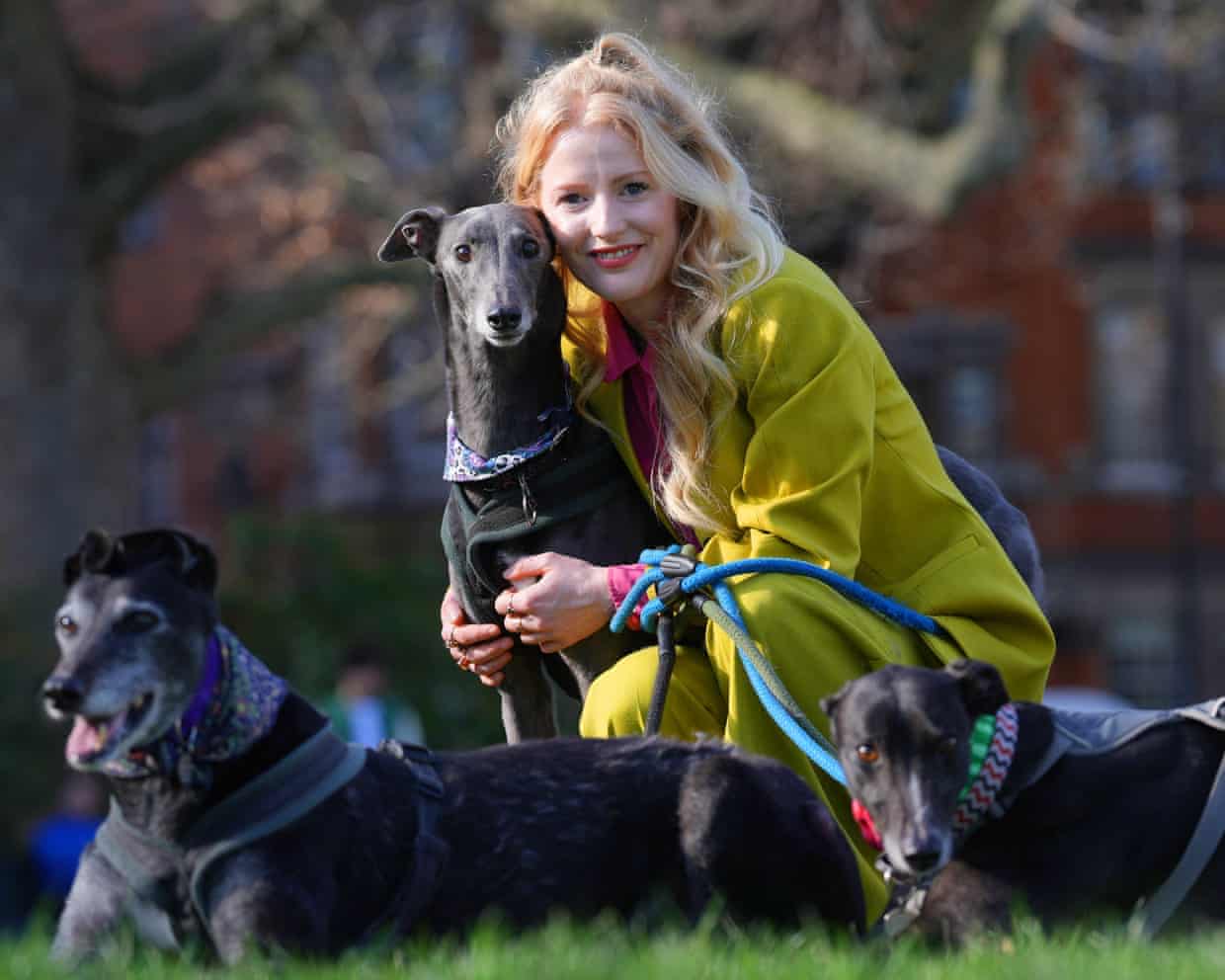
Labour is “offensively caricaturing” working-class people by saying they do not want a greyhound racing ban in England, the Green party MP Hannah Spencer has said.The sport has traditionally been associated with working-class culture and has historically been popular in so-called red wall areas, which Labour insiders suggest is part of the reason why there are no plans for England to follow bans announced last month in Scotland and Wales.The culture secretary, Lisa Nandy, said in parliament on Thursday that the gambling industry “brings joy to a lot of people”. She said: “The industry as a whole brings positive benefits to the United Kingdom.”Spencer, who won the Gorton and Denton byelection in February and has four rescue greyhounds, said: “Lisa Nandy just continuously offends people by saying that working-class people don’t care about dogs or each other

‘It’s a twilight zone’: Iran war casts deep shadows over IMF gathering in Washington
The most severe energy shock since the 1970s, the risk of a global recession and households everywhere stomaching a renewed surge in the cost of living – hitting the most vulnerable hardest.In a sweltering hot Washington DC this week, the message at the International Monetary Fund meetings was chilling: things had been looking up for living standards around the world. But then came the Iran war.“Some countries are in panic,” said the fund’s managing director, Kristalina Georgieva, addressing the finance ministers and central bank bosses in town for the IMF and World Bank spring meetings. “The sooner it [the Iran war] ends, the better for everybody

Keir Starmer faces ‘judgment day’ as Mandelson vetting debacle grows
Keir Starmer’s claim he was “staggered” not to have been told of Peter Mandelson’s vetting failure has provoked incredulity across Westminster and accusations that he sacked a senior civil servant to save his premiership.Senior government figures said the prime minister faced “judgment day” next week when Olly Robbins, who is understood to be furious at being forced to quit the Foreign Office, is expected to appear before a powerful committee of MPs.With Starmer’s position remaining precarious ahead of a statement he intends to make to MPs on Monday, the Guardian revealed on Friday that Starmer was left in the dark about information relating to Mandelson’s security vetting failure by two other top civil servants.The cabinet secretary, Antonia Romeo, and Catherine Little, the Cabinet Office’s permanent secretary, became aware of the situation last month.Government sources denied the two officials had been “sitting on” the knowledge that UK Security Vetting (UKSV) had advised that Mandelson should be denied clearance to become the UK’s ambassador to the US
Winners and judges out of pocket as £20,000 writing awards appear to have closed

Zelda taught me the importance of play – and has helped me deal with work, parenting and grief

From Lee Cronin’s The Mummy to Zayn: your complete entertainment guide to the week ahead
Lost Federico García Lorca verse discovered 93 years after it was written

Stephen Colbert on Trump’s Vatican feud: ‘Damn, the pope just read you for filth’

‘Packaging evil into something funny’: is making fun of Trump now just ‘clownwashing’?