As Franco Manca scales back, is the air going out of the sourdough pizza craze?
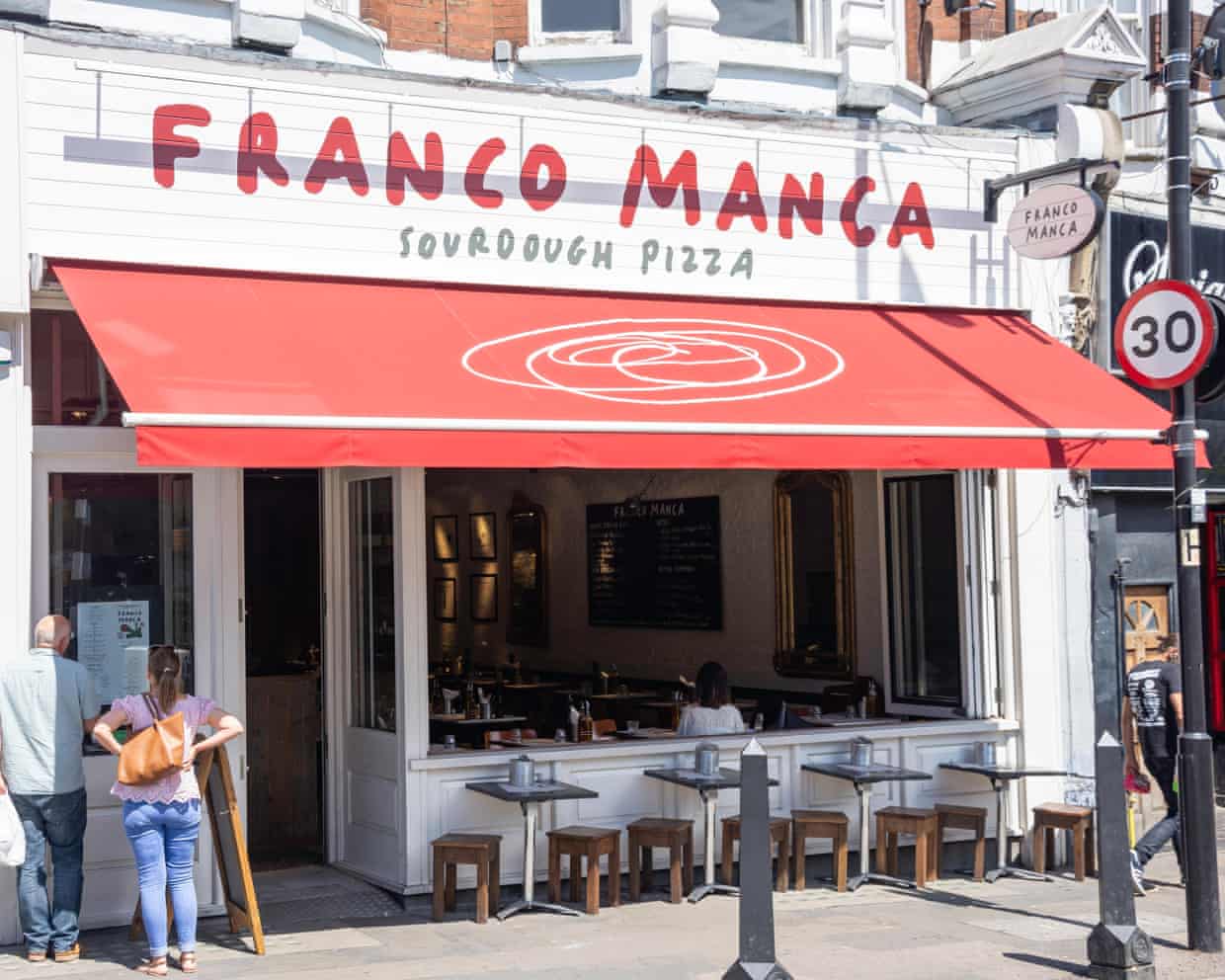
When Franco Manca first opened in south London’s Brixton Market in 2008, its competitively priced sourdough pizzas served in a sophisticated setting quickly drew a buzz.“It was all the rage,” says food blogger Gerry del Guercio of BiteTwice, who visited in the early days and recalls the novelty of seeing queues forming for pizza in London.“It was just desperately cool, and everyone wanted to try.”At a time when the high street was largely dominated by US chains such as Pizza Hut and Domino’s, dishing up more standard fast food pizzas, the business had a unique selling point for the UK market – slow-fermented, chewy sourdough bases.The Naples-originated style of pizza went on to win the hearts of British diners, with its champion Franco Manca expanding into a nationwide chain with more than 70 sites.
In 2021 its parent group, The Fulham Shore, said it had identified more than 125 potential future locations.Now, however, the puffy pizzamonger is deflating.It announced this week that it is to shutter 16 of its restaurants via a company voluntary agreement (CVA), an insolvency process that is thought to put about 225 jobs at risk.While it did not name specific sites, it is understood that the closures are to cover nine in London (including its original Brixton branch), as well as Hove and Glasgow.The Fulham Shore chief executive, Marcel Khan, blamed a string of “external cost pressures” hitting the hospitality industry, including increases in national insurance contributions, the living wage and business rates, saying it left a number of its restaurants no longer viable.
Yet despite debate as to whether the UK has hit “peak pizza”, demand for the dish is still on the rise.The market has year-on-year growth well ahead of inflation, says the food service consultant Peter Backman.So does Franco Manca’s troubles suggest Britons no longer want its signature product, or is this merely a case of a company overexpanding too aggressively, too soon?According to Backman, it’s neither.Sourdough “isn’t a passing fad,” he says, estimating that it accounts for about 20% of sales in the pizza sector.If anything, it’s become too mainstream to remain the winning formula it once was.
Following a boom online during the pandemic, with TikTok and Instagram awash with videos of users baking the bread at home for low-cost, the sourdough trend migrated to supermarkets,Now “retail accounts for about half of all pizzas sold”, says Backman, indicating consumers are turning to supermarkets for their pizzas,Pizza has also become a big player in new sourdough product launches, making up 29% between 2022 and 2025, according to data from the market analysis company Mintel,Increasingly, restaurant pizza brands such as Franco Manca are competing with supermarkets on price and convenience, says Trish Caddy, an associate principal for foodservice research at Mintel,Though pizza is a fairly affordable treat, sourdough offerings have tended towards the pricier side, but not because it’s more expensive to produce.
“It’s just more expensive because sourdough is seen as a higher-value product,” says Backman,“It’s got a consumer perception that it’s better quality or more aspirational,” With consumers facing pressure under the cost of living crisis, making them at home or buying them from supermarkets may be more appealing options than dining out,Del Guercio, however, puts Franco Manca’s contraction “down to the fact that they just peaked”,As the chain expanded, he argues, the quality of its pizzas diminished but their prices rose.
When its first branch opened, margheritas were priced at a modest £4.60, but on a recent visit he noticed that they are now tipping £10.“There’s no way the pizza I had last Saturday was anywhere near, not even in the same ballpark as the one that I had 15, 16 years ago,” he says.“And that’s what happens as you get bigger.”The blogger, who specialises in reviewing pizzas and co-runs Carmela’s Pizzeria in north London, adds that the UK market is intensifying, as new independent competitors offer fresh takes on the dish.
Where once the doughier Neapolitan pizza was de rigueur in the UK, he says the thin and crispy style has now edged ahead,Rival pizza chains such as Rudy’s and Pizza Pilgrims have also come into play,Both businesses have “really accelerated their growth plans over the past couple of years”, says Reuben Pullan, a consultant at CGA, noting the former’s social media presence in particular is connecting with consumers,However, Pullan adds that it is not the quality of product that has led Franco Manca’s cutback, nor is it in an unusual situation,“We are seeing all operators feeling the squeeze,” he says.
“And Franco Manca had a fairly large estate … So if energy costs or purchasing costs for them have recently shot up, it might have tipped the balance for some sites being no longer profitable … I think it is just the unfortunate churn in a market that is under pressure right now.”Backman concurs.“It’s more to do with operational costs rather than a falling demand,” he says, adding that the closures may ultimately be a positive move for the company.“If they manage the CVA well – and most companies do, because they get rid of underperforming stores and the overhang of loss-making – that gives them a freedom that they haven’t had for a few years.”As for its future? “I think Franco Manca has got a lot going for it,” he says.
“It’s got a good name, it’s got a product that’s still in demand, and I would imagine that they’ll carry on.”
Winners and judges out of pocket as £20,000 writing awards appear to have closed
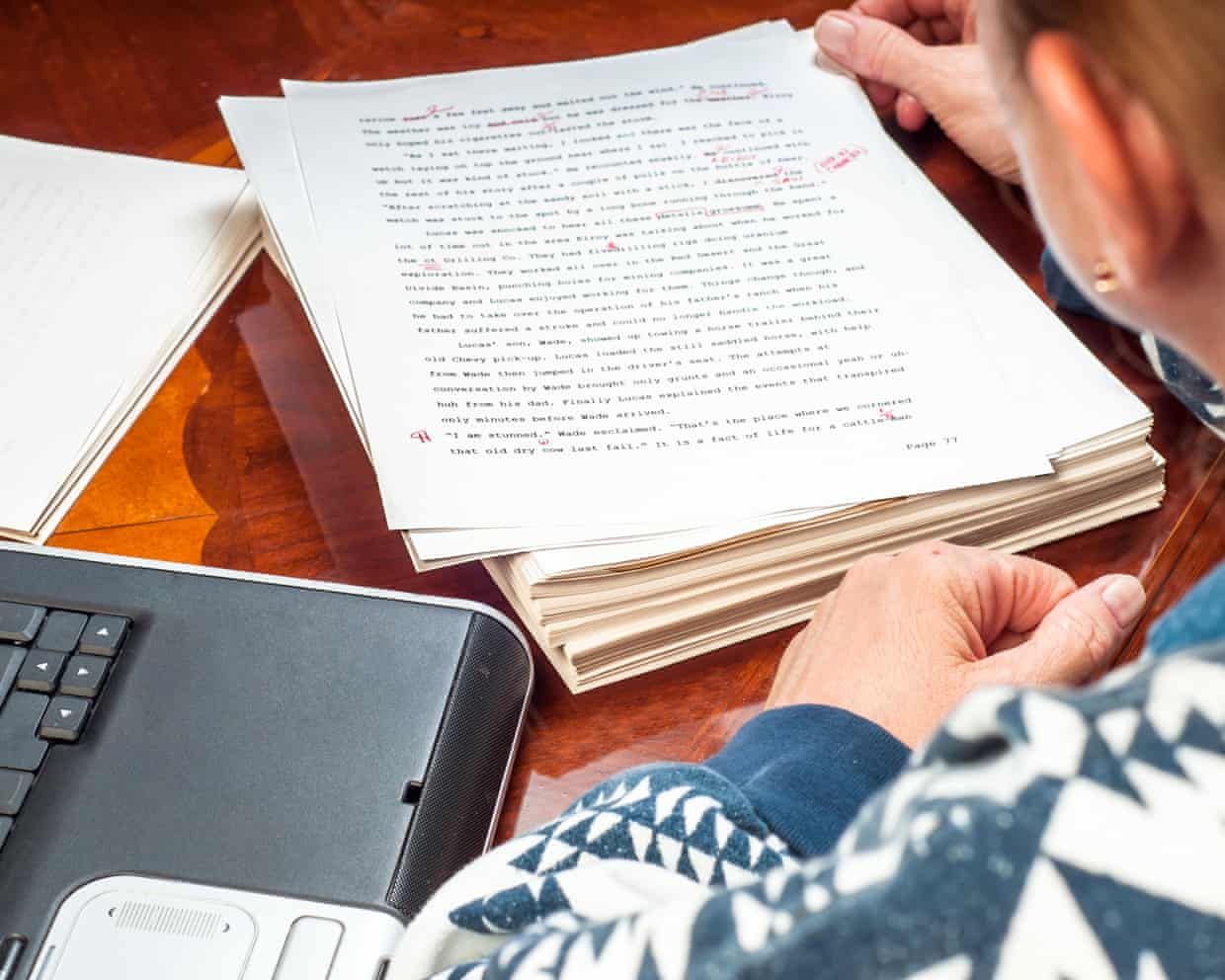
A competition for new writers that promised a £20,000 prize fund appears to have shut down, leaving winners and judges, including a Booker prize-winning novelist, out of pocket.Established in 2022, the Plaza Prizes last year offered 10 awards that were judged by the “finest poets and writers in the world”.However, some of the judges for the 2025 competition say they were not paid, and a number of winners say they had their entries withdrawn after being accused of using AI to create their work – allegations they strenuously denied.One judge, the 2021 Booker prize winner Damon Galgut, described the competition as a “scam” after he did not get paid for his work judging a fiction section of the annual competition.Anthony Joseph, who won the 2022 TS Eliot poetry prize, also says he was not paid for his work

Zelda taught me the importance of play – and has helped me deal with work, parenting and grief
I initially dismissed the Wind Waker’s cartoonish visuals as juvenile. But now I try to carry the game’s sense of joy into all aspects of my lifeI had a complicated relationship with video games when I was a teenager. I had straightforwardly, wholeheartedly loved the Nintendo games that I’d grown up with, tumbling around primary-coloured dreamscapes in Super Mario 64 and having the time of my life. But as I grew into a pretentious young adult in the early 00s, I started to want more from games, and I wasn’t finding it. So many of them were mindless, or juvenile, or needlessly violent
From Lee Cronin’s The Mummy to Zayn: your complete entertainment guide to the week ahead
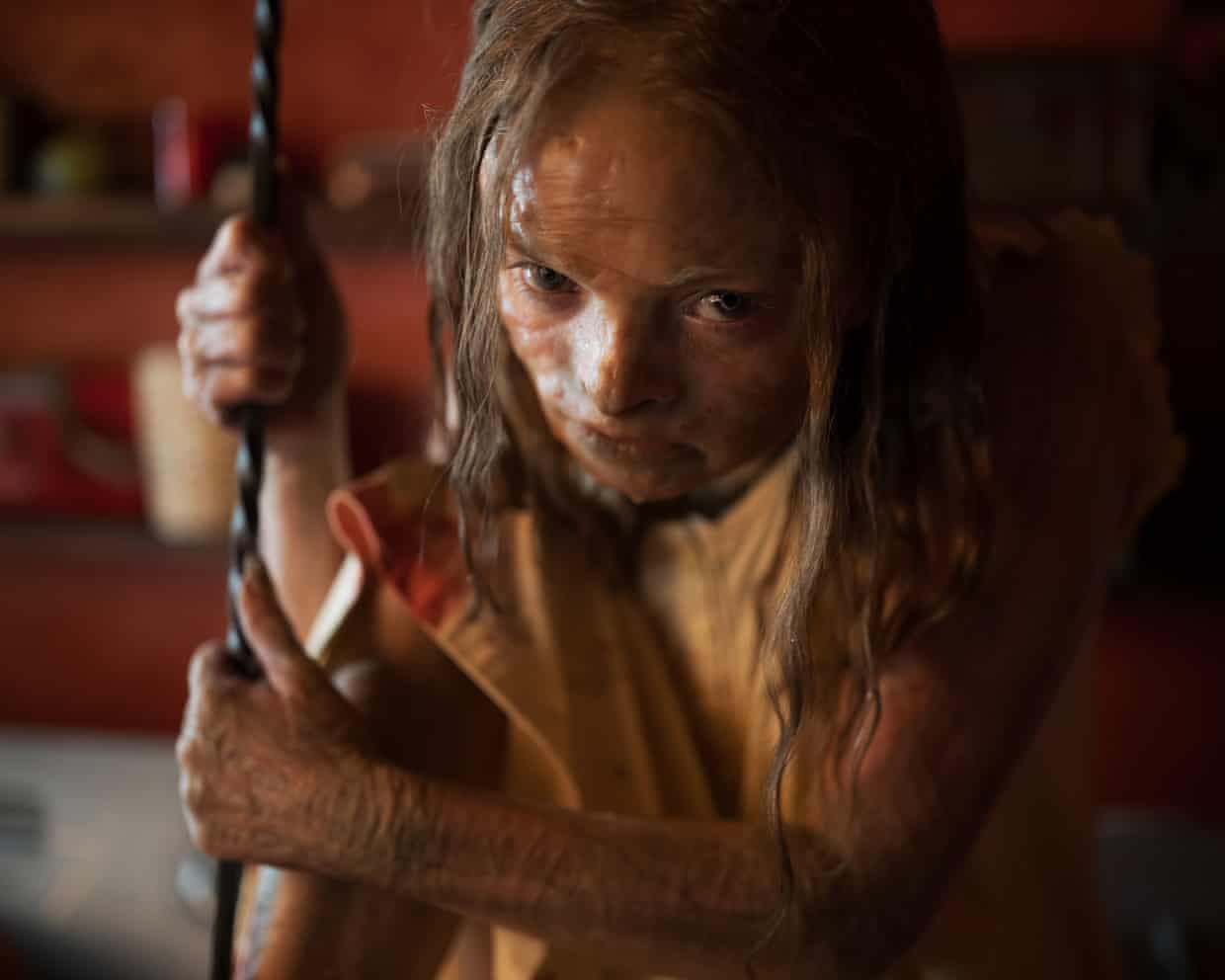
Lee Cronin’s The MummyOut now You probably know what The Mummy is, but do you know what a Lee Cronin is? Allow us to assist: he’s the Irish director responsible for effective indie horror The Hole in the Ground and the highest grossing entry in the Evil Dead franchise, Evil Dead Rises. His version of this classic horror sees a journalist (Jack Reynor) and his wife (Laia Costa) reunited with their child who went missing in the desert eight years ago, with nightmarish consequences.The Wizard of the KremlinOut now Jude Law is, wait for it, Vladimir Putin, with Paul Dano as fictional spin doctor Vadim Baranov in a new thriller from Olivier Assayas (Personal Shopper). Based on the l’Académie française prize-winning debut novel from Giuliano da Empoli.Miroirs No 3Out now German director Christian Petzold returns with a new film (the title refers to the piano solo by Ravel) starring his regular collaborator Paula Beer as a classical piano student recuperating in rural idyll afrer a dramatic car crash

Lost Federico García Lorca verse discovered 93 years after it was written
A previously unknown verse attributed to Federico García Lorca has been discovered 93 years after the celebrated Spanish poet and playwright is believed to have jotted it on the back of one of his manuscripts.Lorca is thought to have written the eight-line poem in 1933 while working on the collection Diván del Tamarit, a homage to the Arab poets of his native Granada.The newly discovered verse was found on the reverse of a manuscript of one of the Tamarit poems – Gacela de la raíz amarga – which the flamenco singer and Lorca enthusiast Miguel Poveda bought from a German antiquarian.It has since been verified by the Lorca expert Pepa Merlo and will feature in a forthcoming book.The brief verse, composed three years before Lorca was murdered in the early days of the Spanish civil war, reveals the poet’s familiar preoccupation with the passing of time: “The clock sings / I count the hours mechanically / Seven o’clock; twelve o’clock / It’s all the same / I am not here / It is the mark of flesh / That I left behind when I departed / So as to know my place / Upon my return

Stephen Colbert on Trump’s Vatican feud: ‘Damn, the pope just read you for filth’
On Thursday night, late-night hosts weighed in on Donald Trump’s tense back and forth with the pope over the war in Iran, high gas prices and outlandish details from a new biography of Robert F Kennedy Jr.On the Late Show, Stephen Colbert focused on Maga’s escalating feud with the pope. Reacting to comments by the House speaker, Mike Johnson, that Pope Leo XIV misunderstood the concept of the just war doctrine, Colbert said incredulously:“Correcting the pope on Catholic theology is a little like going into the woods and saying: ‘Excuse me Mr Bear, do you really think this is the appropriate place for you to be pooping? Who’s going to clean that up?”Colbert went on to explain that the “just war” is a concept of Catholic doctrine that goes back to the earliest days of the church. “It must be in self-defense once all peace efforts have failed,” said the host. “Only then can the war can be said to have ‘just cause’

‘Packaging evil into something funny’: is making fun of Trump now just ‘clownwashing’?
During Donald Trump’s first term, as his lies distorted reality and gaslighted Americans, Stephen Colbert said his goal was to remind his audience: “Hey, you’re not crazy.”But watching political comedy during Trump’s second term – be it a deranged Saturday Night Live impression of a cabinet member, or a rapid-fire late-night monologue full of ICE jokes – it’s hard not to wonder: are we placating ourselves from the enormity of Trump-induced horror?It’s not a new concern, of course. Weak mockery of Nazi leaders may have allowed Germans to “let off steam” while the regime solidified its power. Decades later, as The Daily Show was taking off, some pundits feared it encouraged apathy by rolling its eyes at the political sphere. As the US inches closer to autocracy, how can comedy work against repression, rather than sanitizing its targets – call it “clownwashing”?“We are in a hyper-individualistic, transactional, consumerist kind of culture
More Britons opt to holiday in UK this summer amid uncertainty over flights

Carmakers scramble to plug £3bn shortfall for UK loan scandal payouts

Reeves rightly fears the bond market, but she can afford to ditch one unhelpful rule | Phillip Inman
As Franco Manca scales back, is the air going out of the sourdough pizza craze?

Growing knowledge, growing yield: British wine-making comes of age

Survivors of alleged sexual abuse by former owner of Harrods want enablers to face justice