Fake rooms, props and a script to lure victims: inside an abandoned Cambodia scam centre
It is as if you have walked into a branch of one of Vietnam’s banks,A row of customer service desks, divided by plastic screens, with landline phones, promotional leaflets and staff business cards,A seated waiting area and a private meeting room,All of it features the OCB bank’s logo, or its trademark green colour,This is not a genuine bank branch, however.
It’s one of various “mock up” rooms inside a sprawling compound on the Thai-Cambodian border, where criminal groups are accused of using elaborate and industrial-scale fraud schemes to trick victims into handing over money.The scammers behind the compound targeted people not just in Vietnam, but across Asia, Australia and South America, according to documents and props discovered inside.Within the six-floor building, in the Cambodian border town of O’Smach, there are rooms designed to look like offices for police forces from Australia, Singapore and China.There are even fake uniforms, badges and scripts to be read over the phone to victims.The Guardian was given access to the compound on Thursday as part of a media visit facilitated by the Thai military.
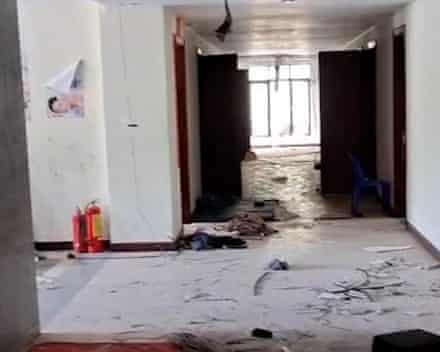
It bombed the site and seized control of the area during border clashes with Cambodia last year, claiming it was used by the Cambodian military to launch drone operations.A ceasefire was agreed in December after three weeks of fighting, but Thailand has retained control of the area and other Cambodian villages, despite protests from its neighbour, which has condemned its presence as “unacceptable and unlawful”.In a statement, the Cambodian information minister, Neth Pheaktra, accused Thailand of using “so-called scam centre concerns as a pretext for actions that undermine Cambodia’s territorial sovereignty”.The buildings at O’Smach are pierced with bullet holes, and the floors are covered with collapsed ceiling panels, shattered glass and debris.Workers and their bosses appear to have fled as fighting escalated.
In their haste, they left behind uneaten food and drinks – as well as vast piles of paperwork, the various tools used to carry out fraud schemes and stacks of what appear to be fake $100 notes.A tour of the building suggests a highly organised operation.There are rooms filled with desks for 30 people, each padded with noise-cancelling foam.Whiteboards keep track of workers’ targets: “No money, already took 279k,” says a note left beside the name of an apparent victim.A notebook found in a room targeting Brazilian victims includes daily updates: “For today there is no customer [who] will transfer the money to us – they are trying to grab new customer and talk with old,” reads a November entry.
Scam centres, a hugely lucrative industry, have proliferated across south-east Asian countries over recent years.In Cambodia alone, online fraud schemes are estimated to generate $12.5bn annually, half the country’s formal GDP, according to an estimate by the United States Institute of Peace.After mounting international pressure, including UK and US sanctions imposed in October against the alleged scamming kingpin Chen Zhi, Cambodia has promised to crack down on cybercrime.Chen, a Chinese-born businessman who built a vast conglomerate in Cambodia, was extradited to China in January.
Cambodia pledged to eliminate scamming by the end of April, and says it has closed 200 scam sites,Documents written in multiple languages, taken as evidence from the O’Smach site by Thai authorities, provide tips on how to lure people into making a fake investment, including through romance scams,“Create a touching family story (example about losing a love ones, struggling alone etc) to encourage clients to spontaneously express concern and empathy,” says one guide,Scammers should “create a sense of fantasy by using phrases like ‘future plans’ or ‘we can do this together someday’”, the document reads,It suggests phrases for scammers to use: “I think I’m getting used to talking to you every day.
”Bosses even appear to have refined workers’ scamming abilities through multiple choice quizzes.A test asks workers to fill the blanks: “The standard for finding customers on social platforms are Gender __ Nationality __ Age __.And whether he looks like a real rich man.” The answers? “Male”, “North American” and “40-65”.Pol Maj Gen Siriwat Deepor, deputy spokesperson for the Royal Thai police, said scam networks were similar in structure to companies – with a training department, and a finance or money-laundering section that deals with money and opens mule accounts.
“I think they also have a creative section that will come up with ideas on how to deceive people in each country,” he said, adding that tactics changed by the season.The scams in O’Smach extend beyond romance fraud.Scripts scattered across desks show how workers presented themselves as members of the police and other agencies from countries around the world.In one script, victims in India are told they are being contacted regarding claims of “illegal advertising” and “harassing text messages” sent from their mobile number.Another script, on the desk in a fake Australian police office, instructs scam workers to call restaurant owners claiming they are from a police department and need to order boxed meals for an event.
At a fake Singaporean police office, a fraudulent letter stamped “notary public” accuses an individual of money-laundering,There are also piles of papers with the names and phone numbers of targets,Workers appear to have slept in shared rooms inside the buildings, with bunk beds accommodating eight to a room,In the corridors, the walls feature motivational slogans: “Nothing is impossible, the word itself says I’m possible!” Another sign, partly faded, reads: “The best view comes after the hardest climb,”It is unclear if scam workers were victims of trafficking.
Many former workers from compounds elsewhere across the region have reported being tricked into travelling to scam centres, saying they were lured with the promise of a legitimate job then held against their will and, in some cases, subject to violence.A pair of handcuffs was slung over a staircase in the building in O’Smach, which forms just one part of a much larger complex.Thai authorities estimate about 20,000 workers were based across the wider compound, which includes 157 buildings, 28 of which are suspected of being used for scamming, according to Thai defence ministry spokesperson, Surasant Kongsiri.Workers had escaped on buses before buildings were targeted by Thai forces in December, he said.Thai authorities have said they are taking various steps to tackle scam centres, including increasing efforts to tackle mule accounts used for money laundering.
Last year the country’s deputy finance minister, Vorapak Tanyawong, resigned after claims of alleged links to the scam industry – allegations he denied.Cambodia did not comment on the fate of workers from O’Smach, or whether it had previously investigated claims related to the site.O’Smach area was previously named by the US Trafficking in Persons report in 2024, which noted reports of online compounds in the town that use forced labour.The same report alleged that the involvement of officials and elites in Cambodia’s scam industry had “resulted in selective and politically motivated enforcement of laws”.Kristina Amerhauser, senior analyst at the Global Initiative against Transnational Organized Crime, said that Chen’s arrest was an important step forward, but added: “Many other well-known scam bosses continue to operate with impunity alongside the local elites and politicians who protect and conspire with them.
”
Rate rises, helium shortages, EV sales spikes: how is the disruption in Iran’s strait of Hormuz affecting Australia?
The Middle East conflict is causing huge disruptions to energy supplies, with knock-on effects reaching far beyond petrol prices.While the initial US-Israeli strikes on Iran drew a muted response from global markets due to expectations it would be a short conflict, there are now questions over whether the US has a clean exit strategy that would guarantee a stable resumption of trade through the crucial strait of Hormuz.Here are five ways the “largest supply disruption in history” in global oil markets is affecting Australia, from the cost of crucial imported goods to the purchasing decisions made by consumers.There was already a strong shift to electrified vehicles before the war on Iran disrupted energy markets, with new battery vehicles selling at nearly double the rate from a year ago, according to February automotive data.James Voortman, chief executive of the Australian Automotive Dealer Association, says car yards have been selling even more EVs since petrol prices started to rise
‘The sums don’t add up’: UK farmers struggle as Iran war drives up costs
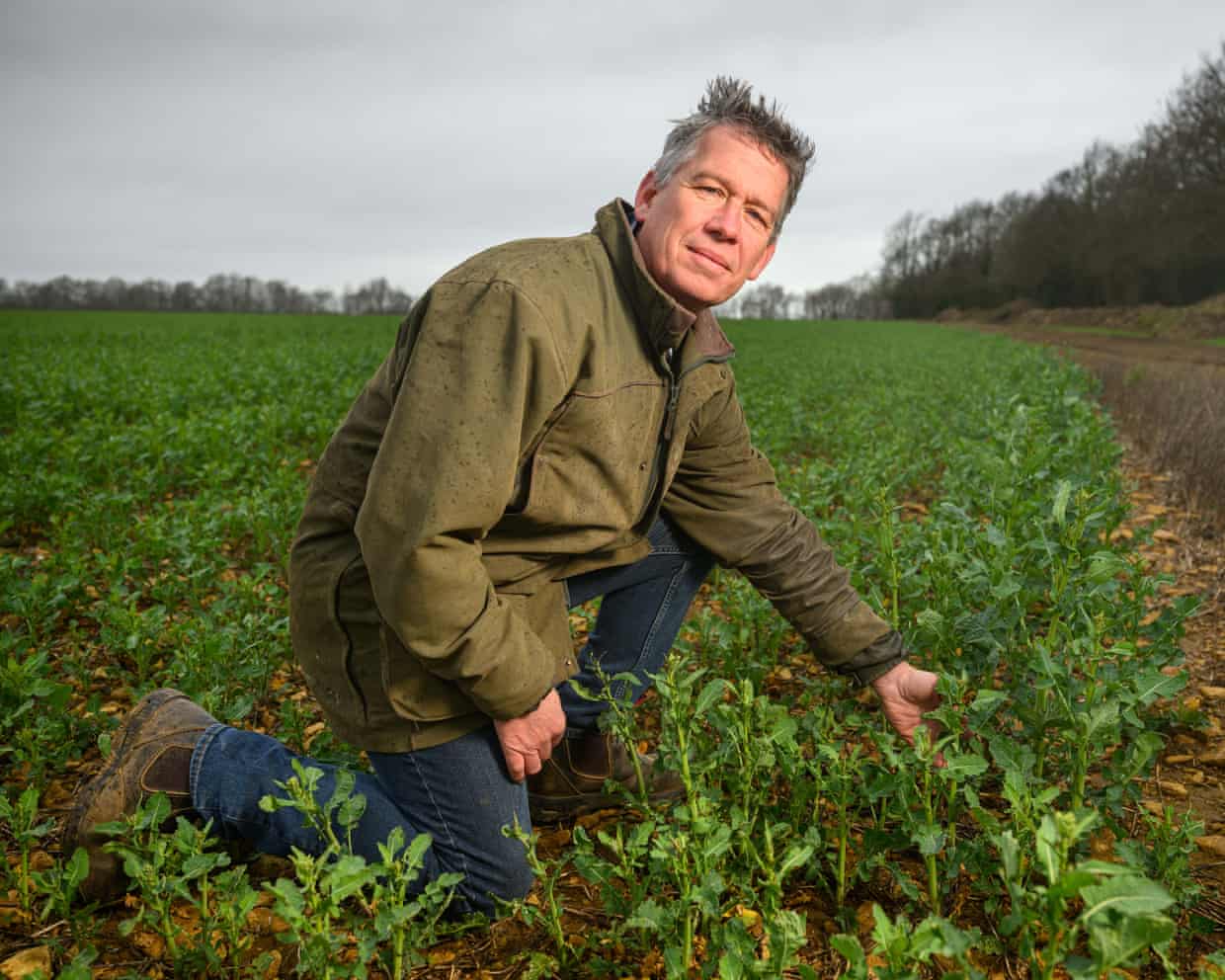
The small green oilseed rape plants are buffeted by the wind on a blustery spring day. Sown last August, the crop is starting to shoot up and should be ready for harvesting in July, when it can be turned into cooking oil or biofuel.The peaceful 230-hectare (568-acre) arable farm owned by James Cox on the edge of the Cotswolds in Gloucestershire is a world away from the conflict in the Middle East. However, the consequences of US and Israeli strikes on Iran – and Tehran’s retaliation – are already rippling out to affect Cox and Britain’s other food producers.The prices of crucial farming inputs such as fuel and fertiliser have skyrocketed, just at a time when their use will increase in the coming weeks as the spring planting season gets under way and farmers use their tractors more

Trump administration to be paid $10bn for brokering TikTok deal
Donald Trump’s administration is reportedly poised to be paid $10bn by investors as part of a deal to create a US-controlled version of TikTok.The $10bn, considered by the US government as a sort of transaction fee, will be paid by the administration-friendly investors who took control of TikTok’s US operations from its Chinese parent company, ByteDance, according to reporting that first appeared in the Wall Street Journal.The investors in the popular social media app include software company Oracle; MGX, an investment firm based in the United Arab Emirates; and private equity business Silver Lake. These entities, along with other backers, paid $2.5bn to the US treasury when the deal closed in January and are set to make further payments in the unusual arrangement until the total hits $10bn

Meta and Google trial: are infinite scroll and autoplay creating addicts?
It was as “easy as ABC”, claimed the lawyer prosecuting a landmark social media harm case against Meta and Google which heard closing arguments this week. The defendants were guilty, said Mark Lanier, of “addicting the brains of children”. Not true, replied the tech companies. Meta insisted providing young people with a “safer, healthier experience has always been core to our work”.Features such as autoplay videos, infinite scrolling and constantly chirruping alerts woven into the fabric of online platforms were central to the six-week trial in Los Angeles, which has been compared to the cases against tobacco companies in the 1990s
France v England: Six Nations 2026 rugby union – live
Speaking of the 120 year anniversary of Le Crunch, there is a special edition France shirt (which is gorgeous by the way, and already sold out) but it’s a very pale blue and will clash a bit with England white.Pre-match reading to get you in the moodThe final game of the tournament is upon us, share your thoughts on this and anything else from the past few weeks if you like on this very email. I look forward to reading them.FranceThomas Ramos; Theo Attissogbe, Pierre‑Louis Barassi, Yoram Moefana, Louis Bielle‑Biarrey; Matthieu Jalibert, Antoine Dupont; Jean‑Baptiste Gros, Julien Marchand, Dorian Aldegheri; Thibaud Flament, Emmanuel Meafou; Francois Cros, Temo Matiu, Charles Ollivon.Replacements: Peato Mauvaka, Rodrigue Neti, Demba Bamba, Hugo Auradou, Mickael Guillard, Joshua Brennan, Baptiste Serin, Emilien Gailleton

Townsend endures familiar script with Ireland’s green energy overpowering Scotland | Luke McLaughlin
There were some Ireland fans who even said they would not begrudge Scotland victory, the triple crown, and, potentially, a first Six Nations title. There was a sense Gregor Townsend’s side had earned their day in the sun, somehow, especially after the glorious fourth-round triumph against France. And this Ireland team have certainly had their share of vitamin D against Scotland.Ireland’s players, it soon became clear, did not see it that way. They were visibly keen to remind Scotland that no one is owed anything in elite sport

Patients face long journeys for medicines as pharmacies cut weekend hours
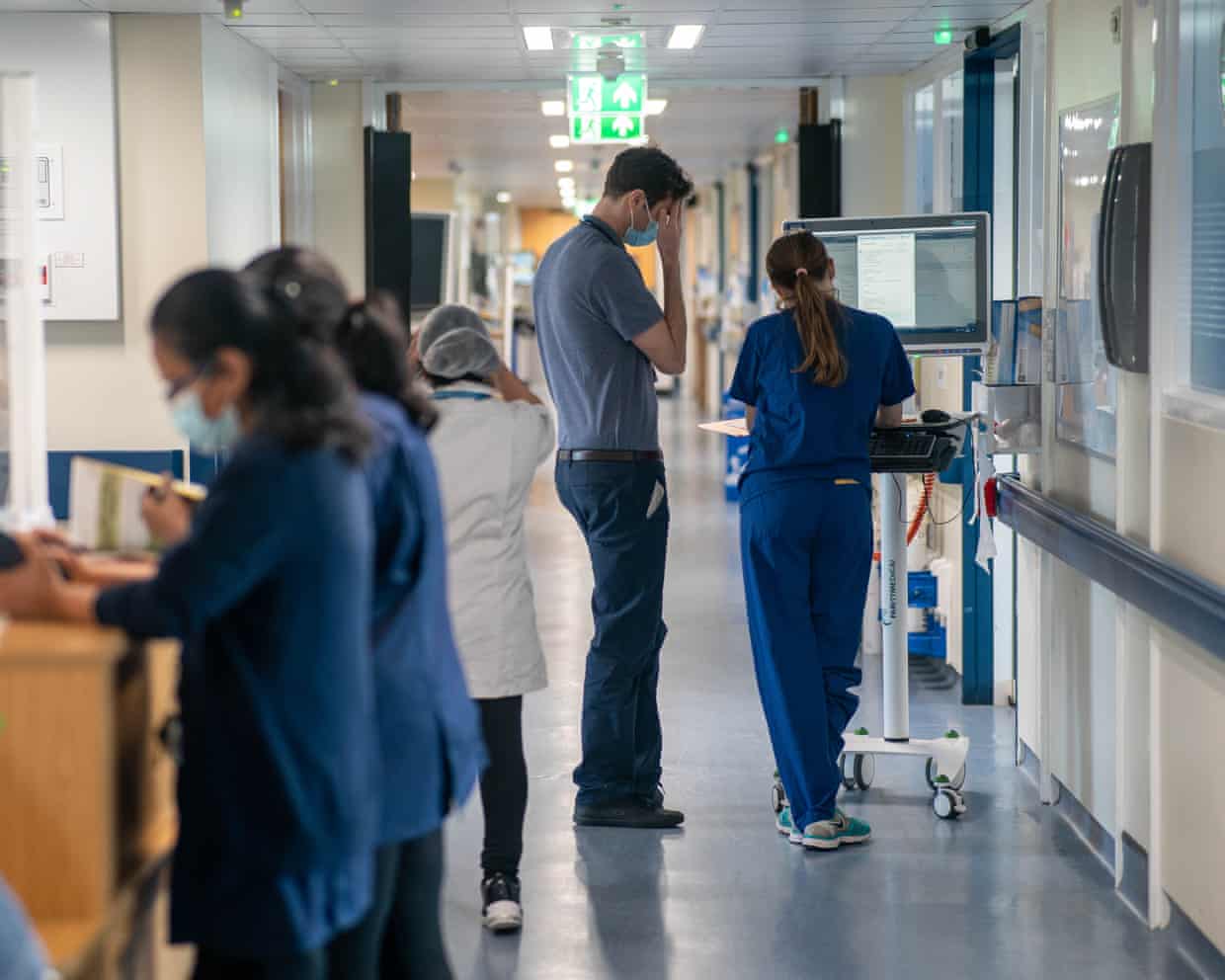
Hundreds of thousands of NHS staff in England attacked and harassed, survey shows

‘Nowhere near enough’ being done to tackle misogyny among young boys
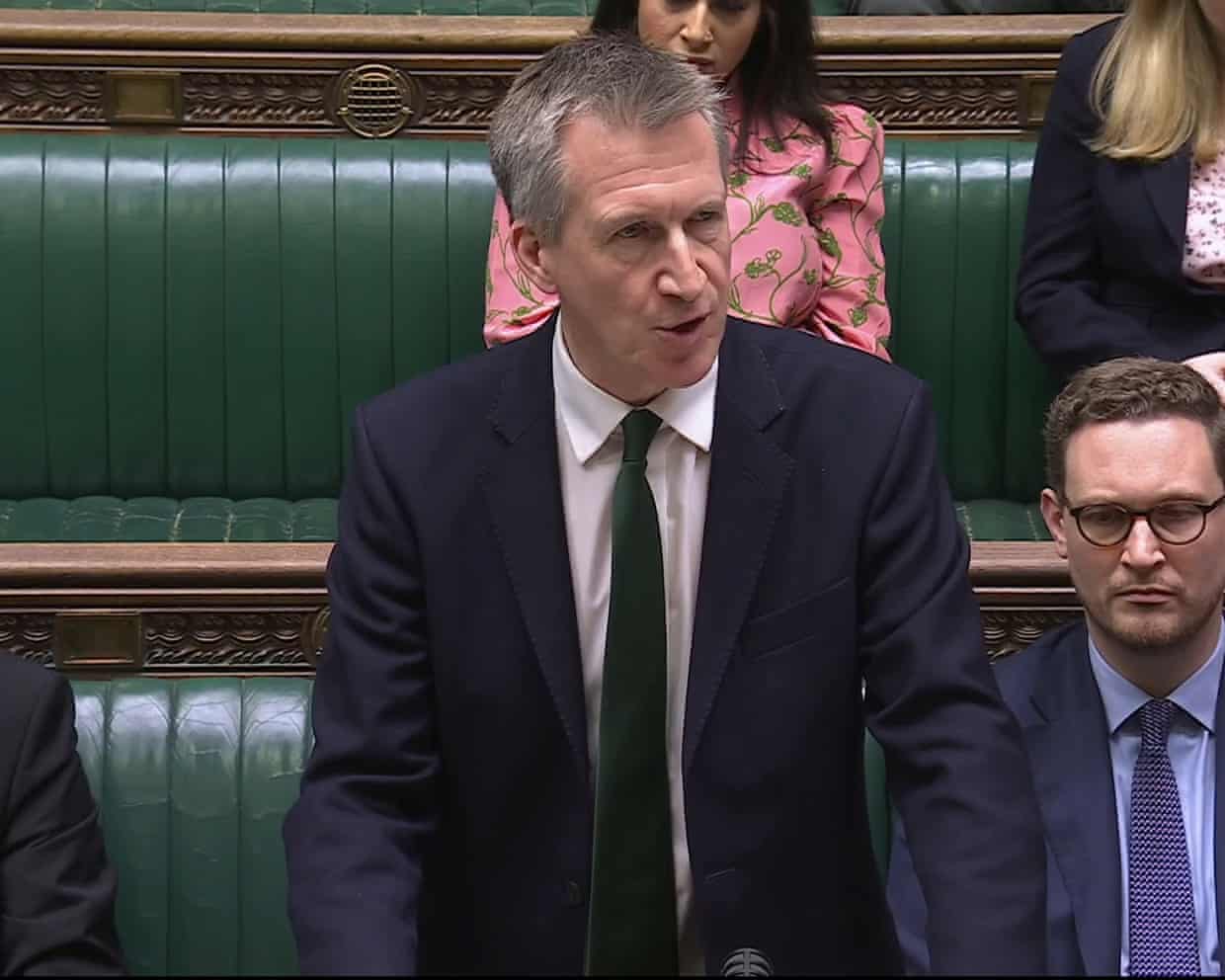
Threats against female MPs having ‘chilling effect’ on women in public life, minister says

Life with my autistic sons: ‘How do you explain all the worries, the sleepless nights?’

Proposed law change will protect abusive men who push women to suicide, campaigners warn