Rate rises, helium shortages, EV sales spikes: how is the disruption in Iran’s strait of Hormuz affecting Australia?

The Middle East conflict is causing huge disruptions to energy supplies, with knock-on effects reaching far beyond petrol prices,While the initial US-Israeli strikes on Iran drew a muted response from global markets due to expectations it would be a short conflict, there are now questions over whether the US has a clean exit strategy that would guarantee a stable resumption of trade through the crucial strait of Hormuz,Here are five ways the “largest supply disruption in history” in global oil markets is affecting Australia, from the cost of crucial imported goods to the purchasing decisions made by consumers,There was already a strong shift to electrified vehicles before the war on Iran disrupted energy markets, with new battery vehicles selling at nearly double the rate from a year ago, according to February automotive data,James Voortman, chief executive of the Australian Automotive Dealer Association, says car yards have been selling even more EVs since petrol prices started to rise.
“Most of the dealers think they will have a very big March in terms of EV sales,” says Voortman,He says the recent rise in petrol prices was enough to convince some prospective buyers to make a purchase decision,“There were a lot of fence-sitters who are now coming off the fence,” he says,The Tesla Model Y and BYD Sealion 7 are the two strongest selling EVs in Australia,About one-third of new cars sold in Australia are now hybrids or EVs.
Given oil prices are the single biggest contributor to global inflation – they add costs to almost all goods and services – interest rates are now expected to rise faster than previously forecast.The ASX’s rate tracker indicates there is a 66% chance of a hike on Tuesday.A week ago, when it looked more likely that the Iran war would be short, the probability of a March increase was just 22%.Australia’s big four banks all predict a rate rise on Tuesday, followed by another one in May.If the bank forecasts prove correct, mortgage holders with an $800,000 debt will be paying $363 more in monthly repayments by May than they were at the start of the year, according to Canstar analysis.
Canstar’s data insights director Sally Tindall points out the longer-term rate outlook is unclear, given an escalation in the conflict could prove so damaging to the Australian economy that rates will need to eventually fall.“The cash rate could well rise in coming weeks, but the fallout from the war, if it hits the Australian economy and jobs market hard, could also push the RBA into reverting back to cuts in the not too distant future,” Tindall says.Almost all forms of travel and freight are becoming more expensive, with costs ultimately passed on to consumers, affecting everything from air fares to parcel deliveries.Customers are already seeing line items on their invoices noting additional charges.Geelong-based D&D Worldwide Logistics says Australian businesses need to prepare for a new wave of freight cost increases.
“Road transport operators have confirmed fuel levy increases, and more carriers across ocean and air freight are expected to follow as global diesel and jet fuel prices continue to spike, driven directly by the ongoing Middle East conflict,” the logistics company says.Cathay Pacific, AirAsia and Thai Airways have now joined Qantas, Air New Zealand and others in hiking air fares as travellers flock to stopover destinations in Asia, rather than the Middle East.Jet fuel prices have now increased to levels not seen since early 2022 when Russia invaded Ukraine.If the war is protracted, rising fuel and fertiliser costs will be passed on to consumers through higher food prices.Australian farmers are facing soaring prices for the essential fertiliser ingredient urea, which has increased in price by more than 30% in the past month, according to commodities website Trading Economics.
The Middle East is a major urea producer and prices have spiked over the past two weeks.The nitrogen fertiliser is used widely in Australia for vegetables, canola and cereal crops such as wheat and barley.The cost of plastic is intrinsically linked to rising global crude prices, as the resins used to create packaging materials are oil derivatives.Given that Australia imports over 90% of its plastic as either resins or finished packaging, a persistent disruption in the oil market will inevitably lead to manufacturers passing these higher input costs on to food producers and retailers.According to Roelof Vogel, a circular economy researcher with experience in the global packaging industry, this market disruption could make recycled plastic a more appealing alternative for Australian businesses.
The industry currently considers it to be prohibitively expensive, with the Australian council of recycling saying producing recycled plastic here can be 50% more expensive than imported virgin plastic.“[If] there is a really sustained long-term increase where the price of oil does not come down for whatever reason, then all of a sudden recycled plastics start to look much more attractive and that the cost difference is no longer 50%,” Vogel says.Australia imports its helium, an industrial gas used to power MRI machines and other critical medical, research and manufacturing technology, including from Qatar.The gulf nation produces roughly a third of the world’s helium, as a byproduct from liquefied natural gas.But Qatar has halted production after an Iranian strike on the Ras Laffan Industrial City – the gas hub where the country’s helium facilities are located.
Qatar’s state-run energy firm has reportedly halted liquefied natural gas production after the Iranian attacks.The government has said it is not aware of any immediate risk to helium supply or availability in Australia but will monitor for any potential supply chain disruption.Australian party-goers not being able to blow up balloons would be the least concerning issue arising from a shortage of helium, says Prof Dongke Zhang, the director of the University of Western Australia’s Centre for Energy.“Hospitals, across the nation, literally all of them use it to service MRI and other advanced diagnoses, and for running major research facilities in physics, in chemistry and, in my case, advanced energy technology,” he says.Australia’s only helium plant, based in Darwin, closed in 2023.
A new company, Natural Helium Tasmania, was recently granted exploration licences and expects to be operating in 18 months’ time.“Balloons are the crudest and rudest form of helium,” says the company’s commercial executive, Simon Talbot.“[It’s in] literally every part of your day: when you pick up your phone, helium’s been used in your phone manufacturing.”

Light red wines for spring drinking
Can wine ever be good for you? The question has surely occurred to most of us after a night on the chȃteau de migraine, especially if we’ve read the increasingly dire warnings on alcohol consumption. Still, as with chocolate, a lot depends on what type of alcohol you drink. After all, a 90% cocoa solids situation is probably going to do less harm than, say, a family tub of Celebrations, and, while all alcohol is, I hate to break it to you, alcohol, there are definitely better choices you can make.The Guardian’s journalism is independent. We will earn a commission if you buy something through an affiliate link
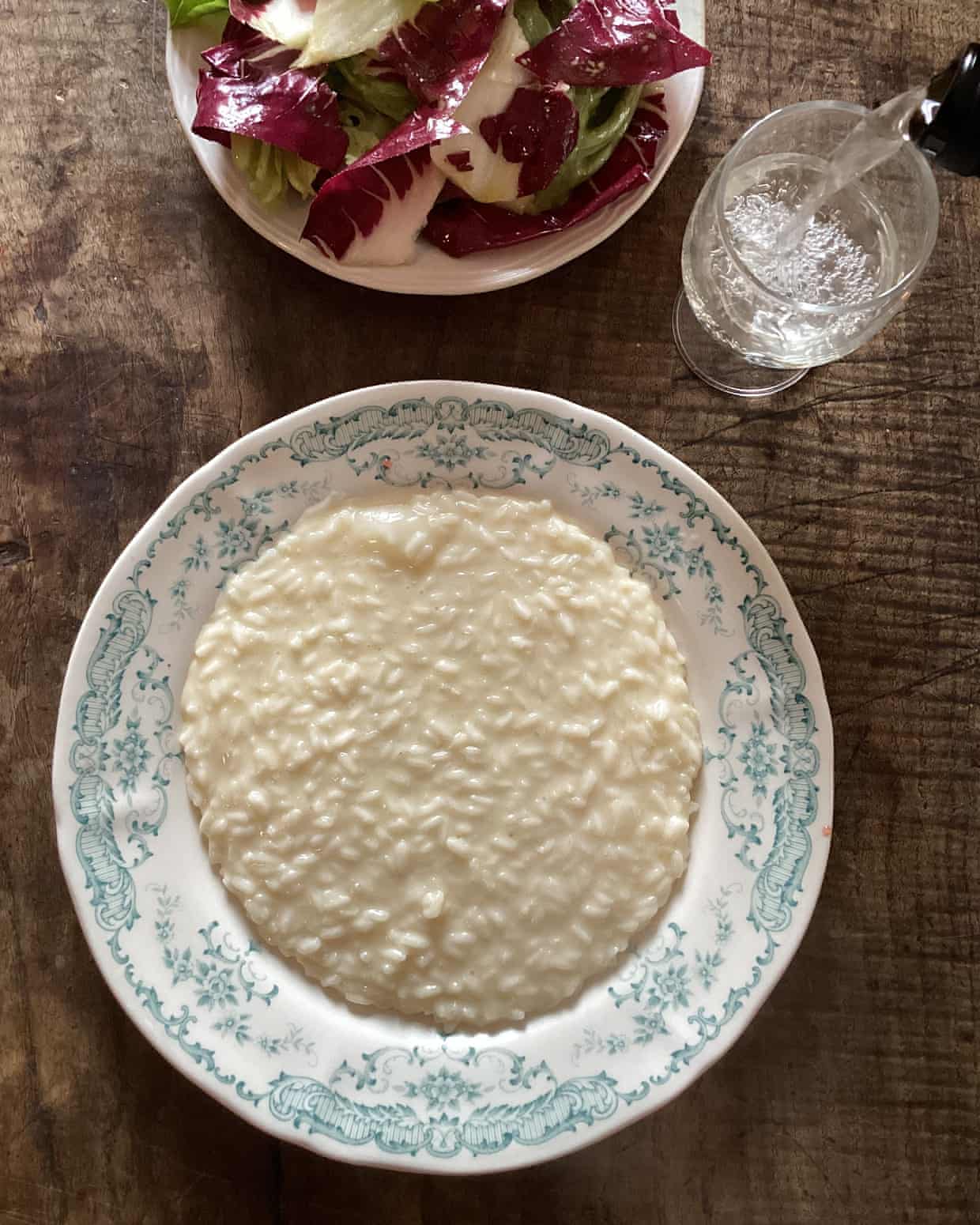
Rachel Roddy’s recipe for risotto in bianco | A kitchen in Rome
Parmigiano reggiano, grana padano, lodigiano, trentingrana and the other members of the grana-type cheese family (there are many, and all are worth seeking out) are far from cheap. Which is why it is important to use every last bit, including the rind with the last few millimetres of cheese still attached. That functions as a sort of highly flavoured and fatty stock cube that can be added to soups and stews. The best place to keep your precious rinds is in a plastic bag or airtight container in the freezer, which also preserves flavour and stops them drying out, until they’re pulled out and added directly to whatever needs a boost, or to make one of the nicest, most delicately flavoured and cheesy broths, which in turn makes a lovely risotto.I have written about risotto many times here, with each version a new favourite, and providing lessons in a dish that, regardless of how much I learn and practise, I am always chasing: the right proportions of rice to broth, as well as a pleasing consistency and texture

‘Highly problematic behavior’: Noma residency in LA starts with PR crisis
It was always going to be an indulgence for René Redzepi, the Danish-Albanian chef of Noma fame, to bring his exacting, innovative vision of haute cuisine to Los Angeles and spend several weeks tickling the palates of well-heeled diners at a hilltop estate once dubbed “the most beautiful home in Hollywood”.The Guardian’s journalism is independent. We will earn a commission if you buy something through an affiliate link. Learn more.The timing has certainly been unfortunate, since the US is now fighting a destabilizing war in the Middle East and food prices are climbing so steeply that many ordinary Americans can no longer afford to eat at McDonald’s, much less contemplate the counterintuitive delights of tacinga cactus, bougainvillea petals, mealworms and giant tuna eyes

Before sunrise: while Sydney sleeps, suhoor meals attract a lively social scene during Ramadan
Suhoor – the pre-dawn meal – is typically shared at home. But in Sydney customers also queue outside food trucks, restaurants and cafes with extended trading hoursIt’s just after midnight in an industrial courtyard in Auburn in Sydney’s west and a glow of string lights and the constant sizzle of a grill signal one of Ramadan’s newest late-night rituals. A food truck specialising in halal steak sandwiches has attracted a small crowd and a queue begins to form.The rest of the city is largely asleep but here the courtyard hums with life as young Muslims arrive in waves after evening taraweeh prayers, chatting and checking their phones as the clock edges closer to suhoor – the pre-dawn meal eaten during Ramadan before the day’s fast begins.Inside The Meat Up, a Lebanese husband-and-wife duo move quickly over the grill
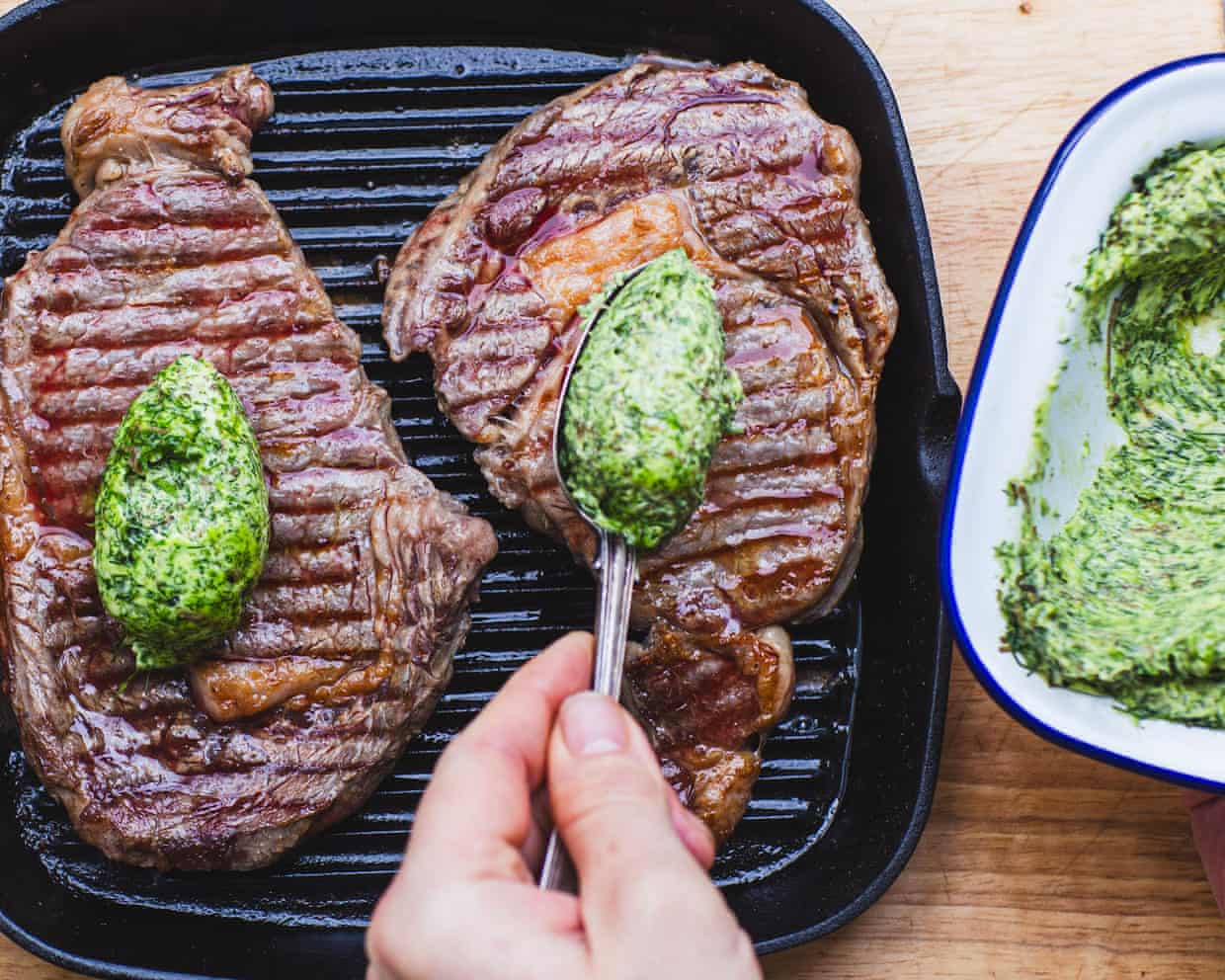
How to use up limp herbs in a flavoured butter – recipe | Waste not
Compound butter is simply butter that’s been mixed with flavourings, both sweet and savoury, and is a tasty and easy way to give a small bunch of tired herbs new life. It can be melted over vegetables, stirred through pasta, grains or pulses, basted over meat or fish, spread on toast, or frozen in slices to use a little at a time. Think of this less as a recipe and more as a framework: taste as you go and decide whether you want something bold and explosive or a more gentle experience.Long before the TikTok revival, compound butter was something most home cooks admired on restaurant plates rather than made themselves. But it’s a really simple way to save a few tired herbs and give a meal a welcome boost, adding both serious flavour and visual impact
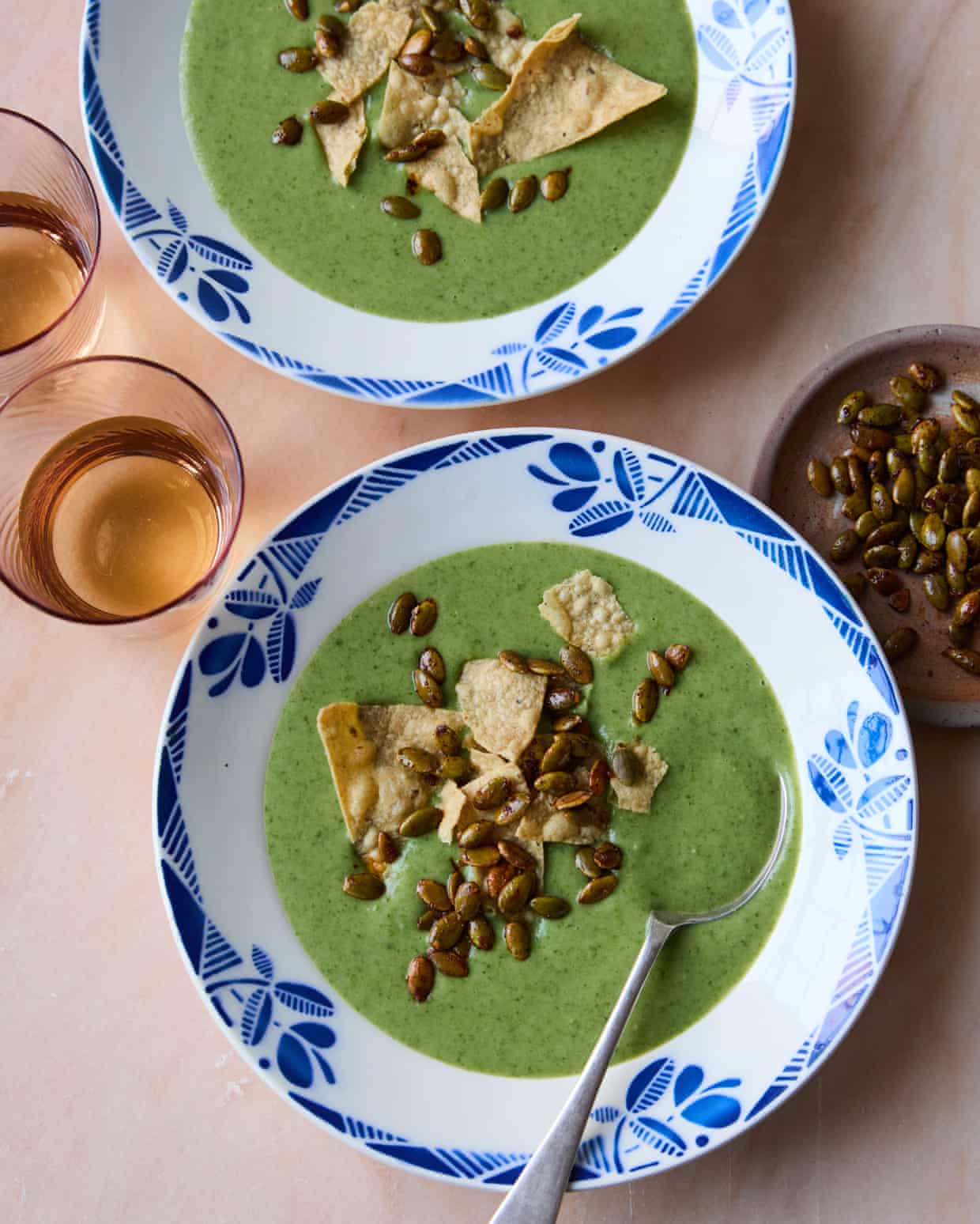
Chicken wings and soup: Helen Graves’ spring onion recipes
March is a tricky pin in the seasonal calendar, with energising winter citrus fading and spring’s stars yet to emerge. It’s a time when I find pleasure in reappraising ingredients that are routinely overlooked. Spring onions, say, which are often considered a garnish, but which are good for so much more. Their contrasting colourway is a clue to their varying intensity, with the white roots holding pungency and the greens more akin to especially bolshie chives. Today’s recipes harness the properties of both, bridging the gap between the current need for comfort and the warmer weather ahead

Ideson claims Paralympics curling gold for Canada with last shot against China

Ireland overpower Scotland to claim triple crown and throw down Six Nations title gauntlet

‘Every lap is survival’: Max Verstappen reflects on F1 Chinese GP qualifying woe

Former NBA star Chris Washburn reflects on drugs, downfall and second chances

Formula One: Antonelli takes pole in Chinese GP qualifying ahead of Russell – as it happened

Kimi Antonelli takes historic pole for F1’s Chinese GP after George Russell’s sprint race win