Life with my autistic sons: ‘How do you explain all the worries, the sleepless nights?’
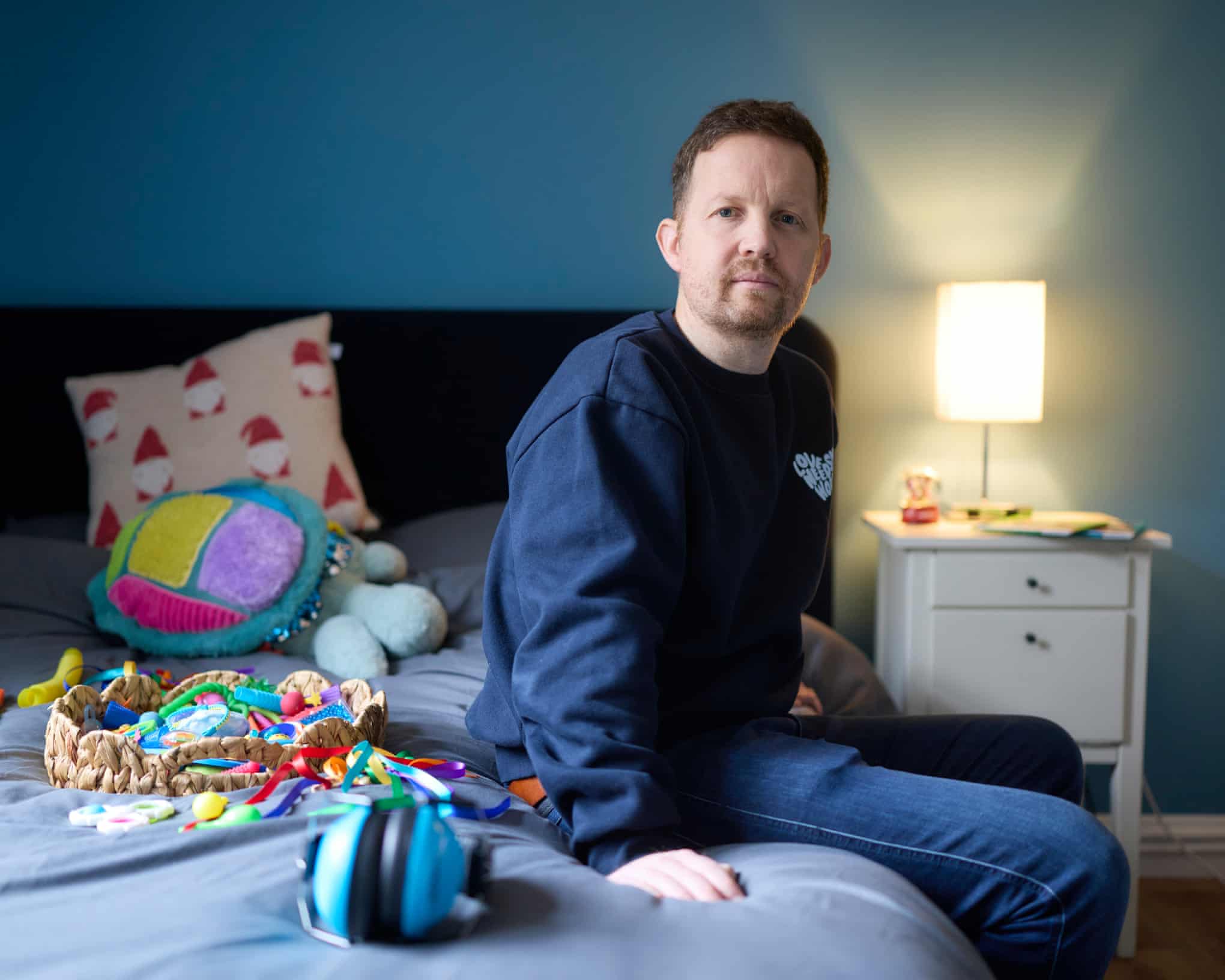
When James Hunt began posting about his boys online, it was a way to describe the emotions and experiences of their extraordinary lives.In sharing his family’s joy and struggles, he realised they weren’t aloneMy conversation with James Hunt begins the usual way: an exchange of hellos, followed by the most mundane of questions.“How are you?” I ask.Although he responds predictably – “I’m all right … I’m good” – we both know that underneath this answer lurks a whole world of experience, and the plain fact that some people’s everyday lives are lived in extraordinary circumstances.Six months ago, this fortysomething father was leading the kind of life that might have caused plenty of people to break into small emotional pieces.
In his Essex home town, he had long since moved back in with his elderly father, who had Parkinson’s and needed round-the-clock care from his son.His mum, who has dementia, was living in a nearby residential home.Meanwhile, the story that comes closest to defining him was continuing as he looked after his teenage autistic and learning-disabled sons, Jude and Tommy, and coped with massively difficult parental challenges – not least a constant lack of sleep.Hunt is a fascinatingly modest, level-headed kind of presence.“There’ve been a few periods like that,” he tells me.
“Sometimes I look back and think, ‘How did we do it?’, for so long and without extra support?” For a moment, his eyes look as if they’re filling up.“I don’t really know how we coped.”His dad died back in October, and he says his sadness was mixed with a strong feeling of guilt: “You feel awful for feeling a bit lighter.” Meanwhile, he was starting to ready Jude – who’s now 17 – for leaving full-time education and entering the adult social care system, which entails endless meetings, phone calls and form filling.And all the time, he was carrying on with a project that began back in 2015: sharing his experiences via a blog (which is now on Substack), and Facebook and Instagram accounts with nearly 400,000 followers apiece.
The title that runs across all this material is Stories About Autism; what Hunt posts online is full of intense emotion and everyday outbreaks of joy, often in the most difficult circumstances.“I never imagined I’d be sharing my life like that,” he says.“When I started, it was because I felt I couldn’t do my boys justice when I was talking to people.Thinking about it all and trying to have a conversation was kind of overwhelming.I’d meet up with friends and they’d say, ‘Oh, how’s Jude?’ and I’d have five minutes to try to distill everything: ‘He’s fine, thanks.
’ But how do you explain meltdowns, and all the worries and the sleepless nights? You can’t.”He was also feeling a deep sense of isolation.“We’d stopped going to kids’ birthday parties because they were just too overwhelming and loud.We stopped going into family gatherings: you know, your aunt’s 60th or so-and-so’s wedding.And it was even difficult for people to come to our house at times.
So I felt like, ‘OK, let me try to write all this down and see if that helps,’”It obviously did,Now Hunt has written a book, Love Needs No Words, a bracingly honest, profoundly moving account of his and his sons’ life so far,It is not about such headline-grabbing notions as autism being a superpower or neurodivergent genius: as he explains, the story happens somewhere else on the spectrum, and is all the more rawly human and relatable because of it,We speak for an hour and a half.
As a fellow autism dad – my son James, who’s now 19, was diagnosed when he was three, and I’ve also written a memoir about our shared life – I instantly recognise a huge amount of what Hunt talks about, from the swirl of emotions sparked by the initial realisation that your child is intensely neurodivergent to what often follows: constant insights into the complexities of their mind, and the dawning realisation that they are part of a huge community defined by human difference.Jude is Hunt’s eldest son, and was diagnosed with autism when he was two, in 2009.As with many parents, that brought Hunt a certain feeling of grief: as he puts it in the book, “the future I’d imagined for Jude – the school drop-offs, the birthday parties watching him make friends – suddenly felt out of reach”.To make things even more difficult, he and his then wife, Charlotte, were given precious little advice about what they should do next.He recalls them being given a single leaflet, and essentially being sent on their way.
“I couldn’t grasp how many people were autistic,” he says.“I thought, ‘We must be the only people in this town with a child like Jude.’ That was the automatic feeling.”As he began to understand who Jude was and what his autism meant, Hunt also began to learn new things about himself – not least how his masculinity initially got in the way of what his new life required, something that hit him when he went to his first autism parenting classes.“There was one other dad,” he says.
“One! It was mostly all mums, who were telling their stories, talking about what their kid was up to, what they were worried about, what they needed help with,Each week would be a different topic: sensory issues, sleep, communication, whatever,And I was sitting there, just not knowing what to say and stumbling over words,” A big part of his story, he agrees, is about how he broke free of these very male inhibitions – not for nothing is one of the chapters of the book titled Finding My Voice,Tommy was born about three years after his brother.
Hunt says he and Charlotte had begun to realise that their second child was also autistic a long time before his diagnosis, despite trying to keep their thoughts off the subject.And, within a few years, the family had collided with something completely unexpected: by the time Jude was six and Tommy was three, they had a clear sense that it was becoming increasingly difficult for the two boys to meaningfully live together.Both were prone to unpredictable meltdowns and generally challenging behaviour; each also had the kind of sensory sensitivities that made being in each other’s company almost impossible.And the tension between these two unavoidable facts felt nightmarish.“It was incredibly scary.
It goes against every instinct you have as a parent,” says Hunt.“Already you’re living a life that’s not quite matching up to your expectations of parenthood, and then also you’re starting to think about splitting your boys up.So it was huge.”He pauses, and exhales.“When we were having our worst, worst days, it was just meltdown after meltdown after meltdown.
And Charlotte and I almost felt like, ‘If we had another flat and you lived there with one of them, would it be easier?’ It’s really hard to explain: your kid is having huge meltdowns every day – physically hurting themselves, jumping off sofas on to their knees – and you’re seeing that one of the biggest reasons is just their brother being in the same room.Tommy was bouncing around and being loud, and it would just send Jude into a meltdown spiral because Tommy was so unpredictable.And then Tommy would watch that, and get petrified of what Jude was doing.And at first, we were just like: ‘OK.One upstairs, one downstairs.
’”In the most trying circumstances, a solution eventually presented itself.As the book explains, the unbelievable challenges that came with parenting Jude and Tommy began to push Hunt and his wife apart.As any parent of a child with complex needs will know, one of the most frequent casualties of a life spent dedicatedly looking after them can be any quality time together, let alone much intimacy.But when he and Charlotte separated and then divorced, it meant that the two boys could flip between each of their homes, avoiding the problems that had made life so impossible.This part of the story has a very unlikely twist.
Charlotte now has twin girls, and she and her former husband now live directly opposite each other, living happily blended lives, something Hunt traces to the fact that even when they first lived apart, they had to remain in close contact.Jude and Tommy, meanwhile, now go to the same specialist school.“They went on a tandem bike together yesterday.And that was great: big smiles, lots of laughing.They’ve spent nights together at their mum’s house because she’s got a bit more space and a bit more support and that’s been fine.
They eat lunch together at school.They’ll do trampolining or art, or something that’s fun to try.We’ve been working on that for a few years.The idea is to build that relationship: ‘I can have my brother next to me and I can still have fun.And the world is still OK.
’”Jude is nonspeaking, but Tommy – who’s now 14 – has a blooming understanding and facility with written language, and is suddenly in the habit of communicating with his parents using WhatsApp.“When I first wrote about that, it was very new,” Hunt says.“But now it’s every night.If he’s at his mum’s, he texts me, and we’re able to have conversations about things that he’s done.Yesterday I was speaking to him about the fact he went bike riding with Jude.
Until a few months ago we weren’t able to do that,So it’s been massively life-changing,”With Jude, a key to connection and understanding is centred on his intense love of music,“The first Ed Sheeran album used to be on a loop for night after night,” Hunt says,“Although Jude can’t type, he can go on YouTube and figure out how to get to a song he likes.
Yesterday he was listening to No Scrubs [by TLC].Beyoncé is a big favourite, and Rihanna.One of the things we always do is get in the car and just drive.And as I’m skipping through the radio stations, I can tell by his eyes if he likes a song.I’ve seen so many examples of similar things on social media – music unlocks something and shows how much is really going on inside.
”As he explains all this, one question becomes unavoidable: given that autism is often rooted in genetics, does he have any traits himself?“At first, I didn’t think so at all.I’d say in more recent years, it’s become a sort of running joke between me and Charlotte: she’s definitely ADHD, 100%, but she hasn’t been diagnosed.And she’s like, ‘There are a few things you do that are autistic.’ But then I also think I’ve changed massively in the past few years because of my boys’ needs.Like, I’m a lot more aware of sounds and noise things because I’m so conscious of them and how it affects them.
I’ll be feeling a bit overwhelmed and start thinking to myself, ‘Am I? Or am I just so hypervigilant that I feel uncomfortable as well?’ I don’t know,”Hunt began his working life as a tennis coach, before he co-founded a small marketing company that worked with hair and beauty firms,These days, he’s in charge of SAA Clothing, which shares its name with all his other Stories About Autism activity,It specialises in hoodies, T-shirts, jackets and more, made with sensory-friendly fabrics, and emblazoned with autism-friendly messages such as: “Inclusion isn’t scary”; “Minds of all kinds”; and “Neurodiverse club”,The business now has a shop, next door to Domino’s Pizza in Hunt’s home town of Burnham-on-Crouch.
Charlotte works there alongside him.The aim, he says, is twofold: to give people whose lives are touched by autism a way of identifying themselves, and also to provide a space for people to share their experiences.“When people come in, they’re usually there for at least half an hour,” he says.“They have a chat.We have a sensory room in the shop.
Often it means it’s the only place that their kids have ever allowed them to have a conversation, because they can go and chill out.The mum stands there and has a chat: they’ll ask about various things that are on their mind.”What he says next goes back to the intense sense of loneliness and isolation that he felt when his first son was diagnosed, and his drive to help other people avoid that predicament.“The idea behind the whole thing has always been to help people feel less alone,” he says.“You know, when I go into London and there’s an Arsenal match on and I see loads of people wearing an Arsenal shirt, I feel connected.
And we’ve had people say they’ve met at Center Parcs, or the beach, or on holiday in Tenerife.Even if it’s just a hello, it makes you feel like, ‘Oh, there’s another family like us.’”He smiles, at something that still seems to feel like a bit of a revelation to him.“That’s the thing, isn’t it?” he says.“There are a lot of us out there.
”Love Needs No Words is published by Gallery Books on 12 March.John Harris’s memoir, Maybe I’m Amazed (published by John Murray), will be available in paperback on 2 April.
‘Wherefore art thou?’: France look to restore identity with outing to Romeo and Juliet
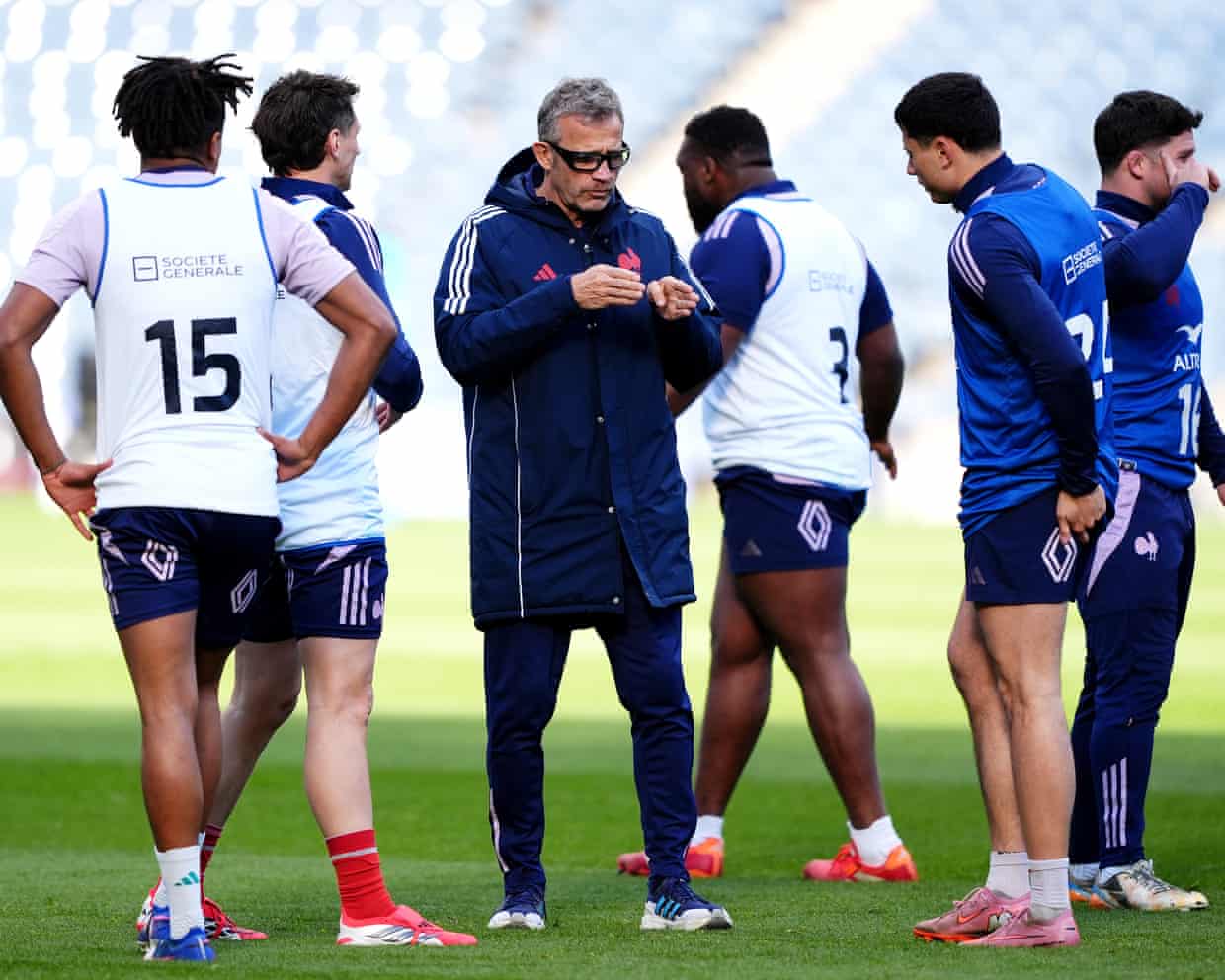
A night at the opera may not be to every Frenchman’s taste these days, but for Fabien Galthié the outing will have been an integral part of his team’s Six Nations finale preparations.Two evenings out from their clash against England, Les Bleus were set to leave their training camp to watch rehearsals for a performance of the ballet Romeo and Juliet at the Opéra Garnier in central Paris. “It’s important for us to take a step back,” the head coach explained. “We’re going to be meeting the lead dancers, watching them at work, speaking to them, and experiencing that legendary venue.”Galthié also highlighted the need for a change of scenery after seven weeks holed up in the sleepy village of Marcoussis

Pakistan’s Abrar signed by IPL-linked team at Hundred men’s auction – as it happened
I think we’ll wrap things up there. James Coles hasn’t played for England yet but he’s 21, bowls left-arm tweakers and has eight first-class tons. That promise has resulted in a £390,000 deal with London Spirit, the most expensive of the auction. But the most noteworthy signing remains that of Abrar Ahmed – the Pakistan spinner was picked up by SunRisers Leeds, an IPL-affiliated team, for £190,000. Is the world healing? Probably not, but it’s something

Cheltenham festival day three: Home By the Lee and Heart Wood win big races – as it happened
I’ll leave you with Greg Wood’s report on a day packed with surprise winners, absent favourites, tetchy trainers and topped off with an awkward handshake. Join us again tomorrow. Bye!It’s never too early to start prepping for Gold Cup day. I’ll be back to guide you through another day of drama.Cheltenham 5
Cheltenham jockeys in alleged racism row bid to bury hatchet but inquiry continues
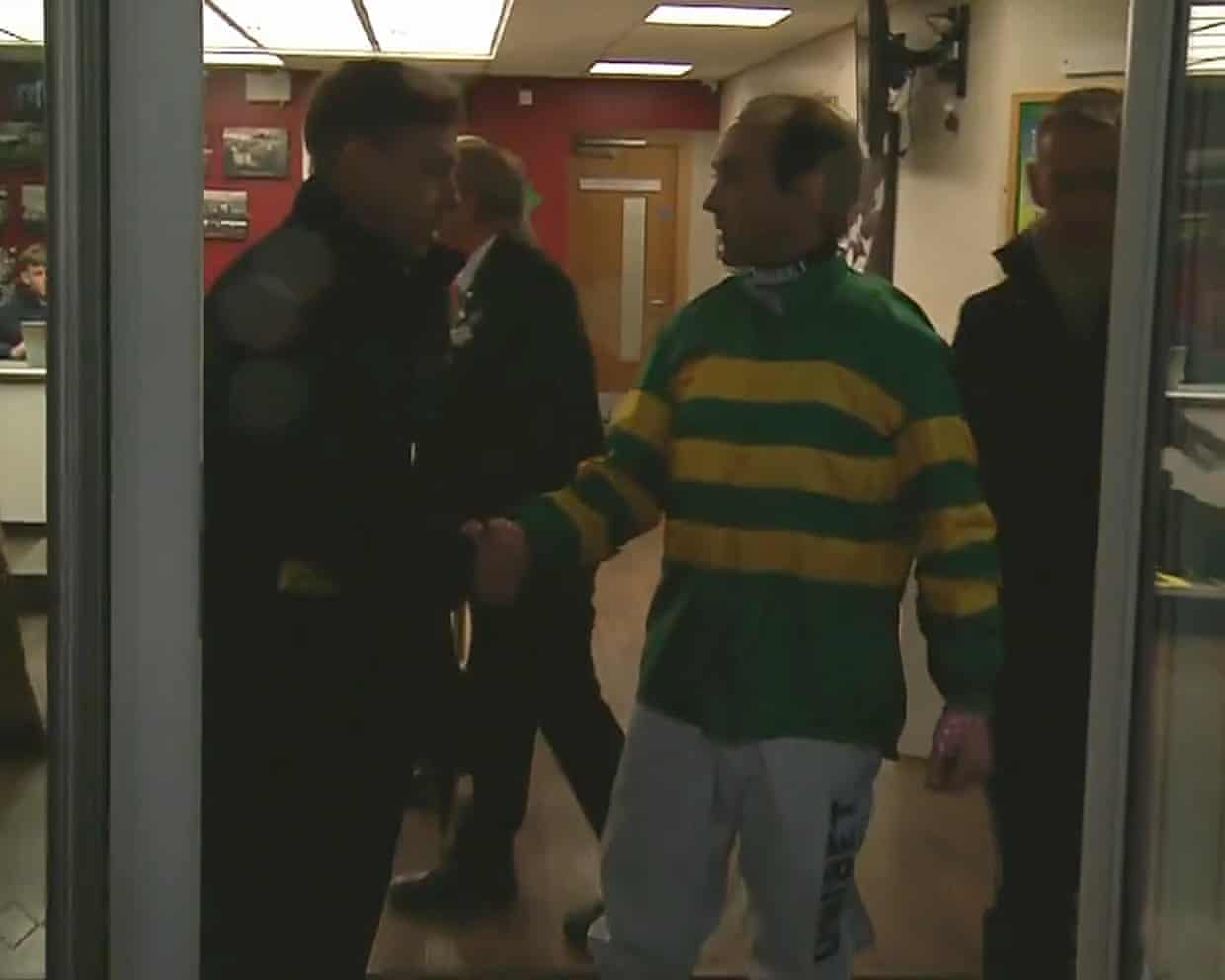
Declan Queally and Nico de Boinville appeared to resolve their differences on Thursday after an angry and controversial exchange of words before the start of the first race on Wednesday.Queally lodged a complaint with the stewards that he had received verbal abuse from De Boinville, some of which was of a racial nature, when he lined up against the running rail shortly before the field was due to set off for the Grade One contest.The two riders shook hands in the weighing room at Cheltenham, however, and told ITV Racing afterwards that their issues have been resolved.“All sorted, it was the heat of the moment and all is forgiven,” Queally said. “Best of luck to Nico in the future
Snow joke: Winter Paralympics athletes angry at scheduling as big thaw hits
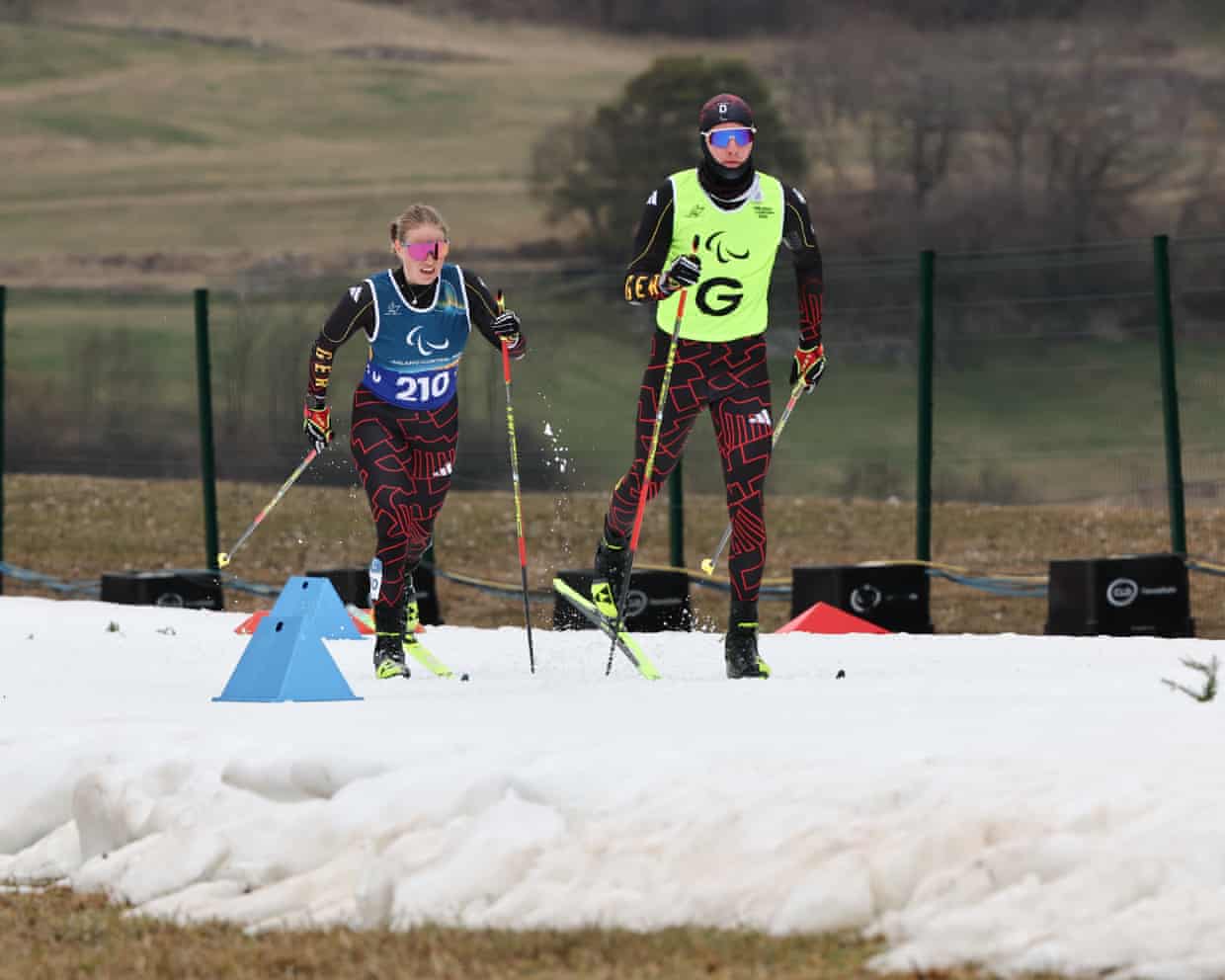
In Cortina d’Ampezzo, the thaw is on. With daytime temperatures reaching double figures in celsius, snow is disappearing from the hillsides and the “torrenti” of ice melt have started to flow once again.Traditionally a time of year when snowfall can be at its heaviest, there has been none since the Winter Paralympics began. The Games have not been insulated from the consequences.Last weekend the course at the Cortina snowboard park, about 1,450m above sea level, had to be redesigned the night before competition because it had proved too dangerous in training due to snow melting then refreezing overnight as ice

Harry Redknapp dares to dream of Gold Cup glory with The Jukebox Man
Harry Redknapp was in a reflective mood after watching Taurus Bay, his first runner at this year’s meeting, finish among the also-rans in Wednesday’s Turners Novices’ Hurdle. It was a decent performance – Taurus Bay was a 33-1 shot, after all – but it was the disappointing run by the favourite, No Drama This End, that was on Redknapp’s mind as he looked forward to his second runner on Friday: The Jukebox Man, one of the favourites for the Cheltenham Gold Cup.“It’s scary, isn’t it?” Redknapp said. “Max McNeill [the owner of No Drama this End], he’s the most lovely man, he had the favourite there and I know how he’s been. I saw him before the race, all the expectations, and he ends up tailed off

Microsoft backs AI firm Anthropic in legal battle against Pentagon

‘Exploit every vulnerability’: rogue AI agents published passwords and overrode anti-virus software

Elon Musk’s Tesla given go-ahead to supply electricity in Great Britain

Palantir’s NHS England contract ‘opens door to government abuse of power’, health bosses told
‘Devastating blow’: Atlassian lays off 1,600 workers ahead of AI push

Binance sues Wall Street Journal over reporting on Iranian sanctions