Bosses say AI boosts productivity – workers say they’re drowning in ‘workslop’

Ken, a copywriter for a large, Miami-based cybersecurity firm, used to enjoy his job.But then the “workslop” started piling up.Workslop is an unintended consequence of the AI boom.It’s what happens when employees use AI to quickly generate work that seems polished – at least superficially – but is in fact so flawed or inaccurate that it needs to be heavily corrected, cleaned up or even completely redone after it’s passed on to colleagues.For Ken, the problem started after his company’s CEO laid off several of his colleagues and mandated that remaining workers use AI chatbots, saying it would boost their productivity.
While initial drafts were a breeze to create, Ken and his co-workers had to spend more time rewriting, correcting errors and resolving disagreements between each other’s chatbots than if they had never used AI at all.“Quality decreased significantly, time to produce a piece of content increased significantly and, most importantly, morale decreased,” said the copywriter, who spoke under a pseudonym for fear of losing his job.“Everything got a whole lot worse once they rolled out AI.” Ken said the company’s executives shifted the blame to staff when they pushed back about AI-fueled productivity decreases.Ken’s experience reflects an emerging divide between employees and their leaders when it comes to AI: a recent survey of 5,000 white-collar US workers found that 40% of non-managers say AI saves them no time at all at work, while 92% of high-level executives say it makes them more productive.
So what’s causing this workslop deluge? The answer is more complex than being simply a case of workers cutting corners,The real driving force connects back to the C-suite,Companies have spent billions on enterprise investment in generative AI,Some of them, like Block, Amazon, Dow, UPS, Pinterest and Target, have laid off human workers at the same time, attributing the cuts to AI’s potential productivity,Workers who remain feel pressured by their employers to use AI to produce more work, often with little guidance or training.
A disconnect separates executives giddy about generative AI from workers – who are finding that AI merely makes their jobs harder,“People are being told to use AI, often without direction or support,” said Jeff Hancock, a co-author of the study that coined the term “workslop”, and a Stanford researcher and BetterUp scientific adviser,While Hancock believes that generative AI could eventually power tools that help workers improve efficiency, in many cases, the incorporation of AI is having the opposite effect,Hancock’s study, which is not yet peer-reviewed, surveyed 1,150 US desk workers, a subset within the total 5,000,The researchers found that 40% of workers had encountered workslop within a month, and then spent an average of 3.
4 hours a month dealing with it – which the study estimates adds up to $8.1m in lost productivity for a 10,000-person organization.Kelly Cashin, a freelance product designer, told the Guardian she encounters workslop often.“It seems to be common to just copy and paste a bot’s message directly into chats or emails,” she said.At times, when she’s confused by work a colleague sent her, they’ll respond, saying: “Yeah, I’m not sure what AI meant by that” – meaning they’re effectively outsourcing judgment to the chatbot.
“Although it is personally frustrating, I understand why people do this.There’s a lot of pressure to increase productivity compounded by serious uncertainty in the job market,” Cashin said.Philip Barrison, a University of Michigan MD-PhD student who surveyed staff while embedded in primary care clinics, found a similar workslop issue cropping up for medical staff who had been encouraged to use AI to generate email replies to patient questions.That approach was meant to save clinicians’ time.“Based on reporting and my own observations, it doesn’t,” Barrison said.
Instead, many of the workers he spoke to described a lot of editing labor, frustration and concerns about data security and patients receiving AI-assisted emails with errors.Because the AI tools are optional, “once they get past the novelty [of the AI], they start ignoring it”, Barrison said.One reason employers are pushing generative AI in workplaces is because many companies are aiming to reduce their labor costs after investing in the tech, says Aiha Nguyen, who leads the Labor Futures program at the Data & Society non-profit research institute.But those investments haven’t paid off, or at least not yet.One of the conclusions of an often-cited MIT report found that 95% of firms aren’t seeing returns on their investments in AI.
Other recent assessments from the software giant SAP and the professional services and consultant firm Deloitte report a larger fraction of businesses generating returns on investment, but they are still the minority.Businesses expect – or hope – better returns will materialize after two to four years, which is rather slow for technology investments, according to the Deloitte report.“The problem is, generative AI is often being presented as a general-use tool that can do anything, but the reality doesn’t work that way.So what could be creating part of the workslop is [AI’s] unclear mandate or use case,” Nguyen said.AI has become a sticking point as unionized workers negotiate the terms of new contracts, Dan Reynolds, research economist of the Communications Workers of America, said.
Unions are demanding clearer mandates for the tech, and more worker input and control over how it’s used.“Firms are pretty open about using AI to streamline operations, and so a natural response is to interrogate what those tools can actually do and the power dynamics that surround their use,” said Sarah Fox, director of Tech Solidarity Lab at Carnegie Mellon University.Fox said she was skeptical when firms say they are deploying AI within their companies to improve productivity and efficiency and to help workers be better at their jobs.“Actually that obscures larger changes to labor dynamics,” and reduces workers’ autonomy rather than empowering them, she said.

Kemi Badenoch’s memory wipe and the eternal sunshine of the spotless mind | John Crace
Please sit down. Loosen your clothing. Do not adjust your screen. Take several deep breaths. Close your eyes

UK’s armed forces are in a sad state – and they have only themselves to blame
George Robertson, Tony Blair’s first defence secretary, a former Nato secretary general and an author last year of the latest in a series of evasive strategic defence reviews, accused Keir Starmer on Tuesday of a “corrosive complacency towards defence”. He said the prime minister was not willing to make the “necessary investment”.Lord Robertson could have directed his fire elsewhere. He must know that no government department has been so complacent in the face of years of devastating evidence of waste, profligate contracts, and policy decisions that have avoided confronting new but increasingly clear security threats to Britain and other western countries.Mandarins in the Ministry of Defence and successive defence secretaries have failed to confront the armed forces’ top brass – senior military figures who have a vested interested in preserving the status quo and continuing to fighting the last battles, reluctant to accept new geopolitical realities and new technologies
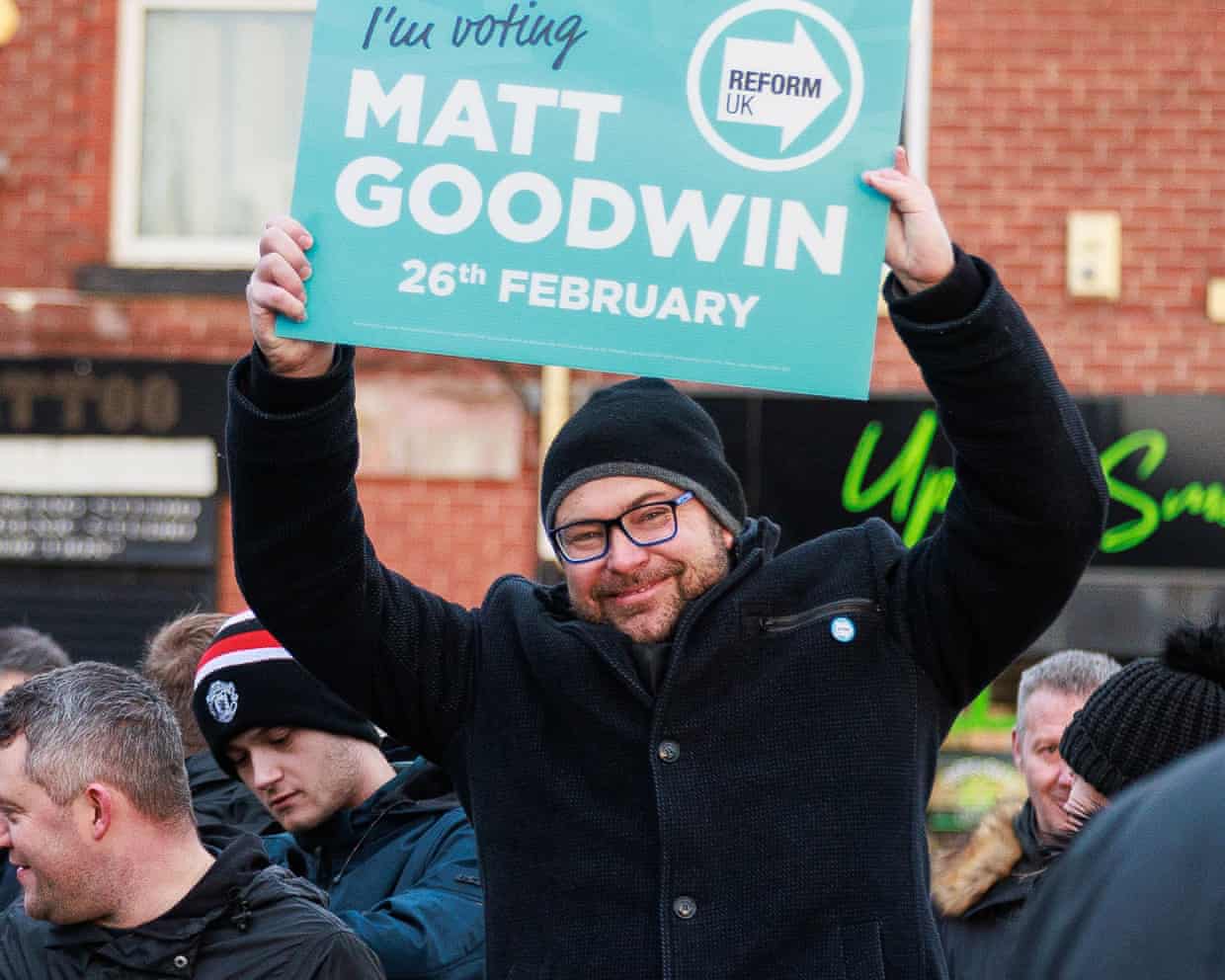
Reform activist suspended over racist and antisemitic comments remains election agent
A Reform UK activist in the Gorton and Denton byelection who was suspended over racist and antisemitic comments has been named as the election agent for three of the party’s candidates in Manchester ahead of polls on 7 May.Adam Mitula, an interim campaign manager in the Tameside area, confirmed in February that he had been suspended as a party member “pending investigation”.It came after evidence was published that appeared to show he posted a highly offensive racial slur aimed at black people, and also made what appeared to be a derogatory remark about Jewish women.A notice of election document published last Thursday shows that Mitula is now the election agent for Reform candidates standing in three wards in the Tameside area: Aron Webb, Audra Murray and Daniel Bennett.Mitula also appeared to have agreed with a Holocaust denier that the number of Jewish people murdered by the Nazis had been exaggerated

Starmer’s ‘corrosive complacency’ on defence has put UK in peril, says ex-Nato chief
The government has shown a “corrosive complacency towards defence” and put the UK in peril, according to a government adviser, in fierce criticism of Keir Starmer’s military policy.George Robertson, the former Nato secretary general and author of the government’s strategic defence review, believes Starmer is “not willing to make the necessary investment”, the Financial Times reported.In addition, Lord Robertson will warn in a lecture in Salisbury on Tuesday that the Iran war “has to be a rude wake-up call”.The former general Richard Barrons, who co-authored the defence review with Robertson, echoed his concerns. “It is a mark of how serious it is that someone who has been a Labour party activist for more than 60 years and was a Nato secretary general has now had to say it in these terms today,” Barrons told BBC Radio 4’s Today programme

Renewed ties with EU needed to boost UK security and economy, says Starmer
The economic and security benefits of a closer relationship with the EU are “simply too big to ignore”, Keir Starmer has told parliament as the British government prepares for more rapid alignment with European rules.Updating MPs on the Iran conflict and his visit to the Gulf last week, the prime minister was explicit about what he argued was the need for renewed ties with Europe given the chaotic global situation and Donald Trump’s unpredictable US administration.The Guardian revealed that ministers were planning to use so-called Henry VIII powers to dynamically align with EU rules by default, including the adoption of changed EU single market rules without full parliamentary scrutiny each time.Setting out what he said were the lessons of the Iran crisis, Starmer said that after Brexit, Covid and the Ukraine war the idea of a global shock to UK living standards was no longer “a novel experience”, and that lessons should be learned.This time, he argued, the response “must and will be different to reflect the changing world that we live in”, saying this included efforts to reduce energy bills

Nige and Zia set out plan to send ‘Boriswave’ traitors to the gulag | John Crace
The Reform UK press conference began a little behind schedule. Time in which Nigel Farage had gathered Zia Yusuf and a few others into a circle for a two-minute silence. A moment to reflect on the sad news from Hungary that Viktor Orbán’s 16 years as prime minister had come to a premature end. Orbán had had so much more to give the world. There would be no one left in the EU to block the €90bn loan to Ukraine
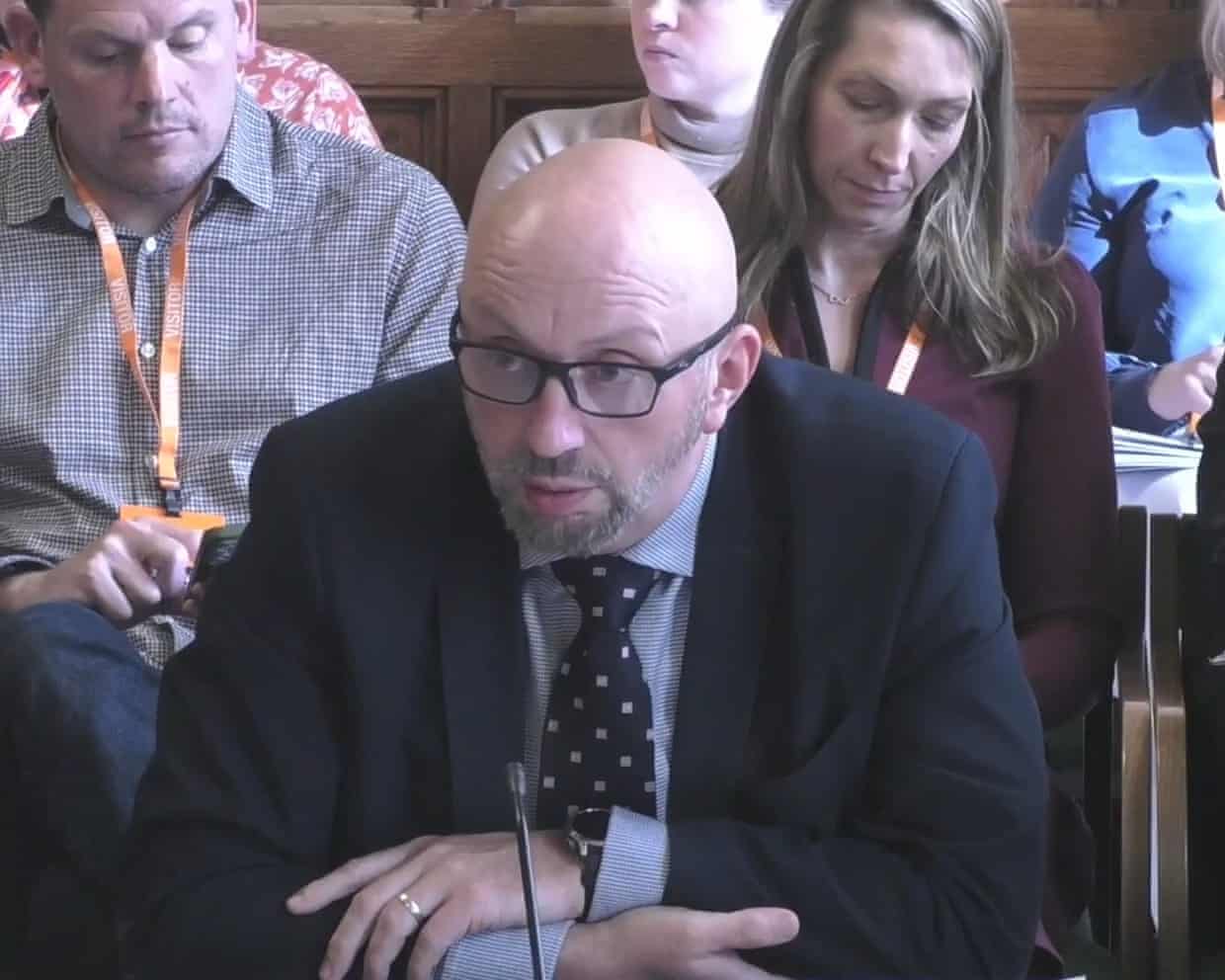
South East Water chief executive to forgo his bonus over ‘unacceptable outages’
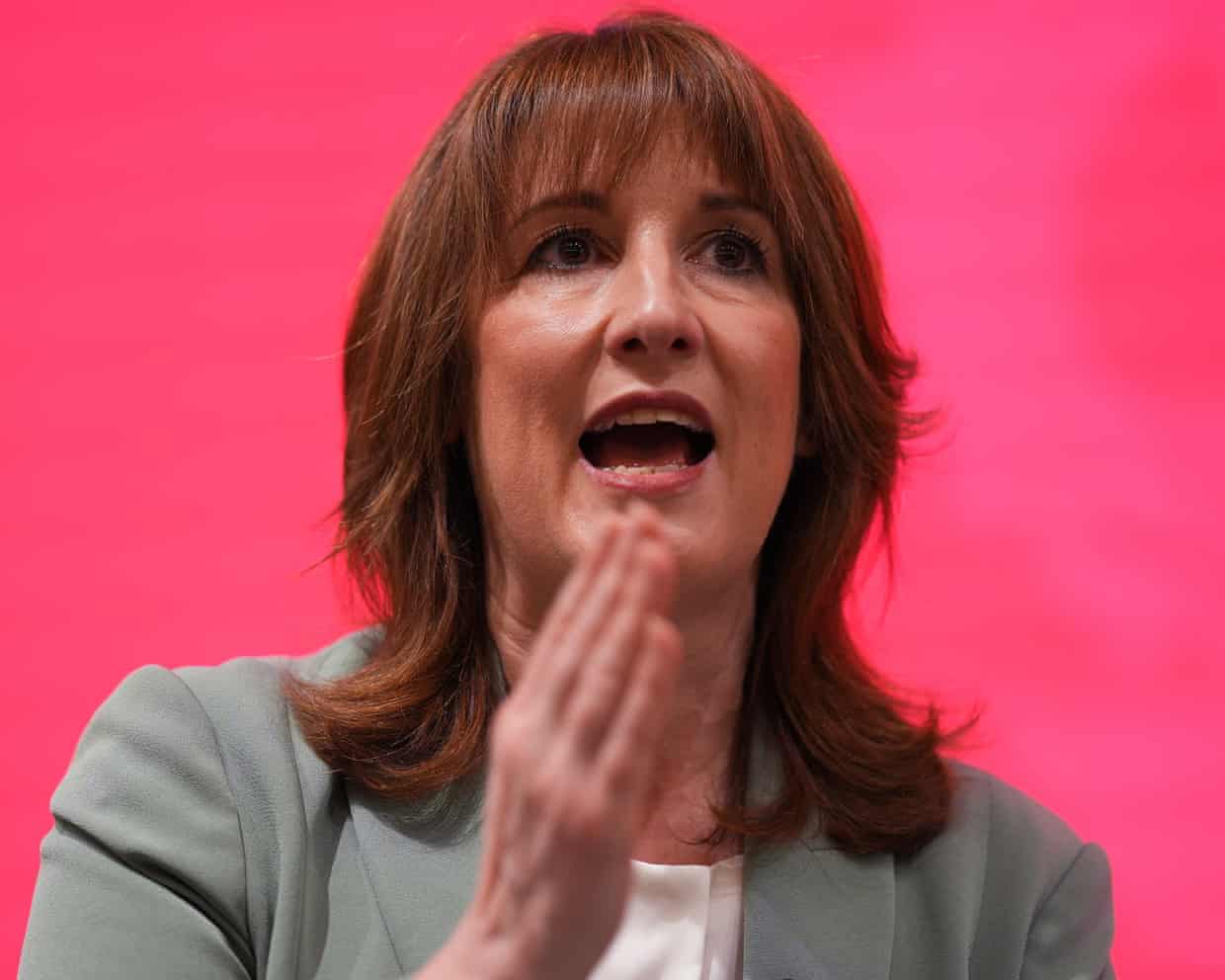
Reeves arrives at IMF with little leeway to prove its UK downgrade wrong
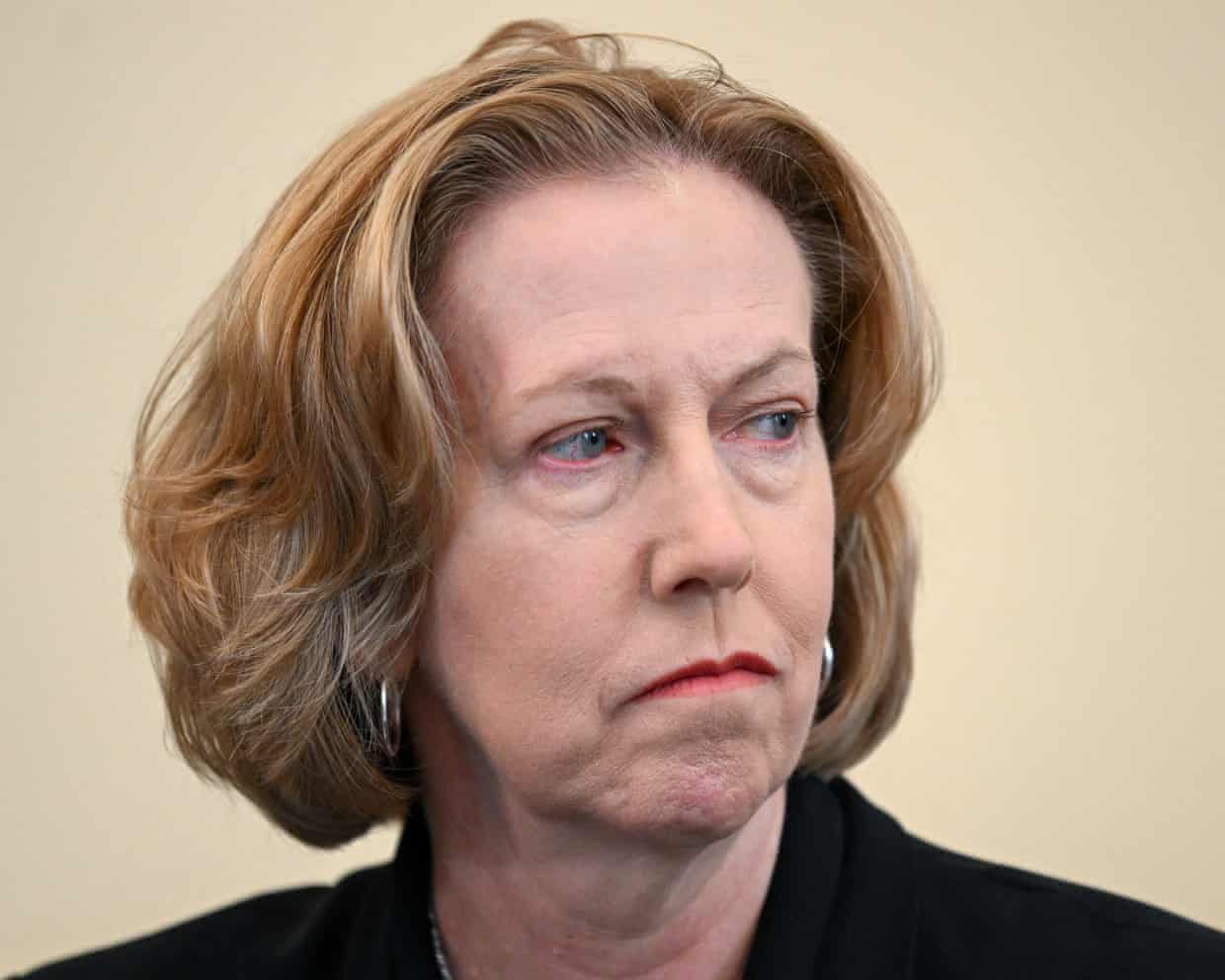
BP’s new boss to overhaul structure after retreat from green strategy

Jamie Dimon says private credit defaults are not threat to major banks

United Airlines CEO reportedly pitched merger with American, sparking competition fears
UK growth forecasts slashed by IMF as Iran war hurts global economy – as it happened