Starmer’s ‘corrosive complacency’ on defence has put UK in peril, says ex-Nato chief

The government has shown a “corrosive complacency towards defence” and put the UK in peril, according to a government adviser, in fierce criticism of Keir Starmer’s military policy.George Robertson, the former Nato secretary general and author of the government’s strategic defence review, believes Starmer is “not willing to make the necessary investment”, the Financial Times reported.In addition, Lord Robertson will warn in a lecture in Salisbury on Tuesday that the Iran war “has to be a rude wake-up call”.The former general Richard Barrons, who co-authored the defence review with Robertson, echoed his concerns.“It is a mark of how serious it is that someone who has been a Labour party activist for more than 60 years and was a Nato secretary general has now had to say it in these terms today,” Barrons told BBC Radio 4’s Today programme.
Robertson, a former defence secretary who led Nato from 1999 to 2003, will also accuse “non-military experts in the Treasury” of “vandalism”.“We cannot defend Britain with an ever-expanding welfare budget,” he said in an interview with the Financial Times.He will say in his speech: “We are underprepared.We are underinsured.We are under attack.
We are not safe … Britain’s national security and safety is in peril.”Barrons said: “There’s an enormous gap between where we have to be to keep the country safe in the world we now live in, and where we actually are.”Asked how he responded to Pete Hegseth, the US defence secretary, mocking the Royal Navy last week, Barrons said: “I hung my head in sorrow, but I couldn’t argue with him because although the Royal Navy and the Royal Air Force and the army are, in their bones, outstanding institutions, they are simply too small and too undernourished to deal with the world that we now live in.And the review says this.”The government’s proposals to fund the strategic defence review recommendations, including a 10-year defence investment plan due by last autumn, have been repeatedly postponed amid warnings that the military faces a £28bn funding gap over the next four years.
Barrons said: “The choice on the prime minister’s desk is they either find some more money to implement a new de minimis review at the speed we agreed last year, or he is going to announce £28bn worth of cuts.And how would that fit with the world that we find ourselves in today?”The Ministry of Defence, the Treasury and Downing Street have not reached an agreement about how to proceed, according to sources.Robertson believes spending cuts in other departments may be required to boost defence funding.In his speech, he will say the chancellor, Rachel Reeves, “used a mere 40 words on defence in over an hour” in her budget speech last year, and last month “in the spring statement she used none”.He will add: “There is a corrosive complacency today in Britain’s political leadership.
Lip service is paid to the risks, the threats, the bright red signals of danger – but even a promised national conversation about defence can’t be started,”In February Luke Pollard, the minister for defence readiness and industry, told the Guardian that the investment plan was “a bigger task than many people outside defence realise”,It would mean “fundamentally changing the shape of our armed forces, so pivoting, in particular, towards more autonomy”, he said, while also stressing the need to refill military stockpiles sent to Ukraine in recent years,“It is not a simple matter of just replacing tank A with tank B,”Robertson said he would cite the country’s inability to deploy more than one Royal Navy warship to the Mediterranean within the first fortnight of the Iran war to illustrate the UK’s complacency on defence.
In the speech, he will warn that the UK faces not just shortages of military kit but “crises in logistics, engineering, cyber, ammunition, training and medical resources”.Last week the defence secretary, John Healey, exposed a covert Russian submarine operation targeting critical undersea infrastructure around UK waters.A government spokesperson said: “We are delivering on the strategic defence review to meet the threats we face.It is backed by the largest sustained increase in defence spending since the cold war, with a total of over £270bn being invested across this parliament.”They said the government was finalising the defence investment plan and would publish it as soon as possible.
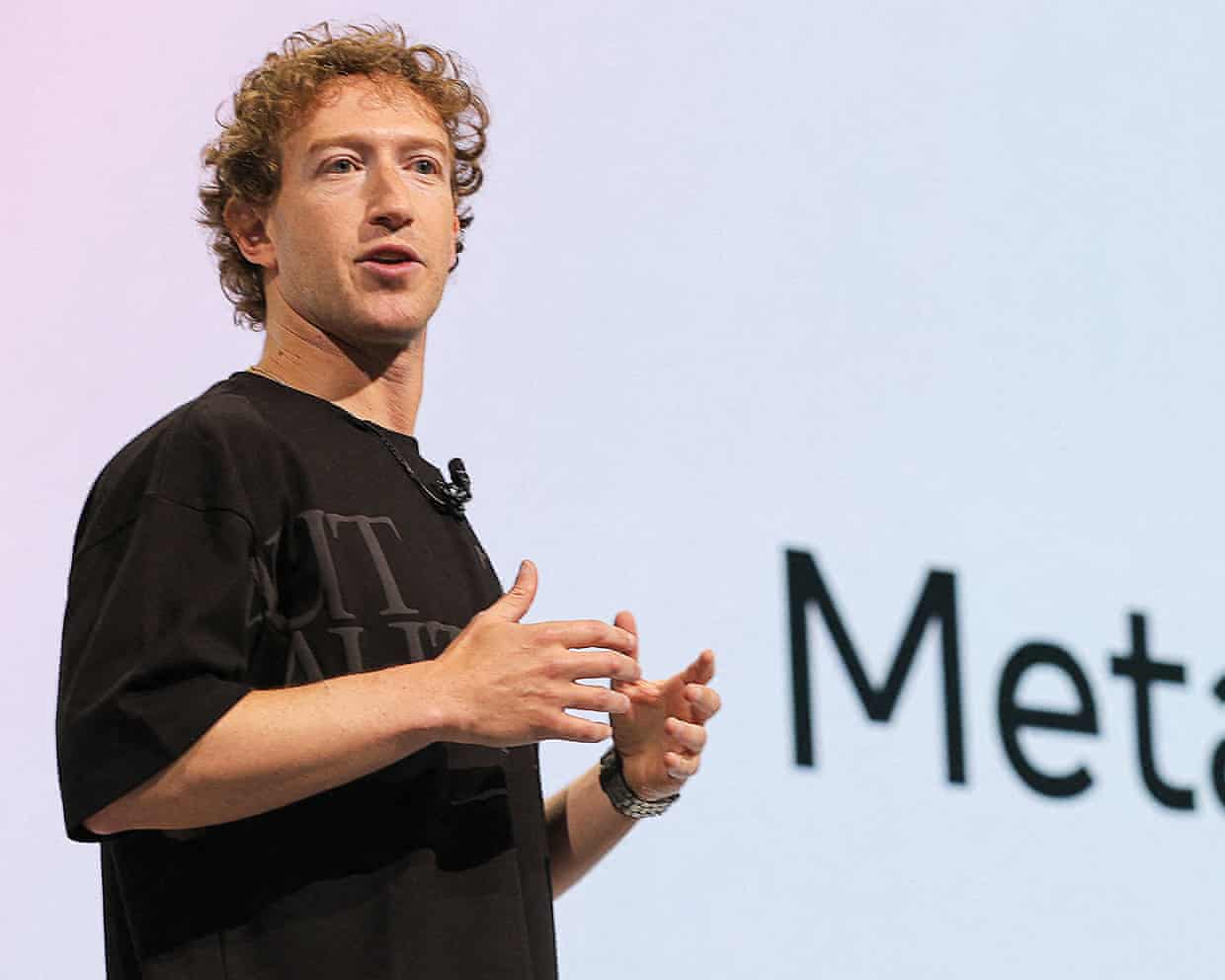
Meta creating AI version of Mark Zuckerberg so staff can talk to the boss
If you are one of Meta’s almost 79,000 employees and cannot get hold of the boss, do not worry. The owner of Facebook and Instagram is reportedly working on an AI version of Mark Zuckerberg who can answer all your queries.The AI clone of Zuckerberg, Meta’s founder and chief executive, is being trained on his mannerisms and tone as well as his public statements and thoughts on company strategy.The rationale behind the project, according to the Financial Times, is that employees could feel more connected to one of the most powerful people in Silicon Valley.The Meta chief has a history of creating and experimenting with digitalised versions of himself
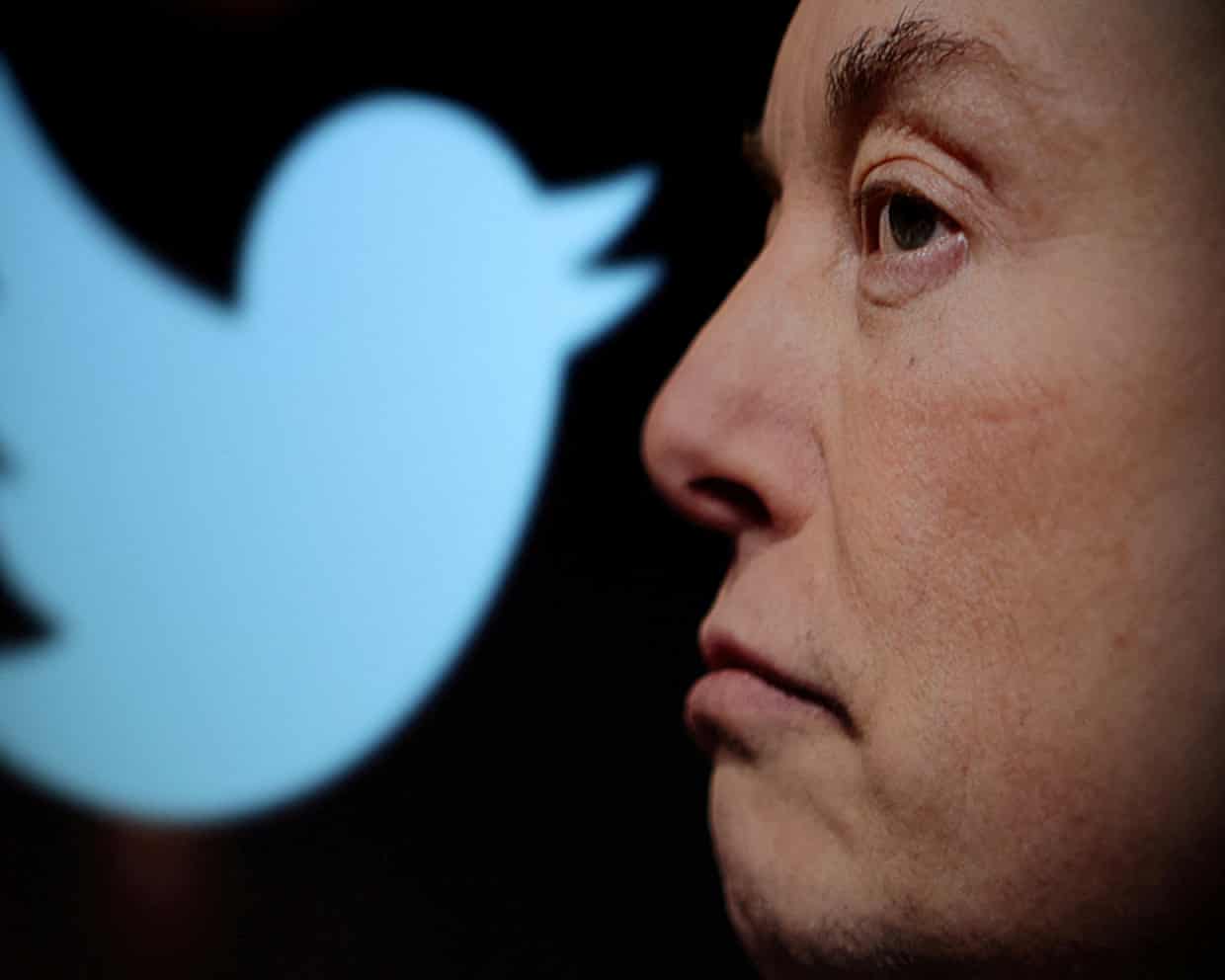
Elon Musk’s X cuts payments to users who post clickbait
Elon Musk’s X has reduced payments to users who post clickbait and recycle news stories as it warned account holders against “flooding the timeline” with low-quality content.Nikita Bier, X’s head of product, wrote on the social media platform that all “aggregators” – users who quickly repackage and repost news from other accounts – had received less money from the creator revenue sharing programme.Under the scheme, X gives a share of advertising revenue to creators who have at least 500 verified followers and generate at least 5m views over a three-month period. Bier wrote that aggregators had their payouts reduced by 60% and that total will be reduced by a further 20%.“It became abundantly clear: flooding the timeline with 100 stolen reposts and clickbait everyday crowded out real creators and hurt new author growth,” he wrote

Booking.com warns customers of hack that exposed their data
The accommodation reservation website Booking.com has suffered a data breach with “unauthorised parties” gaining access to customers’ details.The platform said it “noticed some suspicious activity involving unauthorised third parties being able to access some of our guests’ booking information”.“Upon discovering the activity, we took action to contain the issue,” it said. “We have updated the pin number for these reservations and informed our guests

‘It feels as if I’ve made a new best friend’: my experiment with AI journalling
What’s it like to have a diary that talks back to you, offering comments and advice on your hopes, fears and lunch plans? I spent two months finding outEver since I was a teenager, I have kept some form of diary. These days I favour a paper one for creative brainstorming, and the Journal app on my iPad where I do a speedily typed brain dump every morning. I have always found it a great way to impose some sort of order on my random thoughts, a form of meditation.But I had never even heard of AI journalling until a Google search led me down a rabbit hole where I encountered people enthusing about two apps, Rosebud and Mindsera. It sounded as if Mindsera’s minimalist design was the best for writers

Dr TikTok: patients diagnose chronic illnesses with anonymous commenters’ help
TikTok users increasingly say the app has steered them toward diagnosing medical problems not yet identifiedMalina Lee, a 31-year-old wedding baker based in San Antonio, Texas, joined TikTok during the Covid pandemic lockdowns in 2020. Like many people at the time, she was bored and began using the platform to pass the time and advertise her business. She didn’t expect a cancer diagnosis.Four years after Lee joined the app, a commenter with the username “PickleFart” told her that her neck looked asymmetrical in a way that could suggest she had a goiter – an enlarged thyroid gland – and that she should get it checked out. The anonymous amateur clinician turned out to be right – Lee had thyroid cancer, received treatment quickly, and, less than a year later, was cancer free

AI companies know they have an image problem. Will funding policy papers and thinktanks dig them out?
OpenAI made a surprise announcement this week – not an update to ChatGPT or another multibillion-dollar datacenter – but a policy paper that called for a reimagining of the social contract based around “a slate of people-first ideas”. It’s the latest move in an aggressive effort by the major AI players to reshape the narrative around their industry, as polls show public disapproval of AI increasing.OpenAI’s 13-page paper, titled Industrial Policy for the Intelligence Age, follows its surprise acquisition of tech-friendly podcast TBPN and its announcement of plans to open a Washington DC office that will feature a dedicated space called the OpenAI workshop for non-profits and policymakers to learn about and discuss the company’s technology.OpenAI’s rival Anthropic has meanwhile announced its own thinktank, the Anthropic Institute, which similarly proclaimed an intention to explore how the growth of AI would disrupt society.As disruptions from AI become more tangible and calls for greater scrutiny of big tech companies grows louder, the industry appears to be both recognizing the widespread discontent and looking for ways to reframe the debate

Jamie Dimon says private credit defaults are not threat to major banks

United Airlines CEO reportedly pitched merger with American, sparking competition fears
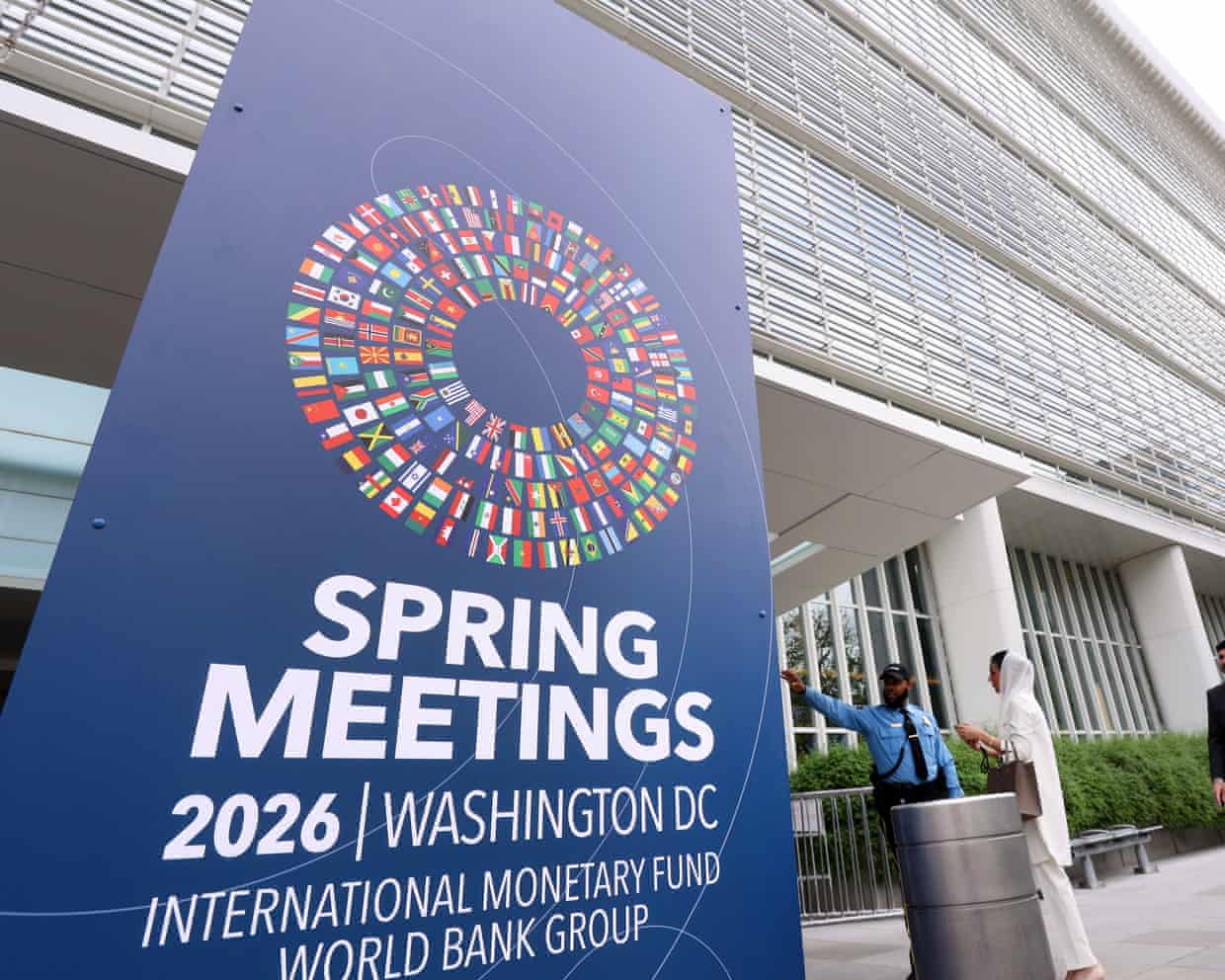
UK growth forecasts slashed by IMF as Iran war hurts global economy – as it happened

UK steel exports to EU at risk as bloc doubles tariffs and halves quotas

IMF warns ‘unprecedented’ energy crisis could trigger global recession as Australia prepares for G20 fuel talks

Nissan turnaround plan pins hopes on ‘AI-defined vehicles’