UK insists US tech deal not dead as Trump threatens penalties against European firms

Downing Street insists the $40bn Tech Prosperity Deal between the US and UK that is on hold is not permanently stalled.The BBC reported on Tuesday evening that the prime minister’s office claimed that the UK remains in “active conversations with US counterparts at all levels of government” about the wide-ranging deal for the technology industries in both countries to cooperate.The agreement, previously billed as historic, was paused after the US accused the UK of failing to lower trade barriers, including a digital services tax on US tech companies and food safety rules that limit the export of some agricultural products.The New York Times first reported British confirmation that negotiations had stalled.“We look forward to resuming work on this partnership as quickly as possible,” a Downing Street spokesperson said in a statement.
She added that the UK government is committed to ensuring a “bond” with the US “and working together to help shape the emerging technologies of the future”,The White House did not immediately respond to a request for comment,Tuesday’s developments come as relations between the US and the EU are likewise chilling,The Trump administration threatened European tech firms on Tuesday with economic penalties if the EU refused to roll back what it called “discriminatory actions”,The Office of the US Trade Representative accused the EU and some member states of “discriminatory and harassing lawsuits, taxes, fines and directives against U.
S.services”.The Trade Representative’s office said in a post on Twitter/X that these companies could face fees and restrictions on foreign services.The bureau singled out European companies, including Accenture, DHL, Spotify and Siemens as being able to “operate freely in the United States for decades, benefitting from access to our market and consumers on a level playing field.“If the E.
U.and E.U.Member States insist on continuing to restrict, limit, and deter the competitiveness of U.S.
service providers through discriminatory means, the United States will have no choice but to begin using every tool at its disposal to counter these unreasonable measures,” the Office of the U.S.Trade Representative said on X.Thomas Regnier, a spokesperson for the European Commission, responded by stressing that their rules “apply equally and fairly to all companies” operating in the region, according to the New York Times.“We will continue to enforce our rules fairly, and without discrimination,” he said.
The retaliation by the US follows a $140m fine slapped on Elon Musk’s X social media platform for violating transparency rules under the Digital Services Act.EU regulators took issue with the “deceptive design of X’s ‘blue checkmark’,” “lack of transparency of X’s ads repository” and “failure to provide researchers access to public data”.The EU has proven much more willing than the US to regulate, investigate and penalize tech giants, a point of contention with the Trump administration.

Caesareans overtake natural vaginal births in England for first time, NHS data finds
Births through caesarean section have overtaken natural vaginal births in England for the first time, NHS data has revealed.Last year, 45% of births in England were through caesareans, 44% were through natural vaginal births and 11% were assisted with instruments such as forceps or ventouse, according to the data published on Tuesday.More than four in 10 caesareans, also known as C-sections, carried out by NHS England were elective, planned operations.For women under the age of 30, the most common method of delivery was natural vaginal birth, and for women aged 30 and over caesareans were the most common.For women aged 40 and over, 59% of births were through C-sections
Resident doctors in England begin five days of strike action
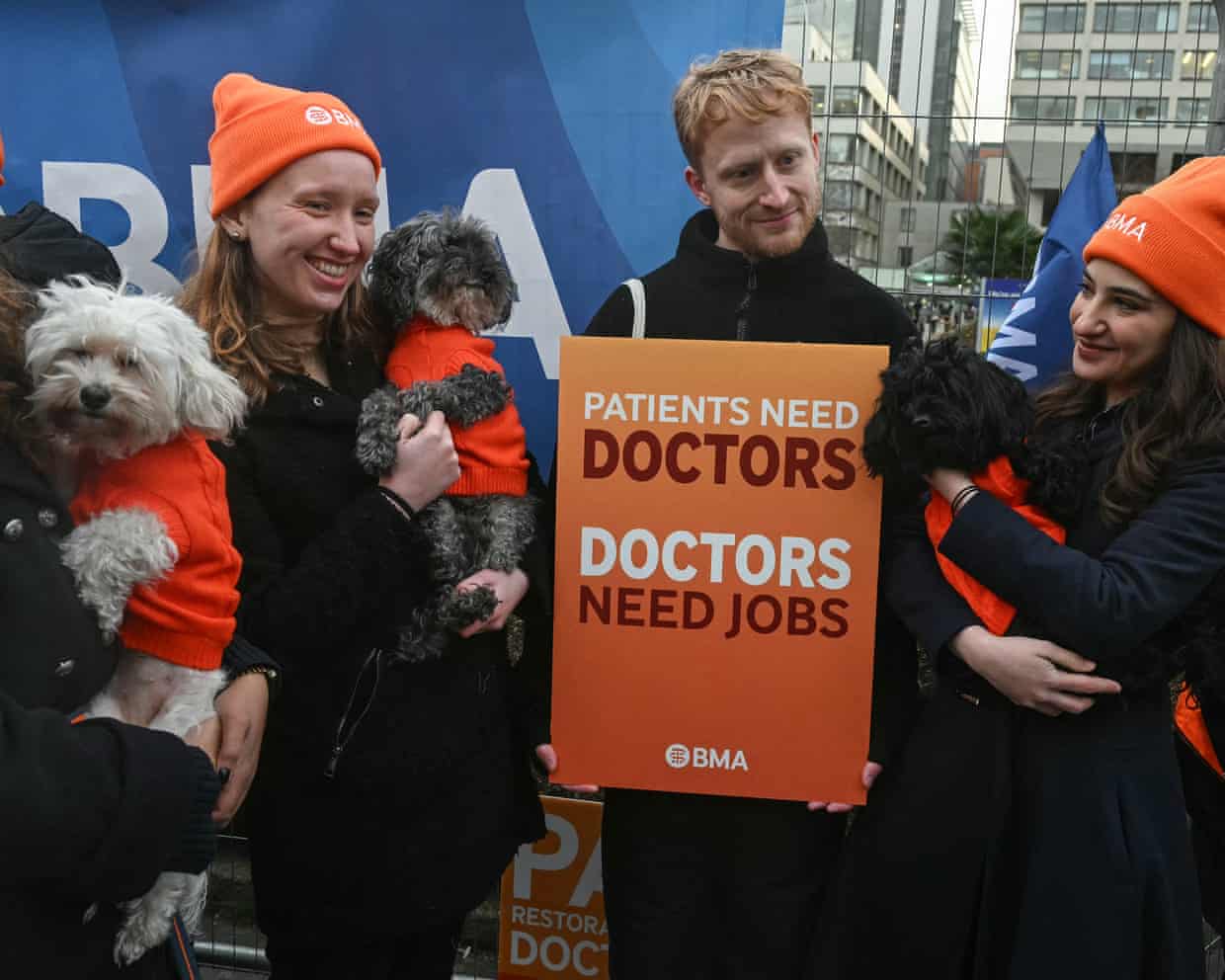
Resident doctors in England have begun five days of strike action after rejecting the government’s latest offer to resolve the long-running dispute over pay and jobs.The British Medical Association (BMA), and the health secretary, Wes Streeting, met on Tuesday in a final attempt to reach an agreement, but failed to do so.It means that resident doctors – formerly known as junior doctors – will remain on strike until 7am on Monday.The latest offer from the government would have increased the number of training places to enable early career doctors to start training in their chosen medical speciality, but not increased their pay for the current financial year.Resident doctors, who make up about half of all NHS doctors, overwhelmingly rejected the offer in a BMA survey last week, with 83% voting against it on a 65% turnout

The Guardian’s Hope appeal raises more than £350,000 for charities
The Guardian’s Hope appeal has raised more than £350,000 for inspirational grassroots charities that bring divided communities together, promote tolerance and positive change, and tackle racism and hatred.The figure, raised in less than two weeks, includes more than £30,000 donated during the annual telethon last Saturday, when more than 40 journalists including John Crace, Polly Toynbee and Simon Hattenstone were on hand to take readers’ calls.The 2025 appeal is raising funds for five charities: Citizens UK, The Linking Network, Locality, Hope Unlimited and Who Is Your Neighbour?Against a backdrop of extremist violence and rhetoric, growing demonisation of migrants, harassment and abuse of charities, and the re-emergence of “1970s-style racism”, our partner charities are delivering practical projects designed to promote empathy, build trust and establish common values.Coverage to date has featured a Citizen’s UK “Walk of Hope” turning anger into community pride, Back on the Map’s work to revitalise a neighbourhood after far-right riots in 2024, and The Linking Network’s programme uniting primary schoolchildren from different faiths and backgrounds.“Thank you to the Guardian readers for your incredible generosity

Adults in England with eating disorders wait up to 700 days for treatment, report finds
Adults with eating disorders in England are waiting up to 700 days for vital treatment, according to a report.The stark figures were revealed in the first report of the National Audit of Eating Disorders (NAED), which looked at access to eating disorder services across the country.The audit, commissioned by the Healthcare Quality Improvement Partnership and funded by NHS England, found there were more community teams to support children than there were for adults.On average, adults with eating disorders had to wait twice as long as children for an assessment, and more than 10 times as long for treatment, the report found.The eating disorder charity Beat said the “growing disparity” between child and adult services was “particularly worrying”
Wes Streeting and resident doctors urged to agree to mediation to end strikes
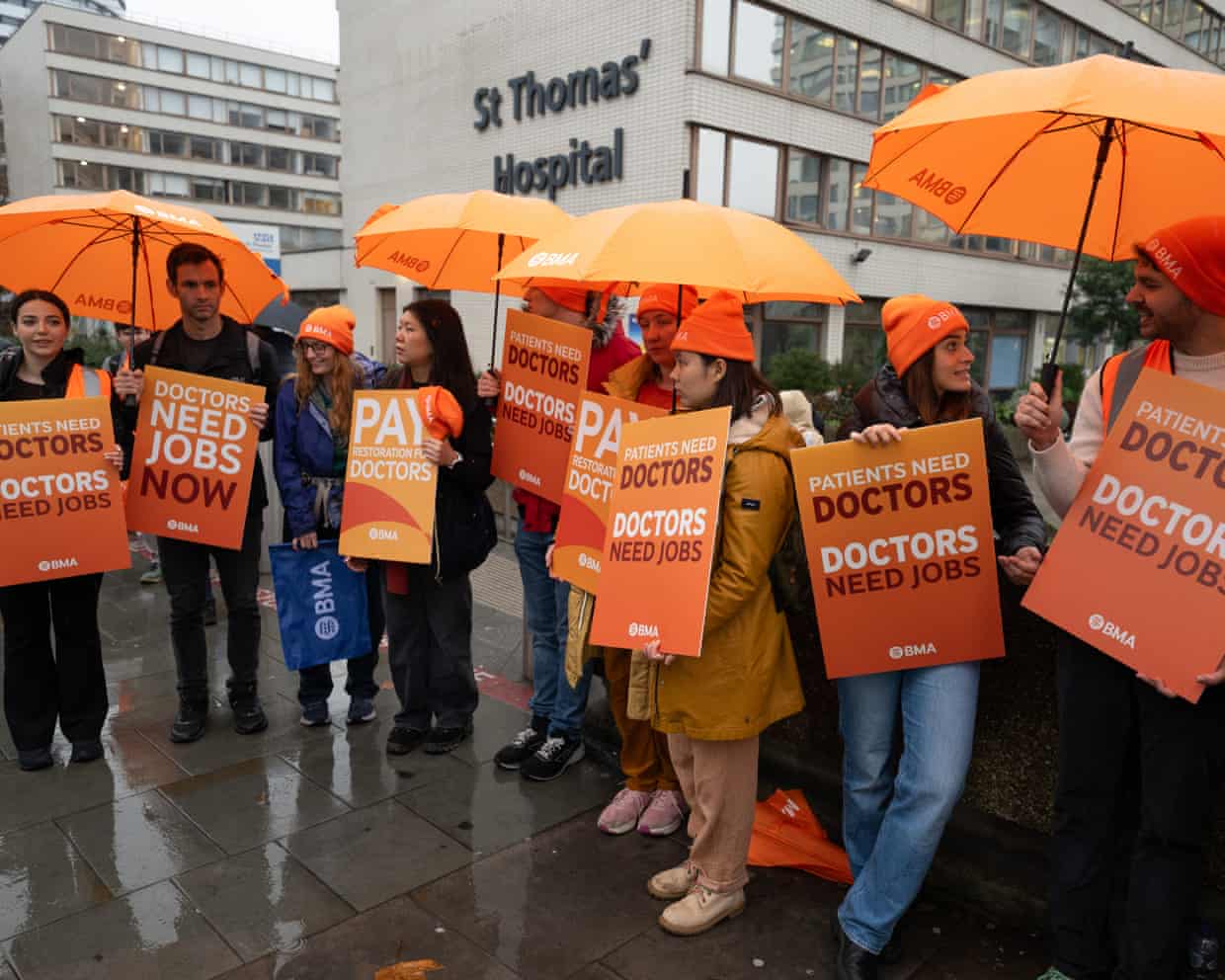
Exasperated NHS bosses have urged Wes Streeting and the British Medical Association to agree to independent mediation to end industrial action by resident doctors, who will begin their latest strike on Wednesday.The health secretary and the doctors union have been told to embrace the idea in order to urgently break the deadlock in their increasingly bitter dispute that health service bosses say is making patients “collateral damage”.An arbitrator could work to bridge the gap between them and resolve the 33-month-long dispute in England, the NHS Confederation, which represents hospital bosses, said.Thousands of resident – formerly junior – doctors in England will strike from 7am on Wednesday for five days in their 14th strike action since 2023.Hospitals have cancelled tens of thousands of tests and treatments to help them cope with the extra pressure they will be under until the strike ends at 7am next Monday 22 December
Striking resident doctors are digging in. History suggests this will go on and on
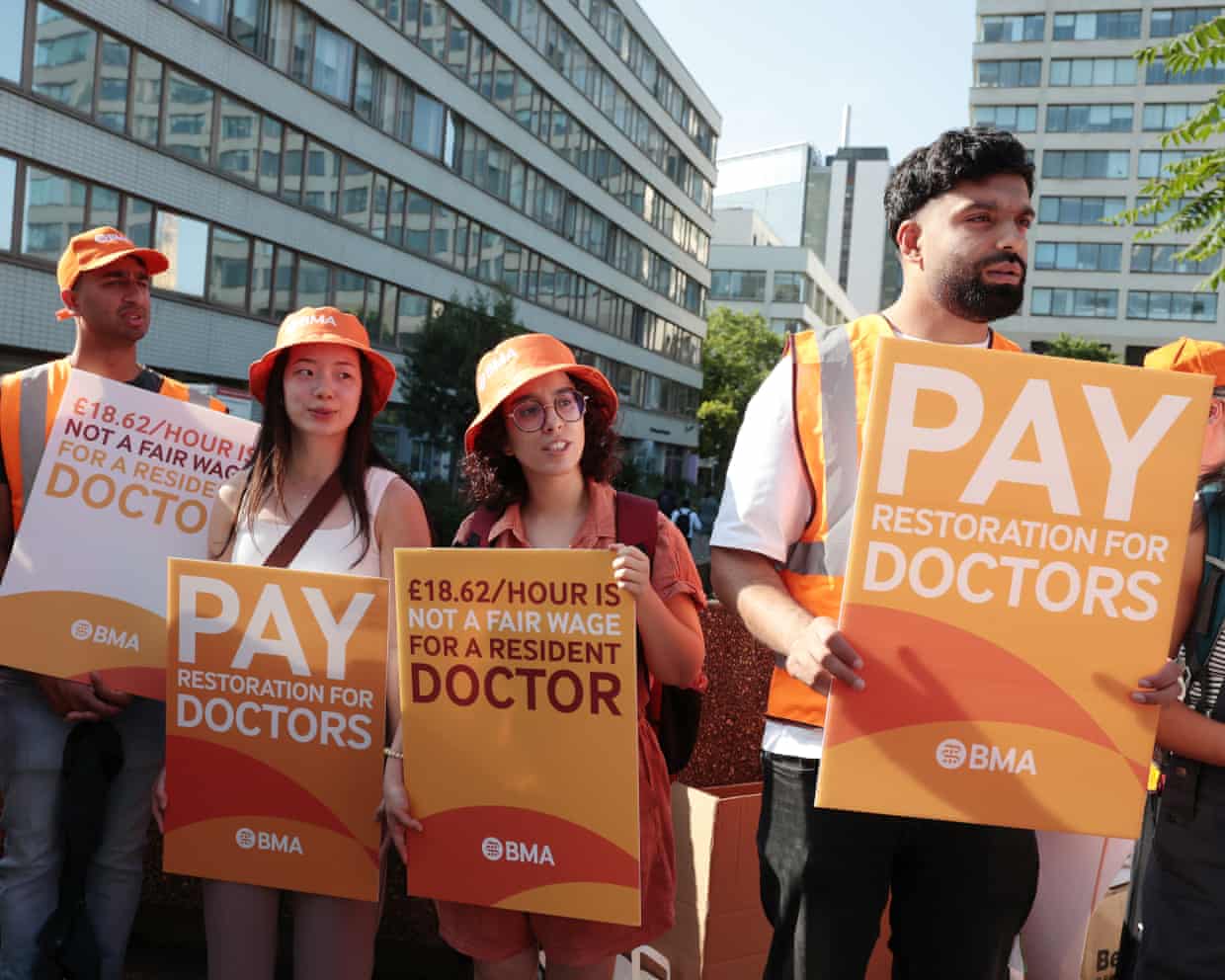
There are an array of numbers relating to the NHS that, it’s safe to assume, make Wes Streeting wince.Take, for example, the number of hospital tests and treatments people in England are waiting for – 7.42 million – and the number of people who need them – 6.24 million. Both have come down since Labour took power 17 months ago but still remain near worst-ever highs

UK to bring forward review of EV sales targets from 2027 to next year
Inflation drop makes Bank of England early Christmas present to Reeves almost a certainty

UK inflation falls sharply to 3.2% amid slowdown in food price rises

Christmas dinner and festive treats up to 70% more expensive, reports Which?

Rate hikes, rising inflation and difficult decisions: key takeaways from Jim Chalmers’ budget update

EU plans to water down ban on new petrol and diesel cars