Rate hikes, rising inflation and difficult decisions: key takeaways from Jim Chalmers’ budget update

Jim Chalmers has claimed “the most responsible mid-year update on record”, unveiling a multibillion-dollar improvement in the budget bottom line alongside extra money for mental health, CSIRO, and training for tradies,Here are the three key takeaways from the mid-year economic and fiscal outlook,As expected, this is a mid-year budget that’s all about the savings,Chalmers warned of “difficult decisions” ahead of today, but there’s no big shock,Instead, the treasurer is making a virtue of small improvements in the bottom line, made harder by some cost blow-outs in areas like disaster relief, which will cost $6.
3bn more than had been expected.The deficit for this financial year is now expected to come in at $36.8bn, or $5.4bn better than expected in the pre-election update.Over the four-year estimates period, the combined deficits are $8.
4bn, and a little bit better than previously forecast in each year.Let’s be clear: even with the improvement, the deficit for this financial year is predicted to be much larger than $10bn recorded in 2024-25, and there are still deficits as far as the eye can see.The federal debt is no longer expected to pass the $1tn mark in 2025-26, which is a bonus – but that milestone has only been pushed back by a year.Still, the documents show that spending and saving decisions taken since the pre-election fiscal outlook have actually served to improve the budget position over the four years.Sign up: AU Breaking News emailThere have been more, major upgrades to revenue – thanks in large part to high commodity prices, especially iron ore and, this time around, gold – which has swelled company tax receipts.
“This is the only mid-year update on record that has delivered a better bottom line every year of the forward estimates, less debt in every year of the forward estimates and net policy decisions that improve the bottom line,” Chalmers said in a statement.“On this combination of measures, it is the most responsible mid-year update on record.”The classic question of every budget.Beyond a slightly more sustainable budget position, punters will have to wait for the May budget for major announcements.But there are some winners.
There is an extra $233m in funding for the CSIRO, which will be widely welcomed after the country’s top scientific body announced a major round of job shedding earlier this year in order to make its budget.There’s $98m to fast-track the qualification of 6,000 tradies and establish a new national training centre in new energy skills, amid forecasts of massive worker shortages associated with the green energy transition.The Myefo also delivers on an election commitment, with $1.1bn for more free mental health services and additional training places.“Labor’s economic plan is all about helping with the cost of living at the same time as we build a more productive and resilient economy and a more sustainable budget, and the mid-year update advances this plan,” Chalmers said.
No surprise that the outlook for inflation is substantially worse than it was earlier in the year, even as growth holds up.“The Australian economy is gathering momentum in the face of substantial global uncertainty,” according to the budget documents.With economists warning that the Reserve Bank could hike rates at its next meeting in February, Treasury officials expect inflation to be about 3.75% by mid-2026 – far above the central bank’s 2-3% target range.Inflation is not expected to get back to the midpoint of the Reserve Bank’s 2-3% target range for at least a year.
The accusation that high levels of government spending is partly to blame for more persistent inflationary pressures forms a major backdrop to how this mid-year budget has been framed.The budget papers are silent on where Treasury assumes the cash rate will be over the coming year.That higher than expected inflation will eat into workers’ pay, with wage growth in this financial year predicted to be 3.25% – suggesting falling real wages.The labour market is also weaker than expected.
The jobless rate is now expected to peak at 4.5% (so not much above the current level of 4.3%), but employment growth is slower.

Caesareans overtake natural vaginal births in England for first time, NHS data finds
Births through caesarean section have overtaken natural vaginal births in England for the first time, NHS data has revealed.Last year, 45% of births in England were through caesareans, 44% were through natural vaginal births and 11% were assisted with instruments such as forceps or ventouse, according to the data published on Tuesday.More than four in 10 caesareans, also known as C-sections, carried out by NHS England were elective, planned operations.For women under the age of 30, the most common method of delivery was natural vaginal birth, and for women aged 30 and over caesareans were the most common.For women aged 40 and over, 59% of births were through C-sections

Resident doctors in England begin five days of strike action
Resident doctors in England have begun five days of strike action after rejecting the government’s latest offer to resolve the long-running dispute over pay and jobs.The British Medical Association (BMA), and the health secretary, Wes Streeting, met on Tuesday in a final attempt to reach an agreement, but failed to do so.It means that resident doctors – formerly known as junior doctors – will remain on strike until 7am on Monday.The latest offer from the government would have increased the number of training places to enable early career doctors to start training in their chosen medical speciality, but not increased their pay for the current financial year.Resident doctors, who make up about half of all NHS doctors, overwhelmingly rejected the offer in a BMA survey last week, with 83% voting against it on a 65% turnout

The Guardian’s Hope appeal raises more than £350,000 for charities
The Guardian’s Hope appeal has raised more than £350,000 for inspirational grassroots charities that bring divided communities together, promote tolerance and positive change, and tackle racism and hatred.The figure, raised in less than two weeks, includes more than £30,000 donated during the annual telethon last Saturday, when more than 40 journalists including John Crace, Polly Toynbee and Simon Hattenstone were on hand to take readers’ calls.The 2025 appeal is raising funds for five charities: Citizens UK, The Linking Network, Locality, Hope Unlimited and Who Is Your Neighbour?Against a backdrop of extremist violence and rhetoric, growing demonisation of migrants, harassment and abuse of charities, and the re-emergence of “1970s-style racism”, our partner charities are delivering practical projects designed to promote empathy, build trust and establish common values.Coverage to date has featured a Citizen’s UK “Walk of Hope” turning anger into community pride, Back on the Map’s work to revitalise a neighbourhood after far-right riots in 2024, and The Linking Network’s programme uniting primary schoolchildren from different faiths and backgrounds.“Thank you to the Guardian readers for your incredible generosity

Adults in England with eating disorders wait up to 700 days for treatment, report finds
Adults with eating disorders in England are waiting up to 700 days for vital treatment, according to a report.The stark figures were revealed in the first report of the National Audit of Eating Disorders (NAED), which looked at access to eating disorder services across the country.The audit, commissioned by the Healthcare Quality Improvement Partnership and funded by NHS England, found there were more community teams to support children than there were for adults.On average, adults with eating disorders had to wait twice as long as children for an assessment, and more than 10 times as long for treatment, the report found.The eating disorder charity Beat said the “growing disparity” between child and adult services was “particularly worrying”
Wes Streeting and resident doctors urged to agree to mediation to end strikes
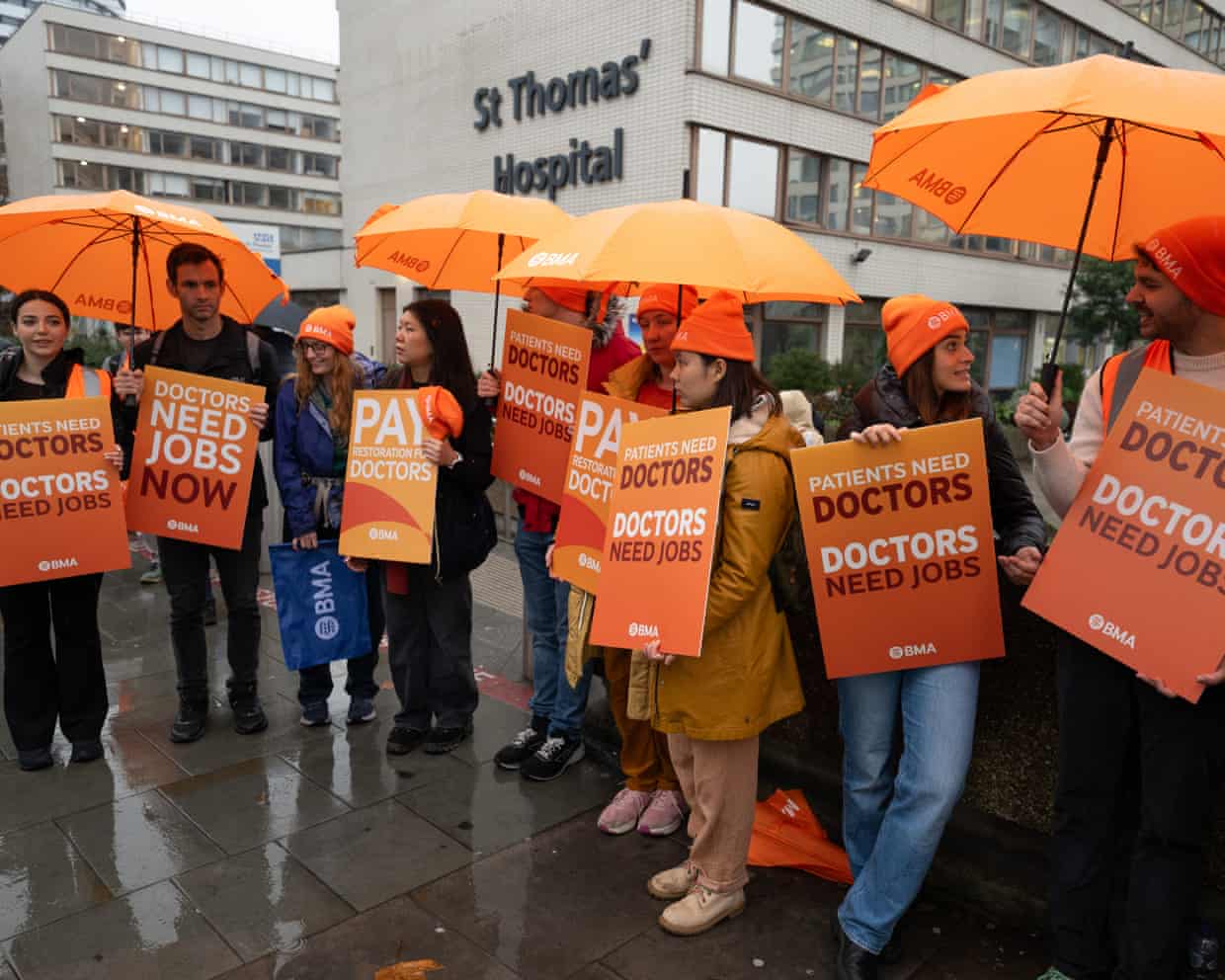
Exasperated NHS bosses have urged Wes Streeting and the British Medical Association to agree to independent mediation to end industrial action by resident doctors, who will begin their latest strike on Wednesday.The health secretary and the doctors union have been told to embrace the idea in order to urgently break the deadlock in their increasingly bitter dispute that health service bosses say is making patients “collateral damage”.An arbitrator could work to bridge the gap between them and resolve the 33-month-long dispute in England, the NHS Confederation, which represents hospital bosses, said.Thousands of resident – formerly junior – doctors in England will strike from 7am on Wednesday for five days in their 14th strike action since 2023.Hospitals have cancelled tens of thousands of tests and treatments to help them cope with the extra pressure they will be under until the strike ends at 7am next Monday 22 December
Striking resident doctors are digging in. History suggests this will go on and on
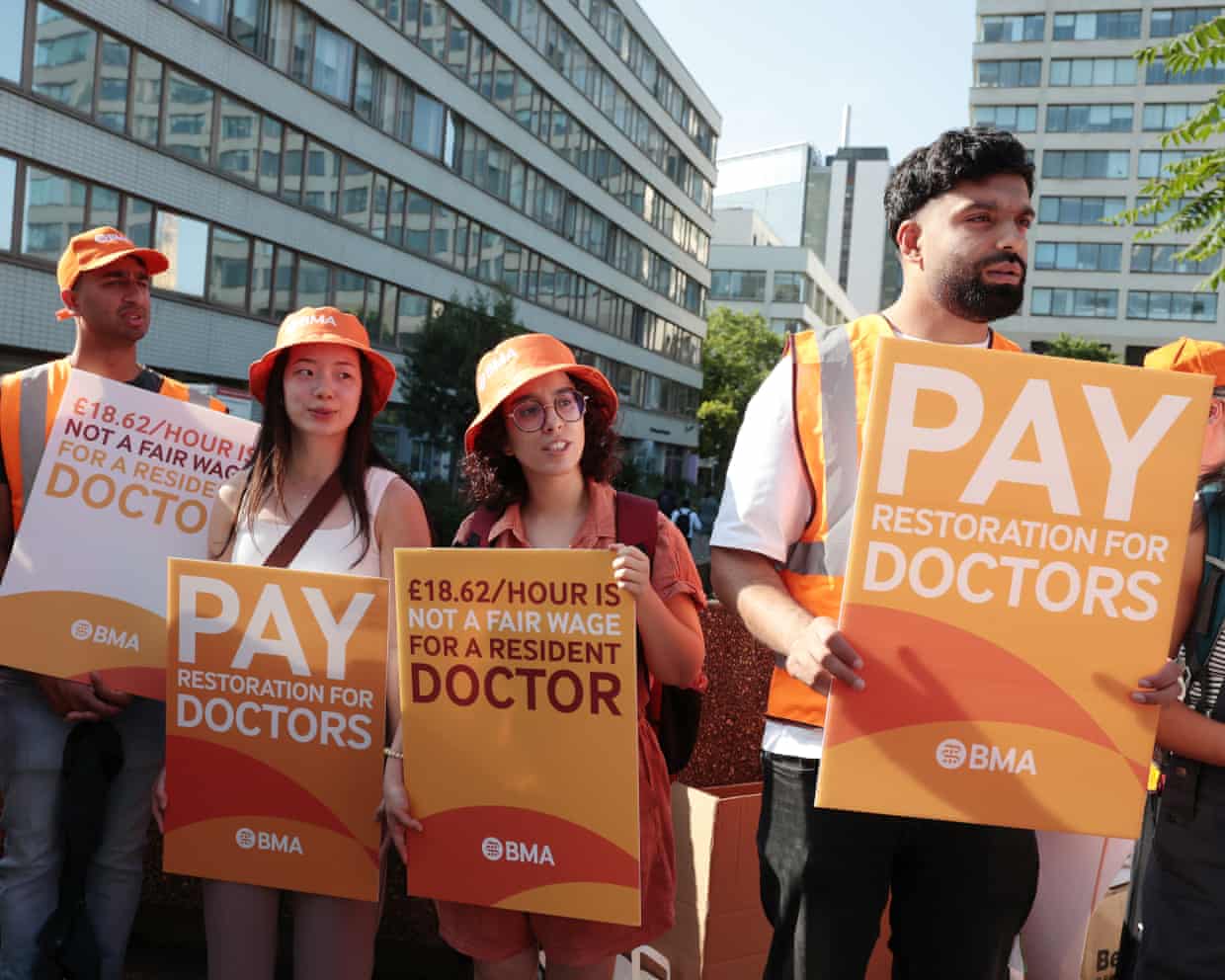
There are an array of numbers relating to the NHS that, it’s safe to assume, make Wes Streeting wince.Take, for example, the number of hospital tests and treatments people in England are waiting for – 7.42 million – and the number of people who need them – 6.24 million. Both have come down since Labour took power 17 months ago but still remain near worst-ever highs

Paddy Power and Betfair to pay £2m settlement after failing to protect users

Warner Bros reportedly poised to reject Paramount’s $108bn hostile takeover bid

UK insists US tech deal not dead as Trump threatens penalties against European firms

US date rape survivors file lawsuit accusing Hinge and Tinder of ‘accommodating rapists’

Jofra Archer steps up to show his true value lies beyond pundits’ stereotypes | Barney Ronay
England consider formal complaint after Snicko error costs Carey’s wicket