A robot walks into a bar: can a Melbourne researcher get AI to do comedy?

Robots can make humans laugh – mostly when they fall over – but a new research project is looking at whether robots using AI could ever be genuinely funny.If you ask ChatGPT for a funny joke, it will serve you up something that belongs in a Christmas cracker: “Why don’t skeletons fight each other? Because they don’t have the guts.”The University of Melbourne’s Dr Robert Walton, a dean’s research fellow in the Faculty of Fine Arts and Music, is taking a different approach to working out whether robots can do comedy.Thanks to an Australian Research Council grant of about $500,000, he will train a swarm of robots in standup.And, at least in the beginning, they won’t use words.
“Robots are good at making people laugh … they are humorous because they break and they bump into things, and so we’re laughing at them,” Walton says,“However, when they try to do something funny on purpose, it ain’t so funny any more,We don’t laugh at them because we really, deep down, don’t believe that they can be funny,”Sign up for a weekly email featuring our best readsSaturday Night Live’s Tina Fey said exactly that at this year’s Edinburgh comedy festival,AI is “unable to be funny”, she said.
But what Walton is looking at is not AI based on text or large language models,He is going to start with non-verbal communication, something that has to be performed rather than written,The fundamentals of comedy, he says, are timing, reading the room, the connection with the audience, along with physical comedy such as clowning,So his ensemble of about 10 robots – which will not be androids but ground vehicles between 40cm and 2 metres tall – will work with humans to learn how to be funny visually in the first instance,They’ll sense movement, the way a head tilts or when someone laughs.
“We’re giving these systems more senses, like human senses … giving them ears, not just listening for words but for things like the gaps in between words, the rhythms of things,” he says.He likens them to babies who don’t yet know how to make sense of the inputs.“That’s partly what we’re trying to do with machine learning and AI – giving it more ways to sense and more ways to build a more holistic understanding of what it means to be in the world,” he says.“It is in standup comedy, really, that the connection between the robot and the audience is so clear, and there’s so much feedback going on.”Asked if eventually they will add voices, Walton says “potentially”.
“Depends how we go,” he adds.There is a tension here, as the performance industry is just one of those where jobs are threatened by AI, and AI steals creative content.Sign up to Five Great ReadsEach week our editors select five of the most interesting, entertaining and thoughtful reads published by Guardian Australia and our international colleagues.Sign up to receive it in your inbox every Saturday morningafter newsletter promotionWalton’s project is not about creating robots that will take over comedy festivals, though, but about investigating whether believable comedy is something robots can be taught, to better understand how machines might use both humour and manipulation, and to better understand human-robot interactions and their risks and benefits.A paradox at the heart of his work, Walton says, is that humour can be used to disarm a situation but can also be used coercively.
He says it might be interesting for comedians to work with robots with comedic timing, but the same techniques could be used, for example, by care robots that can learn to say the right thing at the right time to cheer people up,“But while I’m looking into this work of building belief in comedy performance by machines, I’ve got this other eye on what does it mean, and how might this be used coercively?” he says,Many doubt whether that first step, making robots funny, is possible,At this year’s G’Day USA arts gala, Australian comedian and polymath Tim Minchin told the crowd that humans are interested in “the agency of their fellow human behind the art, struggling, striving, making choices and errors”,“AI might come for the perfectible stuff but never for our flaws,” he says.
“Our flaws are our humanity.”The director of the Melbourne comedy festival, Susan Provan, says what makes comedy enjoyable is “the authentic human originality”.“A performer is bringing something only they can bring, because they are bringing their individual lived experience to the material,” she says.“What’s funny is something that comes from a moment, a magic moment, a pause, an interaction with an audience member, an idea that connects or doesn’t connect.“You’d be laughing at the robot stuffing up.
That’s what would be funny.”

Thousands of patients in England at risk as GP referrals vanish into NHS ‘black hole’
One in seven people in England who need hospital care are not receiving it because their GP referral is lost, rejected or delayed, the NHS’s patient watchdog has found.Three-quarters (75%) of those trapped in this “referrals black hole” suffer harm to their physical or mental health as a result of not being added to the waiting list for tests or treatment.Communication with patients is so unreliable that seven in 10 (70%) only discover they have not been put on a waiting list after chasing up the NHS because they have not been told a hold-up has occurred. In some cases referrals that GPs have agreed to make do not even get sent from their surgery to the hospital, Healthwatch England’s findings show.The research found that 14% of all referrals are getting “stuck” between GPs and hospitals, leaving patients in the dark and anxious about when they will be seen and treated

Spiteful or fair? Reeves’s mansion tax plan proves divisive | Letters
Jonathan Liew’s article (Won’t somebody please think of Britain’s poor £2m homeowners? Oh, wait – everyone already is, 2 November) entirely misses the point that underlies the spate of criticism against the “mansion tax”. While wealth disparity is no doubt an issue that needs to be addressed, this tax is a spiteful assault on hard-working taxpayers who already pay an enormous proportion of their salary to the Treasury to support a woefully mismanaged public sector and welfare state. Those who support the tax seem to be driven by a simple ideology that we need to “bash the rich” to create equality.In the real world, this tax penalises hard-working families who have made difficult choices and made huge sacrifices to get to where they are. I come from a working-class background, I worked hard at school and achieved good grades, I worked part-time jobs, paid my own way through university and chose a profession that pays well, relocating to London and making sacrifices to earn good money – spending 18 hours a day in the office – and I chose to buy property and invest in it

Young unemployed told to engage with jobs scheme or risk benefit cuts
Young unemployed people will be offered training or job opportunities in construction, care and hospitality as part of a UK government scheme, but could have their benefits cut if they do not take up offers.Pat McFadden, the work and pensions secretary, announced on Sunday that 350,000 new training or workplace opportunities would be offered to young people on universal credit, but added there would be “sanctions” for claimants who did not engage.The policy is part of the Labour government’s plans to halt the increase in the number of young people not in education, employment or training (Neet). Britain has almost a million Neets aged 16 to 24, in what some experts have called a youth jobs crisis.Rachel Reeves announced £820m in funding at her budget last month for a “youth guarantee” of a six-month paid work placement for every eligible 18- to 21-year-old who has been on universal credit and looking for work for 18 months

Gambling addicts risk losing ‘life-saving’ help due to funding overhaul, say UK charities
Gambling addicts are at risk of missing out on “life-saving” help unless the government provides emergency support, charities have warned, after an overhaul of funding left treatment providers facing a cash crunch.Until this year, money for problem gambling research, education and treatment had been provided on a voluntary basis by casinos and bookmakers who contributed about 0.1% of their takings.Under new plans, put forward by the previous government and implemented by Labour since April this year, the £12.5bn-a-year gambling sector instead pays a mandatory levy of up to 1
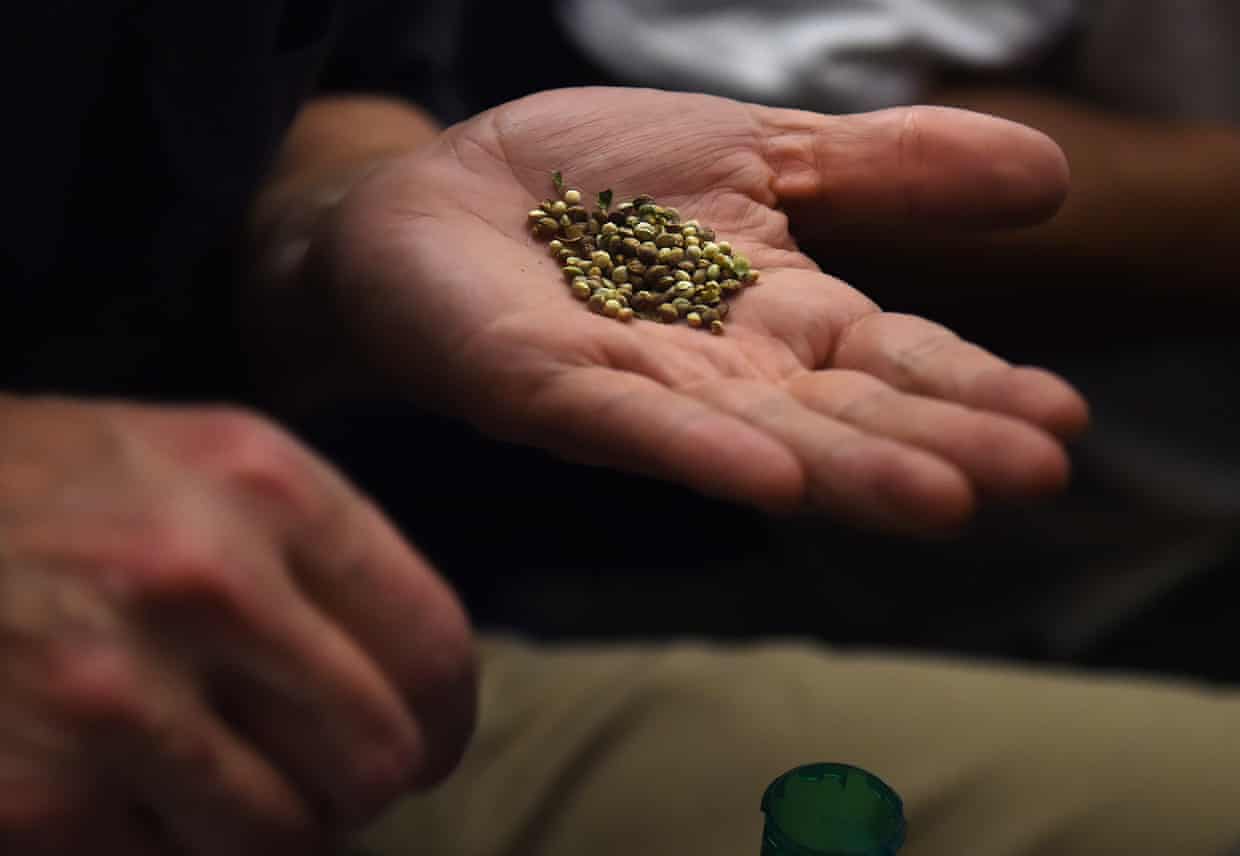
New US seed ban risks driving cannabis genetics underground, growers warn
For the first time since 2018, the sale of cannabis seeds in the US will be restricted due to a last-minute provision in the spending bill that ended the government shutdown last month – a move that experts say will kill the market in this country.Cannabis seed companies have enjoyed comparatively relaxed regulatory standards for the past several years because seeds themselves contain a negligible amount of THC, the compound that makes cannabis federally illegal.Sergio Martínez, chief executive officer and founder of Spain-based Blimburn Seeds, said that the 2018 farm bill eased restrictions on seeds by defining hemp as any product containing less than 0.3% delta 9 THC.“This definition was reinforced in 2022 when the DEA formally clarified that cannabis seeds meeting this threshold are legally considered hemp and therefore are not controlled substances under the Controlled Substances Act, even if the plants grown from them may exceed the THC limit,” Martínez said

Gen Z office survival guide: how to overcome telephobia and get up early
If you are a millennial, part of gen X or a boomer, you probably do not give a second thought to picking up the phone to talk to someone or chit-chatting beside the office water cooler. But for gen Z, those common workplace moments are a huge source of anxiety.According to a study released this week, early mornings, working with older colleagues and making small talk are just some of the things employees born between 1997 and 2012 dread.The study, commissioned by Trinity College London, surveyed more than 1,500 people aged between 16 and 29 across the UK. It found that 38% of young people dread having to make small talk in the workplace

Paramount Skydance makes $108.4bn bid for Warner Bros Discovery, challenging Netflix’s offer – business live

Bank of England cutting jobs as part of overhaul after critical Bernanke review

Social media use damages children’s ability to focus, say researchers
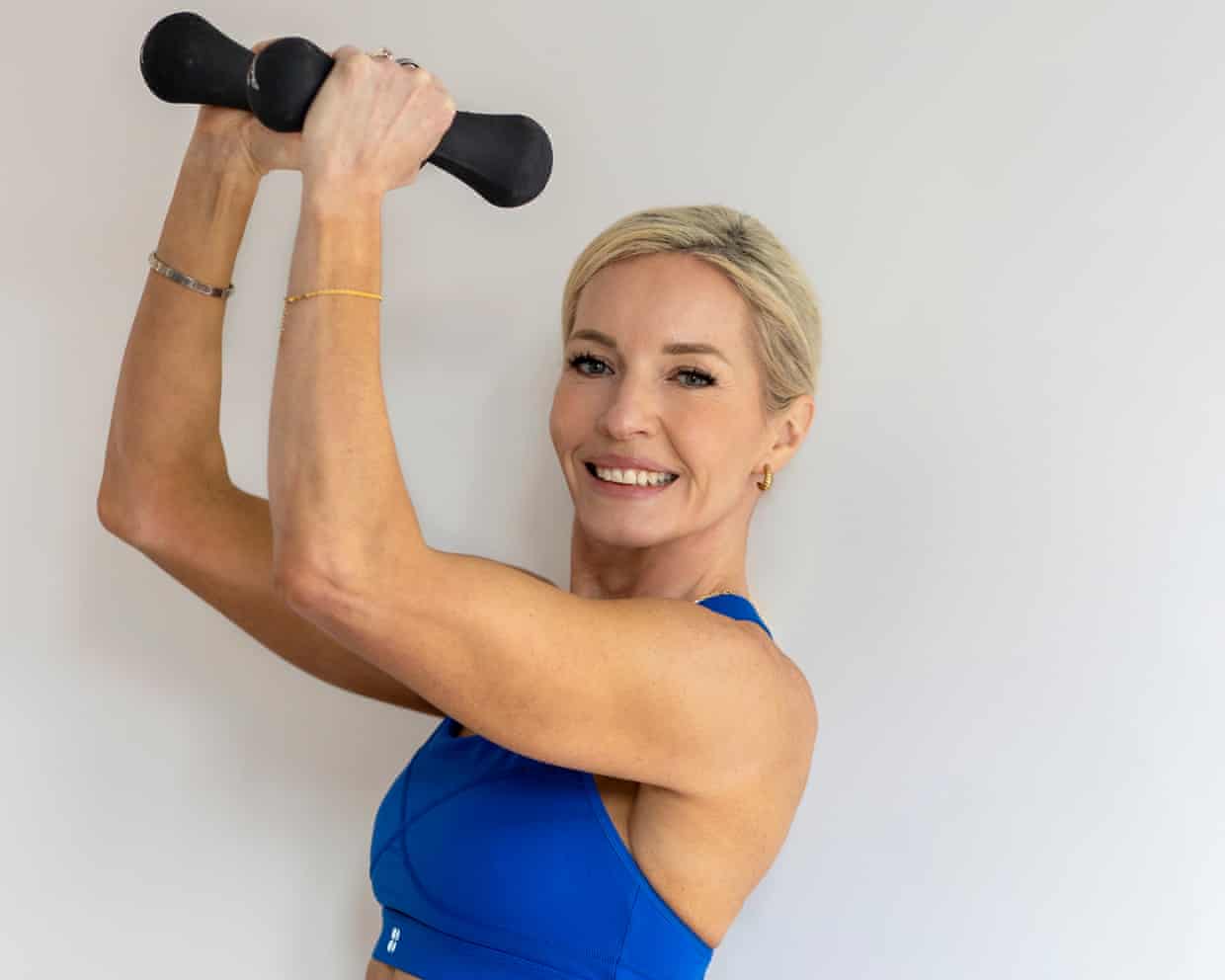
‘It has to be genuine’: older influencers drive growth on social media

McCullum’s ‘overprepared’ Ashes blunder may prove England’s Bazball epitaph

Gabba dramas show why pink-ball Tests are here to stay – and could save the format