Young unemployed told to engage with jobs scheme or risk benefit cuts

Young unemployed people will be offered training or job opportunities in construction, care and hospitality as part of a UK government scheme, but could have their benefits cut if they do not take up offers.Pat McFadden, the work and pensions secretary, announced on Sunday that 350,000 new training or workplace opportunities would be offered to young people on universal credit, but added there would be “sanctions” for claimants who did not engage.The policy is part of the Labour government’s plans to halt the increase in the number of young people not in education, employment or training (Neet).Britain has almost a million Neets aged 16 to 24, in what some experts have called a youth jobs crisis.Rachel Reeves announced £820m in funding at her budget last month for a “youth guarantee” of a six-month paid work placement for every eligible 18- to 21-year-old who has been on universal credit and looking for work for 18 months.
The job guarantee programme will start in the spring, with up to 55,000 young people in line,The government said the jobs would be in areas with some of the highest need, including: Birmingham and Solihull, the East Midlands, Greater Manchester, Hertfordshire and Essex, central and east Scotland, and south-west and south-east Wales,Reeves also announced £725m at the budget to try to increase the number of apprenticeships,The government said on Sunday that this money would fund 50,000 extra apprentices,McFadden also announced that 900,000 young people would be given a “dedicated work support session”, followed by four weeks of “intensive support” to try to find work experience, training or a job.
He told the BBC’s Sunday with Laura Kuenssberg that the government had an “expectation” that young people would take up the work.Asked if young people could lose benefits if they don’t cooperate, McFadden said: “Yes, sanction is part of the system.This is an offer on one hand, but it’s an expectation on the other, because the future we don’t want for young people is to be sitting at home on benefits when there are other options out there.”Ben Harrison, the director of the Work Foundation, a thinktank based at Lancaster University, said the funding and the prospect of more intensive work coaching was welcome, but warned the overall effects could be harmful if the threat of sanctions pushes people into unsuitable or insecure jobs.“Evidence from the UK and overseas is clear that these schemes must focus on connecting individuals to ‘good’ jobs with a living wage, job security and opportunities to progress if they are to lead to long-term sustained employment,” he said.
“If reforms end up pushing young people into ‘any job’ under the threat of benefit sanctions, they may do more harm than good to their future work prospects,Nearly half of young people currently not in education, employment or training report are disabled, so it is vital that participants have some agency over the types of jobs and sectors they work in,”Harrison highlighted that the hospitality, care and construction sectors targeted by the government often provided insecure work, making it difficult for people to step up to longer-term stability,The Department for Work and Pensions said there was “an expectation that young people will take up the opportunities they are offered, and sanctions to benefits could be applied for those who don’t engage with the offered support without good reason”,The apprenticeship money will include £140m managed by local mayors to link young people to local businesses, in the belief that mayors “best understand their local economies”.
Any apprenticeships for under-25s with small and medium-sized businesses will also be fully funded by the government.Previous schemes required businesses to pay for 5% of the cost, which the government said was a “burden”.Keir Starmer said: “If you choose an apprenticeship, you should have the same respect and opportunity as everyone else.It’s time to change the way apprenticeships are viewed and to put them on an equal footing with university.”

‘Urgent clarity’ sought over racial bias in UK police facial recognition technology
The UK’s data protection watchdog has asked the Home Office for “urgent clarity” over racial bias in police facial recognition technology before considering its next steps.The Home Office has admitted that the technology was “more likely to incorrectly include some demographic groups in its search results”, after testing by the National Physical Laboratory (NPL) of its application within the police national database.The report revealed that the technology, which is intended to be used to catch serious offenders, is more likely to incorrectly match black and Asian people than their white counterparts.In a statement responding to the report, Emily Keaney, the deputy commissioner for the Information Commissioner’s Office, said the ICO had asked the Home Office “for urgent clarity on this matter” in order for the watchdog to “assess the situation and consider our next steps”.The next steps could include enforcement action, including issuing a legally binding order to stop using the technology or fines, as well as working with the Home Office and police to make improvements

New York Times sues AI startup for ‘illegal’ copying of millions of articles
The New York Times sued an embattled artificial intelligence startup on Friday, accusing the firm of illegally copying millions of articles. The newspaper alleged Perplexity AI had distributed and displayed journalists’ work without permission en masse.The Times said that Perplexity AI was also violating its trademarks under the Lanham Act, claiming the startup’s generative AI products create fabricated content, or “hallucinations”, and falsely attribute them to the newspaper by displaying them alongside its registered trademarks.The newspaper said that Perplexity’s business model relies on scraping and copying content, including paywalled material, to power its generative AI products. Other publishers have made similar allegations

I spent hours listening to Sabrina Carpenter this year. So why do I have a Spotify ‘listening age’ of 86?
Many users of the app were shocked, this week, by this addition to the Spotify Wrapped roundup – especially twentysomethings who were judged to be 100“Age is just a number. So don’t take this personally.” Those words were the first inkling I had that I was about to receive some very bad news.I woke up on Wednesday with a mild hangover after celebrating my 44th birthday. Unfortunately for me, this was the day Spotify released “Spotify Wrapped”, its analysis of (in my case) the 4,863 minutes I had spent listening to music on its platform over the past year

Elon Musk’s X fined €120m by EU in first clash under new digital laws
Elon Musk’s social media platform, X, has been fined €120m (£105m) after it was found in breach of new EU digital laws, in a ruling likely to put the European Commission on a collision course with the US billionaire and potentially Donald Trump.The breaches, under consideration for two years, included what the EU said was a “deceptive” blue tick verification badge given to users and the lack of transparency of the platform’s advertising.The commission rules require tech companies to provide a public list of advertisers to ensure the company’s structures guard against illegal scams, fake advertisements and coordinated campaigns in the context of political elections.In a third breach, the EU also concluded that X had failed to provide the required access to public data available to researchers, who typically keep tabs on contentious issues such as political content.The ruling by the European Commission brings to a close part of an investigation that started two years ago

Home Office admits facial recognition tech issue with black and Asian subjects
Ministers are facing calls for stronger safeguards on the use of facial recognition technology after the Home Office admitted it is more likely to incorrectly identify black and Asian people than their white counterparts on some settings.Following the latest testing conducted by the National Physical Laboratory (NPL) of the technology’s application within the police national database, the Home Office said it was “more likely to incorrectly include some demographic groups in its search results”.Police and crime commissioners said publication of the NPL’s finding “sheds light on a concerning inbuilt bias” and urged caution over plans for a national expansion.The findings were released on Thursday, hours after Sarah Jones, the policing minister, had described the technology as the “biggest breakthrough since DNA matching”.Facial recognition technology scans people’s faces and then cross-references the images against watchlists of known or wanted criminals

Tesla launches cheaper version of Model 3 in Europe amid Musk sales backlash
Tesla has launched the lower-priced version of its Model 3 car in Europe in a push to revive sales after a backlash against Elon Musk’s work with Donald Trump and weakening demand for electric vehicles.Musk, the electric car maker’s chief executive, has argued that the cheaper option, launched in the US in October, will reinvigorate demand by appealing to a wider range of buyers.The new Model 3 Standard is listed at €37,970 (£33,166) in Germany, 330,056 Norwegian kroner (£24,473) and 449,990 Swedish kronor (£35,859). The move follows the launch of a lower-priced Model Y SUV, Tesla’s bestselling model, in Europe and the US.The cheaper Model 3 and Model Y cars drop some premium finishes and features of the more expensive versions, but still offer driving ranges above 300 miles (480km)

Keir Starmer says ‘hugely talented’ Angela Rayner will return to cabinet
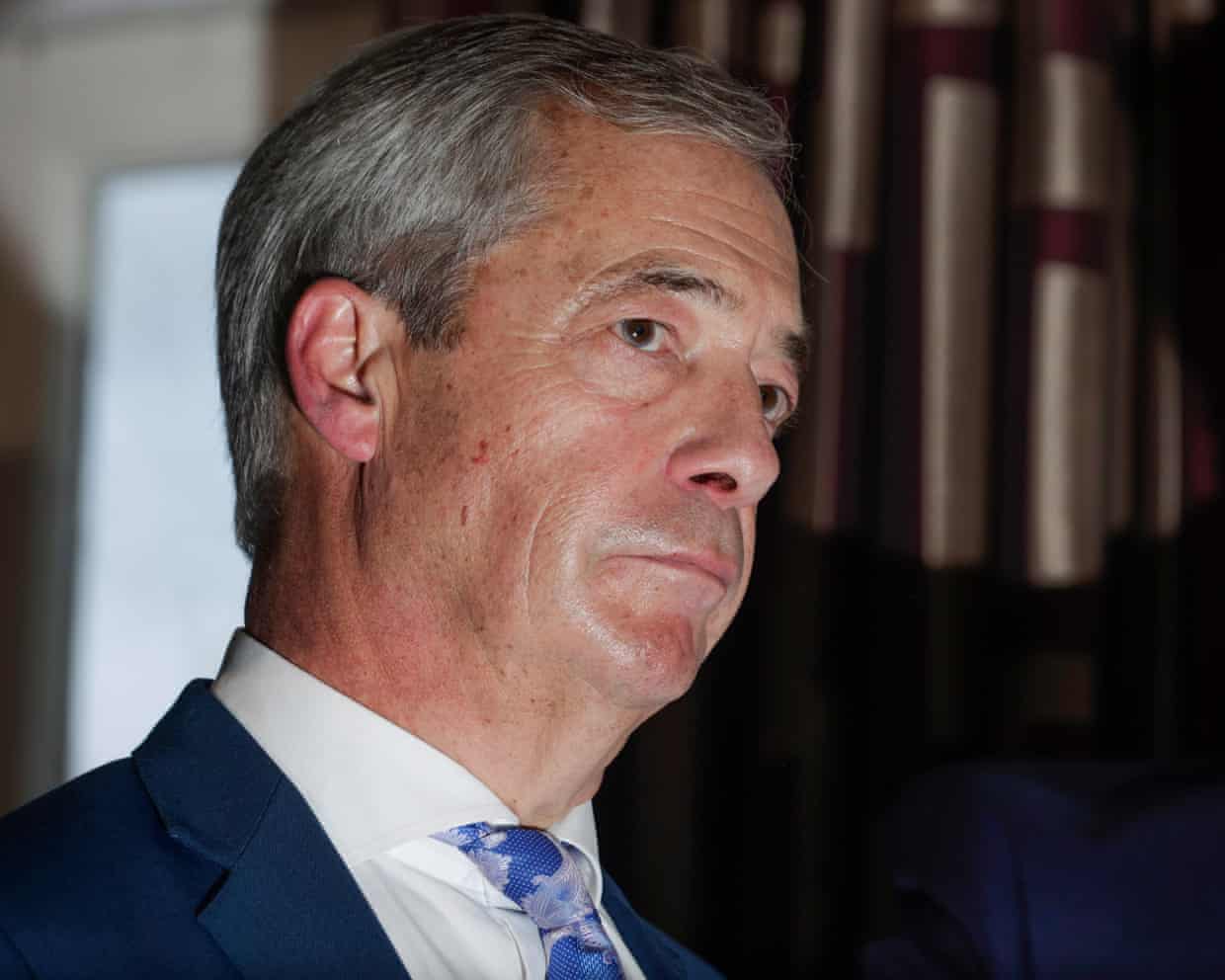
Nigel Farage aide dismisses alleged racism as ‘playground banter’

Faith and Reform: is the religious right on the rise in UK politics?

From bricklayer to mayor: Steve Rotheram is quietly building a Liverpool success story
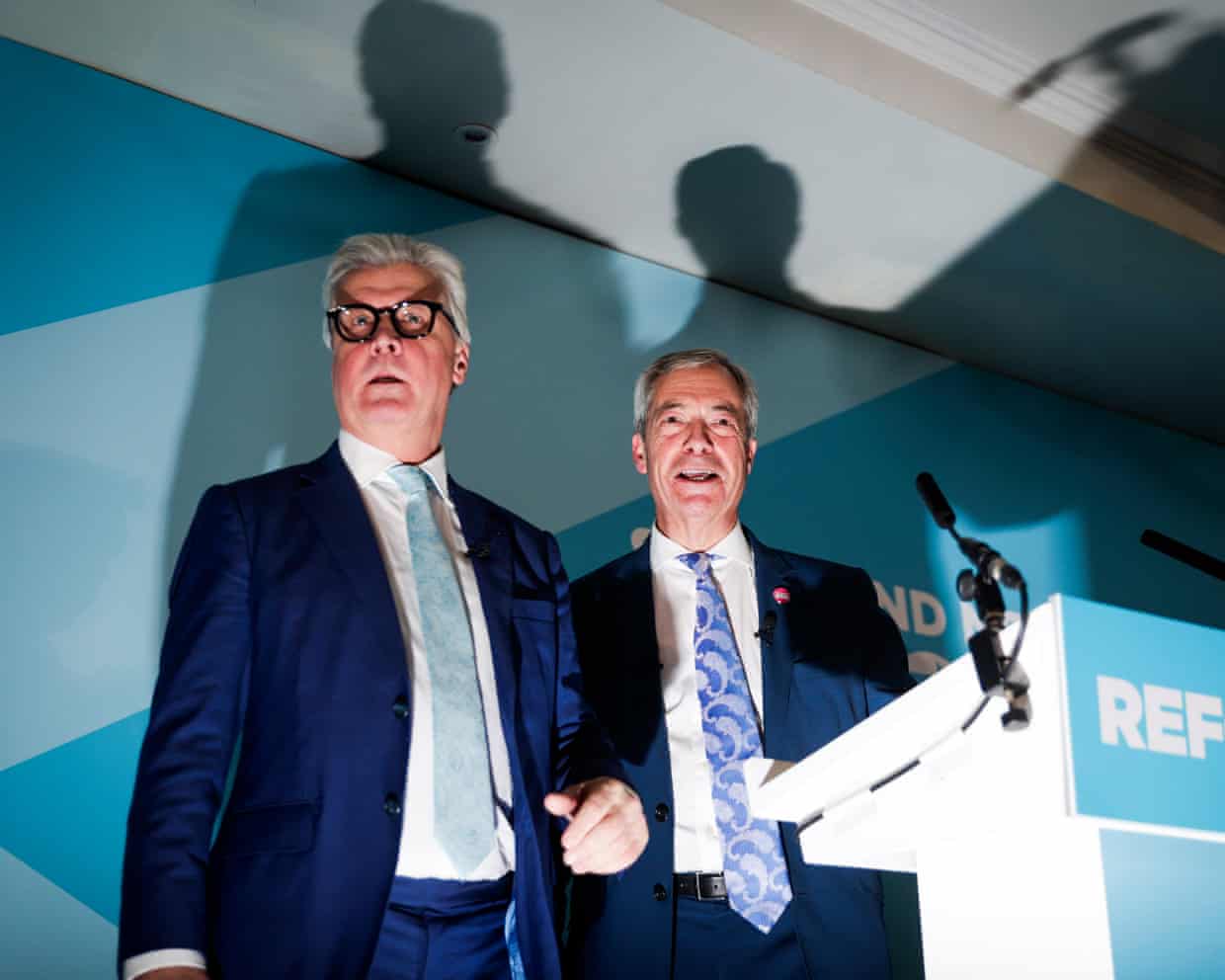
Farage dodges press as he unveils Reform’s first peer after Conservative defection

Beware the Liz Truss chatshow: viewers will require survivor therapy