From the Pocket: AFL’s Final Siren documentary is slick but forgettable
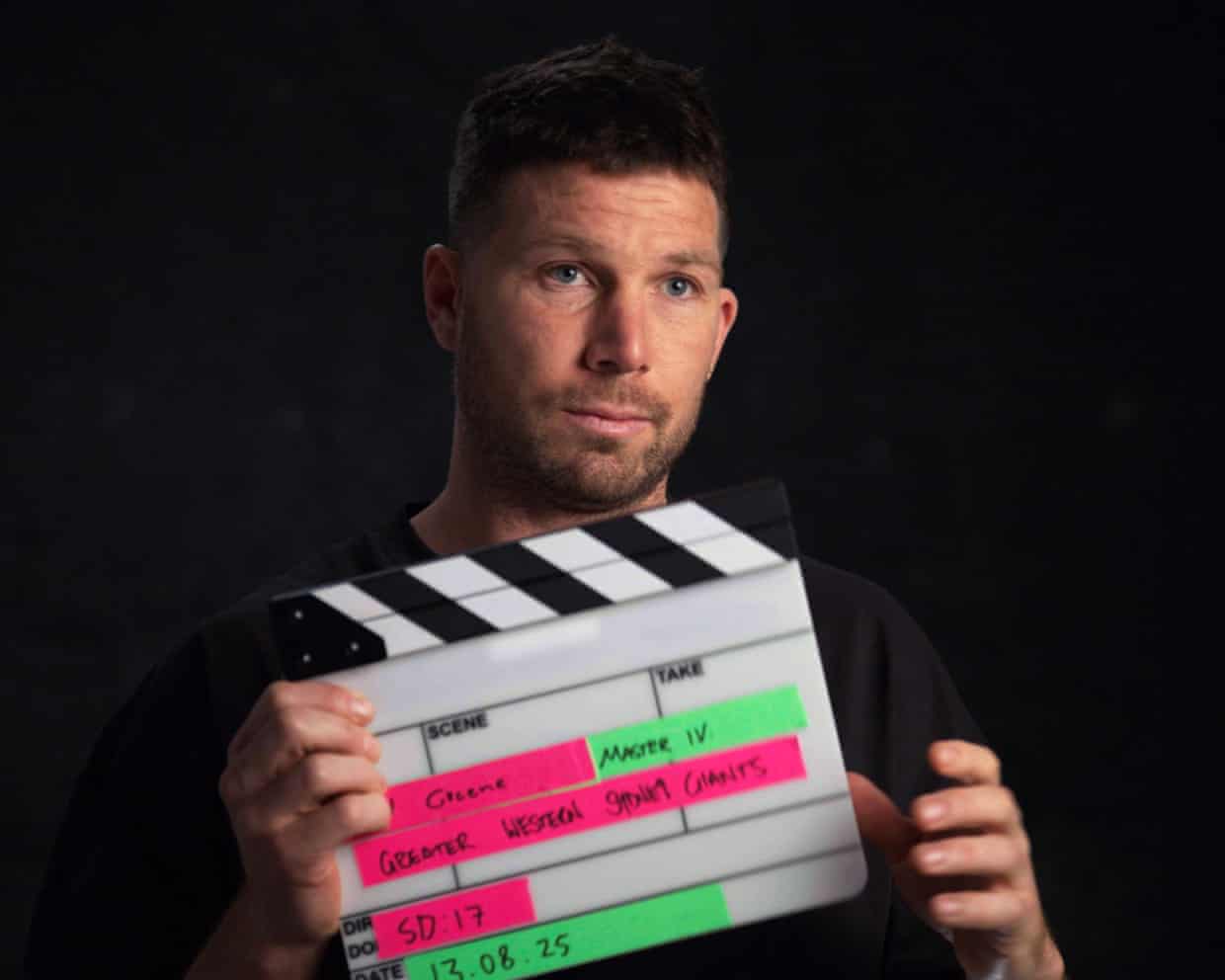
You can’t turn on a television right now without stumbling across a football documentary.The highlight of the current crop is surely Adam Kingsley’s paint peeling spray at half-time of last year’s Sydney derby in the GWS Giants documentary No Holds Barred.It was reminiscent of Leyton Orient’s John Sitton berating his team of hapless, bewildered scrubbers in the 1990s.Unlike the Orient, Kingsley’s Giants responded well to the blast.Of all of them, Amazon Prime’s Final Siren: Inside the AFL had the biggest budget and the most hype.
It promised “war without weapons”, which was a bad start, and which itself was the title of a footy documentary from the late 1970s.Netflix’s Drive to Survive was very much pitched at people who normally couldn’t give a stuff about car racing.Likewise, The Test was a way of reconnecting the Australian sporting public with a national cricket team that had very much been on the nose.I’m not sure what the purpose of this one is – whether it’s to make the sport accessible for overseas people who have never seen a game of Australian rules, or to whet the appetite of rusted-on fans on the eve of the season.It doesn’t really succeed on either front.
It follows some of the best-known footballers in the game, players who have told their stories dozens of times, players who have been profiled on podcasts, in newspapers and by their own clubs.As a result, we don’t really learn anything new about them.We already knew that Toby Greene was a habitual line crosser.We already knew that Nat Fyfe was more than a little bit obsessive.We already knew that Dayne Zorko was a sublime kick and a bit of a pest.
And we already knew that Marcus Bontempelli was, well, perfect.This series uses talking heads, several of whom, it must be said, are incredibly irritating, to constantly hammer those points home.There’s a few moments where it works.Greene scoops up his 18-month-old daughter after an elimination final loss.“Dad was fucking shit tonight, sorry,” he tells her.
After another even more devastating elimination final loss, we get a real sense of some of the demons driving Fyfe as he is chaired off after his final game.“It felt like they were holding me up to show everyone that I’d failed,” he says.And we get some juicy little nuggets that go well beyond the usual platitudes.Something as simple as Bontempelli moving his name tag so he doesn’t have to sit next to Greene at the All-Australian function is the kind of snark this reviewer wanted more of!But a lot of it is just cringeworthy.The conversations between Greene and his partner sound like they were written by a Home and Away scriptwriter.
Then there is the exchange between Max Gawn and Brad Green, shortly after Green has sacked coach Simon Goodwin.This one reads like it has been scripted by the comms department.It’s so wooden, so inauthentic, so contrived, and so at odds with what shows like this should be trying to do.A lot of these footballers have interesting stories to tell, but they don’t really get to flesh them out.Greene is the son of a man who was a champion amateur footballer in the 1980s, but who struggled with drug and alcohol abuse.
In this documentary, Greene speaks of knocking his dad out in the rooms after a match.When he speaks of vowing to never be that kind of father, it’s a good insight into what makes him tick – the chip on his shoulder, his vulnerability, his reluctance to let most people in.But the documentary then immediately shifts to Bontempelli making lattes at his cafe.It feels like a smother.These type of documentaries work best when they profile players we’ve never really heard from before, players who are on the margins, players who are struggling.
Most of all, they work when they’re made by people who love their sport.The Year of the Dogs had a billionth of Amazon’s budget.But it hit like a gut punch.You could smell it.The works of the late Rob Dickson and his brother Peter were two men who understood their sport – its humour, its rhythms, its meaning.
The documentaries from the clubs themselves can be hit or miss.But some, like the recent GWS release, are excellent.Watching that, I got a very real sense of what is an unusual club, a club that clearly targets certain personality types – extroverts and hyper competitors who can be on the receiving end of a bake like Kingsley’s and not fall to pieces.This one achieves nothing of the sort.It’s like so much sporting coverage these days – superbly shot, slickly packaged, cut into easily digestible segments and instantly forgettable.
This is an extract from Guardian Australia’s free weekly AFL email, From the Pocket.To get the full version, just visit this page and follow the instructions
Quarter of healthy years lost to breast cancer are due to lifestyle factors, research finds
More than a quarter of healthy years lost to breast cancer are due to lifestyle factors such as red meat intake and smoking, according to the largest study of its kind.The study, published in the Lancet Oncology, used data from population-based cancer registries to produce a comprehensive analysis of breast cancer and its risk factors.The data used, spanning from 1990 to 2023 from more than 200 countries, was also used to produce forecasts of trends regarding breast cancer up to 2050. In the UK, about one in seven women will develop the disease in their lifetime.New breast cancer cases in women are predicted to rise by a third globally, from 2
Scotland becomes first UK country to legalise water cremations
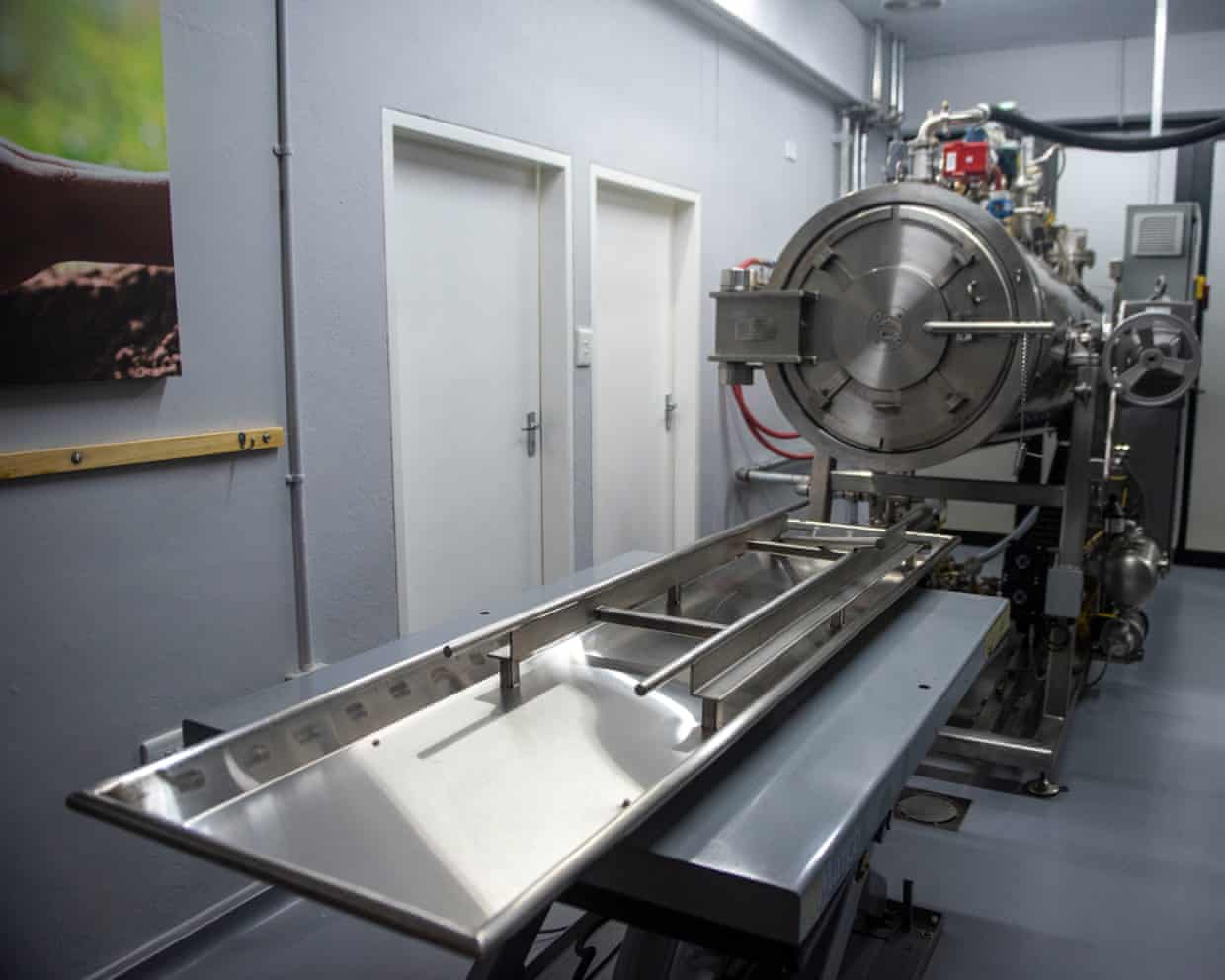
Scotland has become the first part of the UK to legalise hydrolysis, an environmentally friendly alternative to cremation or burial, reflecting increasing demand for more sustainable funeral arrangements.Also known as water cremation or aquamation, the process is already available in many parts of the world, and regulations approved by the Scottish parliament on Monday mark the most significant change to funeral law since cremation was introduced in 1902.Replicating the natural process of decomposition that occurs after burial, but over a much shorter period of time, hydrolysis uses a strong alkaline solution to break down the body of the deceased person.The body is immersed in water and 5% alkaline, such as potassium hydroxide, for three to four hours in a pressurised metal cylinder and heated to about 150C (300F).This dissolves the body tissue, leaving only bones, which are then dried and pulverised into white dust
UK surgeon cleared of antisemitism criticises GMC’s plan to challenge ruling
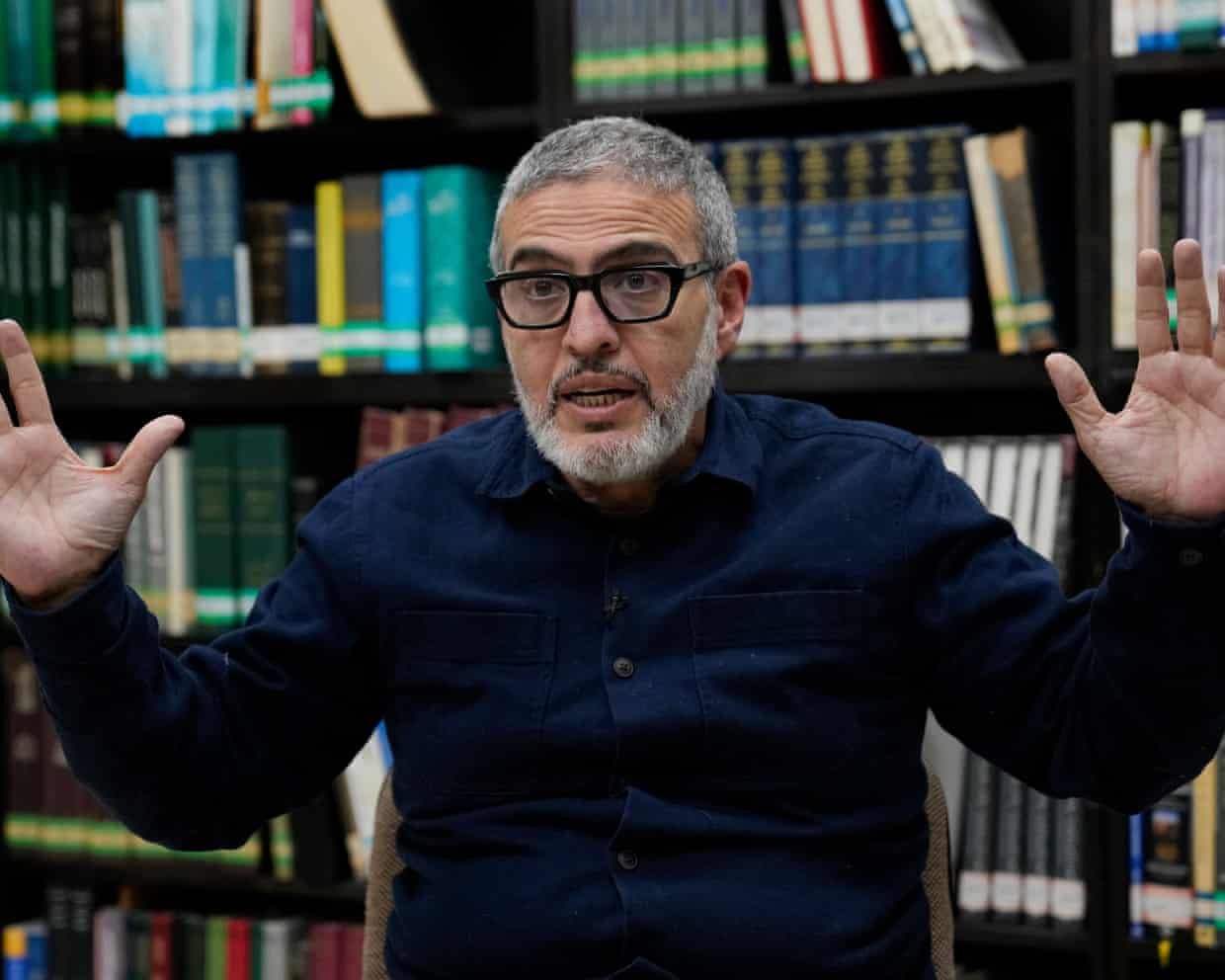
A surgeon who was cleared by a tribunal of alleged antisemitism and support for terrorism has accused his regulator of seeking a “politically acceptable” outcome after it announced it would appeal against the decision to the high court.Dr Ghassan Abu-Sittah, who gave testimony to the international criminal court on Israel’s assault on Gaza and is the rector of the University of Glasgow, was cleared of misconduct by the Medical Practitioners Tribunal Service (MPTS) in January.But the decision to appeal by the General Medical Council (GMC), which brought the case after a complaint by the lobby group UK Lawyers for Israel (UKLFI), means he is trying to crowdfund £150,000 to defend himself again.“When the MPTS rejected the allegations, I felt that a two-year period of continuous harassment and attempts to undermine my credibility, including my evidence before the ICC [international criminal court] and ICJ [international court of justice], had finally come to an end.” said Abu-Sittah

Labour council accuses minister of ‘moral bankruptcy’ over social care dispute
The housing, communities and local government secretary has been accused by a Labour council of showing “arrogance, indifference and moral bankruptcy” towards children in social care.In an unusually forthright attack, Labour leaders of Hartlepool council said they were “furious and appalled” at Steve Reed after a meeting with him last week. A cross-party delegation had asked the secretary of state for £3m to help alleviate the growing cost of social care.The town in County Durham is one of the most deprived in England. It has the third highest number of children in care per capita in the country

Most senior council officers in England say building work hit by delays
Almost two-thirds of senior council officers have said they are seeing construction projects delayed, despite the key role of local authorities in creating the wave of new housing and infrastructure promised by Labour.Before Rachel Reeves’s spring forecast on Tuesday, a survey of senior council officers showed that 40% do not think the local authority they work for is well placed to follow through on its construction plans.Local authority finances have been under sustained pressure for more than a decade. Labour recently announced a shake-up of the funding formula for England’s local councils, to redirect resources from affluent parts of the country towards more deprived areas.Among those surveyed, 64% reported project delays, with as many as 94% calling for more certainty about future financing – such as multi-year funding settlements

Three in four women unaware menopause can trigger new mental illness, poll finds
Nearly three-quarters of UK women do not know menopause can trigger a new mental illness, polling shows.This lack of understanding is so acute that the Royal College of Psychiatrists has launched its first targeted “position statement” to raise awareness about menopause and mental health.A YouGov poll, commissioned by the college, which represents more than 20,000 psychiatrists, found that only 28% of women know a new mental illness can be associated with menopause. In contrast, 93% of women associate menopause with hot flushes and 76% with reduced sex drive.As a result, many women are not seeking or receiving vital help, the RCPsych’s report says
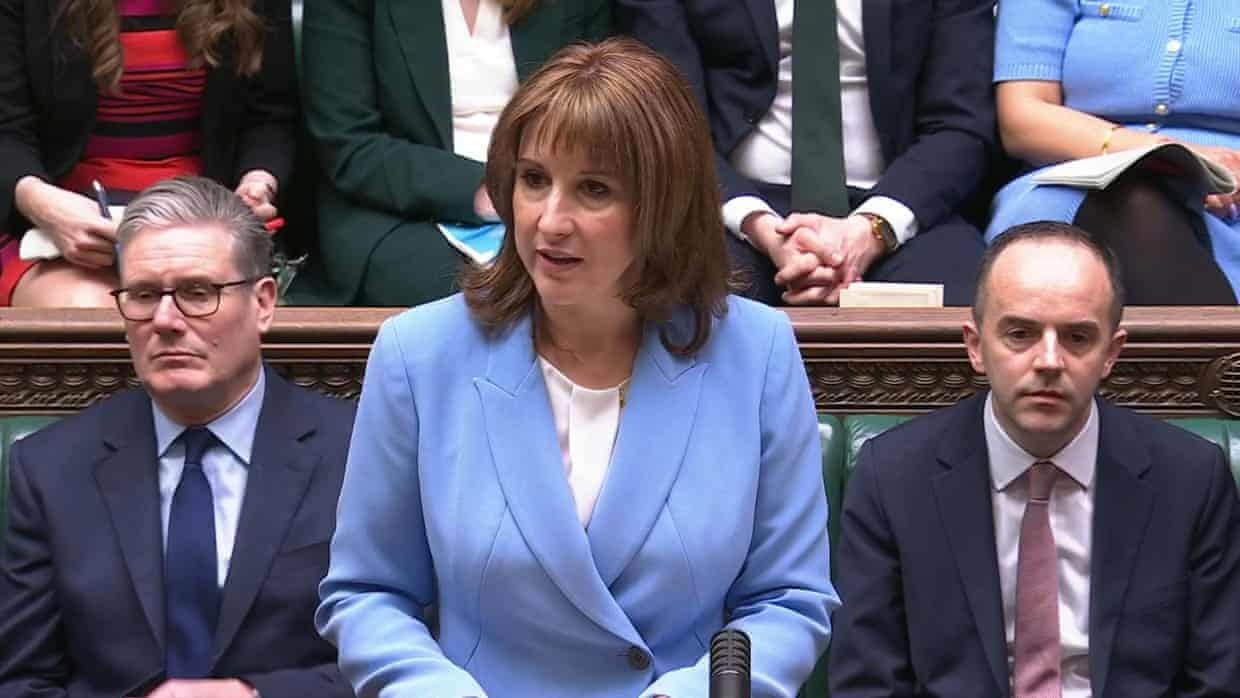
Iran conflict could have ‘very significant’ impact on UK economy, OBR warns; FTSE 100’s biggest fall in 11 months – as it happened

China calls for vessels in strait of Hormuz to be protected amid soaring shipping costs

Stock markets slump amid Iran war as gas prices jump 30% to three-year high

Surprise jump in UK grocery inflation makes interest rate cut less probable
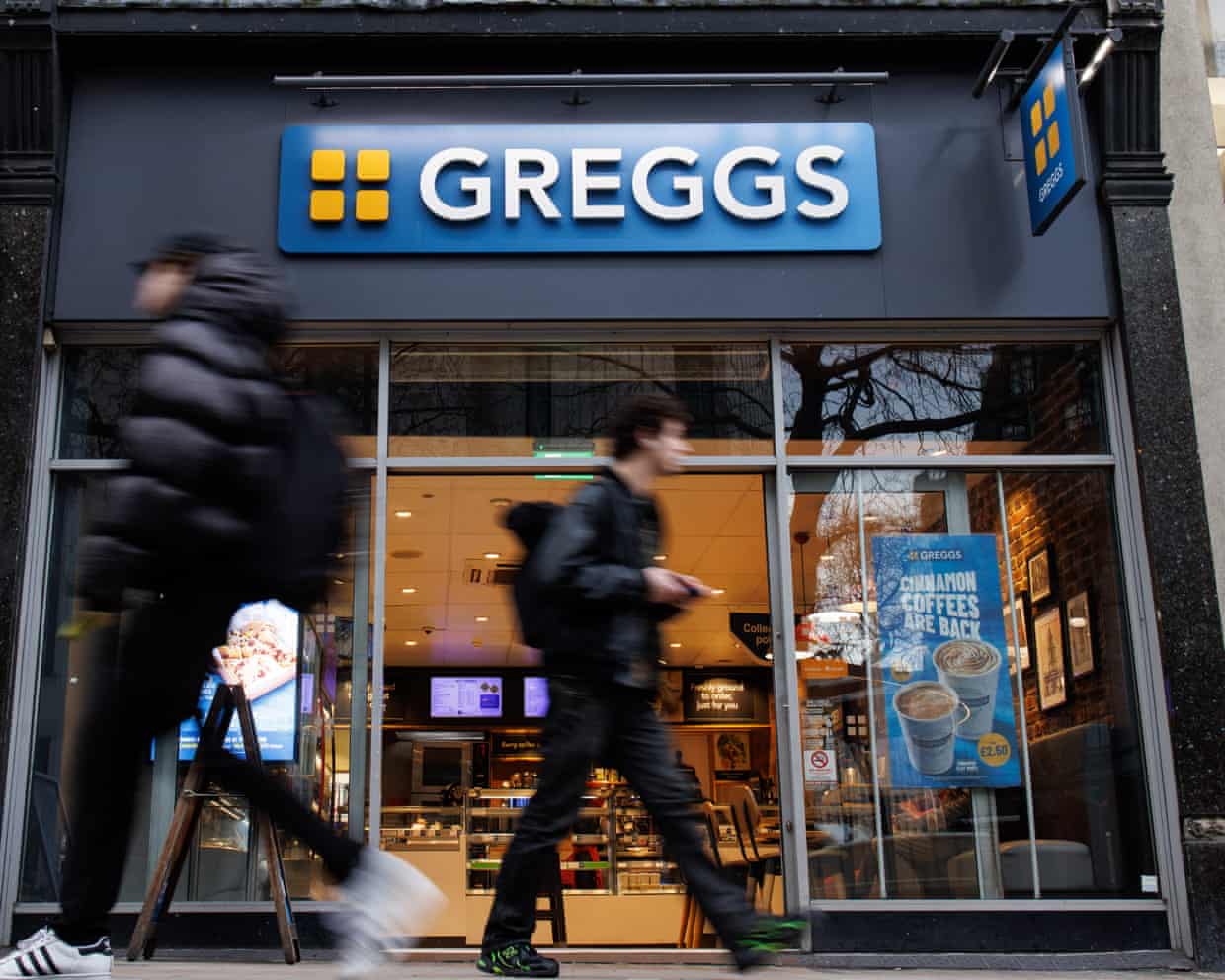
‘Peak Greggs’? Bakery chain’s profits slump and sales slow

US markets see-saw as investors keep close eye on Iran war