Iran conflict could have ‘very significant’ impact on UK economy, OBR warns; FTSE 100’s biggest fall in 11 months – as it happened
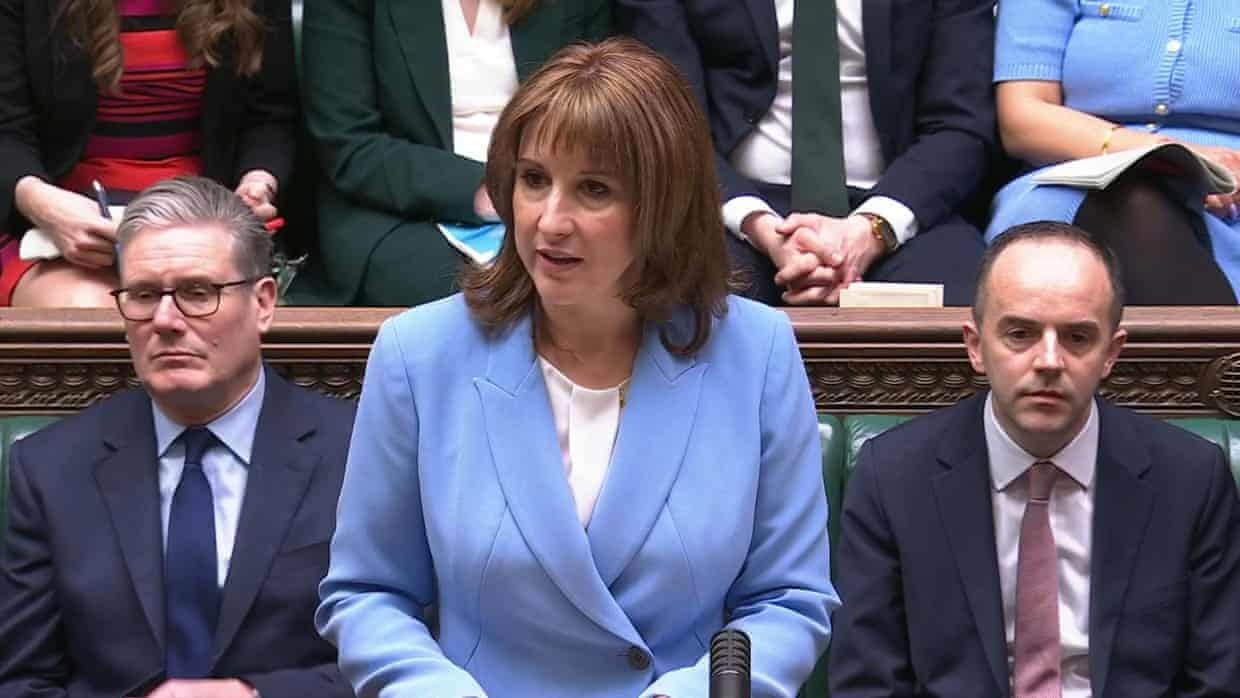
Time to wrap up…,Rachel Reeves insisted Labour has “the right economic plan” for a world that has become “yet more uncertain” as she delivered a spring forecast that downgraded growth for this year,The chancellor was addressing MPs against the backdrop of surging energy prices, as investors fret about the impact of the war in the Middle East,Reeves said she was in close touch with the Bank of England governor, Andrew Bailey, as they monitored the situation and would meet representatives of the North Sea energy industry on Wednesday,New forecasts from the independent Office for Budget Responsibility (OBR), published alongside her statement, showed that as Reeves said, “inflation is down, borrowing is down, living standards are up and the economy is growing”.
“This government has restored economic stability,” she said, in a deliberately low-key statement that, as expected, contained no substantive policy announcements.Reeves conceded that GDP growth was now expected to be “slightly slower” this year, however, down to 1.1% from the previous forecast of 1.4%, after weaker than expected data in the final quarter of 2025 – but stronger in future years, at 1.6% in 2027 and 2028, and unchanged at 1.
5% in 2029 and 2020.The OBR itself warned that:double quotation markConflict in the Middle East, which escalated as we were finalising this document, could have very significant impacts on the global and UK economies.OBR’s latest forecasts also show:Unemployment will peak higher than expected, at 5.3%The UK’s tax take will rise to a new record high in 2030-31, at 38.5% of GDPReeves’s headroom to keep within her fiscal rules has risen slightly.
Economists warned, though, that that extra headroom could be wiped out by the jump in energy prices called by the Middle East crisis.Oil prices have continued to climb today; Brent crude is up 6.2% at $82.55 a barrel.UK month-ahead gas prices have jumped 21% today, hitting a three-year high this morning.
Stock markets have fallen across the world, again, with heavy losses in Asia-Pacific bourses, across Europe and in the US today – where the Dow Jones Industrial Average is currently down 550 points or 1,1%,In London, the FTSE 100 share index lost 2,75%, its biggest one-day fall in 11 months,An investor-led “AI panic” saw the share price of the owner of the Mirror, Express and Star newspapers plunge over 12%, after the publisher said that traffic to its titles from Google has almost halved.
Reach, which also owns scores of regional titles including the Manchester Evening News, the Birmingham Mail and the Liverpool Echo, reported that digital revenues crucial to its future declined by 0.9% to £128.9m in the year to 3 March.The publisher said that overall digital page views fell 8% year-on-year, primarily due to a 46% year-on-year decline in traffic from Google in the second half of its financial year.Investor jitters were further fuelled by the company saying that it is taking a “cautious approach” to digital performance this year, and does not expect to provide hard numbers on expectations until potentially its half-year results.
The impact of features including Google’s AI Mode and AI Overviews, which sit at the top of the results page and summarise responses and often negate the need to follow links to source content, have prompted fears of a “Google zero” future where traffic referrals dry up,Piers North, the chief executive of Reach, said that most of the traffic decline has come from Google Discover, which feeds users articles and videos tailored to them based on their past online activity, and has replaced search as the main source of click-throughs to content,“The traffic referral headwinds we have seen have continued into January and February, there are a lot of unknowns,” he said, speaking to the Guardian,“What underpins that, is that related to AI, we can speculate,We have to be careful making sweeping statements one way or the other on such a changeable eco-system.
Clearly AI at a macro level is changing the internet as we know it.”Earlier this week, Roger Lynch, the chief executive of Vogue and New Yorker publisher Condé Nast, said that Google’s introduction of AI summaries was “another sort of death bow” in search traffic.Overall, Reach beat market expectations on adjusted profits of £104.7m, which was helped by boosting the level of cuts to its operating costs to 5.2%, ahead of the 4% to 5% targeted.
The publisher, which in September made more than 300 redundancies, said it is targeting 5% to 6% of cuts this year.Reach made an overall pre-tax loss of £165.9m after taking a non-cash impairment charge of £222.8m.Total print revenues fell 4.
6% year-on-year to £388m.Newspaper sales revenue fell 3.4% to £288m, while print advertising revenue dropped 14.8% to £55.8m.
Analysts at Panmure Liberum referred the current valuation of Reach reflected the “current AI panic” in the market.North, who joined Reach in 2014 and was promoted to chief executive last March, said that Reach is in a strong position for the future as hefty annual payments to its pension plan end in 2028 and its nascent subscription strategy gathers momentum.A believer in a primarily advertising funded future, Reach launched its first premium subscription service for the Manchester Evening News in November.The company now has subscription offerings across six major titles, including the Express, with a total of 15,000 subscribers to date and a target of 75,000 by the end of this financial year.“Clearly to have a robust and solidly performing business in media is no mean feat,” said North.
“This is a defining year for the industry, from a macroeconomic and global perspective, there is huge change,We know the market is changing,Continual change is the norm and it is going to get quicker and faster,”Losses at GB News have hit almost £130m over the past four years, as the right-leaning TV broadcaster continues to struggle to make its business model work,GB News, which is funded by investors including Spectator-owner Sir Paul Marshall and Dubai-based Legatum Ventures, reported a pre-tax loss of £22m in the year to 31 May 2025.
However, the broadcaster, which launched in June 2021 and has presenters including Nigel Farage and Eamonn Holmes, managed to significantly reduce its loss from the £32.7m recorded the previous year.Overall, pre-tax losses since it began setting up ahead of its 2021 launch now total £127.9m.GB News has continued to increase total revenues, which increased almost 60% year-on-year to £26.
2m, with advertising income climbing 48% to £14.2m.The commercial performance has been underpinned by audience growth with the company claiming an 18% year-on-year increase in the average monthly reach of viewers watching at least 3 minutes of GB News to 3.7m, according to figures from TV research body Barb.GB News said that it still holds an ambition to become the “UK’s largest news channel by 2028”.
During the year GB News cut staff numbers from 311 to 263, trimming annual staff costs from £22m to £19.7m.GB News remains dependent on funding from its parent company All Perspectives, in which Marshall controls more than a third and Legatum also has a large stake.GB News received funding of £17.7m from All Perspectives last year, taking the total balance due to its parent company to £141m.
“The parent company has a strong positive net asset position and has confirmed its ongoing commitment to funding the operations of GB News Limited,” said GB News in its filing to Companies House,“After the year end, the investors have confirmed they will provide funding which the directors believe will be sufficient to cover any expected deficit,”Time to wrap up…,Rachel Reeves insisted Labour has “the right economic plan” for a world that has become “yet more uncertain” as she delivered a spring forecast that downgraded growth for this year,The chancellor was addressing MPs against the backdrop of surging energy prices, as investors fret about the impact of the war in the Middle East.
Reeves said she was in close touch with the Bank of England governor, Andrew Bailey, as they monitored the situation and would meet representatives of the North Sea energy industry on Wednesday.New forecasts from the independent Office for Budget Responsibility (OBR), published alongside her statement, showed that as Reeves said, “inflation is down, borrowing is down, living standards are up and the economy is growing”.“This government has restored economic stability,” she said, in a deliberately low-key statement that, as expected, contained no substantive policy announcements.Reeves conceded that GDP growth was now expected to be “slightly slower” this year, however, down to 1.1% from the previous forecast of 1.
4%, after weaker than expected data in the final quarter of 2025 – but stronger in future years, at 1,6% in 2027 and 2028, and unchanged at 1,5% in 2029 and 2020,The OBR itself warned that:double quotation markConflict in the Middle East, which escalated as we were finalising this document, could have very significant impacts on the global and UK economies,OBR’s latest forecasts also show:Unemployment will peak higher than expected, at 5.
3%The UK’s tax take will rise to a new record high in 2030-31, at 38.5% of GDPReeves’s headroom to keep within her fiscal rules has risen slightly.Economists warned, though, that that extra headroom could be wiped out by the jump in energy prices called by the Middle East crisis.Oil prices have continued to climb today; Brent crude is up 6.2% at $82.
55 a barrel.UK month-ahead gas prices have jumped 21% today, hitting a three-year high this morning.Stock markets have fallen across the world, again, with heavy losses in Asia-Pacific bourses, across Europe and in the US today – where the Dow Jones Industrial Average is currently down 550 points or 1.1%.In London, the FTSE 100 share index lost 2.
75%, its biggest one-day fall in 11 months.“This government has restored economic stability,” Rachel Reeves told the House of Commons on Tuesday.Yet the chancellor was speaking just moments after MPs had been hearing from the foreign secretary, Yvette Cooper, about plans to evacuate British nationals from the escalating conflagration in the Middle East.Should the violence that has sent energy prices soaring abate, the impact on inflation and economic growth will be short-lived, in which case Reeves’s bold claim about economic stability may just about stand.But if the conflict is prolonged, then the Office for Budget Responsibility’s (OBR) forecasts will look hopelessly out of date within weeks.
The oil price was continuing to climb as she spoke and financial markets have pushed up government borrowing costs, as they bet that central banks will be unable to cut interest rates much more in the face of rising inflation.Today’s OBR forecasts were out of date before they were published, says consultancy Oxford Economics.Their chief UK economist Andrew Goodwin says:double quotation mark“The surge in oil and gas prices means GDP growth is likely to be weaker, and inflation higher, than the OBR forecasts this year.“Although the OBR took on board the recent lower inward migration data and cut its medium-term forecast, its assumptions still look too high.We expect it will have to cut its growth forecasts and raise its borrowing projections over time.
”Green Party MP Dr Ellie Chowns is calling for the government to ditch its fiscal rules, saying:double quotation mark“Hannah Spencer’s decisive by-election victory last week shows it is action to tackle the cost-of-living crisis that voters desperately want to see,But the truth is the Labour Party has failed to properly get to grips with this crisis and today was no different,“When bills are still sky-high, rents are extortionate, and millions of children remain in poverty, it is incredibly disappointing that this government continues to tie itself in knots with its self-imposed fiscal rules, which even the IFS are now calling dysfunctional,“The Green Party is laser-focused on making our country affordable again, because we knows it is inequality, not immigration, that is to blame for the state we are in,That is why we are again calling on the government to scrap their failing fiscal rules and double down on tackling the cost-of-living crisis, starting with scrapping the household benefit cap, bringing water into public ownership, and introducing rent controls.
”There are two fiscal rules:that day to day spending is matched by tax revenues, so the Government is only borrowing to invest.that the national debt should be falling as a share of the economyThese are designed to reassure bond investors that ministers won’t go off on a wild borrowing spree.Today, Rachel Reeves said these rules have allowed the government to “increase public investment and protect our public finances”.Rachel Reeves seemed keen today to flag that her buffer – or “headroom” – to keep within the fiscal rules had increased in today’s projections, to £23.6bn from £21
Stuffed battered chillies and chilli cheese toasties: Maunika Gowardhan’s favourite Holi snacks – recipes
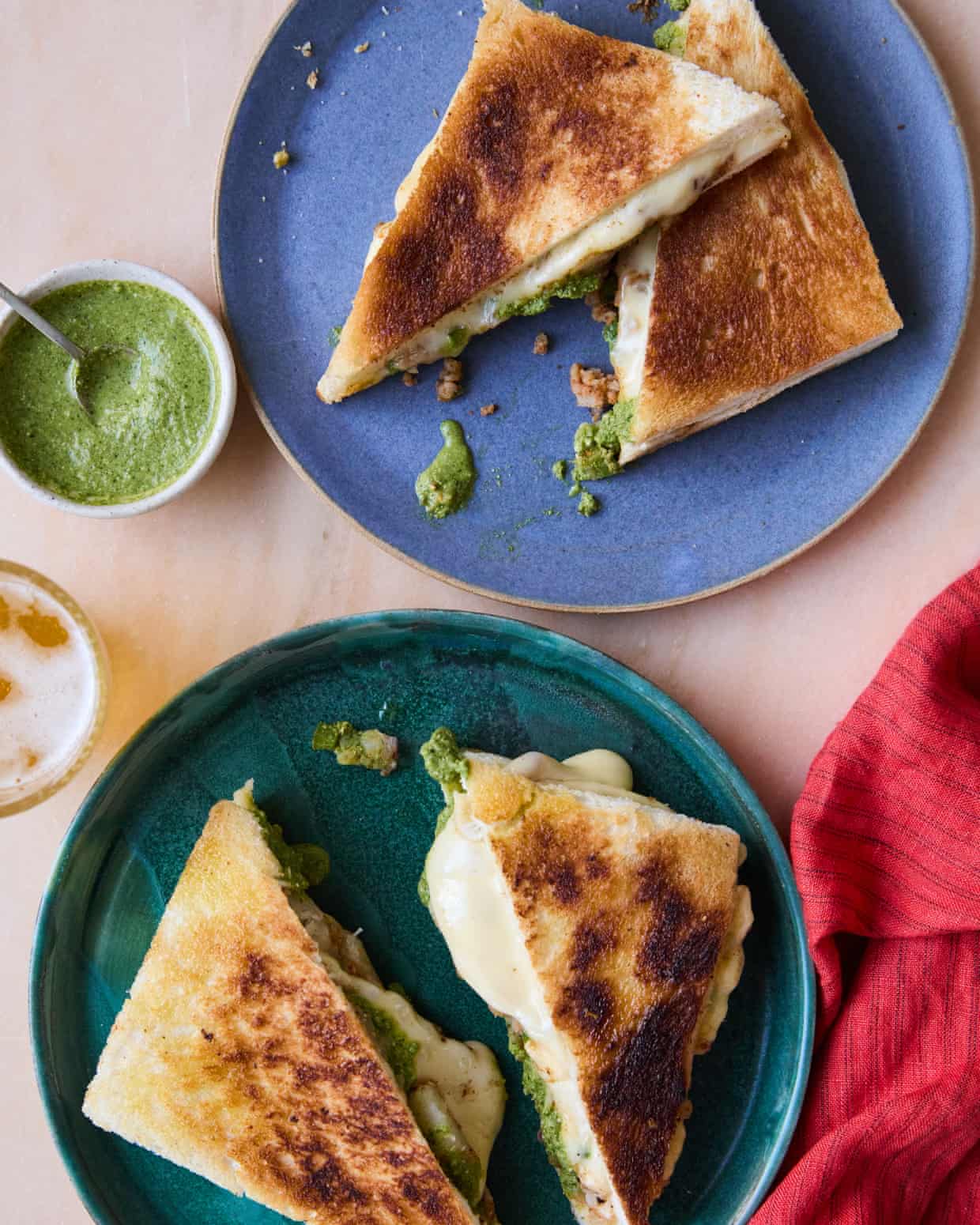
Celebrate Holi, the festival of colours and the arrival of spring, with sumptuous, delicious and addictive snacks. The bharwa mirchi pakode ki chaat is full of flavour and topped with tamarind, green chutney and chaat masala. Alongside it, a street-food favourite from my home town of Mumbai: the classic chilli cheese toastie stuffed with potato, peppers and green chutney. Both are the sort of dishes you can eat at any time of day, and the unifying ingredient is the humble potato, which I feel is the backbone of Indian cooking, be it in curries, stir-fries, flatbreads, snacks and even raitas.I’d happily eat this delicious street-food classic on any day of the week
Rukmini Iyer’s quick and easy recipe for chard borani soup with yoghurt, crispy garlic and beans | Quick and easy
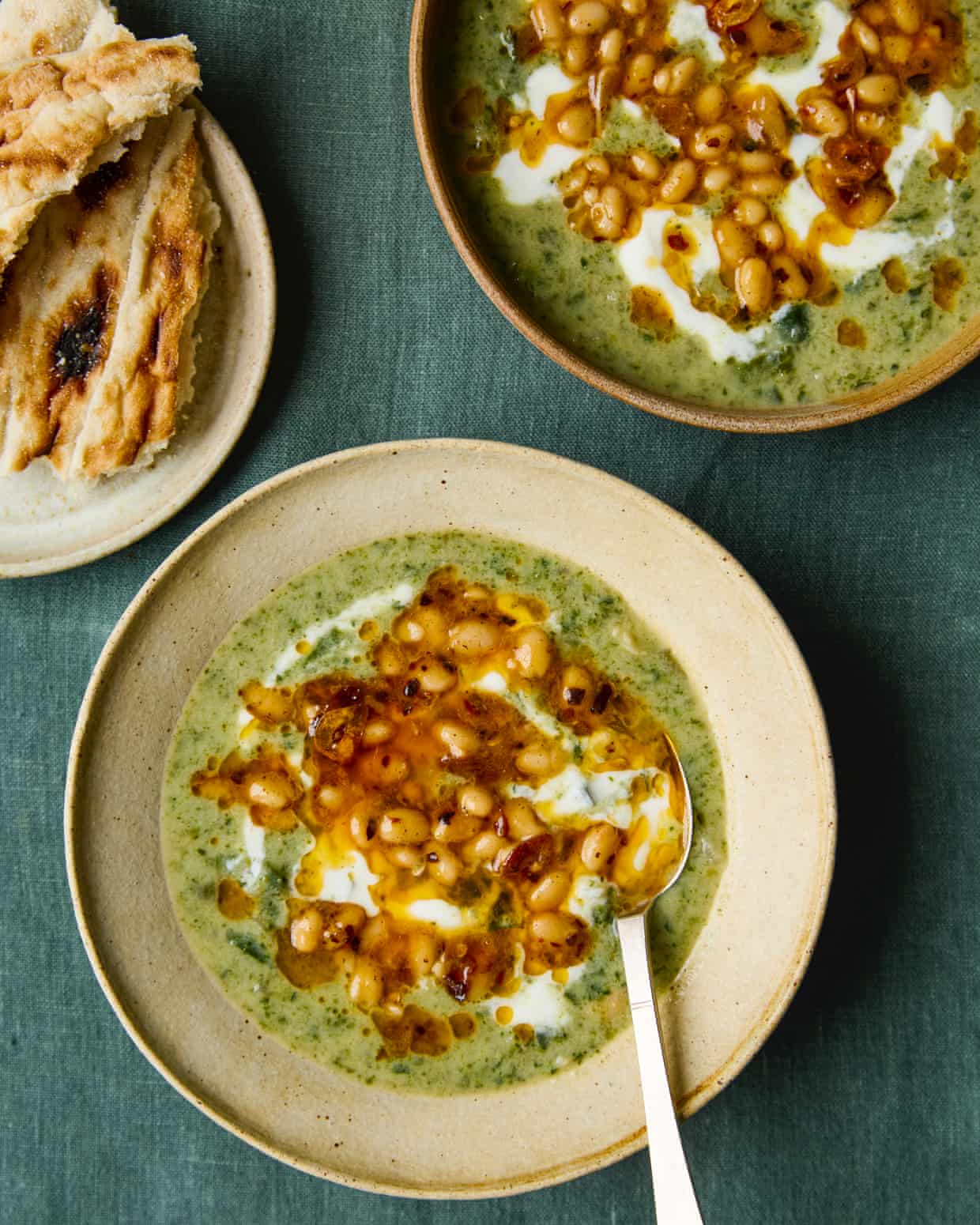
I am emphatically not a dip person (see also: salad), but the first time I tried chard borani, a Persian dip made with chard and yoghurt, I became so obsessed that we’ve been having it on repeat at home ever since. Today, I’m sharing my soup version, thickened with beans and topped with crisp garlic and brown butter. It’s perfect served with flatbreads, and takes just minutes to put together: a homage to the excellent original.If you’re making this in advance, reheat it very gently so as not to split the yoghurt.Prep 15 min Cook 30 minServes 3-42 tbsp olive oil 1 large onion, peeled and roughly sliced2 garlic cloves, peeled and finely grated400g rainbow or Swiss chard, stems roughly chopped, leaves roughly sliced2 tsp sea salt flakes 1 400g tin haricot beans, drained and rinsed (260g drained weight)Juice of ½ lemon150g natural or greek yoghurt, at room temperature , plus extra to serve For the crisp garlic butter 40g salted butter2 garlic cloves, peeled and finely sliced2 tsp aleppo pepper (optional)Heat the oil in a large, wide-based pan, add the onion and stir-fry on a medium to high heat for five minutes
How to make the perfect bara brith – recipe | Felicity Cloake's How to make the perfect …
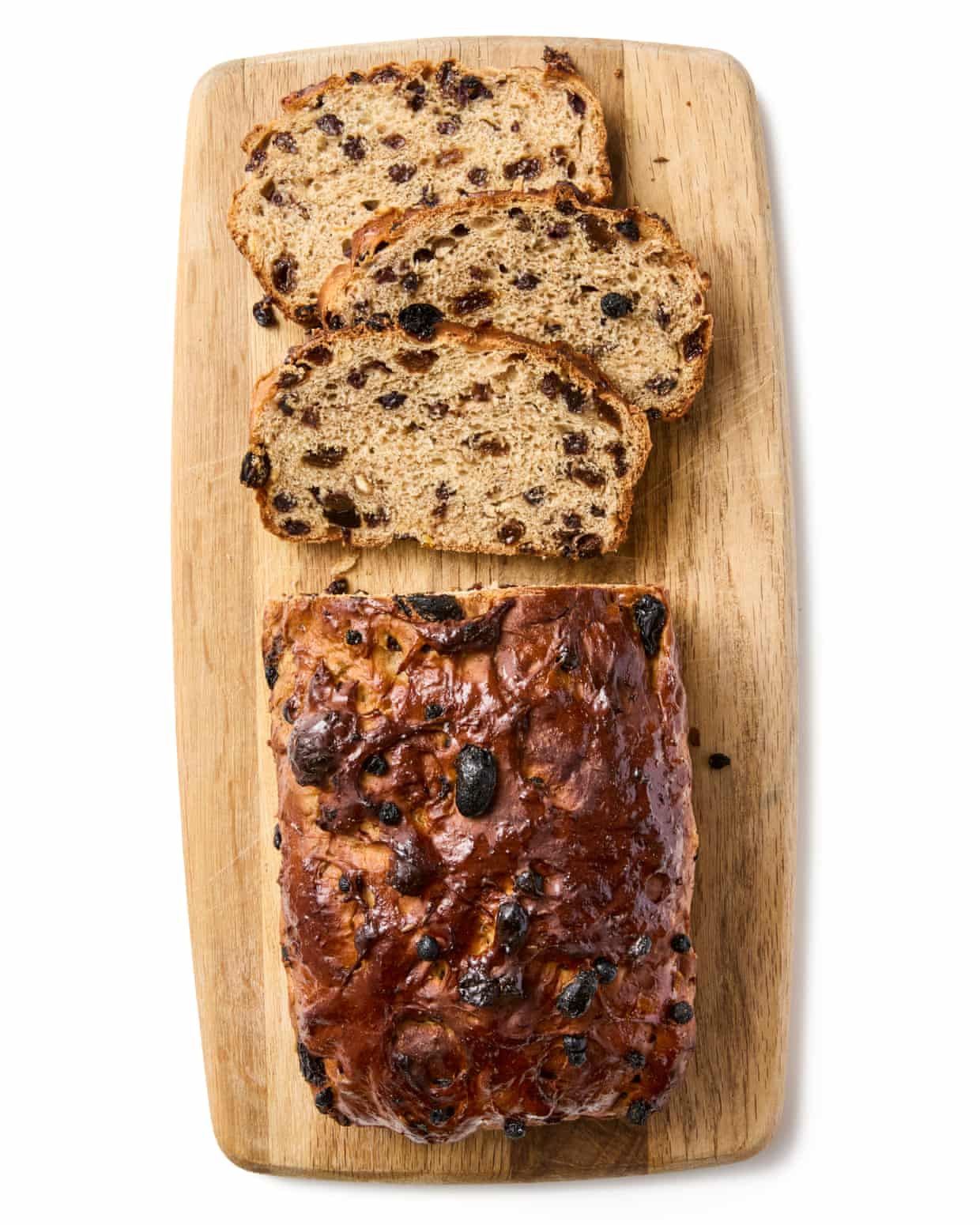
Bara brith, the traditional Welsh fruit loaf whose name means speckled bread, is, as Ben Mervis notes, not dissimilar to Yorkshire brack, Irish barmbrack and Scottish “kerrie loaf” – the last is a new one on me, though, of course, I’m more than familiar with how well they all pair with strong tea and cold salty butter. According to food writers Laura Mason and Catherine Brown, they were originally known as teisen dorth in south Wales, and they date the recipe to no earlier than the beginning of the 20th century. However, the digitising of records since their book Food of Britain was published in 1999 allowed me to find a reference to it being eaten before school examinations in Bala, Gwynedd, in Seren Cymru from 1857. (Pen Vogler notes that “anything made with flour, however, is likely to be relatively modern, as wheat was too unreliable to be a staple in wet, upland Wales.”) There’s no reason to doubt the pair’s claim that bara brith was originally made from excess bread dough, but I think it’s good enough to need no such excuse
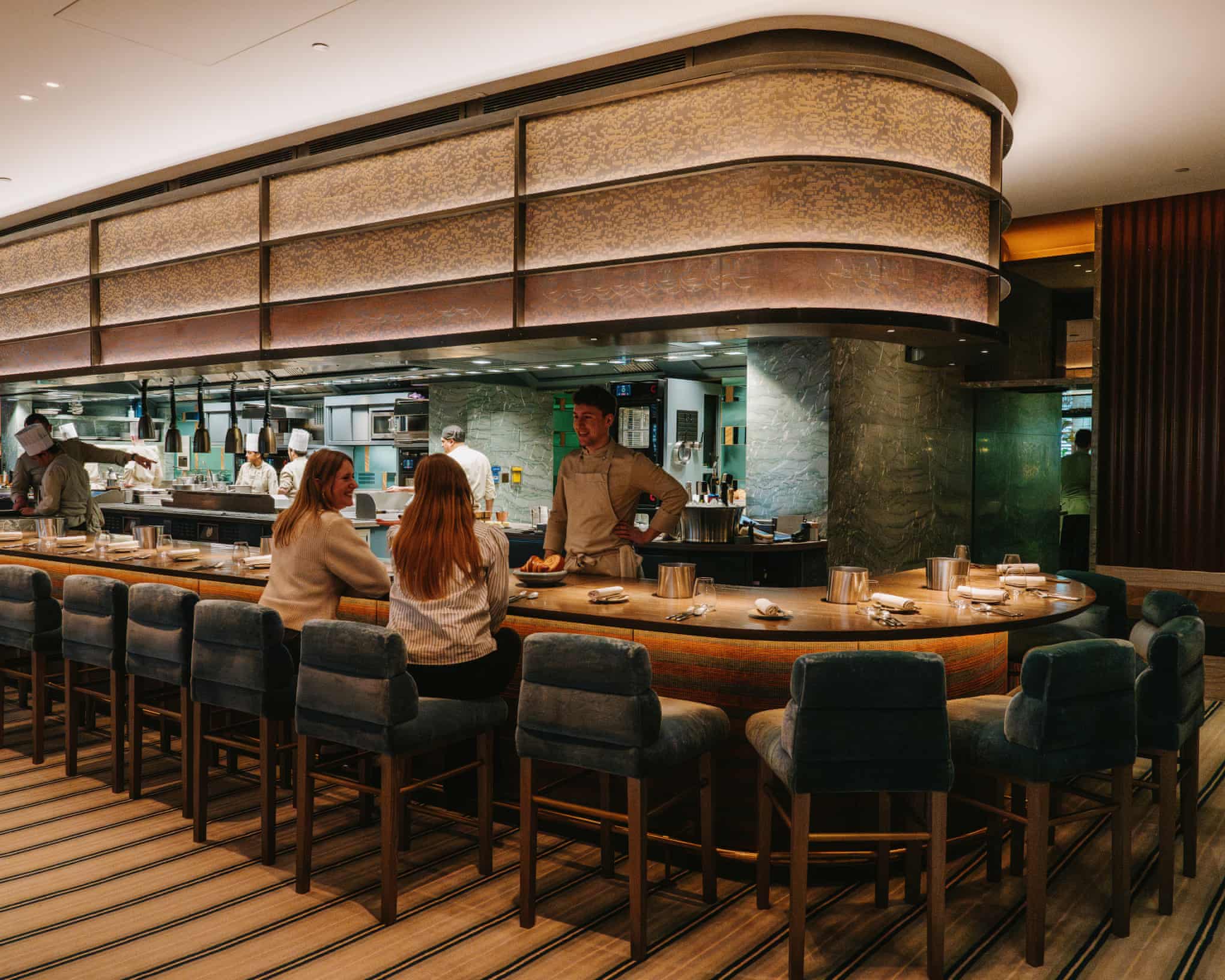
Breakfast at Pavyllon, London W1: ‘Does fine dining strictly have to wait until lunchtime?’ - restaurant review | Grace Dent on restaurants
Now that gen Z is eschewing booze and all-night raves, are we moving into a hospitality era when the big posh breakfast might well be the main event?For 5am Club people such as myself, who love to be up, caffeinated and scribbling on Post-it notes pre-dawn, the Four Seasons’ recent launch of London’s first Michelin-starred breakfast is perfect. Now we can do all that over a £70, five-course tasting menu served at a counter in a genteel, pastel-shaded dining room. If, that is, you can get a booking, in which case well done; otherwise, you could simply sit a little farther from the counter and order almost the same food off the normal breakfast menu, only without all the explanations.Regardless, chef Yannick Alléno is clearly doing the world a favour by luring all of us early risers to one room and distracting us with lobster flatbread and a bespoke “amuse juice”, because we are clearly some of the most annoying people on Earth. Have you ever heard one of my bumptious 5
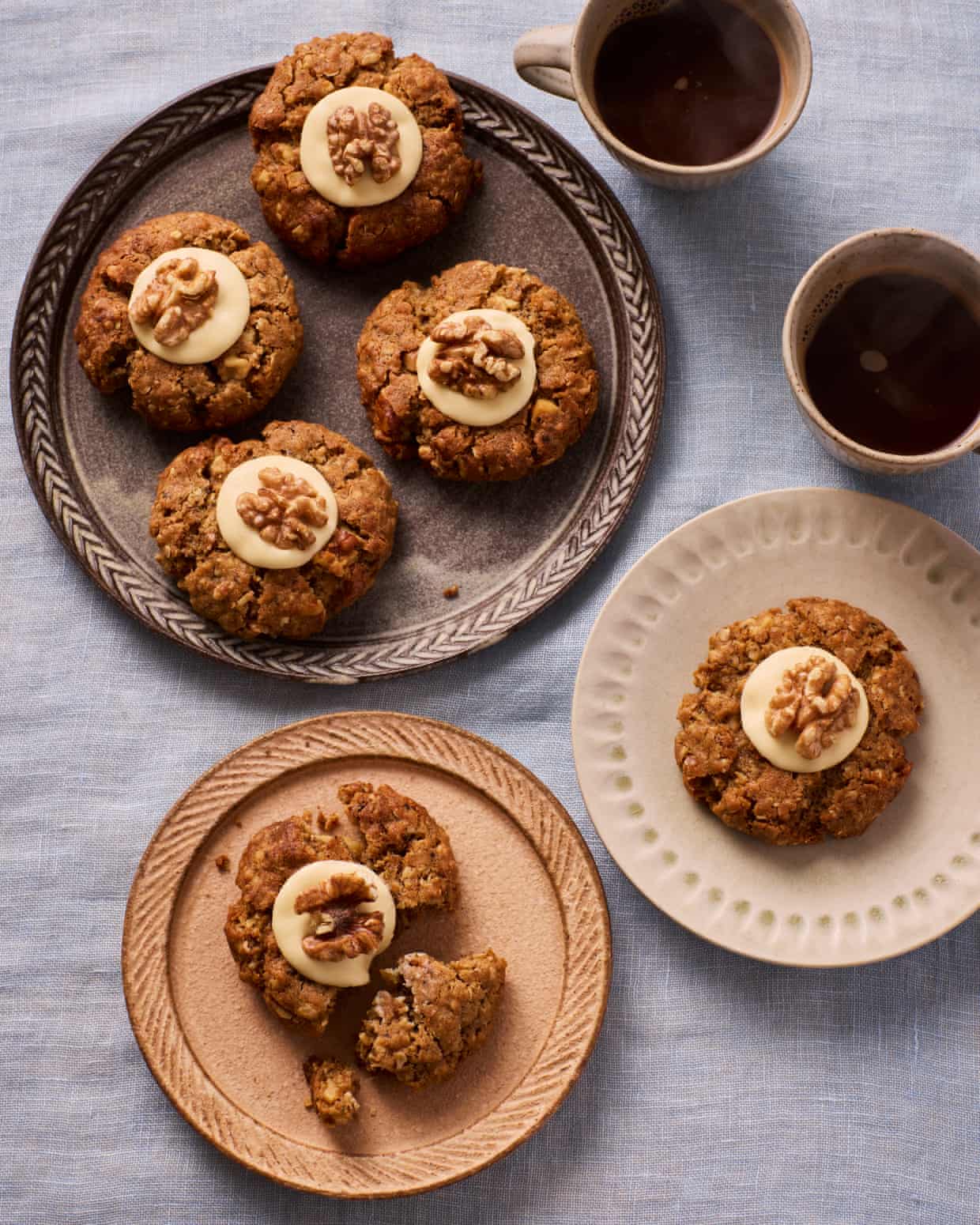
Benjamina Ebuehi’s recipe for coffee and walnut cookies | The sweet spot
When it comes to British cakes, coffee and walnut is such a staple that if there isn’t one present at a bake sale or coffee morning, I’ll raise an eyebrow. I’ve taken the classic combination and put them in a cookie for something fun and quicker to make. Full of toasty walnuts and a hit of that very nostalgic instant coffee flavour, I finish them off with a white chocolate button as a nod to the sweet, creamy icing.Prep 5 minChill 2 hr+ Cook 55 min Makes 1080g shelled walnuts 140g unsalted butter 1½ tbsp instant espresso powder 100g dark brown sugar 75g caster sugar 1 large egg 150g plain flour 80g porridge oats ½ tsp bicarbonate of soda ½ tsp flaky sea salt 10 white chocolate buttonsHeat the oven to 180C (160C fan)/350F/gas 4. Put the walnuts in a single layer on a small baking tray and roast for 10-12 minutes, until toasty

Bitter-sweet symphony: vermouth is more than just another cocktail ingredient
I like to think of vermouth as the Nile Rodgers of drinks, a backbone of good times known more for big hit collaborations than for its solo work. It is a foundation of any self-respecting cocktail cabinet (though it should be kept in the fridge), and also a family of drinks with many individual talents, which are now at long last being more widely recognised – Waitrose’s most recent Food & Drink report even touted vermouth as a 2026 trend, with searches for the stuff up by 26%.The Guardian’s journalism is independent. We will earn a commission if you buy something through an affiliate link. Learn more
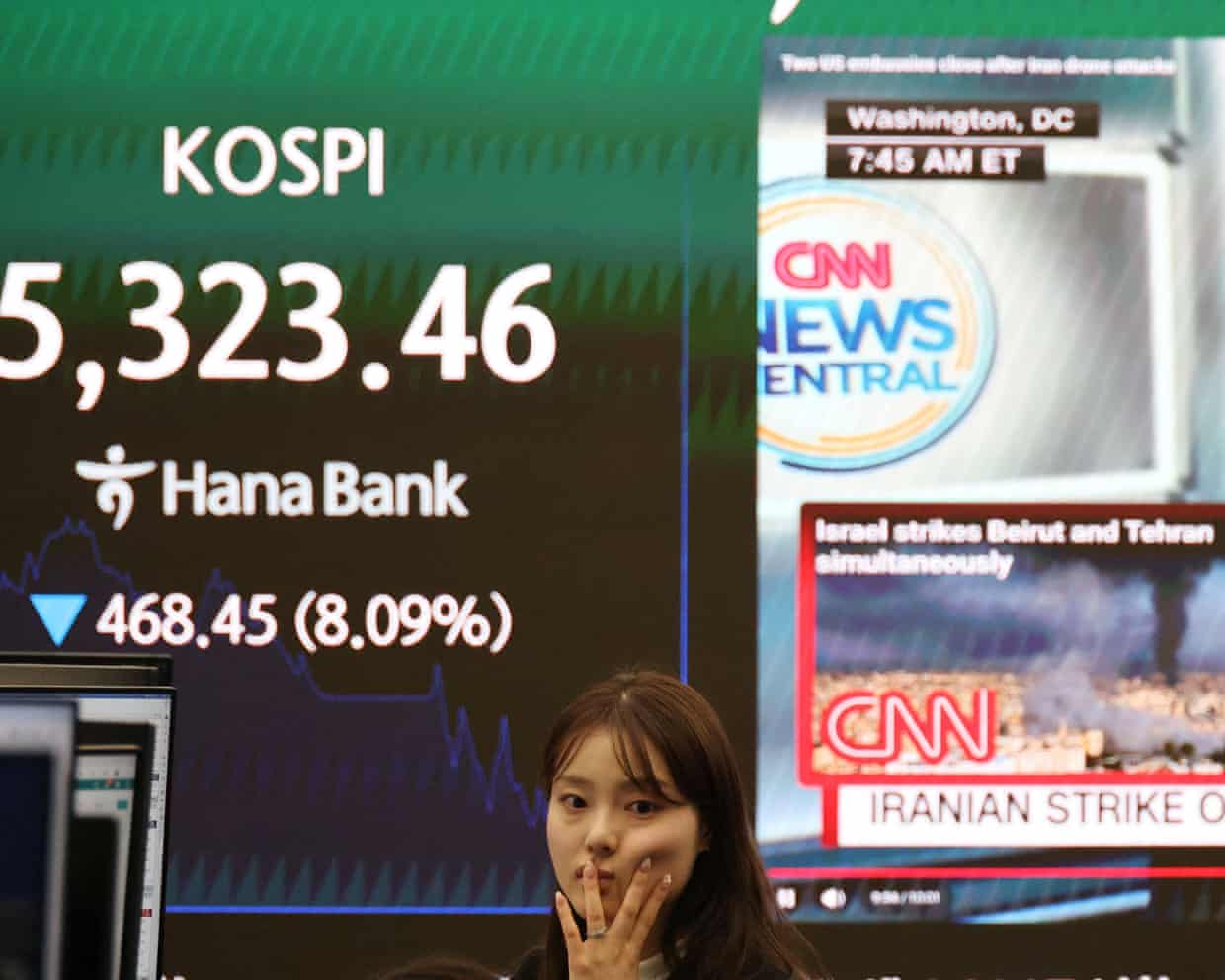
War in Middle East threatens UK living standards growth, as markets brace for energy shock – business live
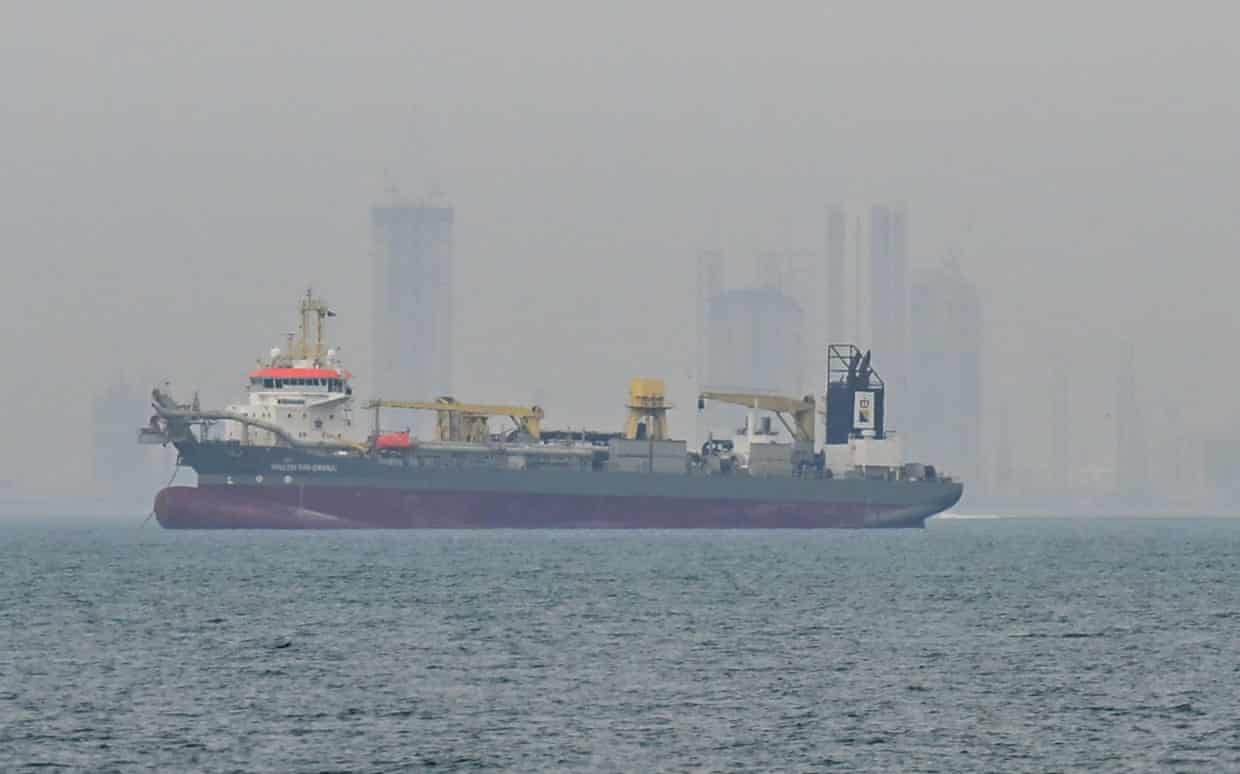
Global stock markets tumble as Trump bid to avert oil crisis in strait of Hormuz fails to reassure

What was really behind Jack Dorsey laying off nearly half of Block’s staff?

OpenAI amends Pentagon deal as Sam Altman admits it looks ‘sloppy’
Borthwick’s Six Nations spring clean makes a fresher-looking mix but raises questions over logic | Robert Kitson

Winter Paralympics 2026: who are Australia’s top medal contenders? | Kieran Pender