From the Pocket: The AFL’s deference to technology only creates more doubt and uncertainty
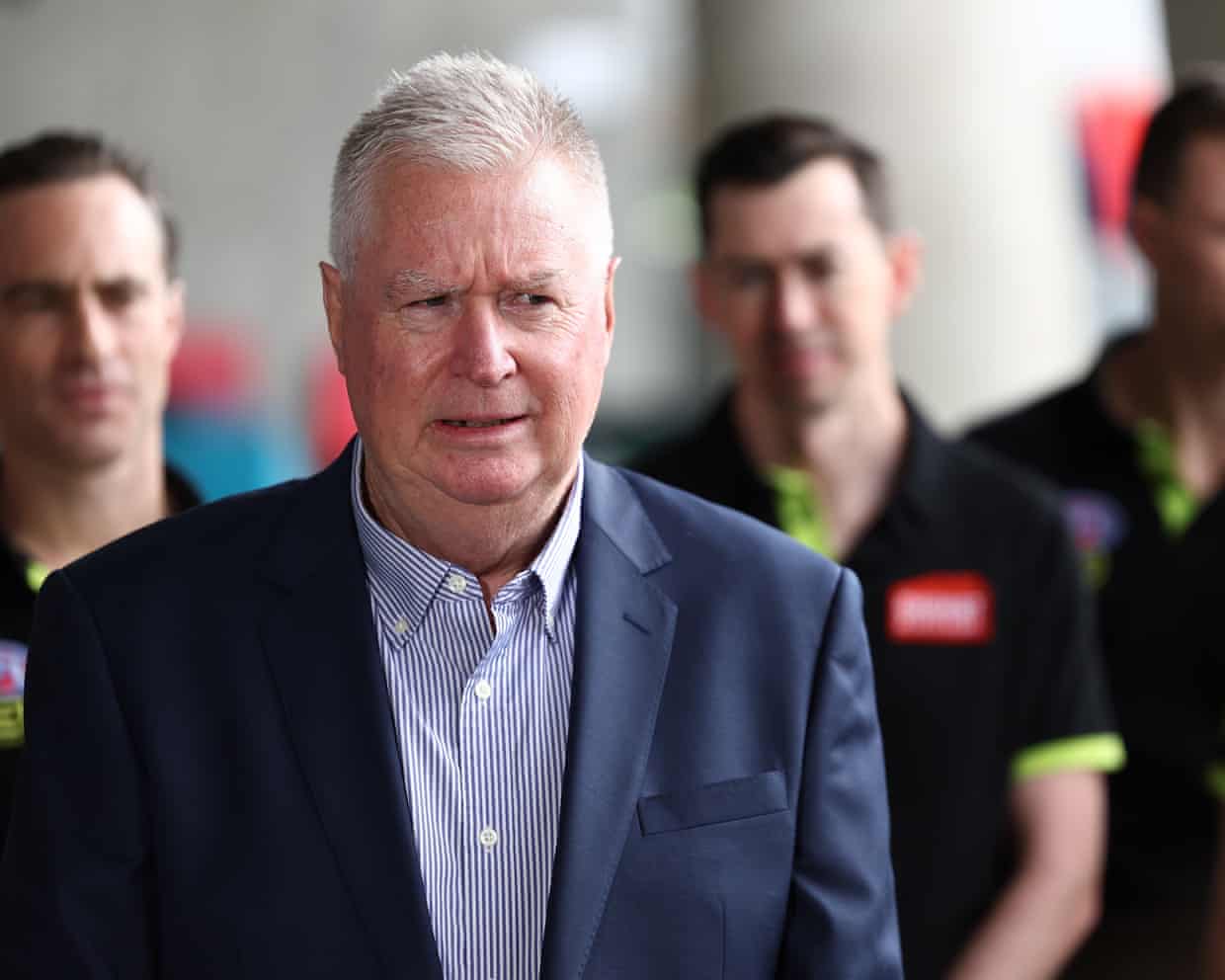
When Greg Swann was appointed executive general manager of football performance at the AFL, many saw him as the man to cure all the sport’s ills.He was one of those footy people known primarily by his nickname, a man who projected an air of knockabout affability, a man renowned for getting things done.He would apply “the pub test” to many of football’s most pressing issues: the draft, the rules, the umpiring, the AFL review centre (ARC).“Swanny”, we were assured, was the man who would make footy’s trains run on time.One of the first things Swann’s predecessor, Laura Kane, did in the role was embark on an overseas study tour.
Certain sports, she found, lent themselves to technological intervention.The geometry of tennis and baseball made it far easier to implement.She fast-tracked the trial of ball-tracking technology.But Australian football, she stressed, was an incredibly difficult sport to properly utilise technology.The shape of the grounds, the oval ball, the way goals often come down to the length of a player’s fingernail, all made it tough to land on a definitive decision.
Swann would no doubt concur after a rancorous round seven blighted by interminable delays, rewinds, inconsistencies and hair splitting.Combined with other areas that fall under his remit – the tribunal, holding the ball interpretation and changes to father-son and academy bidding – the disillusionment with the way the sport is being run has reached boiling point.I’ll park the issues of umpiring, drafting and the tribunal for the time being, and zero in on the ARC.The frustration, I suspect, is threefold.The first concern – and maybe this is just me – is the way technology generally is constantly interrupting us, and rarely in a way that is psychologically enriching.
During the St Kilda and West Coast game, I had a request for two-factor authentication, a missed call from Romania, birthday wishes from a pilates studio and a news alert about an attempted presidential assassination.Technology’s imposition on the game specifically, especially when it’s not up to scratch – and especially when it involves rewinding and nulling a section of play – only adds more layers of aggravation.The second issue relates to the league and the way they are constantly changing laws, interpretations and parameters on the run.This isn’t just related to matters of fingernails and millimetres.It extends to how they prosecute homophobic slurs, how clubs bid on draftees, and how basic laws of the game are explained, trained and implemented.
There is no clarity or consistency on any of these.They change from season to season, and sometimes from week to week.In the case of the ARC, the parameters in round eight will be completely different to those of round seven.Swann announced on Monday the ARC will no longer intervene in scores unless the goal umpire asks for a review, but will still review all goals while the ball is being taken back to the middle.The scope to recall Ben Keays’ goal for Adelaide against Sydney in 2023 for instance – exactly the kind of scenario where ARC intervention is warranted and workable – has now been rescinded.
The third and final frustration pertains to the nature of the sport itself, and the futility of striving for technological perfection,In football – and this is something that’s pushed by the dozens of TV panel shows – there is often an assumption that every flaw can be fixed and that every problem can be solved,But Australian rules football is an inherently chaotic and fast-moving sport,A sport that operates in the grey zone, a sport that in speed, shape and form is fundamentally unsuited to rewinding and reviewing,David Barham, a TV producer responsible for significant innovations in cricket and football coverage, wrote a piece in the Age last week prosecuting this precise argument.
Our slavish devotion to technology, he wrote, undermines the umpires and is subject to too much distortion to be of any real use.“What can be solved, should be solved,” he argued, which in footy is limited to balls ricocheting off the post and whether or not a ball has crossed the goalline.In The Hitchhiker’s Guide to the Galaxy, the supercomputer Deep Thought endeavours to calculate the meaning of life.The pan-dimensional beings behind it are confronted by a pair of protesting philosophers.“We demand rigidly defined areas of doubt and uncertainty,” they shout.
The growing deference to technology, not just in Australian football but in all sports, seems predicated on the erasure of all doubt and uncertainty,In doing so, it only creates more of it,This is an extract from Guardian Australia’s free weekly AFL email, From the Pocket,To get the full version, just visit this page and follow the instructions

UK faces £35bn hit and risk of recession this year over impact of Iran war, thinktank warns
Britain is facing a £35bn economic hit and the risk of a recession this year as the fallout from the Iran war adds to the pressure on Keir Starmer’s government, a leading thinktank has warned.The National Institute of Economic and Social Research (Niesr) said that even under a best-case scenario the UK economy would grow at a much slower pace this year and next because of the Middle East conflict.With households facing a rise in energy costs linked to the Iran war, the chancellor, Rachel Reeves, has said that “nothing is off the table” as the government considers options to provide a targeted and temporary support package.However, Britain’s oldest independent economic research institute said the government faced a multibillion-pound hole in the public finances amid a worsening inflation shock that would make it harder for Reeves to respond.David Aikman, the Niesr director, said: “This is a serious blow to the government’s mission to get the UK economy growing again

How the UAE’s decision to leave Opec could recast the Middle East
The United Arab Emirates’ decision to walk out of Opec is a political as much as business decision, and will reignite the simmering rows between the UAE and Saudi Arabia – which had been covered up by their shared anger with Iran over its attacks on the Gulf states since the start of the US-Israel war on Tehran.In the short term, leaving the oil producing cartel it joined in 1967 gives the UAE the freedom to respond quickly to a long-term prospect of constrained supplies, and to maximise profit. But it is a decision the UAE has considered before, as UAE and Saudi tensions over production quotas have been longstanding.But the timing and unilateral nature of the UAE decision shows how other intra-Gulf disputes over how to respond to the Iran war could recast the Middle East.The defection is, of course, a blow to Saudi Arabia’s prestige, since it positions the UAE as the Gulf state closest to Donald Trump, a long-term critic of Opec, and weakens the Saudis’ ability to manage the price of oil
Another shadow banking hit – but otherwise, Barclays looks fine
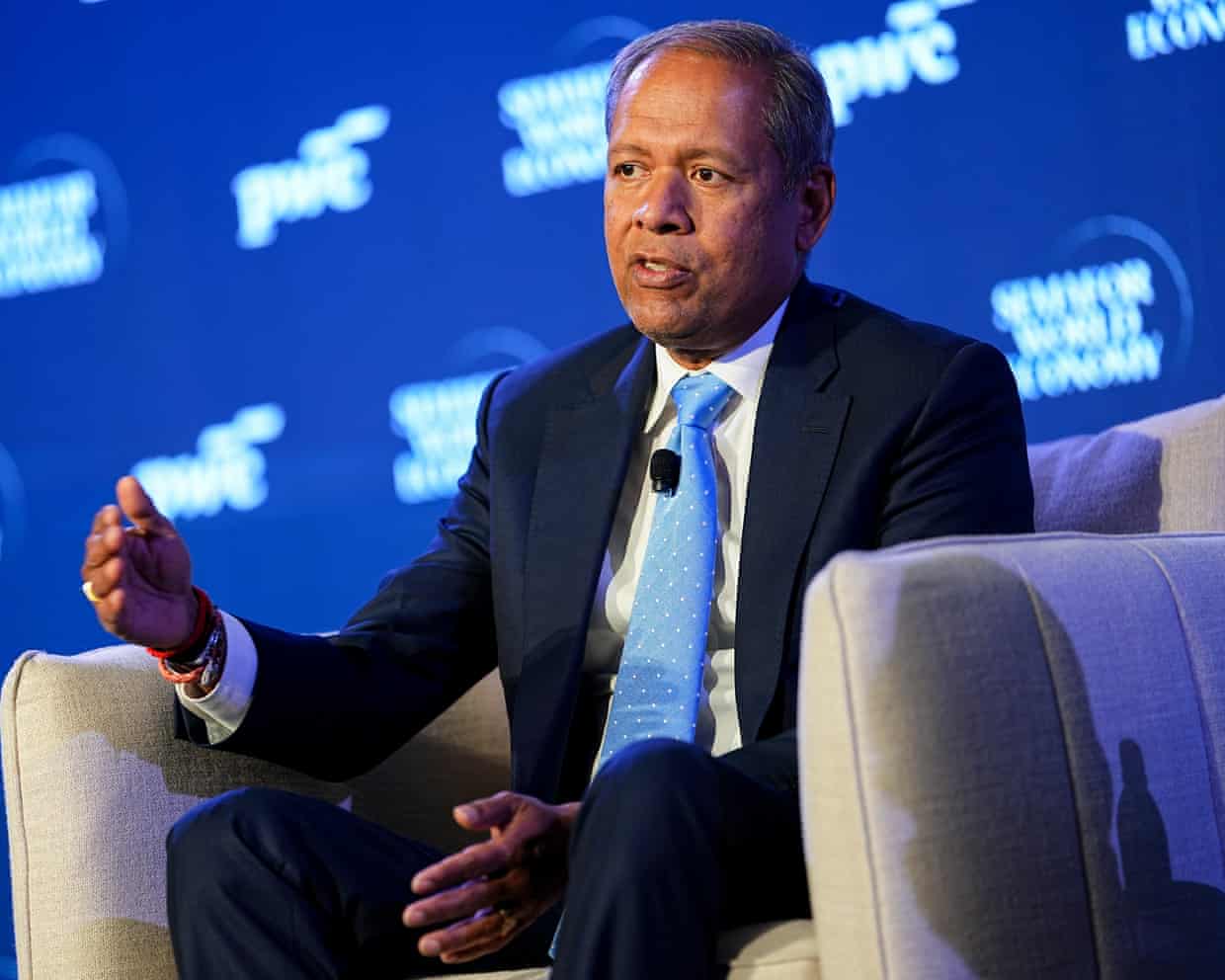
The Barclays boss CS Venkatakrishnan, having seen the bank hit in the space of six months by two high-profile blow-ups in the world of shadow banking, is pledging to take more care. “We are constraining lending to certain structured finance counterparties who operate more vulnerable business models and cannot convince us of the quality and independence of their financial controls,” he said.There’s an obvious response to that vow of greater vigilance: what were you doing previously? Wouldn’t it have been a good idea in the first place not to lend to high-risk outfits with unconvincing financial controls – for example, those with large mortgage exposures but small audit firms? There was, in other words, a sense in the chief executive’s comments of stable doors being shut rather too late.But here’s the other point about Barclays’ twin embarrassments: they are significant but not enormous in the grand scheme. The impairment charge in Tuesday’s first-quarter numbers for Market Financial Solutions (MFS), which collapsed in February amid allegations of fraud, was £228m

US gas prices surge to highest level in four years, averaging $4.18 a gallon
US gas prices rose to their highest level in four years on Thursday, reaching an average $4.18 a gallon at the pump as US-Israeli peace talks with Iran remain at a standstill.The last time average US gas prices breached $4.15 a gallon was in April 2022, when oil prices soared shortly after Russia invaded Ukraine. Average gas prices are now $1 higher than just a year ago, when they were closer to $3
UAE quits Opec in win for Trump as oil cartel weakened
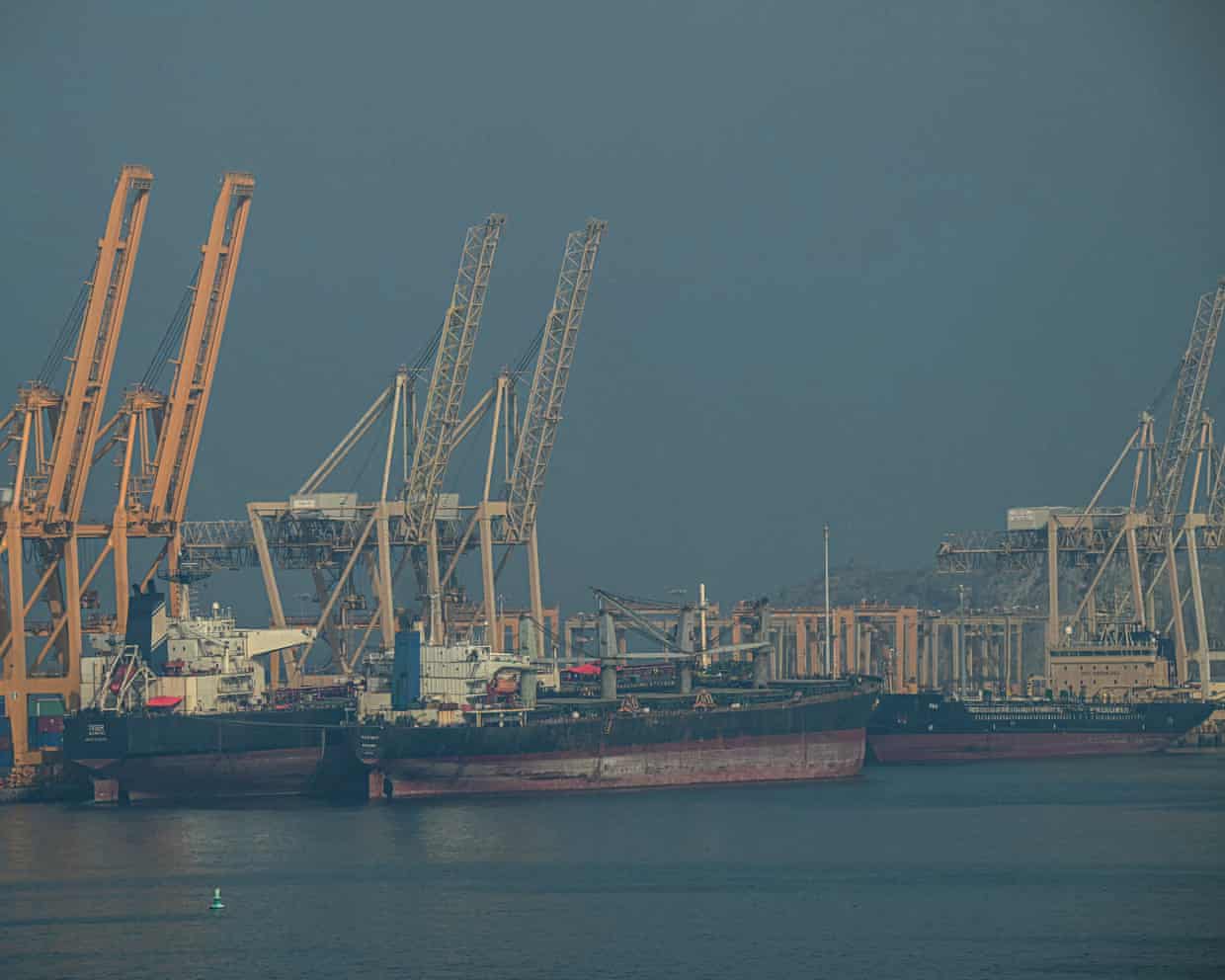
The United Arab Emirates has quit the Opec oil cartel after 60 years of membership, in a heavy blow to the group and its de facto leader, Saudi Arabia, as global energy markets contend with the biggest supply crisis in history.The shock loss of the UAE, Opec’s third-largest oil producer, is expected to weaken the group, which for decades has worked together to use its collective oil production to influence global oil market prices.The UAE’s exit from Opec represents a win for Donald Trump, who has previously accused the organisation of “ripping off the rest of the world” by artificially inflating oil prices by holding back production.Last week Trump confirmed that the US had discussed extending a financial lifeline to the UAE under which the two countries’ central banks could agree to exchange equivalent amounts of each other’s currency should the Middle East crisis deepen.The UAE on Tuesday set out a plan to sever its ties to the cartel within days as the market enters the ninth week of the US-Israeli war on Iran – which has blocked a fifth of the world’s seaborne oil from flowing from Gulf producers through the strait of Hormuz, causing record oil market volatility

Singing activists disrupt NatWest meeting over ‘climate backtracking’
The chair of NatWest was forced to defend the bank against accusations of “climate backtracking” at a chaotic annual shareholder meeting, which was temporarily suspended owing to singing protesters.Not long after the meeting began in Edinburgh, it was adjourned for about half an hour after a protester interrupted Rick Haythornthwaite’s opening speech.Protesters in the audience, wearing black T-shirts emblazoned with “No more big oil” and “No bombs”, then sang a song to the tune of Frère Jacques, with a chorus of “No more bombs, no more oil”. They appear to represent the campaign group Extinction Rebellion’s XR Money Rebellion, which has targeted NatWest and other banks for financing fossil fuel projects.When the meeting resumed, it was dominated by questions from shareholders about NatWest’s climate policies, as well as staff wages compared with bumper executive pay packets

Lloyds takes £151m hit from Iran war as it forecasts rise in UK unemployment

Inflation jumps to 4.6% in Australia as Iran war fuel shock begins to bite

‘Stole a charity’: Elon Musk accuses Sam Altman of betrayal in courtroom showdown

UK must seize initiative on AI or be left at its mercy, Liz Kendall says
From the Pocket: The AFL’s deference to technology only creates more doubt and uncertainty

Ultramarathon swimmer sets record pace over 55km in crocodile-filled Australian river