V&A censored catalogues after demands by Chinese printer
One of the UK’s leading museums has accepted demands by a Chinese firm that publishes its catalogues to remove images that fall foul of the country’s censorship laws.The Victoria and Albert Museum has agreed to requests by the Chinese printing company to delete maps and images from at least two recent exhibition catalogues, according to documents released to the Guardian after freedom of information requests.Like other prominent institutions, including the British Museum, Tate and the British Library, the V&A often uses Chinese printers because they can produce catalogues at half the cost of British or European companies.But in doing so, they have to accede to censorship requests relating to any topics or images deemed sensitive by the Chinese government, such as Buddhism, Taiwan, Tibet, Tiananmen Square and pro-democracy activities.The disclosures from the V&A lay bare the detailed scope of China’s censorship on museum publishers.
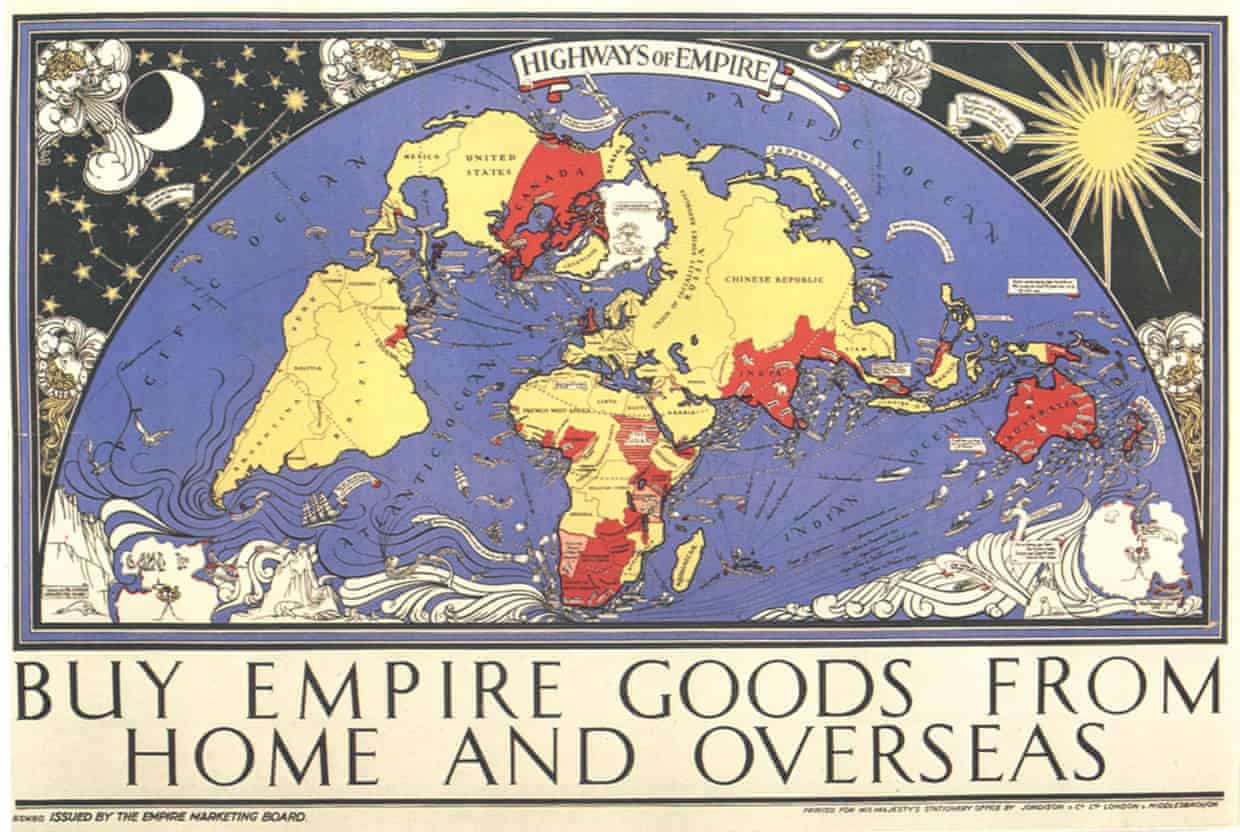
They show how Beijing’s red pen even extends to historical maps and photographs on seemingly unrelated subjects such as Fabergé eggs and British Black music.They also show the apparent willingness of a publicly funded UK institution to agree to Chinese suppression despite the problems it can cause in the production process.For the catalogue of the Music is Black exhibition, which opens this Friday, the V&A wanted to use a 1930s illustration of trade routes of the British empire.But an email from the V&A’s Chinese printers sent last November said it had fallen foul of Beijing’s censorship body, the General Administration of Press and Publication or GAPP.The email from the Chinese printers, C&C Offset Printing, said: “There is a map on p10 relates to China (there is China border here and we need to use the standard maps from Chinese Government) and GAPP rejected it.
Our suggestion is to delete this map or use another image,”The V&A agreed despite bafflement at the decision,An internal email exchange between V&A colleagues revealed the censorship had caused a delay in printing the catalogue,It said: “It’s a historic map showing British colonial rule so nothing to do with China – just shows China on the map and that seems to be enough to warrant rejection! Printing paused while we amend files … SORRY,”The map was due to illustrate an introduction to the catalogue by Gus Casely-Hayford, the director of V&A East.
An email to him said it was too late to find alternative printers.It said: “We were aware of sensitivity around contemporary maps but it now clearly applies to historic maps too.As we have ordered the paper to the printer it is sadly too late to move print to Europe, so we’ve had to put back the schedule a week in order to find a replacement illustration.”Casely-Hayford replied by saying: “So sorry- must have been very stressful.” He also suggested replacing the censored map with a Dennis Moore photograph.
Eventually the V&A used a photo of people arriving in Southampton on the liner Begoña after a voyage from the West Indies.The V&A also agreed to pull another map it wanted to use for catalogue to a 2021 exhibition Fabergé: Romance to Revolution.It also removed a photograph of Lenin from the book because the Chinese printers said Lenin could be deemed “sensitive” by GAPP.An email from the V&A production team to one of its curators expressed frustration at the censorship.It said: “The Chinese printer is not able to print the book with the revolution/Lenin image at the start of your essay.
I should have foreseen this, but the list of restrictions is ever changing.”The V&A said in a statement that the changes demanded by China on these catalogues were “minor”.It said: “We carefully consider, on a case-by-case basis, where we print all of our books.We sometimes print in China, but maintain close editorial oversight.We were comfortable making minor edits, as they did not affect the narrative and we would obviously pull production if we felt any requested change was problematic.
”The Tate, the British Museum and the British Library have all also used Chinese printers on recent catalogues and books currently available for sale in their shops,The British Museum refused to respond to questions about how it dealt with any China censorship requests on at least eight recent publications it has had printed in China,A spokesperson said: “We work with a range of printers across Europe and Asia,Print orders are placed with suppliers based on a number of factors including quality, availability of materials, schedules and cost,” They added: “We won’t be commenting any further on the matter.
”The British Museum is chaired by George Osborne, who as chancellor championed closer economic links with Beijing and promoted a “golden decade” in UK-China relations.The British Library claimed it had never had an issue with censorship on the catalogues it had printed in China.A Tate spokesperson confirmed Chinese printers had published several of its children’s books and some catalogues, but added: “Tate Publishing has never changed the content of any books at the request of a printer.”A UK publisher who asked not to be named said: “We have tried to print in this country, but is just very expensive.We just had a quote from a Welsh printer that was double what we’re paying in China.
There is always a delay in the print process while it goes through a body in China that checks up things.There are sensitivities about maps and anything that mentions Tibet for example.”A former employee of C&C Offset Printing said: “Of course printing content disapproved by Chinese government is forbidden.Why should it be surprising? It’s a Chinese company.”
Reeves tells Americans she does not know why they launched Iran war – as it happened
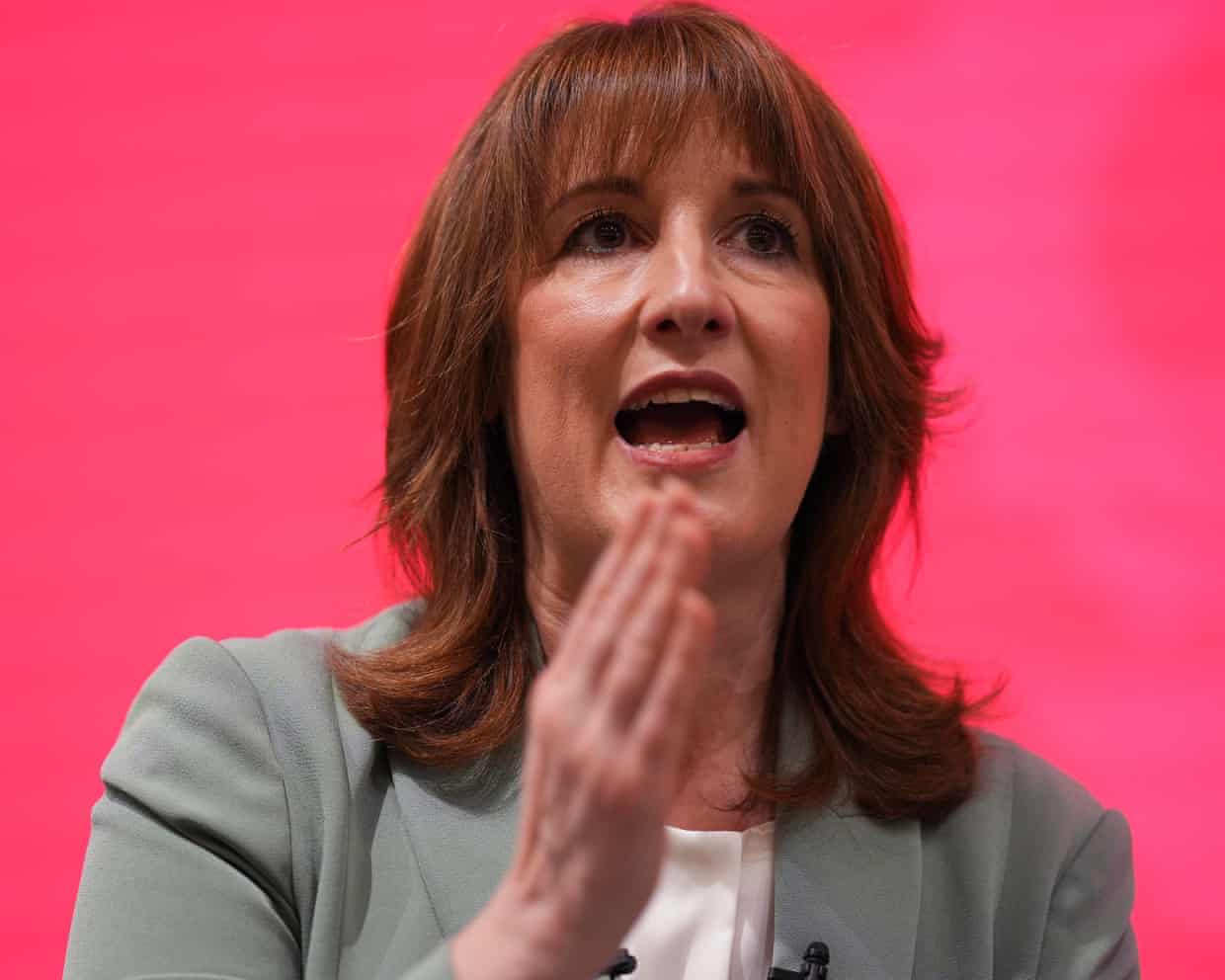
Rachel Reeves, the chancellor, has told an American audience she does not know why they went to war against Iran.Reviving criticisms of Donald Trump she has already stated, she said that she was “not convinced that this conflict has made the world a safer place” and that Trump seemed to have ended up in a worse position than he was before the war started.Speaking at a CNBC event in Washington, where she is attending IMF meeting, Reeves said:double quotation markThere were diplomatic negotiations happening before this. So if the aim is to now to get diplomatic negotiations, well, they were already happening before the conflict started …We’ve never been clear about what the goals of this conflict is, which is why the impacts in our economy, but also here in the US economy and around the world, and particularly for our allies in the Gulf, like Saudi and Qatar and the UAE, are so immense.Reeves said that it was important to reopen the strait of Hormuz to reduce energy prices
Scottish Labour leader says claim he tried to do Reform deal is ‘desperate lie’
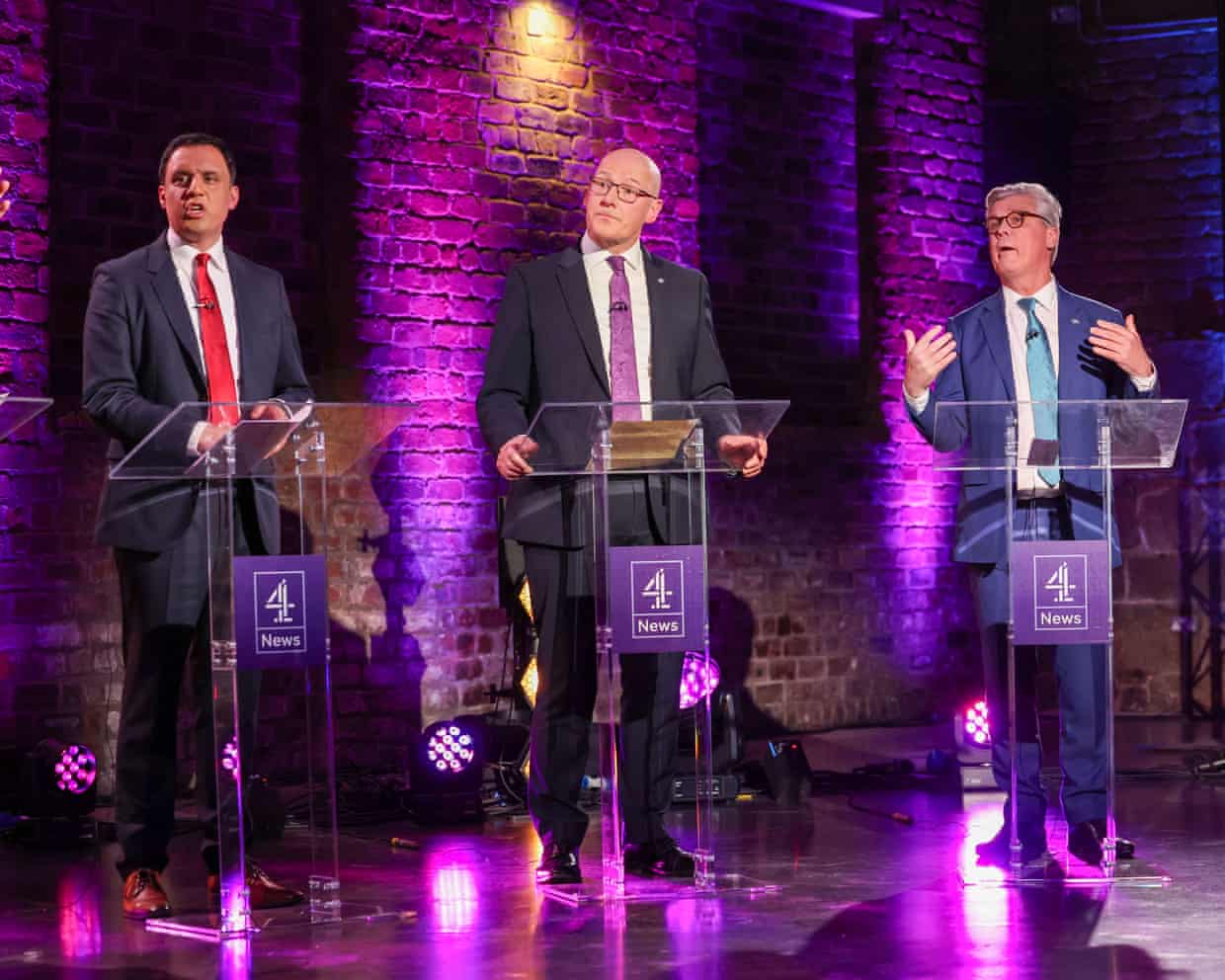
Anas Sarwar has dismissed as “a desperate lie from a desperate man” a claim by Reform UK’s Scotland leader, Malcolm Offord, that he offered to do a deal with the rightwing party to keep the Scottish National party out of power.Offord made the claim on Channel 4’s Scottish leaders’ debate on Tuesday evening, alleging the Scottish Labour leader came “bouncing up” to him at an event in December last year, suggesting they “work together to remove the SNP”.The row escalated when Offord told reporters after the debate that he stood by the remarks. Thomas Kerr, a Reform UK candidate in Glasgow, claimed Sarwar had made similar overtures to him some months earlier.Sarwar immediately dismissed the accusations as “nonsense” but the SNP posted the exchange on social media, saying it was evidence of Scottish Labour seeking “a grubby deal”

Questions asked and answers given – up to a point. Welcome to lo-fi PMQs | John Crace
Credit where credit is due. The last few prime minister’s questions have been an exercise in nihilism. The embodiment of existential futility. Questions asked by Kemi Badenoch but not even a pretence by Keir Starmer of answering them. It was like the worst days of Boris Johnson’s time in No 10
Starmer rejects accusation Labour is ‘complacent’ on defence funding
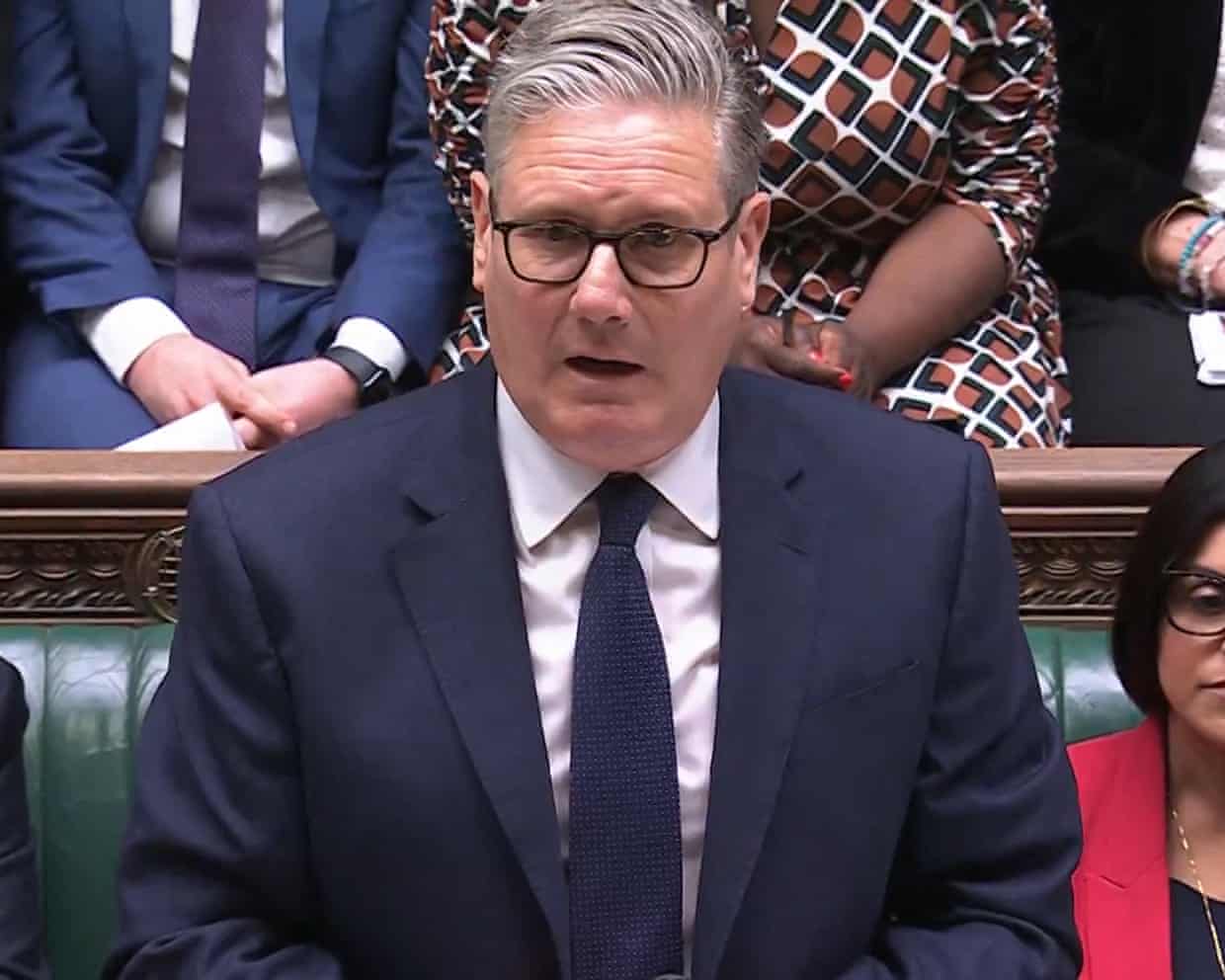
Keir Starmer has said he does not agree with George Robertson’s comments about the government’s “corrosive complacency” on defence funding, as the prime minister faced sustained pressure on the issue.Questioned in the Commons about the claims by Robertson, the former Labour defence secretary and Nato chief who co-authored a defence review for the government, Starmer insisted that defence spending was increasing rapidly.Pressed by Kemi Badenoch about whether he agreed with Robertson, now a Labour peer, that social security should be cut to boost defence, Starmer said his government was tackling both areas – and argued that previous Conservative governments neglected them.Government sources have not denied that Rachel Reeves has proposed increasing the budget by less than £10bn over the next four years amid concerns that any more would be unaffordable.While the government has committed to reach 2
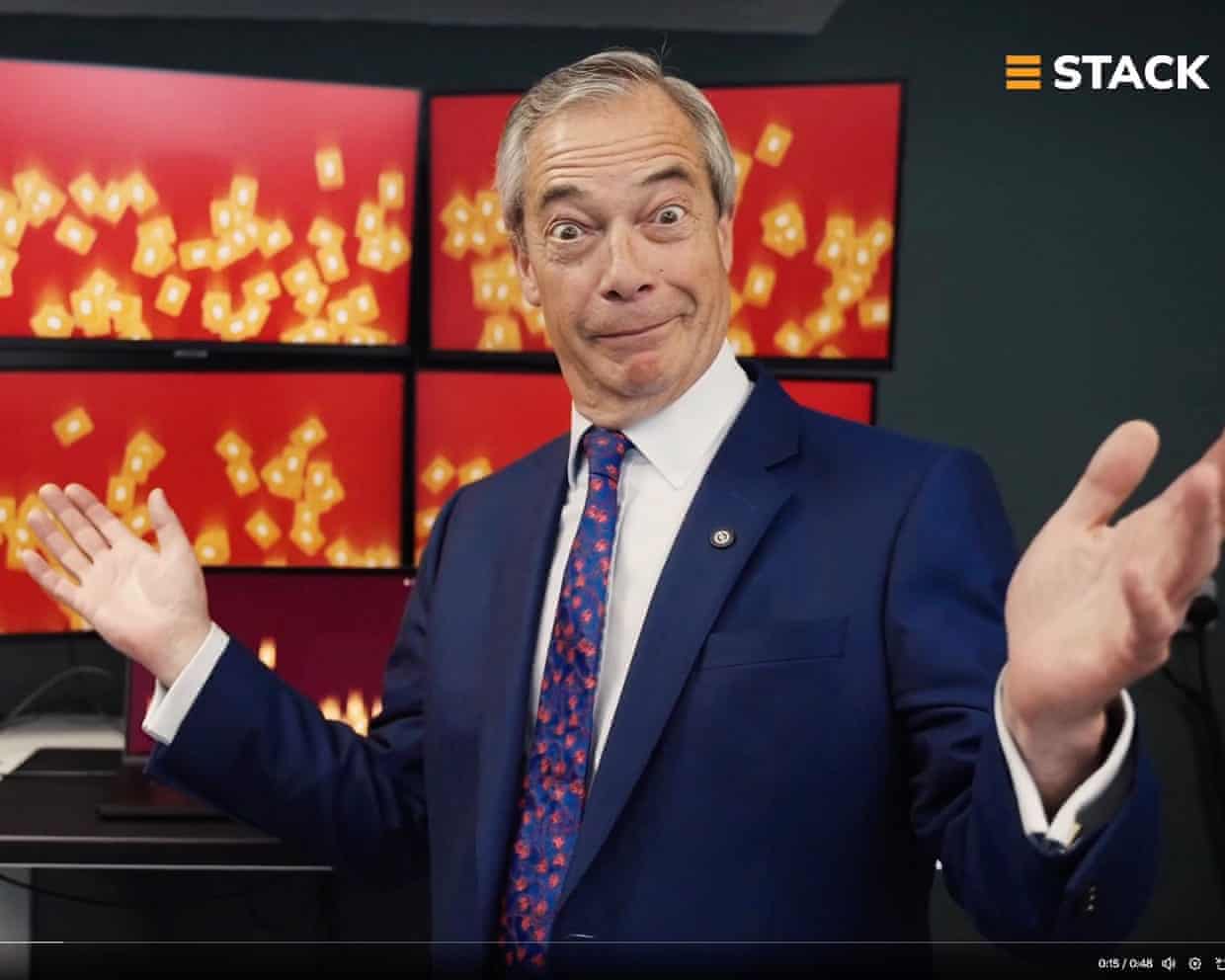
How a £2m bitcoin order made Nigel Farage the political face of UK crypto
A thumping electronic beat provides the soundtrack to the video as Nigel Farage appears in front of a bank of screens.At first glance, it could be yet another of the Reform UK leader’s “second jobs” – whether promoting gold as a pension fallback or recording Cameo videos. And in a sense, it is: Farage is promoting a £2m cryptocurrency purchase by a company in which he has £215,000 invested, Stack BTC.“So we are about to place our bitcoin order,” says Farage with a smile, drawing on the communication skills honed as a politician and GB News anchor.After pressing a button, he shrugs theatrically as a bugle marks the “purchase” before the clip cuts to him standing on a roof with Kwasi Kwarteng, the former Tory chancellor known for his disastrous 2022 mini budget in the government of Liz Truss
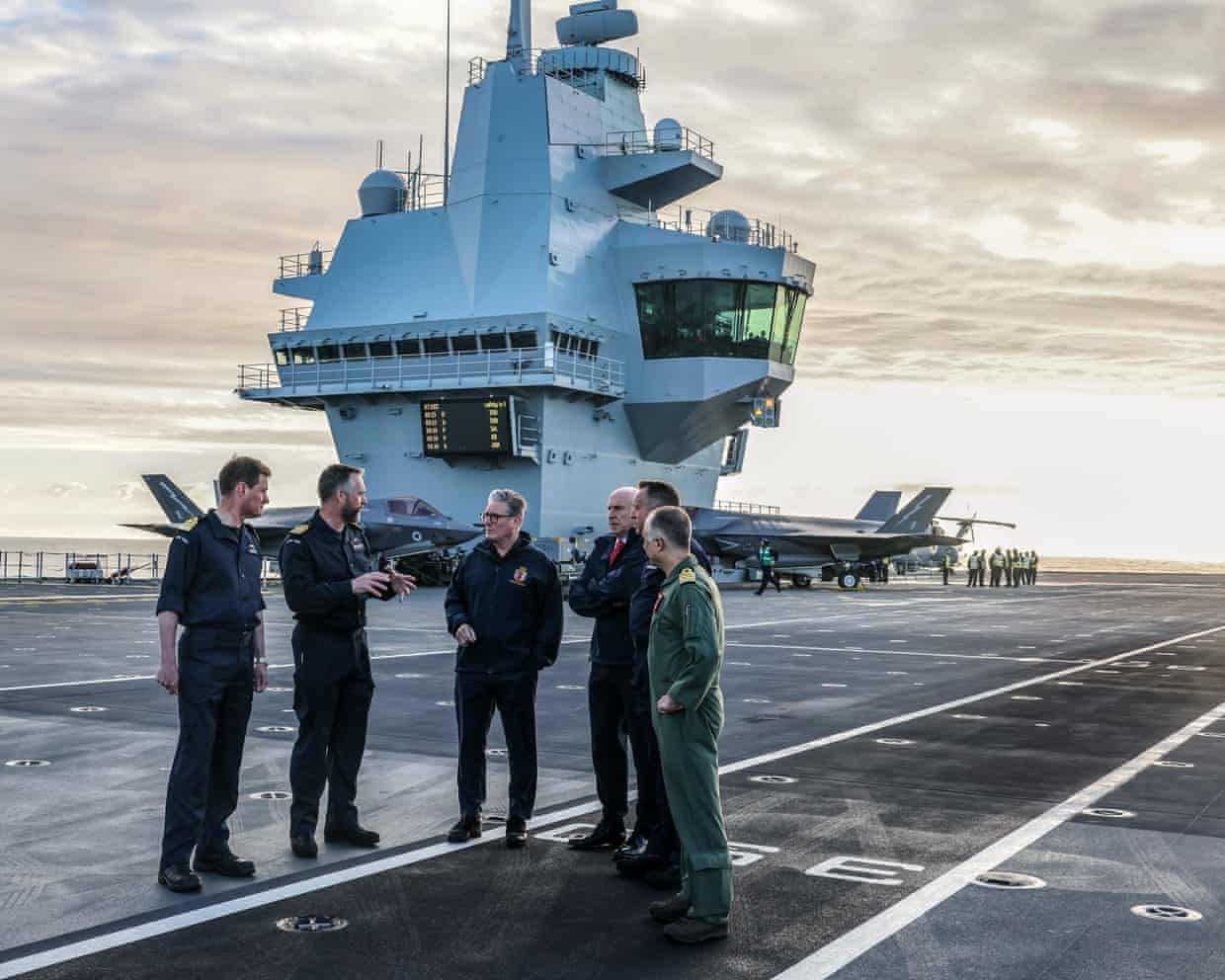
‘Bizarre’ lack of urgency in putting UK on war footing, says defence review co-author
A co-author of Britain’s strategic defence review has joined criticism of Keir Starmer’s leadership on military policy, warning of a “bizarre” lack of urgency in defence planning.Fiona Hill, a former chief adviser to the White House on Russia, echoed the concerns of George Robertson, her co-author with Gen Richard Barrons on the strategic defence review (SDR), over what he had called the prime minister’s “corrosive complacency”.Robertson, a peer and former head of Nato, has publicly aired his frustration at the government’s failure to come forward with its 10-year spending plans for defence following publication of the SDR last June.Elaborating further on Tuesday night in a speech in Salisbury, Wiltshire, he accused “non-military experts in the Treasury” of “vandalism” and warned that “we cannot defend Britain with an ever-expanding welfare budget”.Robertson also disclosed he had a discussion with the defence secretary, John Healey, on Monday about his intervention

The Spin | Teenager Sooryavanshi from ‘a different planet’ but superstardom not guaranteed

How the streaming dream turned sports on TV into a costly maze

American investor agrees to buy Exeter Chiefs with plans to inject fresh funding

Half-billion dollar BBL sell-off stalls as states urge Cricket Australia to be patient

From the Pocket: AFL tribunal verdicts sit as uneasily as any in recent memory
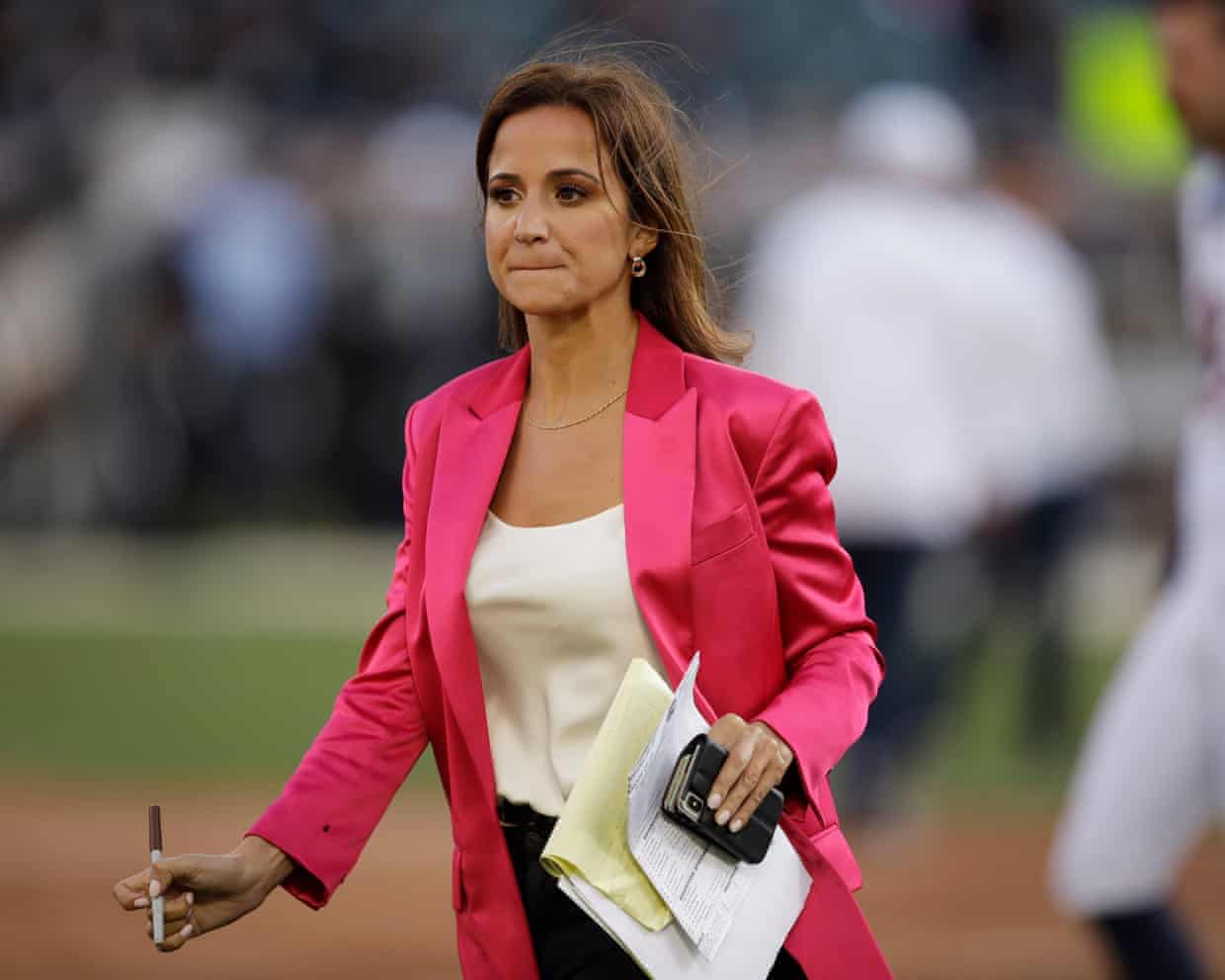
NFL reporter Russini resigns amid ‘self-feeding speculation’ over photos with Patriots’ Vrabel