The UK sleepwalked into this energy price shock | Nils Pratley
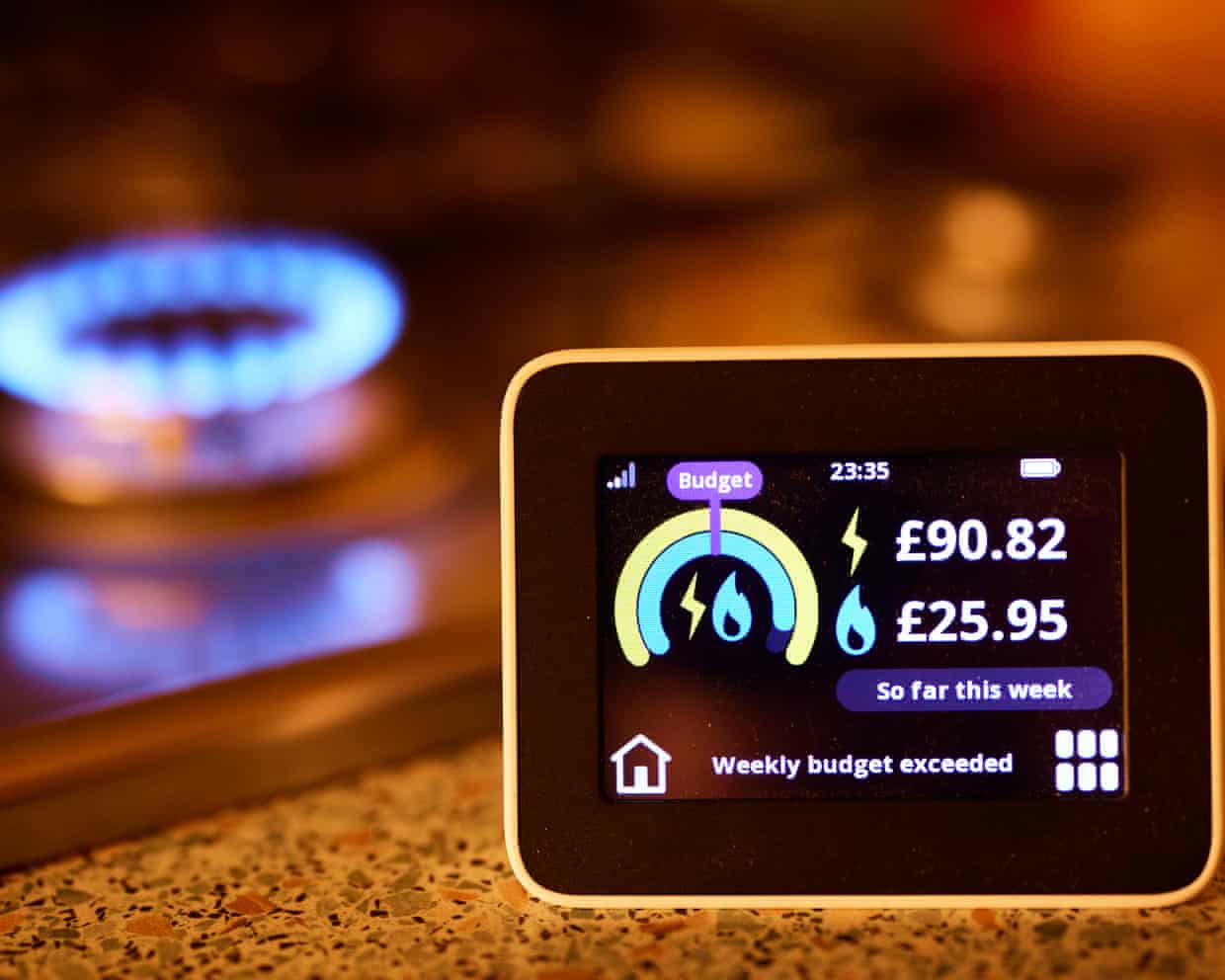
“Because of the choices we made before the conflict in the Middle East began, we are better prepared for a more volatile world”, the chief secretary to the Treasury, James Murray, claimed last week.That statement – surprise, surprise – failed to calm the bond vigilantes who had pushed the yield on 10-year government debt to a punishing 5% before Monday’s modest retreat.Murray seemed to be referring to tax increases and the chancellor’s decision to shift £150 of green levies from energy bills into general taxation.Count those if you wish but, come on, they are minor entries.The UK’s vulnerability to energy price shocks flows from bigger forces, such as our large and growing dependency on imports.
The UK is not alone in that position but two statistics in the Dukes report – the Digest of UK Energy Statistics, published annually by the energy department – should be required information for government ministers,In 2024, says the latest Dukes, the UK got 75,2% of its primary energy needs from fossil fuels, mainly meaning oil and gas (think transport and heating primarily),The proportion, says the report, was a “record low”, but the point is that it wasn’t a low by much,The previous year was 76.
6%.In 2020, it was 76.8%.Energy transition takes time, in other words.The other notable Dukes statistic is that net import dependency in 2024 was 43.
8%, 3.4 percentage points higher than in 2023.It has been hovering around the 40% mark since 2010.Again, the lesson is that while “homegrown” energy in the form of renewables, nuclear and batteries may be the eventual desirable destination, salvation is not arriving tomorrow.So it is fair to ask what preparations the government – and, indeed, the previous Tory government – made to make the UK more resilient to shocks.
There is not much to point to.First, on support for consumers, it is clear that a 2022-style universal package, which ended up costing £44bn, is unaffordable, just as the public accounts committee advised a year ago when examining the events of 2022.The first line of its report now reads as prescient: “The department has been slow to learn lessons about how to respond in the event of a future spike in energy prices.”Talk to retail energy suppliers – the people who would probably administer any scheme – and they say that if the government has found a new data-driven model to identify those most in need, it has yet to share it.At this stage, they say, the only reliable tool for “targeted” support would be the established but imperfect one of the warm homes discount.
Second, as everybody knows by now, nothing has been done to break the link between gas and electricity prices in the wholesale market,A three-year review, started under the last government, rejected zonal pricing in favour of yet-to-be-decided adjustments to the fees paid by generators to access the transmission network,The worry was that the rollout of renewable projects and grid upgrades could be imperilled if developers took fright at the unknown,But the result is that gas still sets wholesale prices 80% of the time (according to the energy minister last week) to the great benefit not only of gas-fired stations but also nuclear plants and the owners of windfarms with pre-2017 subsidies,Third, the government has chosen to ignore calls from many directions – even the head of RenewableUK recently – to drill more in the North Sea.
Greater domestic oil and gas volumes wouldn’t move market prices much, if at all, but there would be benefits for things the UK’s lenders tend to notice – the balance of payments, medium-term tax receipts, jobs, security of supply and so on,That debate will only intensify, especially given the higher carbon emissions associated with imported LNG gas versus domestic supplies,Fourth, nothing was done to improve the UK’s meagre levels of gas storage,Centrica’s Rough facility off the coast of Yorkshire was partly reopened in 2022 with limited capacity but ministers have so far dodged the question of whether the country needs a strategic reserve of gas, which might be useful now,Come back later this year for a response to the alarming official report that warned of an emerging risk of Britain running out of gas from 2030-31 if decarbonisation efforts slow and if a key piece of kit, such as the critical pipeline that brings gas from Norway, were to be unavailable at a bad moment.
Add it all up and the notion that the UK was better prepared for an energy crisis is fanciful.It has been more a case of sleepwalking and trying to avoid hard trade-offs.To repeat, many of the decisions pre-date this government, but the gilts market’s harsh verdict is explicable.On the big stuff, it can’t see much difference from last time.

Stock markets swing and oil prices fall after Trump postpones strikes on Iran power plants
Global stock markets swung wildly and oil prices fell on Monday after Donald Trump postponed US attacks on Iranian power plants for five days.European stock markets, which had been falling sharply in the hours before Trump’s social media post, mostly rose on Monday as relieved investors digested the update.The French Cac 40, the Spanish Ibex and the German Dax, which all also opened lower, were up by 0.8%, 1% and 1.2% respectively

EasyJet bookings fall because of Iran war as boss warns of air fare rises
The boss of easyJet has said the war in the Middle East has started to hit flight bookings, while the soaring price of oil would probably mean a rise in air fares by the end of the summer.The chief executive, Kenton Jarvis, said that while the airline had hedged much of its fuel into next year, avoiding soaring kerosene prices, it was “unavoidable” that some of the costs would be passed on in fares.He said forward bookings for summer had started to slow. With their proximity to the conflict, flights to Turkey, Cyprus and Egypt had been hit by the biggest drop in bookings, Jarvis said, and passengers had instead turned to the “usual suspects” of Spain, Greece and Portugal, which were “holding up pretty firmly”.He said: “We have seen a drop in bookings

Starmer says ‘every lever’ will be explored to ease rising costs of living from Iran conflict
Keir Starmer has promised to look at using “every lever that’s available to the government” to help people cope with the impact on the cost of living of the US-Israel war against Iran, as he prepares for an emergency meeting with senior ministers.The prime minister will chair a meeting of the Cobra committee to discuss possible contingency measures on Monday afternoon, joining Andrew Bailey, the governor of the Bank of England, Rachel Reeves, the chancellor, Ed Miliband, the energy secretary, and Yvette Cooper, the foreign secretary.Speaking to reporters during a visit to a school in London, Starmer said he wanted to reassure Britons that everything was being done to mitigate the economic effects of the conflict, which has resulted in energy prices soaring and the cost of government borrowing also rising.“Cobra is the opportunity at the highest level to bring people together on matters of real, significant national importance,” Starmer said.“Obviously, Cobras are usually used for military considerations, consular considerations, but I think with the Iran war, most people are very concerned now, not only what they’re seeing on their screens in relation to the conflict itself, but also that question of ‘How is it going to affect me and my family?’“And so today we’re looking at the economic impact, and I am asking for every lever that’s available to the government to deal with the cost of living to be discussed at Cobra

Idris Elba-backed firm Huel bought by Danone in €1bn deal
Huel, the protein shake maker which counts the actor Idris Elba among its investors, has agreed to be acquired by the French consumer goods group Danone in a deal worth about €1bn (£870m).The British company, which makes food powders, snack bars and meals from a blend of plant-based ingredients and fortified with vitamins, started out selling its powders online. It is now available in more than 25,000 stores around the world.The Huel co-founder Julian Hearn will make about £400m from the deal, according to filings at Companies House.He started the business in 2015 with the nutrition specialist James Collier, and remains one of the biggest shareholders in the business
Australia’s generation Alpha faces $185k bill over lifetime without urgent action on climate crisis, report finds
The next generation of Australian workers will cop a $185,000 bill over their lifetimes if the country does not act more urgently to address the climate crisis, according to new modelling by a team of young economists at Deloitte.The new report finds that global heating consistent with the current projections would cost the average millennial about $130,000 over the rest of their lives, increasing to $165,000 for gen Z.A gen Z Australian’s lifetime income could be $165,000 lower by 2070 without further global action.For generation Alpha, the eldest of whom turn 16 this year, the bill stretches to $185,000 a person by 2070.The report estimates the damage to worker productivity, infrastructure and property, as well as increased health risks and healthcare costs

UK mortgage interest rates expected to rise despite Trump’s Iran pause
Homeowners’ choice of mortgage deals has shrunk and interest rates on home loans are expected to rise this week despite financial markets reacting positively to Donald Trump’s pause on his threat to attack Iranian power plants.Early on Monday, as the end of a two-day deadline set by Trump for a deal with Iran grew closer, financial market data implied that investors believed the Bank of England would attempt to tackle rising prices with four quarter-point increases in rates before the end of December.After Trump instructed US defence officials to postpone airstrikes against Iranian energy infrastructure for five days, investors reduced the number of rate rises they expect to two quarter-point increases, from 3.75% to 4.25% this year

Cooking with Angela Hartnett: ‘I love food, but I don’t need to talk about it 24/7’

Slop it like it’s hot: the rise of build-your-own takeaway salad bowls

Osteria Vibrato, London W1: “Worth singing loudly about” – restaurant review | Grace Dent on restaurants

I lost my love of cooking after 12 years as a chef. Moving to a pig farm restored it
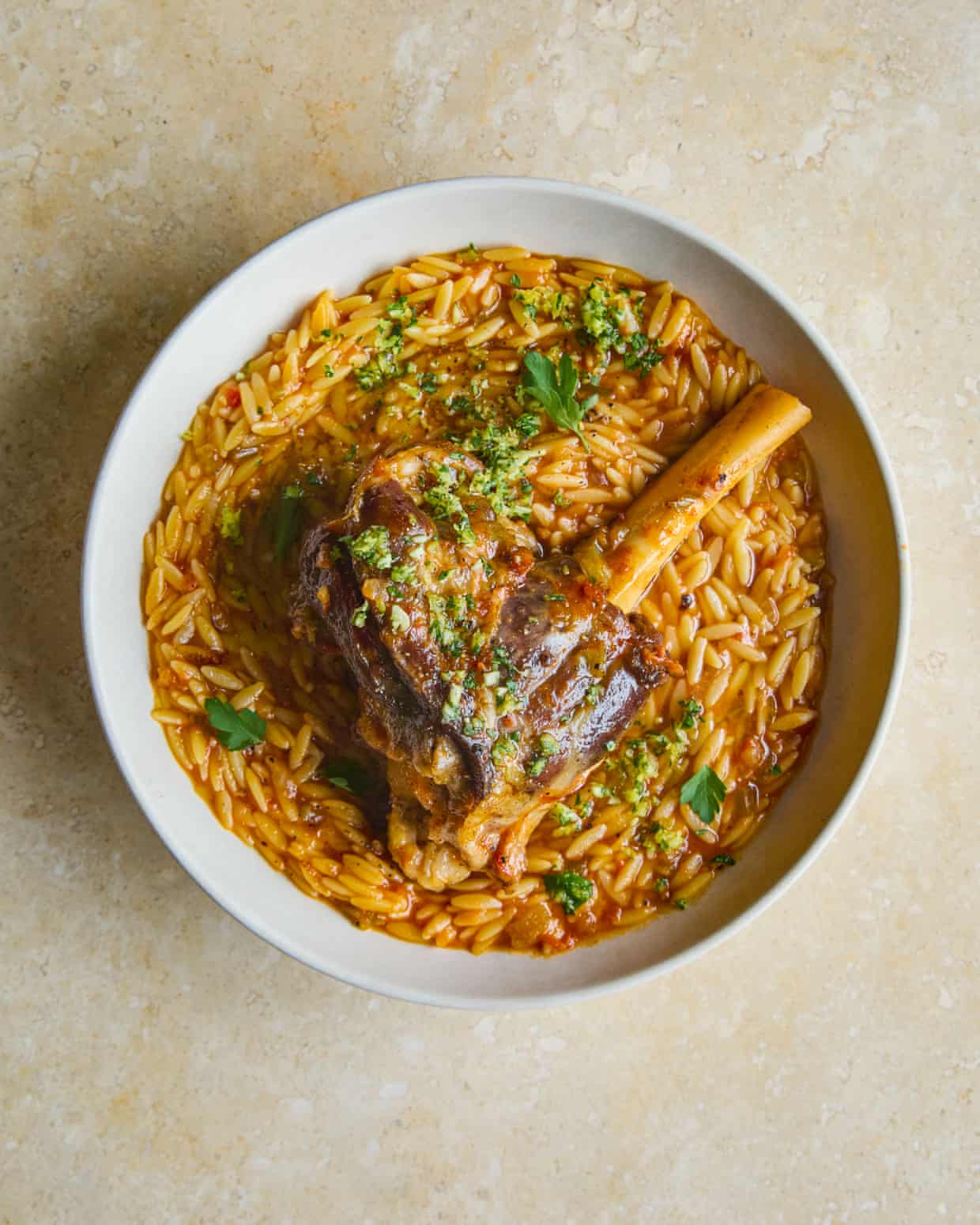
Lamb shanks with orzo and rhubarb galette: Anna Tobias’ Easter recipes
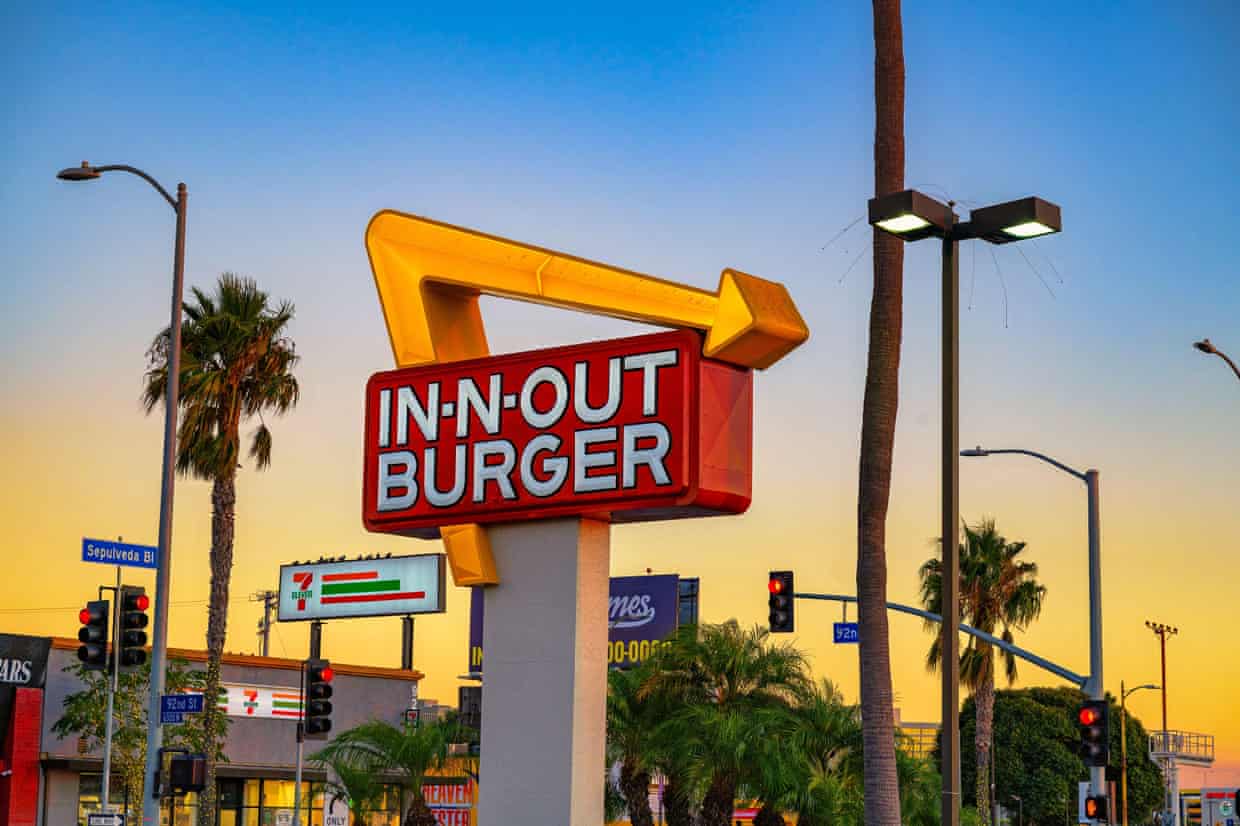
Best thing I ever ate? My first In-N-Out burger in LA