Davos: ECB’s Lagarde plays down fears of ‘rupture’ in world order, as IMF’s Georgieva warns of AI ‘tsunami’ hitting jobs market – as it happened
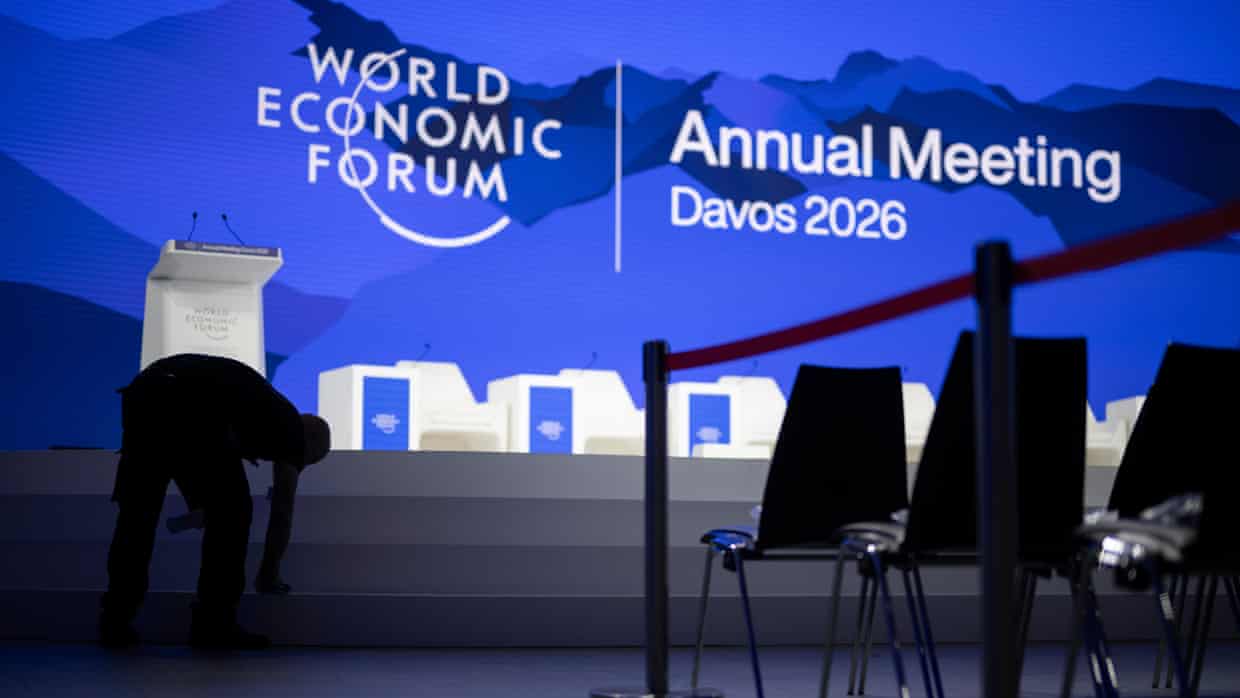
Good morning from Davos, where the final day of the World Economic Forum is underway.After a week dominated by issues such as the world order, geopolitical tensions, tariffs and artificial intelligence, the health of the global economy will be in focus today.ECB president Christine Lagarde, IMF head Kristalina Georgieva and WTO director-general Ngozi Okonjo-Iweala will give their views on the Global Economic Outlook.It’s an outlook that has darkened this week, with warnings from the leaders of Germany and Canada about the rise of great powers, and anxiety over whether AI will create an unemployment crisis.Speaking here earlier this week, Lagarde warned that President Trump’s escalating threats have undermined trust.
She told CNN, before Trump TACO’d out and dropped his latest tariff threat:“I think the trust is undermined.When you keep repeating the same pattern of undermining the rule of law, undermining the contracts, undermining what has been agreed between parties, then parties begin questioning, is that for real? Is that going to change again? And that’s when uncertainty looms large.”She also warned Europe needs to look at its economic strength, and weaknesses., just in case the normal relationship is not restored.S&P Global Ratings’ global chief economist, Paul Gruenwald, reports that talk about tariffs, and macro-economics has been less prevalent in Davos this year.
“I put this down to the fact that 2025 turned out to be a decent year for the global economy.Part of this was tariff climbdowns combined with resilient consumer spending and labor markets.And part of this was the offsetting demand from the Al and data center investment boom and its spillovers through the trade channel.”Actually, it’s more of a half-day, with events due to wrap up by lunchtime.And it feels like many delegates have already fled Davos, perhaps to fight or inflame (YMMV) the world’s problems.
8,45am Davos / 7,45am GMT: Session on Next Generation Social Movements9am Davos / 8,45am GMT: Session on Geopolitical Risks Outlook for 202610,15am Davos / 9.
15am GMT: Session on the Meaning of Politics11am Davos / 10am GMT: Session on the Global Economic OutlookArtificial intelligence will be a “tsunami hitting the labour market”, with young people worst affected, the head of the International Monetary Fund warned the World Economic Forum on Friday.Kristalina Georgieva told delegates in Davos that the IMF’s own research suggested there would be a big transformation of demand for skills, as the technology becomes increasingly widespread.“We expect over the next years, in advanced economies, 60% of jobs to be affected by AI, either enhanced or eliminated or transformed – 40% globally,” she said.“This is like a tsunami hitting the labour market.”She suggested that in advanced economies, one in 10 jobs had already been “enhanced” by AI, tending to boost these workers’ pay, with knock-on benefits for the local economy.
By contrast, Georgieva warned that AI would wipe out many roles traditionally taken up by younger workers.“Tasks that are eliminated are usually what entry-level jobs do at present, so young people searching for jobs find it harder to get to a good placement.”Meanwhile people whose jobs were not directly changed by artificial intelligence risked being squeezed, she said, with their pay potentially falling without a productivity boost from AI.“So the middle class, inevitably, is going to be affected,” Georgieva predicted.More hereAnd that’s all from us for this year at Davos, as we rattle down the mountain towards home.
Thanks for reading on a quite dramatic week, where there was more tension, disagreement, and geopolitical angst than before,I can't remember who said it, but Davos is a talking shop for rich, powerful people, which means it can be boring when rich, powerful people largely agree with one another, and it's magnetic when they're actually at one another's throats,Goodbye,GWAI was certainy a hot topic, again, at Davos this week – even though Kristina Georgieva is regretful there wasn’t more discussion on issues such as guardrails,Earlier this week, at a Google event, Demis Hassabis of Deepmind said he supports the idea that one or two more big breakthroughs may be needed before we get to artificial general intelligence (AGI), such as ‘continual learning’, and better memory.
Dismissing the suggestion that the industry had ‘whooshed by’ AGI and was now working on super-intelligence, Hassabis argued that AGI was five to 10 years away.His definition of AGI is a system that can exhibit all the cognitive capabilities humans can, including the highest levels of human creativity achieved by scientists and artists.That means not simply solving physics or chemistry problems, or the cracking protein-folding which won Hassabis the Nobel prize, but actually coming up with a new theory of physics.“Something like Einstein did with general relativity.Can a system come up with that?Because, of course, we can do that.
The smartest humans with our human brain architectures have been able to do that in history and the same on the art side,Not just create a pastiche of what’s known, but actually be Picasso or Mozart and create a completely new genre of art that we’ve never seen before,Today’s systems are nowhere near that, Hassabis insists,There’s also physical intelligence; an AGI robot would have to play sports or control itself to “amazing levels” to reach the level achieved by the human brain architecture,He added that super intelligence is another concept worth talking about, but that is about going beyond what human intelligence can do.
We can’t think in 14 dimensions, or plug in weather satellites into our brains.Not yet, anyway.Those are truly beyond human, or superhuman, and that’s a whole other debate to have, once we get to AGI.The WEF annual meeting has now wrapped up.Top level delegates are leaving in chauffeur-driven cars, while others schlep to the railway station with their luggage (that's us).
Kristalina Georgieva also told WEF that the IMF’s research into AI has found that in advanced economies, one in 10 jobs is already enhanced.People in these jobs are paid better, she explains, meaning they spend more money in the local economy.That can lead to an increase in demand for restaurant jobs, for example.But there are also two very serious problems.The first one is that tasks that are eliminated are usually what entry level jobs present so young people searching for jobs find it harder to get to a good placement.
And two, which Georgieva is very worried about, is the squeeze on jobs that are not touched by AI.They will be paid less, so the “middle class, inevitably, is going to be affected” she adds.Artificial intelligence is going to be a “tsunami hitting the labour market”, the head of the International Monetary Fund has told Davos.Kristalina Georgieva has told the World Economic Forum that IMF research suggests 60% of jobs in advanced economies will be affected by AI, either “enhanced, eliminated or transformed” in the coming years, and 40% globally.People whose jobs are enhanced are paid more, and spend more money in their local economy.
But, the jobs eliminated are often entry-level, hurting young people.Georgieva says her appeal is:Wake up, AI is for real, and it is transforming our world faster than we are getting ahead of it.The head of the European Central Bank then sounds the alarm over wealth inequality.Christine Lagarde tells Davos that “we have to be careful about the distribution of wealth” and the “disparity that is getting deeper and bigger’.If we don’t pay attention to that we are heading for real touble.
She’s not alone; earlier this week, nearly 400 millionaires and billionaires from 24 countries called for higher taxes on the super-rich.ECB chief Christine Lagarde warns that the artificial intelligence boom could falter if the world becomes less co-operative.Lagarde says we’ve heard a lot of European bashing in the last few days – and she says “thank you to the bashers” as it has shown Europe must be more focused.She adds that “we are dependent on each other", poiting out that AI is capital intensive, energy intensive and data intensive.It will prospers if there is plenty of all that, Lagarde expains, but if we do not work cooperatively and “define the new rules of the game” there will be less capital and less data.
“We are in a bind, lets face it,”And in what she calls an “emotional” aside, Lagarde says she has huge trust and affection for the American people,I know that at the end of the day, the deeply-rooted values will prevail,Ngozi Okonjo-Iweala, director-general of the World Trade Organization (WTO), predicts that the disruption caused in recent years by tariffs and trade tensions will not be fully reversed,Asked whether president Trump’s aggressive approach around tariffs and allies have created a ‘forever situation’ that will outlast his time in the White House, Okonjo-Iweala says:I don’t think we’ll go back to where we were.
She adds that business and policy leaders need to plan for a world with “built-in uncertainties in it”.If I was running a country I’d be trying to strengten myself and my region, and building resilience.Kristalina Georgieva, managing director of the International Monetary Fund, then tells Davos that we are now in a more ‘shock-prone’ world.This is leading to surprises within geopolitics, technology, and climate.Asking Davos delegates who’s watched the Wizard Of Oz, Georgieva jokes:We are not in Kansas any more.

Experts warn of threat to democracy from ‘AI bot swarms’ infesting social media
Political leaders could soon launch swarms of human-imitating AI agents to reshape public opinion in a way that threatens to undermine democracy, a high profile group of experts in AI and online misinformation has warned.The Nobel peace prize-winning free-speech activist Maria Ressa, and leading AI and social science researchers from Berkeley, Harvard, Oxford, Cambridge and Yale are among a global consortium flagging the new “disruptive threat” posed by hard-to-detect, malicious “AI swarms” infesting social media and messaging channels.A would-be autocrat could use such swarms to persuade populations to accept cancelled elections or overturn results, they said, amid predictions the technology could be deployed at scale by the time of the US presidential election in 2028.The warnings, published today in Science, come alongside calls for coordinated global action to counter the risk, including “swarm scanners” and watermarked content to counter AI-run misinformation campaigns. Early versions of AI-powered influence operations have been used in the 2024 elections in Taiwan, India and Indonesia
Grok AI generated about 3m sexualised images in 11 days, study finds
Grok AI generated about 3m sexualised images in less than two weeks, including 23,000 that appear to depict children, according to researchers who said it “became an industrial-scale machine for the production of sexual abuse material”.The estimate has been made by the Center for Countering Digital Hate (CCDH) after Elon Musk’s AI image generation tool sparked international outrage when it allowed users to upload photographs of strangers and celebrities, digitally strip them to their underwear or into bikinis, put them in provocative poses and post the images on X.The trend went viral over the new year, peaking on 2 January with 199,612 individual requests, according to analysis conducted by Peryton Intelligence, a digital intelligence company specialising in online hate.A fuller assessment of the output from the feature, from its launch on 29 December 2025 until 8 January 2026, has now been made by the CCDH. It suggests the impact of the technology may have been broader than previously thought
Scarlett Johansson and Cate Blanchett back campaign accusing AI firms of theft
Scarlett Johansson, Cate Blanchett, REM and Jodi Picoult are among hundreds of Hollywood stars, musicians and authors backing a new campaign accusing AI companies of “theft” of their work.The “Stealing Isn’t Innovation” drive launched on Thursday with the support of approximately 800 creative professionals and bands. The campaign includes a statement accusing tech firms of using American creators’ work to “build AI platforms without authorisation or regard for copyright law”.It adds: “Artists, writers, and creators of all kinds are banding together with a simple message: Stealing our work is not innovation. It’s not progress
Why Trump is worried datacenters might cost his party an election
Donald Trump is worried about datacenters. Specifically, he is concerned about their effects on an already expensive electricity market in the United States. Will Americans’ resentment of sharply rising energy costs scuttle his party’s November election ambitions?The US president’s anxiety is evident in two actions in recent weeks. On 13 January, Trump and Microsoft’s president jointly announced that the tech giant would pay more for its datacenters, paying full property taxes and accepting neither tax reductions nor electricity rate discounts in towns where it operates datacenters.“We are the ‘HOTTEST’ Country in the World, and Number One in AI

My analogue month: would ditching my smartphone make me healthier, happier – or more stressed?
When I swapped my iPhone for a Nokia, Walkman, film camera and physical map, I wasn’t sure what to expect. But my life soon started to changeWhen two balaclava-clad men on a motorbike mounted the pavement to rob me, recently, I remained oblivious. My eyes were pinned to a text message on my phone, and my hands were so clawed around it that they didn’t even bother to grab it. It wasn’t until an elderly woman shrieked and I felt the whoosh of air as the bike launched back on to the road that I looked up at all. They might have been unsuccessful but it did make me think: what else am I missing from the real world around me?Before I’ve poured my first morning coffee I’ve already watched the lives of strangers unfold on Instagram, checked the headlines, responded to texts, swiped through some matches on a dating app, and refreshed my emails, twice
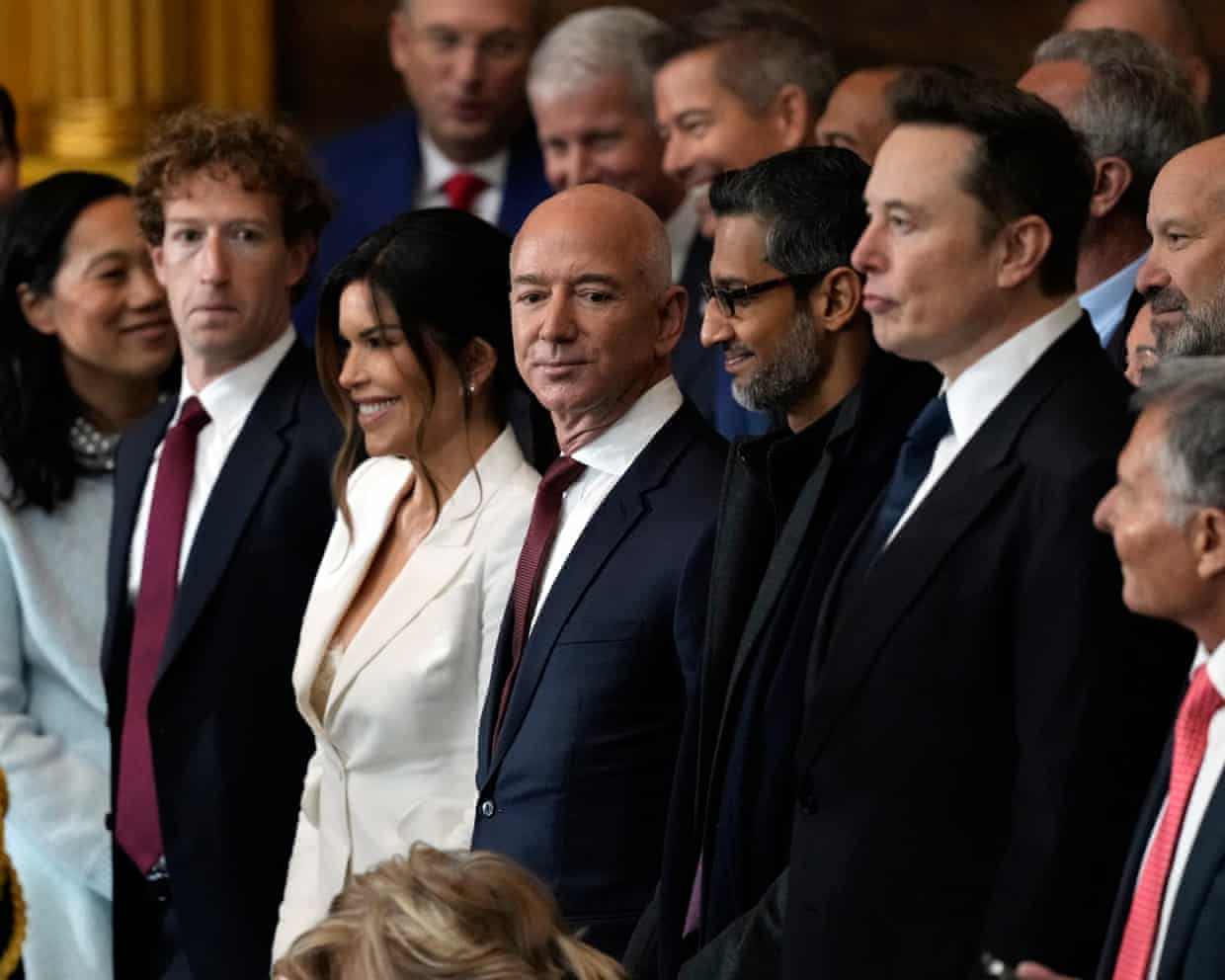
Big tech continues to bend the knee to Trump a year after his inauguration
Hello, and welcome to TechScape. I’m your host, Blake Montgomery, the Guardian’s US tech editor.One year ago today, Donald Trump was inaugurated as president of the United States. Standing alongside him that day were the leaders of the tech industry’s most powerful companies, who had donated to him in an unprecedented bending of the knee. In the ensuing year, the companies have reaped enormous rewards from their alliance with Trump, which my colleague Nick Robins-Early and I wrote about last month after Trump signed an executive order prohibiting states from passing laws regulating AI
Davos: ECB’s Lagarde plays down fears of ‘rupture’ in world order, as IMF’s Georgieva warns of AI ‘tsunami’ hitting jobs market – as it happened

Poundland shuts 149 stores, cuts 2,200 jobs and focuses on £1 items

Campaigner launches £1.5bn legal action in UK against Apple over wallet’s ‘hidden fees’
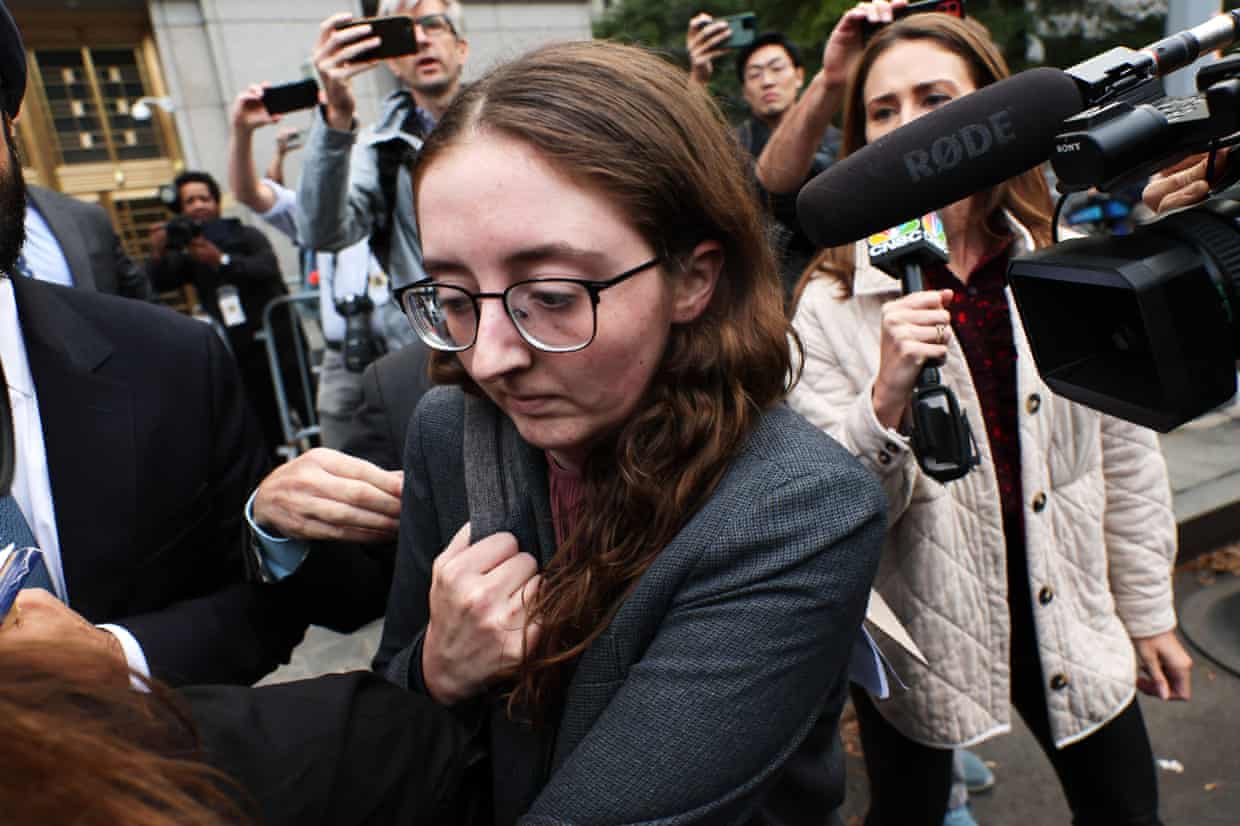
Former FTX crypto executive Caroline Ellison released from federal custody

Harry Redknapp targets second tilt at Cheltenham glory with Taurus Bay

Lewis Hamilton warns new F1 season will present biggest challenge of his career